#304: Fall asleep at work
The ability to fall asleep anywhere is the talent that bites back. Because you end up falling asleep everywhere.
I used to work at Questacon (the National Science and Technology Centre, a popular tourist attraction) which gets extremely quiet in February each year as the school term starts. And by “extremely quiet” I mean “post-apocalyptically quiet”. On one day, there was a total of six customers (who emerged rather shaken after entering each gallery only to meet a jibbering attendant who offered them a personalised tour, then begged them not to leave). That time of year, it was often difficult not to fall asleep. I combated it by walking around and around in circles.
But then there’s my other job: tutoring. Now tutoring only goes for an hour at a time, and is very intensive (I can generally teach an entire week’s worth of material in any subject given 1-2 lessons). You’d think that would keep me awake. You’d be wrong. One of my less-than-proud moments was when a student was rehearsing her speech for class and, while supposedly critiquing her, I fell asleep.*
*ahem*
In order to supplement my tutoring income, I sometimes do after-school care, which fundamentally involves picking kids up from school and then either watching TV or reading a book while they amuse themselves (or, sometimes, actually doing something – but not with my current family, who made it very clear the only reason I was there was in case the house spontaneously combusted. It hasn’t yet, so everyone’s happy). Last week, as both children played computer games, I laid my head on the arm of my chair – and slept.
The thing that makes this awesome? Firstly, I was still getting paid. Secondly, when I mentioned it to the parent in question, he was pleased.
Best. Job. Ever.
Also, the kids are nice.
Have you ever fallen asleep somewhere you probably shouldn’t have?
*Arguably, a valid response. Or at least, it was valid the first two times.
#303: Start a novel
As you know, I’ve been researching and planning a steampunk book for most of this year. Now, finally, it has begun, and I’m having a fabulous time.
Here are some of my research notes, and plot and character planning (this scene occured after getting CJ’s permission to take over the kitchen and living room):
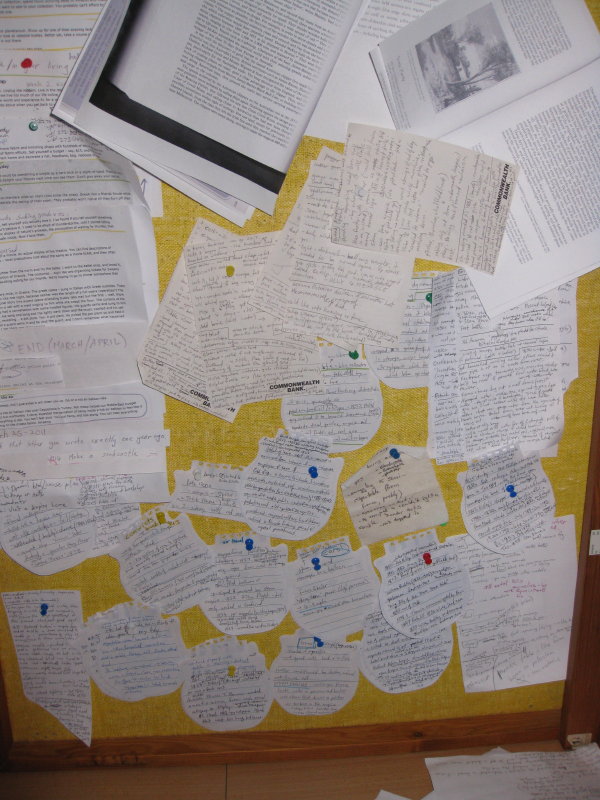
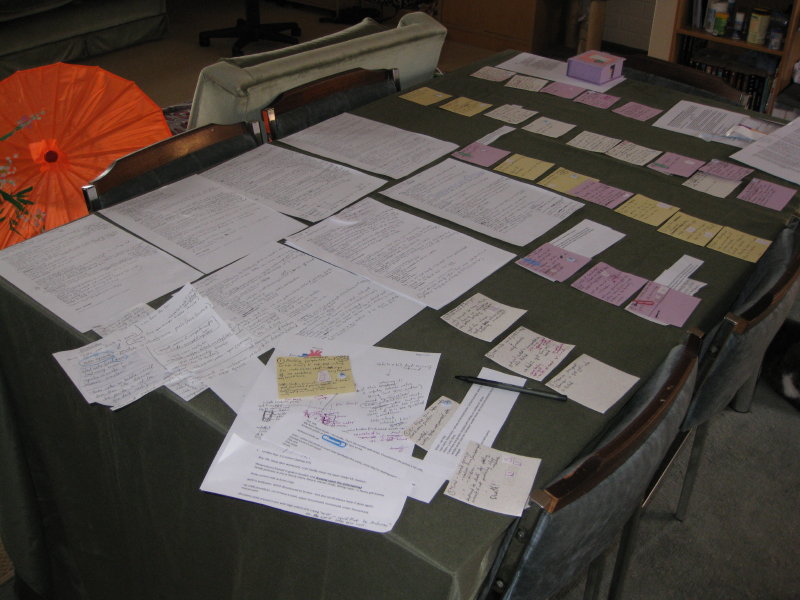
The title is so excellent, so essential to the plot, and so easy to copy that I’m not saying it online (ooh, mysterious!) I will say that the book is about a London girl transported to Australia – and Australia is where most of the action takes place. We were a British colony at the time (1853-4), after all.
The book opens as Miss Miller (aka our hero) is attempting to rescue her family’s faltering riches by marrying well. Her potential suitor, Ambrose Dawes, is about to pay a crucial social call with his mother. Here’s a first-draft sample, taken from when Miss Miller uses magic to eavesdrop on their conversation at her front door:
“One way or another,” said Mrs Dawes, “this family has a reputation for peculiarity.”
“I hope it’s deserved.”
She took several agitated breaths. “Do be serious, Ambrose. And try not to be distracted by Miss Miller’s famous blue eyes. Blue eyes are not at all a suitable reason to marry.”
“I managed to remain calm when I saw them at the royal ball last year. Very distracted blue eyes – until I mentioned my admiration of Hungerford Bridge. Then they were razors.”
“Did you bore her with your engineering talk? You know you mustn’t talk about all that rubbish in proper society.”
“I didn’t have the chance. She danced on. I did, however, notice she possessed a very finely-engineered ankle.”
“Well!” Mrs Dawes cut off further conversation by knocking at our door.
#303: When he cooks
This is what it means when I cook: The food generally costs under $2.50 per serve, and takes less than half an hour to appear.
Here’s what it means when CJ cooks: The focus is on one thing – deliciousness.
Both of us are “good” cooks in our own way, but everything is more epic when CJ cooks*. Last night he made my favourite meal: Lasagna (by request from his parents).
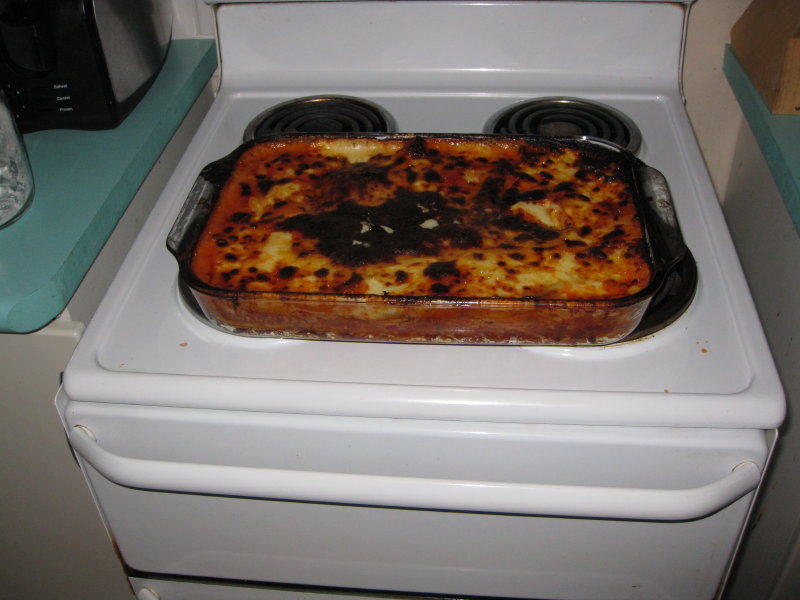
The house still smells delicious. . . and, best of all, we have leftovers.
Today is 14 March, which means *drum roll* there are only TEN official year-of-awesomeness days left. Don’t worry – I won’t suddenly stop being awesome**. I will be making an announcement on Friday 25 March about the blog’s next manifestation. . . and I think you’ll like it.
*Including the dishes
**”Impossible!” from the chorus
#302: Girls’ Day
My Mum is away, so my Dad stole CJ for a boys’ games day.
I responded to the shot across the bow by declaring a rival games day – for girls only.
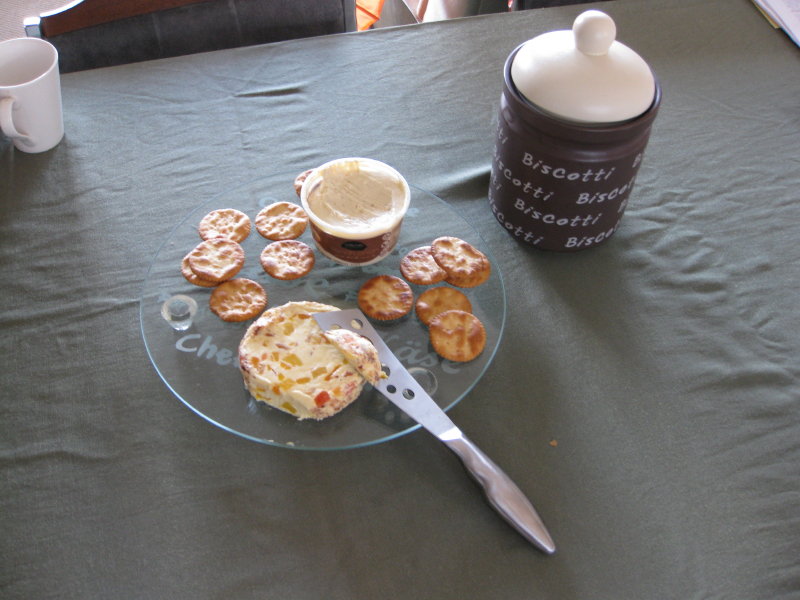

We ate fancy cheese and biscuits, talked about werewolves, and played a one-hour game of Settlers.
Meanwhile, the boys played a six-hour game of civilisation. CJ was pleased that this time he survived to the end – instead of dying partway through and then waiting hours for the game to finish.
Pretty sure the girls won.
Next Sunday I’ll be blogging about a real life hot air balloon ride! Aieeee!
S#86: Starry Night
My mission of awesomeness was to visit an observatory or planetarium. In an odd coincidence, both of Canberra’s star-gazing places (Stromlo and Dickson) have burnt down in unrelated incidents (presumably we’re getting invaded by an army of high-flying yaks who needed to ensure they aren’t seen).
So CJ and I took a picnic rug and went and lay down in a park late last night to ask one another what on earth we were looking at. It was very romantic, even if I did (evidently) forget to take a star map with us.
Plus, since my convict girl and the bushranger do something very similar in my steampunk novel, it totally counts as research.
#301: Detective Dee
Last night I saw “Detective Dee and the Mystery of the Phantom Flame” and BOY was that awesome. . . in every possible sense.
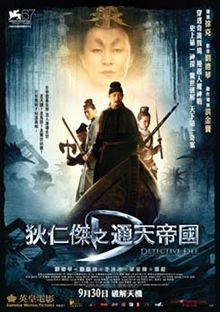
This movie was such a peculiar blend of genius and utter incompetence. Even I know it was wildly inaccurate historically – and while the “rule of cool” says that the giant Buddha statue was fine, it doesn’t speak up when the empress disguises herself with a 1920s hat. The subtitles were very poorly done, which just emphasises the fact that whoever was in charge of this film was just LAZY in so many ways.
The wild leaps of plot and intrigue went way beyond the oriental norm, and the deer high priest was. . . well, whatever. There was plenty of random preachiness, and an oddly flolloping pace. The special effects were unintentionally retro, with no irony whatsoever. The spontaneous human combustions were nice and gory, though – so don’t take your kids.
But the characters were truly interesting – and the resolution was genuinely unique. The acting was often stilted, but it was interesting all the same. I really liked Detective Dee, and the main girl, and the empress. And there was a good range of perfectly adequate eye candy, which is always nice.
The fight scenes were sort of really stupid, but at least it was clear the writers were trying. I liked the scene in which Detective Dee yells out where his blind friend should punch, and the much later scene where he climbs up and around statues while getting attacked by deer.
I saw it at the ANU film group, and all the pain of the movie was worth the roomful of hilarity when Detective Dee went in search of his old friend Donkey Wang. . . the one with scabies.
As an exercise in both very good and very bad film-making, this movie is sublime.
As an actual movie, it’s slightly less good than a punch in the face.
#300: Whiteout Fu
I am deeply absent-minded. In order to function, I have a complicated system of reminders.
My phone has alarms that go off when I need to prepare to go to work, and if there’s something obscure I’m scared I may forget. I also write on my hand a LOT (which is why I very frequently wake up with backwards writing across my cheek).
But most importantly, there is my diary. My basic system is that a single line cross-out means “This is no longer happening, but I may need it for records or decision-making at a later date”. A complete scribble means “This activity/task is done. Use what little mental space you have for other things.” The capital letters here and there indicate that I will see or have seen various students/employers – I keep those letters relatively pristine (and copies elsewhere in the diary) in case there’s a pay dispute.
Altogether, this is what a typical week looks like:

When the gibbering mass of pen marks gets to be too much, I attack it with whiteout. The relief of seeing a suddenly-blank page once more is profound.
How do you remember things?
#299: Steampunk Research
In January I decided to write a steampunk series. This was daunting, because I’m no historian. I decided to remedy my ignorance (to a very minor extent) by reading twenty nonfiction books (and of course spending time on wikipedia and elsewhere). I also took another look at the TV series “Worst Jobs in History”, visited the National Museum, and went horseriding – as well as reading several novels of the time (especially Marcus Clark’s “For the term of his natural life”), and every modern steampunk novel I could get my hands on.
Here for your convenience are my short reviews of the twenty books I read.
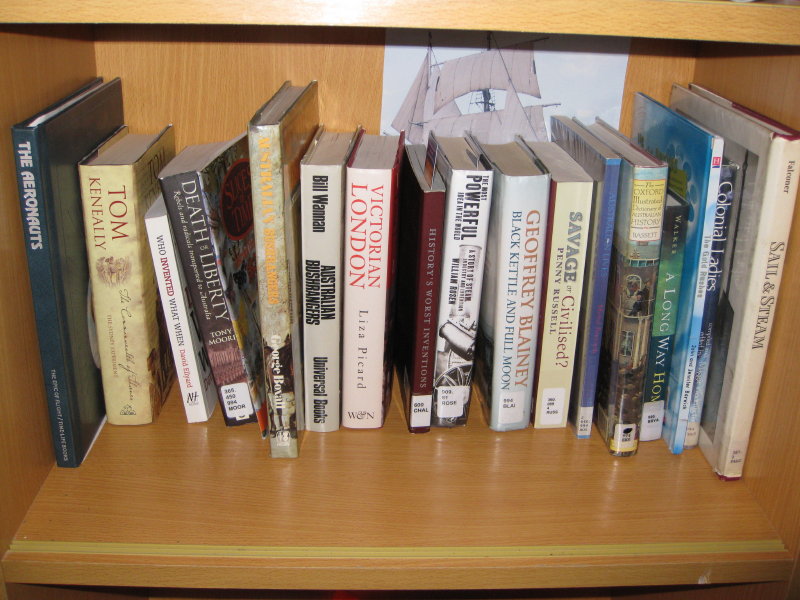
These are the top three, in my opinion.
1. “Victorian London” by Liza Picard (including colour illustrations).
If you’re going to read one book before writing steampunk, this is the one you want (and, as a bonus, it’s often hilarious). The first chapter is on smells. Need I say more?
2. “Who invented what when?” by David Ellyard.
This was brief and coherant enough that even I (a bit of a luddite myself) felt that I understood everything. It includes era-defining inventions such as the steam engine and life-changing inventions like toothbrushes. If you want to have an idea of where technology was at and how people lived, this is where you should start. The thing that makes it especially brilliant is that it’s in chronological order, so you can choose where to stop.
The other technology books I read were “History’s Worst Inventions” by Eric Chaline (which was very good, with a little more depth), “Technology in Australia 1788-1988” (which was intensely dry – I only read selected sections), “The Most Powerful Idea in the World: A story of steam” by William Rosen (which was good, but rather above the heads of non-engineers, and often focused on patent law rather than the more fictionally interesting bits of steam tech).
I also read “The Aeronauts” for balloon info, which was the single most entertaining book on this list – when I write about my own balloon ride I’ll add some quotes for all of you! Oh, and “Sail and Steam” by John Falconer, which I should have read with a dictionary in my other hand (do YOU know the different between a clipper, a cutter, and a tall ship?) but the stunning pictures were well worth it.
3. “Black Kettle and Full Moon” by Geoffrey Blainey.
Blainey is a very well-known Australian historian (I wasn’t able to get “Triumph of the Nomads”, which is a huge shame), and this book is all about everyday Australian lives – so of course it’s gold for writers.
The other books that were very good for everyday detail were “Australian Lives” by Michael Bosworth, “Colonial Ladies” (lots of brilliant and entertaining letter and diary fragments) by Maggie Weidenhofer, and “Slices of Time: Australian Family Life in 1838” by Joan M. Kenny.
For general Australian history I skimmed through “The Oxford Illustrated Encyclopedia of Australian History” (wikipedia was way more useful for getting a grounding in things) and “A History of Victoria” by Blainey (good, but not as relevant as the other one). I also read “The Gold Rushes” by John and Jennifer Barwick (a children’s book, which suited me fine).
For bushranging I read “Australian Bushrangers” by Bill Wannan, and “Australian Bushrangers” (yes, same title) by George Boxall. Both were fascinating – especially tales of bushranging chivalry – but they were also sometimes horrifying to read (especially the second one) because of the nature of crimes committed by certain bushrangers.
For better knowledge of the convict system, I read “Commonwealth of Thieves: The Sydney Experiment” (too historically early for steampunk, but a surprisingly gripping read. . . for a little while, despite all the odds, the two cultures had a chance to actually get on), “Death or Liberty” by Tony Moore (all about transported political prisoners. . . absolutely fascinating, and something Australians should be so proud of – the influence of those rebels is still felt in some of our best cultural attributes), and “A Long Way Home” by Mike Walker (a semifictional account of the convict Mary Bryant – packed with vivid detail and real-life desperate adventure – again, too early but still extremely useful).
Last but definitely not least, I read “Savage or Civilised” by Penny Russell (an examination of early Australian manners). Fascinating, and so relevant to steampunk attitudes! I’ll never think about handshakes the same way again.
So there you have it! Some of the best books for prospective steampunk authors to read, especially if you’re writing Australian steampunk (I know I’m not the only one!)
S#32: Break from technology
Steff Metal is one of those mad fools who thinks that “Real Life” has some kind of benefit beyond that bestowed by the sweet sweet glow of computer and TV screens. Based on her list suggestion, I have now completed (over a period of many months) seven days without TV and internet.
Conclusion: Never, ever again.
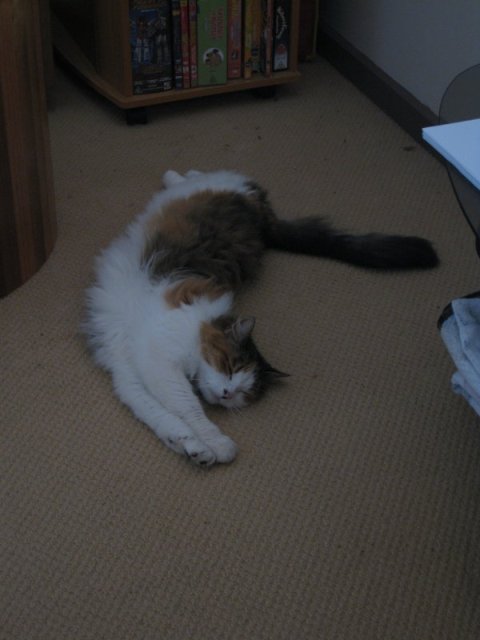
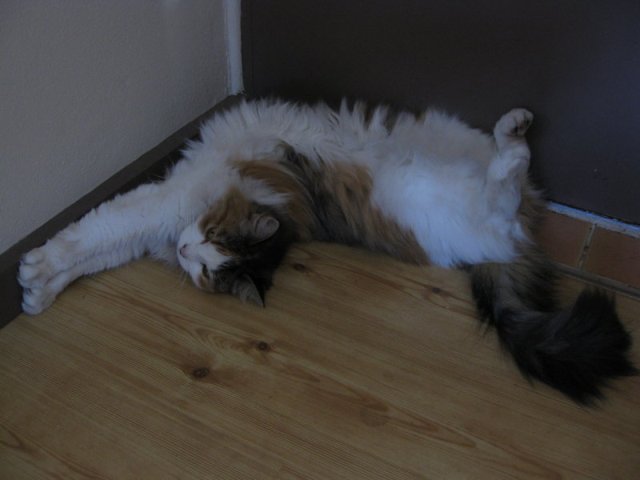
To celebrate my newly rediscovered love of all things square and glowing, here is a present for you, Mr Internet.



S#8: Ich Bin Ein Stern
My mission of awesomeness was to sneak into a friend’s house and stick glow in the dark stars to their ceiling – an idea I LOVE except that the vast majority of my friends are renting.
So instead I gave (and “installed”) glow in the dark stars to the angelic-looking daughters of one of my friends. The whole family was tremendously excited, and it was a lot of fun. I’ll be thinking of them this evening as they lie in bed, desperately staying awake until the stars start to shine. (I’ll also be thinking of their mother, who is likely to experience an equally exciting evening.)
During the afternoon, CJ and I played “Pirate’s Cove” with the mum while the girls slept. The elder daughter (who is almost five) emerged after a while, and was permitted to watch us play.
“Mum,” she said. “Mum! You’re gonna win. You’re gonna win and I’m gonna love you forEVER!”
With a certain amount of interest, we asked what happened if her mum didn’t win.
The girl thought hard, and then made her pronouncement: “I’ll still love her. . . for a couple of days.”
Hmm.
For the next 24 hours I will be *gasp* offline as I endure the final 24 hours of my “week” without technology (the most difficult of Steff Metal’s 101 awesomenesses). See you tomorrow at 3pm sharp, Internet. I’ll miss you.
 Felicity Banks