Zombie Begonia
Not all plants die horribly immediately after I bring them home. Some manage to live despite the odds.
Others die. . . and then claw their way back from the grave.
You may remember my heavy metal begonia. It looked cute for a bit, and then it died – emphatically.
I googled begonias and decided to keep it inside, and water it less.
So, after a few weeks of having a dead plant on my writing desk, I was as surprised as anyone to see new leaves emerging beneath the dead sticks.
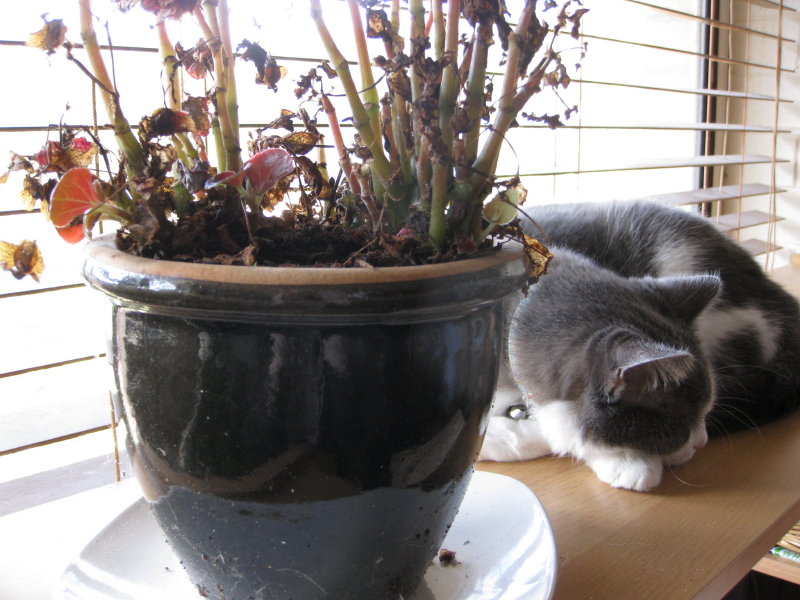
It’s ALIIIIIIIIVVVVVVEEEEE!!!!
I might not be good at caring for plants, but this is also not the first time I’ve watched a dead plant spontaneously revive after getting moved inside. Evidently it’s not me that kills things. . . it’s nature.
*walks off whistling innocently*
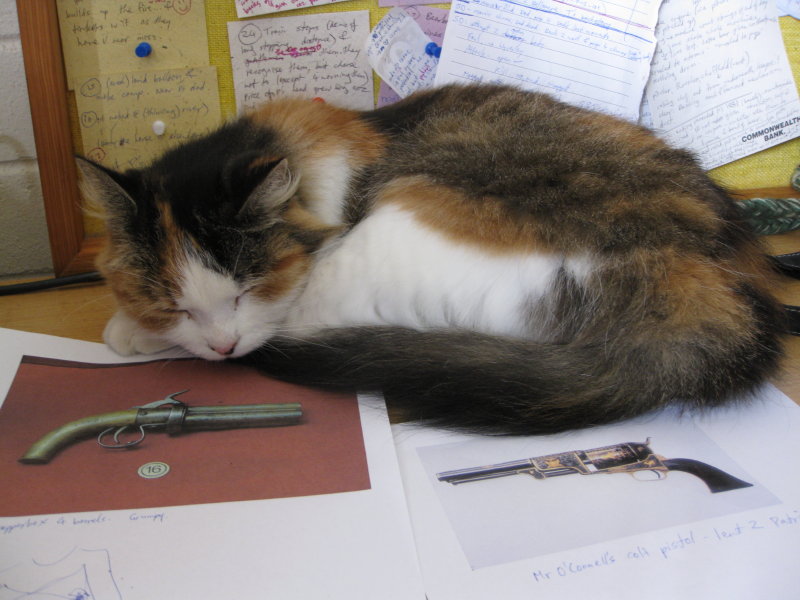
Today is day three of my writing binge, and I’m loving it. Ana decided to get in on the paperweight action (FYI, the gun on the left is a pepperbox, and the other is a Colt – the same type Ned Kelly used):
Writing Binge
Guess what I did yesterday?
I slept in, then did some writing.
I rode my exercise bike, then did some writing.
I went shopping, then did some writing.
I did a load of washing, then did some writing.
I cooked dinner, then did some writing.
I saw friends, then did some writing.
Due to the vagaries of my tutoring schedule, I have absolutely no work – not a single hour – for the next two weeks. So from my absolute lack of lemons, I’m making lemonade.
The Easter Weekend is pretty busy, but before and after that I’m doing almost nothing but write.
Today, for example, is just like yesterday except without the shopping and the friends coming over. Instead I’m vacuuming the house and getting the car blinker fixed.
Tomorrow is similar, except I may dust. Or not. And I may have a job interview (for reasons that I think are pretty clear). Or not.
On Thursday I’ll emerge blinking into the non-fictional world. Until then, I’ll be wearing my pajamas and having a ball.
And, as always, discussing the finer points of grammar with my paperweight, Indah:

It’s time
I think all the readers of this blog also follow my main blog at http://twittertales.wordpress.com. Since the twittertales blog now has Miscellaneous Mondays (as well as shiny new writing articles on Saturdays, and Steampunk stuff on Sundays), this blog no longer has any unique purpose (unless my realist novel is accepted for publication under the Felicity Bloomfield name, in which case I’ll grab the metaphorical paddles and revive this blog like I never left).
I will still see comments posted here, and will respond to them.
Here to say farewell is a selection of relaxed cats:


Top Ten FREE Awesomenesses
It’s finally here! The ultimate awesomenesses for my poverty-striken peeps. I’ve marked with an asterisk those I think are worth clicking on (either for stylish writing or for pictures). And without further ado. . .
10. Feed ducks
8. Join the Library and Read Scott Westerfeld’s Leviathan trilogy*
7. Lord of the Rings Movie Marathon*

6. Sculpture Garden or The National Carillon or whatever’s free in your area*

5. Kidnap your date (or a friend)
4. Light a Fire
3. Steal Flowers*
2. Bubbles!*
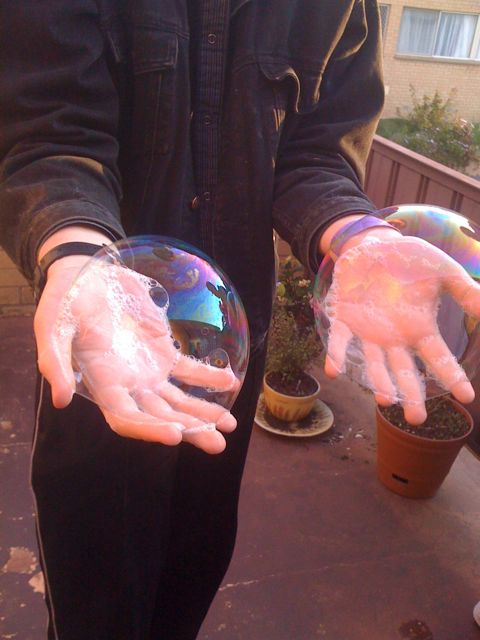
This is it. . . the youtube clip that’ll soon reach 13,000 views. I can only conclude that the internet was expecting something else.
I have a special treat for next Monday. You’ll never guess what it is, but here’s some random clues all the same:
1. It involves a visitor from China (who is not Chinese).
2. Americans should find it especially entertaining/horrifying/insulting, depending on their personality (but it’s not at all mean in any way).
3. It is, allegedly, educational.
4. It is very, very funny.
Love in a time of corsetry
This is a true story that took place in Victorian-era Australia.
The “rather mature” man-servant, Mr Supple, asked permission to marry the “very young and pretty” servant-girl, Mary.
My husband thought, as she was so much the younger of the two, it was a pity for her to throw herself away, so he spoke to her.
“Mary,” said he, “what makes you think of marrying Supple, a man old enough to be your father – and such an ugly man, and you such a pretty girl?”
“Well, sir, John Supple is NOT a pretty man, but his manners! Oh! Sir, his manners!” said Mary.
We could say nothing to this, and manners carried the day.
-From “Colonial Ladies” by Maggie Weidenhofer.

Tomorrow: The top ten awesomenesses – that didn’t cost a cent.
In the beginnings. . .
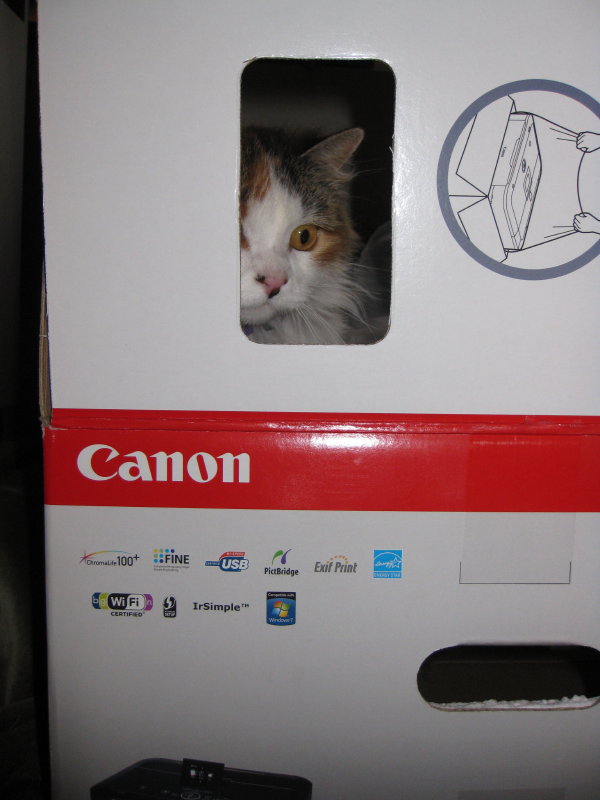
Time to hide in your box, quivering in terror.
Today we’ll be visiting the Pub Rants blog (“pub” as in “publication”, you lush) for the bad news about beginnings: 99.9% are rubbish.
You can tell an experienced writer because they don’t bat an eye when someone says, “Send me the first two hundred words of your book, and I’ll know whether I want to read the whole thing” – because that really is all it takes to sort the maybe-quite-good from the heh-no-way.
Don’t believe me? Go to a critique site like this one and critique twenty first chapters. You’ll soon see exactly how easy it is and exactly how little time it takes. And if you’re serious about writing books, critique at least fifty first chapters and you’ll learn more than you’d learn from reading fifty bestsellers (which you should also read, but that’s another article. . . ).
The full article for today is here. If you’re a writer, read the whole thing – please. My favourite part is when she lists the most common first-page mistakes. Here is that list, with my comments underneath each item.
1. Telling instead of showing.
Don’t say, “I felt scared” – say “My mouth went dry, and I willed my hands to stop shaking.” It makes a surprising amount of difference. Also, know when your scene should be described in full excruciating detail (when there’s action, interesting dialogue, or some incident that makes a difference to the plot) and when not to (when characters are unconscious for three days, or talking about non-plot-relevent geraniums, or quietly grieving someone that they also grieved in the previous chapter). Your first scene should always be interesting, and full of blow-by-blow detail with no summary.
2. Including unnecessary back story.
You should know that the main character was attacked by an aardvark when she was three and that it caused her to hate all animals – but you will probably NEVER mention that incident in the whole book. You’ll just show her flinch when a dog walks in. That SHOWS us she’s had a bad experience instead of telling us.
We don’t actually care about the aardvark incident, or anything else that was exciting at the time – sad but true. Only the present truly matters.
We really don’t care about the fifteen changes in the government of your fantasy world that led up to this particular crisis. Again, keep it in your head.
3. Loose sentence structure that could easily be tightened.
Grammar is important for two reasons: So you make sense, and so your writing is invisible. Any time someone has to re-read a sentence, they are no longer inside the story. Learn how to talk good.
4. The use of passive sentence construction.
See what she did there?
“I hit the cop in the face” is a million times more interesting than “The cop was hit in the face.”
5. Awkward introduction of character appearance.
Please, no glancing in the mirror.
I use a lot of tricks for character appearance including action (I pushed my hair out of my eyes), comparison (Robert towered over me), style rather than lists of hair/eye colour (He pulled at his lower lip again, not realising he was doing it), senses other than sight (I heard a scratch at the door and realised Miss Smith couldn’t quite reach the bell), and other people’s reactions (Harrry stopped talking mid-sentence. Sure enough, Miss Aurelia was adjusting her top again). Anytime you’re physically describing someone while doing something else at the same time (showing character, moving the story forward, etc) you win.
6. Awkward descriptions/overly flowery language to depict.
If you must have an adjective, don’t have a list. “The fat dog wagged its tail at me” is stronger than “The fat little brown dog wagged its tail at me”. But verbs tend to be stronger still – “The dog waddled over to me, wagging its tail.”
7. Starting the story in the wrong place.
Start with something happening. Look at action movies, and you’ll see that the opening scene is often a mini-story that is related to the main plot – eg one young woman is killed by a guy in a mask, and later we realise he’s stalking another. It’s SO much more interesting that starting with a placid/static scene, or a conversation. Ideally the opening scene is the inciting incident that kicks everything else off. But there has to be some kind of risk.
8. Not quite nailing voice in the opening.
Be yourself. Or at least, be that small part of yourself that you have in common with your narrator. Sarcasm? Short sentences? Big words? Yeah-I-couldn’t-think-of-the-exact-word-so-I-made-it-up adjectives? In my opinion, you’ll find your voice somewhere in the first draft, and then if any parts don’t match you can fix them in editing. So relax about voice, and it’ll come.
9. Dialog that didn’t quite work as hard as it should.
For starters, use contractions (“I’m, he’s, you’re). Listen to real-life dialogue and you’ll see how much information people leave out. But do please skip the boring bits of real life – notice how rarely fictional characters say “Hi how are you?” “I’m fine, how are you?” and “Goodbye”.
10. A lack of scene tension even if the opening was suppose to be dramatic.
You get tension by having a clear, important, and difficult goal right away – anything from “Nerdy kid asks out popular girl” to “Bruce Willis defends USA against terrorists”. (To get readers to care, they need to be interested in your character – there’s another article in that.) You keep tension by having things go wrong – the girl’s mean friends show up to watch his humiliation, or Bruce Willis is barefoot in a place full of broken glass.
Again, detail helps. I find that the longer a scene takes, the more time readers have to feel stressed. And readers love stress.
Mmm. . . cafe
The other day I discovered a new cafe – the Red Herring (near Canberra’s merry-go-round). It’s all couches, books, movie and TV posters, free foosball, ug-booted staff, and young ruffians either playing acoustic guitar or sleeping.
Yes. Literally people sleeping, and others playing acoustic guitar with their friends. And I was only there a few hours.
It’s not Melbourne-ish, but it’s pretty darn good.
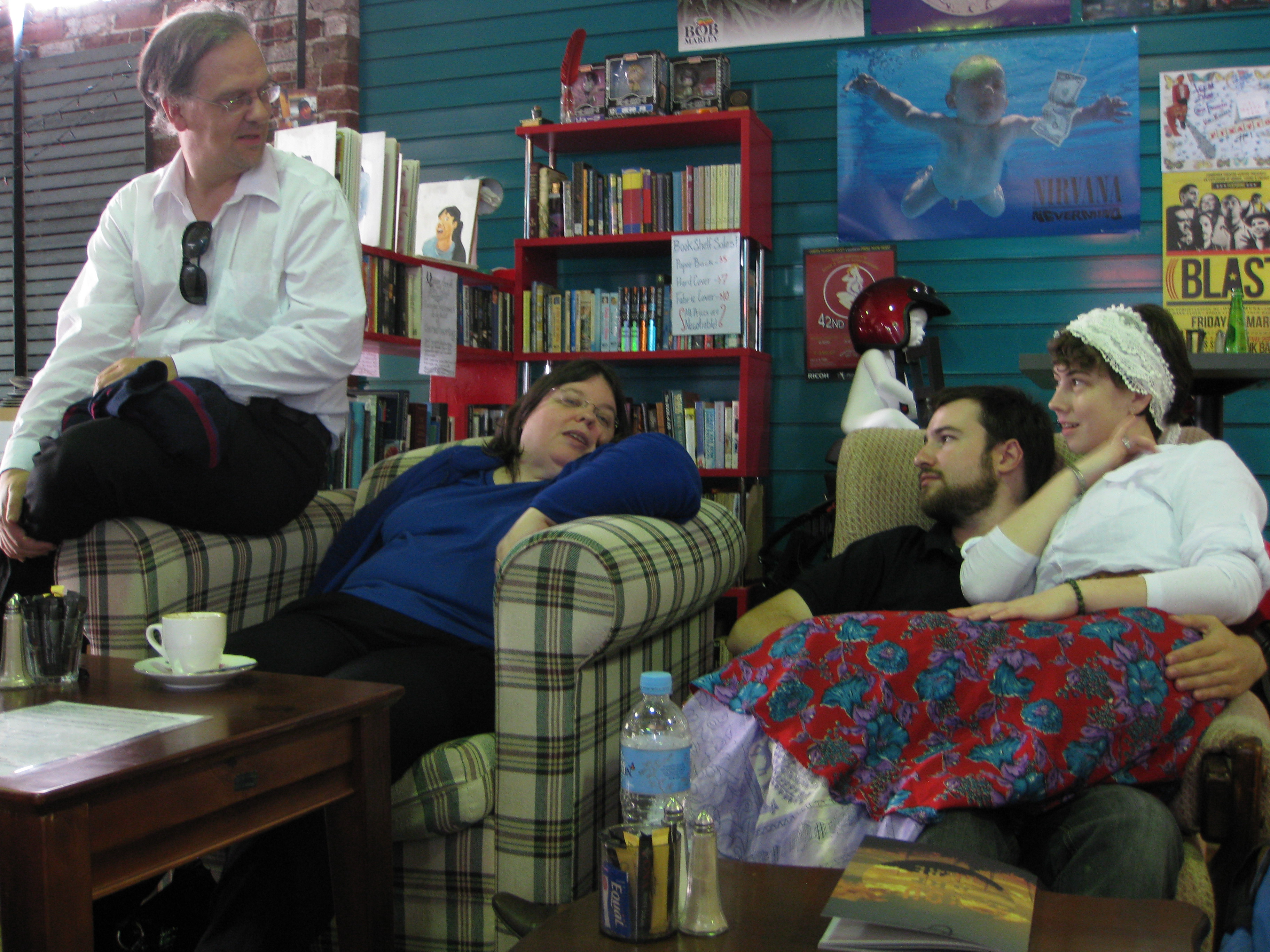
Unsurprisingly, it’s run by uni students. All the best cafes are run by uni students, artists, or both.


Celebrate your bad mood
I feel rubbish today. May as well make a party of it – like so:
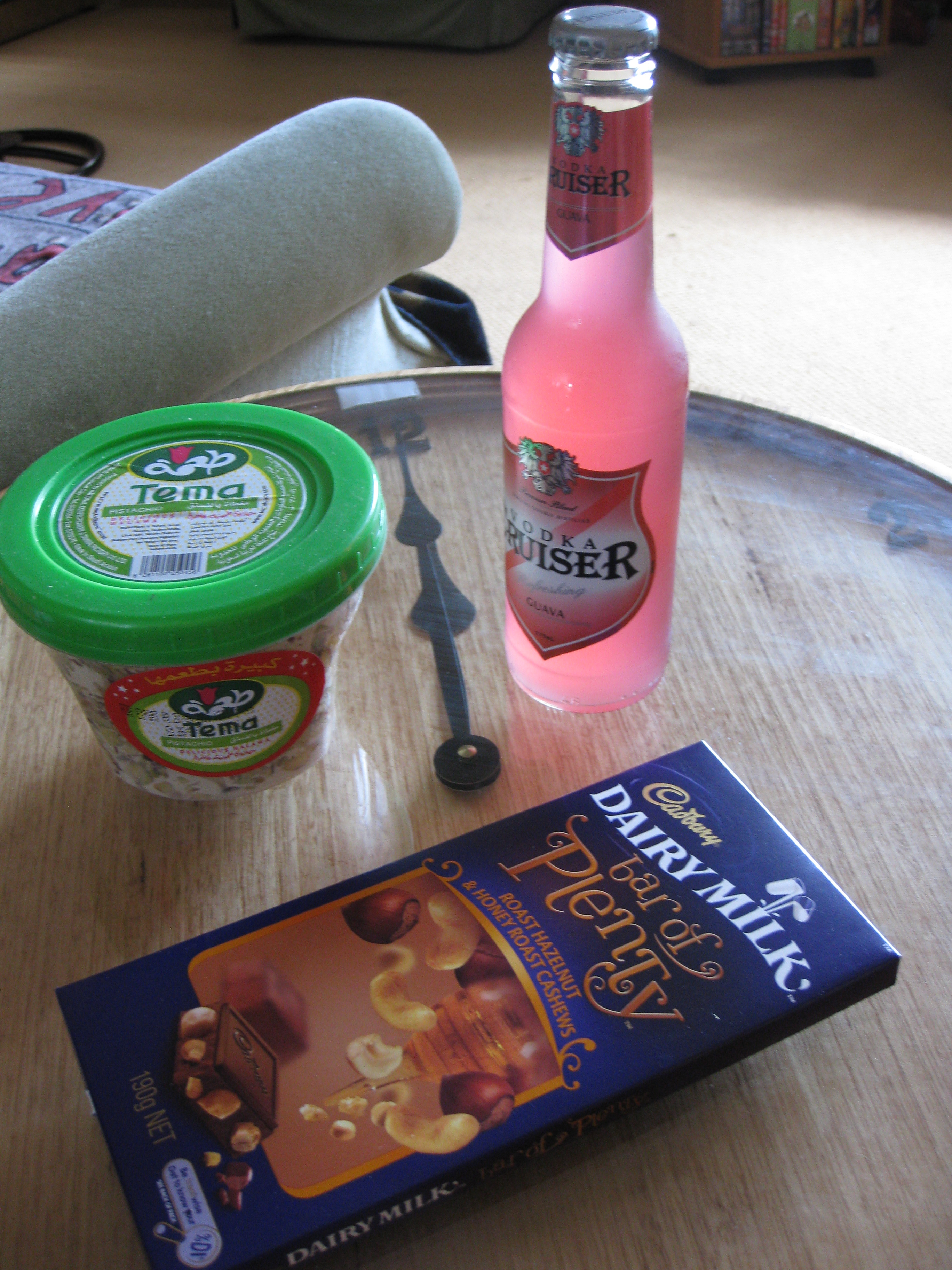
And now, high on sugar, colourings, chocolate, and alcohol – I’m gonna go do some writing.
PS For those who are wondering, “Tema” is a brand of halva/halawa – a very sweet Middle Eastern substance that is popular around the world (in fact, in Spain it’s traditional Christmas fare). I buy pots of it at Cedars of Lebanon shops.
World’s most awesomest fruit?
Check this out. It’s called dragonfruit. Raargh!
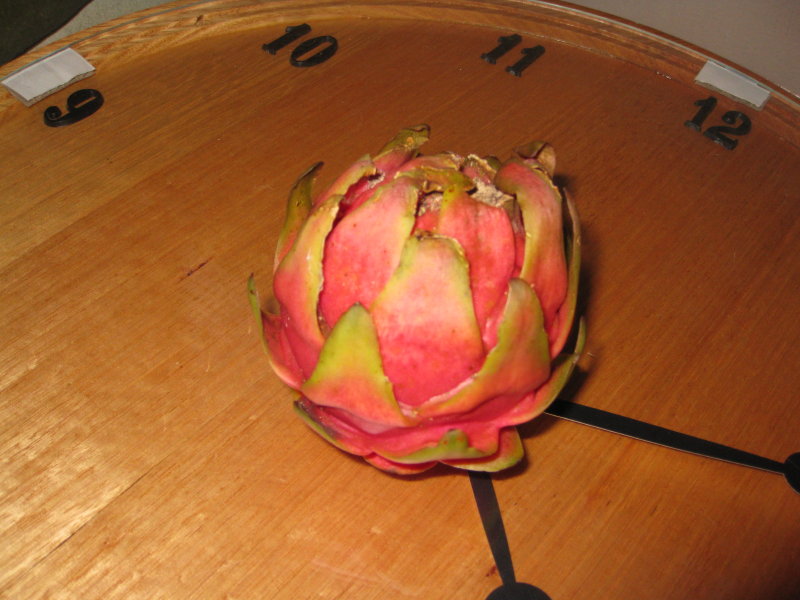
I ate some for the first time last Thursday. It’s about the size of an apple, with a faint sweet smell. I had absolutely no idea what I’d find when I opened it up. Most grocery stores stock it some of the time.
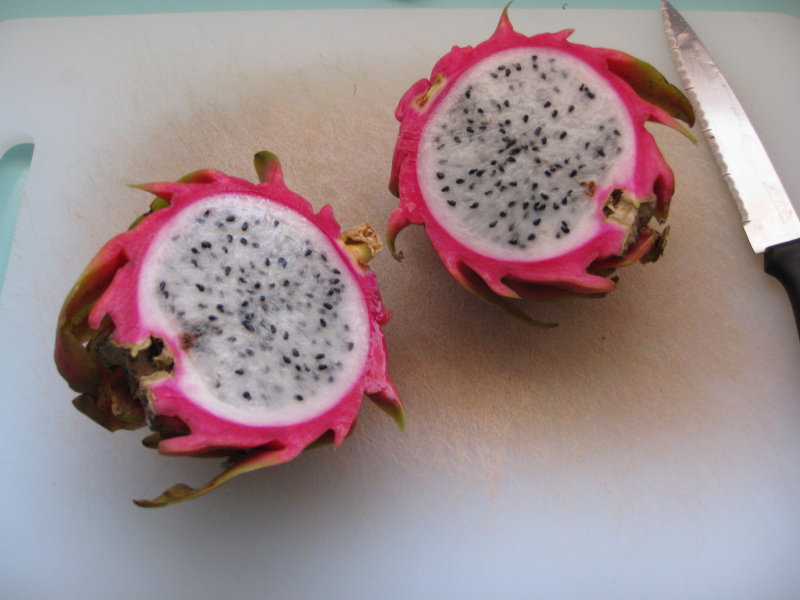
On the inside it has a uniform texture with small crunchy seeds. It tastes sweet, although it’s not a strong taste. It’s very similar to kiwifruit in both taste and texture – and, like kiwifruit, is perfect for eating with a spoon.
Go now and do likewise.
PS Durian is awesome too, but not for the faint of heart.

 Felicity Banks