Choices: And Their Souls Were Eaten
I’ve been working very hard on this story app for Tin Man Games all this year, and I’m incredibly proud of it.
The beginning is free, and the rest costs a few dollars (or a LOT of ads if you choose that option on Android).
It’s a subscription story that releases a new section each week. There are between 2 and 7 strands happening at any one time, with both delayed and instant branching.
Some of you are already subscribed to the award-winning “Choices: And the Sun Went Out” (I’m a co-writer there). In that case, you’re already subscribed to “Choices: And Their Souls Were Eaten”. (Congratulations!)
The original story, the near-future scifi game “Choices: And The Sun Went Out” will end in December this year. The second story, “Choices: And Their Souls Were Eaten” will be “medium-length”. Ultimately it’ll work out to be around half a million words.

On Apple, a subscription to either story gets you a subscription to both.
You can choose to have certain character/s speak to you through your apple watch, if you have one. (That, the music, and the sound effects can all be switched on or off – I like the music off but the sound effects on.)
On Android, you can buy (or earn by watching a LOT of ads) Story Passes, which can be spent on either story.
“Choices: And Their Souls Were Eaten” is my project from the start; a steampunk adventure set in 1830s Europe when Queen Victoria was a teen princess and strange monsters roamed Europe. It uses the same magical steampunk universe as my novel “Heart of Brass2” and the ChoiceScript game “Attack of the Clockwork Army” but there aren’t any spoilers.
One of the features of the subscription system is that the writers (I have paid editors who happen to be excellent writers as well, and I encourage them to add cool bits) can adjust the story based on suggestions from readers. I’ve been known to add pirates, name characters after fans, and so on—all based on what people seem to like.
Place your random requests here, if you like!
Stop LARPing, this is serious
I mentioned here that I was thinking of writing a fifth steampunk story, called STUFF AND NONSENSE.
The gritty origin story:
I was part of the heyday of White Wolf role-playing here in Canberra, when around thirty people showed up to each game, and we regularly travelled to meet other groups and role-play together in nationally interlinked games. That community is still somewhat coherent, enough that although I faded out of role-playing (due to exerting all my creative energy in novel writing) many years ago, there were four members of that crowd at my launch, including the MC and his daughter.
A small group of us also travelled to Sydney sometimes to join a hard-core LARP that included boffer weapons (made of foam—which I assure you leaves significant bruises) and sleeping overnight in a nature reserve to continue the game the following day. I’ll never forget the feeling of being stalked through bushland as I clutched a half-orc baby in one arm and a sword in the other, or the sight of two men in kilts running to attack me with full-size axes.
I only really discovered interactive fiction in January last year, so I often find myself reinventing the wheel and/or being overly clever (a symptom of a new writer is saying, “Aha! Everyone in this genre does THIS, so I will be brilliant and do THAT!” …before mastering “THIS”).
I read a few IF blogs, including Emily Short, and she sometimes writes about unusual games played in museums or across London. I used to work at Canberra’s rather excellent science centre, Questacon, and I had an idea of running a game there that was linked to existing exhibits.
I really enjoyed the IF Comp last year (especially the secret entrant-only forum within the main forum), and have been racking my brain trying to think of a way to enter despite the fact I’m currently working full-time for Tin Man Games.
Then my HEART OF BRASS book launch was set to take place inside the National Library of Australia. It’s across the road from Questacon, and a large number of my friends would already be there….
So I decided to run a steampunk game inside Questacon (and then later adjust it for the IF Comp). Because Questacon entry is super expensive, I decided to have some minor props in the game and charge money for entry.
Unique challenges:
LARPING is always chaos. In this article over at Sibyl Moon’s blog, Sibyl Moon writes that “When the game begins, the GM loses control.” Sam Kobo Ashwell responds in the comments that, “Typically about half an hour before the game begins, when three of your key players text to say that they can’t make it after all.”
The simple fact is that people are unreliable, no matter how much you threaten to stab them if they don’t show up. (It’s possible my technique is counter-productive.)
I wasn’t sure if my players would be first-time LARPers or seasoned professionals… but I knew I didn’t want to be present (too hot, too much standing up, too much seeing people ruin my game). Which meant I needed to write a GM-free (GM = Game Master, the person or team that makes everything run smoothly) game that was 100% self-explanatory. As a result, I wrote scenes in the form of a script (writing it in such a way that one person could take two characters if necessary).
Questacon is a noisy and crowded environment which would make it difficult to negotiate for the players.
There would be VERY young children involved—my own are 2 and 4, so I wrote the game with them in mind. Then I encouraged other parents to bring their own kids. Apart from keeping the game G-rated and making it entertaining for the very young (I had a few short lines for the 4-year olds and assumed the 2-year olds would wander along in their usual curious enjoyment of all the silly things adults do) this had one crucial issue: food. Food isn’t allowed in the galleries, and my book launch only finished at 11am. The game had to finish by 12 or the kids would lose the plot.
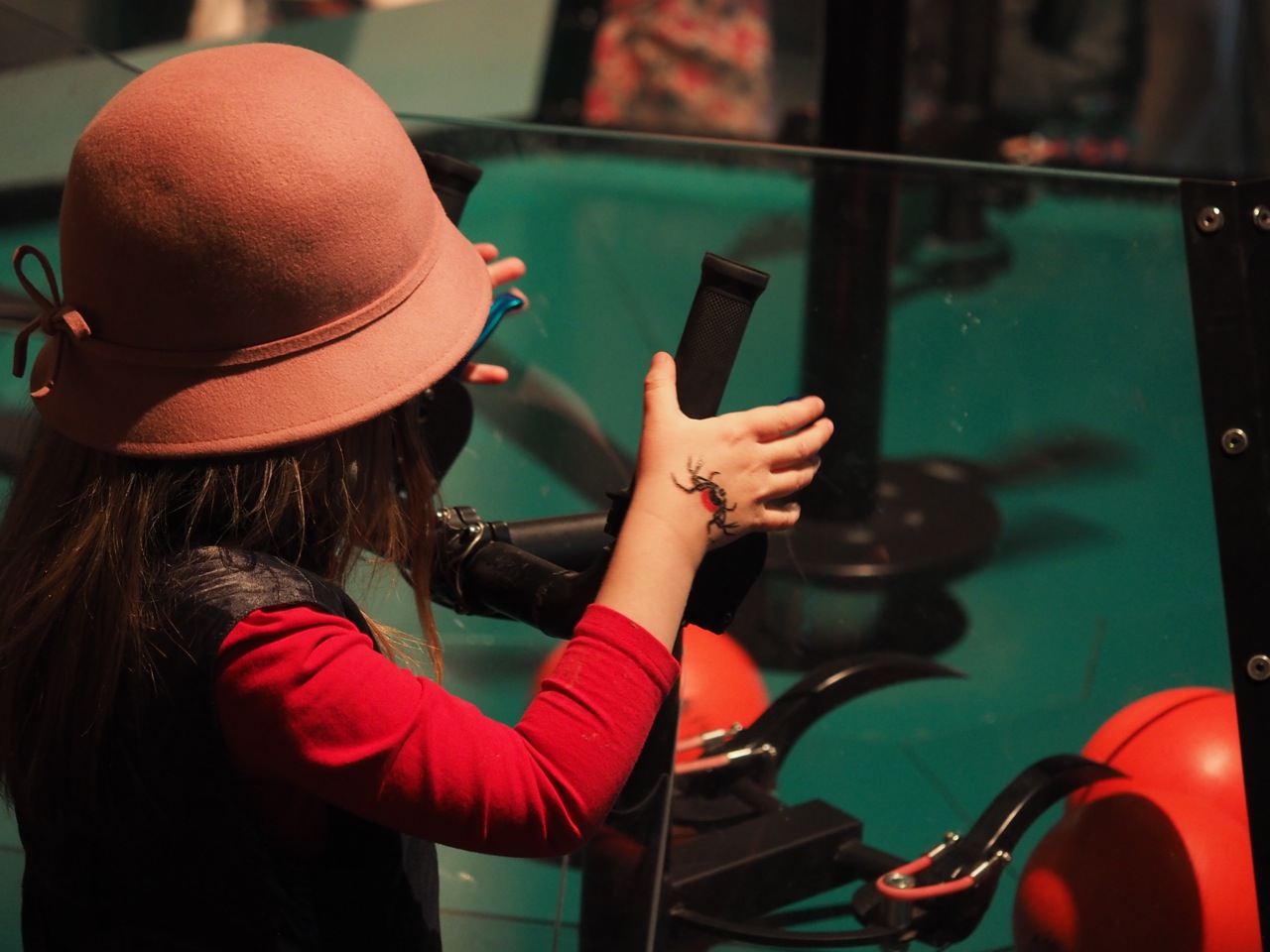
I hate puzzles with a fiery passion, so instead of puzzles I had “challenges” that mostly involved interacting with exhibits inside Questacon. For example, there’s a game in which up to four people can catch a series of red balls by operating two types of enlarged spider fangs. All my challenges suited both adults and children.
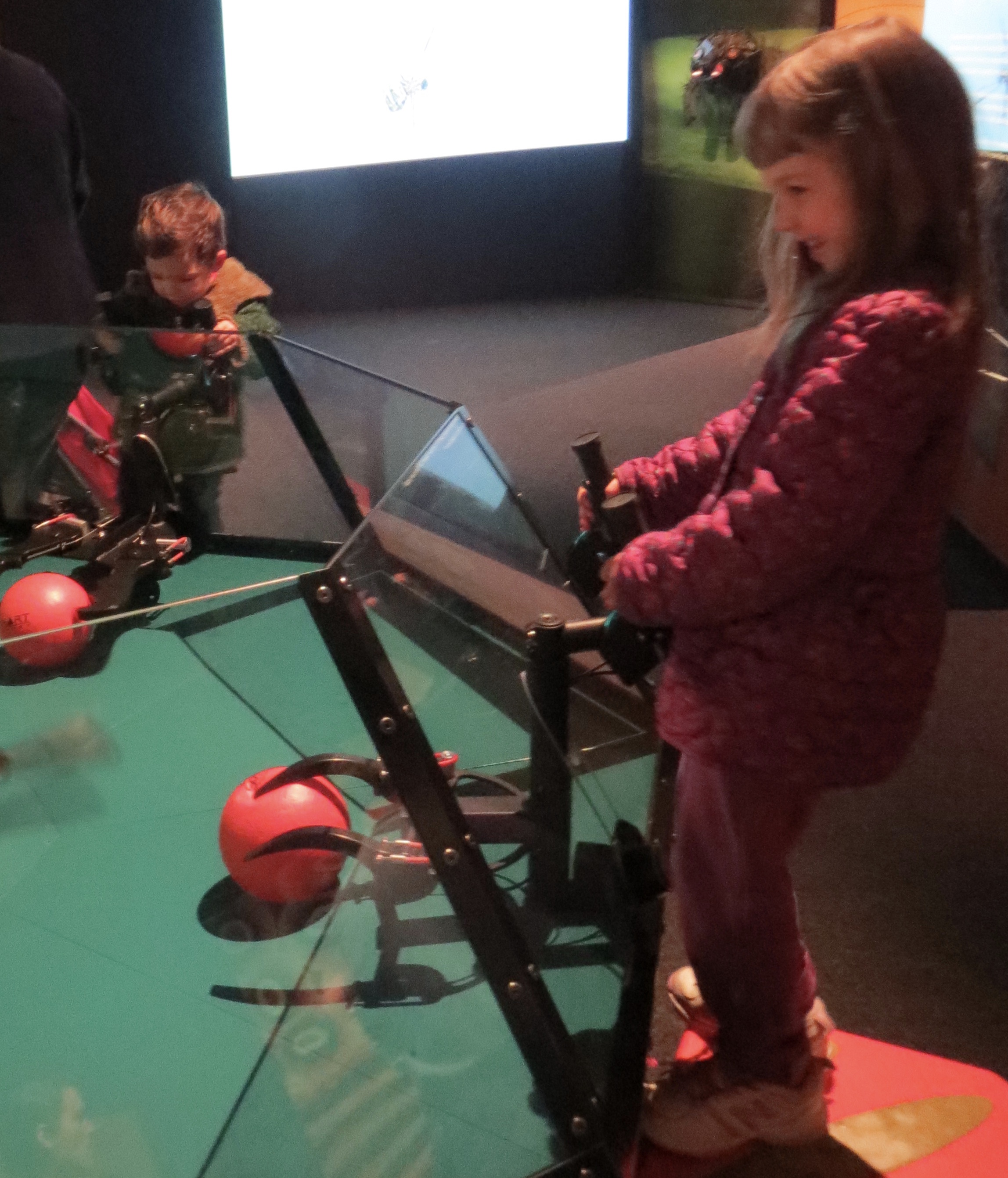
We visited Questacon as a family for me to gather ideas and plans, which is when the above photo was taken (it was later used as a clue inside the game).
I added drama to the game (and a measure of independence) by having two teams that could gain points through various activities. The game above (and one other game) could be played directly against each other.
What went horribly wrong?
People, of course.
I was freakishly lucky in that I ended up with the correct number of adults (8) to play the game, plus five children aged 4 or less. The theory was that one character in each team belonged to the kid/s of that team. It didn’t really work, but it didn’t really need to work since their characters were minor.
I’d deliberately set up a “more efficient” and a “less efficient” team, so that the rowdiest kids were all lumped together. I assigned a leader to each team to get things moving and to keep an eye on the time (in order to coordinate the final scenes and make sure the game finished before the children were hungry), but my “less efficient” team didn’t have anyone bossy enough to make things happen. So not only did the first team begin the game about twenty minutes earlier, but the second time took an additional twenty minutes to cross the road.
This meant the more efficient team was sitting around waiting for forty minutes (ie more than half the game). A little bit of waiting worked fine—there is plenty to do in Questacon—but that was ridiculous and frustrating for me to watch (even from afar).
I’d expected some delays, and assumed the other attractions in Questacon would smooth things over to some extent. I also wrote 5 scenes, and advised the leaders to skip as many as three of the middle scenes in order to get to the climax in time. These were both good ideas, and they worked as well as they could under the circumstances.
I also had a sheet of Victorian insults for the players to sling at one another whenever their paths crossed, plus various things players could do semi-independently to gain more points. But although this might have worked well in a static location (like a large room) where players could lay out the many items in their packs, it was a huge hassle for them as they tried to sort out multiple envelopes (some of them sealed to avoid spoilers) while also wrangling children, and moving through a crowd (in a hurry!) from place to place.
Having two teams also meant separating children from some of their friends (although I put the BFFs together, so that kept things calm).
I was vividly reminded about why control freaks such as myself never run LARPs.
On the up side, my daughter wore a pirate bow tie.

What went right?
I only saw small bits of the game because I was (as I expected) held up at the book launch. My daughter wasn’t really interested in the play scripts at all (too busy talking to the other 4-year old girl), but she enjoyed the challenges. Some people had fabulous costumes on, and one of my friends made an eerily perfect Charles Dickens (which he clearly enjoyed), plus his 2-year old made the cutest steam-powered dog you’ve ever seen. Others attempted German and Irish accents, with amusing results.
The more efficient team had my mobile number, and I was able to advise them to skip ahead and then come back to scene 1. I think they all fundamentally enjoyed themselves. The less efficient team had a few good moments in the chaos.
The climax for this game did, amazingly, work. In either version of the ending, a pack of mechanical spiders escapes and attacks Queen Victoria, prompting players to, “Catch them! Catch them now!!”
Here I am as Queen Victoria, who pops up at the end. It’s funny how ordinary LARPing looks from the outside, when huge drama is happening on the inside.

I made spiders out of red lollipops and black pipe cleaners, which meant they were both unexpected and delicious. Casting them out onto the floor for the kids to catch at the end was terribly exciting.

Most of the players were members of Questacon, meaning that we were able to “pay” entry before the game began, then go in and out of the building as needed. We were also able to access the “Members’ Lounge” – a room set aside in an obscure corner, that was mercifully quiet and peaceful. We ate our lunch and hung out there after the game, which was excellent. If anyone had had any energy left, they could have gone back into Questacon to explore “leftover” scenes or simply have a normal Questacon day.
What did I learn?
LARPing is really not my field.
Inefficient people are inefficient.
Children are children (but they do like games and lollies).
I don’t like noisy, crowded places. Not even when I’m wearing a tiara.
Debriefing and winding-down time is a must.
Imaginative people can be trusted to enjoy themselves.
Dancing, Duelling, Delicious: The official book launch for HEART OF BRASS
You know what’s cool? Nurofen tablets are sugar coated.
*
HEART OF BRASS had her official Book Launch yesterday as part of the inaugural Canberra Writers Festival, an absolutely huge event. I was written about (with a cover image) in Canberra Weekly magazine (96,000 readers!) and in the Canberra Times, as well as various other places.
The launch took place in the National Library of Australia (pictured behind the kids and I), in the Ferguson Room. The Ferguson Room overlooks the foyer of the National Library, which gives it a grand air and means one can watch guests coming in. That was particularly fun for me, since I’d encouraged steampunk/historical garb and was well rewarded for my efforts. My kids loved it too. Louisette got to talk into the microphone before anyone else showed up, and she imitated my own test speech by saying, “I wrote a book”—which in her case is quite true (if you haven’t read “The Adventures of Pirate Captain Louisette”, just scroll down a couple of entries).
I’m usually a very confident public speaker, but I was intensely nervous (enough to have patches of time when I was breathing funny) before this event, even though I was rationally confident it would go well.
The best and most important thing is people.
I was very lucky in that regard. The Ferguson Room is meant to seat forty people, which is rather a lot for a debut author—but within a day of setting up the facebook page (and SMSing and emailing various people to invite them personally), I knew I had at least twenty people. The phrase “book launch” is haunted by the horrifying spectre of a desperately awkward room of four people sitting in a sea of chairs and wishing fervently that they were elsewhere (none more miserably than the author). By the time the big day rolled around I was slightly nervous that the room would be unpleasantly crowded or that we’d run out of books for people to buy (what wonderful issues to have!) I estimated 50-60 guests beforehand, and I was exactly on the money. Someone had added a few more chairs to the room, which was useful. We sold a very healthy number of books without selling out altogether (my publisher and I both had extra stashes of books just in case). I would have liked to sell more, but this means that the National Library bookshop still has copies on the shelf (excellent promotion in itself).
50-60 people is a lot. That’s a larger number than any event I’ve hosted before (with the exception of my wedding), and it was in a location I didn’t know well.
I get panicky in new places. The National Library as a whole is somewhere I’ve been to many times, and I visited the room before the launch to get a sense of the space, but the technical equipment was new on the day. It all worked well (strange but true), including the book trailer and the dancing music. I really enjoyed the location and I wish I could start over so I could have that confidence from the beginning. Bring on Book 2!
Robbie Matthews is a friend, a writer, and a generally charming and funny person who’s well known to the Canberra writing community. He was MC at my wedding, and I was very pleased with myself for thinking of him again for the launch (especially as it prevented me from haranguing other authors who I don’t know as well).
At my wedding reception one of the tables was “the minion table”—full of people who’d helped decorate, give lifts, take photos, etc. As MC Robbie was on that table and he made friends. Then he made a highly memorable speech about the wide range of colourful threats I’d made to all my sweet innocent minions in order to let them know what would happen if they didn’t do their assigned jobs. I vividly recollect how impressed I was at the time that I’d subconsciously tailored original threats to each person.
As the book launch drew closer I wondered what Robbie would say about me, since I hadn’t threatened anybody this time. He got up and explained how we’d met: We did Live Action Role Playing (LARPing is like a play where all the players have a general character and plot outline and then improvise to amuse one another), and I was his fictional daughter. “By the end,” Robbie explained, “she was wearing my spine as a necklace.”
Oh yeah… I’d forgotten about that. (To be fair, my character was under a lot of stress at the time.) One may draw one’s own conclusions about my general mental health…
A lot of book launches are introduced by the writer’s publisher. It’s a very neat way to do things, but I always felt it was a bit sad since the author and publisher are the people who are the most desperate to sell the book. Having Robbie meant that we had a disinterested party recommending the book (which he read before the launch). That made me feel much less like a grasping novice.

I realised belatedly that the reason I was so nervous was that I was, in the most literal sense of the phrase, “selling something” (and to an audience that was trapped for the duration, too). It’s impossible for a writer to truly know if a book is good or not (although being published certainly helps) and that’s why I always find book launch speeches so horrifying. I acquitted myself well enough, I think.
I’d described the launch to Louisette in advance, and she said she wanted to help with my speech, so when I got up I summoned her as well. She is an adorable child and was adorably serious about the entire process—but she stood bravely (by herself, because I needed to stay near the podium microphone). She was very pleased afterwards with her own courage. Hopefully this will lead her to be a confident public speaker, rather than turn her into a full-time writer (creative jobs have a high personal cost that I wouldn’t wish on anyone).
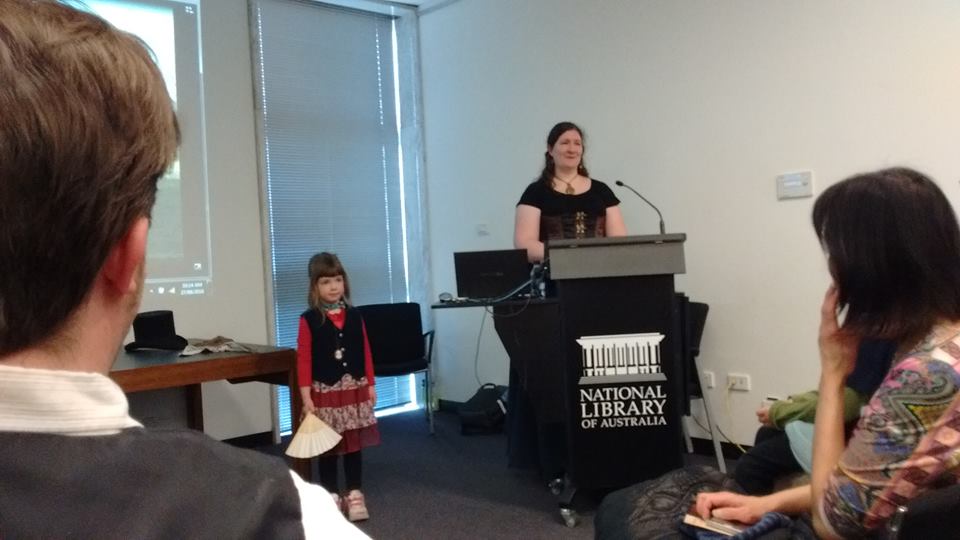
Clothing is tricky while I’m still waiting for my stomach muscles to be put back together (not helped by weird sensory overstimulation stuff that tends to give me panic attacks if I wear new clothes), but I’d had an idea (on Friday) to adjust a favourite skirt, and that very much improved things for me.
My other main panic was that I’d simply forget to bring something essential. I started putting things in the car last Thursday, and although there were certain things I meant to do and didn’t, all the important pieces (such as a copy of the book to give away to the best costume, and having my kindle prepped on the podium for my reading) were in place.
This was all very much complicated by the fact that I’d gotten overenthusiastic and decided to write and run a Live Action Role Play game inside Questacon after the launch. But that’ll need its own entry 🙂
The tea duelling and catering was complicated by the fact that no outside food was allowed, and no food was allowed in the room. That meant paying a huge sum to the cafe (which reserved tables for us and did a great job from beginning to end) and having biscuits that were fresh and delicious but not the right kind for duelling. Although the cafe staff were excellent and the location classy, the lack of ability to bring in a pack of plain dry biscuits was annoying. Still, it was entertaining and it looks great in pictures (useful for media coverage, which is useful for selling books, which is the point). And even though we under-catered, most people were so distracted by the duelling that they didn’t eat or drink at all.

The waltzing was a huge highlight. I had one couple primed to lead the way, and Louisette is an enthusiastic amateur. I figured I’d waltz with Louisette while my dancers hopefully lured a couple or two to join them over the course of the piece.
Actually, I danced with Chris the second the music started, and several other couples willingly took to the floor in an instant. The space was perfect (everyone moved the chairs back); roomy enough to dance without feeling either crowded or lonely.
It’s been a long time since Chris and I waltzed, and it was a lovely moment for both of us. I found out later that one of the other people dancing was stepping out (invited by a nearby acquaintance because Canberra is like that) for the first time since major surgery, and it made her realise she might be healthy enough to dance regularly again soon.

Adrenalin does wonders in carrying my wreck of a body through things (in fact that’s probably part of why I do things like this—for a while, I feel normal). My muscles were freaking out last night as the adrenalin wore off, and today I’m weirdly sore in a dozen places (hence the nurofen). Luckily I’m not involved in the rest of the Canberra Writers Festival so I don’t need to do anything more strenuous than writing and napping for the rest of the day.
I still can’t quite believe how many people came.

The launch was as close to perfect as it could be. The festival, venue, and volunteers were all top notch. Ultimately I wouldn’t change a thing.
The Adventures of Pirate Captain Louisette
My four-year old daughter is an excellent storyteller, and I’ve had an idea for a while of helping her create her own story. Since it’s Book Week this week and she happens to have a pirate costume on hand, I was inspired to take action. I asked her some prompting questions like, “How can we show in the story that the pirate captain is brave?” and, “What if the rope isn’t long enough?” and the classic, “And then what happened?”
I took notes, wrote it up, and took a bunch of photos of her and TJ to supplement the photos we already had (mostly from her “Pirates and Mermaids” birthday party), then spent hours cutting and gluing them into the story. One of my friends has let me use his photos (including one with a pirate hat), so he got yet another dramatic role.
Of course I was careful to put her name on the front, so after I read her the finished tale this morning she went into school saying, “It has my name because I’m the author!”
Without further ado, here’s the story (with a few of the photos I used):
THE ADVENTURES OF PIRATE CAPTAIN LOUISETTE
Once upon a time there was a good pirate captain called Captain Louisette. She loved to borrow books and read them.

Pirate Louisette was a good person and a brave one, and very quick when she steered the ship. She had a new crew member called Gerin, who was shy.
She said to him, “Hello! Don’t worry. We’re good pirates.”
Gerin felt better and made new friends.

One day Gerin fell overboard!

And there was a shark!
Pirate Captain Louisette grabbed a rope and threw it overboard for Gerin to grab hold.
It was too short!
Pirate Captain Louisette grabbed a longer rope and threw it overboard for Gerin to grab.
He still couldn’t reach!
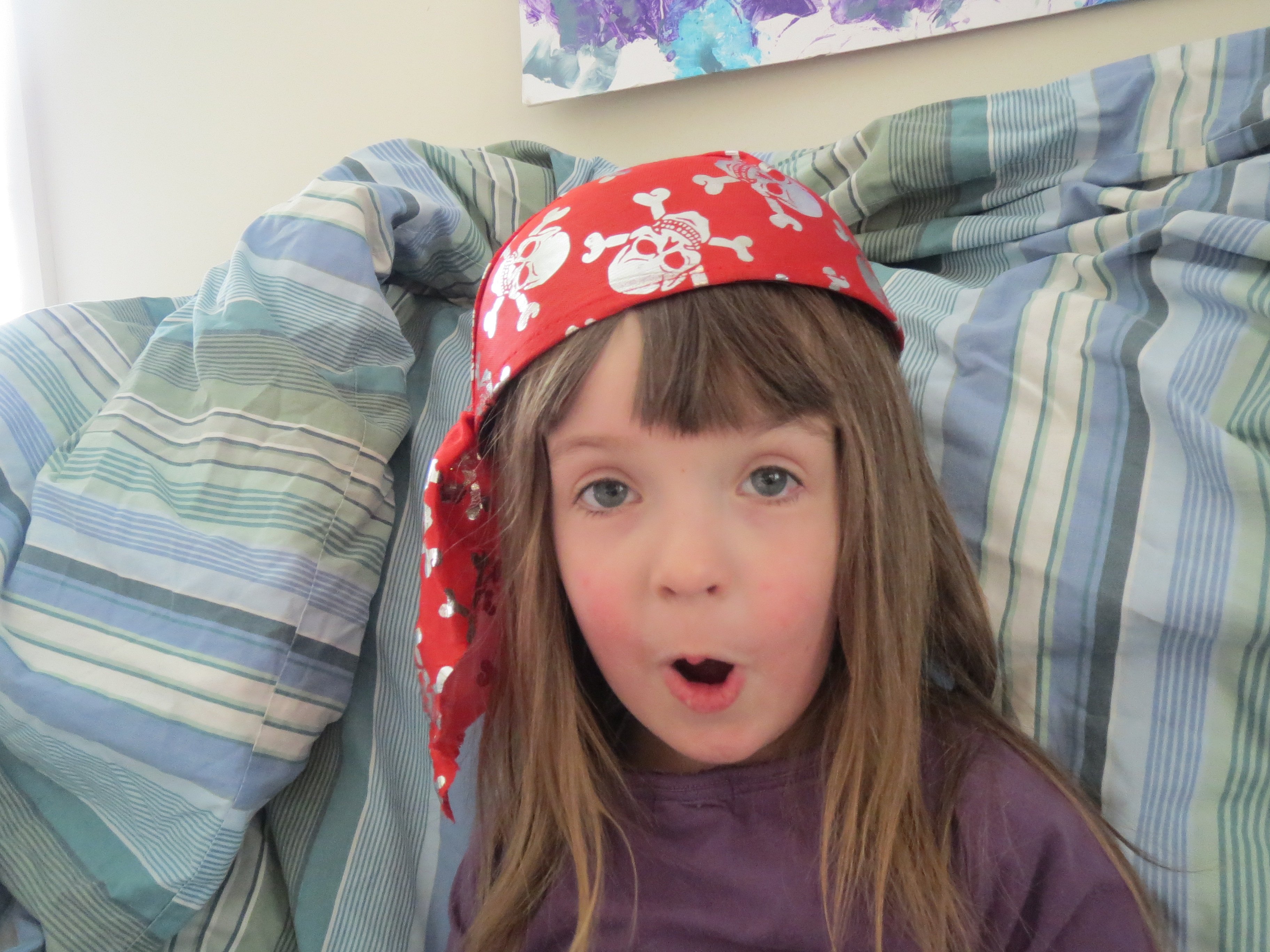
Louisette quickly put on her diving suit and jumped overboard to rescue Gerin from the shark!
She grabbed Gerin’s hand and pulled him really super hard, as hard as she could. She pulled him away from the shark and they swam quickly to get back on the ship.
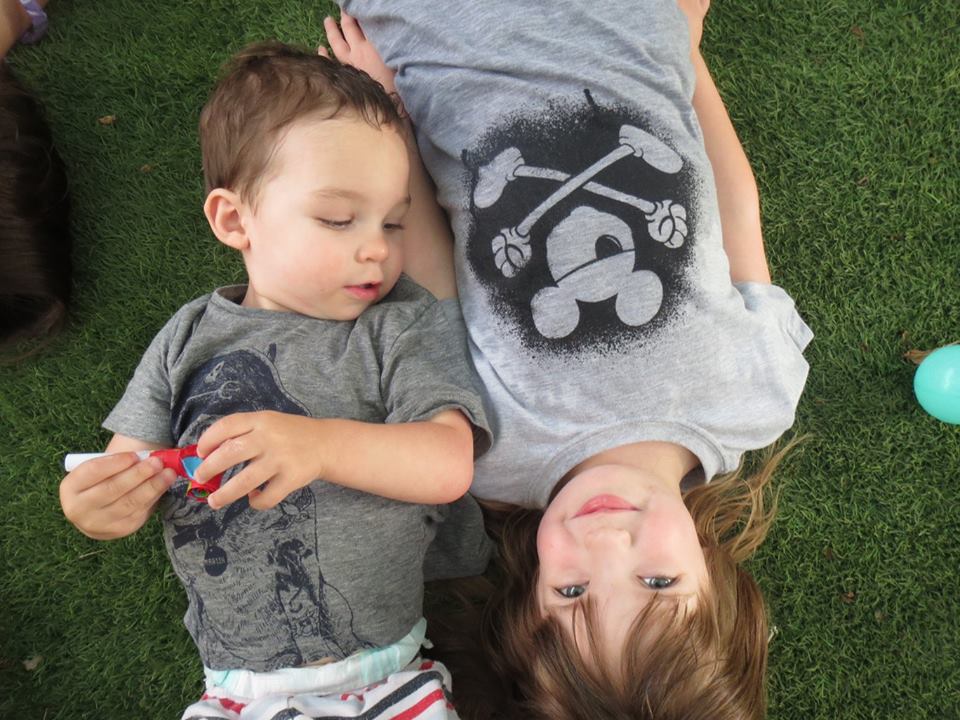
Pirate Gerin was bleeding from where the shark bit him so Pirate Captain Louisette put a bandaid on him.

Then the shark had nothing to eat and it was hungry. Pirate Captain Louisette grabbed some fish and threw it into the water for the shark.
The shark swam super fast and grabbed the fish and ate it.
Then Pirate Captain Louisette sailed super fast away from every single shark.
She saw another pirate ship. It was bad pirates!
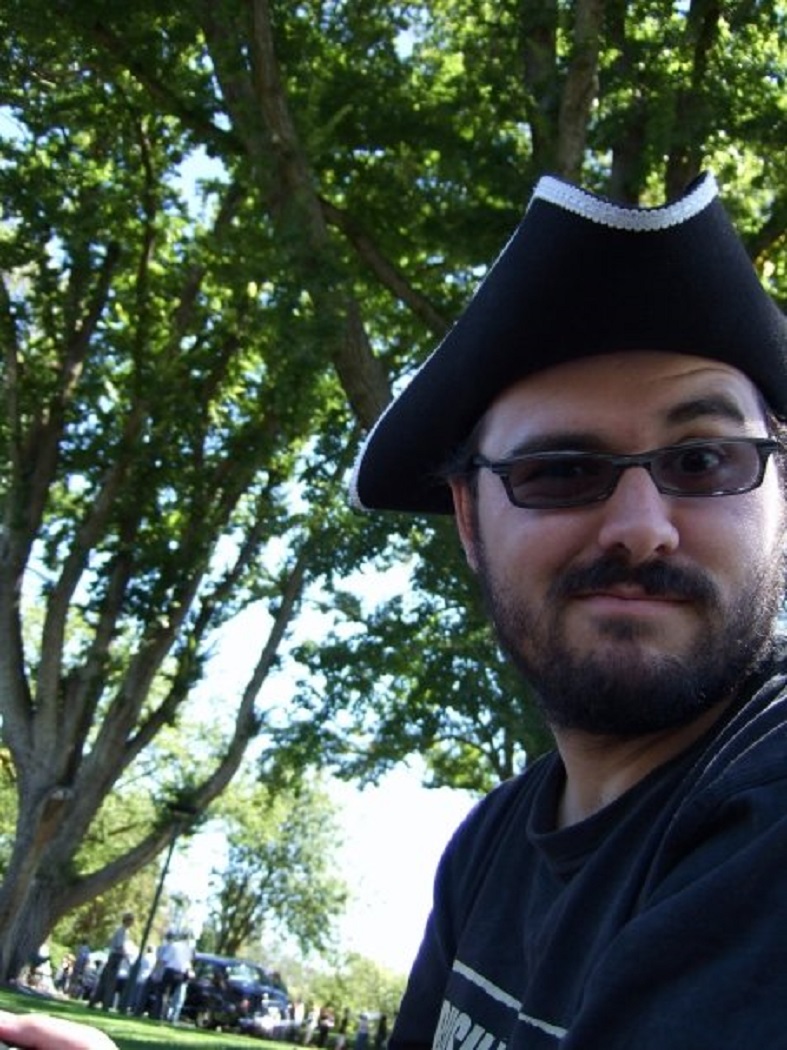
They sailed very close to her and said, “We’re going to take your crew!”

“Hide!” yelled Pirate Captain Louisette, and all of her crew quickly hid.
Then the bad pirates boarded her ship! They were going to take the ship and all her crew.
“Quick!” Pirate Captain Louisette yelled to her crew. “Put your diving suits on and jump into the water!”
Pirate Captain Louisette put her phone and her books in her handbag so they didn’t get wet.
All the good pirates jumped into the water. Gerin was brave just like Pirate Captain Louisette.
The bad pirates took Pirate Captain Louisette’s ship… and she took their ship!
She quickly sailed away from all the bad pirates, and the sharks. She called them on her phone and said, “Nyah Nyah Nyah! We took your ship!”
Pirate Captain Louisette’s new ship had a dog, and it was her favourite animal.
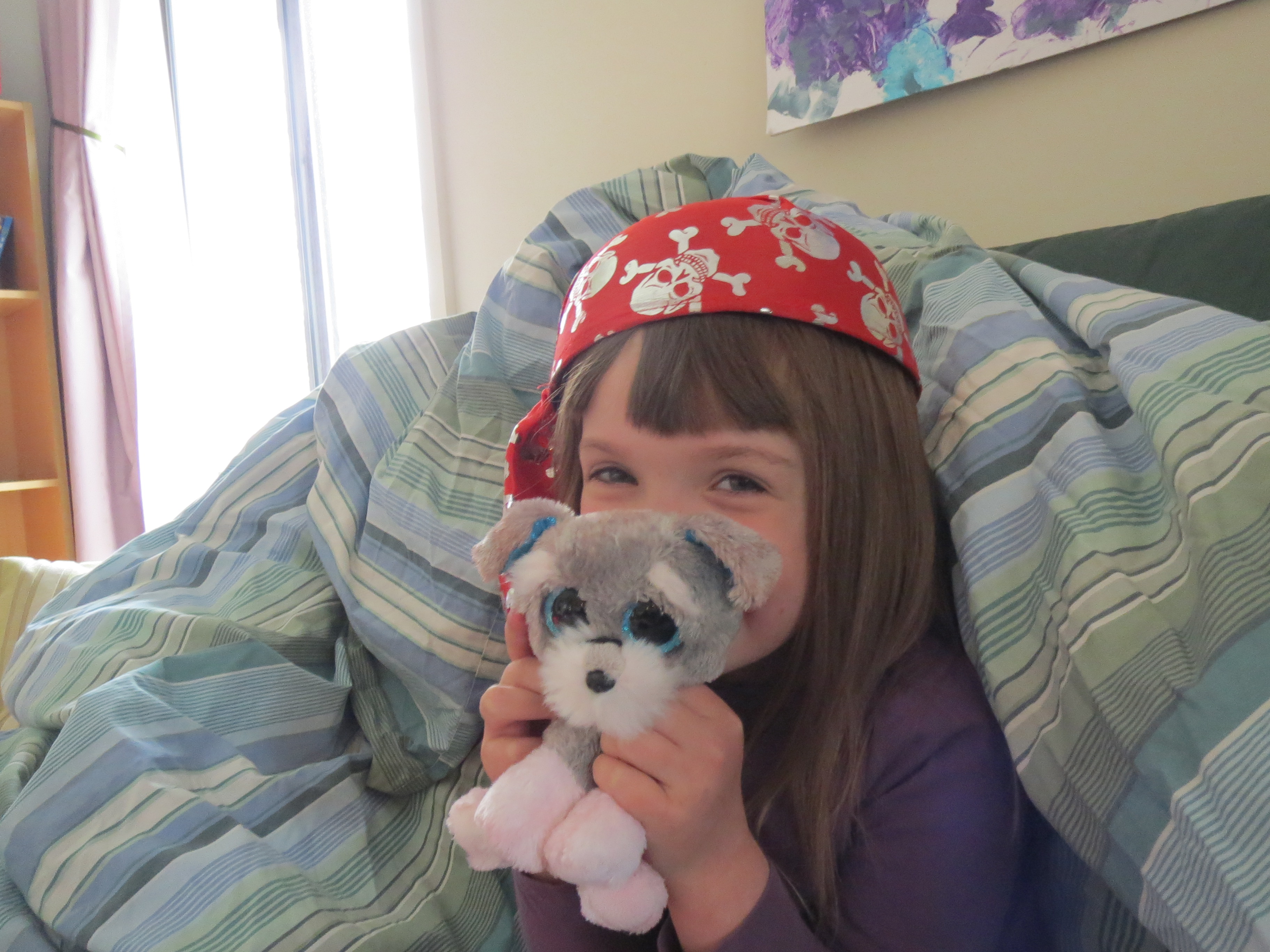
Pirate Captain Louisette looked down and saw mermaids swimming around in the water playing tag.
She called out, “Look up and stop!”
They heard her and they did stop.
The mermaids were scared, because they thought Pirate Captain Louisette was a bad pirate.
“Don’t worry!” said Pirate Captain Louisette. “We’re good pirates!”
The mermaids were still scared, so Pirate Captain Louisette put on her diving suit and jumped in the water to play tag with them. They all had fun!

THE END
Book Launch
It’s a week and a day until HEART OF BRASS is officially launched here in Canberra, as part of the alarmingly enormous inaugural Canberra Writers Festival.
Saturday 27 August
10:00-11:00am
Ferguson Room, National Library
My friend and fellow Canberra fantasy author Robbie Matthews will be doing the formal introductions and playing the book trailer before handing the lectern (there’s a lectern) over to me for the shortest author talk and reading ever (I get bored and/or panicked at normal book launches).
Then a good-looking pair of my friends shall dance a display mazurka, followed by a waltz that anyone who wishes can join (I know I will).
I shall award prizes for the best dressed (in Australian and/or steampunk garb):
1st: A physical copy of HEART OF BRASS
2nd: A slimfit size 16 women’s T-shirt with a brass heart design on it (if one of the best three looks like she’ll fit it then she’ll coincidentally win 2nd place).
3rd: A digital copy of HEART OF BRASS
After that we’ll head into the foyer for signings, snacks, and tea duels.

Tea duelling, presided over by a member of the Airship Sirius crew.
Thus endeth the launch.
A small number of people will then begin a special (and quite expensive) story game that begins in the library and quickly heads over to Questacon (there is ONE PLACE LEFT if someone else wants to join in—talk to me asap).
Incidentally, if you like your books scarier, you can stay in the National Library for Kaaron Warren, who will be launching her latest novel at 11:00am in the Ferguson Room.
Out now in glorious 3D
HEART OF BRASS now exists in physical form. I’ve seen it. The first time I had a book accepted for publication was sixteen years ago (and it never happened). I’ve had another book accepted for publication (contract and all) since then, and it isn’t published yet either. So you can imagine that it still doesn’t feel quite real. But it is.
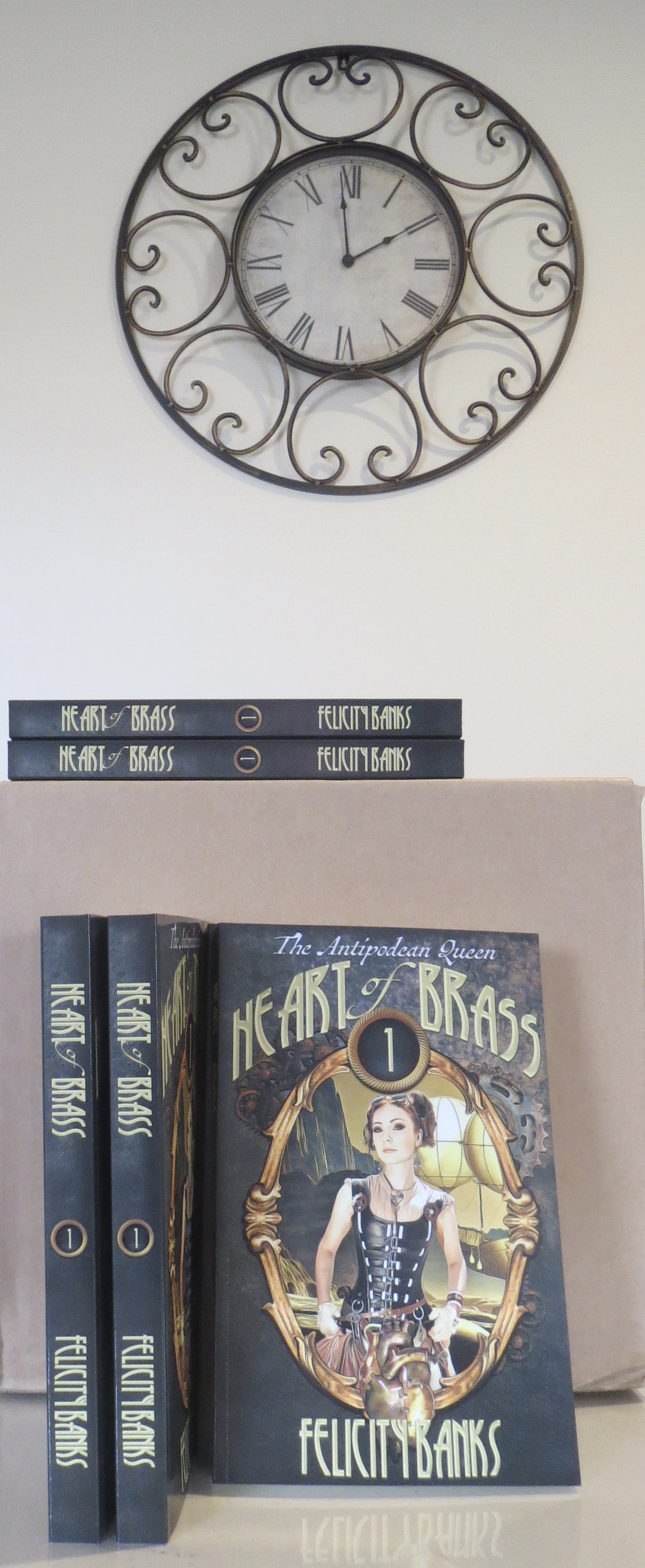
There they are: my books, in my house.
Either that or I’ve gotten a LOT better at photoshopping, and have been doing it in my sleep.
I ordered a box full of my own books so I could more conveniently sign and deliver them to various local friends (and some not so local). My kids both love the postal service, so I decided to see how they reacted to opening the box with me. Louisette has seen the cover pictures a bunch of times, and TJ is still young enough that he thinks every picture of an adult female is me (a fact I exploited shamelessly for this video).
Here we all are:
Saving Real Lives With Fictional Heroes
How did people cope with misery and trauma before they had video games and Netflix?
Exactly the same way—with stories.
One of the brilliant things about fantasy is that already-universal themes of good versus evil, overcoming impossible odds, or falling in love feel even more universal to the reader. The mutant powers of the X-Men universe symbolise different things to different people at different times and places. (“Have you tried… not being a mutant?”)
I’m typing as my four-year old daughter watches “Frozen”. I just paused it (with her permission!) to ask why she likes this movie.
She said, “Because in the end it’s good.”
The parents just died—but my daughter knows it will be all right.
I’m not a fan of Disney constantly killing the parents, but maybe it’s sort of okay. We all lose our parents both symbolically (when they fail us, when we realise that we can no longer rely on them) and literally (hopefully not as children). It seems too awful to survive, but Disney tells us over again that “in the end it’s good.”
There’s a vital truth within the fiction: this is not the end. Keep going. It gets better (or in some genres, not “better” as such, but different).
Of course, this is also why it’s important to have female-led films, and even (*gasp*) films with non-Caucasian heroes. Because putting the reader in the story is essential.
All of which was inspired by this article on the character of Garibaldi in Babylon Five.
Both of my kids loved pretending to be animals (especially fierce ones) before they could talk. There was a story we told over and over again:
Kid: Raar!
Mum: Eek!
Both: Laughter.
Babies are small and helpless. They realise that at a surprisingly young age. But their imagination very quickly catches up and tells them, “Everything in your life so far has taught you that you are weak and have no control over your life. But you can be a hero. Everything is possible.”
I’m in my thirties and have been crippled by mental and physical illness my entire adult life. It seems hopeless. My experience and my (broken) mind both tell me that the world is full of darkness and despair. But I don’t believe that. My own stories tell me that things (mostly) get better, and when they don’t get better they get different. And my own life experiences tell me that stuff is constantly happening that is far less realistic than any magical epic.
Apart from anything else, I’m already living in the “happily ever after” of my own personal love story. Plus I made two people exist out of basically nothing.
I CREATED LIFE!!!!! MWA HAHAHHAHAHAHA!
*ahem*
So fantasy and magic and happy endings don’t strike me as unrealistic after all.

 Felicity Banks