Ah, l’Hospital!
For those who don’t follow me on facebook or twitter, I’m in hospital (again). Just as it looked like I was in the clear post-operatively speaking, I developed an infection.
It so happens that the infection is right in a patch of my belly that’s currently completely numb. Which possibly explains why I’ve been in almost no pain this entire time (I noticed it on Christmas Eve, but thought it was just a rash).
Yesterday I had a small operation to help fix the infection and (warning: the rest of this paragraph is medical and icky, but fascinating) the wound was left open and gaping for a while, as I waited to have a special medical vacuum attached to it. I used my kindle camera to have a look and got a huge shock at what I had thought might be a belly button-sized wound. It’s long, and wide, and deep. It’s also extremely clean as far as the human body goes, and I could clearly see different levels of. . . well. . . me. I was somewhat disturbed and quickly replaced the sheet covering it, but then realised it was a fab writing opportunity and took a picture. Several people have since requested to see it, so I’ve emailed them privately. (If you want to see it, email “fellissimo@hotmail.com” with the subject line “Gaping belly wound please”.)
It’s also inspired a significant dramatic scene in one of the stories I’m currently working on. I can’t tell you more than that, except that I ran the entire scene past a nurse and she made lots of the right kind of impressed noises. (Also, I was not on morphine at the time.)
I very much enjoyed my morphine experience once again. Some people throw up and/or feel awful after a general anaesthetic. I feel FANTASTIC. It was rather hard not to over-compliment all the wonderful staff, and I struggled with conversation due to not being able to hold info in my brain for more than about five seconds at a time.
The following morning I had a follow-up visit with the surgeon who asked me if I remembered speaking to him and his team after the surgery.
No, I did not. I definitely remember being on morphine and talking to people, but there is a whole period of time before that fully-conscious part of the evening that I don’t remember at all. He said I was, “Two vodkas over” and “laughing at nurses”. I suspect I may have made some overly affectionate comments towards all the staff (male and female nurses are both awesome) and he chose to spare me the knowledge of exactly what terrible things I said.
Silly man. Of course I want to know exactly what terrible things I said! I’ve never been blackout drunk so THIS IS MY MOMENT TO SHINE.
I saw a different doctor this morning and asked him if he was there at the time. “No,” he said. “Sadly. It seems I missed out.”
Fingers crossed I get some embarrassing and inappropriate quotes of my drugged-up self before I have to go home.
As you can tell, I’m in high spirits and feeling remarkably well (seriously, I’m not even taking panadol today because I just don’t need any pain relief). I’m going to stay attached to the medical vacuum for quite a while, and I’m still waiting on a swab result to get me a more targeted antibiotic—but I have my own room with a gorgeous view of Telstra Tower, The National Arboretum, and the helipad, and I actually had to force myself to not dance when a song I liked came on the Tv this morning.
Wacky stuff.
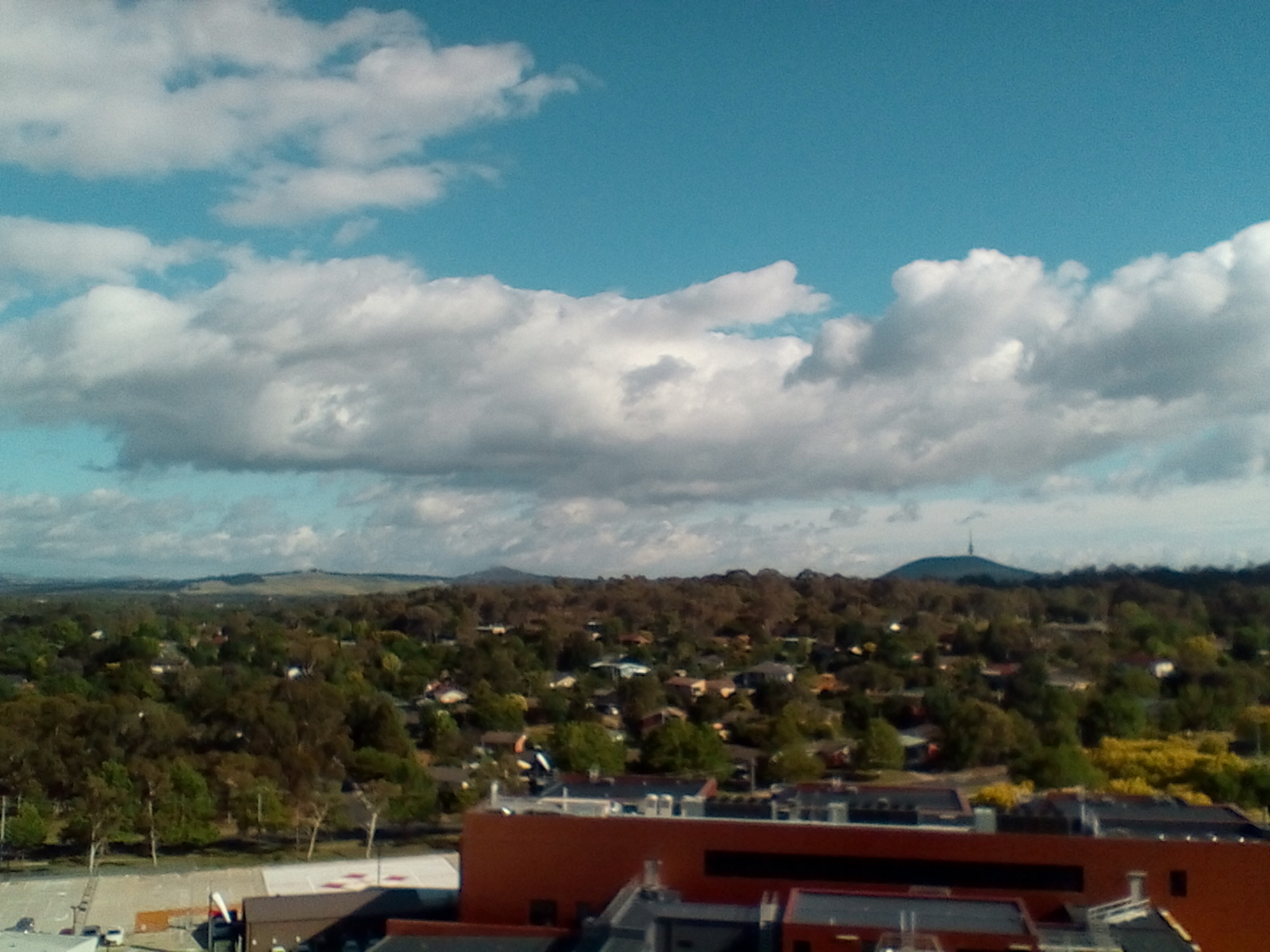
You can see why this floor is called ‘The Penthouse’.
Also, I have a silver dressing on/in my stomach wound, which is extremely cool given that my steampunk universe has magical silver that can assist with supernatural levels of healing. (Based, of course, on silver’s real-world antibacterial qualities, which is why it’s in me right now.)
My actual surgery was at John James Private Hospital, but my official surgeon is away on holiday so this entire infection is being dealt with in Canberra Hospital, which is public. So I’ve been able to compare notes with… er… myself.
What the private hospital did better:
- It’s made up of almost all private rooms, and you can pay a (relatively) small amount ($70/night when it costs over $1000/night already) to make sure you’re alone.
Not to put too fine a point on it, but sharing a room with a random stranger (who is guaranteed to not be at their best) is always going to suck. The best-case scenario is that the 2 (or more) of you get on like a house on fire, and relieve one another’s boredom. But even that would freak me out thanks to the magic of social anxiety.
When I was at the private hospital I also had a private ensuite, which of course significantly reduces the grossness factor. (I also struggle with anxiety when showering anywhere other than my own ensuite at home, but sharing with sick/bleeding/incontinent people—or sharing while sick/bleeding/incontinent is even less fun.)
My roomie here at Canberra Hospital was an older man who was clearly very ill and in a lot of pain. He spent a lot of time moaning aloud, and would swear (and then apologise—he’s clearly also a very nice man doing his best at a miserable time) at almost every procedure (including really basic stuff like blood tests and cannula flushes) or movement. He was also in the bed by the window, which meant I didn’t get to see the view (not anyone’s fault of course, but natural light is a very helpful thing). He isn’t fully aware of where he is, or who staff or family members are, and talked to himself a bit. All this was stressful for me but part of the joy of hospital life. Then one day he was talking to himself about wanting to be violent and trying not to be, and I decided that he was a (tiny tiny tiny) potential danger to himself and others.
I told the staff that I thought he should have his own room, and why. They said that wasn’t an option, which shocked me utterly.
This man has been in hospital for weeks and hasn’t done anything the least bit violent. He’s also got a catheter and is basically unable to leave his bed. So you can see why staff immediately assumed I was over-reacting.
I went to the lounge and tried to sort out whether I was being rational or not. The thing is, as a fiction writer everything in life goes through a story filter in my head. This man said he felt like he was being tortured. He wasn’t sure what country he was in. He didn’t recognise his own family, or the nurses. And he was understandably angry.
I’m mentally ill too, and keenly aware that “mental illness” is blamed for a bunch of crimes (while the mentally ill are far more likely to be the victims of crime than the perpetrators).
But.
Watch any movie with foreshadowing, and you can see the big disaster coming from miles away. You never get a story where a crazy old man talks about violence and then successfully controls himself. You get a story which ends with Hospitalised Mother Of Two Killed By Delusional Room-Mate After Requesting A Different Room.
Long story short, I applied the same strategy I apply to every important hospital issue: I waited until the next shift came on, and told them exactly the same thing.
They knew the man would hate to be moved, so they moved me instead. And voila! I have a private room (the only one on this floor), despite assuring everyone over and over that I’m absolutely fine and don’t deserve special treatment.
It’s sooooooo gooooooood. TJ in particular was born loud, and it was very hard to host him while trying not to bother the patient on the other side of the curtain. The gentleman above also had lots of visitors and I constantly found myself inadvertently (or vertantly, who am I kidding?) eavesdropping on everything they said.
It’s good to be alone.
2. Food. Obviously. Everything I ate at John James was nice. Not all of it was 100% to my taste, but it was all decent. Some of it was seriously good.
Yesterday for breakfast I was intolerant to literally everything on the plate except a slice of cold toast and some low-fat margarine. So that was my breakfast. No milk, no protein, nothing that was enjoyable to eat.
The vegetables here are microwaved frozen vegies; the meat is usually a little nasty; the porridge would be better used as Kindy glue and the backup sandwiches (kept in a fridge for people like me that have been fasting and needed something to eat between normal mealtimes) recalled that famous New Yorker story “Cat Person”, in the following manner:
“It was a terrible sandwich, shockingly bad; Felicity had trouble believing that a grown human could possibly be so bad at making sandwiches.”
One sandwich was cheese: plastic cheese with a thick layer of cloying margarine. The other was “Mayo chicken”. The mayo was bad, the chicken was bad, and the bread was going stale, but it was the combination of finely-minced chicken and still-very-noticeable chunks of cartilage and bone that truly surprised me. I’ve never encountered chicken bones in a sandwich, let alone one that had apparently gone to the trouble of mincing up the meat. Was it made of chicken scrapings from a sausage factory floor?
I cannot confirm or deny that statement.
This was my lunch today:
Take a moment to guess what it is. Milky tea, and some kind of meat with an ice-cream scoop of gently flecked mashed potato?
The mug is mushroom soup. It tasted very mushroomy, with just the slightest hint of actual real mushroom—perhaps as much as 2% of a physical mushroom, finely grated and scattered into the mushroom-flavoured broth. It was actually pretty nice, and it was a good thing it was low on actual vegetables since I’m pretty darn intolerant of the shrooms at the best of times.
The other is a veal roast with gravy and “cheesy potato”. The lunch and dinner menu always feature microwaved frozen vegetables, and various forms of (alleged) potato.
Potato is actually the one vegetable I can eat safely, and despite the carbs it’s got a lot going for it. It’s all powdered potato, but the “cheesy” version was definitely superior to the ones that are pure powder or microwaved slices of boiled spud.
I feel a little sad as I wonder how many baby cows were slaughtered in order to be burned and smothered by (alleged) gravy throughout hospitals all over Canberra today. I had some of the non-burned bits and they were okay, although the weirdly viscous movement of the gravy was a little disturbing (I’ve made powdered gravy and it doesn’t do that, so what could create such an effect? Did it get mixed up with the “rolled oats” glue from breakfast?)
Oh! The other food difference is that it was quite easy to convince people here that I’m better off with the non-diabetic menu (which tends to have more protein and less stuff I’m intolerant to). At John James I’d take advantage of any confusion and squirrel away real butter whenever someone accidentally gave me the good (ie non-diabetic) menu.
I also had a slice of nice white bread and real butter at lunch, which isn’t super healthy but certainly is delicious.
3. Respect/Meds
But here’s something interesting: I’ve been treated much more respectfully here than at John James. On one occasion at John James two nurses came in to personally administer my medication while I was on the loo (rather than coming back in a few minutes). Given how overworked nurses are, I’m mildly sympathetic—but after having two kids I feel like far too may people have treated my body like public property and I’m pissed. If I can dress and shower myself, I want to do so without company thankyouverymuch.
A nurse at John James disapproved of my method of bringing in my (very confusing) array of medications, and she confiscated them all and ordered replacements from the pharmacy. The replacements looked different and I was unable to keep track of important meds like diabetes stuff, migraine stuff, and anti-depressant pills. As has happened every single time I’ve been in hospital, nurses tried valiantly to keep perfect written records and give me all my meds at the right times—and they failed utterly. Although the paperwork system is a great plan, it doesn’t work in practice and that is dangerous. (Obviously, letting me take my own pills while high on morphine isn’t going to be safe either.)
Here at Canberra Hospital, nurses have over and over again LISTENED to me and let me take my own pills at the appropriate times. This is bizarre and wonderful. (And didn’t happen here at Canberra Hospital when I was pregnant and came in with premature labour… but of course, pregnant women be crazy so people are always extra patronising during such times.)
I have a theory that patients at a private hospital are fussier and more demanding, so private nurses are more likely to have grown hard and dismissive of patient concerns. Because, although the vast majority of staff at John James were great, my overall experience with staff here at Canberra Hospital has been better, kinder—and MUCH more respectful.
Having said that, I’d kill for a private room.
I mean, not really KILL…
Or would I?
There’s often a wonderful eerie quality to hospitals, as I meet yet another shift of new people tasked with keeping me alive, as my medical vacuum says “eep” to indicate it’s just been unplugged, as I smile politely while someone takes four attempts to hit one of my veins with a syringe, or as I push my drip stand down the empty hall at 2am, shuffling in and out of pools of fluorescent light.
Once again, my biggest worry is recovery. Small children, school holidays, and major surgery do not mix well.
Kids get bored.
Mums run out of ideas.
Mums do what they have to do to get through the day without excessive screaming from/towards the children.
Mums go back into hospital, and the cycle starts again.
I don’t really have a solution. Chris may be healthy, but he has his limits too—and he’s back at work this Tuesday. I have received overwhelming amounts of support from friends both close and barely seen, and that frightens me as well. I’m painfully aware that my normal “good” level of health isn’t enough to do the stuff people have done for me (such as babysitting my kids for a whole day, or donating money). It’s never easy to believe I have value, as a woman/fat person/depressed person/writer/disabled/low-income person. Hopefully spelling it out here will help me to remember it’s society that is broken and wrong, not me. My personal worth can’t be linked to societal norms or I’m screwed.
The good news is that I may still be able to enrol Louisette in holiday care during January. Because boy howdy do we need it.
Dear Star Wars: Here is Your Script
I don’t often write fan fiction.
So this kind of happened as I wrote my thoughts after seeing “Star Wars: The Last Jedi” (I had so many feels it took me days to write and is 3000 words long.) It’s a VERY interesting film for writers, and so of course I analysed it in that vein.
The full (very spoiler-y) article is here, on a shiny new forum I’ve set up for the “Murder in the Mail” series. You can read the article immediately, but you need to register to comment. (If you register, you’ll get about three emails a year about the “Murder in the Mail” series, unless you unsubscribe.)
The “Murder in the Mail” series is a set of cozy mystery stories (one story so far, to be released in August/September 2018) told entirely through letters, postcards, objects, and art posted to the reader over the course of eight weeks. The forum is for fun (discussing things like Star Wars, and so on), and also for readers to talk amongst themselves and try to figure out the identity of the murderer before the final letter arrives.
There is (arguably) a VERY mild general character-based Star Wars spoiler below.
Basically I figured out the One True Way to resolve all the possible romances of the current Star Wars trilogy. Because I am a genius.
Insert anti-spoiler kitty!

Rose: *Takes Rey to a storage area where they can talk privately* So you’re a big hero, just like Finn. I guess you guys are… you know…
Rey: Um. *blushes furiously* Well I might sort of kind of think of him a little tiny bit that way. Maybe.
Finn: *Emerges bleary-eyed and shirtless from under canvas, and clutches it around his hips so the girls don’t see EVERYTHING* Rose? Rey? What are you doing here?
Rose and Rey: *wide-eyed panic*
Rey: You. . . heard us talking?
Finn: Me? Nope. Nuh-uh. Didn’t hear a thing. *Accidentally-on-purpose jabs his elbow into the canvas*
Poe: *Emerges bleary-eyed and shirtless from under canvas, clutching canvas around his hips, and hastily donning That Jacket* Oh, hi Rose. Hi Rey.
Rose and Rey: Ohhhhh! Er, we’ll just be going now.
Rose and Rey: *become best friends*
Finn and Poe: *adopt half a dozen children and live on a porg farm forever*
Pirate Ball
It’s official. I can wear corsets again.

And with three book launches this year, it’s not a moment too soon.
Do you live in Australia?
Do you live reasonably close to Canberra?
Do you love the Narnia books?
Do you love pirates?
Do you love live music?
Do you love dancing (and/or watching others dance)?
Do you love dressing up (and/or seeing those who do)?
Do you love chocolate coins and fairy bread?
Do you love prizes?
On Saturday February 17th 2018, the first book in my tween magical pirate trilogy will be released with an enormous free PIRATE BALL hosted by the epic Earthly Delights Historic Dance Academy.
They have agreed to run a pirate ball for their monthly extravaganza (7pm-11pm, $25) AND a free mini-ball/book launch for me from 6:30-7pm with lots of great beginner dances for all ages. My kids will be there, that’s for sure.
There will be prizes for best dressed, and for the treasure hunt.
There will be live music.
There will be professional dancers scattered among the crowd.
There will be wonderful and enthralling outfits both piratical and historical.
There will be free food.
There will be my Rather Excellent fantasy pirate novel, The Monster Apprentice, on sale and ripe for signings (along with Heart of Brass and Silver and Stone, naturally).
Date:
Saturday February 17th 2018
Location:
Canberra Baptist Church Hall, Currie St, Kingston
Times:
Free book launch and mini-ball 6:30pm-7:00pm including prizes and activities.
$25 full pirate ball 7:00pm-11:00pm

Avast! Unlock yer daughters and belay any other plans!
Feel free to RSVP in the comments, and let me know if you’d like me to wrangle some discount ball tickets for you. I might just be able to find some… one way or another.
New News!!
To get discount tickets to the full-length ball (7-11pm), go to:
www.earthlydelights.com.au/upcoming
Adult Tickets are $25 at the door
Online Tickets are $22.50 for adults
If your friends buy online using the code PIRATES they can buy them for $20.00 each
Sad, Bad, Mad: Cat Person
The New York Times published a short story, “Cat Person” and people have gone a bit nuts over it. Including me.
Minor things first:
*Trigger warning: This article might bring up traumatic memories for some people.
*Cats are awesome and cat people are awesome. Cats are not the point of the story. (But some of us will lie awake wondering about them all the same. Are they real? Am I? Are you?)
*The cats are definitely not real. I’m sure of it now. Cats feign disinterest but would definitely come to investigate the smells of a new person in their territory. Which means Robert’s creepiness factor just went up to eleven. Fake cats? That’s bonkers.
*There’s a fascinating interview with the author here.
*Yeah, that excessive close-up photo that goes with the story is super gross. I have to put my hand up to my screen to block it out whenever it comes up.

#fixedit
*Also, the story gets really into fat-shaming Robert, which is cheap and gross and suggests immaturity on the part of the writer (as well as, of course, the character). The writing clearly mocks the viewpoint character for her various delusions, but Margot’s disgust at Robert’s extra weight is written about non-critically. It’s about as deep as having an evil ugly witch who is baaaad.
*Yes, gay folks are most welcome to have a “Lol, you poor sad heteros!” moment. Because although a lot of the story does apply to anyone attempting to negotiate dating, the deepest, scariest level of the story is absolutely about what women face when dating men.
*A lot of men feel disturbed and defensive about the story, or simply feel that it’s stupid. Although all art is subjective, most of the men that dislike the story are missing that deep, scary level of the tale. I’ll address the valid points of negative male reactions later.
*It is deeply saddening for speculative fiction lovers that no one in the story turns out to be even slightly feline. Agreed.
*The main characters’ names, Margot and Robert, make me think of Margot Robbie. This is never a bad thing.
Summary (including spoilers)
Margot meets a guy who is pretty average but witty in text form. They eventually have a kind-of date with very bad sex and then Margot texts him (technically her room-mate texts him) to end things, and he calls her a whore.
The deep, scary bit that hurts to think about
There is an underlying tension to the story that a straight female reader (or anyone in a non-male body who has dated a man) has a visceral response to: While on the surface the relationship is mundane (and in the thoughts of the main character it varies as she judges and re-judges the situation), the third layer is the knowledge that Robert has the physical power to rape or kill Margot at virtually any time (and could probably get away with it too).
Women
live
with
this
knowledge
every
day.
Here’s the worst part, the part the story doesn’t even touch on: When a women is a victim of violence, it is almost always at the hands of someone she knows. Someone she trusts. Someone she isn’t afraid of; not any more. Should I live in fear of Chris, my Chris, father of my kids and love of my life?
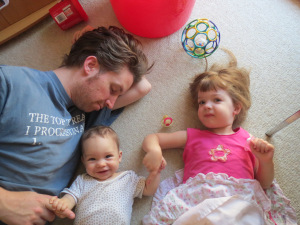
Of course not!
Except, statistically, yes.
Women live in a world where half the people we know are bigger and stronger than us. We are taught from birth to be careful. Don’t go to certain places after dark. Don’t go to certain places at all. Carry mace. Keep your eyes open. Don’t wear certain clothes. Don’t drink too much. Learn self-defence. Don’t show weakness. Don’t drop your guard.
Then at the same time we’re taught how to survive in the living world: Be nice. Don’t say ‘no’. Flirt. Wear heels and makeup. Marry a breadwinner. Have a private bank account. Don’t have a shrill voice. Don’t complain. Don’t be a feminist. Don’t be loud. Don’t be unlikable. Don’t get angry. Don’t cry in public. Don’t show weakness. Don’t drop your guard.
I am an innocent, partly because I choose to be and largely because my privilege allows me to be. I am white; I grew up thinking I was straight; until recently I was able-bodied.
One of my fictional characters (in a deleted novel) leaves her shoes above the high tide line of a beach while she wanders along the water. Her friend asks if she’s concerned about them getting stolen, and she admits that sometimes they are in fact stolen, but she’d rather have to buy new shoes sometimes than to constantly worry about her possessions.
At a certain point, women have to accept that we might get murdered—and then we befriend men anyway.
I met a man online who lives in Adelaide (I live in Canberra). We got to know one another online (as much as anyone can). Daniel visited Canberra, and we began dating. Then it was my turn to visit Adelaide. He picked me up from the airport and drove me back to his house.
Like a lot of Australian cities, Adelaide has sections of well-established bushland, many of them bisecting the city itself. Daniel and I had already joked about how one of us was most likely an axe-murderer, and as we passed through an unlit section of what appeared to be virgin bushland I felt my heart beat faster.
I didn’t rehearse in my head how to throw myself out of the car, or carefully recollect exactly where my phone was in case I needed to call the police. Instead I tried very hard to pretend I wasn’t afraid. Because when it comes to priorities, men’s feelings almost always come above women’s safety.
Now, spoiler alert, I wasn’t murdered. So I was arguably right to be polite. But that knee-jerk reaction to Be Nice At All Costs isn’t just manners—it’s another type of fear. What if Daniel had noticed and been offended that I’d thought such a thing of him, even just for a moment? What if he’d been so offended that he threw me out of the car, or punched me? That instinct to Be Nice—Or Else is hugely powerful and damaging. That right there is the reason women are frozen in terror when a man masturbates in front of them. He’s already crossed so many boundaries that trying to get away might just be the catalyst that leads to him doing so much more. It also applies to so, so many other awful situations: getting groped, getting overlooked for a deserved promotion, getting interrupted mid-sentence. Women’s default setting is less powerful, and the imbalance gets wider in a thousand different interactions every day. Because men don’t want to give up power, and they push back against women who try to change things.
It’s difficult for men to understand what it’s like from the other side of the gender divide. It’s not a fun think to think about. Quite often, a man will suddenly have a light turn on in their head when they have a daughter: Suddenly they understand the terrifying vulnerability of women from a position where it matters to them.

I asked my mother once if she was scared of being raped. “I used to be,” she said, “then I had daughters. So now I’m afraid of my daughters being raped.”
I hesitated to include a picture of my daughter in this article. You all know why. Yet I didn’t pause for even a second when including a picture of my son. Of course not.
Back to the story. . .
The story plays with the conventions of three different genres, keeping the reader guessing since those genres have very different endings.
One is a romance. I felt myself give that little ‘Aww’ smile as certain beats were hit: The cute meet over Red Vines; the nearly-missed-it moment when the girl doesn’t really know why she gave the boy her number; the tension at silly misunderstandings. Margot gives Robert several chances, and for all her flaws I admire her for that. That genre always ends with a critical romantic moment (a wedding, or meeting the parents, or a first kiss) that indicates that the pair will live happily ever after.
As it turns out, this is not a romance.
The second genre is comedy; there is clearly a slightly dark, wry, self-deprecating humour as Margot’s expectations and opinions about Robert shift and change from moment to moment, only to be ultimately let down by the reality. This layer of the story is expertly done, highlighting the self-delusions and awkwardness of dating in a way that made millions of readers say, “That is the truest story I’ve ever read.” The comedy genre climaxes (oh, lolz) with the awkward horror of the sex scene.
The third genre is horror. When it becomes clear that it’s not a romance, the reader is left not knowing if this is a comedy or a cautionary tale. The horror genre ends with violence, usually with a sense that the protagonist has somehow brought it on herself by her foolish decisions. Margot risks her safety by giving Robert a chance—doubly so by going to his house, and any sexually active female (fictional or otherwise) is guilty for the purposes of fictional denouement. A story is sometimes sympathetic to the sexually active heroine, but it will still kill her for putting out. Stories understand, consciously or otherwise, that sex is dangerous for women and not so much for men.
But refusing sex, as Margot wishes she could do? That’s even more dangerous. Because the last thing you want to do is make a man angry. She’s very conscious of the need to soothe and console Robert (before, during, and after their ‘date’) and is sufficiently aware of her own vulnerability that she finds herself unable to figure out how to break up with Robert, even though she knows she must do it.
Is she promiscuous for sleeping with a man she doesn’t want to? Or is she a victim, unable to extract herself safely from a threat? Or is Robert a victim, lead on and discarded by a powerful (better educated, more attractive) woman?
In my opinion, only one of the above interpretations is a ‘yes’ according to the story—but it’s written well enough that the other questions are allowed to be asked.
Angry men on the internet
There’s a twitter handle set up just to repost men’s reactions to the story, mainly because a lot of men don’t understand the fear Margot feels, and/or they relate to Robert as the victim but feel he is portrayed as a monster.

Margot is not a good person. Nor is she a bad person. She is vain, certainly. She lets her imagination run away with her as she tries to figure out what kind of person Robert really is. She flirts at work (an activity that is harmless, but could hypothetically lead to mildly hurt feelings).
This article is getting ridiculously long, so I’ll be brief: Yes, being a man (especially a straight white man) is the lowest difficulty setting in this game we call life (as written about by straight white male John Scalzi, here, including several follow-ups, one of which is here). And, as John Scalzi and others have stated loudly and repeatedly, that definitely does not not not mean that the lives of straight white men aren’t hard or don’t suck. Life has times of suckitude for everyone, and many lives just suck from beginning to end, and it hurts to be in a sucky place and feel like others are telling you:
- Stop whining. My sucky place is suckier than your sucky place.
- Give some of the tiny scraps you have away to others.
- A lot of what is bad in the world is the fault of you and people like you.
All those three things are true of me and my privilege as well. My methods of coping are:
- Trying not to compare my pain to anyone else. That never ends well.
- Giving away a little (money, time, and mental energy) when I can, and trying to be aware of barriers that other people face and I don’t. This also means consciously supporting minorities when I can, and continuing to learn painful truths for the rest of my life. It’s not easy, but it is rewarding.
- Pretty much the only way to deal with this is #2.
Is Robert a baddie?
I. . . I wasn’t sure, but then I reread the story.
The first hint of a red flag is when Robert steps back from Margot’s very mild flirtation “as though to make her lean toward him, try a little harder”. If someone stepped back from me, I would assume they were not into me and nothing more. It probably wouldn’t even be a conscious thought on my part. It’s unclear if Margot is interpreting him this way or if the story is. It’s a very very subtle form of negging.
He calls her ‘Concession-stand girl’ which is either cute or insulting. Could go either way.
He plays it a bit cool with texting, letting her choose whether to keep texting or not. That’s more of a positive sign than negative, and their sharp humour is the one real connection they have. Another good sign.
He kisses her on the forehead “as if she was something precious” which charms Margot but also suggests fetishisation of the big man/little woman dynamic. In both directions.
The silly scenario they play out via their cats involves jealousy and tension. Is that because Robert is the jealous or possessive type?
He sends a heart-eyed smiley at the mention of her parents, which is a good sign.
Then he acts strange and cold after spring break. A red flag on its own, and even more so when it turns out he is jealous of an entirely fictional potential ex (although it certainly shows that he and Margot have imaginative portrayals of one another in common).
It takes longer than it should for him to stop being unpleasant and weird, and it also seems he’s trying to impress her due to feeling insecure about her higher education and youth.
(There are plenty of red flags about Margot, too—particularly the way his grouchy behaviour makes her feel honoured by his vulnerability. That kind of attitude puts her at high risk of an abusive relationship.)
When she begins to cry during the humiliating ID incident, he kisses her for the first time—like her, he is emboldened by vulnerability, even or especially as a flaw. This is a two-way red flag. Vulnerability is good, certainly, but both Margot and Robert are genuinely turned on by it. It’s not intimacy they crave, but power. That’s messed up.
I’ll stop there rather than pick apart the story line by line. Men who hate the story see Margot as more powerful: She is young and beautiful; she is the viewpoint character; she is more educated than Robert.
But is the risk of rejection as bad as the risk of being murdered?
Of course not.
But. . . is the 90% certainty of being rejected as bad as the .001% likelihood of being murdered?
I don’t know.
There are two more points worth making. First, Robert is 34 and Margot is 20. Once again, that gives Robert power. It’s also a big red flag. (Margot guessed he was in his mid-twenties and was off by a decade so this one’s all on him.) There are loads of thirty-something single women, so why isn’t Robert dating one of them? At best it suggests he prefers younger, prettier woman. Given the rest of the story, it strongly suggests he likes all the power he can get—needs it, because he is so insecure he doesn’t stand up straight.
The age difference could be just coincidence (after all, Robert doesn’t realise she can’t get into a carded bar, and is horrified she might be a virgin) except then Robert appears in the same student bar that he earlier mocked. What is he doing there? There are three possible answers. If one is extremely charitable, one could argue he has decided to study (why not? He’s smart—except it’s clearly in the middle of the semester, so no). It’s far more likely he’s looking for a new twenty-something to hook up with. Or, worse, he is looking for Margot. Either way, this is the moment we know for certain that something is definitely truly off about Robert, and while the Secret Service-style exit of Margot and her friends is needlessly dramatic, she is also genuinely afraid. And at this point, that is not being dramatic. Her friends know it, and they know what all women know: there is safety in numbers. That is the only safety women can draw on.
One of my friends was attacked at a bar because her friend was too drunk to protect her. I feel disgust at the men, but I have a burning fury at the woman who abandoned my friend.
Women protect each other. That is the law. That is how we survive.
Here’s an interesting fact: not all that many people are attracted to me. (That’s not the interesting bit.) Of the dozen or so people that ever confessed attraction to me, three were more than a decade older than me.
One of those men I never knew well. The other two both have a very clear pattern of dating younger women. One prefers women who are sexually inexperienced (not necessarily virgins, but women who lack the confidence of a past healthy romantic relationship they can use to spot his patterns of abuse). The other’s self-esteem is strongly based on being helpful, so he tends to be attracted to people who are needy in some way (usually mentally ill, or those who have been abused, or both). When I dated him, I found myself acting depressed and unhappy when actually I felt fine. It took me a very long time to figure out that I was unconsciously adapting to what he wanted in a relationship.
So again, you have older men grasping for power of various kinds over a younger woman. (Dating suuuuuuucks!)
There’s one final red flag about Robert: When they spot one another in public later he sends Margot a series of texts. They start friendly and then get harsher and more jealous, ending with the final word: “Whore.”
It is a punch of an ending, revealing the true character of the man who seemed harmless and sweet.
But (say male readers) it’s just a word.
Robert insults Margot with time-honoured sexism, condemning her as the baddie with a blithe unawareness of the irony of condemning her sex act when he was there and participating at the time. He condemns her sexual activity, when it was her fear of his anger that caused her to have that sex at all. (No, it wasn’t assault. . . but it wasn’t an empowered choice either.)
The story ends there, but does it?
In real life, would Margot ever feel safe on campus again? He literally knows where she lives, not to mention where she works and where she eats and drinks.
He is angry. The beast of legend, the monster Margot had sex to pacify, has awoken.
Margot could never possibly know if his anger was “harmlessly” spent by insulting her via text, or if he will begin/continue to stalk her. Or if he’ll get drunk one night, three months from now, and break into her dorm and shoot her.
No woman ever quite knows. She only knows that if he wants to hurt her, he can.
My Belly Part 2 (NB medical grossness)
I woke to pain; the kind of pain I imagine I would feel if my abdomen was sliced open and pinned wide, like a butterfly.
Of course the anaesthetist had done her job well and I was all sewn up and already settled into the ICU (most people go to a regular ward after an abdominoplasty but I have diabetes etc so they were being careful). I knew I was in hospital and that nothing was wrong and that there would be painkillers very soon. So I wasn’t afraid; just in pain.
So I thrashed my head back and forth, careful not to actually move my torso, and said, “Ow ow ow ow ow ow ow ow ow” until people came over. I think they asked me to rate my pain out of ten (something that always reminds me of Scrubs pointing out how utterly biased and useless such a scale is). Since I wasn’t actually screaming (a la being in labor) I said 7 or 8. They gave me morphine, which was most definitely the right call. I had a button I could push for more as needed (which had a light that turned off if I wasn’t allowed more yet). I later discovered that only about 1 in 300 abdominoplasty patients require post-op morphine. That astonishes me.
Kids, it hurt. It hurt a lot. It still does. (To be fair, my back pain due to the limited movement is also very bad, and the operation also triggered migraines.)
After that, the hospital visit was about the same things as all hospital visits:
- Negotiating bureaucracy. Every shift and every ward has slightly different rules, and the vast majority are set in iron. Most of the rules are harmless, but it pretty much always means my medications—some of which should NOT be messed with—get screwed up. That certainly happened this time, and over the five nights it didn’t ever get correctly sorted out.
- The gradual transition from sleep to boredom, punctuated by tests. I was bored enough to summon pastoral care just so I had someone to talk to. (I’ve heard hospital staff average a total of 12 minutes per day per patient, and that sounds about right.)
- Toilet functions.
#3 should definitely be #1. I couldn’t tell you how many people asked if I’d farted, nor express how pleased they were when I answered in the affirmative. For the first couple of days I couldn’t sit or stand without help (or, obviously, walk) so some of the nurses got to know me… extremely well. Nurses are always ridiculously blase about such things. On my last day I was going to the bathroom and two nurses went ahead and walked in on me to give me some pills rather than waiting five minutes and coming back.
So there was a lot of grossness. If you’re a woman who’s had a baby, you’ll be familiar with the sense that your body no longer belongs to you. That doesn’t mean it doesn’t suck, or that it stops feeling like a violation. Abdominoplasty scars go basically from hip to hip (like a great big smile), but are deliberately laid down as low as possible. Which means literally among the short and curlies. (As it were.) I literally cried when I had my dressing changed yesterday. You know what it’s like removing an unusually strong bandaid? It’s like that, except you’re not allowed to wet it, and it’s far too big (and too raw a wound) to rip off fast and get it over with.
The grossest thing that people have to deal with post-op is the drains. The body tries to fill up a wound with liquid, which actually tends to swell and infect it. Drains draw bodily fluids away during that first crucial few days (8 for me). Basically I had two very long flexible straws sewn into the wound. At first it mostly looked like blood coming out through the straws, but it was always a mixture of blood and other stuff that gradually shifted in ratio to the point where the blood could clot, and the fluid in the bags was an orangey colour instead of scarlet.
So this is what the drains actually looked like:

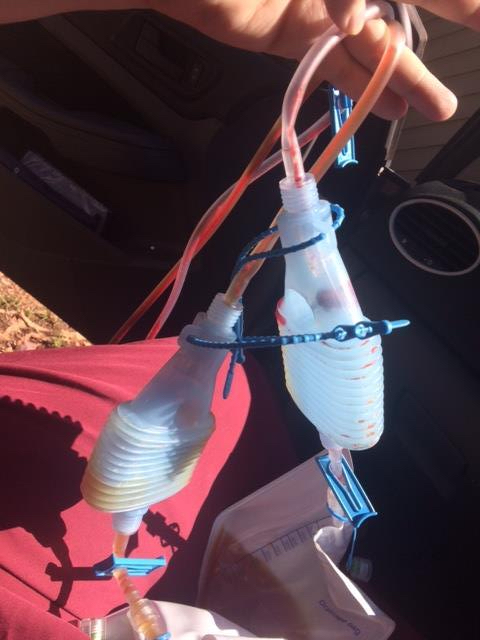

They were uncomfortable as well as gross, poking into me when I sat or walked, and getting quite heavy at times. I’m very glad to not have to deal with them any more.
I’m still on some pretty intense painkillers (again, I’m assured that most people have downgraded to just panadol from here—which is certainly not a go for me at this stage). I’m still in a lot of pain, although I do have periods of time (when I’m sitting still) that I can forget about it.
My body is quite different. Obviously, my enormous stomach is now a normal size (it’s certainly not the world’s greatest stomach, because abdominoplasties don’t work that way), which is extremely exciting. I’m retaining water (normal after surgery because the body is stressed out) and still can’t stand up completely straight, but I can wear all my dresses (skirts tend to be too big now and pants would hurt way way too much).
My appetite is dramatically changed now that my stomach isn’t flopping about willy-nilly (rather, held in place with the muscles that are supposed to hold it)—not only do I eat much less, I stay full longer too. I’ve been getting blood-sugar readings in the healthy range for the first time since I was diagnosed as diabetic.
It’s early days yet, but the worst is over—for this operation, and I hope for my health in general.
Here’s the official pre- and post-op photos:
The surgeon removed 3.5 kilos just from my stomach. He also made me a new bellybutton (which right now is just a horrifying pit of blood and bruising).
This surgery is definitely not for everyone. It’s not an easy thing to go through, it costs a huge amount, and you need to be realistic about results. But I’m certainly very glad to have my innards put back where they belong, and I expect to reap the benefits of that for the rest of my life.
My Belly Part 1
I’m going to go ahead and talk about some gross medical stuff here, so feel free to skip this one if you’re at all squeamish.
It’s 5am on Friday, so it’s just (barely) over a week since I had my abdominoplasty operation. I’ve carefully referred to it as an abdominoplasty rather than its much simpler and catchier name: Tummy tuck.
I guarantee a bunch of people are saying, “WHAT!?! This whole thing you’ve been banging on about is elective plastic surgery?”
Yup.

(This monitor lizard is both shocked and appalled.)
To which I generally point out all the hard medical reasons for me to “need” (rather than just want) this surgery: the 9cm gap between my stomach muscles; the back problems; the umbilical hernia; the sores due to loose skin.
But when I’m able to push past my own self-righteousness, why the hell shouldn’t women be allowed to have their stomachs put back into a vaguely familiar shape? The phrase “mummy makeover” makes me quiver, but seriously why not? Why is it right and good that women should go through the misery of pregnancy for 9 months, the agony of birth, and then also cheerfully accept that they’ll never fit into jeans again, no matter what they do? Why should women’s bodies go through horrific trauma and then also shame their owner for the rest of their lives? I often feel about ninety years old courtesy of my various post-partum health issues, but even the average woman probably ages around 10 years thanks to having kids… and that’s before actually looking after the kids.
So anyway…
I had a tummy tuck last week. Although my stomach muscles were severely separated (in a manner that, as a sports injury, would be covered under medicare-why yes that IS sexist) it proved impossible to have my body stitched back together via the public health system. Believe me; I tried over and over again for years. My youngest is three and a half years old, and I knew within weeks of his birth that something was seriously messed up with my stomach. It’s been a long and shitty journey, and the journey itself has certainly been a factor in my gaining more and more weight (which then of course causes doctors to tell me that all my problems are my own fault. Cause and effect are a thing, y’all), and going through a lot more pain and humiliation than necessary.
One surgeon told me that my stomach gap was probably too small to bother with, but ordered a scan. When I returned to him with evidence of a 9cm gap between my stomach muscles, he told me it was far too big for his hospital to deal with, and I’d need to go to Canberra Hospital (which happened to be where we were meeting, since he works at two hospitals). On both occasions he told me, “It’s out of my hands.”
One surgeon told me that stomach muscles could not actually be fixed (the entire tummy tuck industry is a scam, apparently) but he could add some surgical mesh to fix my umbilical hernia (the hernia means that umbilical stuff tends to poke out of my stomach at times due to the lack of stomach muscles being where they should be). After googling matters, confirming my suspicion that stomach mesh would make any future actually-solving-the-primary-problem operation more difficult and dangerous, I refused the surgery. Shortly afterwards, Australia’s largest manufacturer of surgical mesh was taken to court for their unsafe product. So that was a win. Sort of.
I looked online for a surgeon who worked in both the public and private sector. My plan was to get a straight answer about the surgery by appearing to be a private customer—then, when he confirmed surgery was necessary, tell him that I needed to go the public route. The surgeon I found (and ultimately used; Dr Tony Tonks) no longer does tummy tuck operations through the public system because it’s statistically impossible to get them approved.
So.
Friends suggested a crowdfunding campaign, which I did. It raised around $10,000 (some people chose to give to me directly), and my parents ultimately paid the rest (THANK YOU Mum and Dad). The surgery itself cost a bit over $8000. The anaesthetist cost $1700. The hospital cost a bit under $7000 (for using the theatre room, and for staying two nights in the ICU) which then increased to $10,000 (because I stayed an extra three nights due to a low lung capacity). So if you’re looking to get this surgery, you’ll need about $17,000 if absolutely nothing goes wrong along the way (plus 2-4 weeks off work during which you’ll be barely able to go to the toilet unassisted, and won’t be able to concentrate or stay awake for long).
A huge number of people donated amounts ranging from $5 to $4000. I’m quite anxious about letting people down (goodness knows I have other health issues as well, so I won’t be representing Australia in the Olympics anytime soon), but I’m also extremely touched by all the support. It’s incredibly hard to get past the “I’m so grateful for my kids that I mustn’t complain about anything” notion combined with the self-deprecating “Anything that improves my appearance and costs more than $100 is sheer wasteful vanity, especially if the ugliness is due to mum stuff”. Even though I can tell, logically, that they’re stupid. Having people not just say, “You should do this thing” but put their money into it has really helped me to grudgingly allow myself to value my own health.
In related news, why do so many women feel that a drug-free vaginal birth is the only “good” birth? Because it hurts more, and is therefore morally superior (aka “better for the baby”)? Medicine hasn’t stopped being sexist just because “hysteria” isn’t an official diagnosis any more.
Nowadays, we say, “Hormones”. Or “It’s natural”. Or even “post-partum depression”. Or “a side-effect of weight gain” (I’ve gained enough weight and suffered enough pain to know that when medical people say, “Even five kilos will make a difference” they are often dead wrong. Everything that’s wrong with me right now was also wrong with me when I was twenty-five kilos lighter… which is the reason I’m twenty-five kilos heavier now). All of which are used every day to deny real medical support to women. And once you have more than one medical condition… well! Good luck to you. Especially if one condition is mental illness. Because a problem that’s hard to fix is easy to simplify: You’re a hypochondriac, or looking for attention, or maybe you’re just fat and looking for something to blame other than your own lazy arse. (How do I know you’re lazy? Easy! You’re fat. Fat isn’t a side effect of chronic pain, or a battalion of complicated medical challenges. It’s a side effect of laziness every time. And I can prove it, because you’re looking for a medical solution instead of dieting. What a pig!)
I guess that’s a fairly good summary of the psychological side of this operation. I’ll save the physical stuff for another entry.
Home is where the heart is. And also lungs
I’m home.
I stayed an extra three days in hospital to do lung-strengthening stuff because apparently I was under-oxidised (very likely a contributing factor to me feeling exhausted and running largely on sugar for several years).
But I’m home now, and pretty pleased about that.
The operation went smoothly, and the incision site seems to be healing well.
I’m going back to bed now.

 Felicity Banks