Cat Rescuing for Newbies
This post is very much inspired by Athena Scalzi. People are constantly running into stray cats and kittens and wanting to help them (and to stop them breeding).
TNR stands for ‘Trap Neuter Release’ and has proven extremely effective in humanely reducing a cat population over time. Humane cat traps cost around $40. If you want to make a real difference to a cat colony without euthanising any cats, you can trap cats and take them to the vet to be desexed and vaccinated—then take them back and release them into their colony. It’s God’s work.
Most adult cats are difficult or impossible to socialise (eg some will take literally years before they allow a human to pat them). Others are abandoned pets. If you scratch the skin of literally anyone involved in cat rescue, they are extremely angry about the treatment of cats by irresponsible humans. I imagine those who focus on native Australian animals (which tend to be a convenient size for cats to kill and eat, and have few natural defences) are even more furious.
So… cat fostering is extremely important. And so is desexing pet cats!
Catching cats
The first thing to know is that, no matter how adorable they are, cats are one of nature’s most efficient killers. Even at four weeks old—barely weaned—they can sometimes send humans to hospital. Seriously. They are faster than you, and they have multiple inbuilt weapons that they have been using since they were newborns. This is Cinnamon, who was about six weeks old and absolutely shredded my hands when I caught him. Even a cat who appears friendly and lets you pat it (even purring!) will react with efficient and lightning-fast violence if you try to restrain it. The one exception is a cat about this size or smaller, because IF you can ‘scruff’ them (grab them by the loose skin on the back of their neck like a mother cat) then that will work like an off switch. But if they’re older, they may be immune. Or just too heavy. Or they may just be too smart to let you get a grip (like Cinnamon). This is why I strongly recommend getting a trap!
I’ve always used a trap that you put food inside (and then walk away and wait until their weight snaps it closed), but others swear by ‘drop traps’.
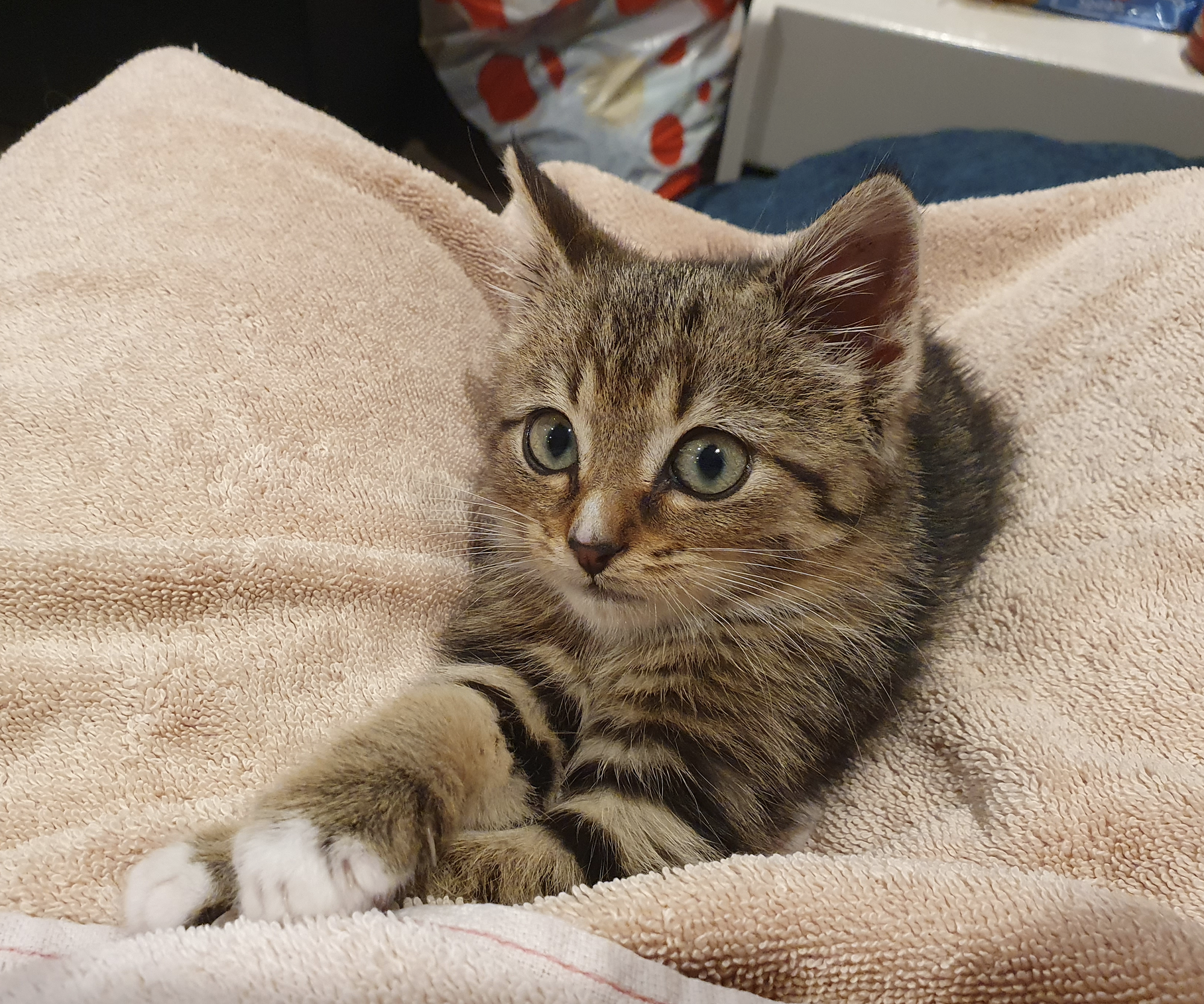
You can ‘train’ stray cats a little by feeding them at the same time each day, which is the first thing you should do in preparation for trapping. Try to get photos so you can assess age and health and/or send those photos to a rescue organisation.
Having said that, every rescue organisation I know is perpetually overwhelmed. It’s likely to be tricky or impossible to find someone to help. But if you catch a cat in a lever-style trap, you can take it directly to the RSPCA. They may euthanise it, but at least they won’t just let it go.
If a cat is younger than four weeks, it is not yet weaned and it will probably die if you trap it. If it is four to six weeks old, it will not be able to clean itself, so you and a facewasher will become very familiar with its butt. Six to twelve weeks old is perfect because they’re still quite adaptable (and want cuddles) but don’t need their mum any more. If their mum is friendly towards humans, she will be a good influence on her kittens and should stay with them until twelve weeks if possible. If she’s not friendly, she should be separated from them at around five or six weeks.
Cinnamon was purring in my lap less than 24 hours after shredding my hands, because he was desperate for a mother and I was a pretty decent substitute for his biological mum (who I was not able to catch until later). After twelve weeks kittens may already be too set in their ways to be socialised, but you never know. This is Jack Black, who was rescued at six months and was sweet and loving from the start.
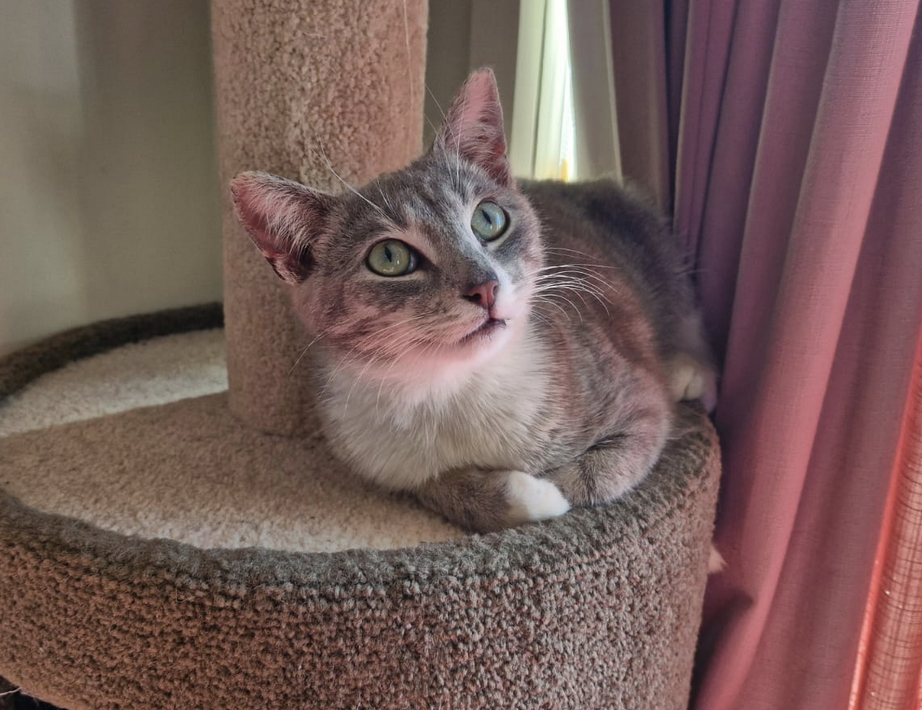
I made a series of weekly kitten videos starting from newborn age, so you can watch them to give you some idea of how old your kittens are. If the mother of very young kittens is killed, a foster carer may be able to save them by feeding them Womberoo cat milk (gently warmed) every few hours via a syringe or bottle, and keeping them in a room at about 30 degrees Celsius if they’re less than two weeks old. They will also need to massage the kittens’ butts to help them poo.
At some point I plan to do a detailed blog on fostering newborns. Suffice to say, it’s difficult work and often they’ll die anyway. So keep them with mum until at least four weeks if possible.
And if mum is around, she is likely to reject young kittens if they have been touched by humans. So be very careful! Do what I say, not what I did!
If possible the person who catches the cats should not be the same person who fosters them.
It is very important to note that kittens can get pregnant (to their immediate family members, ew) from just four months of age, so if you catch more than one kitten and there is a mix of genders then you must try to separate them by gender and/or get the males desexed asap (the male operation is quite simple). Once they’re about six months old, male balls are usually fairly obvious so their gender is suddenly a lot less mysterious.
Your first few days with foster cats
They are almost certainly infected with worms and probably fleas, both of which can be transferred to humans. For this reason, the first medical treatment they get from me is a combined flea and worm treatment. I use Nexgard because it’s the only one in Australia that puts all the parasite medications into one liquid (otherwise, it’s a combination of liquid and tablets, which your cats may object to). If I know a cat is going to be difficult to socialise (eg they’re over twelve weeks old), I medicate them before letting them out of the carrier. Otherwise, I wait a few days or weeks so their stomachs and nerves can adjust to their new life, especially if they’re small.
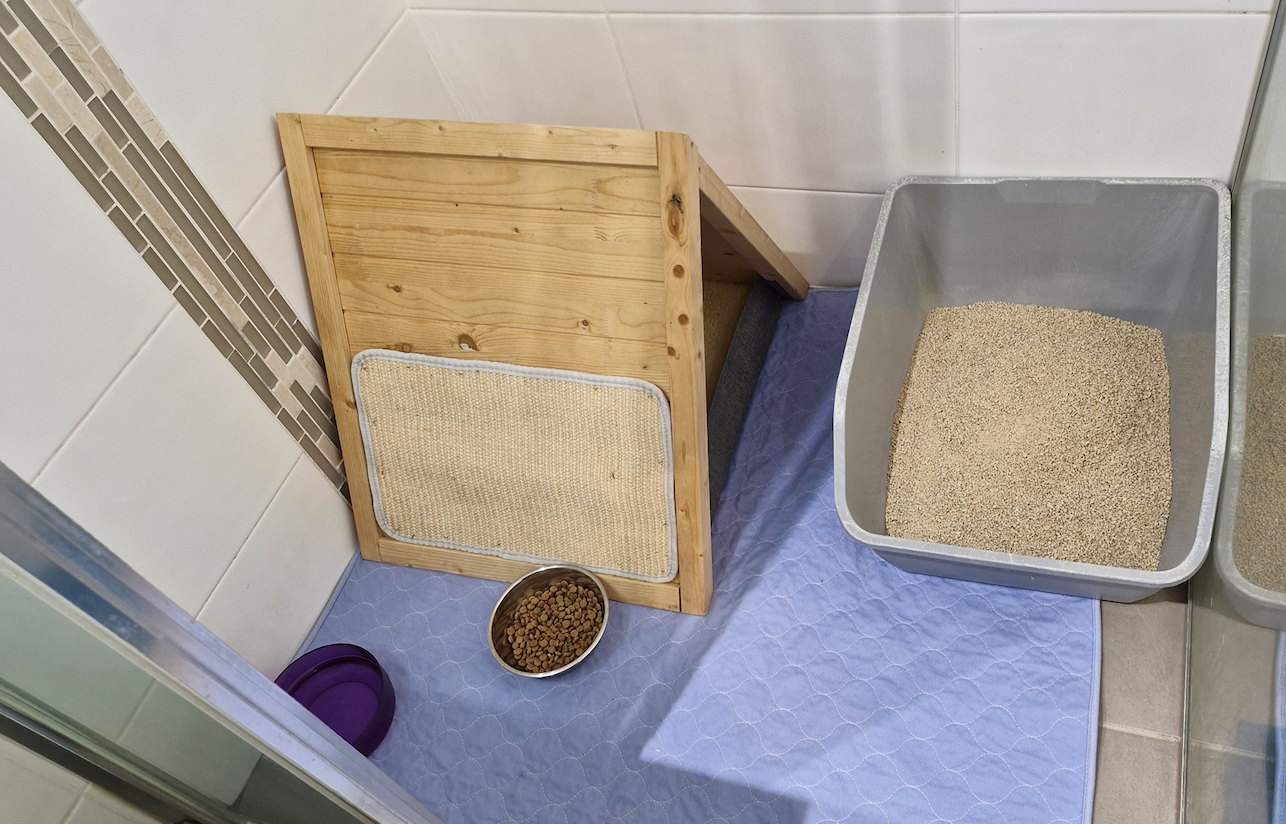
My quarantine room is the ensuite, because it’s easy to clean and hard for a cat to truly hide. I provide food, water, litter trays (two for a single cat, and then another one for every cat added), something to scratch, and somewhere to hide. It’s tricky to fit all of that into an ensuite, especially since cats like their food, water, and litter to all be separated. But here’s an example of a fairly typical set-up (there is another litter tray out of frame). The blue mat is actually an incontinence pad (I love incontinence pads and bath mats because they give comfort and warmth but are very easy to wash).
The small size of the ensuite is actually a good thing because it is basically a large box where the cat can quickly get familiar with the whole room. I puts toys in there fairly soon but not immediately because even toys are scary at first.
It is much easier for your rescue cat if they have another cat with them (that they know), which is why I strongly recommend fostering two or more cats rather than just one. Cats find it stressful to be introduced to other cats so although it’s usually worthwhile it’s best to wait a few weeks before starting the feline introductions. Kittens are much more adaptable, especially when they’re younger.
Most cats are lactose intolerant, so don’t give them milk unless they’re under six weeks old (and you’re using a pet milk such as cat Womberoo or Di-Vetelact). Or you can give them human lactose free full cream milk as a treat.
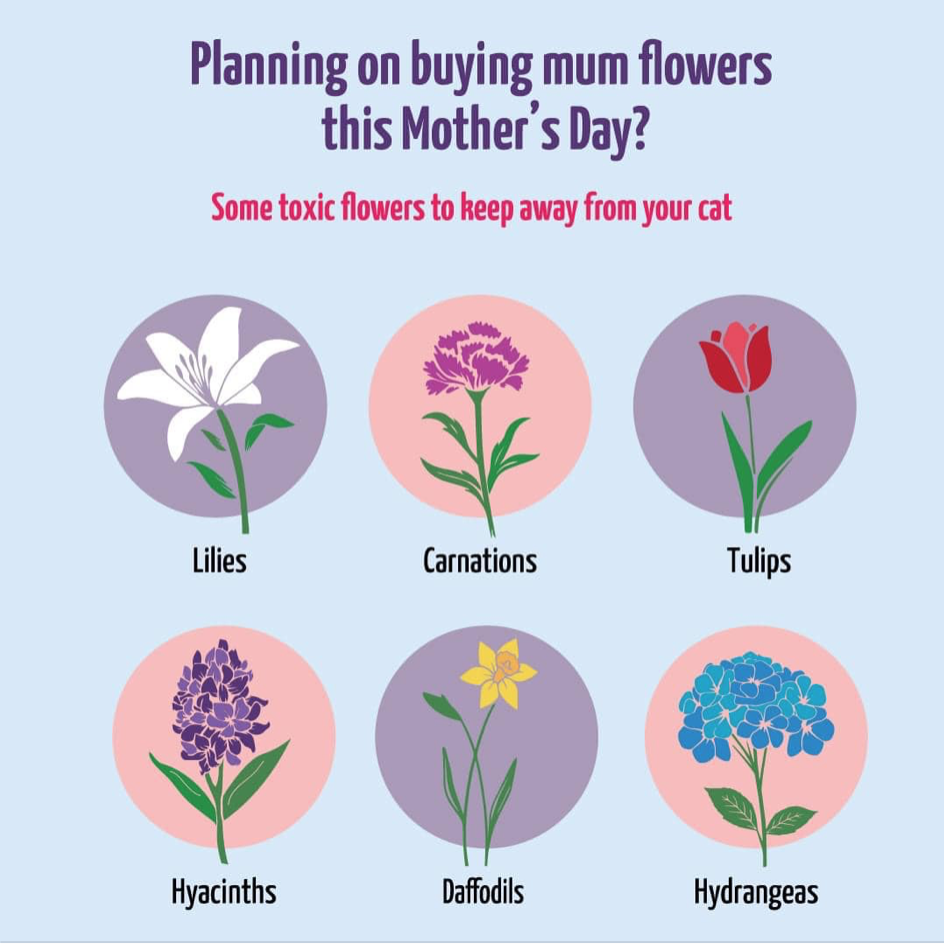
Some plants are poisonous to cats, including these favourites. Cats often eat grass which is fine although it can be a sign they’re feeling unwell. Grass tends to make them vomit, which is one way to get bad things out of their body (so, they’re self-medicating).
Food-wise, don’t give them dry food until six weeks of age. Do give them wet kitten food if they’re over five weeks. The younger they are, the better quality it needs to be. I use Royal Canin mother and baby mousse if they’re under six-ish weeks, and Felix kitten food if they’re not (and when changing food it’s vital to do it very gradually over several days or weeks). For dry food, I use Royal Canin kitten food if they’re under eight weeks, and Whiskas if they’re over eight weeks.
A lot of cats get soft stools after worming, after vaccinations, and when changing food. Some continue to get soft or stinky poos long term, and they need to be shifted permanently onto good quality food like Royal Canin or Ziwi.
If they’re over six weeks old, I usually top up their dry food (and water) constantly, and give them wet food twice per day. It’s rare for kittens to overeat.
I use “World’s Best Cat Litter” which is expensive ($26/bag at Woolworths) but lasts a long time and reduces smell very well. The annoying thing is that I get a scattering of sand near litter trays. Bath mats are great for catching most of it, and then I can shake them out in the garden and wash them.
Use this rule for water bowls: a minimum of two bowls, and then add one or more bowls for every two cats.
They tend to get somewhat bored of the quarantine room after a week, so if they’ve been wormed at least three days ago and they’re using the litter trays, I let them explore a little further. They’re often tempted to poo in beds or on clothing (especially clean or dirty washing because of the smell) or piles of paper, so that’s something to watch out for. The best defence is habit, so I only gradually increase their roaming area. I always scoop trays daily, plus any time there’s a poo. And I supervise their exploration closely at first.
If they have small bald patches, especially on the face, ears, legs, and tail that is probably ringworm. Ringworm is a minor condition but it’s incredibly infectious, including to humans. The spores are too small to see and can live in fabric for over a year. Washing doesn’t get rid of the spores unless it’s extremely hot (think 90 degrees or more) or includes specific sanitisers. I use F10, buying it from Aussie Vet Products as even pet shops don’t usually stock it. I also buy F10 hand sanitiser. If they have ringworm, they stay in quarantine—with as much play time and novelty as possible. And those without ringworm should be separated into a second quarantine area if possible.
If one or more of your cats has ringworm, you need to talk to a vet (and tell them you suspect ringworm before you enter their premises). Ringworm is actually not a worm (and not treated by worm medication) but a fungus.
Here’s Jodie Foster with a lesion above her eye and two more developing on her nose and under her other eye.
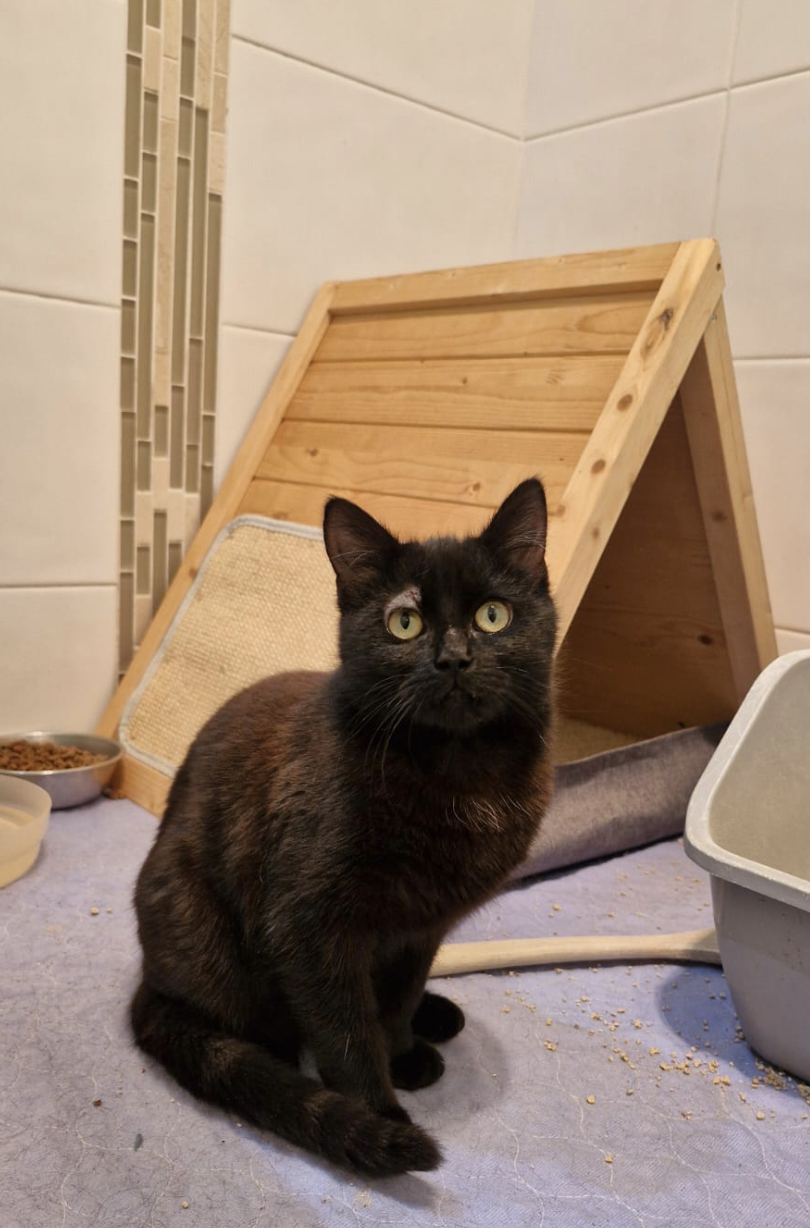
The other disease that a lot of cats will get is cat flu, which can be brought on by stress (like being rescued). A few sneezes are no big deal, but if they have runny eyes or nose they are sick and it may get deadly shockingly fast. Monitor their breathing and you may need to take them to a vet at short notice (so make sure you know your local emergency vet).
Because a vet visit can also be very stressful, you need to carefully balance the potential harm of a vet visit with the potential benefit. I would usually say it’s a bad idea to take a cat to a vet within three days of them arriving at your home unless they have something that needs immediate attention. A lot of foster cats will hold a grudge and get less trusting after I take them to the vet.
Go to a vet within 48 hours if your cat has a runny nose (clear or yellow/green), is drooling, or refuses to eat (try extra-smelly food such as fish first). Go to the vet immediately if they have trouble walking, if they are panting, if they are not drinking, if their eyes look painful or are not fully open, or if they are not playing at all. Ditto if the discharge from their eyes is yellow or green.
Cats can also get a fever from cat flu. You can test them for fever by feeling the temperature of their ears. If you feel them when they’re healthy they feel quite cool, and if you feel them often you are more likely to be able to tell if something is wrong. If in doubt see a vet of course.
If you are looking after them at home, it is helpful to wipe the moisture away from around their eyes and nose with a wet cotton ball. Steam can also help them, so it is often helpful to run a very hot shower with your cat in the bathroom and the heaters on for ten to twenty minutes up to twice per day (being careful not to dehydrate them, as that can also kill them). Change their water frequently and keep other pets away. It may help to gently warm their wet food (mainly to increase the smell so they can recognise it despite a stuffy nose). Reduce their stress levels as much as possible.
Socialising your rescue
The first and best tool for winning your cat’s heart is food! After food is gentleness. You are at least a hundred times bigger than any cat, so you are frankly terrifying and they need time to learn to trust you. Speak gently and try to avoid anything too noisy (crying baby, vacuum cleaner, etc) especially for the first week. Kittens under six weeks can have heart failure from a loud noise or a scare!
Prolonged eye contact is usually seen as aggressive in the animal kingdom, but if you meet your cat’s eyes and then give them a slow blink or look away, that tells them, “I don’t want to fight you.”
I find that mewing at them often helps, mostly by confusing them (confusion is better than fear).
They feel less threatened if you sit on the floor.
If they let you, go ahead and pat them. If they hiss at you but don’t growl, snarl, or swipe at you they are probably safe to pat. Be careful, move slowly and steadily (pausing when they hiss), and make sure they have room to move away from you. If they are extremely food-motivated you may be able to pat them when they’re eating, but I generally don’t because I don’t want them to associate food with fear.
Give them plenty of time to think about new information (such as “the human monster patted me and it didn’t hurt”), and if possible help them to spend a lot of time observing you doing normal non-scary activities such as watching TV (not too loud or violent), reading books, playing on your phone, and sleeping. I like to give them one small challenge per day eg sitting 10cm closer than I sat the day before or letting them see another cat from across the room for the first time.
If you absolutely cannot pat them, here are some strategies that might help:
-patting them with a wooden spoon to get them used to gentle touch (without getting your flesh mangled).
-dangling a toy such as a fishing-pole toy or rolling a ball at them, so you can have a positive interaction without getting slashed. Don’t do this for the first week though, as toys can appear threatening at first.
-Letting them see you interacting with another cat (ideally a kitten so it’s less scary).
-Letting them interact with another cat, so they are less lonely (but introductions must be done very slowly and carefully over several days/weeks).
-Feeding them treat tubes.
I find that EVERY cat in the world goes through a ‘conflicted’ stage when they enjoy your company, possibly even purring when you pat them, but are still afraid of you.
At the time of writing, Cate Blanchett still hisses when I approach, but snuggles and purrs when I pat or hold her. However, she also sliced me up quite badly when I grabbed her by force to take her to the vet just last week. That was my fault for not slowly scruffing and patting her before picking her up.
Most cats hate being picked up or restrained.
Summary of Fostering
*Don’t trap kittens under four weeks unless their mother is dead. They will probably not survive.
*Be aware that the second a cat feels trapped (eg by your hands) they are likely to attack with considerable speed and skill.
*At four months of age cats can get pregnant to their siblings, so they need to be desexed or separated immediately.
*Cats can give you worms, fleas, or ringworm so take precautions, especially early on. Cat flu is dangerous to the life of kittens.
*Cats need water, dry food (once they’re over six weeks), wet food, a scratching place, and a hiding place. Cats under six weeks of age will benefit from specialised pet milk.
If you are a good foster carer, you will get the cats health checked, vaccinated (ideally twice but as far as I know I’m the only foster organisation that does that), microchipped, treated for parasites, and desexed. Then adopted into a safe and appropriate home!
This is a VERY quick and dirty guide to fostering, but I hope it will help you!
If you’re in Canberra, you might like to volunteer with me, or get mentored to become a foster carer yourself! My email address is MagicalMoggiesCanberra@gmail.com
Here’s the link to my GoFundMe. Food, litter, and vet care gets real expensive real fast.

 Felicity Banks
Leave a comment