Caring for Newborn Kittens
I have fostered exactly two newborn litters (each of which had an excellent and friendly mother) so I’m no expert. But I wanted to write down everything I learned in order to help myself next time I’m fostering tiny ones.
The first thing to know is that kittens under four weeks will probably die if they are separated from their mother, so don’t separate them! And, don’t touch them without gloves for that four weeks unless you’re willing to feed them every two hours, day and night, if the mother rejects them due to your smell, AND to do mother-type things such as stimulating their butts to make them poo. (And they’ll still probably die.) I choose not to wear gloves, but to sanitise my hands with F10 (vet-grade disinfectant) and then rinse them with water (the F10 is strong stuff so although it’s safe to handle adult cats when using it, kittens are fragile).
I won’t include details on caring for orphaned kittens under four weeks old, as I have no experience with that. Suffice it to say, it’s a very intense job.
Here’s a lovely video of the first 100 Days with some purebred kittens. It’s not particularly educational but it’s gorgeous.
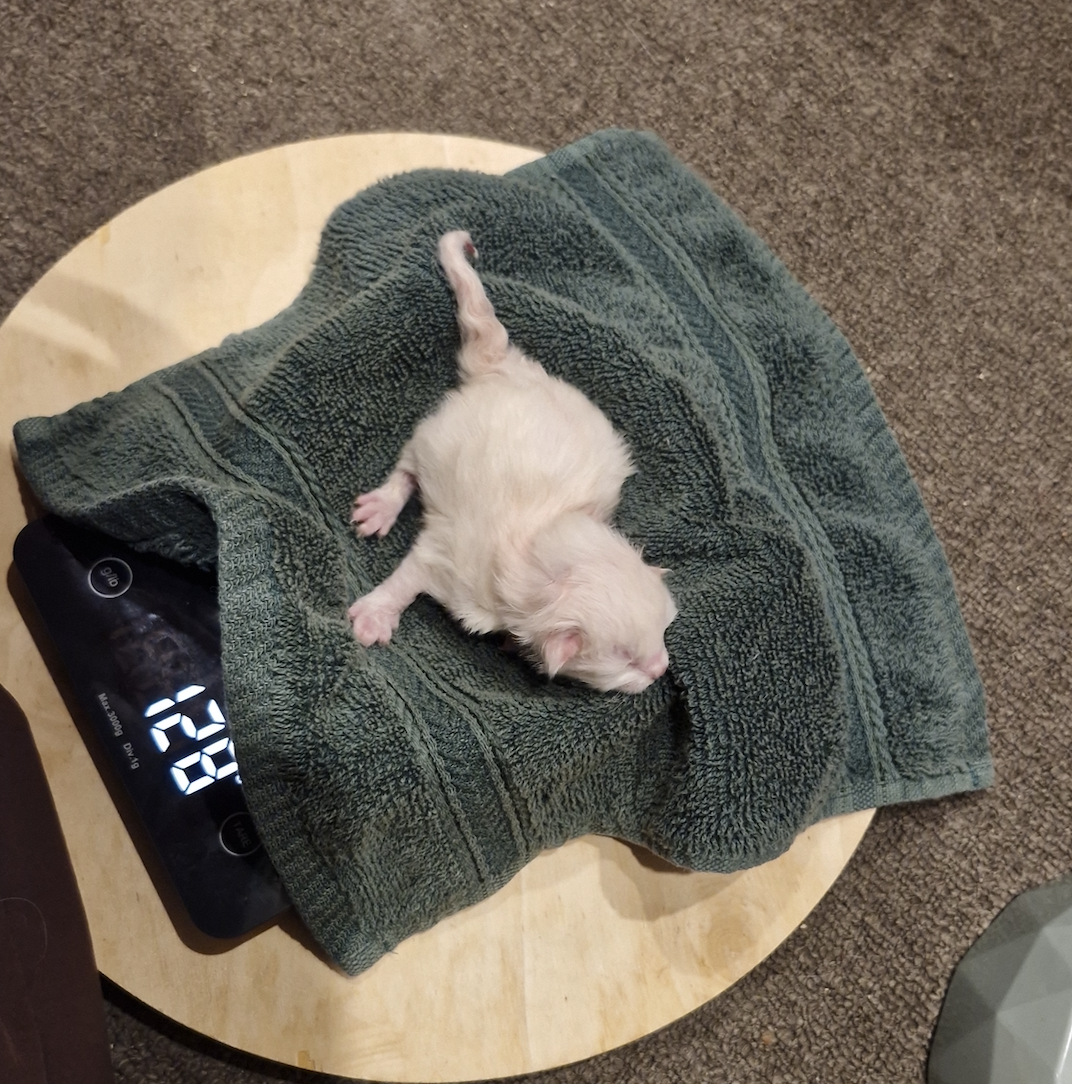
Speaking of gorgeous, here’s Turtledove (“Turtle”) at three days and then again at three months. There’s a huge set of Turtle photos at the end of this post.
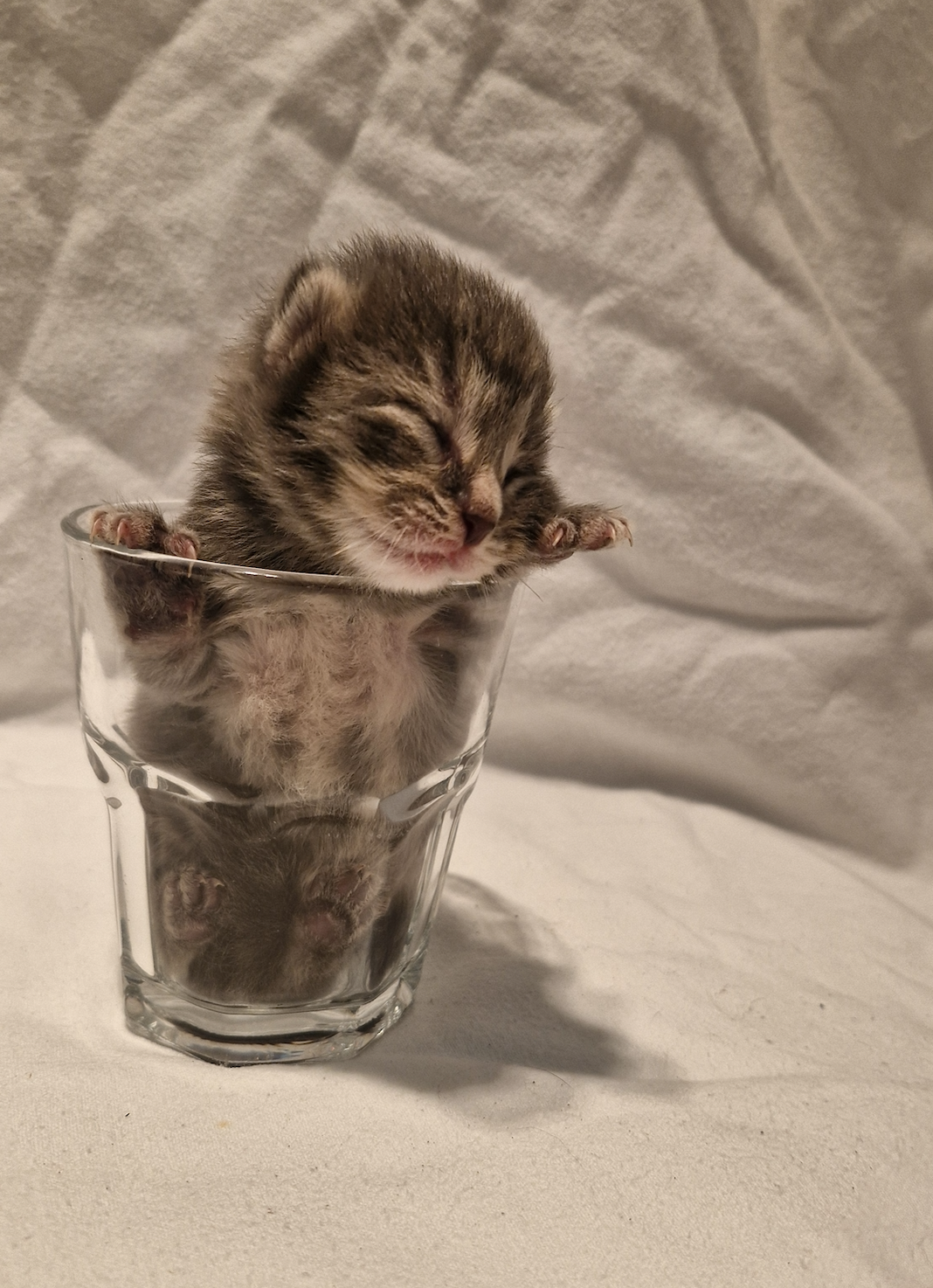
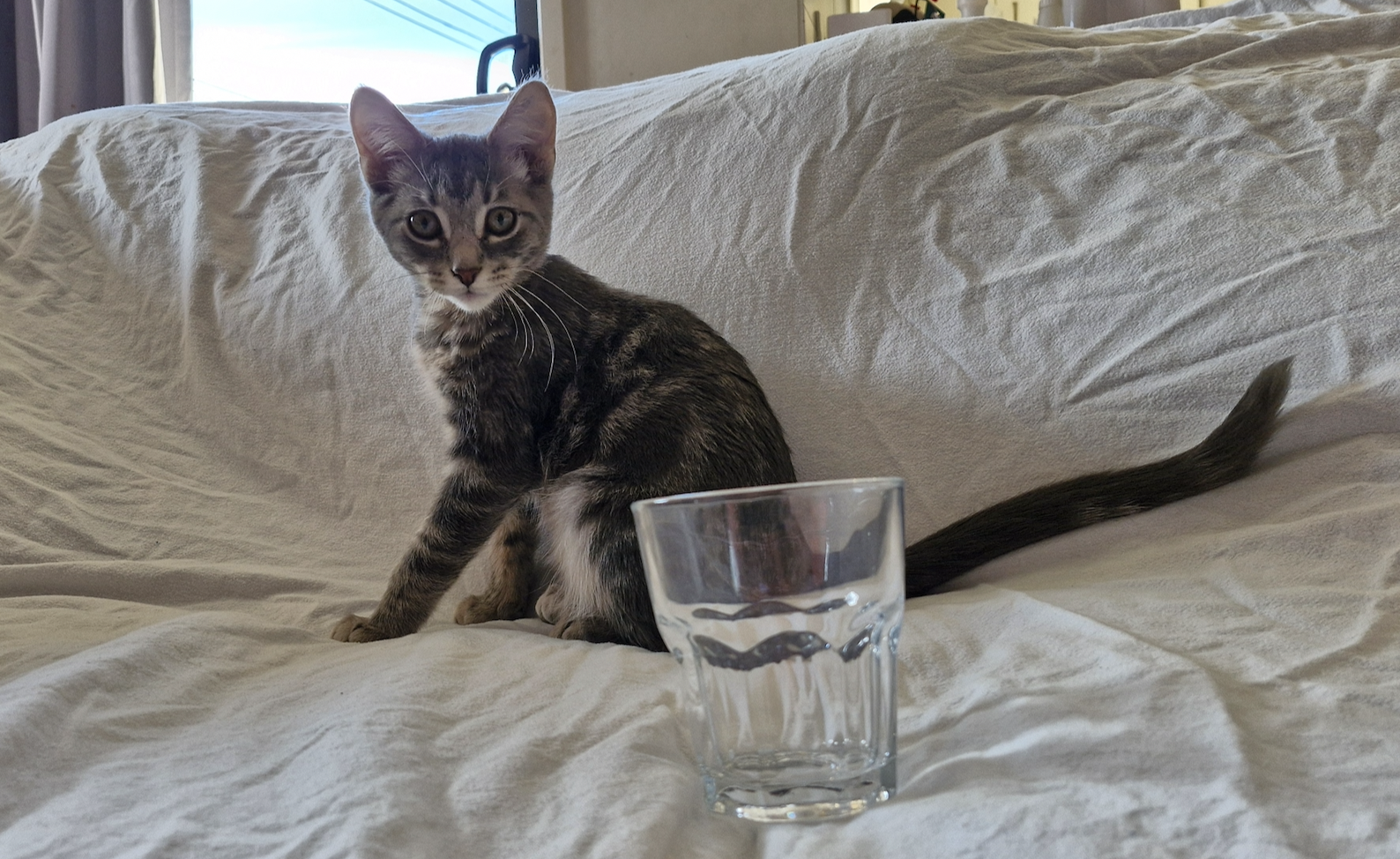
And here are some photos of Ragdoll kittens as newborns (they are born white and then their ‘points’ (ears, nose, paws, and tails) darken, and continue to darken for a year.
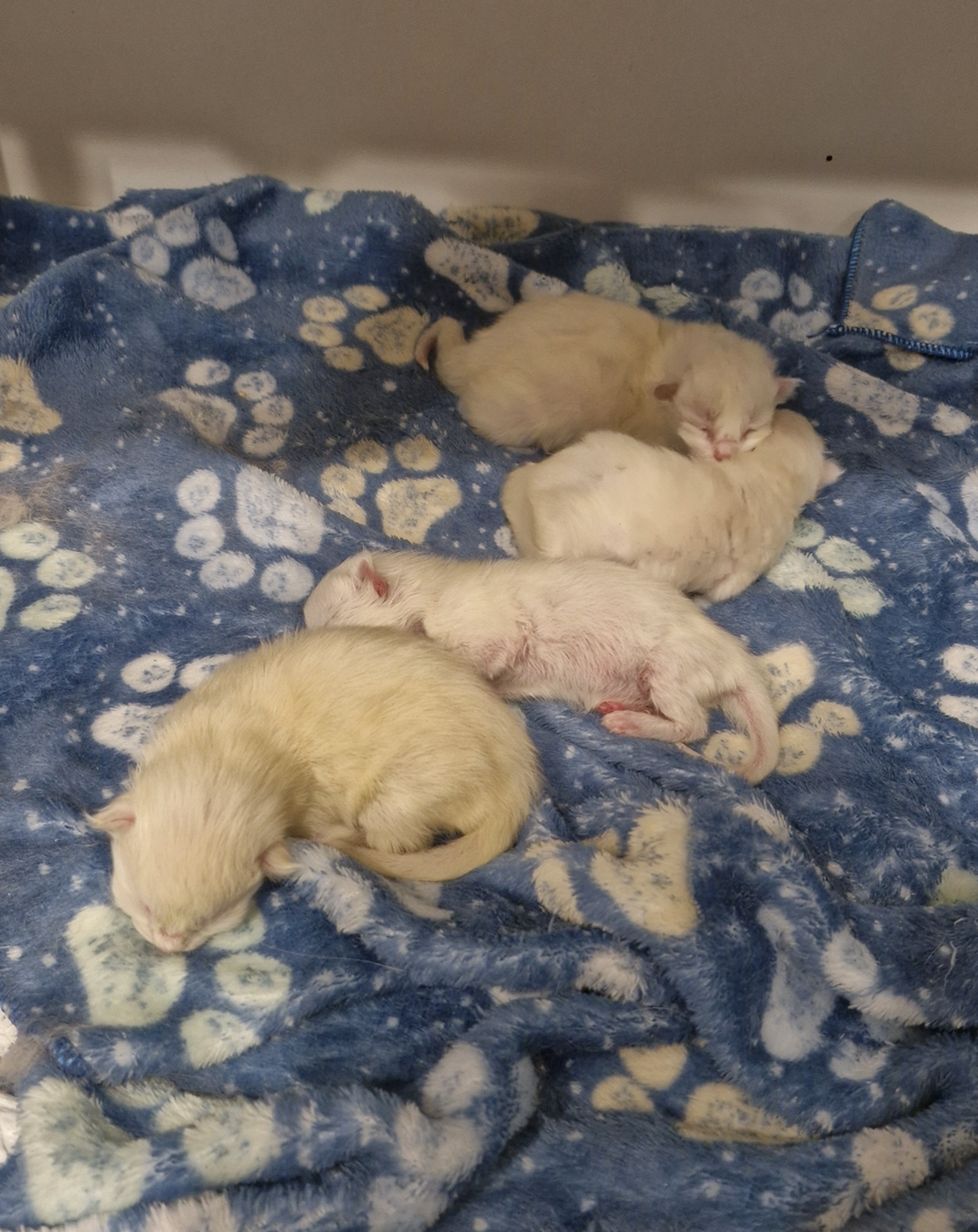
I was lucky to be fostering newborn kittens along with their extremely friendly and relaxed mother cats who were both happy to have a fellow mammal helping with the child rearing. Cats are actually very social creatures, often ‘babysitting’ for one another. Dove (a stray but I suspect she was abandoned and missed having a family) rarely moved more than twenty centimetres from her kittens for the first two weeks… but Mama Ragdoll (who had her first litter by accident when she was barely over a year old herself), although lovely with her kittens, was not interested in staying in the nest when she didn’t have to.
Cats are very good at mothering, and to a large extent the best thing to do is simply leave them alone to get on with it. But both of the litters I fostered needed supplemental feeds. Dove was fine after the first few days in my house (a new environment), but Mama Ragdoll just didn’t produce enough milk. That happens a lot for mammal mothers, including me with my kids.
When they’re pregnant, they could do with more food (Royal Canin has ‘Mother and Baby Mousse’ in tins with a pink label, which is also a great first food for the babies when they’re old enough) and a reliable supply of fresh water (at least two bowls, because sometimes one gets knocked over). They also need a nesting box—a safe, warm place to both give birth and to keep the kittens. A cardboard box with a towel (that can be washed and replaced with another towel) tends to work well (keeping the sides about 15cm high so the kittens don’t fall out until they’re old enough to find their way back). Most cats want privacy when giving birth, although some want company. It’s good to monitor the birth in case something goes wrong. Here’s a guide on pregnancy and birth. Obviously, a pregnant cat should have a prenatal check-up at the vet too. If you pay for an ultrasound, you’ll get a good idea of the due date, plus might find out how many kittens are coming. With Mama Ragdoll, we were advised that there was less than two weeks of pregnancy remaining, and there were “at least two” kittens, but it was hard to tell because it was too late in the process. She had four kittens.
Warning: Some mothers have a powerful instinct to move their litter every few days, so make sure your nesting box is in a room that has other possible nesting boxes in it, AND that the whole room is safe for kittens. Mama Ragdoll was always hiding her kittens from us (eg under a bed where it was very difficult to reach the babies). Even worse, she usually left one or two kittens behind, so they’d just be by themself, as if they were abandoned. Usually if the mum ‘forgets’ a kitten that would mean the left-behind kitten was unwell and the mum was leaving them to die…. but I’m pretty sure Mama Ragdoll was just dumb!
Mama Ragdoll is now desexed, by the way. Due to the owner’s request, you will not see her face.
This is Dove with the elderly couple who were already feeding her, and who officially adopted her when her kittens were old enough. She’s one of the friendliest cats I’ve ever met.
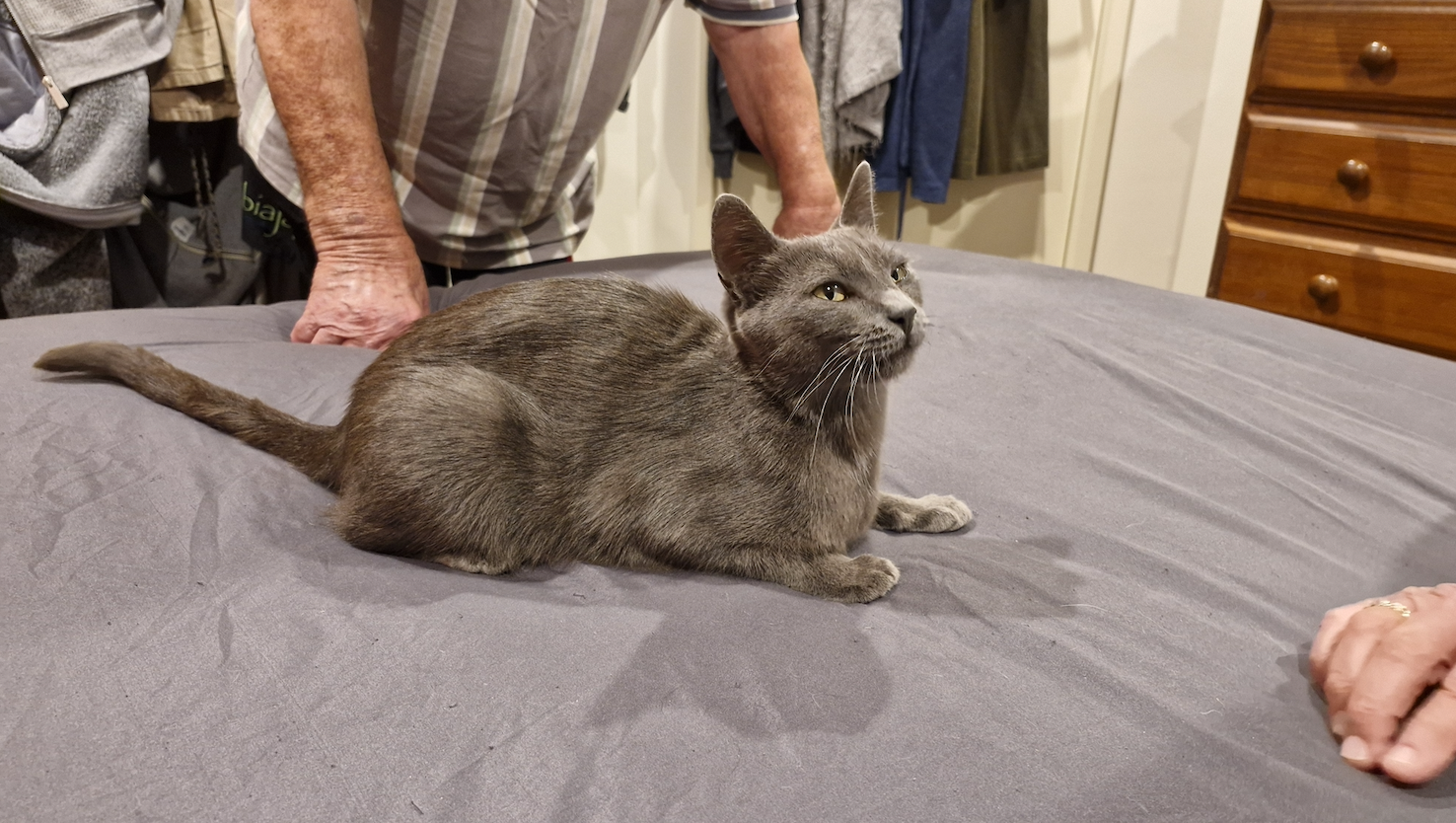
I met Dove and her kittens when the babies were one day old, and then I frantically raised some donations to be able to justify fostering them from the following day (even with donations and adoption fees, they cost over $2000… so now I’m fundraising to make up for that so I can justify the next kittens I foster).
One of Dove’s kittens died the night after I met them. Nature has chosen a scattershot approach with cats—they breed easily, often, and in large numbers—which means that kitten mortality is always very high. Nature’s PLAN is for lots of them to die as newborns, which means looking after kittens is in some ways more difficult than looking after a human baby. It can also be very traumatic.
That kitten may have died because there was a storm that night, and the temperature dropped quickly. But it probably died because it either wasn’t ‘fully baked’ (it was premature) or it had some kind of birth defect that wasn’t immediately visible. It was the smallest. It may even have died because it wasn’t able to feed properly due to fighting with its siblings over access. Cats have eight nipples so there’s plenty for everyone, but they still fight each other from birth for the best positions. It’s nature’s way of keeping the resources for those who are most likely to survive.
If you count the heads in this photo, you can see there are five kittens. Believe it or not, Dove is actually a very small cat (probably because she had kittens too young—kittens can get pregnant as young as four months of age… even to immediate family members).
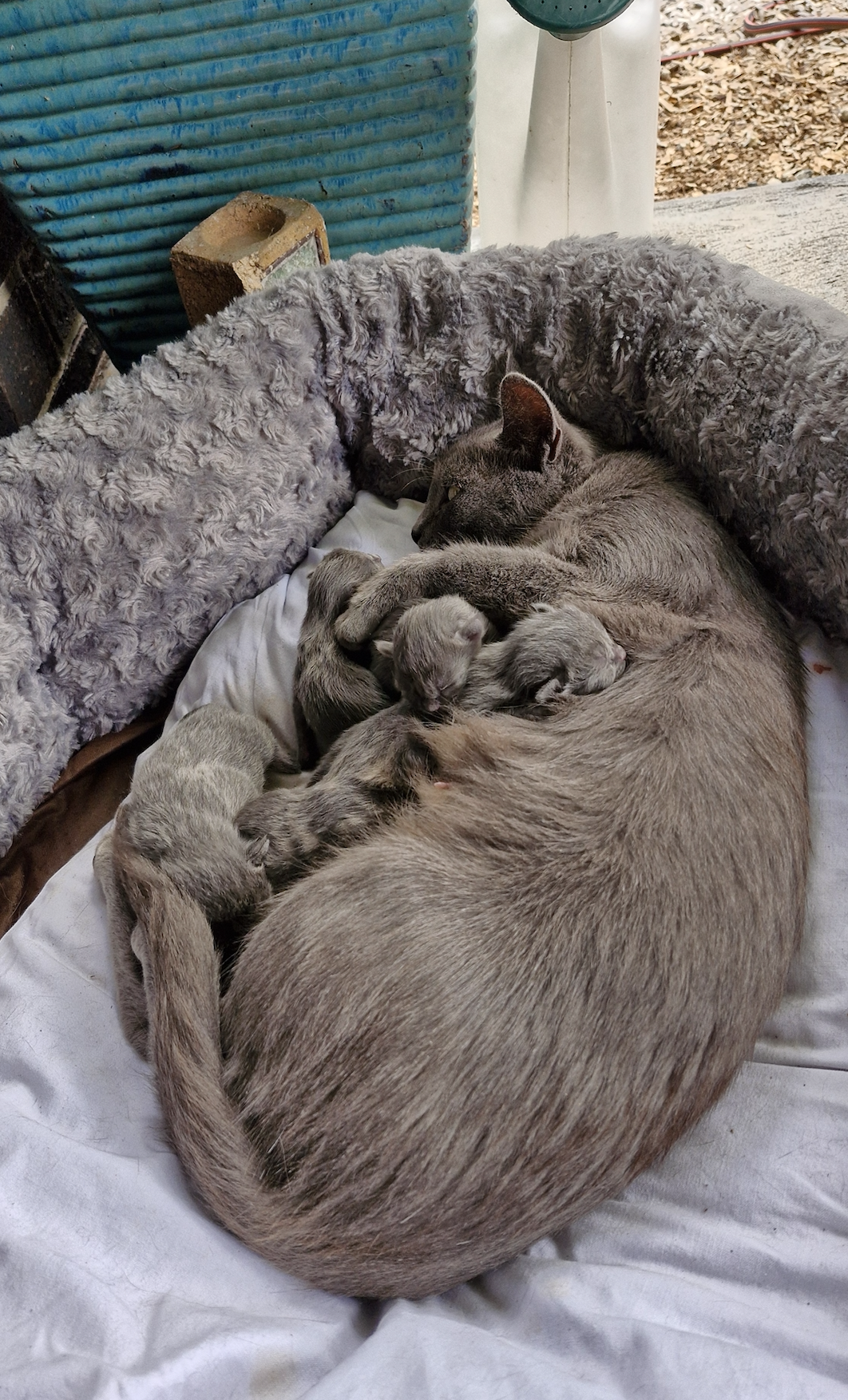
Here’s a photo with my finger for scale. Newborn kittens weigh about the same as a pack of cards. They often don’t have fur yet on their legs and bellies (and even if they’re born fully furred, it is so fine that it can rub off with grooming for a while). It is normal for considerable size differences between kittens. If you are trying to keep a runt alive, it may help to supervise feeding times. The nipples closer to the mum’s head have a better supply.
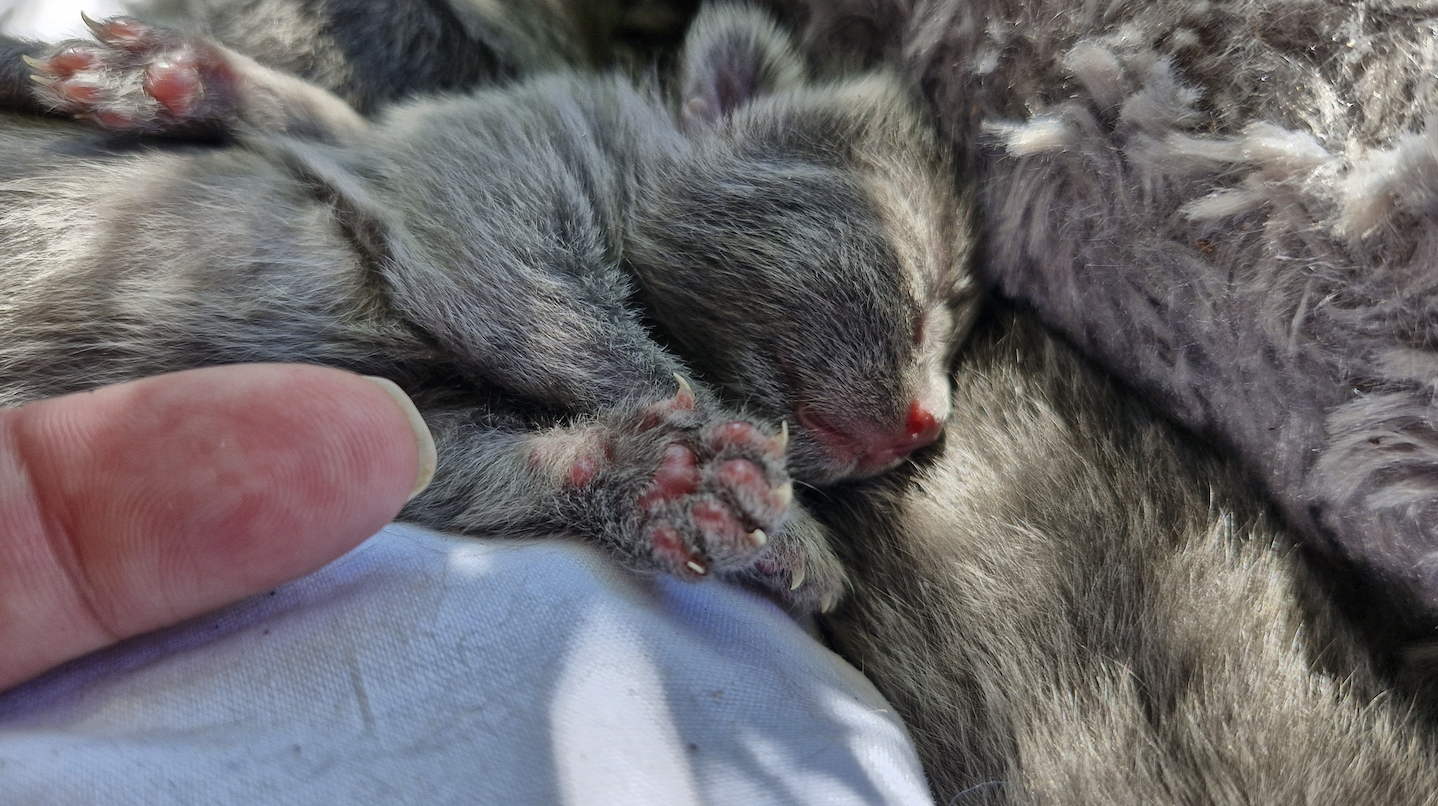
Basically, the most important thing for non-orphan kittens is to keep them warm as they cannot regulate their body temperature—that is the main reason they’re always cuddled up together as babies. That lack of temperature control is the most likely thing to kill them.
BIRTH
Mother cats need to break the amniotic sac so the kittens can breathe; bite through the umbilical cord (which can make a rather alarming grinding noise); and wash the kittens (mainly to dry them). Mama Ragdoll did all that perfectly, but often first-time or young mums don’t do it, so the human needs to step in. Birth needs its own blog entry, but that’s the most likely issue. It is common for one or two kittens to be stillborn.
This video was taken during the birth of the Ragdolls. Trigger Warning: there is a small amount of blood on the fur but nothing super graphic.
TEMPERATURE
For the first four days, the ambient room temperature should be between 29.4 and 32.2 degrees Celsius. A pet-safe heat pad is a good idea too. (Some people use a heat lamp, being careful to ensure there is enough room for the cat and kittens to move away from it if they get too hot). Between four and seven days you can gradually reduce the temperature to 26.7 degrees Celsius. After ten days, you can gradually reduce the temperature to 22.2 degrees (aka comfortable for humans) and keep it there until they’re four weeks old. They’re still very vulnerable at four weeks, so keep the temperature around 20 degrees, plus have cuddly spots for them to sleep. Textured fabrics like imitation sheepskin are good for reflecting heat back to the kittens.
Orphaned kittens benefit from having a heat pad toy to snuggle with (and ideally siblings). In this video of the Ragdoll kittens’ first two weeks, they were kept at the above temperatures… but you can still see that they always seek out each others’ warmth.
WEIGHT
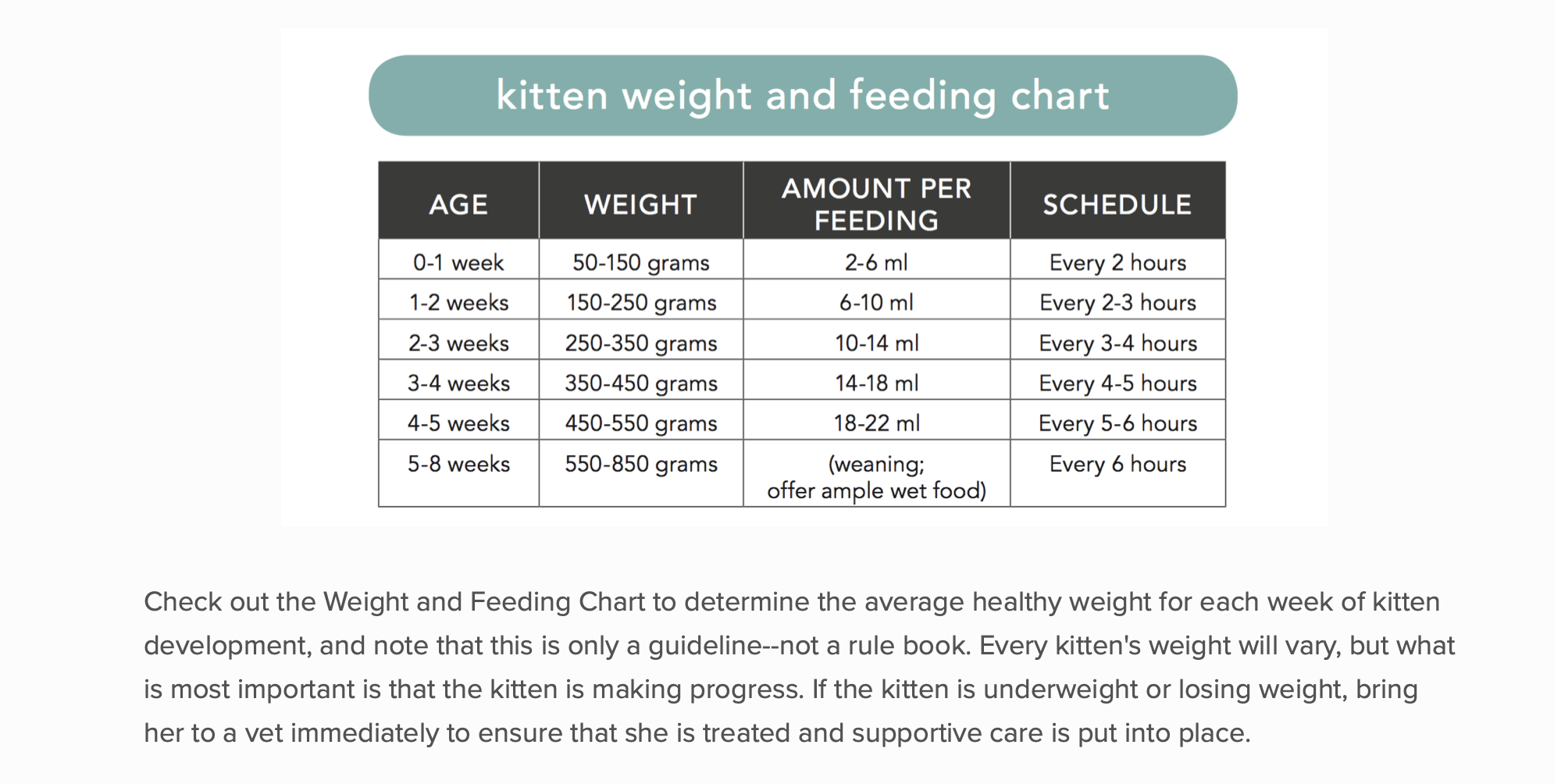
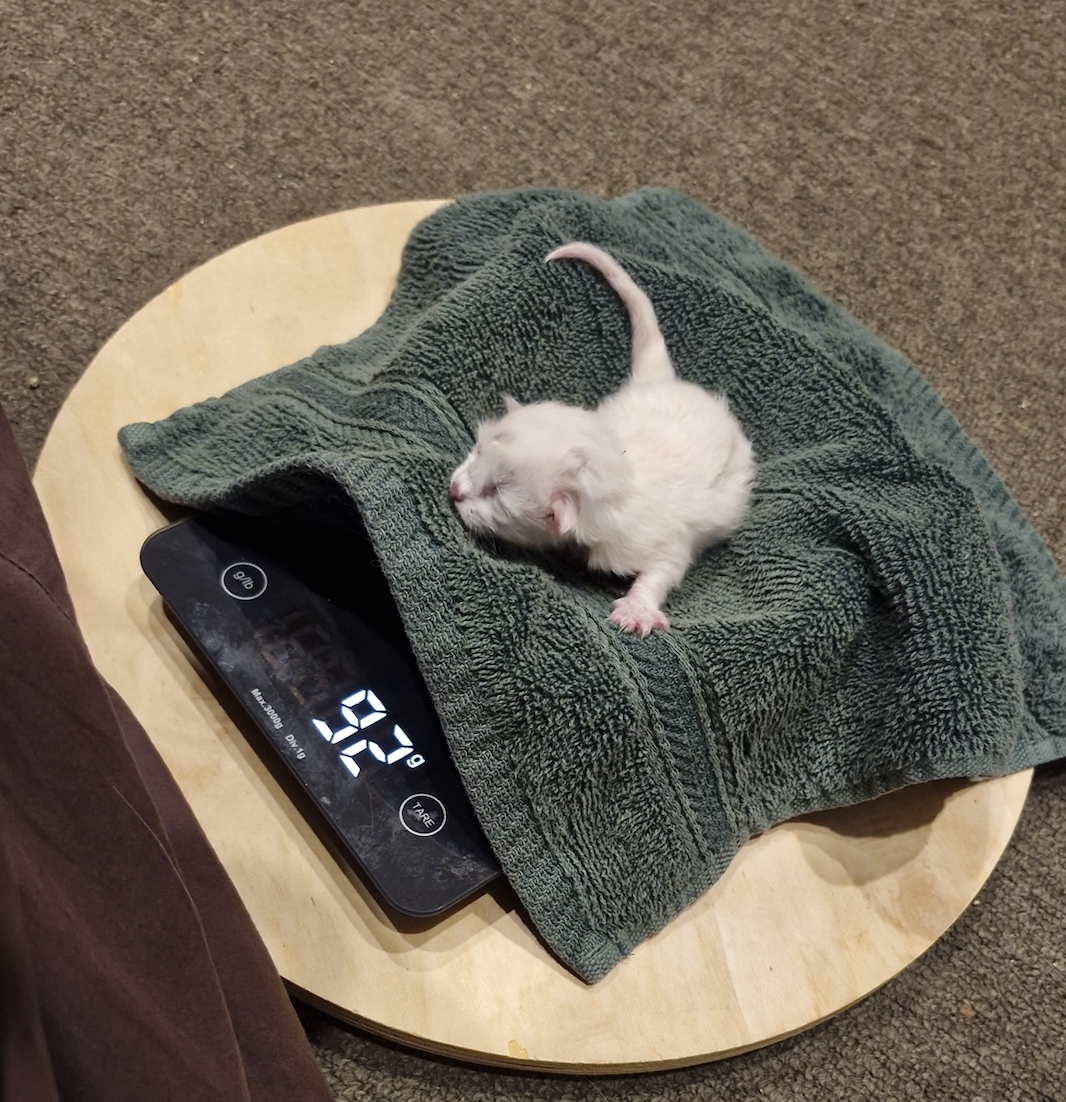
Weight is the first and best measure of health for us ignorant humans. So, kittens should be weighed daily (often twice daily) for the first three or four weeks, and twice weekly for another three weeks after that. This chart is from kittenlady.org and also gives feeding directions for if your kittens are orphaned.
Let’s talk about kitten development week by week, with videos!
WEEK ONE
When kittens are born, their eyes are closed and their ears folded so they can’t see and can barely hear. They also have the stump of the umbilical cord, which needs to drop off by itself at around five days of age. Kittens are pear-shaped, with adorable fat tummies.
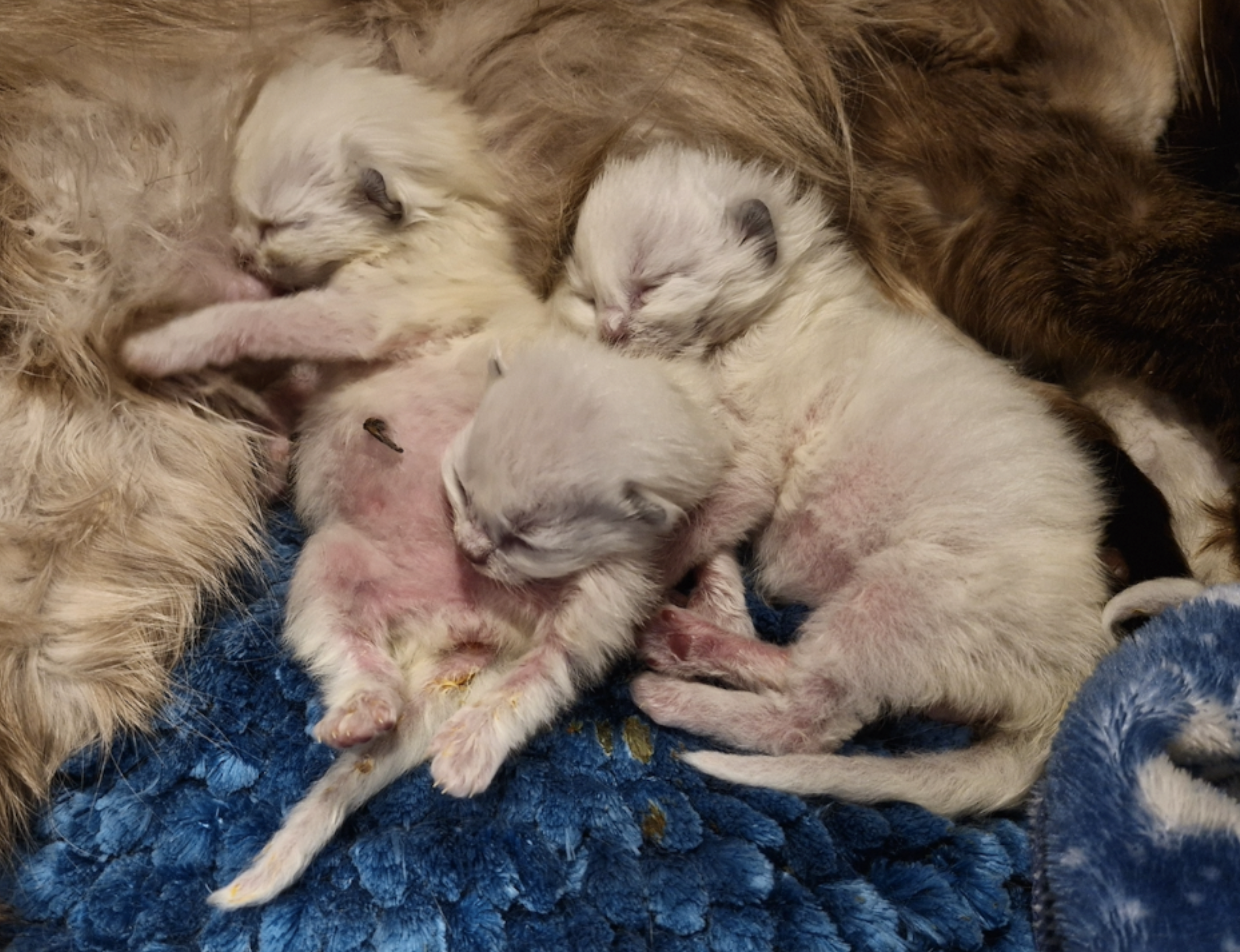
In addition to keeping them warm, it’s worth noting that a bed with gappy sides can be a suffocation danger. When they’re young, they’re very uncoordinated. If they fall on their back, they can’t turn themselves right way up (which was part of the inspiration for Turtle’s name). My instinct says to not change the bedding too quickly after birth. I think 24 hours might be about right, then every few days after that unless it’s noticeably dirty. However that is my guess, not professional advice. Certainly there will be blood, urine, and/or poo in their bed quite often. But you want to leave them undisturbed as much as possible, for both their sake and the mum’s sake. And wash and sanitise your own hands if you handle them at all.
Kittens will probably hiss at humans (you can see it in two of the videos in this section). To me, it looked like panting (a sign of dehydration). Mother cats are protective of their young, and even house cats will sometimes get furious if you attempt to touch their kittens at all.
I cut patches of fur from two of the kittens in order to safely differentiate them, so I knew which one was which, especially when weighing them. They gain about 10g a day, but you should weigh them at the same time to get the most reliable data possible, and record it all so you can observe trends. If they’re healthy, they don’t need to see a vet yet (a vet visit is a big deal and the stress could make them sick or even kill them).
Kittens under four weeks old can also have heart failure and die, particularly from a loud noise such as a dog’s bark or a vacuum cleaner—or from something scary, like an unfamiliar cat (cats are adorable, but they’re also extremely potent killers and it is rational for them to be afraid of other cats).
Their ears unfold in the first week, which means they start to hear better after a few days.
Their stomachs are extremely weak and although the mother cleans them (and stimulates them to wee and poo with her tongue—if they are orphaned, a human must stimulate them by dabbing their butt with a tissue after every feed) there will be a lot of poo around for 4-5 weeks at least. You can see some diarrhoea in the umbilical picture above. Sometimes you need to wash them (with plain warm water and clean facewashers/towels) but be extremely careful as being wet can make them cold. They can’t regulate their body temperature at all. It may be worth using a warm hairdryer with a diffuser from at least 30cm away, but try not to wet them any more than necessary.
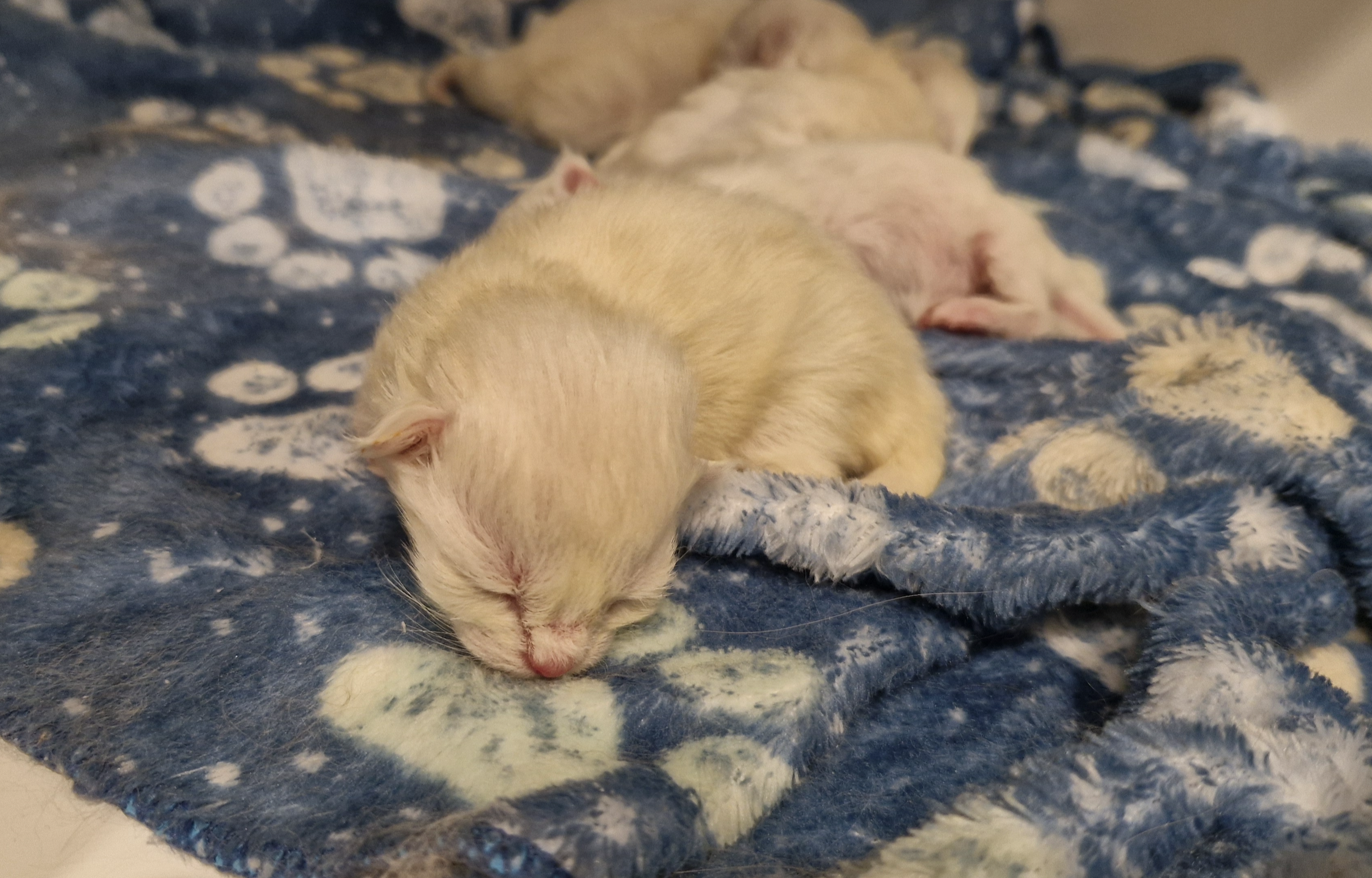
WEEK TWO
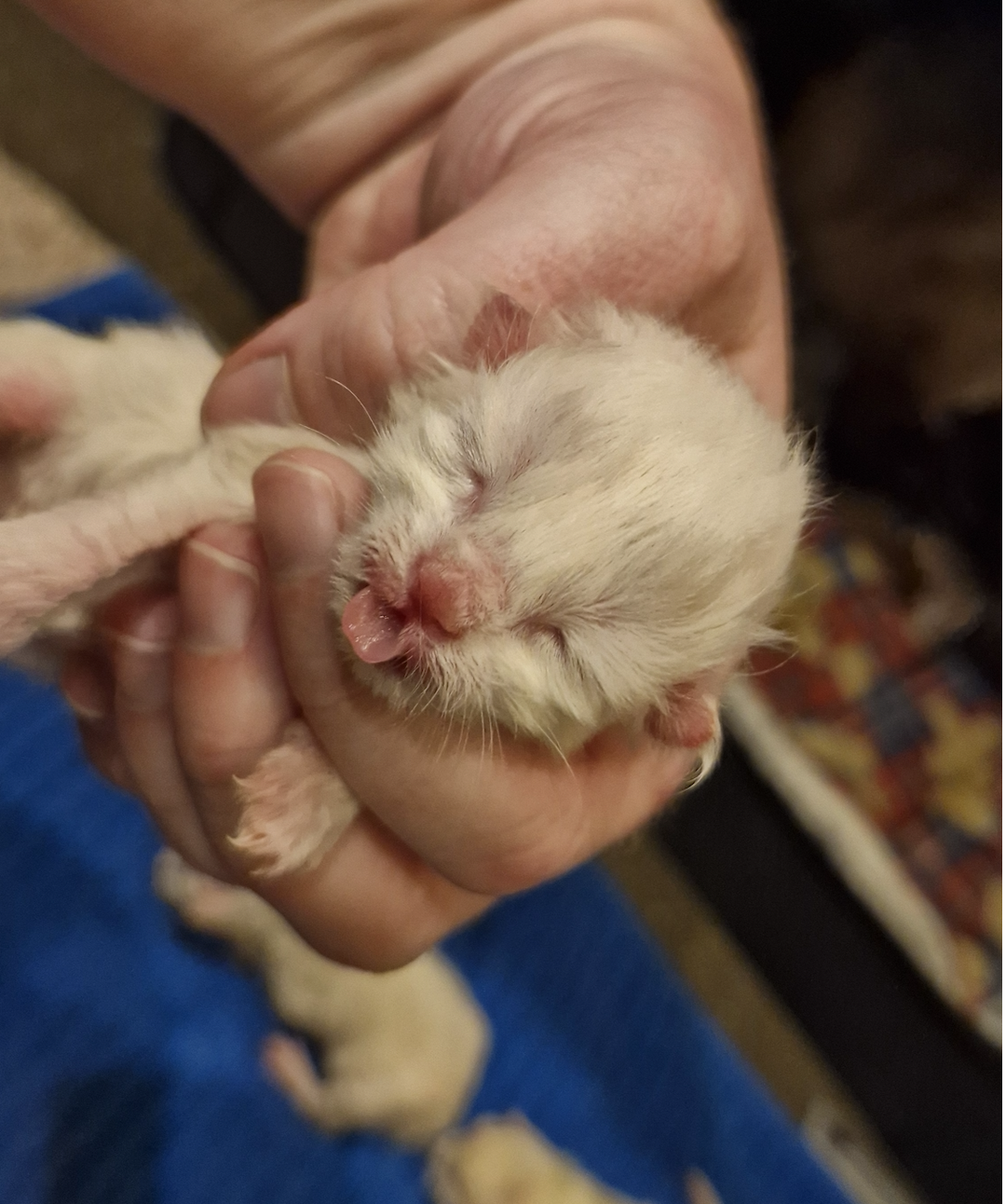
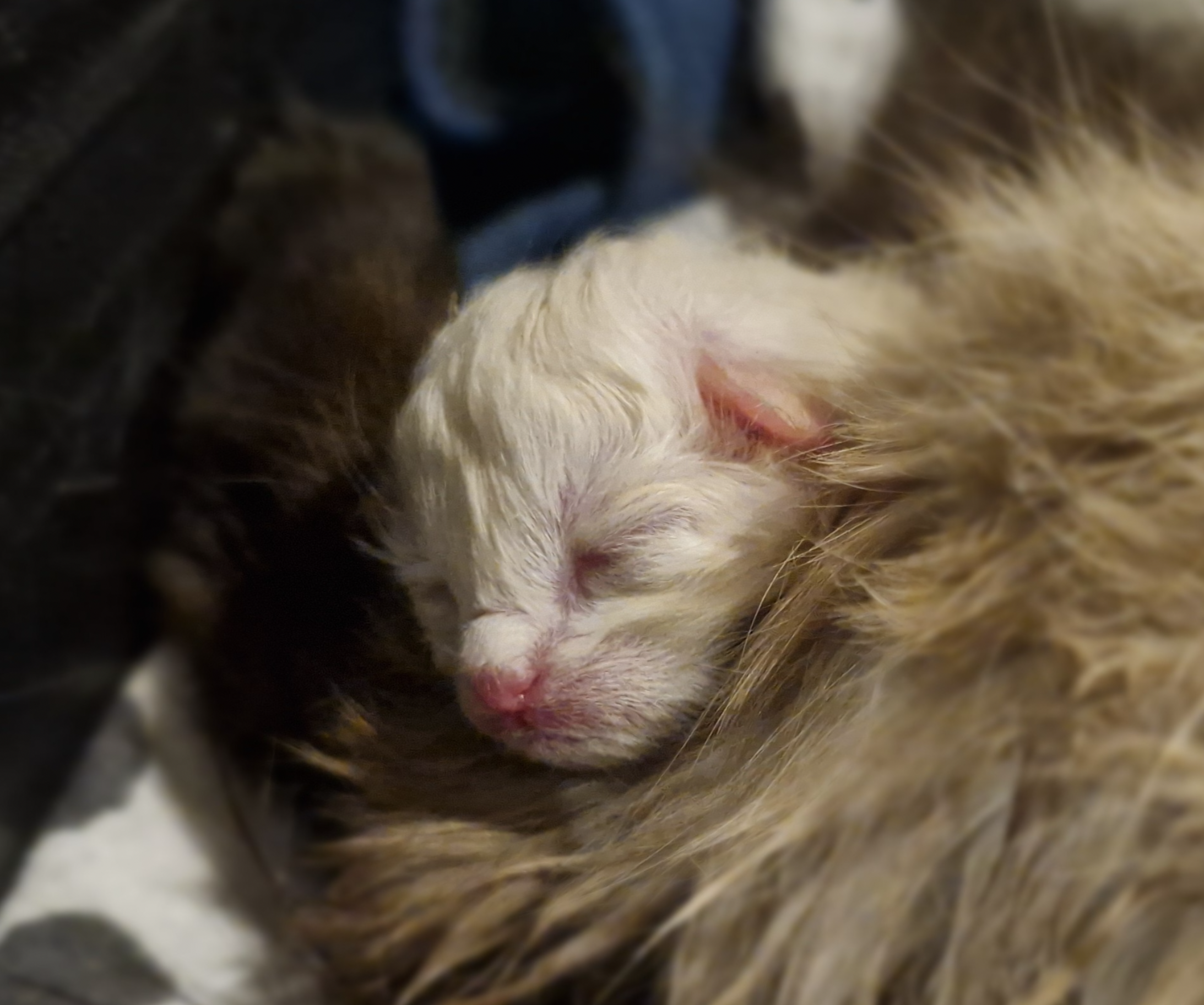
This is when the eyes open (gradually, over several days). Do NOT touch them unless there is discharge indicating something is wrong. Try to keep lights low as they gain their vision.
All newborn kittens have blue eyes.
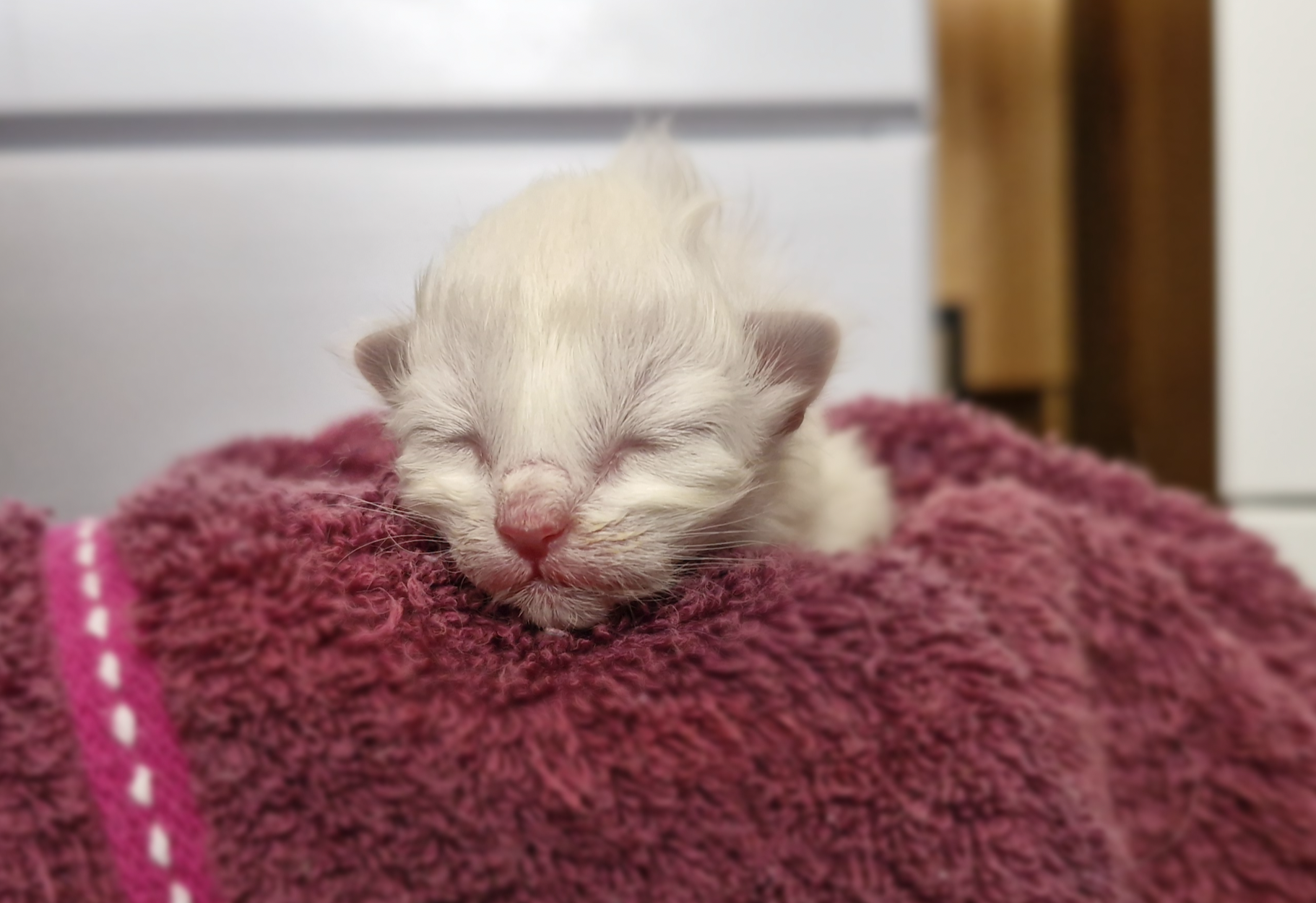
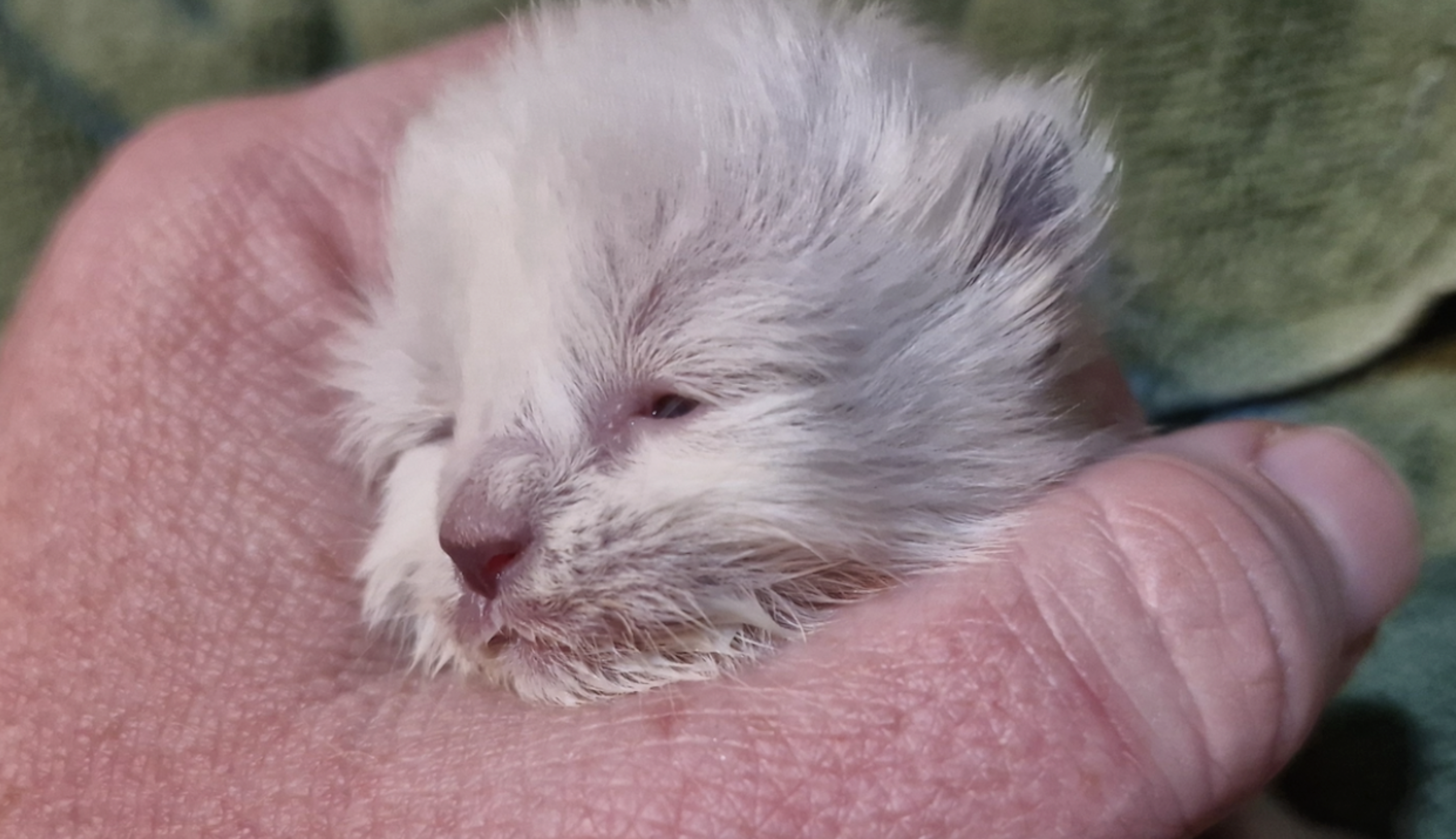
They honestly don’t do much except eat and sleep.
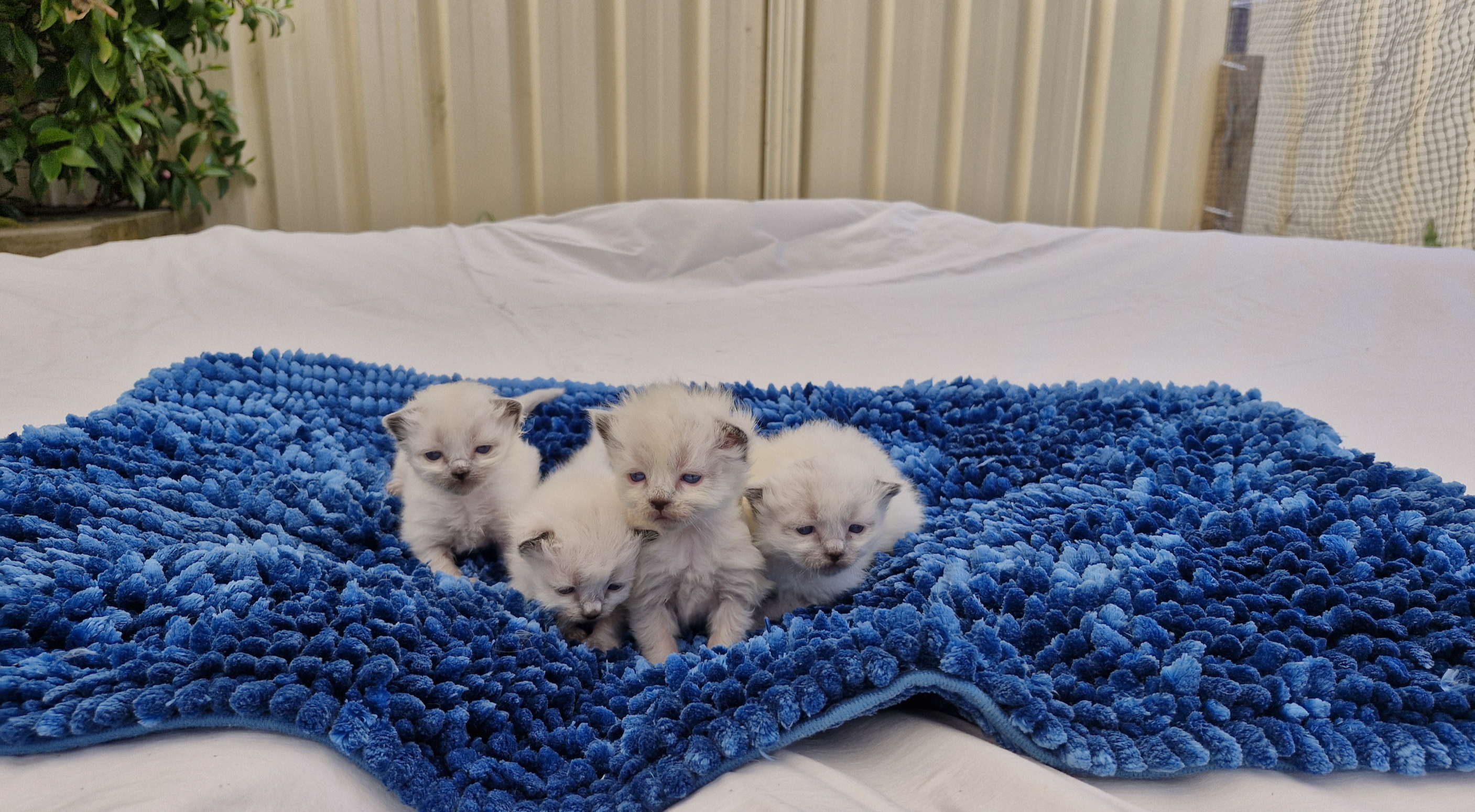
WEEK THREE
They’re starting to walk around a bit more, which means they now have the ability to drown in a water dish! So keep water dishes nice and shallow, or put them in a slightly higher location. You don’t want them to get wet, as that will make them cold. They can climb over a very small barrier a few centimetres high, but might not be able to get back, so make sure that the area around their nesting box is also warm and fairly flat.
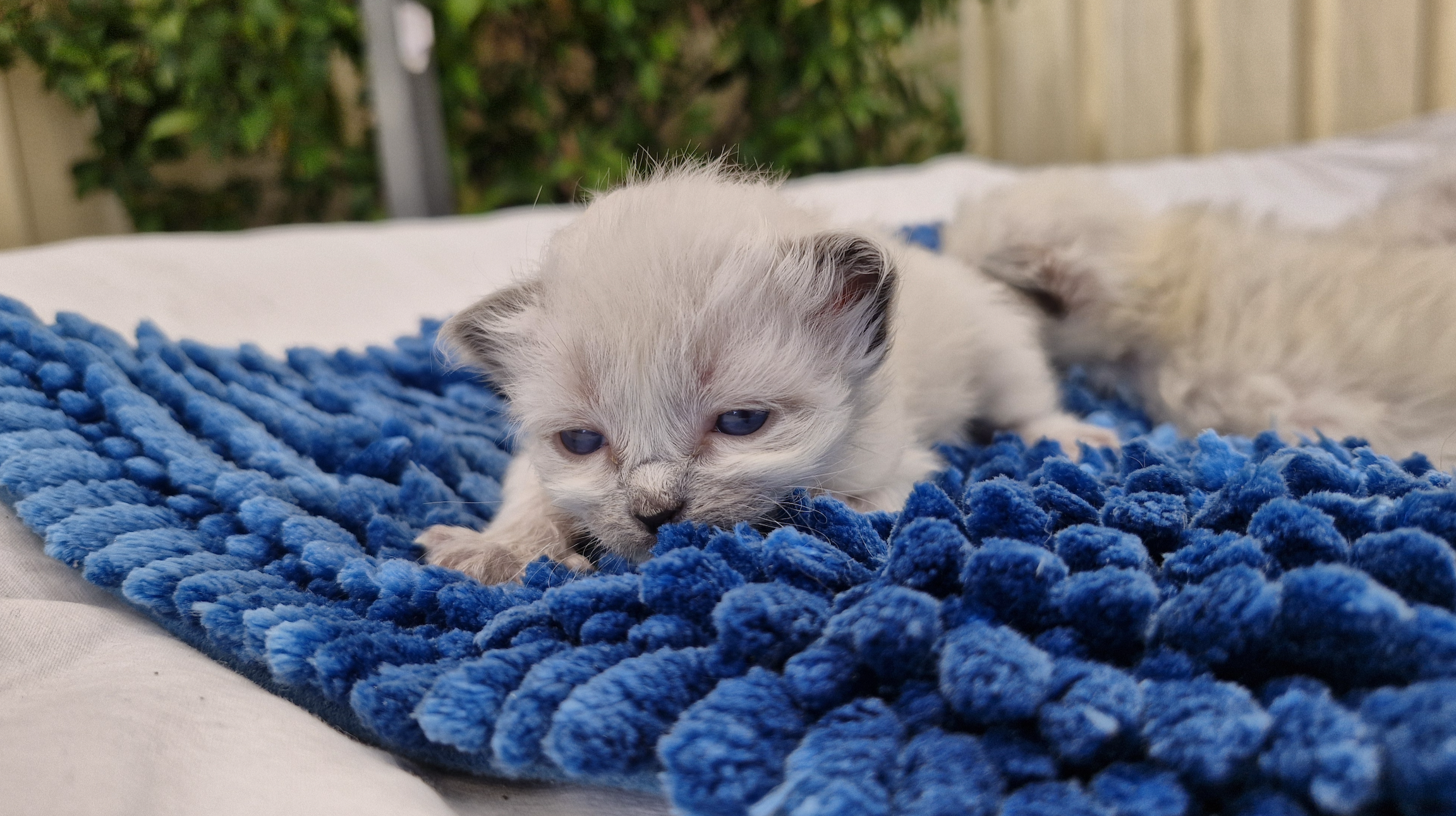
The kittens will start play-fighting each other but they’re not strong enough to hurt each other even if they try. Mostly it just makes them fall over. When they are first walking, their bellies often drag on the ground.
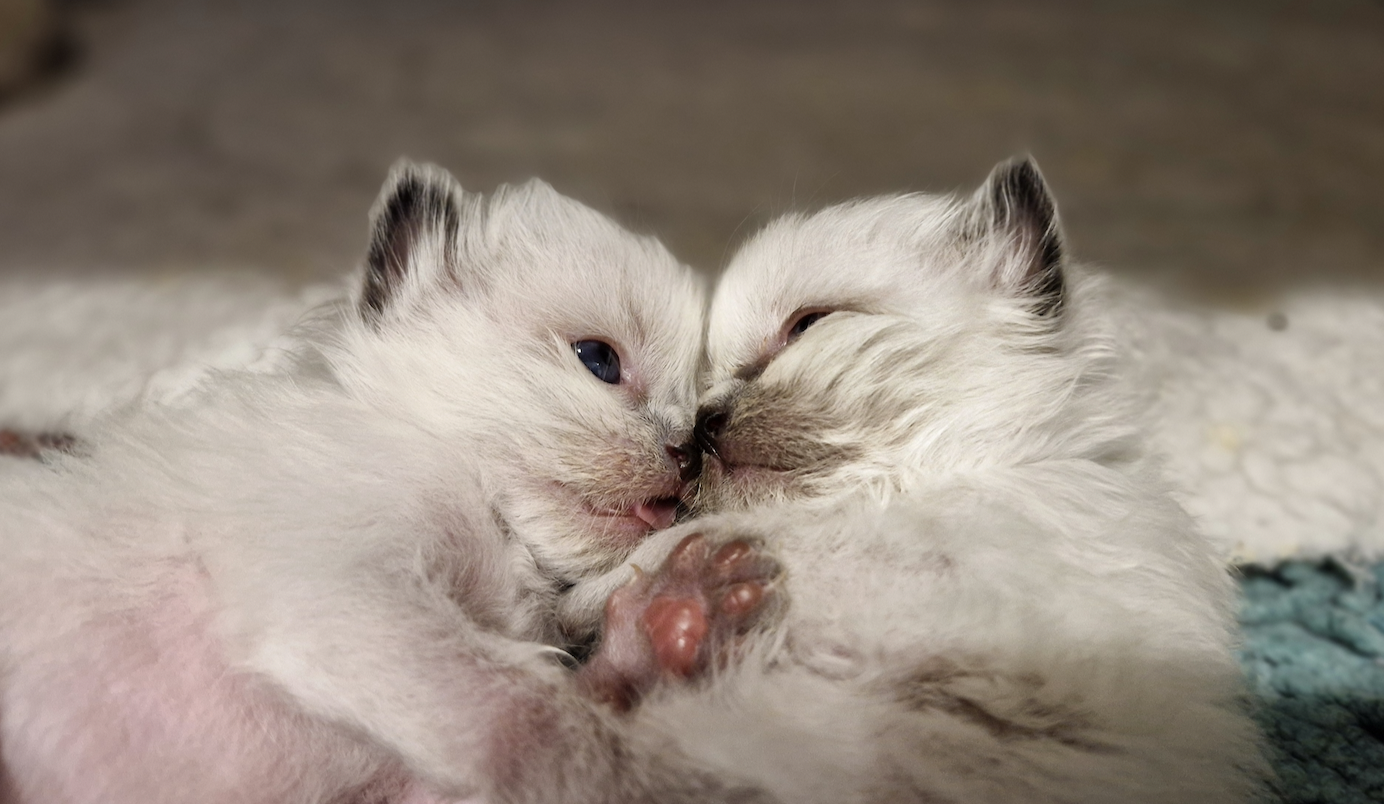
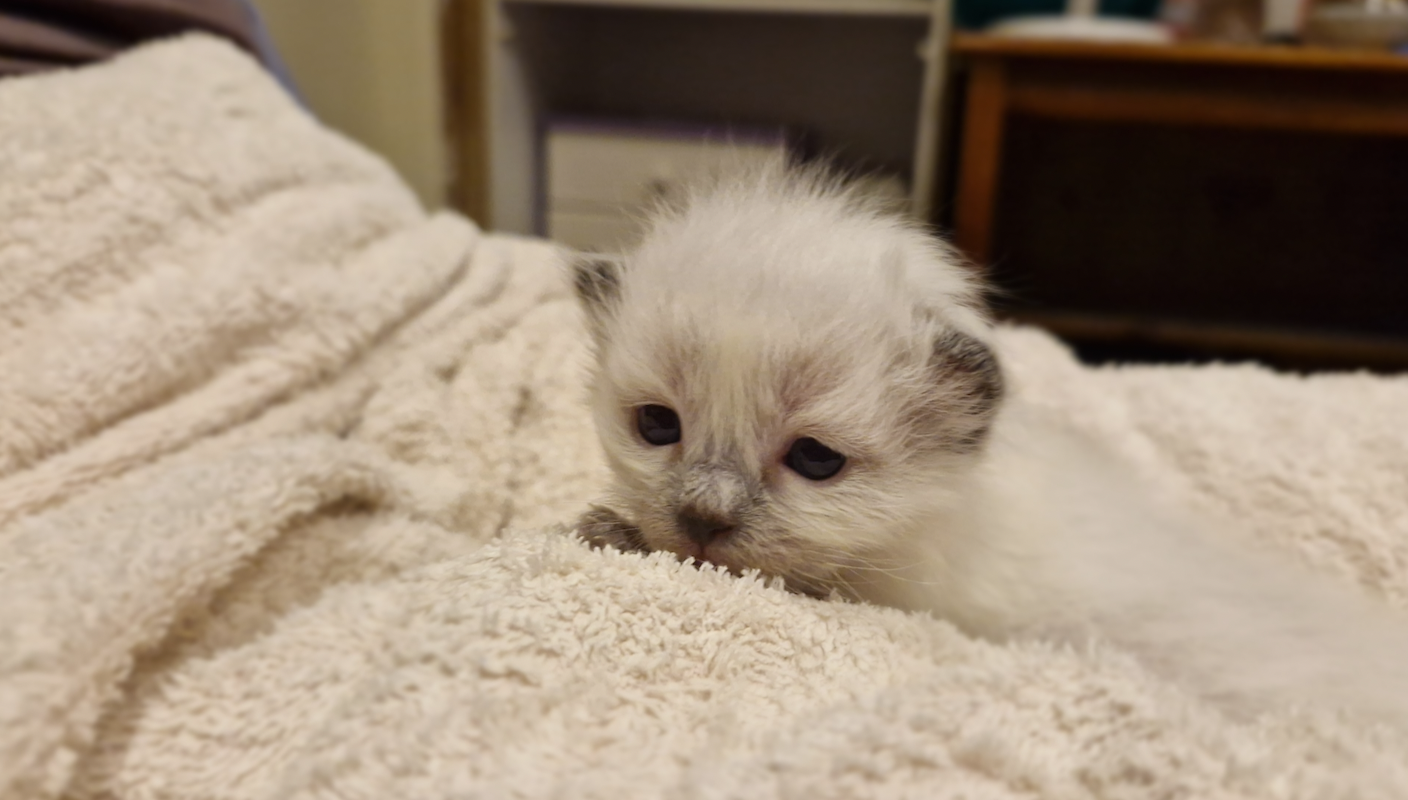
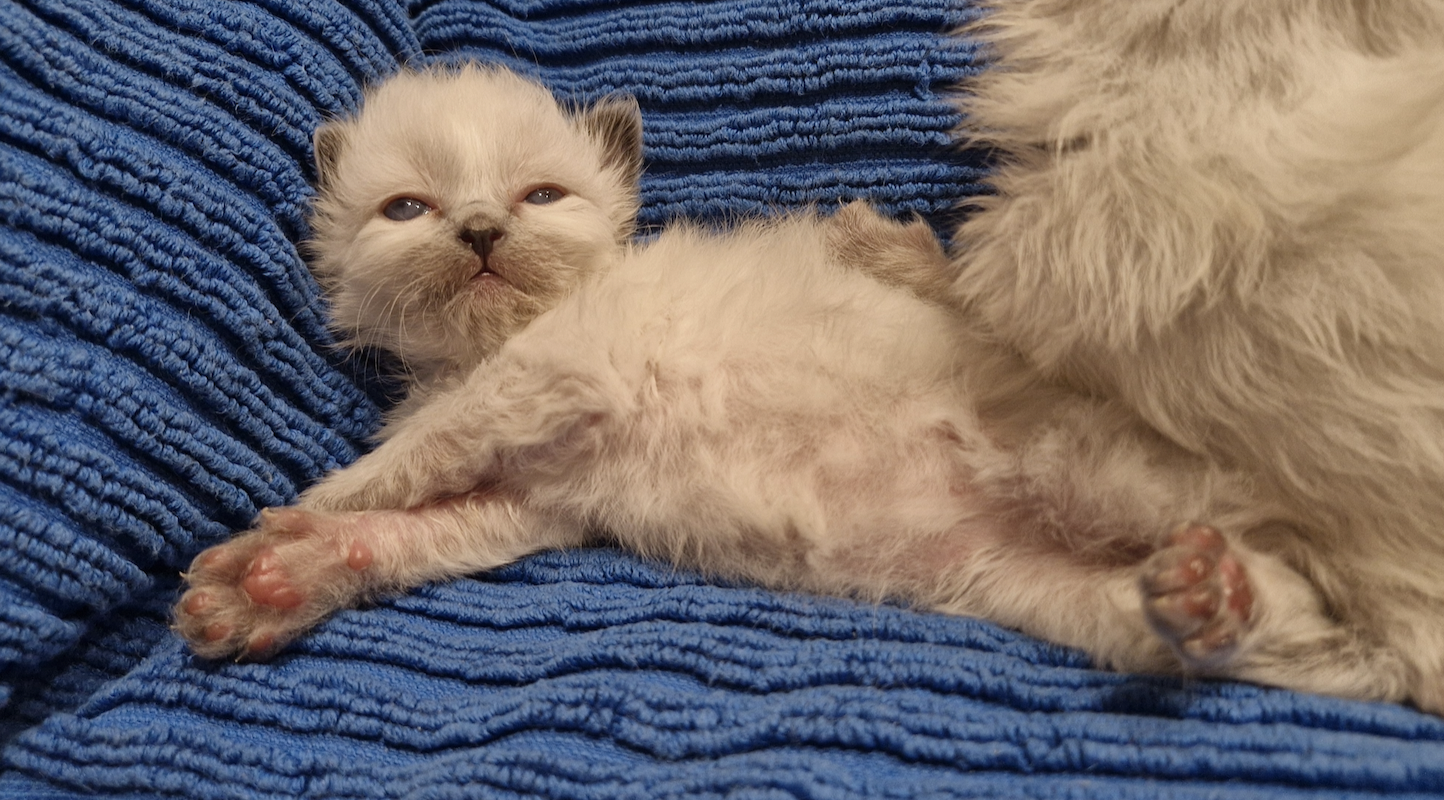
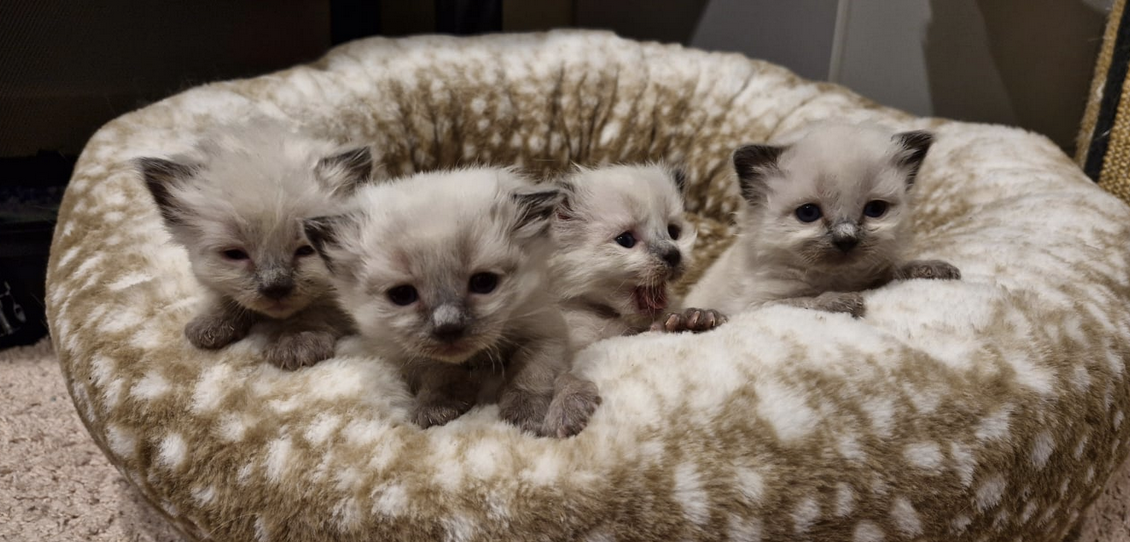
WEEK FOUR
This is the smallest kitten you’d usually see in a photo or on TV. In some ways, this is when they start getting interesting. They’re also less likely to drop dead without warning, although it’s definitely still possible. In humans, medical people often refer to the first three months of life as “fourth trimester” because a human baby is so tiny and fragile. The kitten equivalent is four weeks. They are extremely curious and quite mobile, while also being very small and quite dumb. My quarantine room is the ensuite bathroom in my home, and I never ever let them out unless I’m there to keep track of them. They are still extremely sensitive to cold and noise, and either could kill them shockingly quickly.
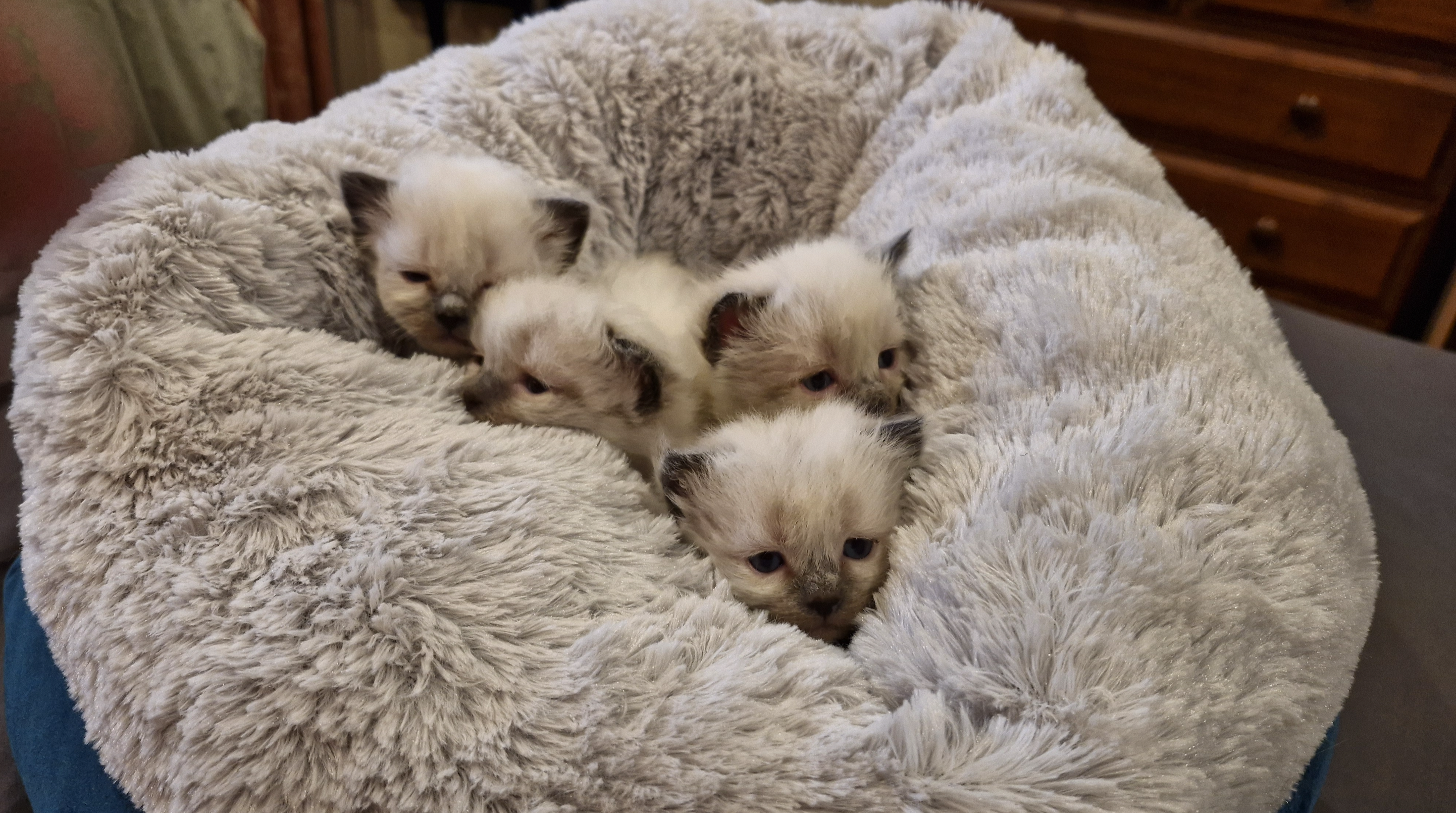
This is when they start being interested in toys, so there is plenty to do even in a tiny room. Dove was too tired out from the work of motherhood to want to do much herself. She was still very underweight despite getting fed excellent food. It didn’t help that big sister Kookaburra (Dove’s daughter from a previous litter) would often take a drink from her! Some people recommend removing older kittens for this reason (as soon as possible), but Kookaburra needed the comfort of family to assist with her socialisation process. I did remove Dove from the kittens when they were only about nine weeks old, for Dove’s sake, and she immediately gained weight in her new home. Otherwise I would have kept her with them until twelve weeks so they had plenty of time to observe and imitate her pro-human behaviour.
Play always includes meowing in pain, which is very important developmentally as they are teaching each other how hard is too hard. They’ll also start to struggle against their mum when she washes them (or carries them back to a safe place), and she may fight with them and/or smack them surprisingly hard when they attack her and she doesn’t feel like joining in. It’s nice for her to have somewhere high where she can watch them but still get a break physically. You can also start teaching them physical boundaries, by saying, “No” and moving away if they use their claws or bite a human. They are not strong enough to hurt you, but it builds good habits. If you want them to be safe for young children, you should avoid the temptation to use your hand as a cat toy.
WEEK FIVE
This is about when they’re likely to start eating solids. I fed them Womberoo cat milk and Royal Canin’s Mother and Baby Mousse, both of which are also great for nursing mothers and can be bought from pet stores (although Womberoo may be difficult to get and isn’t necessary except for orphans or supplemental feeding).
Although I let them on my bed, I supervised them closely so they didn’t fall off. They’re definitely at an age where they can fall/jump and injure themselves.
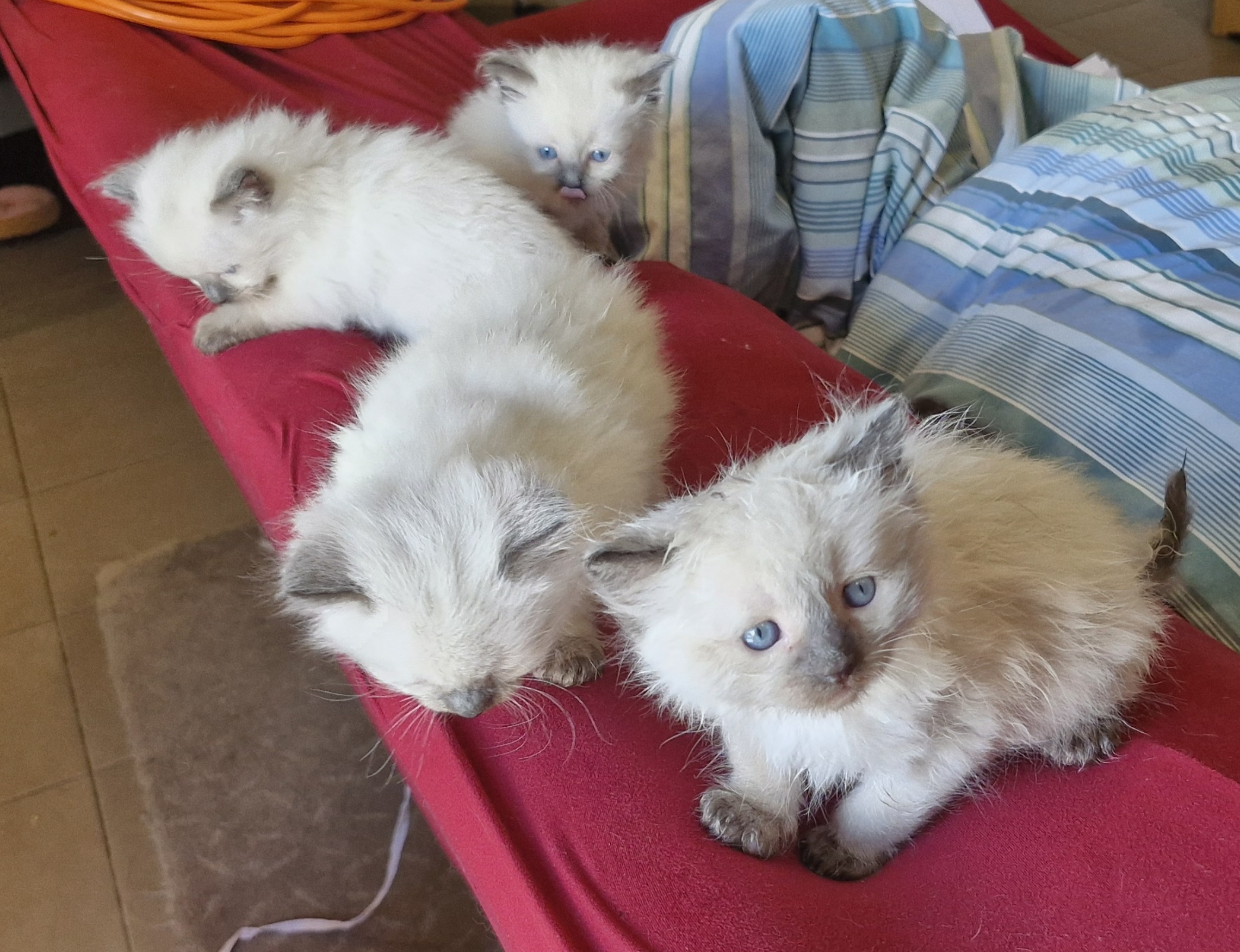
It was extremely interesting watching Kookaburra (their older sister) as she coped with them growing up, and clearly had some jealous/threatened feelings she needed to work out along the way. However, I could see that her claws were sheathed even when she attacked them.
Six weeks is still definitely too early to introduce them to other pets! Yes, they’re tiny and harmless… but they’re also one of nature’s most efficient killers so your other cats may freak out. Or your dog may bark and give them a literal heart attack. Or your other pets may have a minor illness that can infect and kill them, as they can’t be vaccinated until eight weeks of age.
They can definitely now climb, so that opens up a whole new world of ways to injure themselves or break your stuff. You need to supervise closely (more than ever) to spot danger as it develops. Welcome to the toddler phase! They’ll often mew for help if they feel they are too high up (or if they forget how to get back to the nest) but usually it is best to let them try to figure things out for themselves. The best judge of their ability is their mum, who definitely hears them mewing and decides whether to rescue them or not. They can fall from about twenty centimetres onto carpet without hurting themselves.
If the mum is anti-human and all the kittens are eating solids, this is when you should separate them from the mum. Otherwise they will copy her anti-social attitude.
WEEK SIX
Some people will sell kittens when they are six weeks old. This is deeply wrong as they’re barely weaned, too young to be vaccinated (or, crucially, desexed), and they definitely still need their mum AND their siblings.
But they’re incredibly cute.
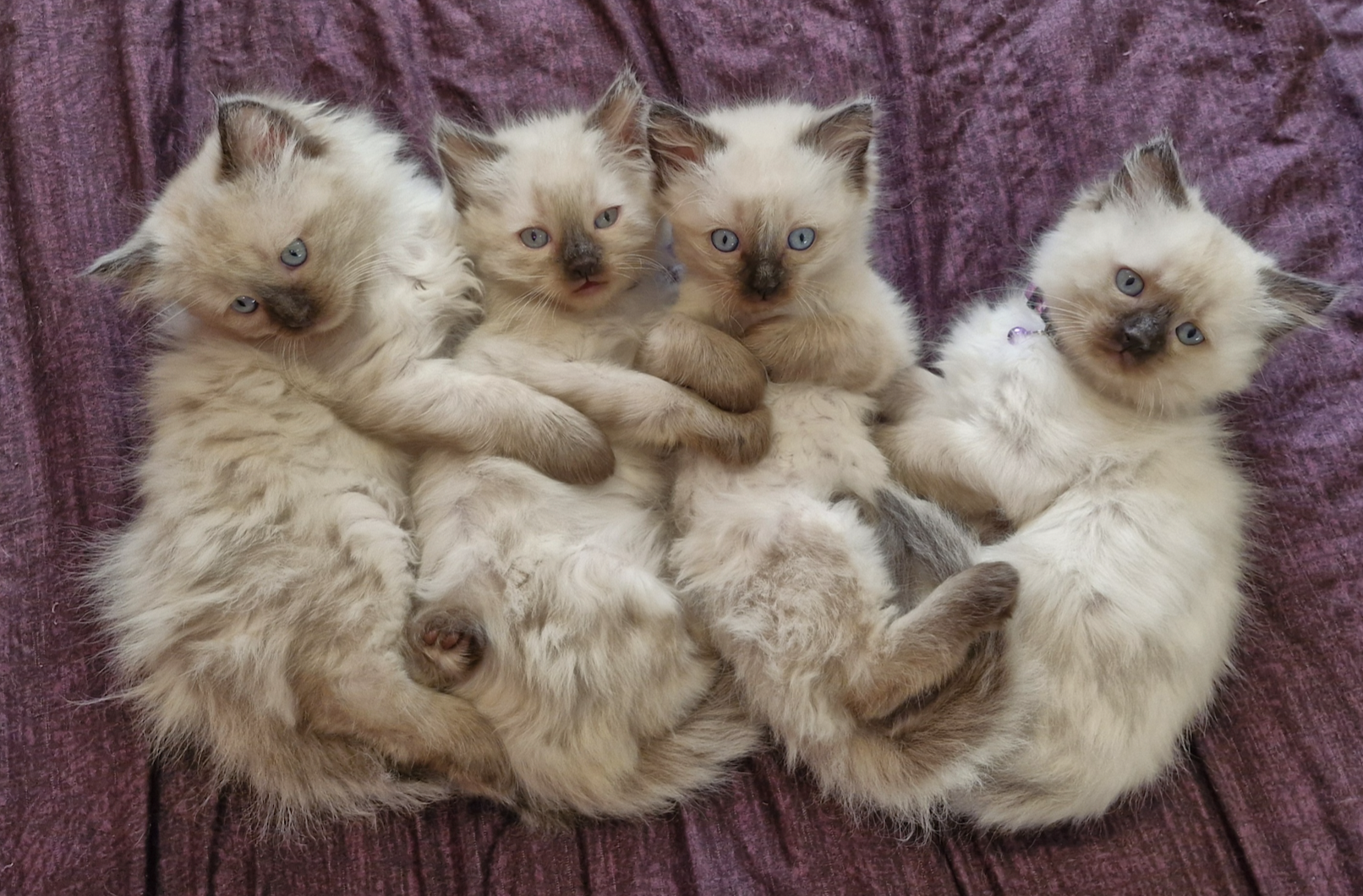
This is also when their permanent eye colour starts to develop. Ragdolls keep their blue eyes but most cats have yellow eyes.
They will fall asleep in unusual places, making carers absolutely panic as they search their entire house for their missing kitten. Goose once fell asleep in a tissue box under the bed! Other possibilities include behind cupboards, inside shoes, under clothing, behind a toilet, and much more. So it’s still best to limit them to one room. They do need space to run, and some novelty (toys, or even just moving items around). Items like scrap paper or empty bottles with rattling rubbish sealed inside can be great toys, and you can make old toys new again by removing them for a week and then bringing them back.
This is also when kitten claws will start to draw blood, so if you haven’t started training them to keep their claws sheathed with humans then now is the time (if a kitten has no siblings, it will take a lot of extra training to teach them boundaries, especially around biting). You may also want to keep some disinfectant on hand for minor wounds (on you, not on them). And be careful not to trip on them! The one down side of having kittens used to humans from birth is that they comfortably assume no one will ever step on them. (For this reason, stray kittens are often better suited to households with younger kids—they are also less likely to scratch humans, as they never forget that humans are a different species.)
As they start getting into solid food, it’s worth making sure that you have a routine and a distinctive noise that they associate with wet food (such as a bell, calling “Food time!” or the sound of a can opener). You want to make sure that when you give them more freedom, you can trust them to appear at meal times and/or when you yell “Food time” (or whatever). It is also worth thinking about getting them a collar, even if they will be inside cats, because if they do escape your house, people can tell immediately that they’re not a stray.
You can start giving them kitten-appropriate dry food a week or two after they start eating wet food. Start with just a few pieces sprinkled on or in their wet food, so their teeth and stomachs can adjust slowly. I usually start with Royal Canin, then experiment with cheaper food after ten weeks or so. If you change their food, it is vital to do it very gradually over several days. If their poo is extra smelly or sloppy after two weeks with new food, then you need to switch back to the good stuff.
They now have loads of energy and need at least two or three solid play sessions daily. If they don’t get them during the day, they will have night-time zoomies. Morning and dusk are excellent play times that fit with their natural rhythms. Surprisingly, almost all cats will adjust to your routine including waking when you wake up (and immediately demanding pats and/or food and/or play depending on their personalities).
They will toilet train themselves (make sure the litter trays have low edges that they can climb over, and that there are multiple trays), but between four and six weeks they’re likely to make toileting mistakes (and to play with the litter itself), so it’s quite a messy fortnight. I use lots of bath mats around litter trays because they’re easy to lift up and shake out, then wash. Kittens also tend to walk through their food at this age. They’re a lot like human toddlers enjoying exploration and experimentation.
Ragdoll kittens are larger than average so they tend to reach developmental milestones sooner (and if you have a runt they will always take longer, which is fine). The major exception is toileting, because of their fur. It would probably help to trim their butts (with hair-cutting scissors) starting now. I didn’t quite dare to trim ‘my’ Ragdoll litter, and they were still sometimes flinging poo around (unintentionally!) at twelve weeks of age, including getting it on each others’ heads like horrifying little hats.
I let them briefly look at some other (friendly and calm) kittens through mesh, so they could see and smell each other but not touch. It was very interesting that they all had different reactions. I think it was worthwhile to introduce them to the concept of other (non-aggressive and vaccinated) cats without actually letting them physically touch.
This week, I moved them out of my bedroom and ensuite into the official cat room.
WEEK SEVEN
This entire video is just gratuitous cuteness. They’re incredibly acrobatic at this age, and love chasing balls, chewing on things, scratching things, and getting in and out of boxes. You should be able to notice different personality traits, one of which will be whether they prefer the company of other cats or other humans. Eg. Kookaburra clearly needed a home with other cats, even though she would take a long time to trust them. And Goose needed a human who would give him lots of attention (his owner tells me that Goose follows her from room to room).
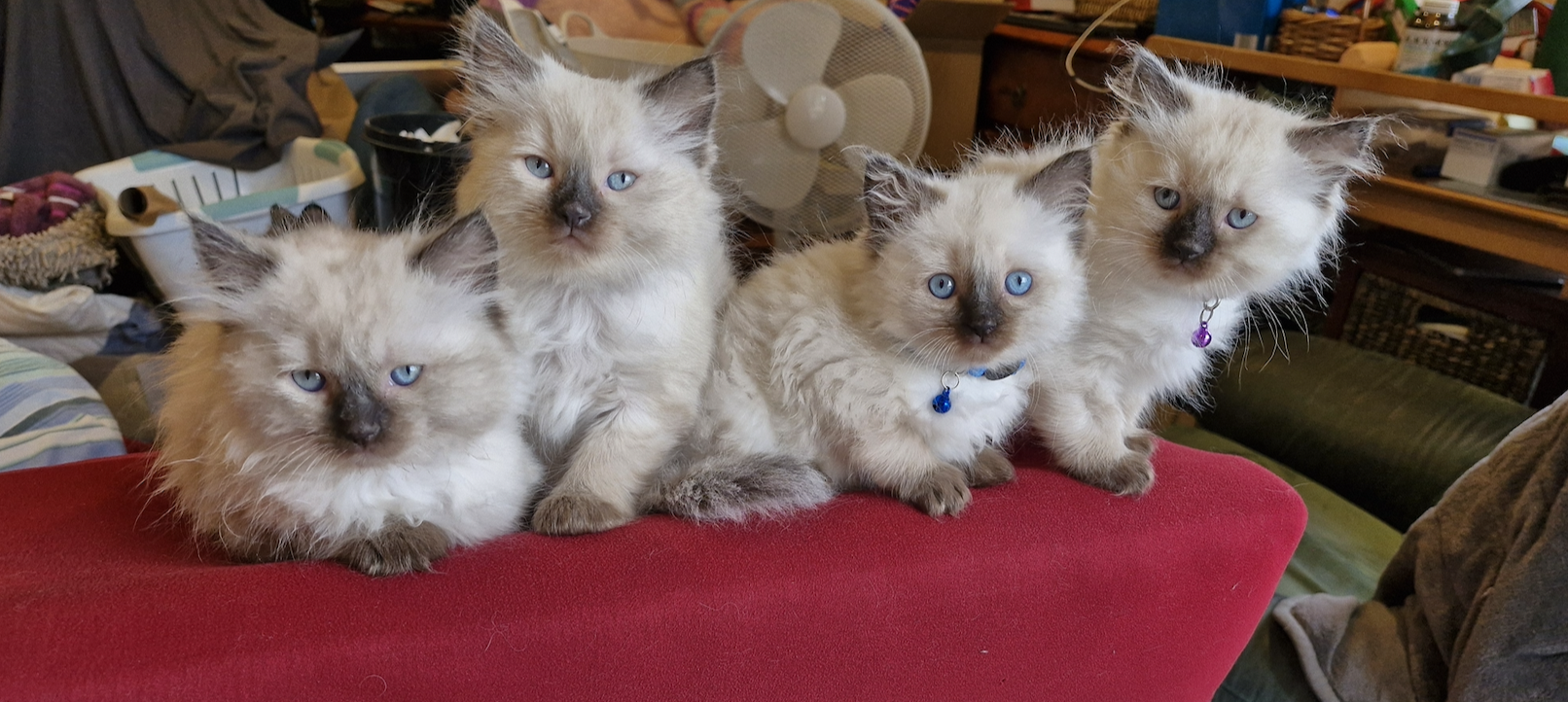
They can fall almost two metres onto carpet without injury now—usually. Injuries are much much less likely, but always possible.
WEEK EIGHT
They can get their first health check and vaccination at eight weeks, as well as a microchip. They can’t usually be desexed until twelve weeks. Then, after time to recover, they can be adopted. Boys are generally fine after a few days, and girls should be monitored by someone who knows them for ten days. Their operation is much more complicated.
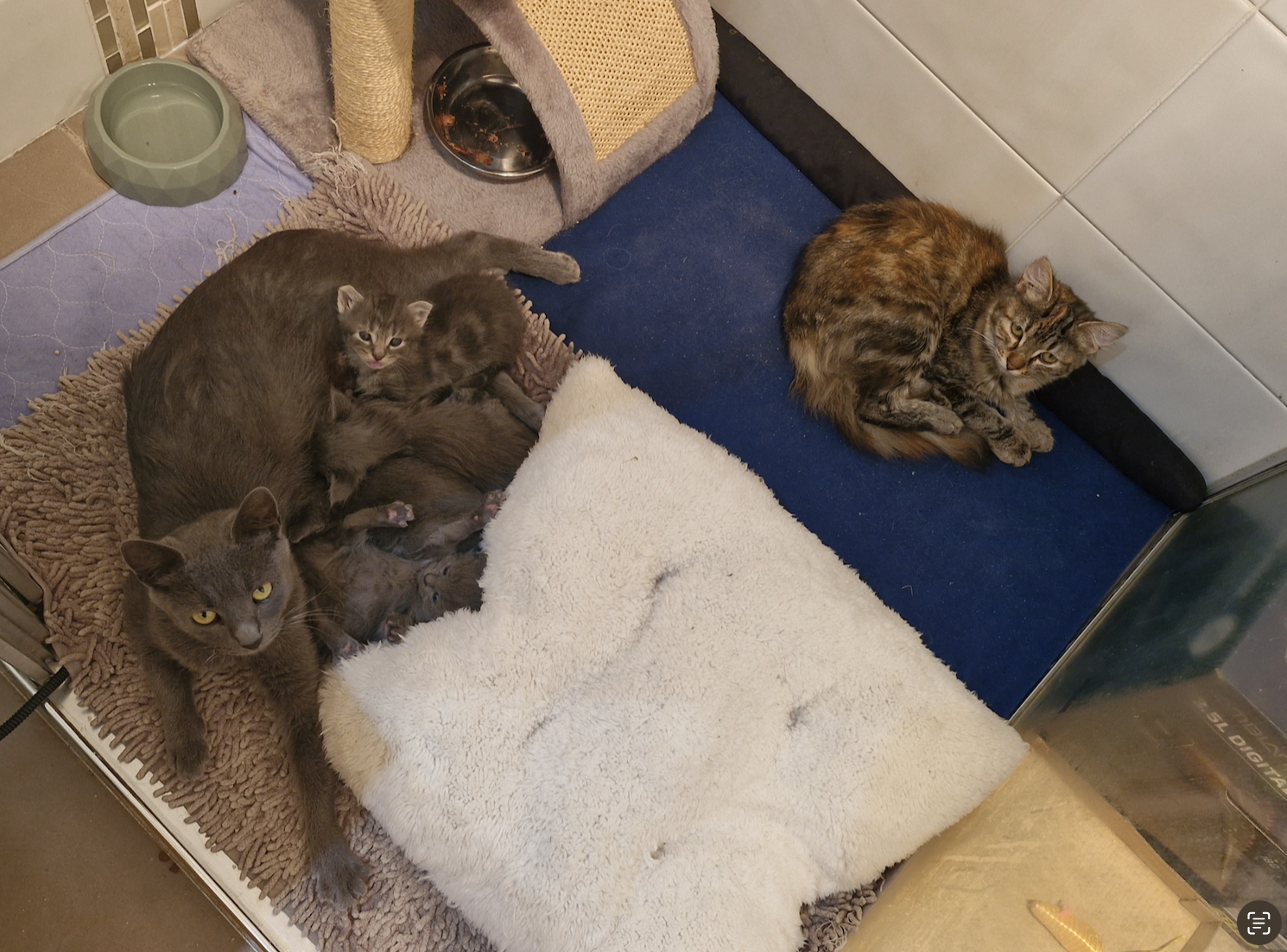
Looking after newborn kittens was one of the best experiences of my life, and I hope I get to foster newborn kittens again someday.
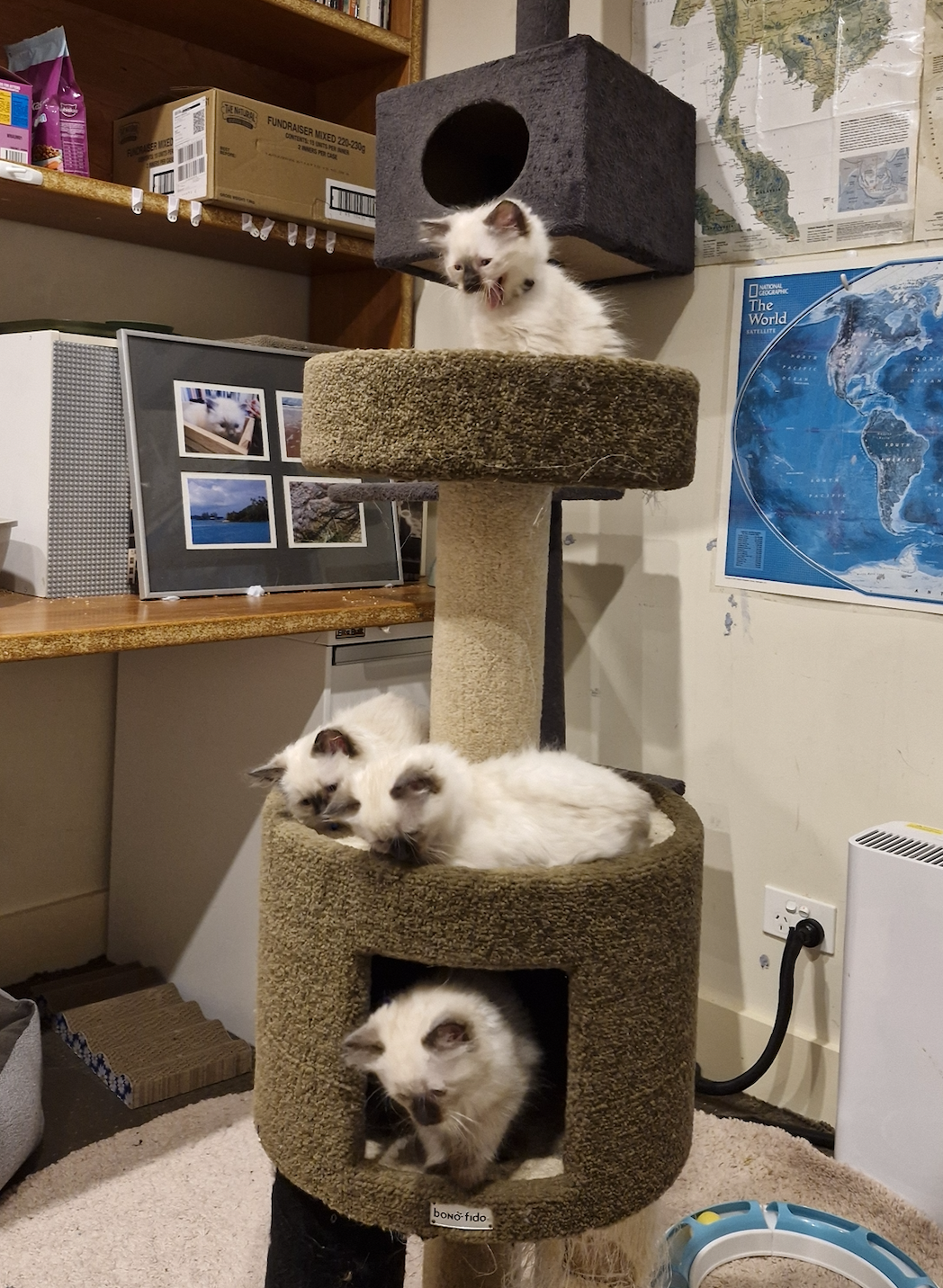
I recently had someone contact me asking if I could foster two very pregnant (and friendly) cats and their babies. I had to say no, because I have to pay off the debts from the Bird kitten litter before taking any more foster babies.
If you can help me get closer to the day when I can foster another group of kittens, I would be very grateful. At this stage, though, it would take a miracle.
Here’s the Ragdolls in Week Nine, Ten, Eleven, and Twelve:
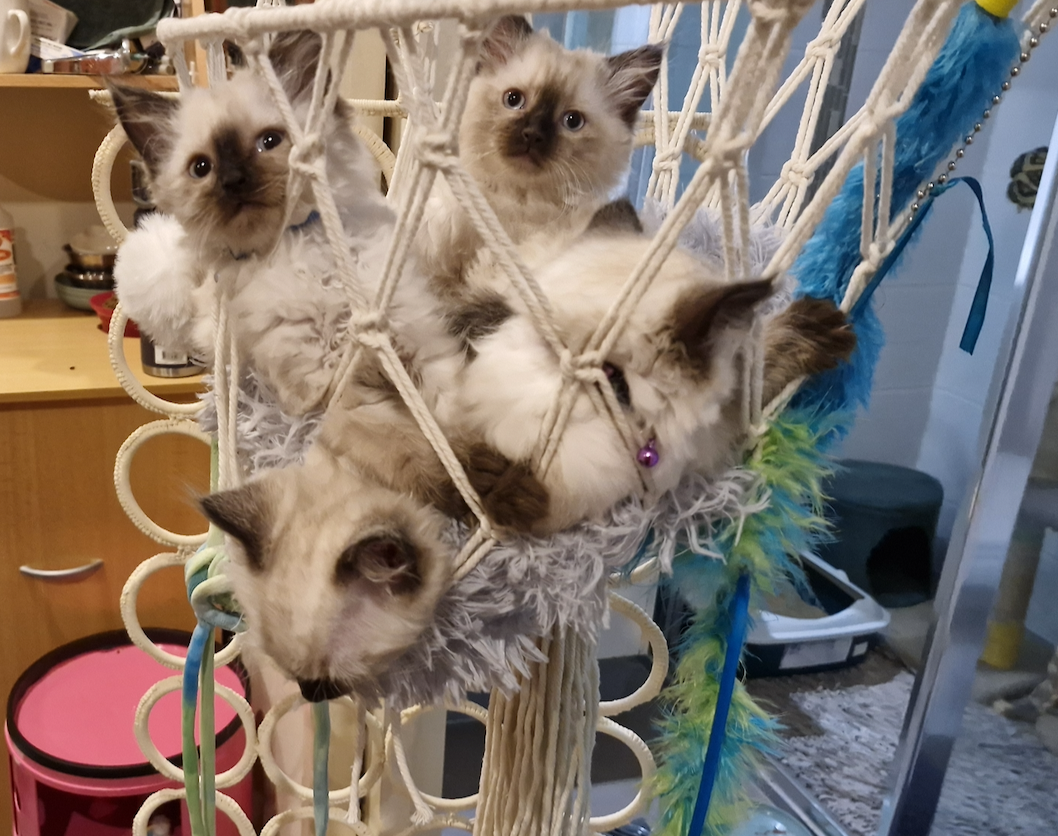
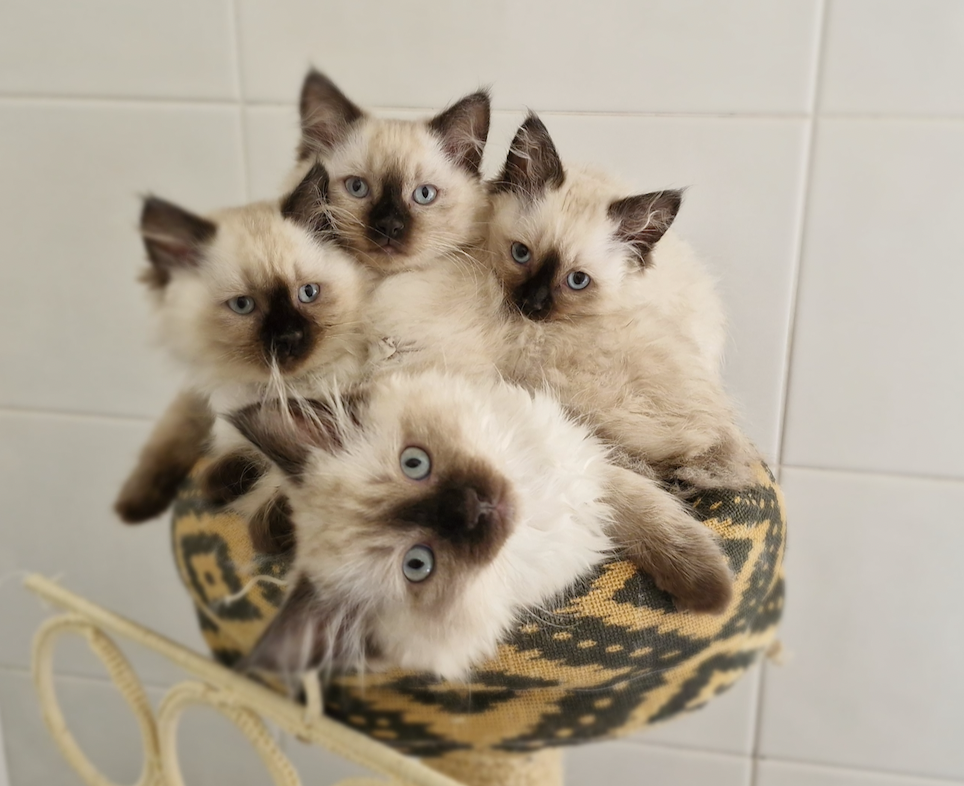
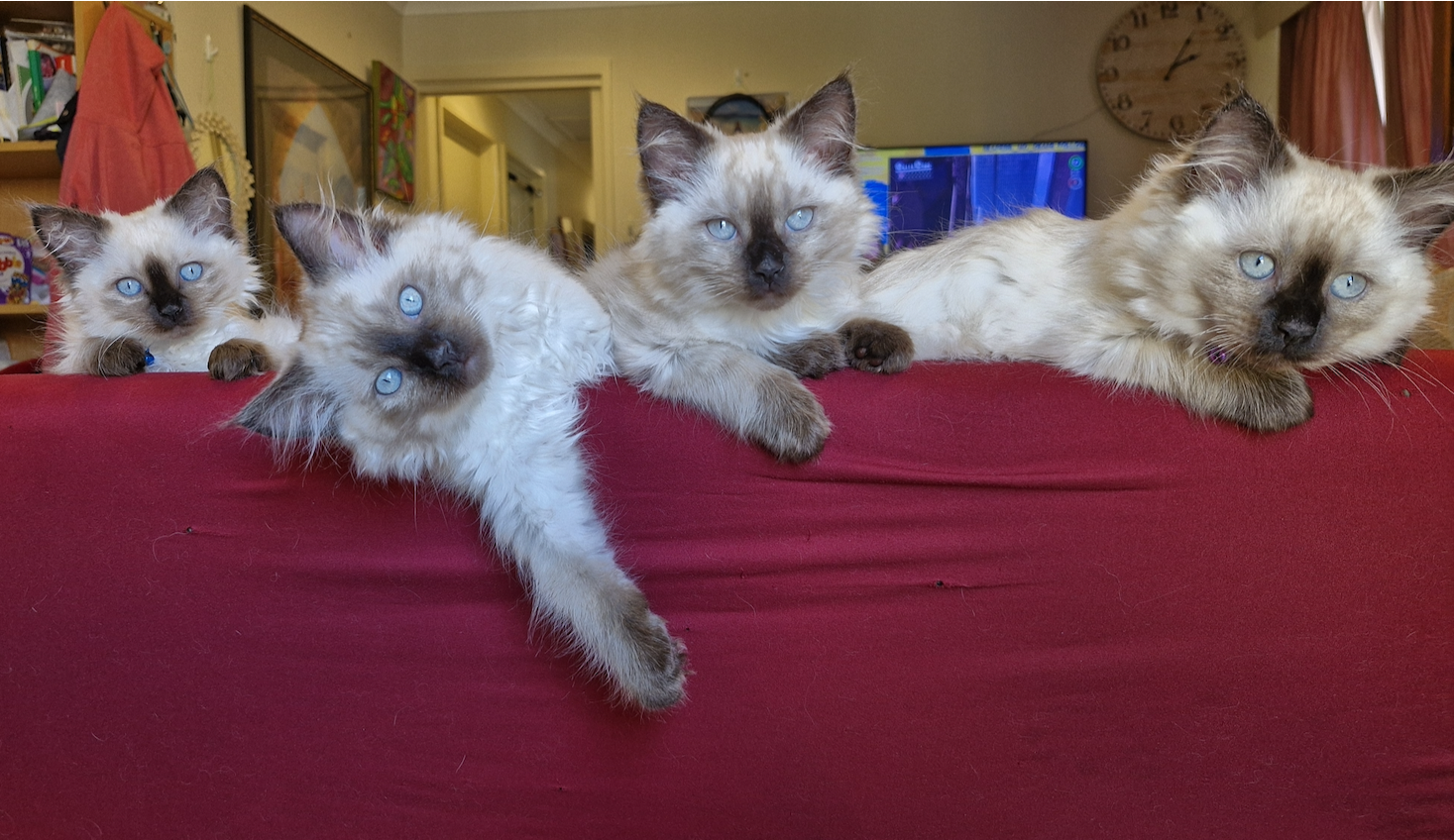
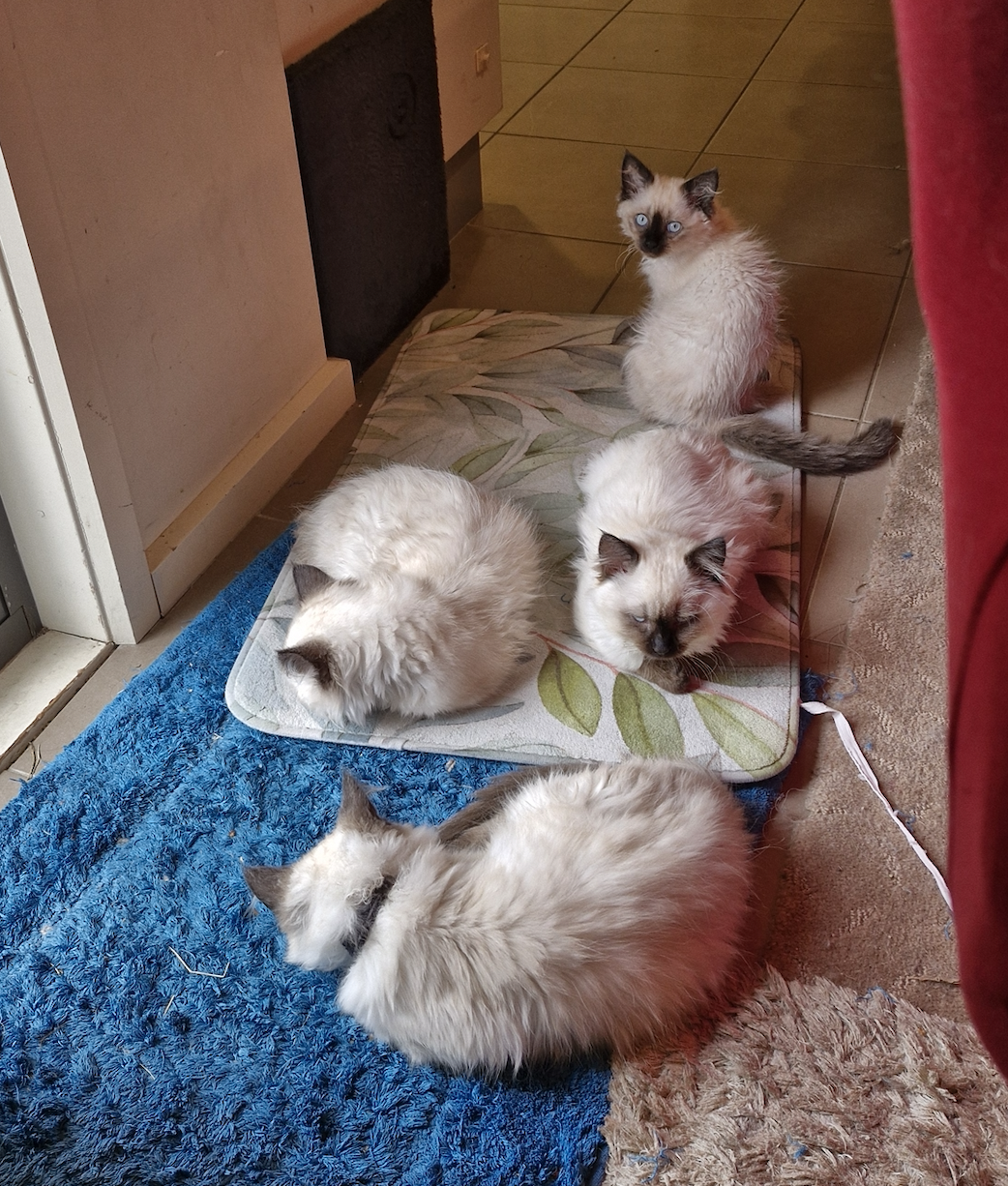
And in close-up (I swear these are four different kittens!)
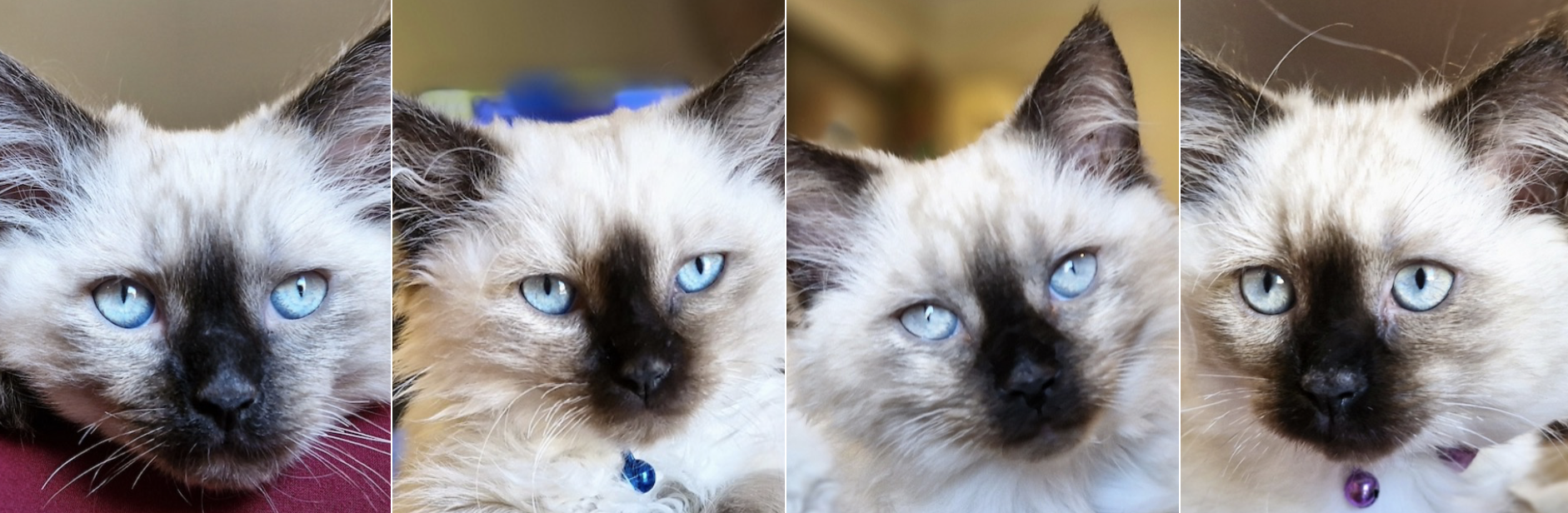
Here is Turtle in photographs from a newborn baby to a confident and ready-to-adopt young man:
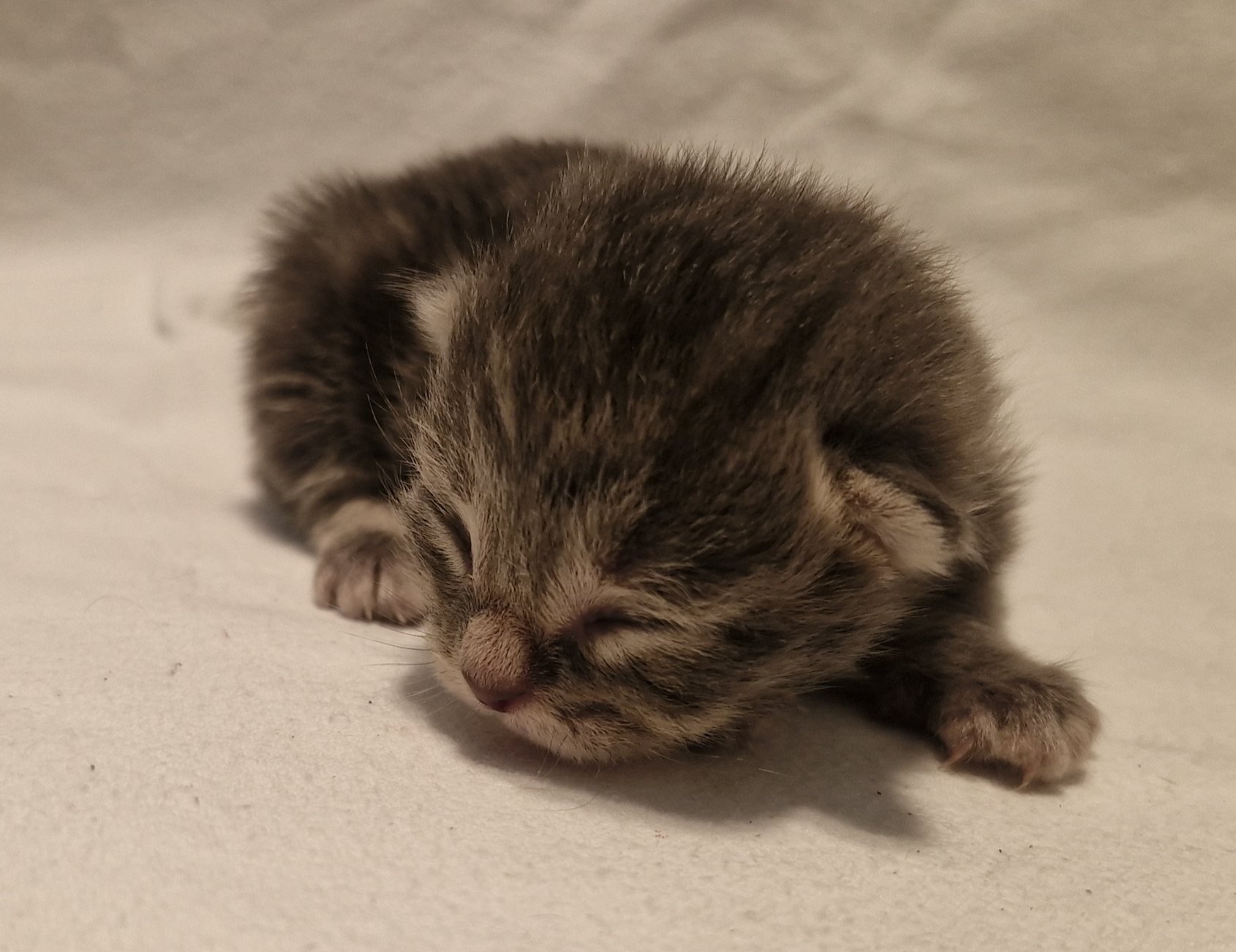
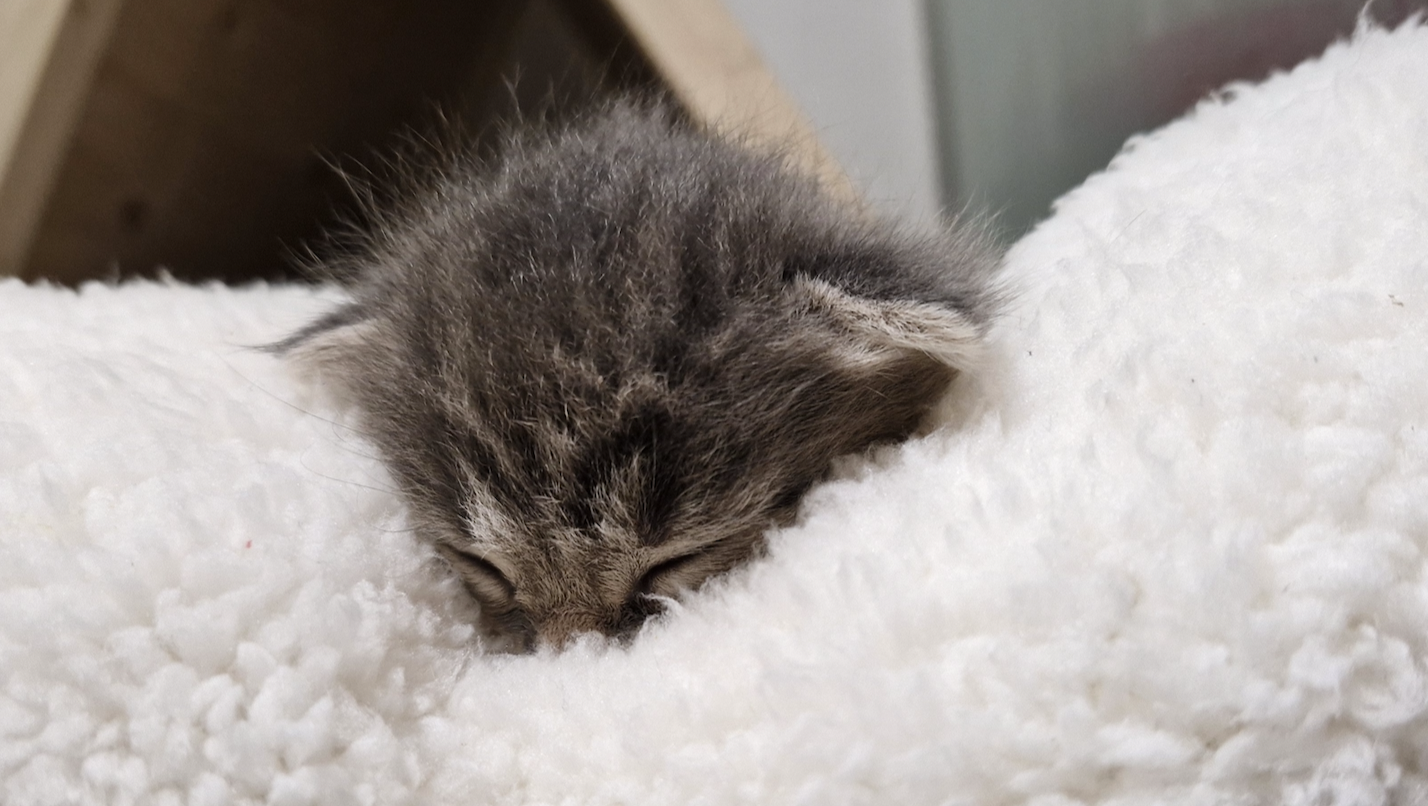
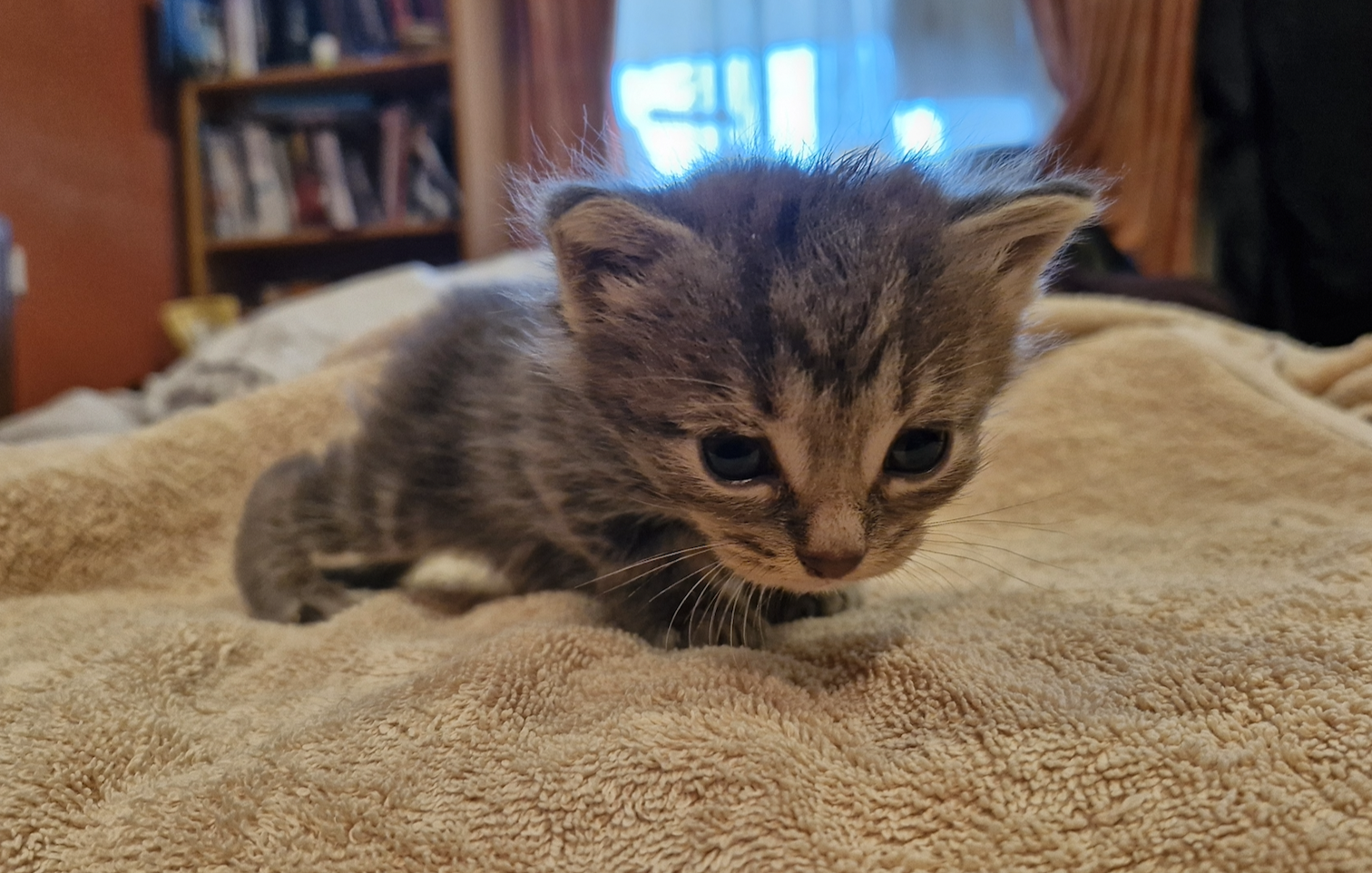
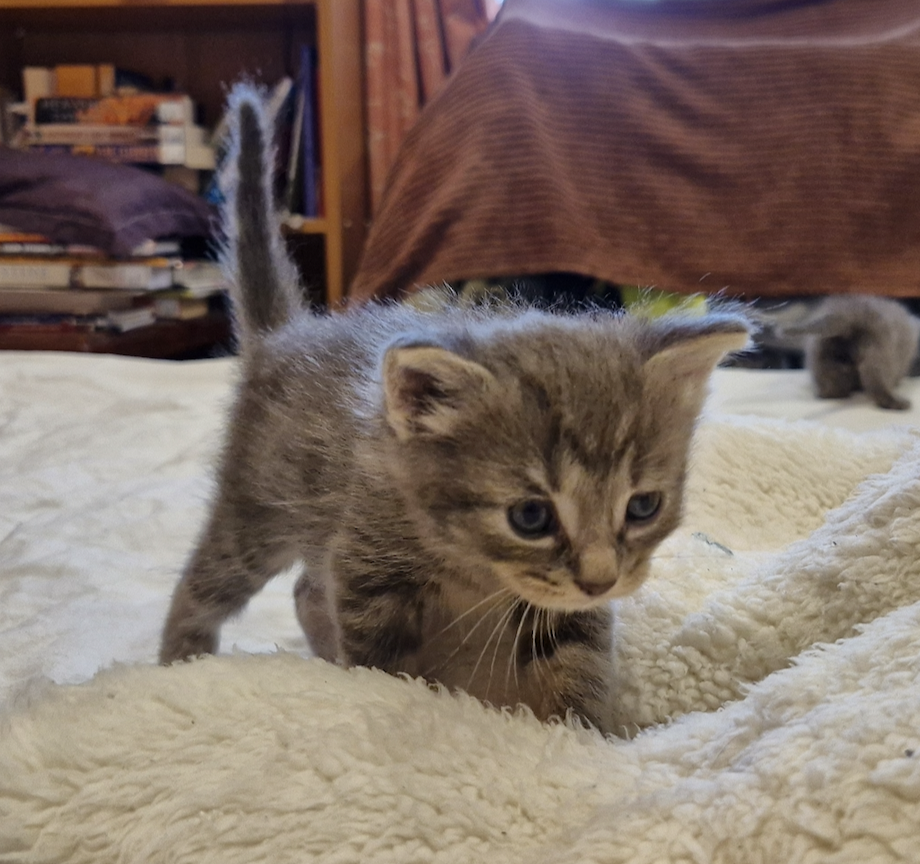
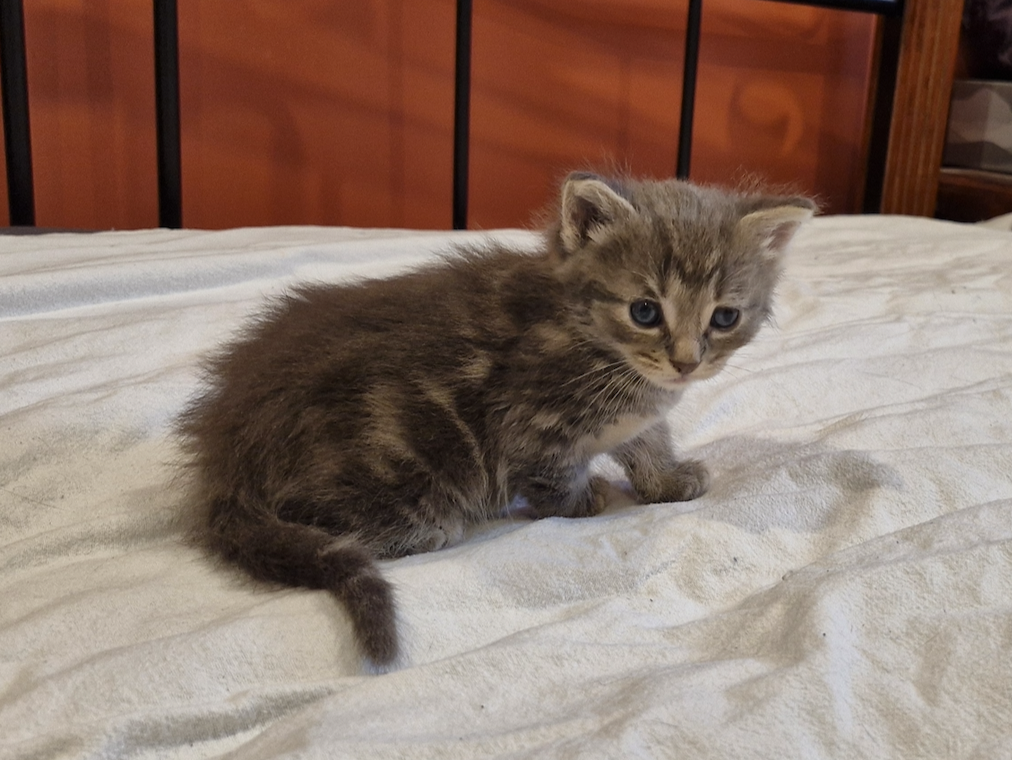
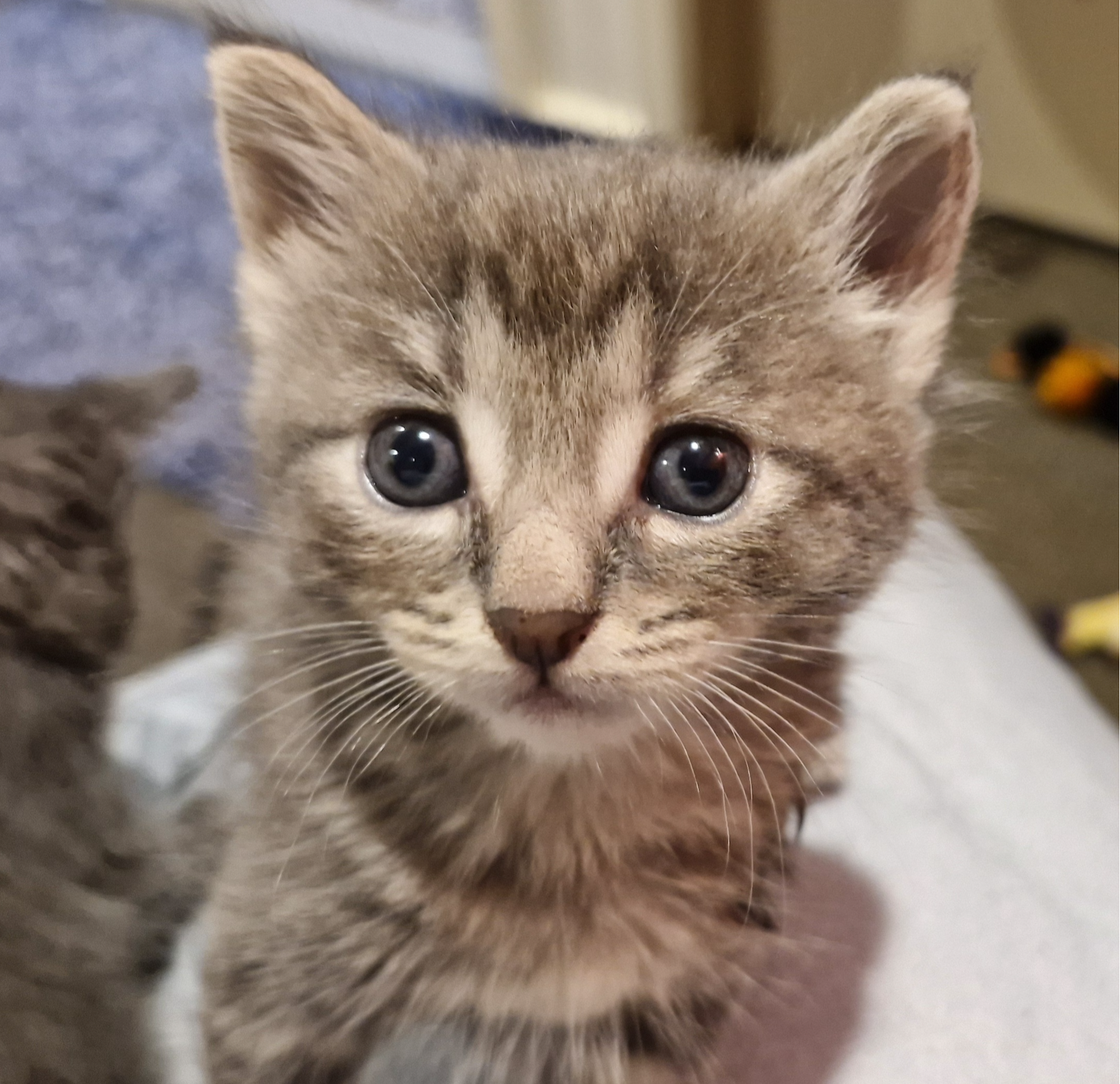
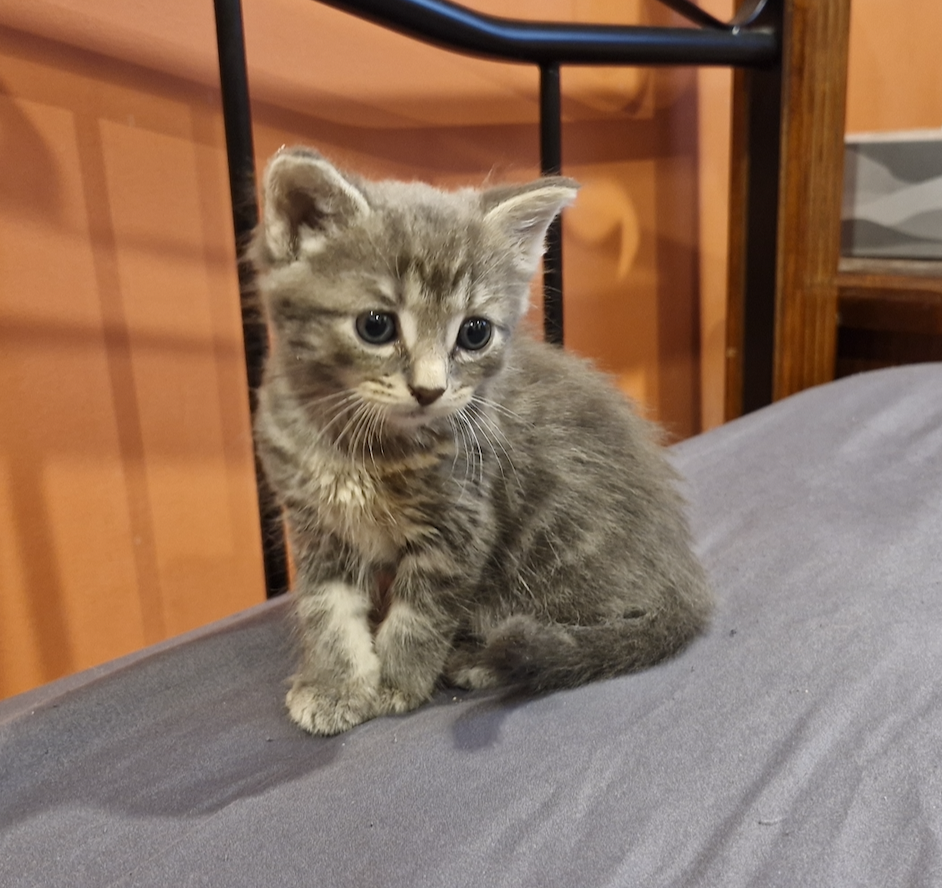
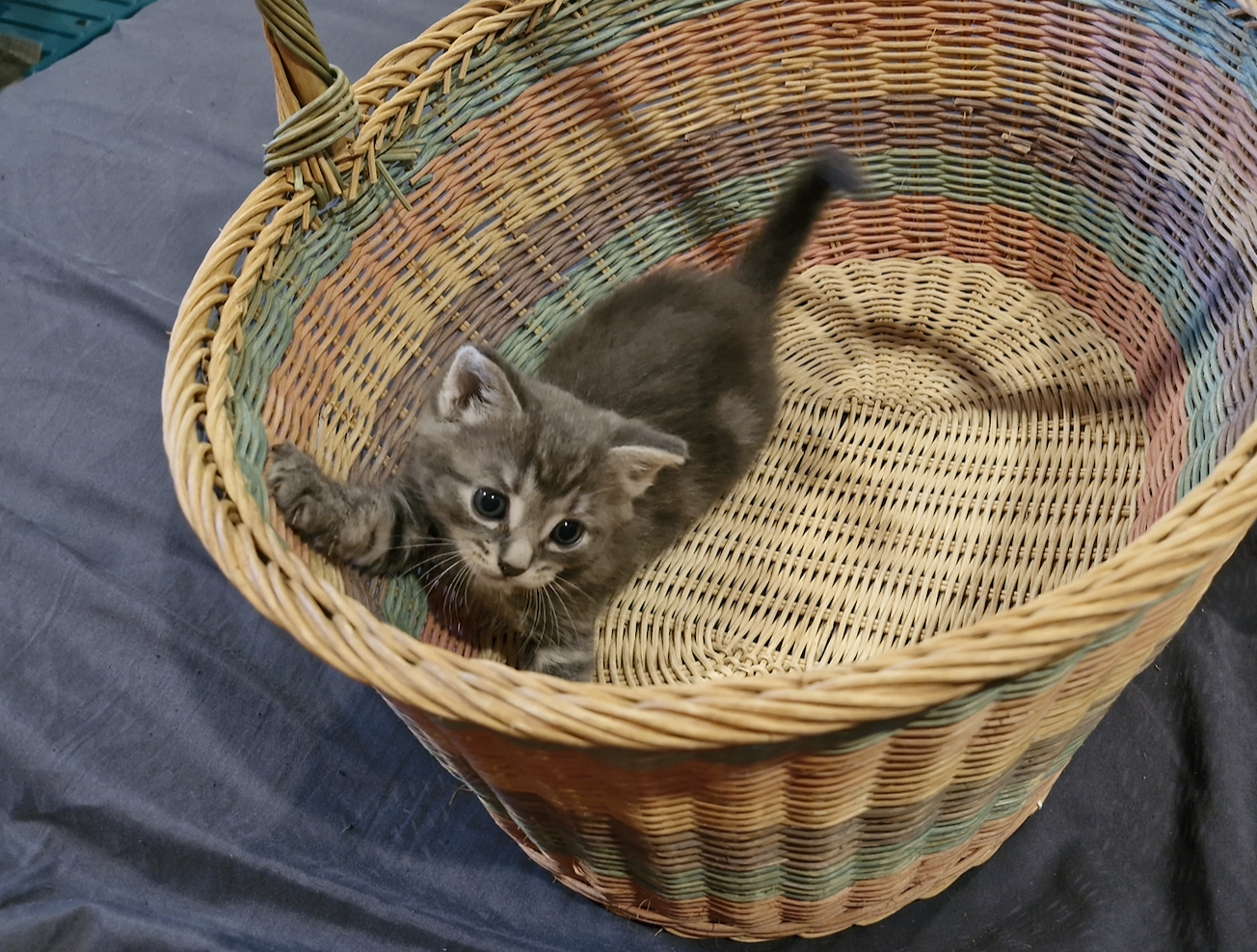
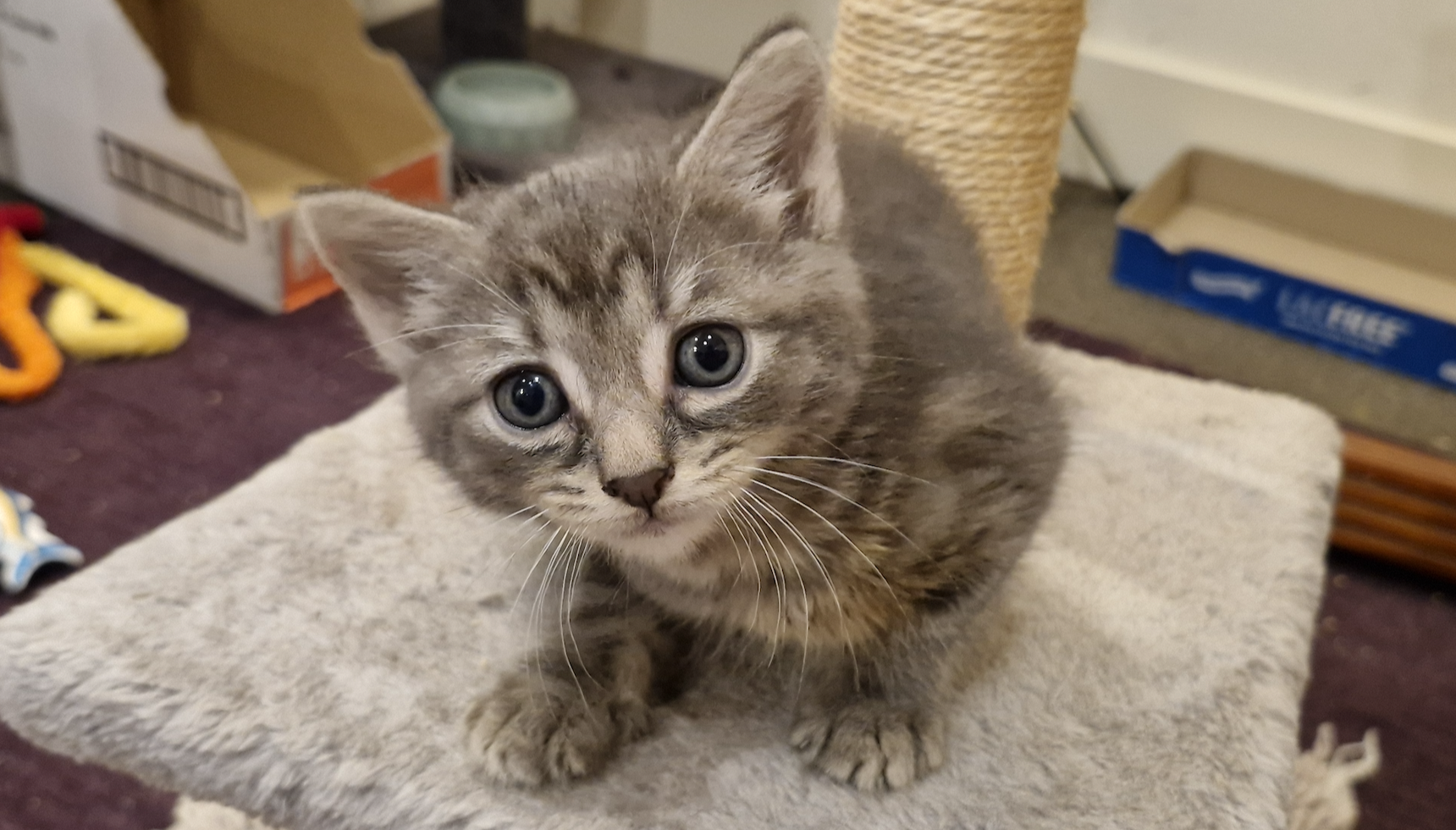
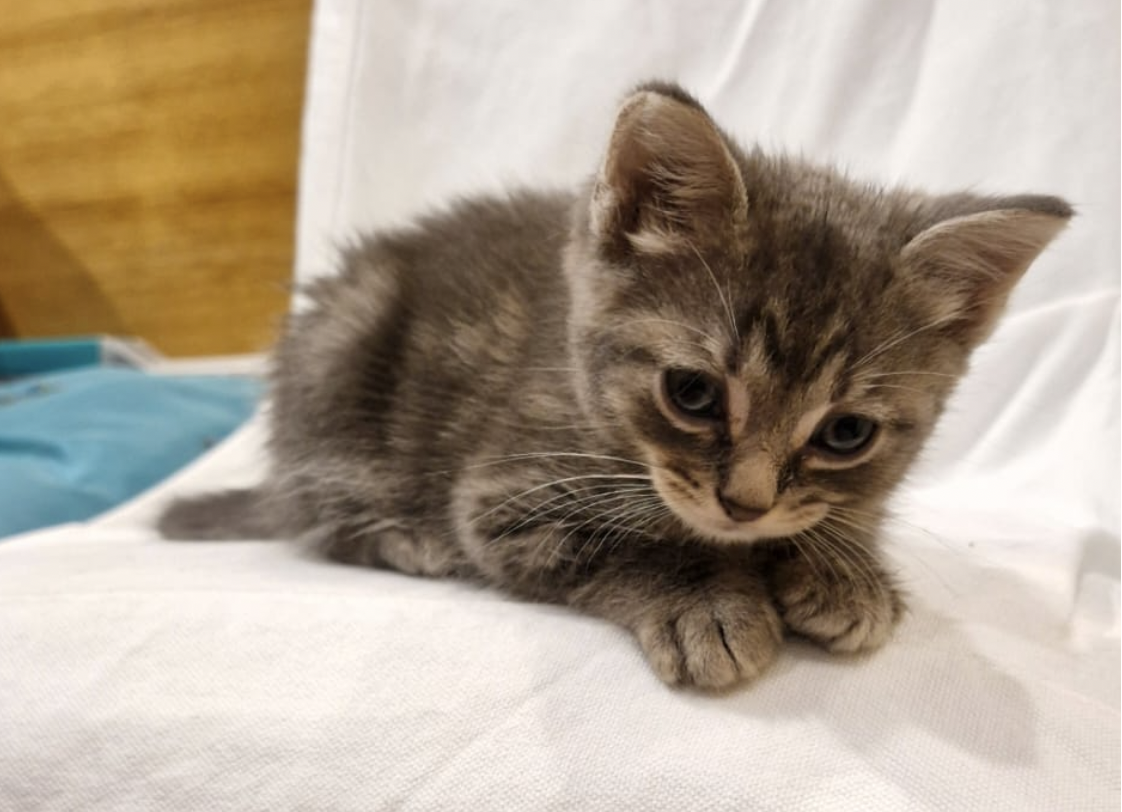
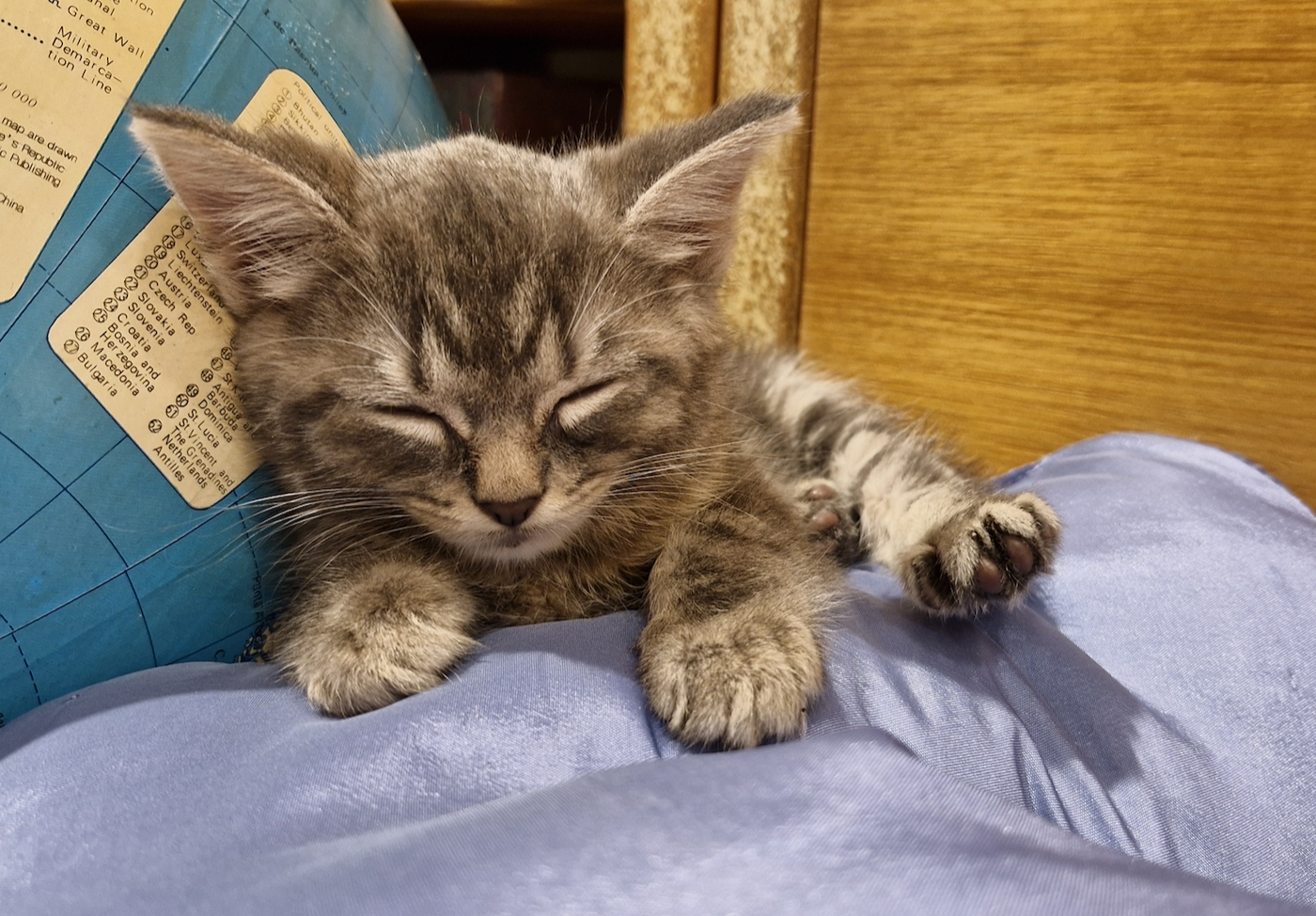
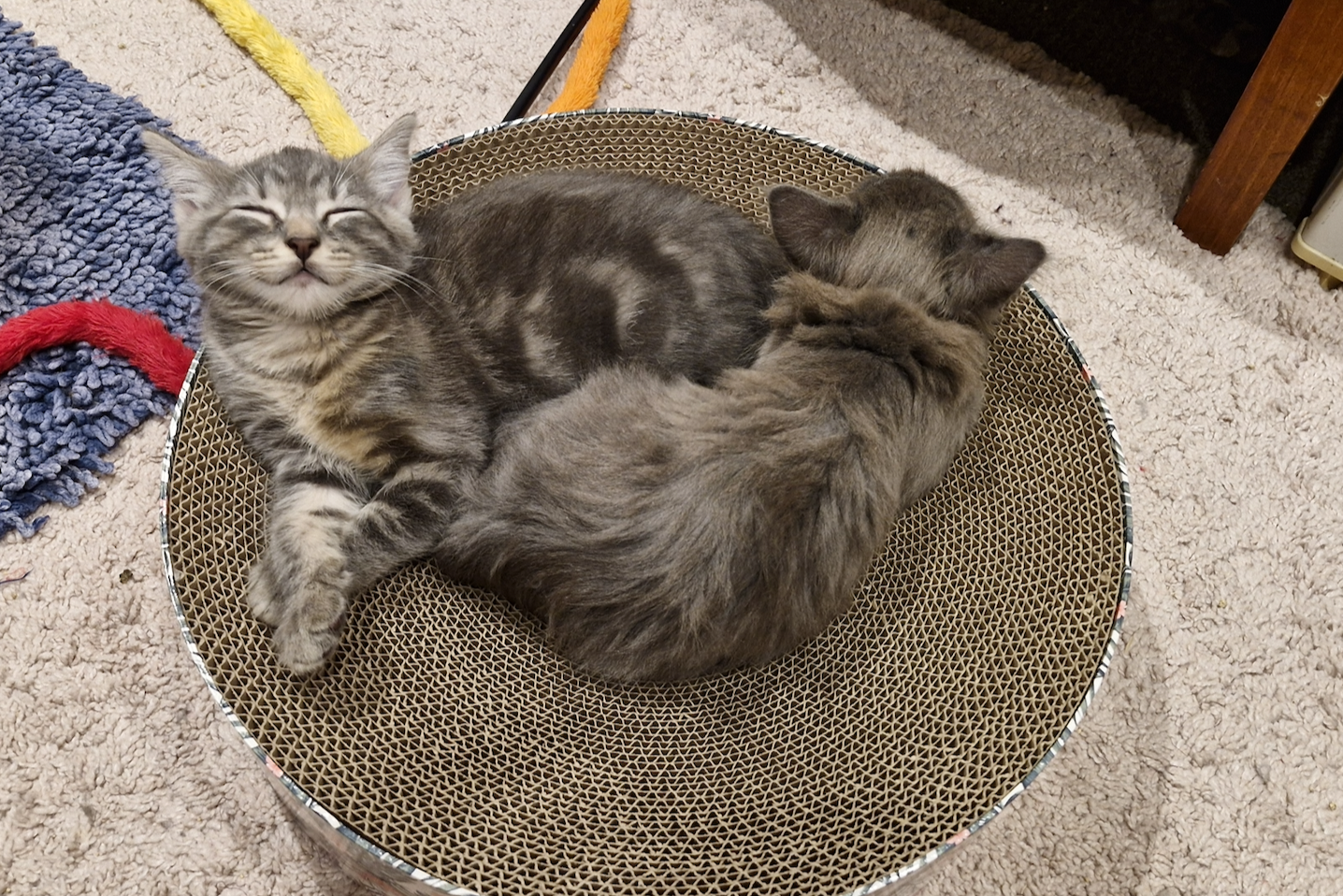
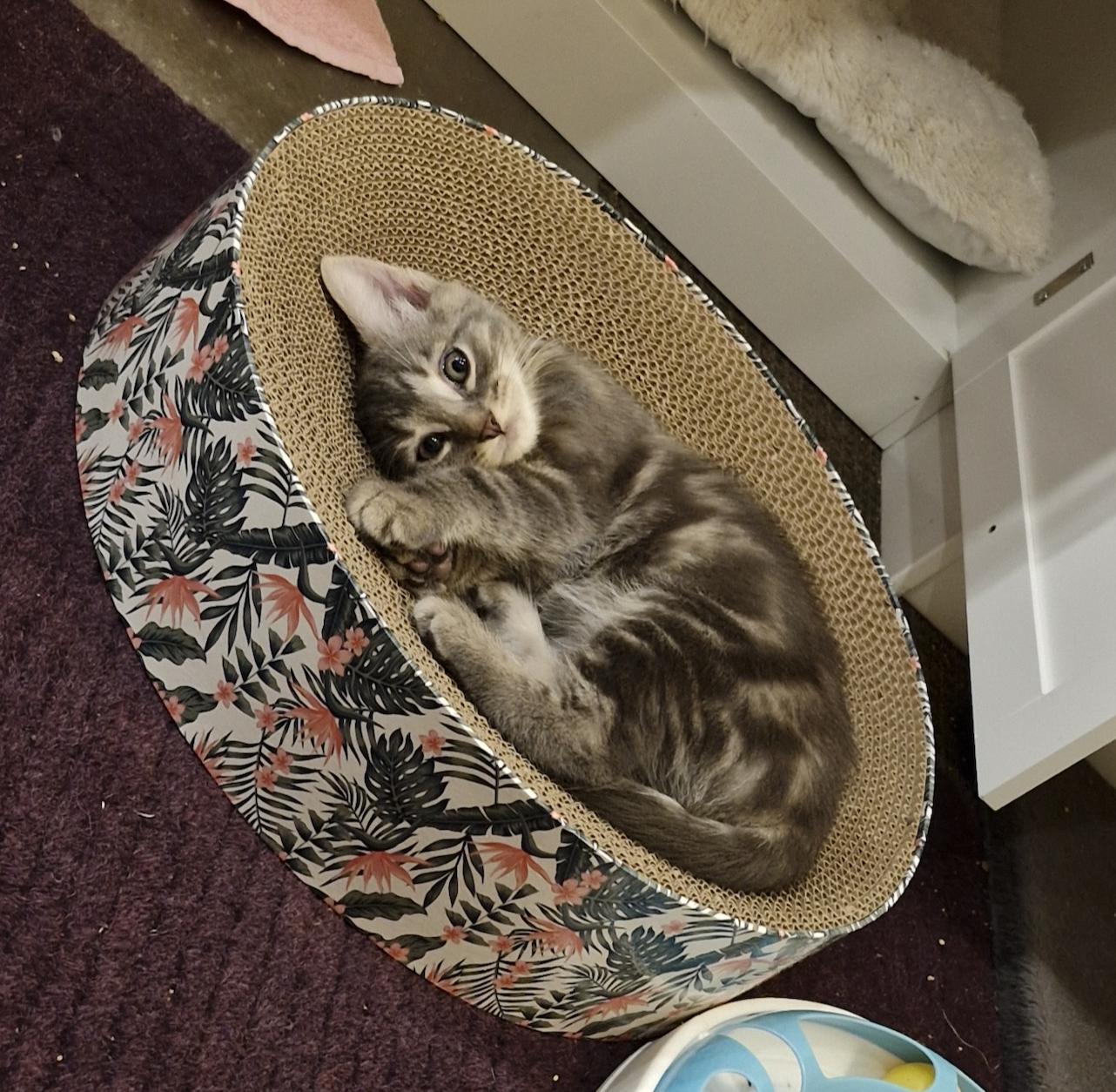
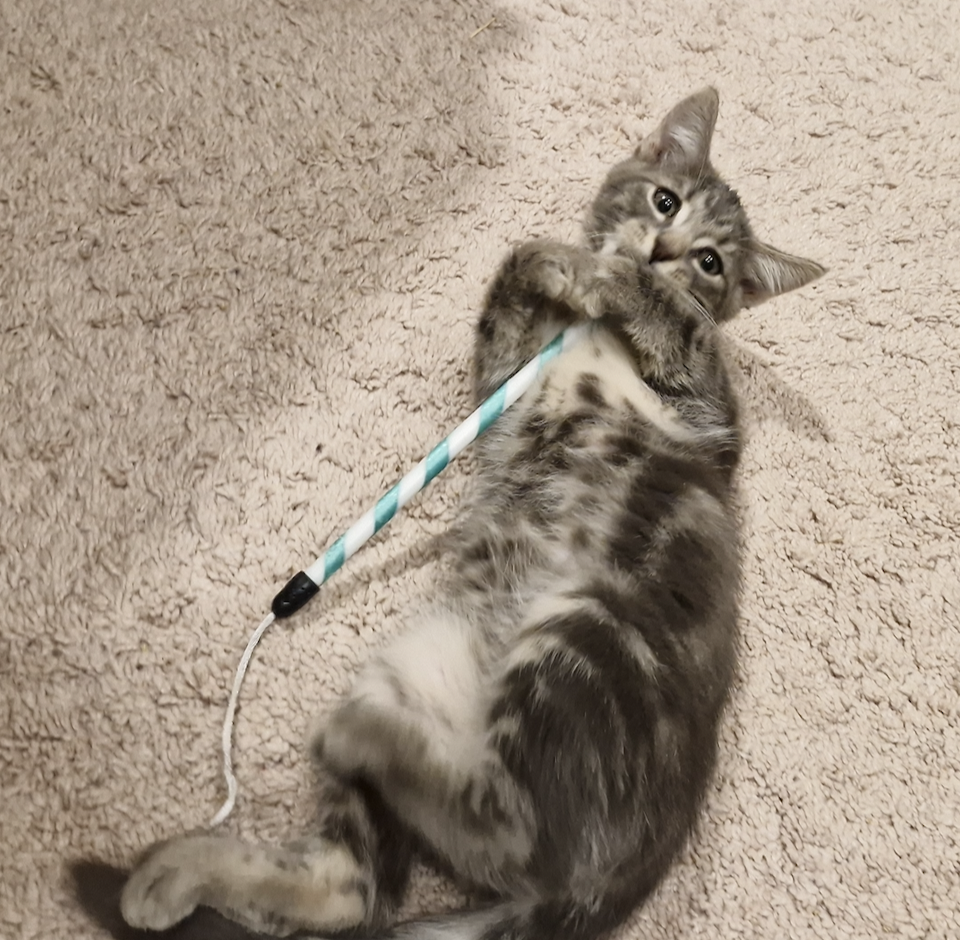
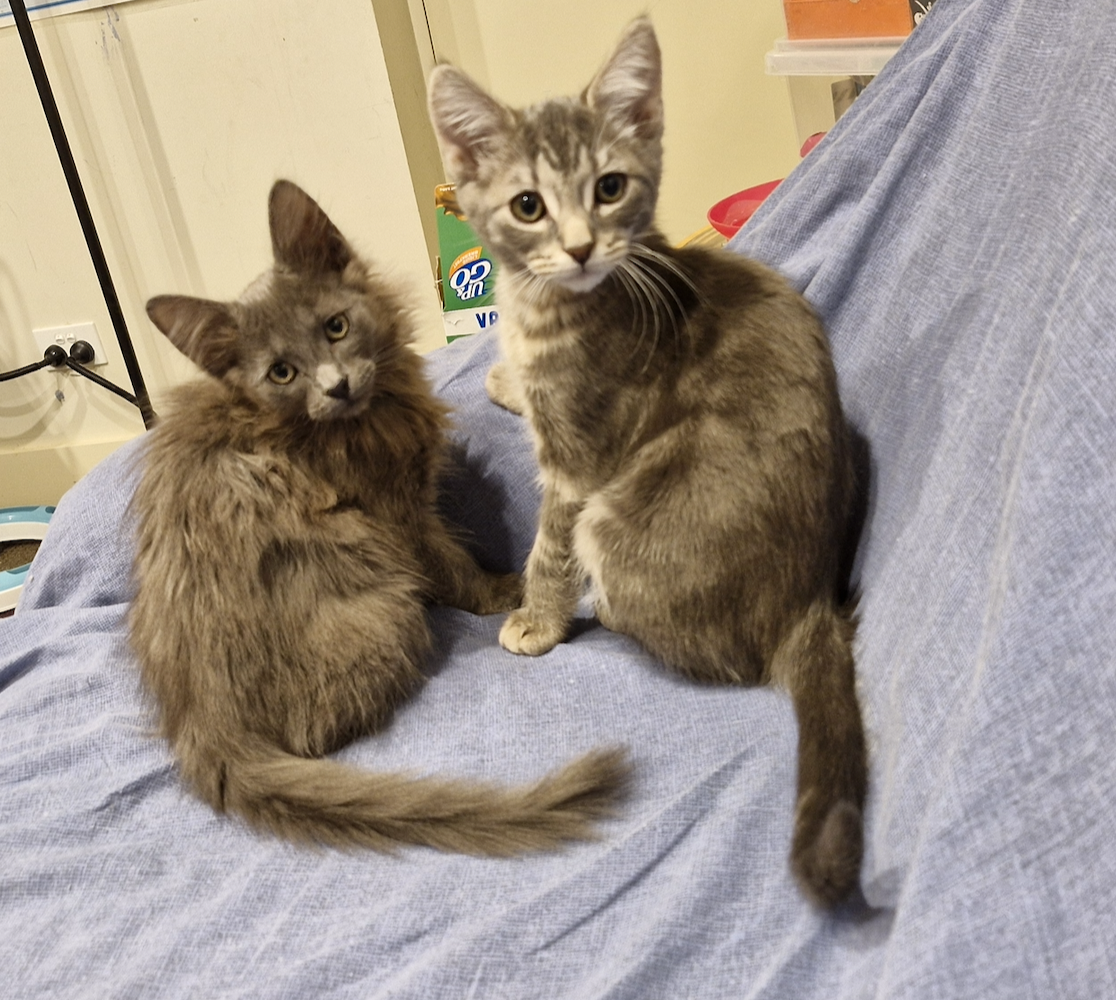
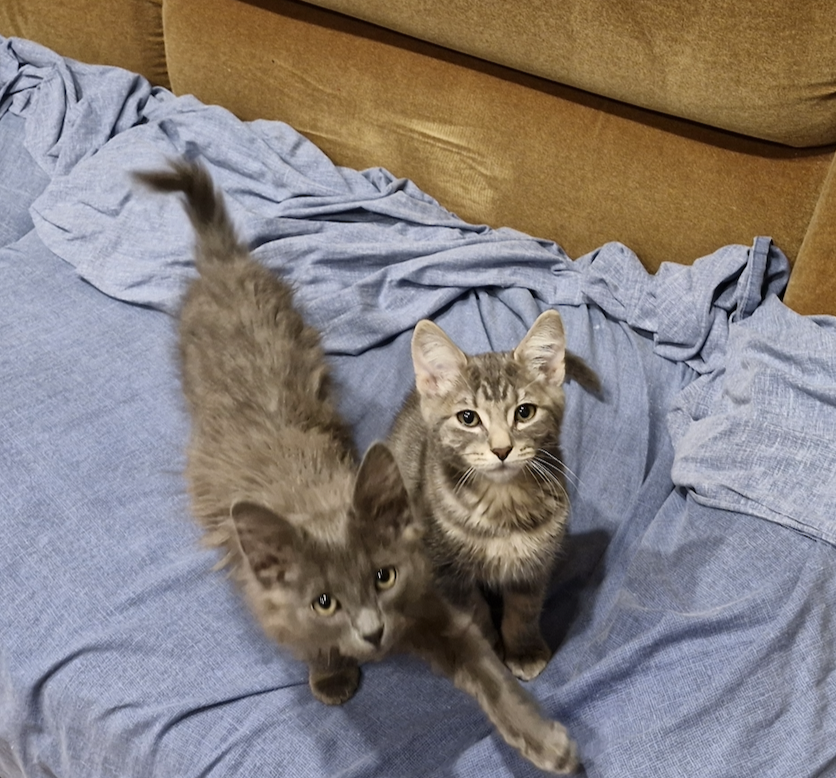
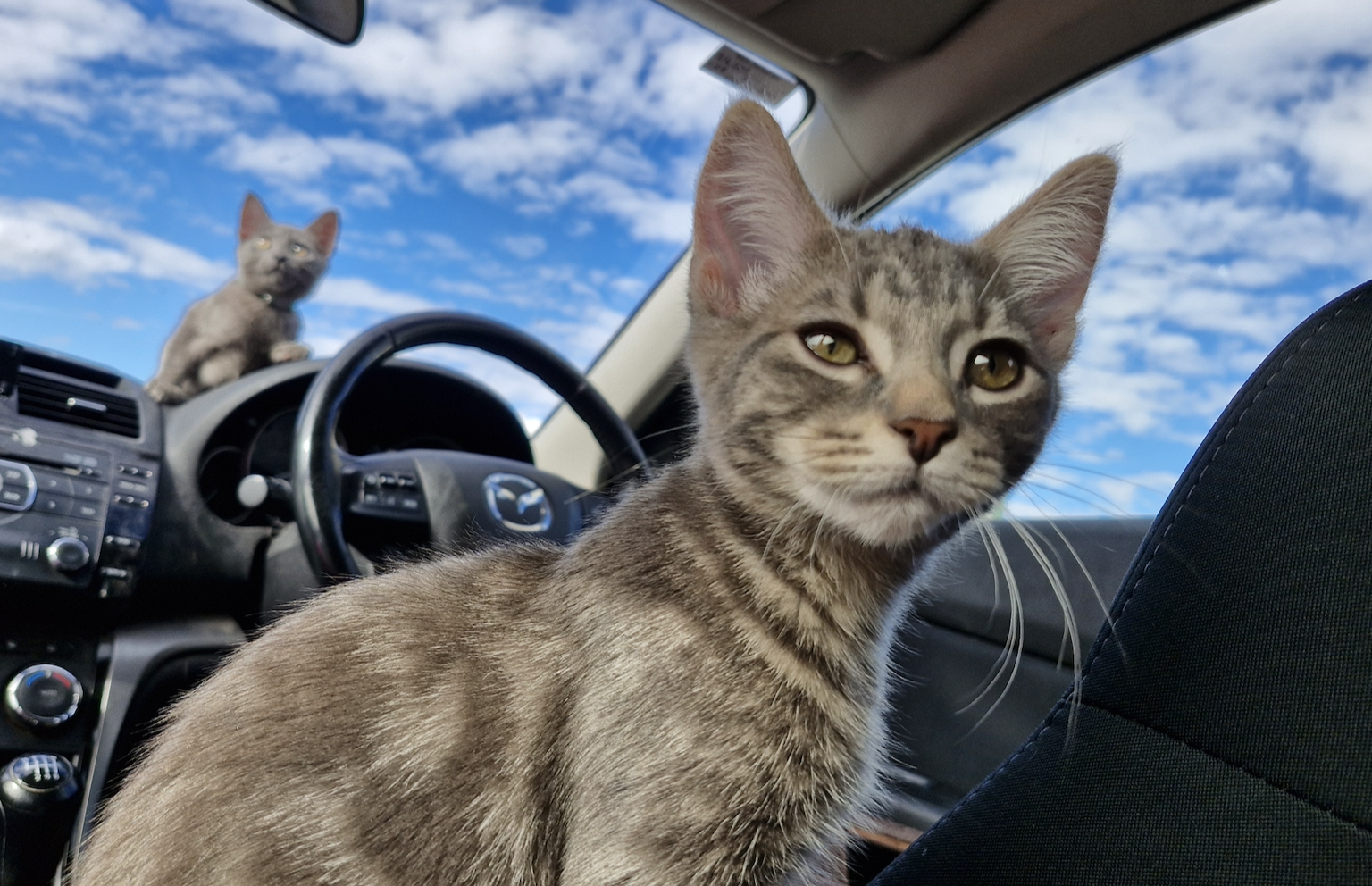
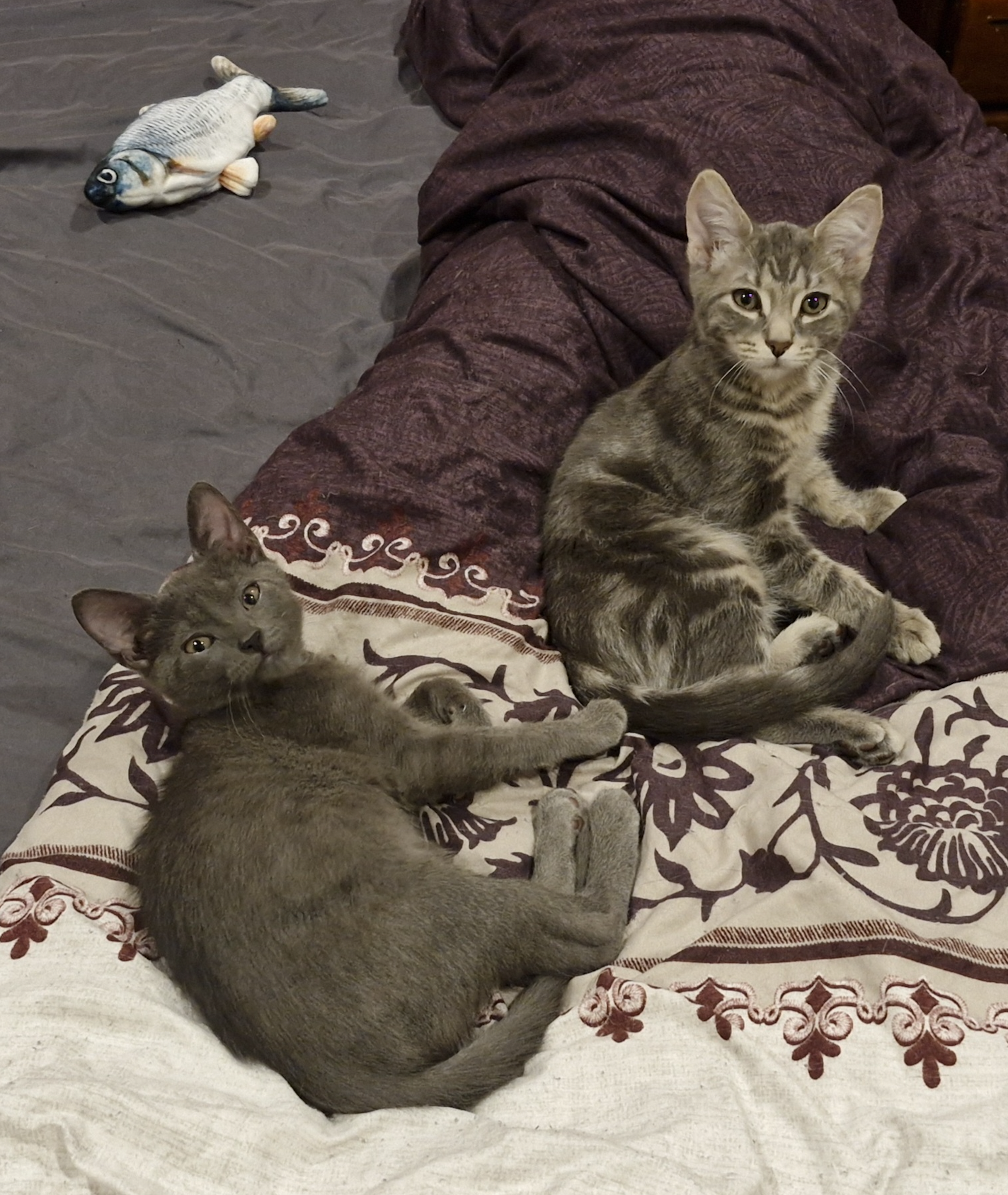
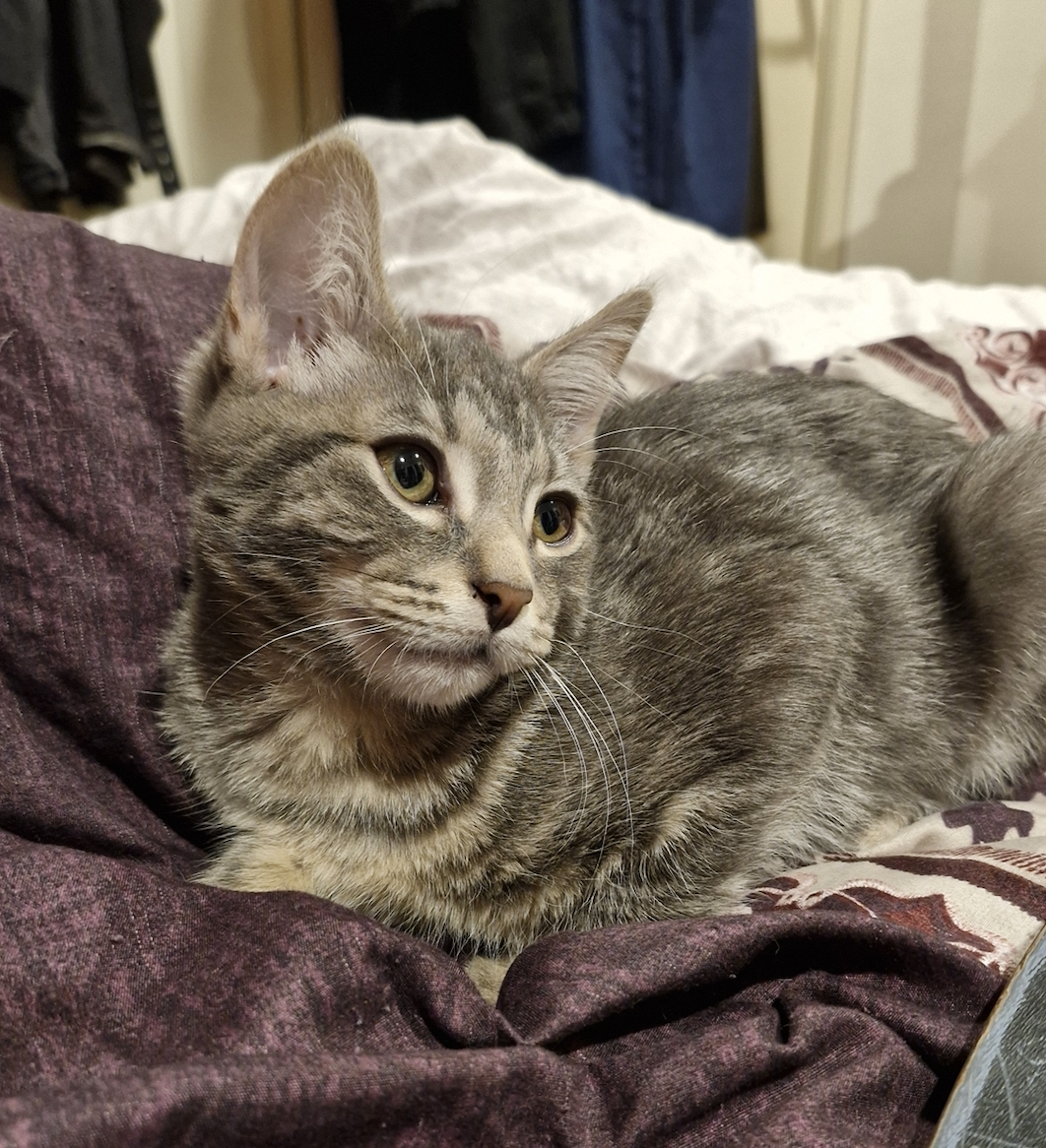
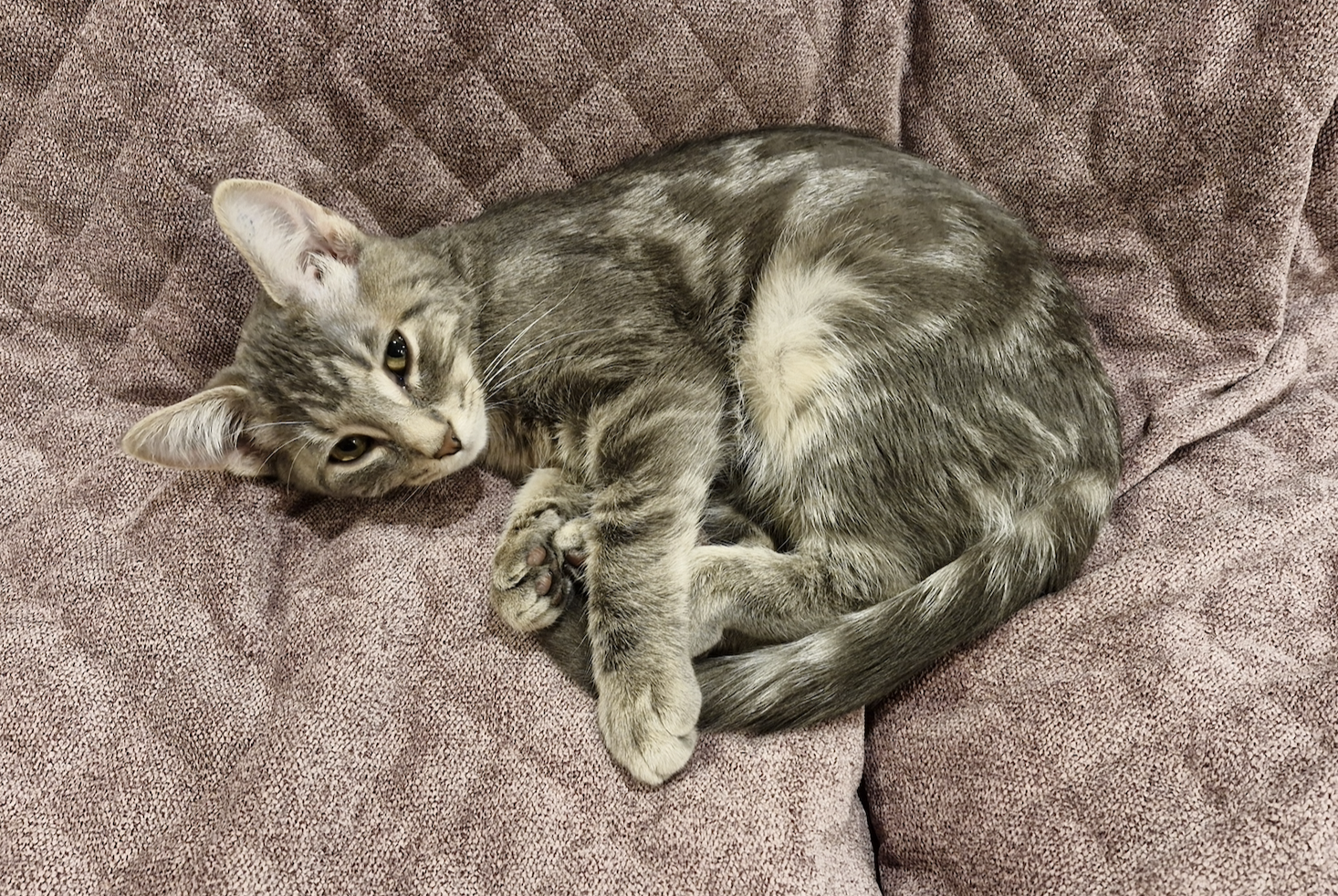
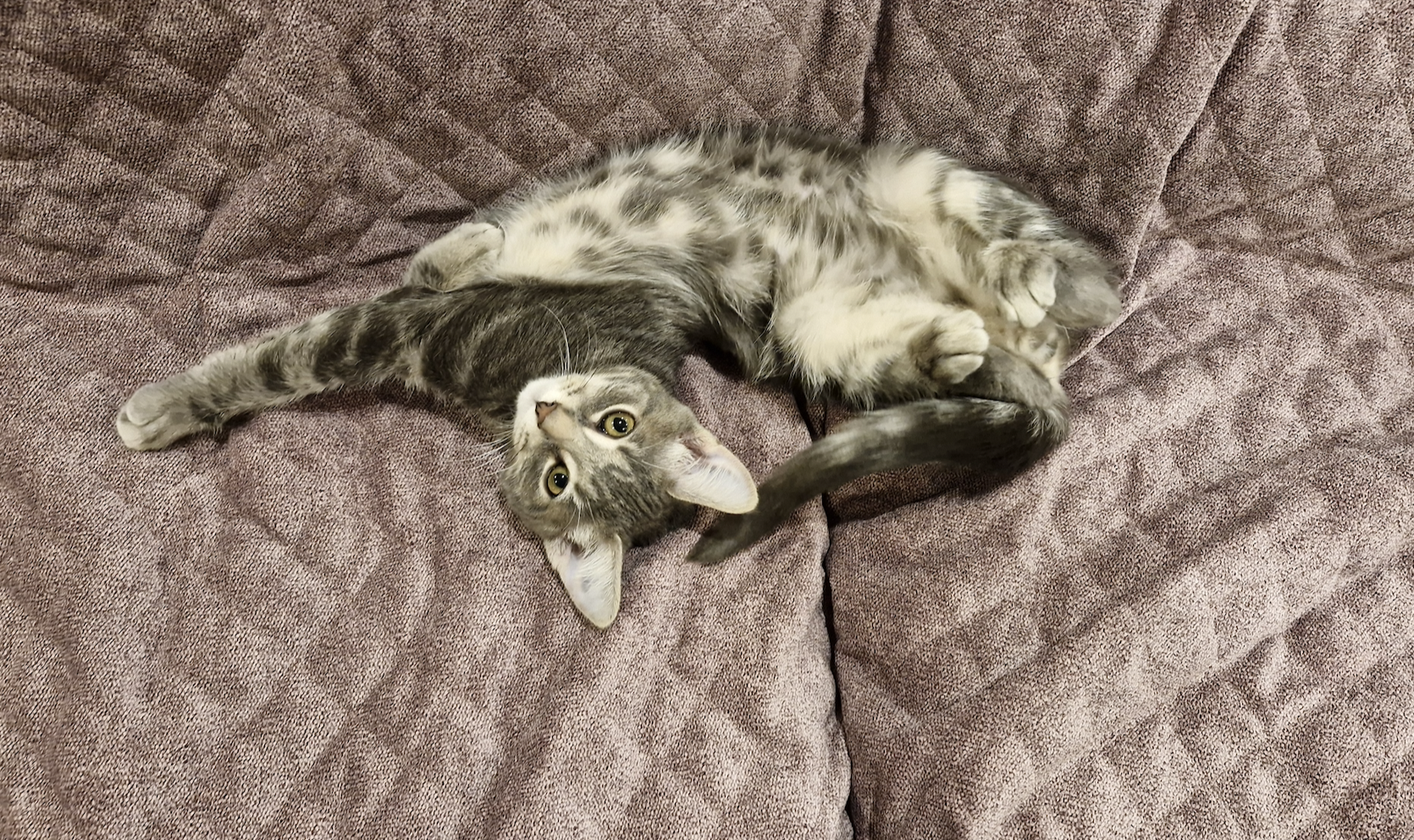
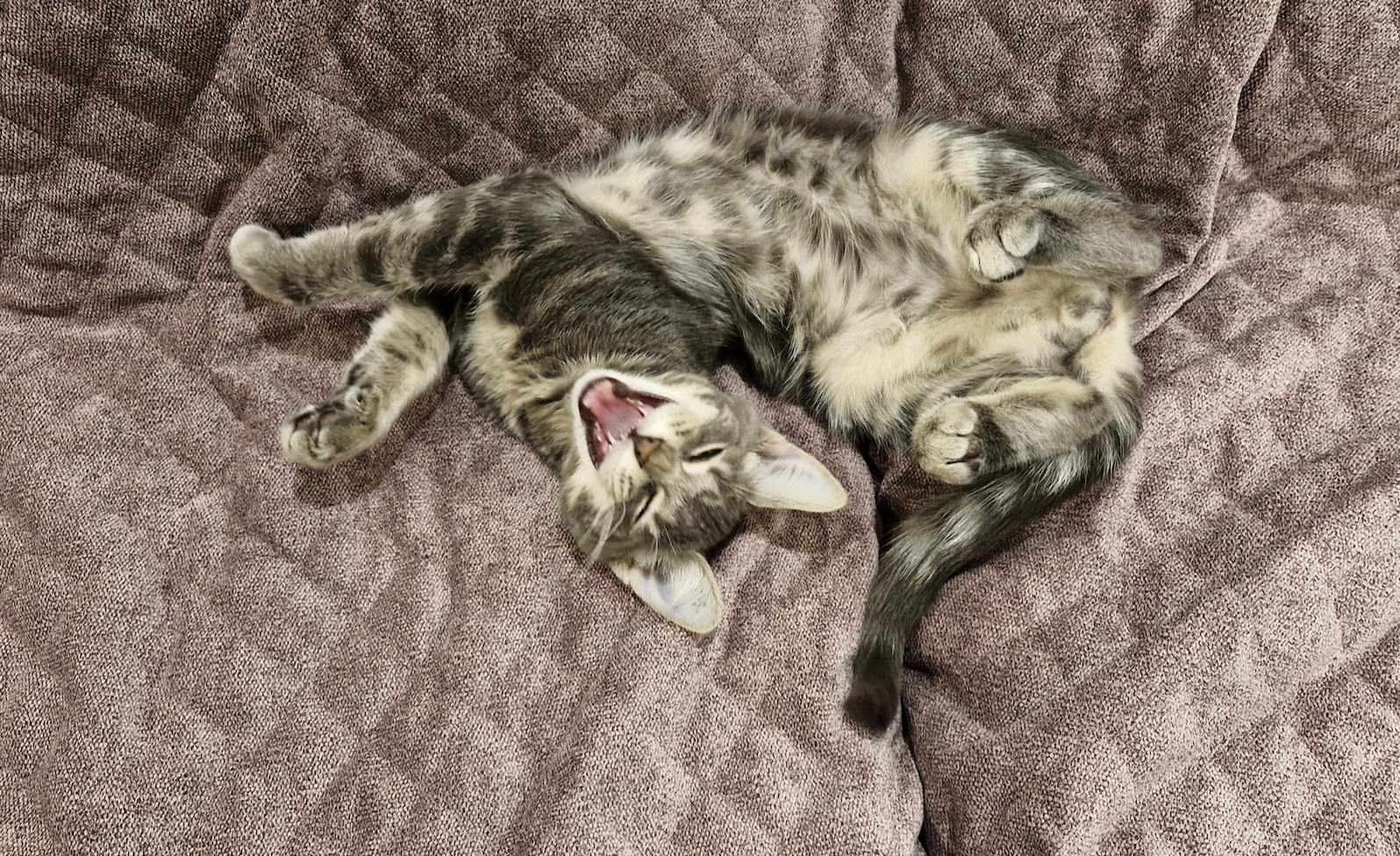
Okay, the last three photos were all taken on the same day. Aren’t they great though?

 Felicity Banks
I’m having kittens about having kittens | Felicity Banks said,
October 24, 2025 at 7:00 am
[…] reason to wear gloves is so the mum doesn’t reject the babies. Which is why I’ve said here that if you’re not willing to feed the kittens every two hours, and stimulate their bowels […]