Semi-Balinese Duck
I went to Indonesia for six months when I was eighteen years old, and literally the only food I enjoyed while I was there was pancakes (martabak/terang bulan and kue dadar).
But in 2024 I went with my family and I fell in love with the food SO HARD, especially Bebek Betutu. I even loved the sambal (chili sauce) served with it (presumably a very mild tourist-friendly version). Bebek Betutu is often translated as “Twice-Cooked Duck” as the duck is cooked for a delicious moist inside plus a crispy outside. I ate it as often as I could, in as many different places as I could. Usually the crispy outside was perfection but the inside varied, so I assume people usually deep-fry it. This recipe doesn’t. I have been working on my own version of Balinese duck which is somewhat non-authentic but still very nice.

Accessibility:
*This is expensive. Two duck breasts at Woollies cost around $15 (and I buy two per person). Spring onions are super expensive too.
*Some skill is required. Having a good nose and steady nerves is very helpful. If you forget about your duck at the wrong moment it’ll be ruined. Also, the duck fat will spatter.
*Very little standing up is needed, so that’s good!
*This doesn’t have many ingredients (the only true essentials are duck and rice) so it can be adjusted easily for food intolerance.
*This is very high in fat, and low in veggies. You can adjust it, of course.
*The curry paste and the turmeric (and everything that touches either of them) are VERY yellow so there’s a high chance of staining, especially if you’re uncoordinated and/or forgetful.
*It is barely spicy the way I make it.
*You need a cast iron frypan. Stainless steel simply doesn’t work. A thermomix is handy but not essential.
*It is difficult to cook this without touching the raw meat, but a determined person could probably manage with tongs.
*If you want to cook more than four duck breasts at a time, you will need another pan and hot plate.
*The finished duck will be slightly pink inside in places, and may leak some juice when it is cut. Double the oven time if you want it all brown (but it won’t be as tender). It should be blushing pink, not bright pink. Unlike chicken, you don’t have to cook every scrap of colour out of duck.
*Everything is available at Woollies, but if you want to be more authentic/spicy you can buy Sambal Oelek online (I mix one part sambal with four parts coconut milk then reduce it over low heat—that makes it milder).
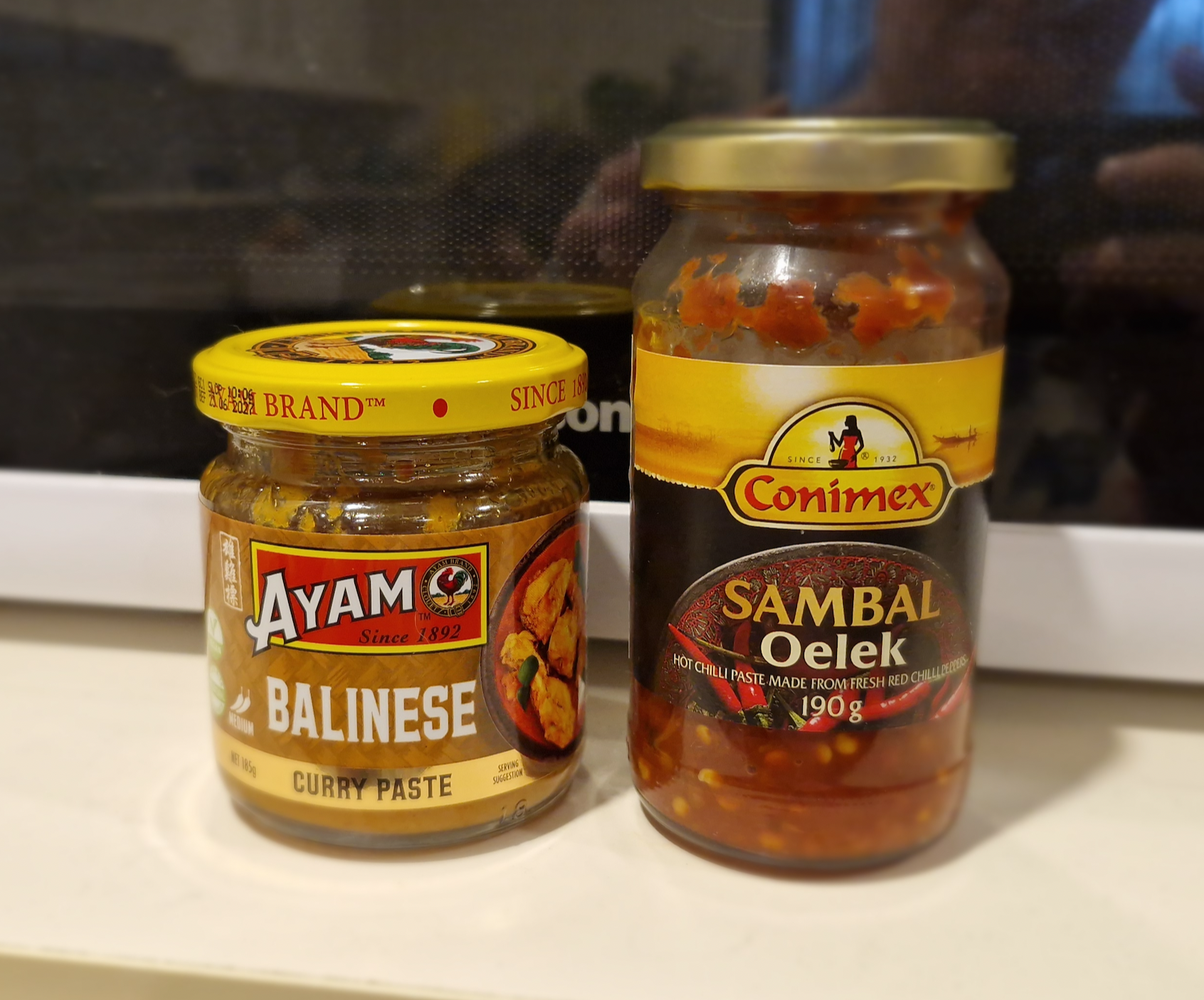
Ingredients:
Duck breasts, two per person.
Rice.
Ayam brand “Balinese curry” jar.
A tin of coconut milk.
1 teaspoon turmeric (optional).
Fresh or fried spring onions/shallots/garlic/onion (I like fresh spring onions best).
1 cucumber (optional).
1 tablespoon sweet soy sauce aka Kecap Manis (optional).
1 tsp brown sugar (very optional).
Method:
- Let the duck sit out of the fridge (in the packet) for about an hour before you start.
2. Preheat the oven to 120 degrees Celsius.
3. Pat dry both sides of the duck breasts with paper towels. Use a sharp knife to score lines into the fat side of each piece, being careful not to cut the non-fat part at all. Lay them in a room temperature cast iron pan, with no oil or anything, skin side down.
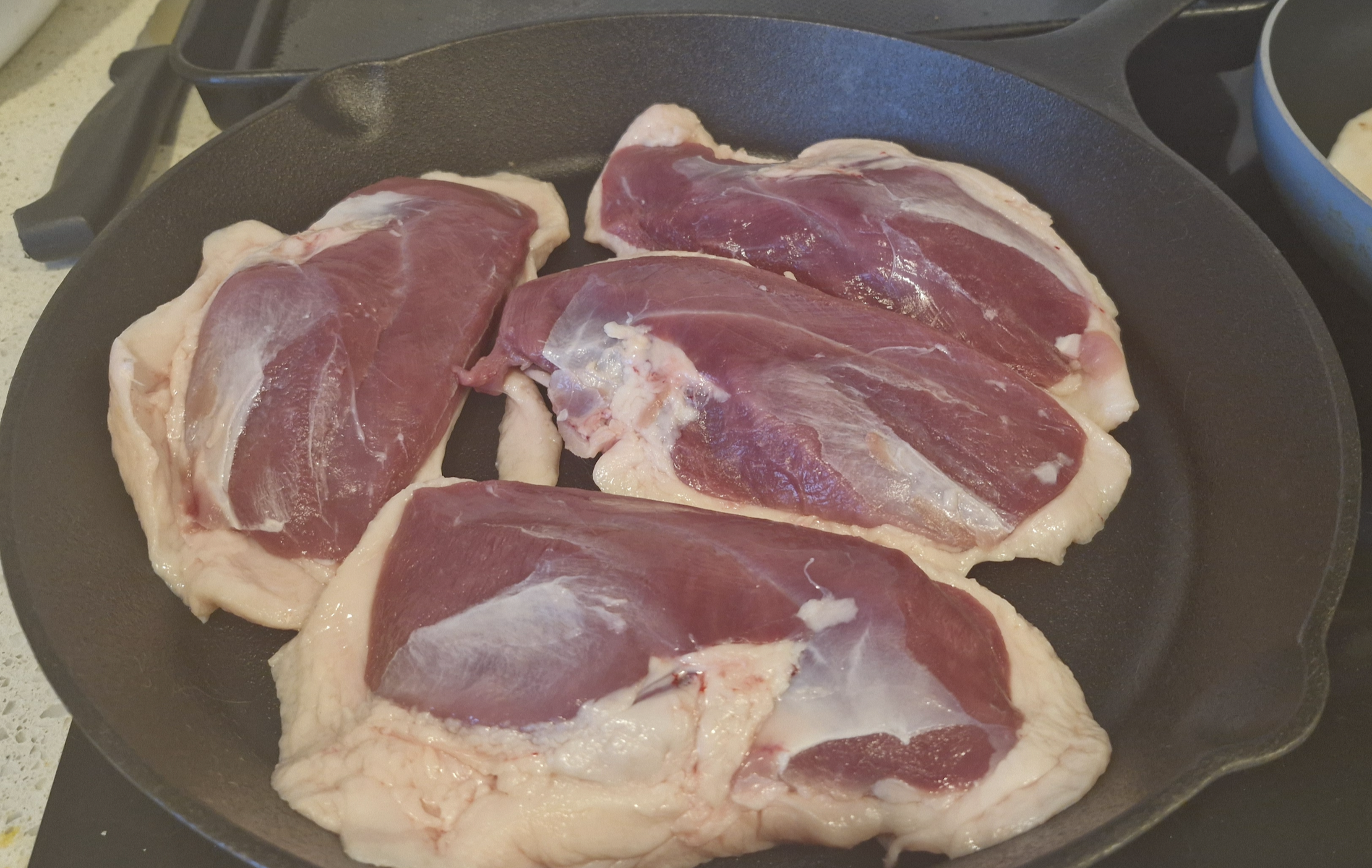
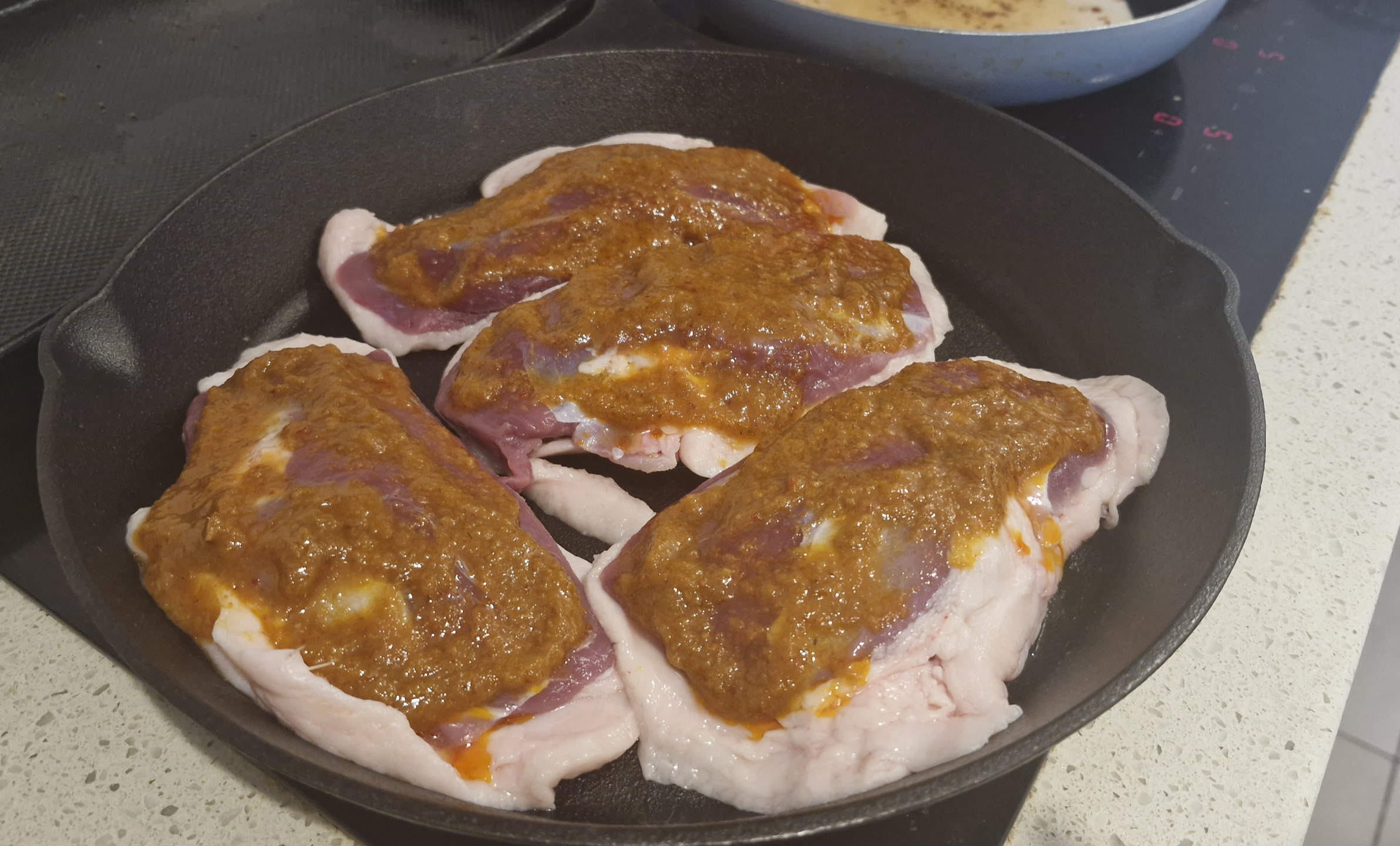
4. Turn on to Heat 4 for 25 minutes. Do NOT move the duck. At all. It needs to form a crust. After about 5 minutes, the fat will start to render. Put a teaspoon of the curry sauce on each piece at that stage.
My biggest issue with this dish is that my hot plate isn’t big enough to heat the whole pan evenly. I try to squash them close together in the centre of the pan (they will shrink in cooking anyway, making space between them). I can also move the pan around to try to cook things evenly.
Lots of recipes recommend putting a second frypan on top of the duck to try to keep the fat flat so it’s all touching the cast iron pan and doesn’t go rubbery. I could never figure out a way that worked.
5. Cook the rice, but substitute the coconut milk for some of the water, and mix the teaspoon of turmeric into the uncooked rice. If you are NOT using a thermomix, set aside a couple of tablespoons of coconut milk for the sauce. (If you are using a thermomix, you will use the liquid in the bottom of the jug for the sauce but be warned! It will spit yellow liquid in all directions, so I cover the nearby area with tea-towels.)
6. Chop your onion/garlic (if using fresh onion/garlic) and cucumber.
7. When the duck has been cooking for 25 minutes, turn the heat up to 6 for another 3 minutes.
8. Turn the heat back down to 4 and flip the duck breasts to seal the non-skin side. 3 minutes only.
If you like, spread one teaspoon of brown sugar over one duck breast. This is yum, and is my tribute to the Caramelised Bebek Betutu at the Indus Restaurant in Ubud. They had a version that was both crispy and sweet on the outside. It. Was. Incredible.
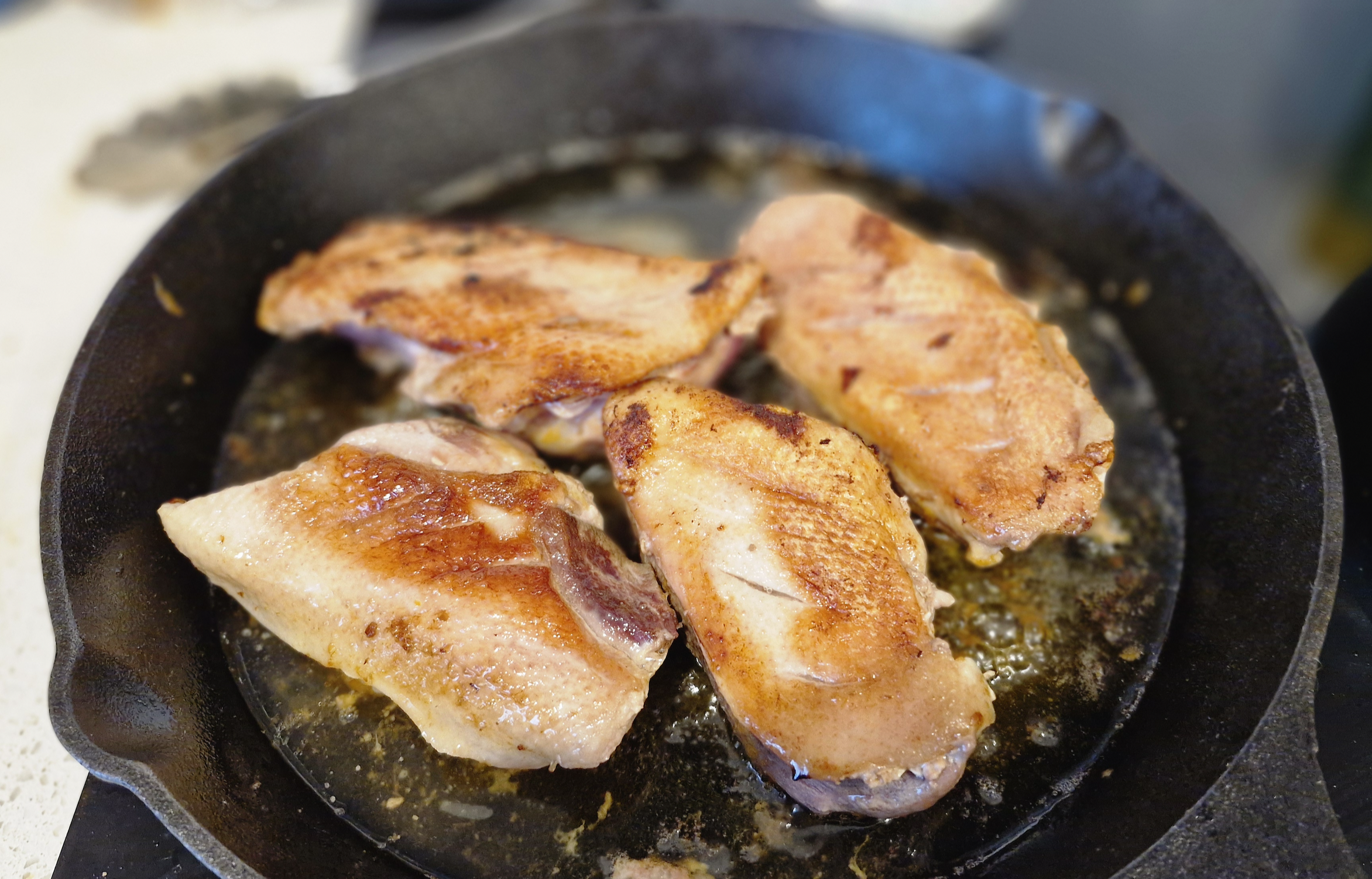
9. Put the duck breasts on a tray in the oven for 10 minutes. When they are done, turn the oven off but leave the duck in the oven with the door closed for at least 5 minutes (I think 10 is better).
10. Pour most of the duck fat from the cast iron pan into a freezer-safe glass container, leaving a bit in the pan. Fry your garlic/onion in the remaining fat (if it’s fresh onion/garlic; otherwise sprinkle your inion/garlic on the rice when you plate it up), then add the rice and sweet soy sauce. Return a tablespoon of the fat to the rice, and don’t stir it too much once you’ve mixed it all together. If you get it just right, you’ll get crispy rice.
I think the rice would be slightly better if the freshly-fried onion/garlic was removed and then added back at the last minute.
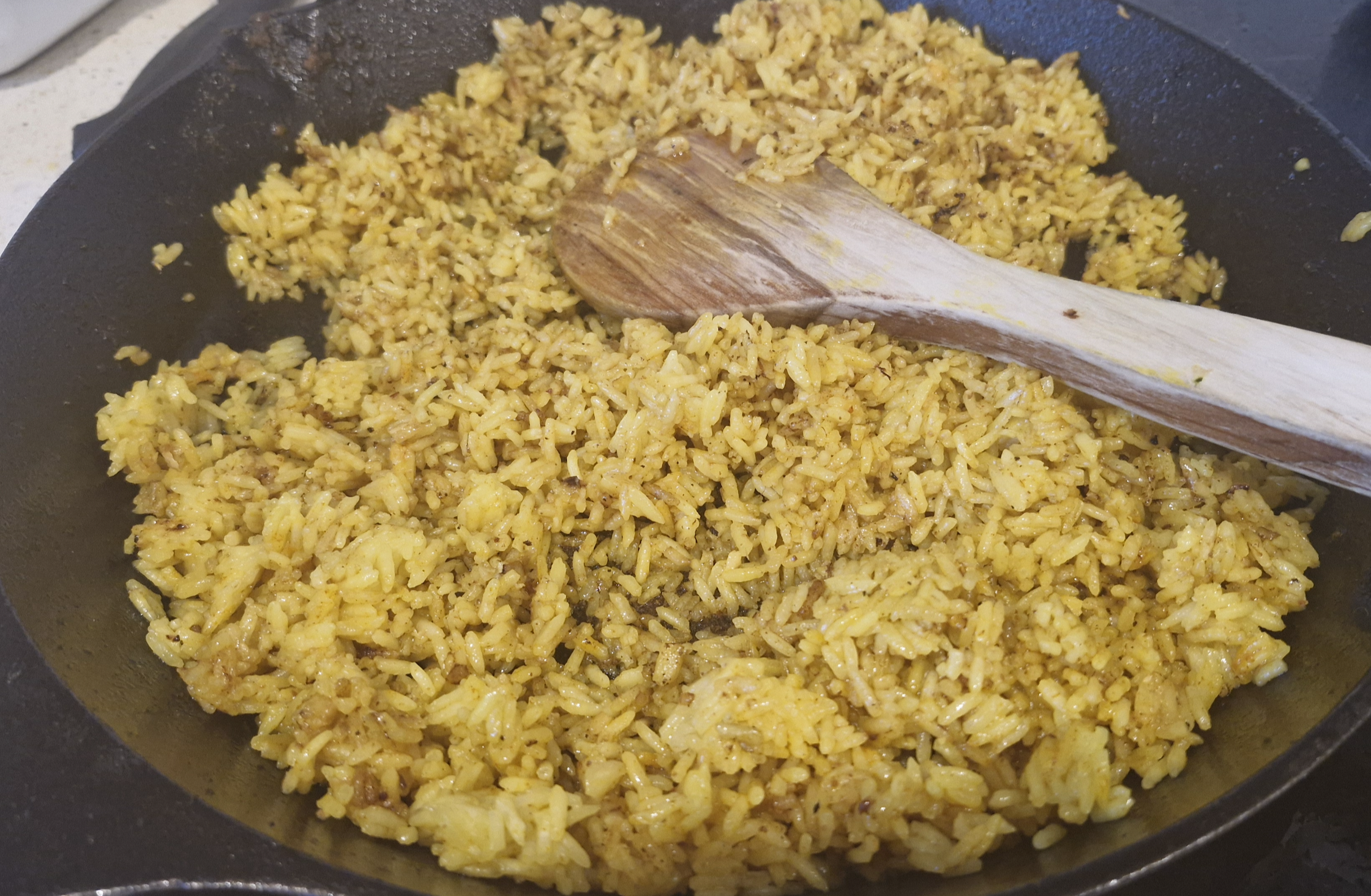
11. Get another tablespoon of the fat to make the sauce. Mix it with the remaining coconut milk (or the yellow liquid from the thermomix jug) and add at least one tablespoon of the curry sauce. Heat it and keep mixing (I use a smaller frypan so it reduces a little).
12. Arrange rice, chopped fresh cucumber, and duck on plates, then pour over the sauce.
Keep the leftover duck fat in your fridge or freezer. It is a brilliant addition to many recipes (specifically, the Crunchy Noodle Salad I’ll be posting about very soon—or any salad that you’re serving immediately). Or instead of oil for almost anything. There will be more fat in your oven tray, so add that fat to the rest. I’m told it has amazing health benefits. It will solidify when it cools, but you can easily heat it when you want to use it.
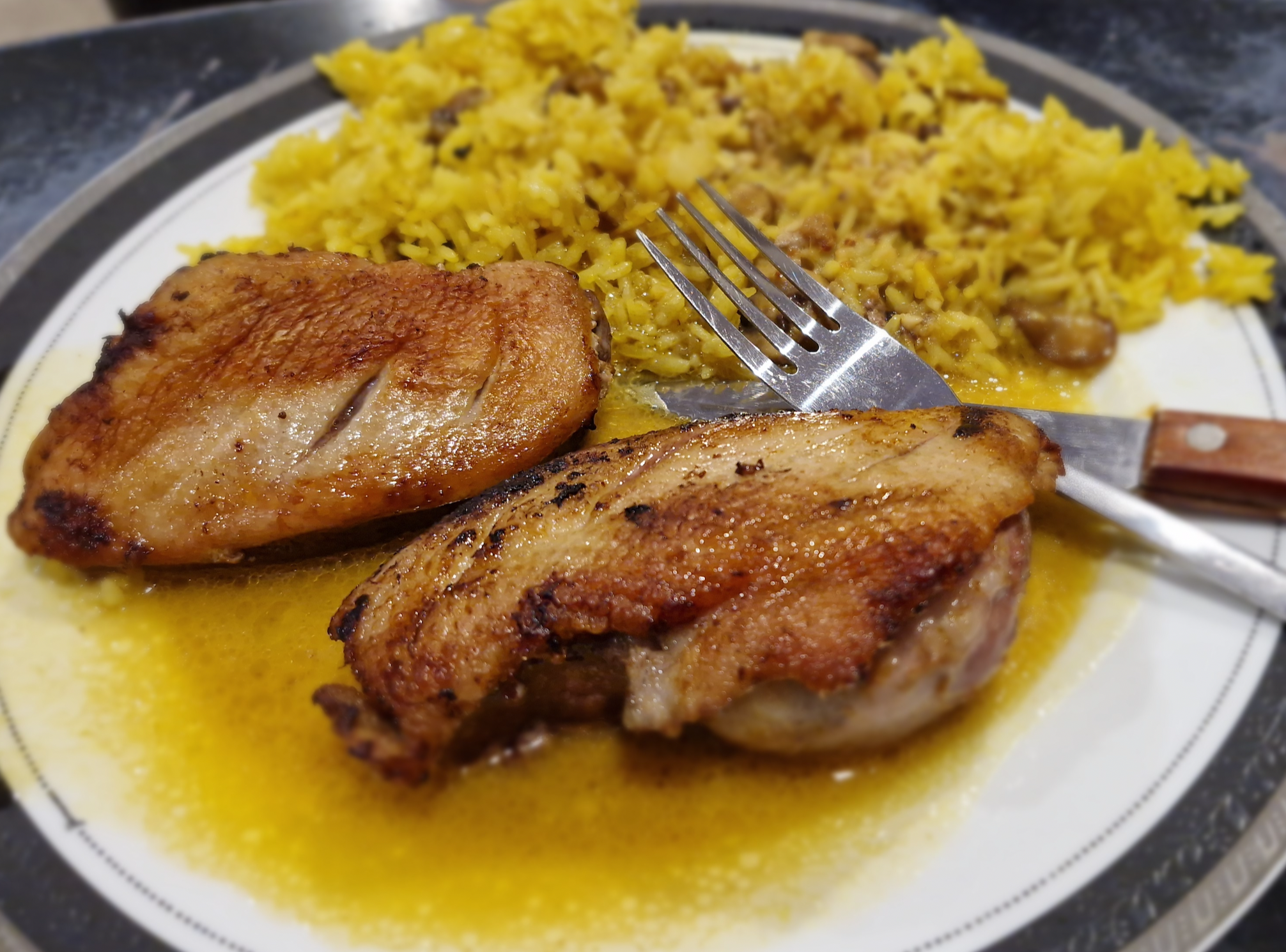
In this first picture, the sauce is quite different to the way I do it now.
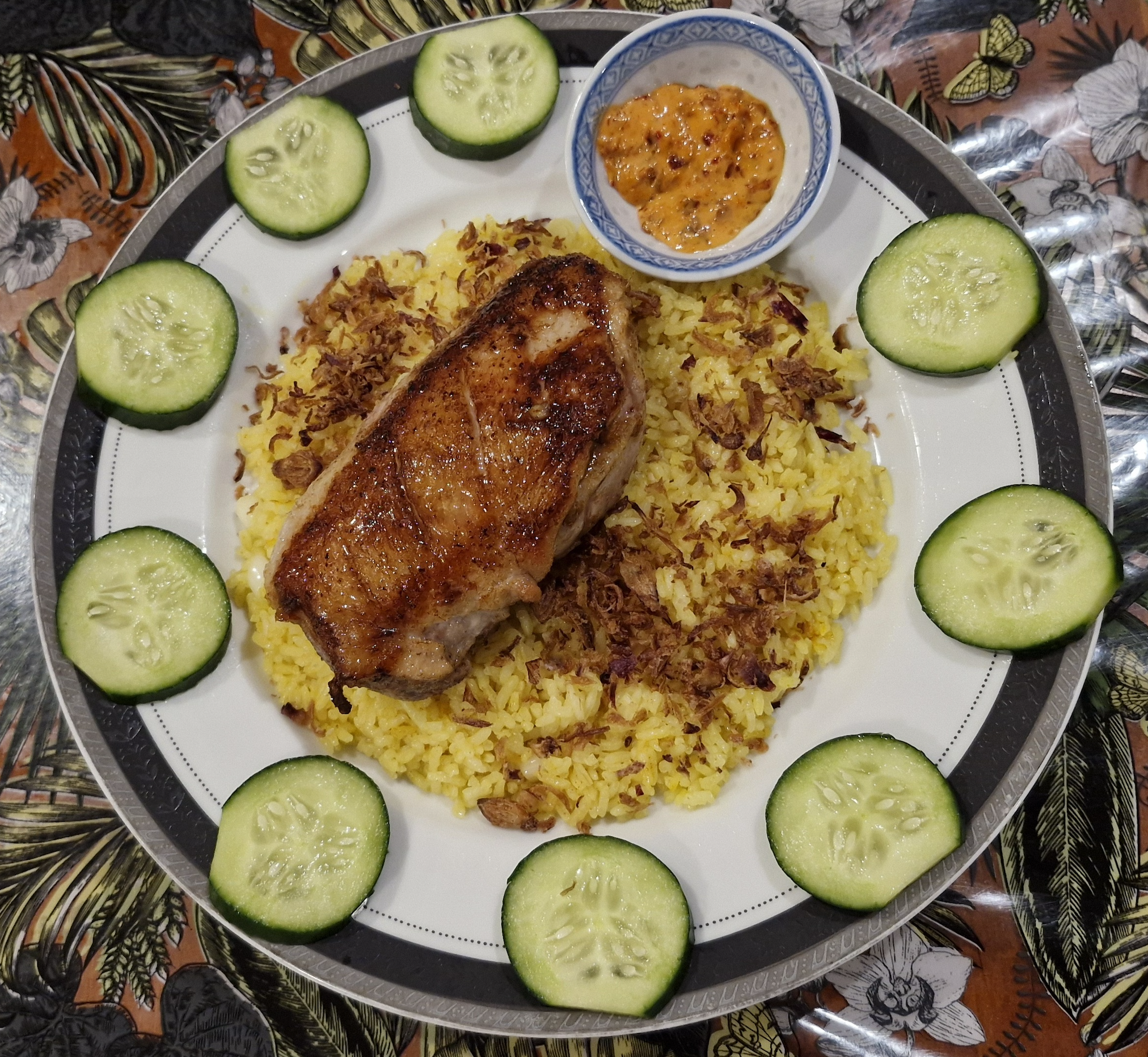
The red sauce in the little pot is my sambal-plus-coconut-milk creation.

 Felicity Banks
Crunchy Noodle Salad | Felicity Banks said,
February 2, 2026 at 3:30 pm
[…] often cook duck, and there’s always way too much fat, so I save it specifically for this […]