Don’t have contacts in the biz? Don’t worry
Last year I spent a bunch of moolah and time schmoozing across Australia, and I ended up with personal contact (handshakes, names, cards) with staff from four of Australia’s six big publishers.
I now have enough data to tell you what those contacts mean to me so far:
*drum roll*
Drastically longer response time.
I am personally convinced that the only – ONLY – time personal contact helps you is if your book is one of the .05% (that’s not an exaggerated joke, sorry) of books that gets to the final stage of the maybe-getting-published ladder – the acquisitions meeting. At which stage, you contact will most likely say, “Oh yeah, I met Louise Curtis. She wore a simply giant dress to some conference somewhere. Seemed mostly sane.”
The good news is that that comment may make the difference between accepting your book and accepting another book on the table at the same meeting (that was written by someone who doesn’t have contacts).
In the meantime – particularly if you’d like a chance at a response time shorter than six months (again, I’m not joking, sorry – six months is standard across all publishers, in my experience), the person you REALLY REALLY want. . . is the assistant.
Here’s an article from Kidlit Blog telling you why:
For my Writer’s Digest webinar, I pledged to answer all the questions sent in by students. This one got me fired up enough to transfer the exchange to the blog:
What can we do to ensure that an actual agent sees my query? I’ve received rejection letters directly from assistants, therefore I know that the agent hasn’t seen my query or sample work. Perhaps the agent would have liked it, but if he or she wasn’t able to see it, then both the agent and I miss out on what could have been a wonderful opportunity.
This writer seems to have what I would call Assistant Attitude. It’s a belief that assistants aren’t really important and that only the big names at an agency can make or break a writer’s chances at representation. A lot of (beginning) writers think very poorly of assistants and are shocked — shocked! — to learn that these are the people reading their queries.
I invite everyone currently suffering from a case of Assistant Attitude to consider, perhaps, the complete opposite viewpoint.
Read the rest here. Always remember – the hard part is writing a brilliant book, so focus on that.
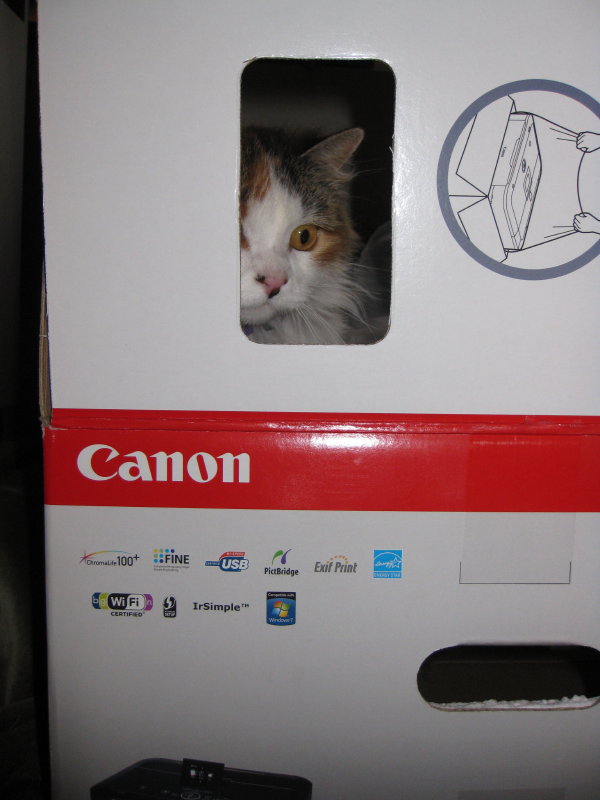
Meanwhile, a kitty (who just saw a bird dare to land on OUR windowsill):

In the beginnings. . .
Time to hide in your box, quivering in terror.
Today we’ll be visiting the Pub Rants blog (“pub” as in “publication”, you lush) for the bad news about beginnings: 99.9% are rubbish.
You can tell an experienced writer because they don’t bat an eye when someone says, “Send me the first two hundred words of your book, and I’ll know whether I want to read the whole thing” – because that really is all it takes to sort the maybe-quite-good from the heh-no-way.
Don’t believe me? Go to a critique site like this one and critique twenty first chapters. You’ll soon see exactly how easy it is and exactly how little time it takes. And if you’re serious about writing books, critique at least fifty first chapters and you’ll learn more than you’d learn from reading fifty bestsellers (which you should also read, but that’s another article. . . ).
The full article for today is here. If you’re a writer, read the whole thing – please. My favourite part is when she lists the most common first-page mistakes. Here is that list, with my comments underneath each item.
1. Telling instead of showing.
Don’t say, “I felt scared” – say “My mouth went dry, and I willed my hands to stop shaking.” It makes a surprising amount of difference. Also, know when your scene should be described in full excruciating detail (when there’s action, interesting dialogue, or some incident that makes a difference to the plot) and when not to (when characters are unconscious for three days, or talking about non-plot-relevent geraniums, or quietly grieving someone that they also grieved in the previous chapter). Your first scene should always be interesting, and full of blow-by-blow detail with no summary.
2. Including unnecessary back story.
You should know that the main character was attacked by an aardvark when she was three and that it caused her to hate all animals – but you will probably NEVER mention that incident in the whole book. You’ll just show her flinch when a dog walks in. That SHOWS us she’s had a bad experience instead of telling us.
We don’t actually care about the aardvark incident, or anything else that was exciting at the time – sad but true. Only the present truly matters.
We really don’t care about the fifteen changes in the government of your fantasy world that led up to this particular crisis. Again, keep it in your head.
3. Loose sentence structure that could easily be tightened.
Grammar is important for two reasons: So you make sense, and so your writing is invisible. Any time someone has to re-read a sentence, they are no longer inside the story. Learn how to talk good.
4. The use of passive sentence construction.
See what she did there?
“I hit the cop in the face” is a million times more interesting than “The cop was hit in the face.”
5. Awkward introduction of character appearance.
Please, no glancing in the mirror.
I use a lot of tricks for character appearance including action (I pushed my hair out of my eyes), comparison (Robert towered over me), style rather than lists of hair/eye colour (He pulled at his lower lip again, not realising he was doing it), senses other than sight (I heard a scratch at the door and realised Miss Smith couldn’t quite reach the bell), and other people’s reactions (Harrry stopped talking mid-sentence. Sure enough, Miss Aurelia was adjusting her top again). Anytime you’re physically describing someone while doing something else at the same time (showing character, moving the story forward, etc) you win.
6. Awkward descriptions/overly flowery language to depict.
If you must have an adjective, don’t have a list. “The fat dog wagged its tail at me” is stronger than “The fat little brown dog wagged its tail at me”. But verbs tend to be stronger still – “The dog waddled over to me, wagging its tail.”
7. Starting the story in the wrong place.
Start with something happening. Look at action movies, and you’ll see that the opening scene is often a mini-story that is related to the main plot – eg one young woman is killed by a guy in a mask, and later we realise he’s stalking another. It’s SO much more interesting that starting with a placid/static scene, or a conversation. Ideally the opening scene is the inciting incident that kicks everything else off. But there has to be some kind of risk.
8. Not quite nailing voice in the opening.
Be yourself. Or at least, be that small part of yourself that you have in common with your narrator. Sarcasm? Short sentences? Big words? Yeah-I-couldn’t-think-of-the-exact-word-so-I-made-it-up adjectives? In my opinion, you’ll find your voice somewhere in the first draft, and then if any parts don’t match you can fix them in editing. So relax about voice, and it’ll come.
9. Dialog that didn’t quite work as hard as it should.
For starters, use contractions (“I’m, he’s, you’re). Listen to real-life dialogue and you’ll see how much information people leave out. But do please skip the boring bits of real life – notice how rarely fictional characters say “Hi how are you?” “I’m fine, how are you?” and “Goodbye”.
10. A lack of scene tension even if the opening was suppose to be dramatic.
You get tension by having a clear, important, and difficult goal right away – anything from “Nerdy kid asks out popular girl” to “Bruce Willis defends USA against terrorists”. (To get readers to care, they need to be interested in your character – there’s another article in that.) You keep tension by having things go wrong – the girl’s mean friends show up to watch his humiliation, or Bruce Willis is barefoot in a place full of broken glass.
Again, detail helps. I find that the longer a scene takes, the more time readers have to feel stressed. And readers love stress.
How To Talk English, Like, More Gooder
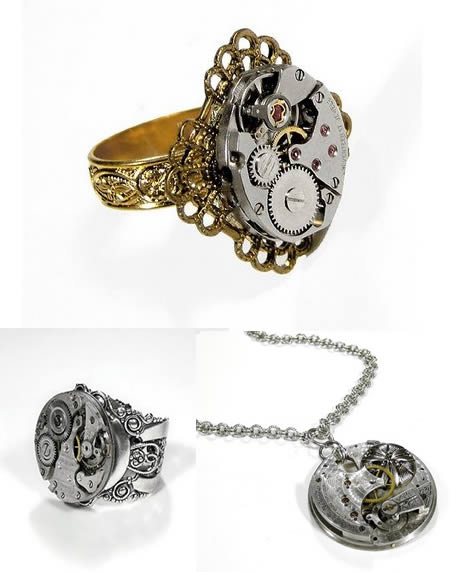
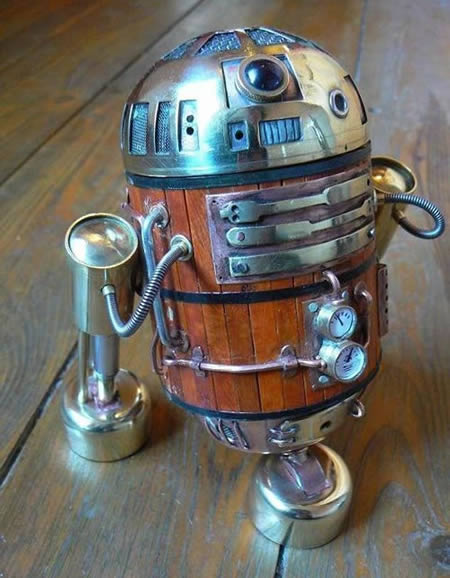
If you watch TV, you’ll know that people are dumb. As a writer, you don’t want to alienate the slavering masses of humanity, so here’s ten ways to make absolutely sure you come across as a complete idiot in your writing (interspersed with steampunk gadgets).
1. Use “like”, “totally”, and “you know” as much as possible! Also exclamation marks! Exclamation marks are totally awesome and not irritating at all when used frequently!!!!!!!!!!!!!!!!!!!!!!!!! You know what else is GREAT????? CAPITALISING AND ITALICS!! They’re a fantastic blog/online habit that brilliantly and non-annoyingly translates into REAL LIFE!!!!!!!
2. Invent a wacky dialogue (or several) and make sure at least one character talks in a way that makes your readers want to strangle them. Brian Jacques is the master. Observe:
Dotti wiped her lips ruefully on an embroidered napkin. “I bally well wish we could, I’ve never tasted honeyed oatmeal like that in m’life. I say, Rogg, how the dickens d’you make it taste so jolly good, wot?”
Rogg chuckled at Dotti’s momentary lapse from molespeech. “Hurr hurr young miz, oi chops in lot of. . .” [let’s just stop it here, or I’ll bally punch meself, wot wot?”]

3. Correct apostrophes are for pompous know-it-alls. If you want to pretend you’re smarter than, say, your pet fish (and shame on you for such ludicrously high goals), then go ahead! Use apostrophes like this. . .
a) For abbreviation. Eg can’t, isn’t, I’m, they’re = cannot, is not, I am, they are.
b) For possession – but only when it’s the next word or phrase. Eg Sarah’s cat/Sarah’s alluringly plunging neckline/Sarah’s totally, like, awesome grip on the English language. And also, “The cats belong to Sarah” with no apostrophe, since the owner-ownee words aren’t in the right place to need an apostrophe.
If you’re REALLY the kind of fool who thinks editors like consistent punctuation, I bet you’ll also be able to combine plurals and possessives in a way that allegedly makes more sense than just putting apostrophes in where they look pretty. So I guess if you were a real geek you’d put the apostrophe precisely after the owner or owners. Eg The cat’s bowl (one cat) or The cats’ bowl (more than one cat). Also, The women’s club (because “women” already indicates it’s more than one woman).
And I bet you’ll cut out the one optional bit of apostrophes (whether you add an extra ‘s’ or not when the word already ends with ‘s’) by sticking to the rule that always works (leaving off the ‘s’ – because the plural of “Jesus” never has an extra ‘s’ – strange but true; you’re allowed an extra ‘s’ for almost everything else. . . if you want it). So that’d give you disgustingly consistent tripe, like “The princess’ cat” and “Jesus’ disciples”. Or maybe even “The princesses’ cat” if the princesses collectively own a cat.
You’re such a nerd I bet you even know that the only time apostrophes get left out is for the possessive “its” (so people can tell the difference from the abbreviation “it’s” for “it is”) so you’d end up with a sentence like, “It’s such a nice dog even its bark is polite.”
4. Adjectives and adverbs are for winners! More is better!!! You don’t need actual characterisation if you have a handy thesaurus. As you can clearly see below:
Boring old sentence: The Doberman took one look at my mother and growled. Mum’s blue eyes filled with tears. She didn’t even try to shield herself as the dog attacked.
Thrilling drama unfolding: The vicious cruel Doberman took one menacing look at my blue-eyed mother and growled loudly. Mum’s crinkly eyes filled with salty tears. She didn’t even try to shield herself as the mean and underfed dog attacked her quickly.
This lazy descriptive technique is also super great for dialogue. The word “said” is invisible, and you don’t want that!!! Write like THIS:
“Hello,” she extemporised.
“Why hello,” he growled back rapidly.
5. Words that sound the same may as well look the same. Right? Right!
Use “there” (“over there”, “There, there, don’t cry”) interchangeably with the possessive “their” (“their dog” “their lack of IQ”) and the abbreviation “They’re” (“They’re kidding about this, right?” = “They are kidding about this, right?”)
Ditto for the possessive “your” (“Your dog is getting mentioned a lot in this blog post”) and the abbreviation “you’re” (“You’re dumber than you look” = “You are dumber than you look.”)

6. It’s totally edgy to mix up past, present, and future tense. Make those verbs add zing to your story. If that’s too hard, just write in future tense or present tense. Readers LOVE that. It might be harder to read, but readers these days need a challenge anyway. (The exception is primary readers – for some reason, present tense doesn’t make them want to throw a book against the wall. For them, stick to future tense. It’s the only one that’ll really build their character.)
Boring old sentence: As I went to the store, I thought about how yesterday I’d had foccacia.
Thrilling drama unfolding: As I go to the store, I thought about how yesterday I will have foccacia.
Don’t you love how trippy that second sentence is? It just makes you want to read it again and again before moving on.

7. Corect Speling is 4 peopl with no imaginashon. Spel chekers are for peopl who r unartistic.
8. It’s totally humble to use a lower-case “i” instead of the standard capital “I”. Your editor will think, “This person will be great to work with” rather than, “This person has never written anything longer than an SMS.”
9. You don’t really need to start sentences with a capital letter. That’s old-fashioned. So are speech marks, like these old fuddy-duddies:
“Do you like my question mark?” said Mrs Jones.
“Sure!” said Mr Jones.
“I’m not sure though,” she said, “about how to break up a sentence in the middle, using commas.”
“Don’t worry,” he said. “Just use two sentences. The main thing to remember is that punctuation belonging to the sentence goes inside the speech marks – just like that exclamation mark I used earlier – and various commas for when the speaker pauses.”
“Do you think giving each new person a fresh line makes dialogue easier to follow?”
“Yes. And it means that not every single line needs a ‘he/she said’ tag.”
Mrs Jones said, “Good point. And I suppose you’d need to capitalise the first letter of dialogue mid-sentence if the dialogue made its own mini-sentence.”
“Sure. If you’re a total know-it-all.”

10. Don’t bother inserting page numbers. If your book gets dropped and the pages are out of order, the story will probably improve. For bonus points, leave your book title out of the header, too. It might just cause your book to get mixed up with a much better book. (Of course, if you also leave your name out of the header, no-one will be able to track you down – but that just adds to the mystery.) Having a header containing your name, book title, and page number is just showing off.
This post was based on Steffmetal.com’s #38: Re-Vocabise. The pictures are from http://oddee.com/item_96830.aspx
PS: CJ has SMSed to say our jewellery evaluation is ready for him to pick up, and thus discover all the details – such as, which items are worth how much (all we know so far is that the total is $11,500). Will the hideous amber necklace be the only item of real value? Will I still be haunting ebay’s jewellery section trolling for buyers in ten years’ time? The full financial details and pictures. . . tomorrow!
Writing tips for when the book is written
Today’s awesomeness is getting given a GIANT CANISTER OF LOLLIES AND CHOCOLATE at the end of my final lesson with a student who just finished Year Twelve.
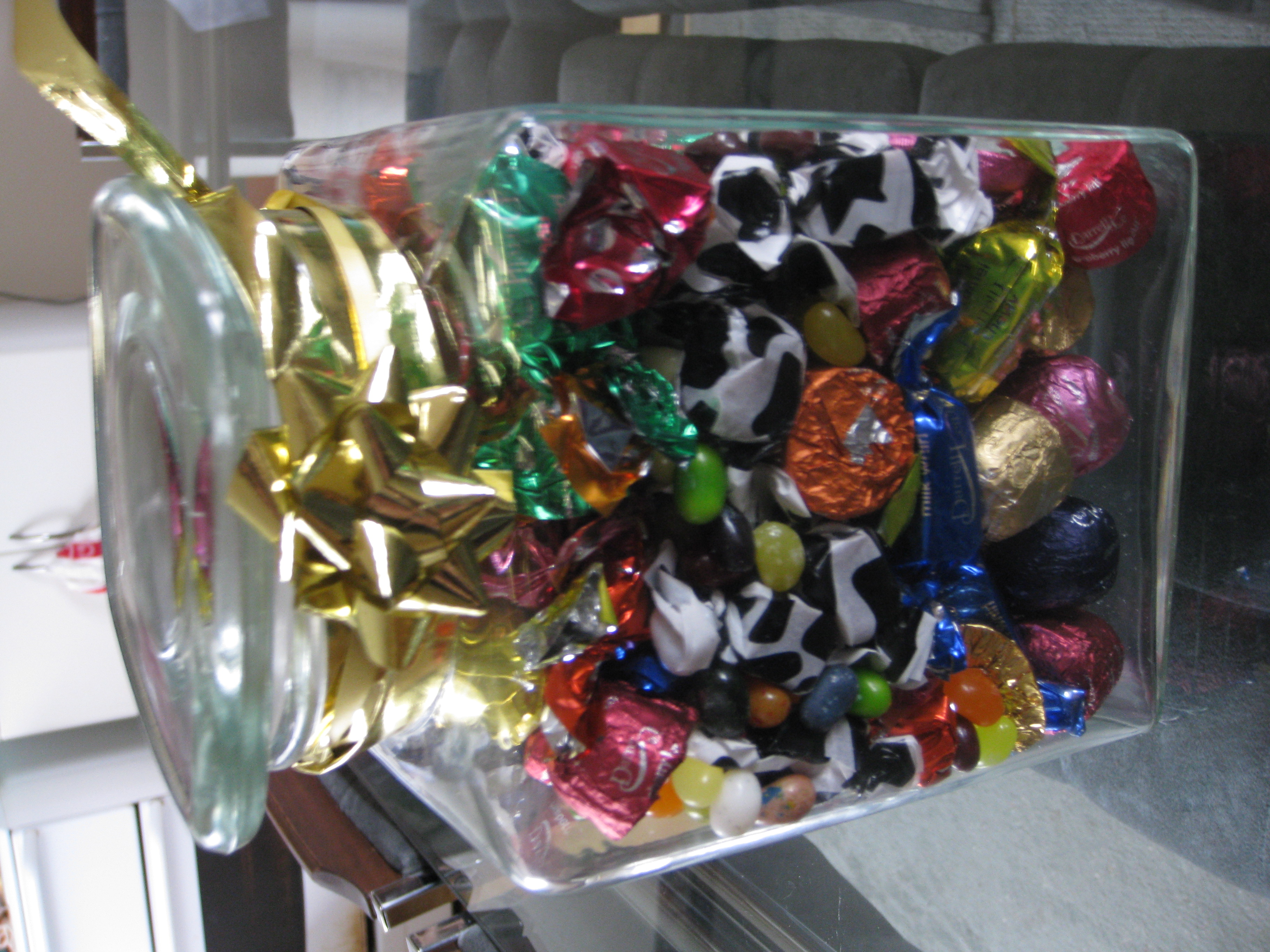
It was high quality, too – jelly belly jelly beans, liquer chocolates and other wonderfulness. All the wrapped chocolates had their labels on them, which shows extraordinary thoughtfulness of the part of my student and her mum. (In case you’re wondering, features included “Tuscan dream”, “peanut brittle”, “raspberry cream”, “Hazelnut and honey”, and many more.) Truly, epic awesomeness was had. (In unrelated news, my stomach hurts.)
Here’s three extremely relevent articles for when your book is all done and all edited. The second is funny, and every writer should read it. (That, and the equally funny entirety of http://slushpilehell.tumblr.com/.)
http://cba-ramblings.blogspot.com/2010/09/11-questions-for-crafting-pitch.html
http://cba-ramblings.blogspot.com/2010/09/10-ways-to-annoy-literary-agent.html
http://cba-ramblings.blogspot.com/2010/09/why-oh-why-did-i-get-rejected.html
And, in a seamlink join between today’s writing links and October’s steampunk theme, here’s a great list of common steampunk motifs.
http://www.writing.com/main/view_item/item_id/1249132-SteamPunk-A-List-of-Themes
What publishers do with your book
Today’s awesomeness is #209: Share your knowledge. Which I’m doing by posting this.
First, let’s make something very clear: Publishers do a lot of work. They might earn a steadier income than you or I (there’s perhaps a dozen in Australia genuinely doing well), but they work just as hard and love books just as much.
You think your novel is the best novel ever written, but so do 90% of the other 300 people sending a novel to the same publisher as you this week. So settle down, and prepare yourself for a long wait. A month is a lightning-fast response time – it often means they didn’t have to think hard about rejecting you. Don’t ever contact the publisher unless at least 3-6 months have passed since you sent your stuff. (Agents are similar – and neither group will be pleased if you resubmit a book, so make sure it really is the best it can be FIRST.)
The book process goes a little like this in Australia (In Britain and America, you pretty much need an agent – in Australia it’s optional at this stage):
1. You send the first three chapters of a finished book, plus a short cover letter and one-page synopsis – or whatever the web site says you should send (and done in standard manuscript format – usually courier new size 12, double spaced with one-inch margins on all sides and a header with the novel title, author name and page number. The very first page is a cover page with the author name, address, email and phone on the top left and the total word count on the top right, then the title and author pen-name in the middle of the page, with lots of white space all around).
2. The book waits on a slushpile for weeks or months – not because the publishers are lazy, but because they get hundreds of manuscripts every week (and pay staff hundreds of dollars each week to sort through them all). The initial read is generally given to editors and/or interns.
To have an idea of their life, go to an online critique group, pick someone at random and volunteer to read their novel. Read it and edit it that day (you need to think of good points as well as bad points). Now imagine doing that every single day of the week (including, often, your weekends and holidays).
Once you’ve read twenty or thirty unpublished novels (go on, I dare you) you’ll realise that three chapters is far more than you need to tell if someone is good at writing or not. Random House in Australia asks for just 250 words (and replies within two weeks – genuinely!) They’ve often requested my full MS (manuscript) based on that little, so it’s clearly not a ploy to get out of reading the slushpile.
Also, any reader who picked up your book in a bookshop would read perhaps two sentences before making their choice. So if you can’t grab a publisher RIGHT AWAY – how can you expect to grab a reader, who is expected to financially invest in you from their own wallet? (Side note: when’s the last time you read and/or bought a book? Hopefully less than a week. If you won’t, who will?)
3. After 3-6 months (closer to six, despite the charming optimism of publisher estimates on their web sites and/or the rare “yes we have received it; we’ll get back to you soon” responses), you will get a one-line reply saying either, “Your book does not suit our list at this time” (which is particularly true if you were stupid enough to send a cookbook to a scifi imprint) or “Please send the full manuscript.”
That form reply of “Please send more” means you’re in the top 5% of unsubmitted manuscripts. Time to celebrate – a little.
The form rejection usually means your manuscript needs more work (or perhaps you need to write a new book from scratch – but I wouldn’t assume the latter from a single rejection. More than six rejections, maybe). Since it’s probably been at least a month since you last edited (if you never edited it, you’re a moron and a waste of publisher time), now is a great time to have a different look at your book, realising for real this time that it’s not an instant classic after all. You may want to eat a kilo or so of chocolate before you start, especially if this is your first rejection. But above all, don’t say a word to the publisher who rejected you – not even a dignified thank you. It’s unprofessional, and can be career suicide.
4. If your full book was requested, you may have time for an edit and then you send it off, with an extremely brief cover letter saying, “You asked for it; here it is.” Resend the synopsis, too. Send the full book, not just chapter four onward. And then wait for another 3-6 months (at least; as I write one of my full-MS books has been with a publisher 17 months). Meanwhile. . .
5. Your book is read by anywhere between one and a dozen different people. Some of them include more editors/editorial interns, publishers (who are often also editors), readers (who may belong to the publisher, or be hired as contractors), and acquisitions editors. At every stage, people are looking for reasons to either reject your book (saving the company a lot of time) or believe in it (so perhaps they might someday make money off you). If everyone along the way thinks a section of the general public will like your book, your book gets to an acquisitions meeting. Everyone present will have read at least an outline of the book (very possibly your own synopsis, so make sure the synopsis reveals your style, and what the book is like – humour if it’s humour, philosophical if it’s questioning, or whatever). There will be one or two people who are the champion of your book, and they will argue for you. Of all the books that are requested by publishers (say twenty a week), one or two will go to the fortnightly acquisitions meeting.
This is a hilarious example of roughly what that meeting looks like (horrifying, though, if you don’t already know the process):
http://cba-ramblings.blogspot.com/2010/09/behind-scenes.html
6. At some point during #5, you will get a reply. It will almost certainly be a form rejection, even if they’ve taken an astonishingly long time to reply. In about 25 rejections of full novels, I’ve had personal comments twice (excluding the publishers I’d actually met, who knew I and my books were at a professional standard – and therefore gave comments).
Be professional, and don’t respond. Be wary of blogging, tweeting, or facebooking about your experiences, too. Never, ever burn a bridge with anyone. In Australia, all the major publishers are friends. Many are married to each other.
Don’t be rude to ordinary people, either, because (a) You never know who they are, and (b) They might someday be a fan of yours – maybe even the extra-special kind who buys your books, and (c) It’s rude.
7. Your book is accepted! Awesome! Deals do sometimes fall through (especially with small publishers), but that’s rare. So break out the champagne. And – brace yourself. Over the next couple of months you will be doing a lot of painful editing work. Your royalty is usually paid in three installments – one when the contract is signed, one when the book is ACTUALLY ready, and one when it’s released. The whole process takes about a year (if the book is illustrated, it’s more like a year and a half). Incidentally, if your publisher charges you money – they are a scam (ditto for agents).
This is a great time to get an agent to make sure everything is in order, and that the contract is beneficial to you. Large publishers often buy world rights – but don’t sell them (which means they’ve just prevented you from making two or three or seven times as much money by selling your book to other places for similar advances). Others don’t understand e-books (which, to be fair, is true of the entire human population, since the current e-book system is extremely clunky and user-unfriendly at present).
You don’t want a super large advance, because that can backfire. Your advance will be between $3000 and $10,000, based on predicted sales. Most of the time, the publisher doesn’t actually sell the predicted number (sad but true). You get to keep your advance, but it may be difficult to sell them your second book if they’ve just gambled on you and lost (which happens 9 times out of ten). However, with a smaller advance you may look good.
If your advance is $3000 (based on 1000 books) and you sell 2000 books, you look like a hero.
If your advance is $10,000 (based on selling 3000 books) and you sell 2000 books, you look like a failure.
Publishers make a loss on MOST of the books they produce, so (a) Be kind to them when they reject you, and (b) Promote yourself like crazy if you’re published (but remain polite – eg no spamming).
You probably won’t get much input into the cover design, unless you’ve already sold several books successfully to the general public. Publishers know more about the public than you do, so let them do their thing.
8. Books are usually given to booksellers on a “sale or return” basis, which means that even if the bookshop lets your publisher send them twenty copies, they can all be sent back after a few months if they don’t sell. Publishers have a LOT of warehouses full of unsold books. “Firm sale” means smaller profits, but the bookshop has to keep them (you know those bargain bin $1 books? They’re firm sales that the shop just wants to burn for the shelf space.)
9. Promotion happens for about two months before and after the release date. You can expect to travel a lot. Get used to being a commodity, and dealing with people insulting you. (As soon as you publish, you’re public property, and people will feel free to mention how much they hated your most precious characters – often to your face.) You will also have a web site made, and possibly start (or continue) a blog. The average attendance for a book signing in the USA is four people, so call in every favor you’re owed to rent a series of crowds. Personally, I recommend getting a whole lot of helium balloons with faces drawn on.
10. Your promotion period soon ends (for better or worse). You’ve probably already written and edited another book, so hopefully you’re already accepted and gearing up to next promotion season. Most writers produce a book a year working full-time (probably financially supported by someone else), and publishers rarely want more than that.
There are a lot of gaps in my knowledge, but that’s the general gist of things as far as I’m aware.
Remember: Be patient, be polite, and work hard (before, during, and after publication). As always, my most important piece of advice is – if you don’t enjoy writing for writing’s sake, don’t do it. Why punish yourself?
Click on this for a mildly-naughty comic series (language, and otherwise fine as far as my extremely limited knowledge goes) – the first refers to Isambard Kingdom Brunel*, a heroic engineer of a time when engineers were. . . well, heroic.
My friend Will says, “Some Hark! A Vagrant does have sexual references. I give it PG to M, depending on the person. But it’s soooooo worth reading.”
For some reason, you need to scroll down quite a bit. Do it; it’s worth it.
http://beatonna.livejournal.com/135788.html
*Real name. Yep, I know. Awesome.

 Felicity Banks