Colour Taste Texture: An Autistic Cook Book
My daughter is autistic and has a number of unusuakodd behaviours in relation to food. For example, we went to the zoo (she loves animals) and when I asked her the best part of the day she said it was the Chocolate Caramel Slice (just what a parent wants to hear after spending so, so much money). She is obsessed with junk food! But she frequently skips meals because she’s “not hungry”—and that includes meals that are simply us parents begging her to eat a sugary treat (like chocolate caramel slice) rather than nothing at all.
When she does eat, there is an extremely small range of acceptable dishes. We are constantly perusing recipe books to find more foods that she is willing to taste (often even a bite is too much to ask). And she loves recipe books, too! She brings them home from the school library all the time. Of course it’s mostly about the treats, but there’s usually one non-dessert item that she’s at least hypothetically willing to try. Having said that, I’ll often choose and cook something with her input and assistance only to have her change her mind at the end of the process and still refuse to try it.
[Memo to self: WHY does she get full so quickly? Investigate. Maybe it’s some kind of medical thing.]
Every so often, though, we have a real victory. For example, she has been eating a stick of celery almost every day for the last two years. It has to be slathered in peanut butter (smooth not crunchy) and choc chips, but she eats it. This is a HUGE deal. It’s currently her only acceptable green vegetable and if she required it to be deep-fried and served with ice cream we would do that. (She also takes iron and vitamin C tablets, because she would otherwise be literally malnourished due to her many food aversions and her general lack of appetite.)
Celery (and food therapy) was also key to my understanding that a crunchy texture is something that Lizzie really enjoys. (Which was quite a revelation, since I dislike almost all crunchy foods myself.) Today I made her cucumber sandwiches, and even though she ate only three bites before getting full, she said she liked it! (Then Chris and I finished them, and they were so good I made another just for myself.)
Sidebar: Cucumber sandwich recipe
Thinly slice some cucumber, and thickly butter two slices of white bread. Lay out the cucumber slices on the chopping board and press a paper towel on them to absorb the moisture (otherwise they’ll immediately go soggy, plus make your bread soggy). Spread mayo on the lower slice of bread, then arrange the cucumber in a single thin layer and sprinkle it with salt. Cut off the crusts and serve in triangles immediately (or it’ll get soggy). Watch the film “The Importance of Being Ernest” as you eat them for extra flavour.
So that was a win today!
As soon as I heard this book might be helpful for autistic kids, I wanted it.

It literally has chapters on colours, tastes (sweet, bitter, salty, etc), and textures—what autistic people tend to like and dislike, and how to modify dishes based on those criterion!

Autistic people don’t “hate vegetables”… they probably hate bitter tastes, or that farty smell (looking at you, cabbages), or crunchy foods (hello salad), or foods mixed together (again with the salad). If you can figure out WHY they love or hate a food, you might be able to expand their list of safe foods by changing the texture, colour, or environment. Incredible!
The author is autistic, which gives them excellent insights as well as some blind spots (eg his editor pointed out that in the colour section he had completely left out green, a colour to which he is so averse he forgot it existed). He clearly loves bread, and recipes with yummy dairy in them (buttermilk, cream cheese, butter) as there are loads of those.
The book isn’t written with a kid audience in mind, so although I started reading it aloud to Lizzie we quickly decided it was best for me to read it and for her to look at the recipes and pick which ones were best for her (interestingly, not every recipe had a picture with it, which was frustrating for her).
The author also uses cooking spray to stop things like dough sticking to other things, which to me is nothing short of a slap in the fact to autistic people in general and me in particular. Doesn’t he know that cooking spray has a horrible bitter taste that ruins almost everything it touches? And he says to use it on SWEET dishes? IS HE EVEN AUTISTIC??
Ahem.
My daughter likes sweet things, salty things, crunchy things, smooth things, and soft things. She always wants to eat while watching YouTube because that is soothing to her. Understanding these things is key to offering her food she is more likely to eat (it is extremely difficult to get her to eat much at all).
She jumped on the French Fry recipe and I managed to not tell her that it’s extremely similar to the way I roast potatoes almost every day (a safe and delicious food for me). I adjusted it a bit—cutting out pepper (which a lot of spicy-averse people like her also hate) and adding basil and garlic (both sweet flavours) instead. She liked them, and so did every other member of the family. They need to cook for 30-40 minutes, but they’re not super difficult. Given that Lizzie doesn’t even eat potatoes (I KNOW, weird) this is a win! Potatoes are actually a really great food with lots of fibre and other goodies. And I can easily cook her some fries every time I cook roast potatoes (so, about five times a week). Three baked potato chips a few times a week is actually a great improvement in her diet. Here’s how they looked:

I’m in the (long) process of cooking cinnamon rolls right now. They’re rather finicky (eg including fresh orange juice) but clearly they’re also the author’s absolute favourite recipe, honed over many years, so I have to try them at least once!
The author likes specific cooking tools like a dough hook (okay, what is that?) and meat thermometer (ooh, I could do with one of those), and uses Fahrenheit (ugh… why YES I already boiled some bread dough today) but their insights are so incredibly valuable. It’s definitely worth scribbling all over the book as I figure out what works for us and what doesn’t.
I haven’t seen anything like it before.
Pic of the finished cinnamon rolls:
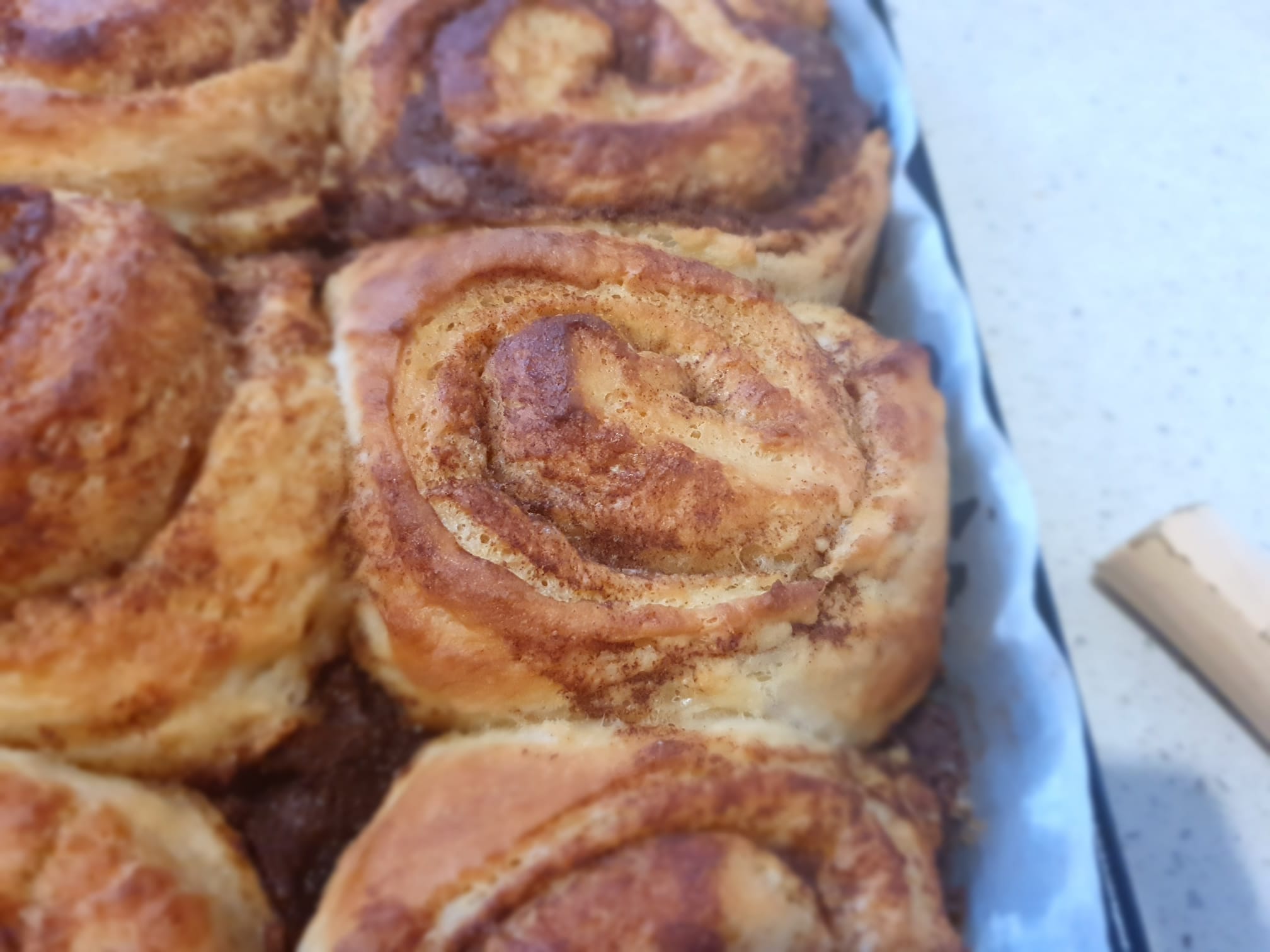
They. Were. Incredible.
The edges were crispily delicious, and the middle was a crumpet-esque land of chewy bread perfectly intermingled with air pockets thanks to the author’s beloved tangzhong (aka roux) method).
I made the icing, which was great (and mercifully simple) but honestly there was way too much. I think the tiniest little bit of icing would be best, so the buns can shine. I also think this icing would take lemon or other flavours really well. Orange would be the perfect thing for these, since they already have a tiny bit of orange in them.
The icing also ruins the look, but perhaps a perfect swirl of icing along the line of the bun would work really well.

Now I’m all excited and I’m looking through the book with newly trusting eyes, thinking, “What other wonders lie in these pretty pages?
I normally get one let’s-give-it-a-go savoury recipe per book, and a few sweet ones that sound good. This book is batting waaay above average.
Of course, I adore bread too.
Discovering a Fictional Australia
When I decided to write books set in an alternative Victorian-era Australia I decided to remedy my ignorance (to a very minor extent) by reading twenty nonfiction books (and of course spending time on wikipedia and elsewhere). I also took another look at the TV series “Worst Jobs in History”, visited the National Museum, and went horse riding – as well as reading several novels of the time (I definitely recommend Marcus Clark’s “For the term of his natural life” although I now can’t remember whether it has rape in it or if I’m confusing it with another convict story), and every modern steampunk novel I could get my hands on.
Here for your convenience are my short reviews of the twenty books I read.
These are the top three, in my opinion.
1. “Victorian London” by Liza Picard (including colour illustrations).
If you’re going to read one book before writing steampunk, this is the one you want (and, as a bonus, it’s often hilarious). The first chapter is on smells, and later on she has compiled some advice for Victorian ladies, including the following:
Never be in the company of an unmarried man alone, unless considerations such as the imminence of an acceptable proposal of marriage outweigh the normal rules. If about to faint with emotion, make sure there is a convenient sofa on which to subside. Not all gentlemen can be relied upon to catch a falling female in time.

2. “Who invented what when?” by David Ellyard.
This was brief and coherent enough that even I (a bit of a luddite myself) felt that I understood everything. It includes era-defining inventions such as the steam engine, and life-changing inventions like toothbrushes. If you want to have an idea of where technology was at and how people lived, this is where you should start. The thing that makes it especially brilliant is that it’s in chronological order, so you can choose where to stop.
The other technology books I read were “History’s Worst Inventions” by Eric Chaline (which was very good, with a little more depth), “Technology in Australia 1788-1988” (which was intensely dry – I only read selected sections), “The Most Powerful Idea in the World: A story of steam” by William Rosen (which was good, but rather above the heads of non-engineers, and often focused on patent law rather than the more fictionally interesting bits of steam tech).
I also read “The Aeronauts” for balloon info, which was the single most entertaining book on this list. Oh, and “Sail and Steam” by John Falconer, which I should have read with a dictionary in my other hand (do YOU know the different between a clipper, a cutter, and a tall ship?) but the stunning pictures were well worth it.
3. “Black Kettle and Full Moon” by Geoffrey Blainey.
Blainey is a deservedly well-known Australian historian (I wasn’t able to get “Triumph of the Nomads”, which is a huge shame), and this book is all about everyday Australian lives – so of course it’s gold for writers. However, Geoffrey Blainey is shockingly and deliberately ignorant about the lives of Aboriginal Australians.
The other books that were very good for everyday detail were “Australian Lives” by Michael Bosworth, “Colonial Ladies” (lots of brilliant and entertaining letter and diary fragments) by Maggie Weidenhofer, and “Slices of Time: Australian Family Life in 1838” by Joan M. Kenny.
For general Australian history I skimmed through “The Oxford Illustrated Encyclopedia of Australian History” (wikipedia was way more useful for getting a grounding in things) and “A History of Victoria” by Blainey (good, but not as relevant as the other one). I also read “The Gold Rushes” by John and Jennifer Barwick (a children’s book, which suited me just fine).
For bushranging I read “Australian Bushrangers” by Bill Wannan, and “Australian Bushrangers” (yes, same title) by George Boxall. Both were fascinating – especially tales of bushranging chivalry – but they were also sometimes horrifying to read (especially the second one) because of the nature of crimes committed by certain bushrangers (lots of rape and murder and truly horrifying insanity). One features a photo of a dead bushranger on the cover (I forget which, and don’t want to look).
For better knowledge of the convict system, I read “Commonwealth of Thieves: The Sydney Experiment” (too historically early for steampunk, but a surprisingly gripping read. . . for a little while, despite all the odds, the two cultures with dibs on Australia had a chance to actually get on), “Death or Liberty” by Tony Moore (all about transported political prisoners. . . absolutely fascinating, and something Australians should be so proud of – the influence of those rebels is still felt in some of our best cultural attributes), and “A Long Way Home” by Mike Walker (a semifictional account of the convict Mary Bryant – packed with vivid detail and real-life desperate adventure – again, too early but still extremely useful).
Last but definitely not least, I read “Savage or Civilised” by Penny Russell (an examination of early Australian manners). Fascinating, and so relevant to steampunk attitudes! I’ll never think about handshakes the same way again.
So there you have it! Some of the best books for prospective steampunk authors to read, especially if you’re writing Australian steampunk. Surely I’m not the only one out there working on this!
Edit: Since I wrote this book entry, Dr Bruce Pascoe published “Dark Emu, Black Seeds” which turned Australian history upside down. It is an incredible piece of research and every Australian should read it. Pascoe looked at early European sources and paid attention to what they saw (a well-designed, fertile landscape) rather than what they concluded (there are no true humans here so God must have arranged all this so nicely).
My interactive steampunk novel, Attack of the Clockwork Army is set in Australia. You can choose to be male or female, gay or straight, black or white. You can even choose to fight for the British, or not to fight at all.
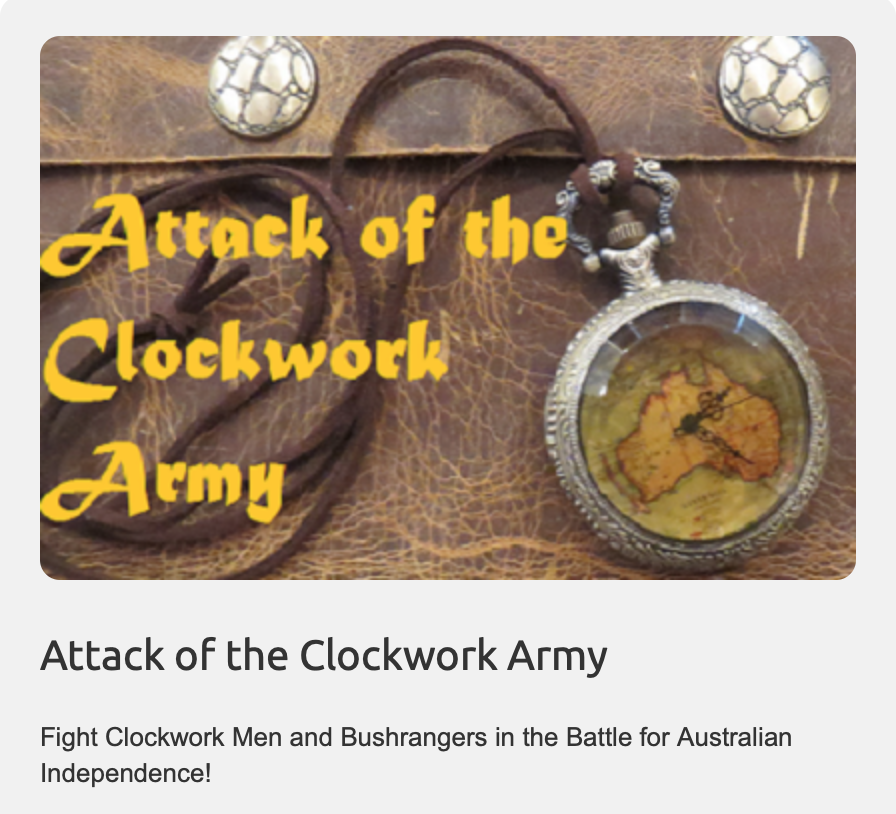
The book is available as a Choose Your Own Adventure-style app for your device on Amazon, Apple, Android, and Chrome. You can also buy it directly from the publisher (an easy way to buy and read it on your computer).
The app stores list it as “free, with in-app purchases”. What this actually means is that the beginning is free, and then you pay $5 (once!) to read the rest.
https://itunes.apple.com/us/app/attack-of-the-clockwork-army/id1042824941?mt=8
https://chrome.google.com/webstore/detail/attack-of-the-clockwork-a/oojmcpcnhdedgiegdocaedonlgfhlpgj
The Great Book Sort, Part 5—rape
Way too many hack writers use rape as either backstory, drama, or peril for female characters (and all the more so if it provides handy motivation for the male character—double ugh).
Way too many actually-pretty-good writers use rape too.
And so do some brilliant writers.
It’s an instant red flag for me as a reader. I relate hard to my fictional characters and if they get traumatised there’s a strong risk that I will also be traumatised. I wish all books came with content warnings, like movies and TV, so at least I had a choice about whether I was about to be tricked into imagining being sexually assaulted! Those who claim it’s important for “historical accuracy” (oddly enough, especially in fantasy worlds) are welcome to it. But it’s definitely not for me.
I’ve written at least one character who was raped, and now that I’m older I do regret it.
Any child who is a good reader will read a rape scene far too young.
But sometimes a story with rape in it is worth it, even for me.
Favourites
Pamela Freeman’s “Deep Waters” trilogy (+ 1) series has plenty of rape, some of it ‘on-screen’ (always more traumatic to read) and I have to brace myself before reading it. But the series is so incredibly good that it’s worth it.

As I sort my kindle books, I’ve re-discovered another amazing Aussie author, Glenda Larke. She has several trilogies, and the Isles of Glory trilogy was the first one I read this time around. There is a LOT of rape, and torture (explicitly described), and even a post-rape baby that is genuinely evil (which I imagine is extremely triggering for some people). But this series still made the ‘Favourites’ pile, in part because it’s female-led and the women basically treat rape and torture in the same way—it really really sucks, and is frightening, but it doesn’t change anything about who you are. If your friends are in danger and you know you’ll get raped if you help them—well, you’re gonna choose to get raped.
I definitely still brace myself before reading anything by Larke—partly for all the violence, and partly because I get so badly drawn in that I’m not 100% in real life until the trilogy is finished.
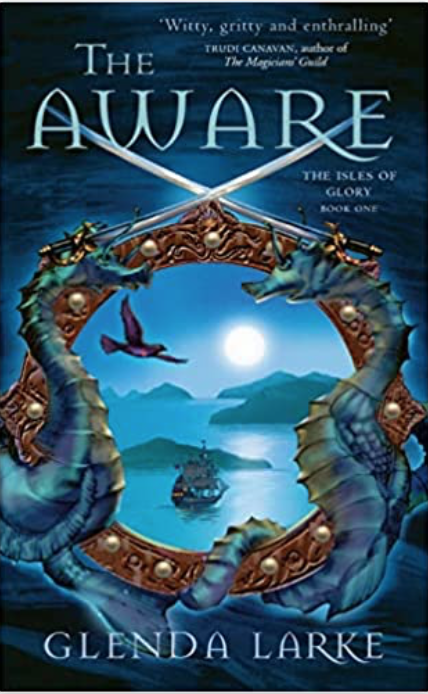
I’ve also read her “Mirage Makers” trilogy very recently, and it was just as compelling without nearly as much rape (but rape was still very much a thing—in this case, lots and lots of rape of male child slaves before the stories began—fortunately I’m pretty sure it was all ‘off-screen’ and without detail).
Nah
Juliet Marillier is famous enough that I don’t need to remember how to spell her name. If I search for anything similar, her actual name will come up. She also has quite a lot of books, and I’ve bought a solid chunk of them.

This is the one that traumatised me as a child, and then again as an adult. It’s definitely not the most awful rape scene ever, but there are several elements that make it extra difficult, the main one being that you’re in the moment with the heroine.
Now, all her books are really good! The ‘tiny pale-skinned heroine with magic and enormous hulking brothers and/or love interest/s’ gets a little tiring after a while. I could definitely handle reading these books again…. but I have other books that are just as good that don’t require me to go through that experience again. Plenty of her other books also have rape or attempted rape, but I think this is the one with the most detail.
Nope
“The Book of the Unnamed Midwife” by Meg Elison is a good book, but I never want to go into that world again. There’s been an apocalypse that wiped out most women and children, and made childbirth deadly. The heroine basically finds women who have been claimed by a gang of men (that is, they are prisoners who get raped a bunch by all of them), and gives them contraceptives so at least they don’t get pregnant.
It’s a profound angle on post-apocalyptic literature (memo to self: in the apocalypse, make sure to loot the contraceptives as a lot of people will really need them) and is well-written and well-developed. Not surprisingly, there’s lots of sex and violence. Although the book is definitely not devoid of hope, it’s way too dark for me.

The Great Book Sort, Part 4
This coming Saturday, the Castle of Kindness Refugee Sponsorship Group has our big annual fundraiser, an Open Garden event at 67 Vagabond Cr McKellar (Canberra), on Saturday September 3rd from 10am-4pm featuring stalls, food, music, contests, plants to buy, and so much more.

So I’m going to try and keep this entry brief.
Favourites
T. Kingfisher (who writes as Ursula K Vernon when she’s writing for kids) is a gift to this world. She has strong inclinations towards writing horror, but she writes with such incredible warmth that devouring her books is worth my newfound fear of the sound tock… tock…. TOCK (from her book “The Twisted Ones”).
Here’s a quick screenshot from “Summer in Orcas”, which is probably the least scary of all her books.
This author is just amazing, with a wide range of styles. I’m so glad she exists.
Nah
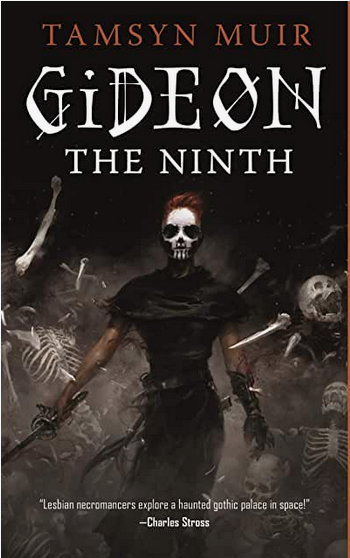
Tamsyn Muir, “Gideon the Ninth” etc.
A lot of people, including my partner, really really love this book. It’s well-written, fascinating, and unique. Probably a bit too dark and/or nihilistic for me.
Nope
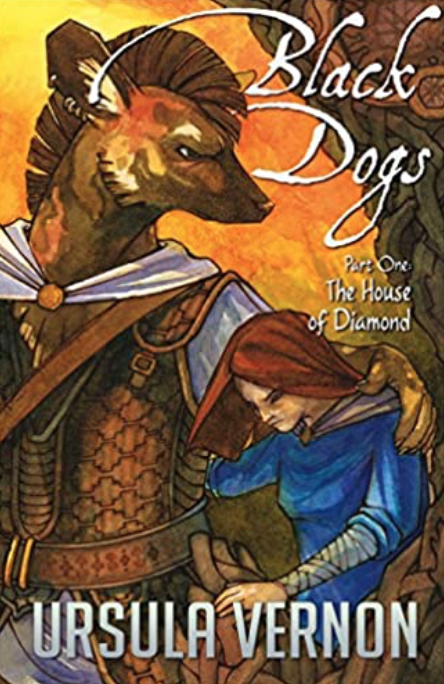
Ursula Vernon, “Black Dogs”
I just really, really didn’t like it. I found it childish. Which seems like an odd insult to a children’s book, but I write children’s books myself that are highly enjoyable for adults to read. So here we are. Even the glorious Kingfisher doesn’t always write what I like. And in fact, “Summer in Orcas” reads like that kind of stunning, ageless fantasy to me. It even has a child protagonist.
But what do I know?
The Great Book Sort, Part 3 (Robin McKinley)
Before I start, let us remember that authors are only human and never ever deserve the abuse that any famous person inevitably receives. This is a (mostly) negative review, and a warning to readers—it is not an invitation to harangue an elderly woman who happens to be particularly gifted with the written word and somewhat less gifted (in my opinion) at sticking to incomplete ideas and letting go of complete ideas.
Yes, I am attempting humour. Hopefully some people will like it.
I hereby declare a blood feud against Robin McKinley. She conceals great evil in her apparent innocence.
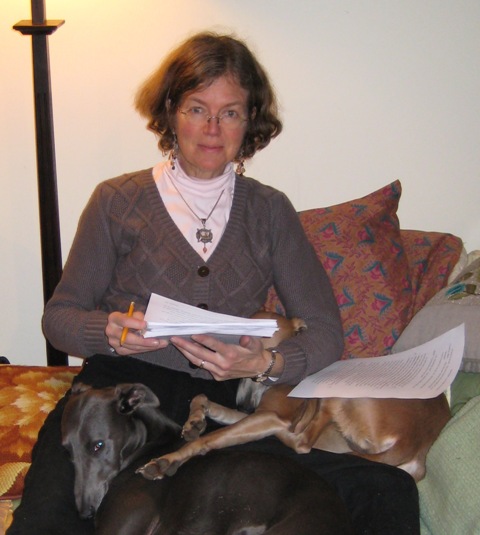
Observe the face of true evil! Note how she has clearly cut up two innocent dogs and laid one head and one body on her lap, never to be united.
(Photo from wikipedia.)
Twenty or so years ago, I read “The Blue Sword” and was enchanted. There was something about her lyrical style that grabbed me, and the moment in which the heroine is talking to someone who loves the desert like she does (passionately, irrationally) has stuck with me all this time.
The sequel wasn’t nearly as good. It felt a lot more generic (chosen one, prophecy, magical items, battle) and therefore less interesting. The main character who was interesting in the first book was effectively a different person.
But I read one of her other books, way back then, that I didn’t remember so clearly. I read it again, recently, and remembered as I read that I’d read it before, but couldn’t remember how it ended. Was it beautiful? Tragic? Mediocre?
So much worse, my friends. So. Much. Worse.
That book was “Pegasus”, a story about human-Pegasus relationships across a seemingly insurmountable cultural divide. Of course I loved it! Cultures reaching out to one another is my jam! But as I re-read it, long stretches of the book were incredibly dull. Conversations between characters that stopped the plot moving, and lots of political machinations that weren’t magical or fun at all. I kept going, telling myself to trust this author who sometimes had such a profound effect upon me.
Then I finished the book, which ends very abruptly. Or rather, it doesn’t end at all. Not even a cliffhanger, or a tragedy, or something badly written. It truly ruly doesn’t end. (Apparently it’s NOT “a book” put part one of a three-part “book”.) As I searched for the second part, not sure if I wanted to wade through more of this drab tale but hoping I could at least get a summary…. I found a deep well of rage, betrayal, and tragedy.
There is no sequel (or “Part 2” if you prefer). It’s been over a decade and there’s NO SEQUEL!?!??! To a book with one of the most frustrating non-endings of all time?
It’s not just me. You can read some of the chorus of rage on the Goodreads page for the second book, which has been live for over ten years and giving people false hope all that time.
And I have suffered more than all of them, because I journeyed through the boredom, frustration, and ultimate fury of reading “Pegasus” not once but twice.
*inarticulate screaming*
Whatever you do, DO NOT read this book! It is, quite literally, not finished.

Faugh!
But there’s more, even more damning horrors to lay at the feet of this best-selling villain.

Notice anything, my precious? Sorta similar covers, aren’t they? Both somewhat suggestive of “Beauty and the Beast”, yes?
Oh yes.
Not only are they both based on “Beauty and the Beast”, they are extremely similar. If anyone else had written the second, they would definitely lose millions in a plagiarism lawsuit.
Three daughters, and an elderly father. Poverty. Travel. Small town. Becoming better people through hardship. Dad lost in woods; mysterious castle; takes a rose for the daughter named “Beauty” and then the Beast gets angry and orders him to send his daughter to the castle; the daughter comes; the beast isn’t nearly as horrible as he looks; Beast lets her go due to family crisis and nearly dies as a result, which causes Beauty to declare her love; they marry and live happily ever after.
Many many scenes are almost identical: The Beast refusing to eat with Beauty because he can’t do it gracefully; the castle constantly changing shape and colour and size (I really hated that in both versions—it was mystical and lyrical, but also somewhat pointless and annoying); Beauty seeing visions of her sisters, etc. Even the sudden appearance of butterflies in the otherwise lifeless castle being an early portent of returning life.
For me, there are two main differences between the stories. In the first, the name “Beauty” is a sarcastic nickname for an ugly girl (which I liked, except the castle then made her prettier). In the second, the Beast does not transform back into a human at the end, which is cool in some ways and super weird in others.
It reads VERY much as if it has been written from the exact same notes as the first book. Not just the same inspiration. Very much the same scene by scene outline. In the author’s afterword, she says how disappointed she was to have written “Beauty” before she had spent a significant amount of time growing roses. An increase in horticultural knowledge has not improved the story; not one bit.
It is terribly annoying to read the exact same story by the same author, and to pay for both of them. It feels like reading two drafts of the same book, as if the author is lurking over my shoulder saying, “Should I write the scene this way or that way?” I didn’t sign up to be an editor.
But I am now going to express my rage in the most heinous manner possible—and it is all the more heinous because I am about to say something true, and one never knows what an author, even a nearly-70-year-old bestselling author, might somehow read:
Brace yourselves.
The second “Beauty and the Beast” book she wrote, with an extra ten years of writing experience (and gardening experience) under her belt….
is not as good.
Pow. The burning brand of true hatred falls without mercy.
The character development of the family is much weaker in the second book. It rushes through the change from ‘spoiled rich people’ to ‘good-hearted and loving country folk’, making it feel unrealistic (and calling attention to the fact that being poor and anxious is not usually a catalyst for becoming a better person). It also has a whole complicated magical backstory that serves only to confuse matters, spending several pages telling different versions of a story (which just feels repetitive, and slows down the actual story), and well as making a huge deal out of “three sisters living in Rose Cottage” with no payoff whatsoever (there’s a prophecy saying that when three sisters live in Rose Cottage, walls and towers will fall—but the sisters live there for many years with no issues… and there are no walls and towers in the book whatsoever).
I mean sure, feel free to read both. Compare and contrast, if you like. Make up your own mind. But just know that they are absolutely the same story (acknowledged by the author).
So yeah, “Rose Daughter” and “Pegasus” are going straight into the “Nope” pile, so I never sully my mind with their contents again.
Take that, McKinley.
The Great Book Sort (Part 2)
Since one of my three followers is in hospital and needs more book recs, here’s…. some more book recs!
Favourites
“Clean Sweep” (and “Sweet in Peace”, “One Fell Sweep”, “Sweep of the Blade”, “Sweep with Me” and I haven’t read “Sweep of the Heart” yet) by Ilona Andrews (aka the Innkeeper series). Now here’s the interesting part: they’re not all THAT well written. They read like many many many mid-level paranormal romance authors (and, to be fair, a million billion times better than MANY error-riddled published books, especially self-published books). The plot is only more important than the inevitable love triangle (good), and the writing is fine and fundamentally flawless but not astonishing. I’ve read other books by the author and they went to the “Nah” pile—perfectly good books, which I might re-read if I run out of favourites. So why is this series a favourite? The heroine is an Innkeeper, with considerable powers… but she’s fundamentally an inter-species diplomat, and most of the books’ tensions come from two or more very different magical species coming into contact in or near her inn. So it’s all about making different cultures feel safe and comfortable and respected… and I LOVE THAT TO BITS.
Side note: The “Temeraire” series by Naomi Novik is absolutely brilliant but I can only re-read the first of the series (it’s all excellently written) because there are so many cases of cultural clashes where people are just awful at understanding each other. It’s too painful to ‘watch’ a second time.
“The City in the Middle of the Night” by Charlie Jane Anders is scifi that takes place on a planet where only a narrow band between the permanent day and permanent night is mild enough for human habitation. According to wikipedia it’s climate fiction, but I don’t see it that way. It is, amazingly (since I’m doing these reviews in alphabetical order by author, which is effectively random), another cross-cultural story.
“The Bear and the Nightingale”, “The Girl in the Tower”, and “The Winter of the Witch” by Katherine Arden (aka the Winternight Trilogy). If you want to know what I mean by “astonishing” writing—as opposed to Ilana Andrew’s “fundamentally flawless” writing—this is it. This is really, really it. The trilogy takes place in Northern Rus’/Russia. You will feel the deadly cold as you read. You will feel the corrosive hatred and unmet hope in the heart of the beautiful priest. You will feel the wild heart of our heroine, and the weight of an entire society that falls, always, on the shoulders of women. CONTENT WARNING: Women are constantly at risk of rape, and are also subject to arranged marriages against their will, which definitely includes spousal rape (the men are also married without always getting a choice over their partner, but they are clearly in a position of muuuuch more power than any woman). I am not against arranged marriage on the whole. There are several examples of happy arranged marriages in the book (and in real life). But there is at least one arranged marriage in this series that is incredibly awful, and a better man would have made different choices (yes, even in that historical setting—although there is room for interpretation on that score). The sexual violence is never explicitly described, and it is never used to break the spirit of a female character or to justify someone’s evil with a rape backstory. There are much more creative ways to break a person. . .
This series is magical, and it is unbelievably harsh, and it is exhilarating and tragic and more.
You, too, will weep for a nightingale.
Since I’ve already talked about the brilliant Naomi Novik AND I’ve talked about magical stories set in medieval Russia, I can’t stop there.
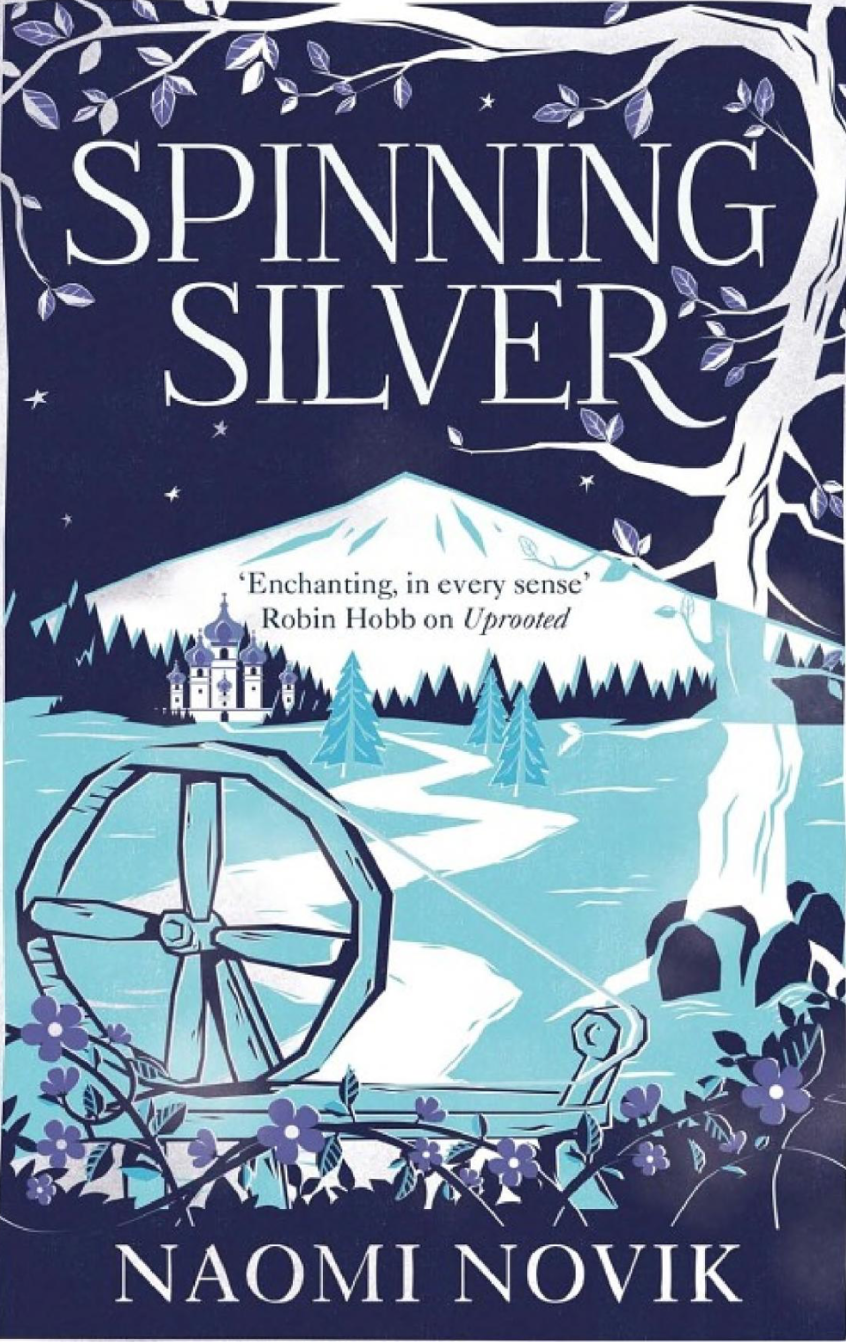
“Spinning Silver” by Naomi Novik. This is so good you guys. So so good. It is just as good as the Winternight Trilogy, and when I describe them they sound similar, thanks to the rich and bone-chilling selling of a magical medieval Russia. They even both have a female heroine who attracts the interest of an immortal man (for better or worse—but usually much much worse). But although rape is still threatened in this book, it is only a very slight possibility that is quickly and relatively easily fended off. In this story, the heroine is Jewish. So there is a whole other complicated and historical layer. And almost everyone in the story becomes a better person, which I love. That reminds me: another thing this book has in common with the Winternight trilogy is a protagonist who is incredibly honorable. Even when someone treats them incredibly badly, they do what is right. Even when they absolutely deserve a break they refuse to leave people to their fate. I love that.
“Uprooted” also by Naomi Novik. Completely different world. You’ve got a medieval-ish valley with a nasty wizard who takes a girl from the village every ten years. It’s always someone a bit extraordinary, so the heroine has grown up knowing that her best friend (who is beautiful, and kind, and clever) will be the girl taken. Except the wizard takes her instead. Content warning: there is an attempted rape (that ends rather badly for the attacker, which amuses me more the more times I read it). Again, it’s brilliantly written, including delving into the complicated feelings of the characters. How would you feel if your mother had long since accepted that you would be taken against your will as a teenager? How would you feel if, after all that, you weren’t chosen after all? And how would you feel if you were the friend of that girl that everyone knew was so, so special (unlike you)? And how would you feel, knowing your best friend would be taken and not being able to do anything to stop it? And how would you feel when you were taken instead?
And that’s only the start. I don’t want to say too much, but this book is amazing.
“A Deadly Education” (and “The Final Graduate” which ends on a major cliffhanger, and “The Golden Enclaves” once it comes out later this year) by Naomi Novik. All of the above brilliance, but absolutely hilarious too. This is a “magical school” story, but the survival rate of this particular educational institution is incredibly low. Our heroine is prophesied to become an evil sorceress. People dislike her instinctively, and she is severely hampered in her magical school by the fact that the school is basically pushing her to destroy the world and everyone in it (because it will automatically feed you the magic you’re best at—which in her case is all the most destructive killer spells). Worse, she just had her life saved by everyone’s favourite hero RIGHT when she had a conveniently impressive monster to kill. It is so funny, and strangely sweet, and exciting, and surprising. Naomi Novik was an impressive author when she wrote “Temeraire”, but she just keeps getting better and I hope she lives forever so I can keep reading her books.
“Sing the Four Quarters” by Tanya Huff. The heroine is a princess who gave up the throne to follow the call of her magical gifts. Then she did the one thing that an abdicated princess must never, never do: she got pregnant. What is worse, the man she slept with is currently in a dungeon accused of treason. He’s mostly a pretty face to her (she has a healthy and open long-term relationship with another woman, which is beautifully realised) but he’s no traitor.
Nah (aka good books that I might re-read someday, but just not really my thing)
“Fifth Quarter”, “No Quarter” and “The Quartered Sea” by Tanya Huff. Interestingly, the first book in the series is “Sing the Four Quarters” and I love it, and it’s right above this entry in my favourites pile. But in Book 2 we get a pair of new characters: siblings, and an incestuous love that continues to play a part in the rest of the series. They’re still really good books, but I strongly dislike both of the sibling characters and don’t want to spend time with them.
“Over the Woodward Wall” by A. Deborah Baker (aka Seanan Macguire, who will show up on the “Favourites” pile soon enough). This is well written (Macguire is a master writer) and pretty good, but aimed at a younger audience. I just found the two child protagonists mildly annoying.
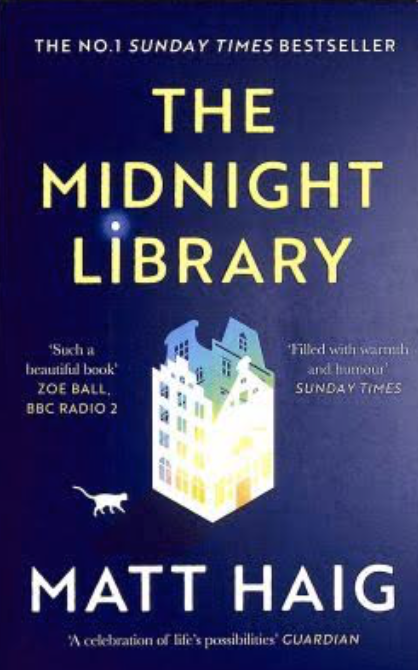
“The Midnight Library” by Matt Haig. The midnight library is a place where you can go between life and death, and play out alternate possibilities. Sort of cool, but I want sentient books and mysteriously well-read monsters in my library setting, not a story about regret and life choices.
Nope
“The Dragon Lady” by Angelique S. Anderson. Magical steampunk, including dragons. Too many adjectives.
“Red Queen” by Victoria Aveyard. I don’t remember much about the book (apparently a bestseller), but there’s a lot of clumsy exposition in the first two pages.
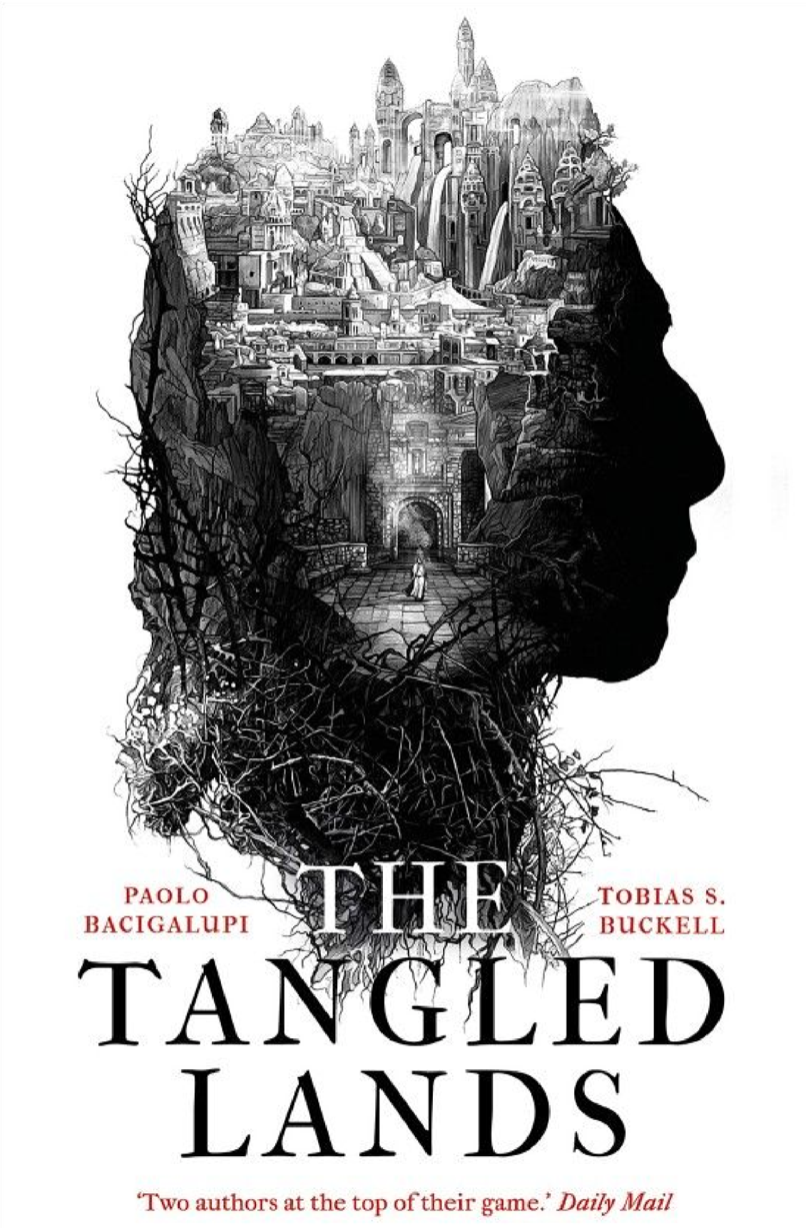
“The Tangled Lands” by Paolo Bacigalupi (who had a book in the “Nah” section of Part 1) and Tobias S. Buckell. Really well written but too dark for me.
The Great Book Sort (Part 1)
I’ve been reading mainly ebooks for many years, and now have over 700. I only recently realised I could and should sort them. The main categories I am now using are “Favourites” (happy to re-read frequently for the rest of my life), “Nah” (books that are good, but I dislike them for one reason or another—but if I get desperate I could still potentially re-read them). I also have categories for research (mainly non-fiction), and for “People I’ve Met” (mainly so I can quickly glance at them when I’m on a panel with someone, to remind myself of their books—but also so that if I hate a book by a friend, I can put it there rather than in the “Nope” section).
Here are some samples from the main three.
Favourites (currently 249)
“Notes From A Small Island” by Bill Bryson. It’s very rare for non-fiction to be so entertaining that it’s worth a regular re-read, but Bryson’s travel books are brilliant (and hazardous, because if I try to read one before I go to sleep I laugh so much I end up feeling more awake than when I started). Other than his travel books, I also love “At Home”, his book about his house and by extension the history of the home in the Western World. Highly recommended for historical authors, even though I don’t own a digital copy. His book “A Short History of Nearly Everything” isn’t nearly as fun (although definitely more fun than a textbook).
“Minimum Wage Magic” by Rachel Aaron. An incredibly relatable heroine fighting seemingly impossible odds to make rent. I like it. Haven’t bought the next book in the series, but I think that has more to do with cashflow than anything else. Or possibly because it wasn’t quite good enough to make me want to keep going and risk the quality falling in the sequel.
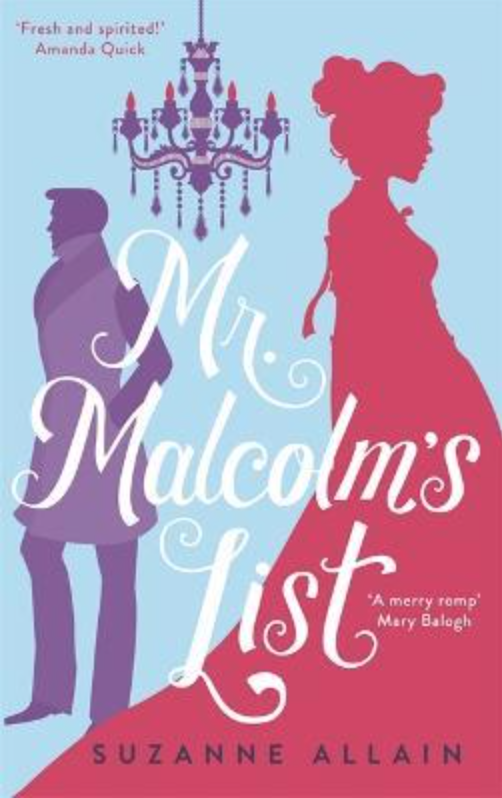
“Mr Malcolm’s List” by Suzanne Allain. Delightful and witty Austen-esque romance. I’ve been recommending it for years and now it’s getting made into a movie.
Nah (currently 89)
“Nice Dragons Finish Last” and “One Good Dragon Deserves Another” by…. Rachel Aaron. It’s rare for a writer to fall into two categories, but clearly these books were “tolerable, but not handsome enough to tempt me”. Maybe I won’t buy the second “Minimum Wage Magic” book after all. Sometimes it’s nice to take your reasonably-happy ending and pretend nothing of interest ever happened to the character again.
“Children of Blood and Bone” and “Children of Virtue and Vengeance” by Tomi Adeyemi. Really well written, but just a few shades too dark for my readerly palate.
“The Water Knife” by Paolo Bacigalupi
Really well written; very violent. It’s science fiction (my preferred reading genre is ‘YA fantasy that doesn’t go on and on excessively about how hot the romantic interest/s are’) and climate fiction, set in a very dry USA.

Nope (currently 116)
“The Sparrow” by Mary Doria Russell. This was recommended to me by a friend, and I can definitely see why. It is heart-rending and has a lot of kindness in it, and a very interesting exploration of faith. But some really bad stuff happens—too dark for me to stomach. TW: rape.
Almost all stories with rape in them (including flashbacks, spousal rape, or statutory rape) will go in the “Nope” pile for me. This book definitely earned its rape scene, but even so…. way too many writers think, “What shall I put in this female character’s backstory?” and go straight to sexual violence. I’ve done it myself (once, out of hundreds of stories). As someone with a vivid imagination and strong empathy, it is often traumatising for me to read. I am extremely fond of trigger warnings for this reason, and wish all books with sexual violence had them.
“The Wandering Inn” by Pirateaba. Great cover, terrible writing. I never read past the opening few pages. (If you think publishers are harsh for rejecting books based on a few pages, you should try giving a book to actual readers. We’re not here to find your diamond in the rough. We want diamonds from page one, sentence one.)

“Brilliant Devices”, “Her Own Devices”, “Lady of Devices”, and “Magnificent Devices” by Shelley Adina. This is light-hearted steampunk, and I obviously liked it enough to buy all four books the first time around. But the second time around the author’s admiration for the heroine was too grating, and the way she won over a bunch of streetkids struck me as both unrealistic and patronising. And yes, I know books aren’t meant to be exactly like real life, but the mix of dark problems and comical solutions bugged me so much I don’t want to go back.

Halfway. Ish.
Not long ago, I wrote that I was planning to write a steampunk novel, but I wasn’t letting myself just dive straight in. Not this time.
First I had to:
1. Read at least twenty relevant history/technology books.
2. Write all my twittertales for 2011.
3. Write all my monthly short-short stories (there’s an email list – and yes, you can get on it) for 2011.
4. Take a break between the reading and the writing, so I don’t get overly excited and start lecturing readers on historical dates and/or how to build a steam engine (don’t you hate it when writers show off how much research they’ve done?)
About five seconds ago, I finished #3 with a murder mystery. Yay!!
#2 is one-quarter done, but I can do plenty more during #4.
I’m halfway through # 1.
These are the books I’ve read so far:
“Australian Bushrangers” by Bill Wannan – which also has a short but very useful section on guns.
“History’s Worst Inventions” by Eric Chaline
“Savage or Civilised” by Penny Russell
“Australian Lives” by Michael Bosworth -more on the 1900s than the 1800s, but still very good detail.
“Oxford Illustrated Dictionary of Australian History” by Jan Basset
“Black Kettle and Full Moon” by Geoffrey Blainey – again, focused on the everyday details that are so important for writing.
“A History of Victoria” by Geoffrey Blainey – good, but not as good as the above.
“The Most Powerful Idea in the World” by William Rosen – good, but the most useful bits were above my head.
“Commonwealth of Thieves: The Sydney Experiment” by Thomas Keneally – heartbreaking and enthralling reading.
“The Aeronauts” by Time/Life Books – SO much fun.
I’m also reading all the modern steampunk I can find that I haven’t already read, and I plan to read some 1800s fiction (which I have ready to go), but right now my non-fiction to-read pile is ridiculously big. So I’m going to stop procratinating and go start on “Technology in Australia 1788-1988”.
Vested Interests
I’m still madly reading history books. If you’re a writer researching a period of Australian history (including the little that’s known about Aboriginal lives before 1788), you need to read Geoffrey Blainey’s “Black Kettle and Full Moon” (I’m also trying to find “Triumph of the Nomads”, which is just about Aborigines) and “Australian Lives” by Michael Bosworth. Both of these books focus on all the small, daily details that writers need most.
So here’s a wonderful section from “Australian Lives” (as World War 2 caused rationing of clothes):
The ‘Victory’ suit was cut to reduce the amount of fabric used – lapels were smaller, cuffs were discarded, buttons were reduced to a minimum, but worst of all, the government decreed that men could live and work without a waistcoat. This caused a tremendous outcry, which was so loud and so persistent, that eventully the government gave in and allowed the wearing of waistcoats to continue.
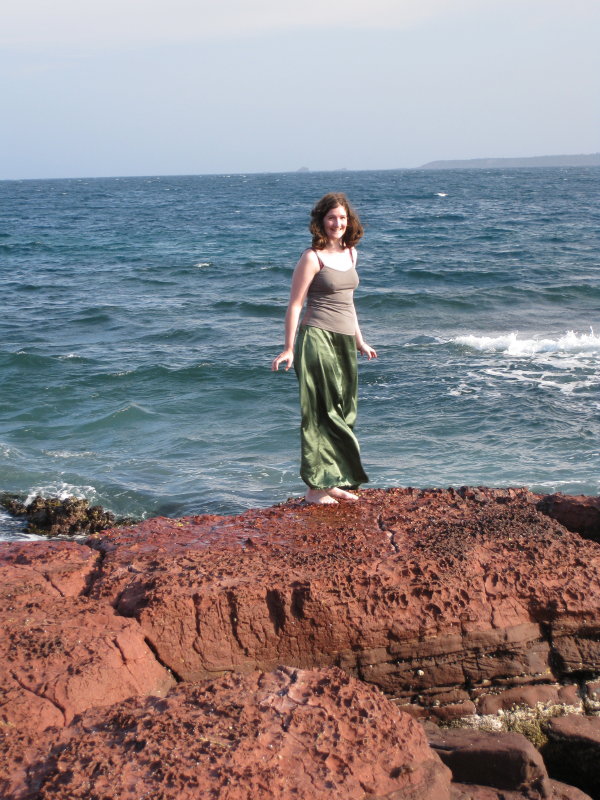
This random photo brought to you by the holiday CJ and I have just returned from. All the details and many pretty photos (including horseriding!) are happening for the next week or so at http://twittertales.wordpress.com.
Viktor Frankl, Garth Nix, and Yours Truly
Here’s a quote from Don Miller talking about Viktor Frankl: “Tested in the concentration camps, Frankl realized no amount of torture could keep a person from living a fulfilling life, if only they had three elements working for them: a project in which they could contribute, a person to love, and a worthy explanation for their suffering.”
Living a meaningful life is far more important to me than anything else. The year I finally gave up my twelve-year plan to go to Indonesia as a full-time aid worker was also the year my chocolate habit suddenly went from a cute foible to something that controlled my life. I’d never been out of the healthy weight range before then, and I’ve never stopped struggling with my weight since.
I am as certain as it’s possible to be that God doesn’t want me in Indonesia – I’d feel like Jonah disobeying God if I went there now (and I hear that didn’t work out). The other two main reasons for giving up Indonesia were that I love my writing more (when I’m in Indonesia I find I write non-fiction, which isn’t what I most love), and it was pretty clear that the main reason I wanted to go to Indonesia in the first place was to suffer.
One sure-fire way to feel special and close to God is by sacrificing a lot in a great cause. But throwing myself into increasingly painful situations in order to feel okay about myself isn’t the right way to go about it.
But I gotta tell you, switching destinies from, “Helping poor third-world children” to “sitting in my room typing up books that no-one reads” is crushing. Every day.
Writing books sort of counts as a “project in which I can contribute” except that I’m not contributing anything of worth – in my opinion.
If I suffer, it’s because I’m doing a whole lot of work that no-one cares about (which is where publishing comes in – and it’ll probably happen eventually, which’ll mean, since I definitely have someone to love, that I’ll be scoring at least 2 out of 3).
This interpretation of the meaningful life at least justifies how much lack of publication hurts. Writing meaningless books that are paid for (and read by the public) is obviously more life-affirming that writing meaningless books that I have to pay someone to read.
Which brings me to Garth Nix. You all know I adore “Sabriel” with a passion verging on that of an internet stalker. I’ve read it about four times this year alone. But in some ways I love “Lirael” and “Abhorsen” (books 2 and 3 in the trilogy, but they’re really one massive story) more.
I admire “Sabriel” because it’s brilliantly written, but my stalker-love stems from the fact that Sabriel is such a hero. She has a great cause, and she sacrifices everything for it. In short, she’s exactly who I’d like to be – and metaphorically, a close match to my Indonesia-travelling self. Too bad my Indonesia-travelling self is dead.
Lirael’s story is much closer to my own. Throughout the 600-word book, she wants one thing: The psychic gift that every single person in her community has. Without that gift, she can’t contribute to her society, and she is still considered a child. At the end of the book, she finds out that she has a different gift – a gift which was (in part) perfectly obvious, but which never seemed important to Lirael. She will never get the destiny she wanted – but she does have another that no-one else in any of the three books possesses.
It’s not a triumphant ending. In some ways, Lirael’s discovery comes as a relief. In other ways, it’s devastating – the final realisation that she will never be what she’s wanted to be all her life. (It parallels a discovery by the other main character, Sameth.)
In the final book, “Abhorsen”, both of the main characters go through all kinds of pain – except one: they know and accept their real destinies. The whole book is infused with a sense of purpose, and reading it (especially after the long pain of “Lirael”) fills me with hope.
Like Lirael, I have a longed-for destiny shut off from me, and another one waiting for me to fully embrace it. I hope that one day I can believe that my second destiny really does matter as much as the first.
In the meantime, stuck as an unpublished writer, I am still a child – dependent on others, and unable to contribute something of worth to the wider society. That’s never going to stop hurting – but one day it’ll stop.
 Felicity Banks