Ten Questions for Feminist Mums
Regular readers will know that I’m a fan of feminist blog blue milk*. She likes to read the responses of other feminist mums to the following ten questions, and since I’m currently promoting my ebook SEE THROUGH, she’ll be posting extracts of this on her blog.
How would you describe your feminism in one sentence? When did you become a feminist? Was it before or after you became a mother?
Duh. Of COURSE women are as good as men, as smart as men, and deserve to be paid as well as men – in money, in respect, and in equal shares of the annoying/gross/stressful/responsible household jobs. It took me many years to realise not everyone thought that way – and that very few people truly act that way, including myself.
What has surprised you most about motherhood?
My experience is, I think, unique – having a baby did something to my body chemistry (and my heart) and I recovered from seven years of mental illness. Early in my marriage I wasn’t sure if I should have children, because it looked quite likely I’d be unable to care for a child. But after talking to family members (mainly to check I could rely on a lot of emergency babysitting if I had to) I took the chance.
Before I was a mother, I could work a maximum of twelve hours a week. Now, in addition to looking after my own baby, I also babysit other young children for up to ten hours a day, thirty-five hours a week, on a regular basis. I think it’s possible there was some kind of chemical reboot during pregnancy (and all the pro-baby hormones helped), but it’s also because I desperately needed a grand, all-encompassing purpose in life – and for me, being a mother is that meaningful and satisfying. (Although doing paid work is also vital to me to feel like a human – a belief that is fundamentally flawed, but too close to my centre for me to cast aside.) I still have panic attacks and times when I can barely get dressed, but ultimately I’m pretty functional. Most women’s sanity goes in the opposite direction with motherhood.
How has your feminism changed over time? What is the impact of motherhood on your feminism?
Getting married turned gender roles into an obsession long before I had a baby. When little Louisette arrived, the spotlight on my marriage grew even more intense.
For me, the weakest point of my marriage is the risk of falling into a mother-child relationship with my husband. Anyone who can’t be trusted to do their share of household chores is not an adult.
I knew it was the weakest point of our relationship before we married, and have carefully (often tearfully) explained it to my husband over and over. He simply doesn’t understand what I’m saying. The more powerful members of society never do understand what it’s like to be the less powerful member. That’s one of the perks of power – everything seems fair from where you’re standing.
It’s not all his fault, however. Organising things and making household decisions (from groceries to what kind of house to buy) makes me feel powerful, so I have a tendency to jump in before he has a chance to do his part. It’s not like he’s the only one sending us in that fatal mother-child direction. (And yes, it’s definitely fatal. How can I be in love with someone I see as a child? How can he be in love with his mother?)
Having a daughter also gives me a highly convenient litmus test for feminism. All I have to do is think, “How would I want my daughter treated in this situation?” and I know when someone is treating me badly. I hope that by the time Louisette grows up she’ll have enough self-worth to figure out her rights without needing a prop.
What makes your mothering feminist? How does your approach differ from a non-feminist mother’s? How does feminism impact upon your parenting?
I tread a compromised path, like all mothers. To survive in our society, I think a woman must be able to believe in her own attractiveness, and I choose not to fight that particular battle, because I know Louisette would suffer for it. My prettifying efforts started from her birth, when I dressed her in attractive and usually pink clothing. I believe a girl who is constantly told how pretty she is as a child will be better able to handle the sudden awareness of societal messages saying, “Shouldn’t you be thinner? Shouldn’t you have bigger breasts? Shouldn’t you have blonder hair?” as she grows up. I will teach her to use make-up, to shave her legs, to do her hair. She can stop doing any of those things if she wants to, but she’ll have the skills to fit in if she chooses the more comfortable path.
At the same time I already try to steer her away from the stories that equate goodness and worth with beauty, and that tell the reader the purpose of life is to get married – like Cinderella. Beauty is nice, and everyone has a little bit – but there must be more to you than that.

The correct response to this photo is, “Awwww!”
As a writer, I believe stories tell us who we are and what matters. When I write my own novels, my protagonists are almost always female. They have problems, and they solve them – actively. When they like a boy, they generally tell him, and if a boy treats them badly they don’t stick around. Why would they? But generally they’re too busy saving the day to care too much what boys think. Isn’t that true of all the world’s most interesting women?

Most of all I try to be aware of the contradictions in both society and myself, so that when my little one is old enough she can sort truth from lies, and choose what compromises to make in her own life.
Mental illness runs in my family, so I try to teach Louisette resilience as both a preventative and a cure. I watched a psychology video once that presented toddlers with a problem. Both started off by crying for help, but when no help arrived in a few moments the boys stopped crying and attempted to solve the problem themselves. The girls continued crying.
I try so hard to sit on my hands when my own baby has a frustrating problem to solve – so she learns that waiting to be rescued isn’t the solution to everything. You can’t learn resilience without frustration, and you can’t learn it without pain. Sometimes I have to let her fall down. I remind myself constantly that we all unconsciously let little girls fall down less often than little boys – and that’s not a good thing. (We also shush little girls more than little boys, but that’s another story.)
Do you ever feel compromised as a feminist mother? Do you ever feel you’ve failed as a feminist mother?
Of course, always! I could lie awake every night thinking about the mistakes I’ve made – or I could be transparent and let my daughter see the cogs working. “Mummy usually takes care of remembering birthdays, because Daddy doesn’t like to organise things. Daddy usually drives the car because Mummy likes looking out the window.” I have a lot of faith in thoughtfulness and questions.
Has identifying as a feminist mother ever been difficult? Why?
LOL! I literally got up from the desk before answering this question, and moved some large-but-light toys onto the couch. Why? Because my husband is vacuuming right now and I’m aware that he won’t move the toys himself – and our daughter has a habit of attempting to eat cat hair that she will most certainly find beneath her own toys. While our marriage is probably the envy of many readers (he vacuums? Every week?!) it has its weaknesses – and Louisette will echo our relationship patterns for the rest of her life.
Incidentally, I also pointed out to my husband a few moments ago that now was his last chance to vacuum this weekend (baby asleep; no guests; not late at night). He appears incapable of figuring this out himself – which makes all the household chores my responsibility, regardless of who physically does them. That’s not right.
My husband will be the image of “normal man” for my daughter – most potently, the way he treats me (the image of “normal woman”). If I don’t pursue equality in my marriage, how can I expect my daughter to pursue it in her life?
Motherhood involves sacrifice, how do you reconcile that with being a feminist?
From the age of twelve to twenty-four I planned to move to Indonesia to teach in slum schools for free. . . . so Australian motherhood seems easy in comparison. The important thing for me is the ratio of meaningfulness to sacrifice. Given that motherhood more or less cured me from mental illness, giving me my life back – I’m still gaining a lot more than I’m losing.
It’s interesting that it was only after having a baby that I finally published a novel for the first time. Parenthood is sufficiently daunting that, in comparison, almost nothing is scary.
This was the best picture of Louisette and I that was taken on my first Mothers’ Day – and yes, I’m wiping up her spew.

If you have a partner, how does your partner feel about your feminist motherhood? What is the impact of your feminism on your partner?
My husband spends a lot of time observing other people’s female children from birth to young adulthood, and thinking about the kind of girl and woman he wants our daughter to be. If nothing else, his hopes for her make him a feminist. He wants her to know her strength, to be respected, to be herself.
When he’s at home, he doesn’t “help” me look after her – he just looks after her.
Feminism has given him a more interesting wife.
If you’re an attachment parenting mother, what challenges if any does this pose for your feminism and how have you resolved them?
Mother Nature is definitely sexist – just look at the female reproductive process as compared to the male contribution. On the other hand, while I’m furious that women are still often forced to abandon their career to be a mum, I think all of the horror show of pregnancy and birth is worth it for women to get first dibs on the opportunity to be the stay at home parent. Because I imagine it’s easier for a woman to choose this life than a man.
I love being around my daughter all day, every day (with certain much-needed breaks) and I have a unique solution to my own attachment to her, as opposed to my longing to work. My job is writing novels and babysitting – and in both jobs I have my daughter with me. The pressure is enormous sometimes, but I have everything I need.
Do you feel feminism has failed mothers and if so how? Personally, what do you think feminism has given mothers?
It has definitely failed mothers, because pretty much every woman I know feels she has to do paid work, whether that is her preferred choice or not. The cliché that motherhood is the most important job in the world? I actually believe it. That belief cured my mental illness and gave me my life back. Apart from anything else, it’s parents that teach the next generation how society should be – so if we want the world to change, motherhood is where it’s at. Being a mother doesn’t take away any of my ability to think, read, write novels, work for money, or be an interesting person. It is tragic that so few women have the choice to stay at home.
—————————————————————————————————
*This is not a child-safe blog, FYI.
Mothers’ Day
For those of you wondering why your female parent is no longer speaking to you, it’s Mothers’ Day today: a scheduled annual day for spontaneous expressions of gratitude. Your mum gave you the gift of life X years ago (and has probably helped to keep you alive*since then). For my first Mothers’ Day CJ bought me a book and Louisette was generous – surprisingly generous – on the chocolate and lolly front. What a good girl.
As a person with a social anxiety disorder, Mothers’ Day was always the second-most stressful day of the year (the worst being Christmas). I felt that I needed to satisfy both my family and CJ’s family with two separate but equally important occasions in which it was vital to be happy, and to come prepped with thoughtful and beautiful presents, and with some kind of reasonably respectable food. At the same time, I’d be aware that one or both families would be in not-so-secret pain due to missing at least one adult child, and that everyone would hate one or more parts of the many iron-clad traditions that they still felt the need to take part in (or, often, to take full responsibility for). So I had at least two large events with people I often didn’t know well, with a lot of expectations that most of us don’t like – and it was ESSENTIAL to be happy about all of it. All day. (Sidebar: I actually like a good tradition, whether it’s pleasant at the time or not. There’s a kind of satisfaction in, “We must get the family together on THIS day every year” that you don’t get any other way.)
Like most things in life, this is a problem that is almost completely solved by money – an expensive gift is a thoughtful gift nine times out of ten, and if you’ve got the money it’s super easy to buy a spectacular dessert and/or take everyone out to a restaurant to eat**. This week CJ and I paid for our annual car registration, so fixing things with money is even less of an option than usual. Also, as you may have heard, we recently had eight months of illness and then acquired a human being.
So instead of breakfast in bed***I got up before Louisette and launched headlong into a recipe I’ve never tried before. The path to dessert never did run smooth, and I’ve destroyed one pie base already at the time of writing.
Stupid freaking Mothers’ Day.
This year it fell to CJ and I to provide a dessert at each gathering. I was smart enough to arrange things so that one family met on Saturday instead of Sunday, and to buy/make desserts that I like. It so happened that the desserts I chose were terrible choices for both my mum (who was allergic to it) and CJ’s Mum (who doesn’t have the raging sweet tooth I do). So I feel guilty about both. How strangely appropriate for a first-time mum (guilt is kind of what we do).
Mothers’ Day is much more painful for most of the world than it is for me. I know at least one woman who has always wanted to have children – lots of children – and is staring down the barrel of her first IVF cycle. She may never conceive a child. I know many other women who want to have children but don’t even have the expensive-and-not-at-all-guaranteed benefit of IVF – they are single, and suddenly every birthday they “celebrate” is cutting away at their dreams. They have a huge pile of love stored inside them and life has not given them the option of bringing it out into the light. Mother Nature is a bi– . . . a mean person.
I know other people who have mums that hurt and belittle them constantly. Those people have a choice to meekly accede to (or attempt to psychically figure out) their mother’s wishes on Mothers’ Day – or to literally or metaphorically hide under their bed in the fetal position and hope the storm passes. I am very lucky to have a mum and mum-in-law who are fundamentally good, but they have enough. . . let’s call it “humanity” rather than “evil”. . . in them that I have seen a tiny glimpse of the burning darkness that some live with every day – a darkness that turns nova on the second Sunday in May. You know who you are, and you have my sympathy.
There are other mums that feel trapped by their children, or resentful that their children have never once said a genuine thank you, or who never wanted children, or who always secretly wanted a girl/boy, or who are just. . . . . . . . so. . . . . . . . .tired. . . . . . My heart goes out to you, too. And if you’ve ever silently wished you’d never had children at all, you’re certainly not alone.
There are as many kinds of Mothers’ Day pain as there are mothers, daughters, and sons. There is the same range of joys too – the joy of making an actual real LIFE****; the fascinating horror show of pregnancy; the uncertainty of that first smile/fart; the reluctant pleasure in toothless and drooly kiss; the thrill of the first words; the endless inane chatter of a child; the sudden independence of the teenage years; the bittersweet joy of seeing a child grow up and move away to make their own life; the cherry on top that is grandchildren (and a new round of nappies). . .
Here’s to my Mum for surviving me and for assisting in my survival (to this day in a surprisingly literal sense*****). And here’s to me for jumping into the motherhood maelstrom and laughing at the thunder, lightning, and hail as it beats down on me.
I EARNED that chocolate.

*do the undead celebrate Mothers’ Day? Hard to say unless Louisette gets bitten in the next twelve months.
**not if you don’t like crowds – because I guarantee everyone who can go out to lunch is going out to lunch on Mothers’ Day. The same doesn’t apply to Fathers’ Day, because on that day the women coordinate and cook and clean and it’s considered okay. It’s only on Mothers’ Day that we suddenly realise the complex arrangement of: 1. thinking of a food contribution, 2. buying the ingredients, 3. cooking it under very specific time pressures, and 4. cleaning up – is too much for a large number of men (due to lack of practice, not innate stupidity) – so it falls on the daughter-in-law. CJ is a great cook and can negotiate a supermarket better than I can but he’s not good at time pressure or multitasking. So here we are.
***How stressful would that have been?? As if I don’t have enough trouble keeping up with Louisette’s vomit on my clothes, I’d have had to try and deal with a bowl of milk on an unsteady surface. I don’t think so.
****Here’s hoping it ends better than it did for Dr Frankenstein.
*****Yes, I’m talking about money.
Breasts: Not just for decoration
Every so often I hear about something so unjust, so wrong that I want to devote myself to fighting against it, possibly for the rest of my life. And by “every so often” I mean “actually quite often – too often to let myself follow through”. I don’t fight those wars, except sometimes with an “entries that matter” blog entry.
Breastfeeding: It’s necessary to sustain life. It’s not particularly schedulable. If a mother wants to venture out in public for more than an hour at a time, she’s going to have to breastfeed out there, in the world. Yet it’s still technically illegal in many places around the world. And I admit I am one of many who are uncomfortable with public breastfeeding (whether it’s me or someone else).
To which, may I say, WTF?! Right now during the day Louisette needs to be fed every two and a half hours. A single feed takes up to an hour. So if I want to do anything without breastfeeding, I need to do it in under an hour and a half, including transport there and back. Imagine your life in 1.5-hour chunks. Could you even get to work and back in that time?
A part of me wishes I was the kind of woman who would just breastfeed in public any time I had to (without suffocating Louisette in a modesty blanket), and therefore help to open doors for other women to be able to feed their infants AND have a life. For our society (including, frankly, me) to feel comfortable with breastfeeding, we need it to happen, and happen a lot of times a day. But it’s not a fight I’m willing to join – for me, it’s just too hard.
Here are a couple of photos from Blue Milk of women I admire. I’m proud to say that the second is a politician feeding her kid in my own home town of Canberra. Thanks to her, Parliament House has now become an accredited workplace for the Australian Breastfeeding Association.
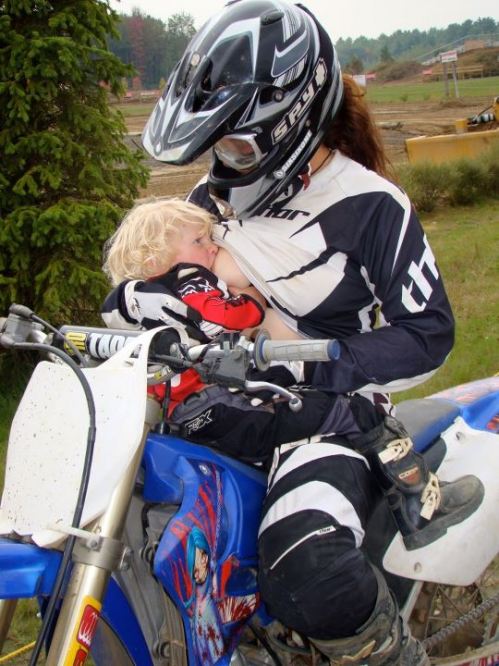

*Blue Milk is a feminist/parenting blog. Because of open discussions of sex, sexuality and violent sex, it is not safe for young or sensitive readers.
One-sentence rant
I am disheartened that so many Australians do not trust Indonesia to kill cattle – but do trust Malaysia to jail refugees.
Oh, THAT invasion
The Sydney city council recently voted to re-word the official city literature so that the arrival of British settlers in Australia is now called a “European invasion” rather than the “European arrival”.
Here’s a Daily Mail article.
Some argued against the change of wording, either because the word “invasion” is rather unpleasant, or (more openly) on the basis that the change was merely semantic.
Despite the obvious devastation of the original Aboriginal population, and the fact that all Australians are taught about the horror of the Stolen Generation, it only really occurred to me in a meaningful way recently that my beautiful Australia would not exist except that it was built on a foundation of breathtakingly matter-of-fact racism. The phrase “Terra nullius” (empty land) really says it all.
So why didn’t I realise the truth of my own history (and the REASON for so many of the divisions between the first and third world) sooner, given that I knew the facts? Mostly because history is taught by the winners, and in Australia that is most certainly the Europeans. All my life in school I’ve been taught to see Captain Cook as a hero – a brave, brilliant, compassionate man (compassionate because he actually made an effort to ensure his entire crew didn’t die of scurvy). He probably was all of those things. But he was also the man who doomed hundreds of nations of one of the oldest, most interesting, most environmentally conscious, and most mysterious group of cultures on Earth.
It’s an uncomfortable truth that I am wealthy and safe and will (probably) live a long and healthy life because my ancestors committed horrible crimes against innocent people on a huge scale.
Save the world – in your PJs
Amnesty is an organisation that defends human rights internationally by researching unjust situations and then writing letters and petitions to those in power. Which means ordinary schlubs like you and I can simply go to their website, click a few buttons, and help save lives around the world.
How awesome is that?
Get it right – this time

I knew before I began my steampunk novel that I would need to learn a whole new set of rules when it came to my Koori character, Matilda (you’ll notice that’s not a Koori name – names are just one taboo area).
A week or two ago I attended a lecture (in the gorgeously squished building above) by bestselling chicklit author Anita Heiss, who is a member of the Wiradjuri nation.
The lecture itself was very interesting (especially the various covers – some early drafts had Koori art from utterly the wrong nation, ugh), but the best part for me was that, as I’d hoped, Anita was able to tell me exactly where to look to find out how to write respectfully about a Koori character.
These are the two documents she recommended I read before approaching the correct Koori nation for more detailed consent:
http://www.australiacouncil.gov.au/__da … _guide.pdf
http://www.asauthors.org/lib/ASA_Papers … tralia.pdf
The bits about copyright were especially fascinating, because of course copyright law isn’t designed for oral stories – which means extremely valuable stories are not legally protected. Not yet.
Also, I’ll probably need to pay actual money to representatives of the nation I choose for Matilda’s background. I can handle that. Given the classic steampunk theme of rampant colonialism, it’s neat that I will be giving something back in order to honourably write about that era.
There is a huge wealth of religious tradition that non-Koori Australia is largely unaware of – not because we’re helplessly undereducated, but because much of it is secret, and needs to stay that way. My rule when it comes to other religions is, “What if they’re right?”
What if it’s true that a woman playing a didgeridoo causes terrible harm? What if outsider knowledge of sacred rituals destroys a people group?
Frankly, I’m not going to risk it.
This was part of the reason I made Matilda half-British, and a rebel against both her parents’ cultures. That way I can steer well clear of a lot of traditional knowledge or ritual – since Matilda has left much of it behind her.
And of course I’ll take care that the facts about historical Koori that make it into the book are accurate.
If you are writing about a people group you’re not a part of, here’s a good list for you to think about:
1. Respect
2. Indigenous control
3. Communication, consultation, and consent
4. Interpretation, integrity and authenticity
5. Secrecy and confidentiality
6. Attribution and copyright
7. Proper returns and royalties
8. Continuing cultures
9. Recognition and protection
And here’s a great resource for finding Koori artists by state:
http://www.theblackbook.com.au/
I’m setting my book in Australia because I love it with all my heart. Matilda exists because there is no WAY I’m going to pretend Koori people didn’t exist in 1854. (That’s exactly what was done at the time – nice work, Empire.) I’m so pleased to have finally found some detailed resources so I can make the book something special for all Australians.
Or at least, all those who like steampunk.
#248: Heifer, anyone?
For today’s awesomeness, I joined literary-stuff blogger http://blog.nathanbransford.com/ who is pledging $1 for every comment on his blog, giving it to the charity http://www.heifer.org/. Any charity that gives people a goat* is one I like.
I’ll be giving $1 for every blog comment from this instant until Christmas Eve (up to $500, to be paid in January, when CJ and I are back to buying groceries and such again).
And I haven’t forgotten I promised to review Scott Westerfeld’s “Leviathan” and “Behemoth” YA steampunk books, either.
On Christmas Eve, I’ll be posting my sarcastic Christmas letter – with pictures this time.
And I fully intend to climb a tree this week, for “Secret Squirrel”. Wish me luck. . .
*or a cow. Or a camel. etc
Muslim Headshawl
I am a Muslim.
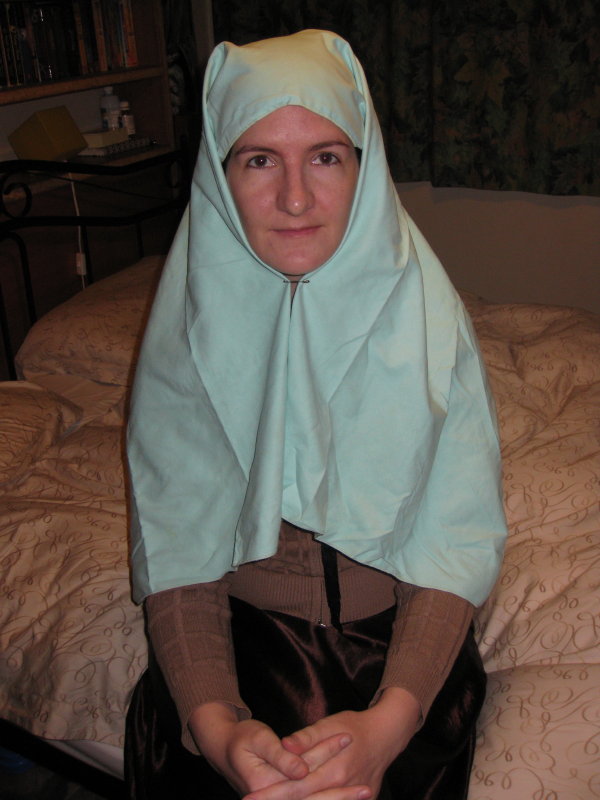
Nine years ago I stayed at a Muslim boarding school in Indonesia. While I was there I wore a head covering (jilbab, in Indonesian), joined a religious fast, and avoided physical contact with boys.* None of that was required, and the girls I stayed with were constantly urging me to take off the jilbab because of the heat (I was fine, and so were they). The jilbab was part of the uniform, but it really came into its own as a flirtation device.
Here’s how it’s done (based on lots of observation):
1. Spot a boy you like.
2. Giggle as if you’ve never seen a boy before.
3. Watch carefully for the exact moment the boy tries to meet your eye.
4. Quickly hide your face with the side of your jilbab.
5. Giggle as if you are Shocked and Apalled that a boy would dare look at you.
6. Repeat.
Speaking of jilbabs, I recently saw the head of the Australian Muslim Women’s Association on TV. This is an organisation that represents and protects Muslim women (and the head is a woman, of course). Although she and her staff receive many calls for assistance from Muslim women, her organisation has never had a woman call to say that her husband or father is forcing her to cover her head.
It’s worth repeating: Women in Australia are covering their heads because they choose to cover their heads.
So if you respect women’s rights – let them.
To many Westerners, the jilbab or burka is a symbol of the oppression of women. To Muslim women, it is a symbol of a compassionate God, a symbol of beauty, and a symbol of personal pride in who they are.
So I’m proud to wear it today.
Since we’re here, here’s my one-minute lecture on what it means to be a Muslim.
The five pillars of Islam.
1. The creed (said three times in Arabic): There is no God but Allah and Muhammed is his prophet.
2. Giving to the poor.
3. Fasting (from dawn to dusk for up to forty days).
4. Pilgrimage to Mecca (for those who are financially able).
5. Prayer five times a day.
You’ll notice suicide bombs don’t feature.
I have read the Christian Bible, and an English translation of the Koran, and the Bible (rather embarrassingly) is much more violent. The Koran utterly condemns violence against innocents, and also condemns starting wars – a true jihad can only be fought in self-defence. Suicide bombs are definitely not allowed in the Koran’s principles, as any Muslim can tell you.
I have personally stayed in an entire town of Muslim refugees from a people group murdered and dispossessed by Christians.
So don’t you dare tell me Muslims are violent.
Obviously, killing and mutilating people of another faith doesn’t agree with the Christian faith, either (despite the disturbing parts of the Old Testament).
I am a Muslim because a girl at that boarding school in Indonesia cared enough for me to ask me to say the creed three times, which I did. That makes me a Muslim – technically. In reality, I am a Christian – mainly because I’ve met Jesus and after that he’s a bit difficult to ignore. (Side note: Muslims believe Jesus was a prophet, but not as important as Muhammed. Both religions trace their spiritual lineage to Abraham, so we have a lot in common.)
In my opinion, the only crucial difference between Islam and Christianity is that Muslims must earn their way to paradise (Allah mercifully forgives sins, which certainly helps), while Christians are given total forgiveness and a free ticket to paradise because of Jesus’ death – so we can just chill salvation-wise, except that we (hopefully) respect God enough to be good people too.
The commandments given by God and Allah are virtually identical – love your neighbour, help the poor, practise hospitality.
I sometimes wear a cross. Muslims sometimes cover their head. That is all.
Today’s awesomeness is Steffmetal.com’s # 45: Worship a new God.
Yesterday, Don Miller sang Christmas carols near what turned out to be a terrorist bomb. He wrote a blog today about terrorism and extremism far better than I could (this is G-rated, so go ahead and read it).
http://donmilleris.com/2010/11/30/the-war-on-extremism/
*Easy to do, since boys are gross anyway.
For the Bible tells me so: What the Bible actually says about homosexuality
This is an article I’ve been planning to write for a while, but it was so personally upsetting that I didn’t. I encourage you to pass it on to anyone you like. I ran this article past my parents and friends, and they gave me permission to use them as examples here. It’s technically Daily Awesomeness #159: Get your grump on.
Warning: PG rated for mention of homosexuality, consent, and adultery – plus overt Christianity.
Each Bible verse referenced here (all from the New International Version) is included in order of mention below the gratuitously gorgeous library picture that comes at the end of the article (the photo was taken by Candida Hofer and published in the Thames&Hudson “Beautiful Libraries” book. It has nothing to do with anything I’ve talked about). I’m leaving aside the Old Testament in this article, because Jesus is the fulfilment (and the end) of many rules – something for which bacon-loving Christians are grateful (especially me).
For the Bible tells me so
My mother is an Anglican priest who likes to wear her dog collar with a hot-pink shirt. She’s also, according to the Bible, an adulteress. Oh, and the Bible also says that she shouldn’t be a priest (1 Timothy 2:12).
So what makes her an adulteress? In Matthew 5:32, Jesus said, “I tell you that anyone who divorces his wife, except for marital unfaithfulness, causes her to become an adulteress, and anyone who marries the divorced woman commits adultery.” Oops, that only makes my father an adulterer. My mistake! Sorry Dad! But I’m afraid the last twenty-five years of marriage (and raising my brother and sister and I) were a sin against Heaven. You should stop at once.
Jesus says a similar thing in Matthew 19:9, and the exact same thing in Luke 16:18.
I’m really glad my Mum remarried. All my life Christian people have taken me aside to tell me how much they admire my parents’ relationship, and I agree. So what’s the deal, when the Bible says so clearly my Mum and Dad should not be married?
The deal is simple: love trumps all. Jesus himself conveniently gave us a summary of every single bitty rule in the whole darn Bible (it’s also mentioned in Luke 10:27 and Mark 12:29-31). Here’s Matthew 22:36-40.
36“Teacher, which is the greatest commandment in the Law?” 37Jesus replied: ” ‘Love the Lord your God with all your heart and with all your soul and with all your mind.’38This is the first and greatest commandment. 39And the second is like it: ‘Love your neighbor as yourself.’ 40All the Law and the Prophets hang on these two commandments.”
It’s pretty obvious that the love between my Mum and Dad is something holy and good. It’s real love – the kind that lasts beyond the flush of attraction, and beyond hundreds of moments when one or both of them wanted to give up. There are thousands of similar stories of godly remarried men and women around the world. As a result, divorce is widely accepted in the church today – so much so that my parents are praised rather than shunned for their relationship.
So we agree, right? Two people loving each other is what Jesus wants.
And then there’s my friend Bobby. Bobby is someone who I admire for his goodness and his Christian faith. Bobby is not attracted to women – just men. And Bobby wants to marry someday. He wants to marry a godly man.
Of course the Bible has plenty to say about that too. The New Testament describes “homosexual offenders” as “wicked” (1 Corinthians 6:9-10), “unnatural. . . indecent” (Romans 1:26-27), and some scholars say that the “perverts” described in 1 Timothy 1:8-11 as “ungodly and sinful” are also homosexuals. These are the only three New Testament references, and they’re a little less clear than the references to divorce (as well as coming from Paul rather than Jesus) – but they’re clear enough.
Some argue that the homosexuality referred to in these passages is a more specific word relating to a relationship between very different ages, or talking about an unwilling partner (there’s an internet reference for that at the bottom of this page, but I don’t recommend it for children). Since I don’t speak Ancient Greek, I don’t know.
I am an ordinary heterosexual Christian who’s read the Bible a few times, and followed Jesus for twenty years. I love God, I love my parents, and I love my gay friends. I have seen “adulterous” couples like my parents shine with God’s love, and I’ve seen the same selfless love in gay couples.
I know it takes courage for a Christian to stand up for their beliefs against a corrupt world. But courage isn’t the right quality to express when it comes to homosexual human beings. Love is. Let God speak to the conscience of gay people in whatever way He thinks best – he’s capable of that, don’t you think? Since there’s theological doubt, shouldn’t we leave it up to Him? Non-Christians are right in saying homosexuality is none of our business. Our business is to love. Sometimes we think telling someone what they’re doing wrong is the loving thing to do, but it just doesn’t work that way (except in special circumstances, for example a parent disciplining a small child).
Jesus was infamous for hanging around tax collectors, women of ill repute, and sinners (Matthew 9:10-12, Matthew 11:19, Mark 2:15-17, Luke 5:30, Luke 7:34, Luke 15:1). The Bible doesn’t record him telling them their lifestyle is wrong, except when he says to a woman, “Go now and leave your life of sin” (after both saving her life and making it clear that everyone sins). He also told one man to stop sinning – after he’d healed him (John 5:5-15). But when he saw Zacchaeus (a tax collector, ie thief) what actually happened was this: “When Jesus reached the spot, he looked up and said to him, “Zacchaeus, come down immediately. I must stay at your house today.” ” (Luke 19:5, NIV)
All these “sinners” were people Jesus actually knew before he said anything about sin – except Zacchaeus, who is a more typical example of Jesus’ behaviour. So it would appear that Jesus’ reaction to a sinner is to invite himself over to their place for dinner – and then to stick around. Sometimes he mentioned sin, but usually he didn’t. Jesus is the only person who ever had the right to judge us – and he chose to have dinner instead.
He seemed to like the company of sinners, which offended a lot of people. You’ll notice there are WAY more references about Jesus eating with sinners than there are verses condemning sinners of any kind. Since that society was much like ours in many ways, you can be sure at least some of Jesus’ friends were gay. So if you’re the kind of person who asks, “What Would Jesus Do?” about gay people, the answer is apparently, “Crash on their couch indefinitely, and help yourself to whatever’s in the fridge.”
The only people Jesus immediately condemned were the religious authorities – the ones who took it upon themselves to tell everyone else how to please God (sound familiar?) The whole chapter of Matthew 23 is a massive rant against the so-called “righteous”. Here’s verse 13: “Woe to you, teachers of the law and Pharisees, you hypocrites! You shut the kingdom of heaven in men’s faces. You yourselves do not enter, nor will you let those enter who are trying to.”
I hope I never slam the open door of Heaven in anyone’s face. Jesus died for us so that door could stay open.
So, to sum up – the Bible tells us not to allow women in authority, not to allow remarriage, and not to allow homosexuality. But love trumps all.
Women priests can love their congregations – which pleases God. Divorced women can love a godlier man the second time around – which pleases God. And gay couples can embody the love of Christ – which pleases God.
Jesus died because none of us are capable of living by the rules. So throw your own rule book away before you hurt someone, and ask God to give you a more loving heart (and gay friends who can cook).
I recommend you start by
(a) Regardless of your stance on homosexuality, never tell anyone they’re a sinner – because everyone is.
(b) Never treat a minority group as less valid than everyone else. (Which means that it’s time to let gay people legally marry – they each have a conscience of their own to decide whether gay relationships are okay or not.)
(c) Ask yourself why homosexuality seems so wrong to you, but you’re more likely to be okay with de facto relationships and/or remarriage. (If you’re 100% against all three types of relationships, you’re at least consistent.) I’ve had to face the fact that for me, it was because homosexuality was weird to me – much like people with a different skin colour. Time to move on and realise there’s no real difference – and time our laws reflected that. (Astonishingly, Aboriginal people in Australia didn’t get the vote until the late 60s. Before then, it was considered right and proper to prevent them voting. Can you believe it? Sometimes, our deepest-held beliefs really are wrong.)
And if you’re gay and reading this, I’m sorry for everything I and other Christians have done to make your life harder. You should know that Jesus loves you.
Specifically you.
This verse is yours as much as it is mine:
Jeremiah 29:11
For I know the plans I have for you,” declares the LORD, “plans to prosper you and not to harm you, plans to give you hope and a future.
Article written by Louise Curtis at https://shootingthrough.net/2010/07/18/for-the-bible-tells-me-so-what-the-bible-actually-says-about-homosexuality/
You may use this article elsewhere, but do not cut or edit it without consulting me. Please include this note with the article.

1 Timothy 2:12
I do not permit a woman to teach or to have authority over a man; she must be silent.
Matthew 19:9
“I tell you that anyone who divorces his wife, except for marital unfaithfulness, and marries another woman commits adultery.”
Luke 16:18
“Anyone who divorces his wife and marries another woman commits adultery, and the man who marries a divorced woman commits adultery.
Luke 10:27
He answered: ” ‘Love the Lord your God with all your heart and with all yoursoul and with all your strength and with all your mind’ ; and, ‘Love your neighbor as yourself.’ ”
Mark 12:29-31
29“The most important one,” answered Jesus, “is this: ‘Hear, O Israel, the Lord our God, the Lord is one.30Love the Lord your God with all your heart and with all your soul and with all your mind and with all your strength.’ 31The second is this: ‘Love your neighbor as yourself.’There is no commandment greater than these.”
1 Corinthians 6:9-10
Do you not know that the wicked will not inherit the kingdom of God? Do not be deceived: Neither the sexually immoral nor idolaters nor adulterers nor male prostitutes nor homosexual offenders 10nor thieves nor the greedy nor drunkards nor slanderers nor swindlers will inherit the kingdom of God.
Romans 1:26-27
26Because of this, God gave them over to shameful lusts. Even their women exchanged natural relations for unnatural ones. 27In the same way the men also abandoned natural relations with women and were inflamed with lust for one another. Men committed indecent acts with other men, and received in themselves the due penalty for their perversion.
1 Timothy 1:8-11
8We know that the law is good if one uses it properly. 9We also know that law is made not for the righteous but for lawbreakers and rebels, the ungodly and sinful, the unholy and irreligious; for those who kill their fathers or mothers, for murderers, 10for adulterers and perverts, for slave traders and liars and perjurers—and for whatever else is contrary to the sound doctrine 11that conforms to the glorious gospel of the blessed God, which he entrusted to me.
[Hi! Are you reading all the Bible verses? Cool! My favourite is the story of the woman of ill repute nearly getting stoned to death.]
Matthew 9:10-12
10While Jesus was having dinner at Matthew’s house, many tax collectors and “sinners” came and ate with him and his disciples.11When the Pharisees saw this, they asked his disciples, “Why does your teacher eat with tax collectors and ‘sinners’?”
12On hearing this, Jesus said, “It is not the healthy who need a doctor, but the sick. 13But go and learn what this means: ‘I desire mercy, not sacrifice.’ For I have not come to call the righteous, but sinners.”
Matthew 11:19
19The Son of Man came eating and drinking, and they say, ‘Here is a glutton and a drunkard, a friend of tax collectors and “sinners.” ‘ But wisdom is proved right by her actions.”
[I don’t really understand the “wisdom” bit of this verse. Kind of ironic, really.]
Mark 2:15-17
15While Jesus was having dinner at Levi’s house, many tax collectors and “sinners” were eating with him and his disciples, for there were many who followed him. 16When the teachers of the law who were Pharisees saw him eating with the “sinners” and tax collectors, they asked his disciples: “Why does he eat with tax collectors and ‘sinners’?”
17On hearing this, Jesus said to them, “It is not the healthy who need a doctor, but the sick. I have not come to call the righteous, but sinners.”
Luke 5:30
But the Pharisees and the teachers of the law who belonged to their sect complained to his disciples, “Why do you eat and drink with tax collectors and ‘sinners’?”
Luke 7:34
The Son of Man came eating and drinking, and you say, ‘Here is a glutton and a drunkard, a friend of tax collectors and “sinners.” ‘
[They make him sound fun, don’t they? No wonder sinners hung out with him.]
Luke 15:1
Now the tax collectors and “sinners” were all gathering around to hear him.
John 8:1-11 [This is the one I mentioned before – my favourite one]
1But Jesus went to the Mount of Olives. 2At dawn he appeared again in the temple courts, where all the people gathered around him, and he sat down to teach them. 3The teachers of the law and the Pharisees brought in a woman caught in adultery. They made her stand before the group 4and said to Jesus, “Teacher, this woman was caught in the act of adultery. 5In the Law Moses commanded us to stone such women. Now what do you say?” 6They were using this question as a trap, in order to have a basis for accusing him.
But Jesus bent down and started to write on the ground with his finger. 7When they kept on questioning him, he straightened up and said to them, “If any one of you is without sin, let him be the first to throw a stone at her.” 8Again he stooped down and wrote on the ground.
9At this, those who heard began to go away one at a time, the older ones first, until only Jesus was left, with the woman still standing there. 10Jesus straightened up and asked her, “Woman, where are they? Has no one condemned you?”
11“No one, sir,” she said.
“Then neither do I condemn you,” Jesus declared. “Go now and leave your life of sin.”
[Jesus is such a smart alec sometimes.]
John 5:5-15
5One who was there had been an invalid for thirty-eight years. 6When Jesus saw him lying there and learned that he had been in this condition for a long time, he asked him, “Do you want to get well?”
7“Sir,” the invalid replied, “I have no one to help me into the pool when the water is stirred. While I am trying to get in, someone else goes down ahead of me.”
8Then Jesus said to him, “Get up! Pick up your mat and walk.” 9At once the man was cured; he picked up his mat and walked.
The day on which this took place was a Sabbath, 10and so the Jews said to the man who had been healed, “It is the Sabbath; the law forbids you to carry your mat.”
11But he replied, “The man who made me well said to me, ‘Pick up your mat and walk.’ ”
12So they asked him, “Who is this fellow who told you to pick it up and walk?”
13The man who was healed had no idea who it was, for Jesus had slipped away into the crowd that was there.
14Later Jesus found him at the temple and said to him, “See, you are well again. Stop sinning or something worse may happen to you.” 15The man went away and told the Jews that it was Jesus who had made him well.
Luke 19:5
5When Jesus reached the spot, he looked up and said to him, “Zacchaeus, come down immediately. I must stay at your house today.”
[Dear gay people and/or sinners: Feel free to invite me over and give me food. I like food.]
Matthew 23
1Then Jesus said to the crowds and to his disciples: 2“The teachers of the law and the Pharisees sit in Moses’ seat. 3So you must obey them and do everything they tell you. But do not do what they do, for they do not practice what they preach. 4They tie up heavy loads and put them on men’s shoulders, but they themselves are not willing to lift a finger to move them.
5“Everything they do is done for men to see: They make their phylacteries wide and the tassels on their garments long; 6they love the place of honor at banquets and the most important seats in the synagogues; 7they love to be greeted in the marketplaces and to have men call them ‘Rabbi.’
8“But you are not to be called ‘Rabbi,’ for you have only one Master and you are all brothers. 9And do not call anyone on earth ‘father,’ for you have one Father, and he is in heaven. 10Nor are you to be called ‘teacher,’ for you have one Teacher, the Christ. 11The greatest among you will be your servant. 12For whoever exalts himself will be humbled, and whoever humbles himself will be exalted.
13“Woe to you, teachers of the law and Pharisees, you hypocrites! You shut the kingdom of heaven in men’s faces. You yourselves do not enter, nor will you let those enter who are trying to.
15“Woe to you, teachers of the law and Pharisees, you hypocrites! You travel over land and sea to win a single convert, and when he becomes one, you make him twice as much a son of hell as you are. [Jesus is scary.]
16“Woe to you, blind guides! You say, ‘If anyone swears by the temple, it means nothing; but if anyone swears by the gold of the temple, he is bound by his oath.’ 17You blind fools! Which is greater: the gold, or the temple that makes the gold sacred? 18You also say, ‘If anyone swears by the altar, it means nothing; but if anyone swears by the gift on it, he is bound by his oath.’ 19You blind men! Which is greater: the gift, or the altar that makes the gift sacred?20Therefore, he who swears by the altar swears by it and by everything on it. 21And he who swears by the temple swears by it and by the one who dwells in it. 22And he who swears by heaven swears by God’s throne and by the one who sits on it.
23“Woe to you, teachers of the law and Pharisees, you hypocrites! You give a tenth of your spices—mint, dill and cummin. [Did you know cummin eases flatulence?] But you have neglected the more important matters of the law—justice, mercy and faithfulness. You should have practiced the latter, without neglecting the former.24You blind guides! You strain out a gnat but swallow a camel. [Yuck.]
25“Woe to you, teachers of the law and Pharisees, you hypocrites! You clean the outside of the cup and dish, but inside they are full of greed and self-indulgence.26Blind Pharisee! First clean the inside of the cup and dish, and then the outside also will be clean.
27“Woe to you, teachers of the law and Pharisees, you hypocrites! You are like whitewashed tombs, which look beautiful on the outside but on the inside are full of dead men’s bones and everything unclean. 28In the same way, on the outside you appear to people as righteous but on the inside you are full of hypocrisy and wickedness.
29“Woe to you, teachers of the law and Pharisees, you hypocrites! You build tombs for the prophets and decorate the graves of the righteous. 30And you say, ‘If we had lived in the days of our forefathers, we would not have taken part with them in shedding the blood of the prophets.’ 31So you testify against yourselves that you are the descendants of those who murdered the prophets. 32Fill up, then, the measure of the sin of your forefathers!
33“You snakes! You brood of vipers! How will you escape being condemned to hell? [So Jesus, what you’re saying is. . . you’re not a fan.] 34Therefore I am sending you prophets and wise men and teachers. Some of them you will kill and crucify; others you will flog in your synagogues and pursue from town to town. 35And so upon you will come all the righteous blood that has been shed on earth, from the blood of righteous Abel to the blood of Zechariah son of Berekiah, whom you murdered between the temple and the altar. 36I tell you the truth, all this will come upon this generation.
37“O Jerusalem, Jerusalem, you who kill the prophets and stone those sent to you, how often I have longed to gather your children together, as a hen gathers her chicks under her wings, but you were not willing. 38Look, your house is left to you desolate.39For I tell you, you will not see me again until you say, ‘Blessed is he who comes in the name of the Lord.'”
[Which may or may not take a while.]
One example of the argument that “homosexuality” in the New Testament refers to sex that involved a difference of either age or consent (a well-known argument with many other sources that I didn’t bother finding): http://www.lionking.org/~kovu/bible/section09.htmlhttp://www.lionking.org/~kovu/bible/section09.html
[Did you read the whole thing? Time for a lie-down.]
 Felicity Banks