Introduction to Interactive Fiction
I thought I’d better write an entry today in case someone is a-googling after hearing my interactive fiction interview on 666 ABC Canberra at 7:25am this morning (wheeee!)
Hello and welcome.
I write both novels and interactive novels. Other people find interactive fiction via the gaming community, so there are usually elements of game play (for example, skill bonuses that are tested later). You can “read” an interactive “book” or “play” an interactive “game”. I use the terms interchangeably.
Within interactive fiction, there are two main forms: Choice-based interactive fiction (the reader makes choices from set options) and Parser interactive fiction (the reader types commands to move the story forward and/or solve puzzles). I’m strictly on the choice-based side, which is definitely more accessible for newbies. The list below will make it immediately obvious that I was drawn to interactive fiction via Choice of Games. It’s not a bad place to start. This is what games always look like on the inside:

You pick one of the options, and click next. Easy!
Interactive fiction is almost always digital (the obvious exceptions are “Choose Your Own Adventure” novels, and the Windhammer Prize), and almost always released as a phone app on the itunes and android stores (and more, for Choice of Games).
If you’re curious about interactive fiction (IF), here are some good places to start learning more:
To learn by playing
Interactive Fiction Data Base This link takes you directly to my page, which has links to all of my games. My games are usually accessible to newbies, since I am one myself. There are a LOT of games and reviews on IFDB, and you can find lists (such as “Games for new players”) to sort through the mountain of stories.
The Interactive Fiction Comp is hugely popular, and all the games are free to play. Judging season is in October and the first half of November each year (right now!!) Usually about half the games are Parser games. Some games are a lot easier to download than others so if you get stuck just move on.
Birdland came fourth in the IF Comp 2015, and is a funny game using Twine. Free.
Choice of Games (CoG) is an extremely successful company with a clear in-house style.
Choice of Broadsides is a short CoG game that’s a perfect introduction.
Choice of Robots is an excellent scifi CoG story.
Community College Hero is an excellent teen superhero CoG story (Pt 1). It’s not an official CoG game, but is released through their Hosted Games label.
Creatures Such as We has a more literary style than most CoG games. It’s also free, and placed second the IF Comp in 2014.
My own CoG Hosted Games (I’m not associated or affiliated with CoG in any way) are the Australian steampunk adventure Attack of the Clockwork Army, the piratical romp Scarlet Sails (which also placed 7th in the IF Comp 2015; this version was improved after the competition which is why it’s not free like the original version). I also wrote and edited for the retro scifi comedy Starship Adventures, which has a bunch of behind-the-scenes special features.
Cape is a beautifully written Superhero origin story, where you can add detail by choice. It’s a hypertext story, meaning that you click on bolded words rather than choosing choices from a list. It placed fifth in the 2015 IF Comp, and is free.
Tin Man Games releases what they call “Gamebook Adventures”. They range from the mostly-text scifi serial story “Choices: And The Sun Went Out” app on itunes or android (the European steampunk tale “Choices: And Their Souls Were Eaten” is the second story inside that app; I’m a co-writer on #1 and writer on #2) to the recent Warlock of Firetop Mountain which takes the famous Steve Jackson & Ian Livingstone novel and turns it into a video game (including a fight system). They are internationally respected and an Australian company.
To learn by reading the blogs of reviewers (who also write games and talk about stuff)
To learn by joining a community
Be aware that the IF community is a small, welcoming, diverse, and kind group. Don’t be a troll. Don’t write when someone (especially a reviewer who is adding to the community with their comments and not getting paid for it) has made you feel angry.
Embrace different genders, sexualities, abilities, and nationalities.
The Interactive Fiction Forum is very lively during IF Comp season (October/November).
An excellent book on Twine and writing, pitched for beginners to both
Writing Interactive Fiction with Twine by Melissa Ford
If you’re quick, you can probably catch me at Conflux today between when-I-get-there and 1:30 (when my workshop starts – it’s booked out already, but just email fellissimo@hotmail.com if you want to arrange something else workshop-ish). I’ll most likely be in the dealer room, since my publisher has a table (the publicist is actually hiding in this shot – can you see her elbow?)

To learn by writing
Twine is certainly the easiest; it actually automatically builds an (adjustable) map for you. It takes about thirty seconds to learn, or ten minutes on your own.
There are LOTS of online resources, including lists here and here about finding the authoring tool that works for you. You certainly don’t need to be a computer programmer!
To get paid
Choice of Games pays advances of up to $10,000 for novel-length stories based on an approved outline and written with their tool, ChoiceScript. I know from personal experience that a story written for their less-exclusive “Hosted Games” label earns a respectable amount purely through royalties. Mine have earned around $1000 each, but there are no guarantees (and no limits!)
Sub-Q magazine pays for short fiction (they can be quite literary).
itch.io is a vibrant community that’s specifically designed to let indie creators sell their games on their own terms. It has loads of game jams that you can join, and some jams are competitive (which is a handy low-stakes way to see if your writing is appealing to others.
Contests pay a little (often not in money) but are hugely important to the community and to gaming companies, who sometimes even approach entrants to offer paid work. All the contests are publicly reviewed and judged, which is an intense emotional experience for any writer. Don’t ever interact with reviewers until after the competition is finished (and even then, always thank them regardless of what they said—every review is a precious gift, and the harsh ones are often the most useful).
Your stories must not be published, and they must be publicly available after the contest for free. Although the judging is public, they are NOT popularity contests, but based on judges being as neutral as possible in their ratings.
IF Comp is the biggest and best, but it’s NOT for beginners. Reviewers can be harsh in order to be more entertaining, or due to assuming you’re trolling the contest).
Windhammer Comp is printable (and short, and Australian) and high-status. First prize is $300, within runner-up prizes of $50. Not bad for a short story that doesn’t require learning a new tool!
IntroComp (for games that aren’t even finished)
Spring Thing (called the Fall Fooferal if you’re in the Southern Hemisphere) is particularly welcoming to newbies, including a “Back Garden” where you can indicate that you’re new and reviewers should take that into account. It’s deliberately placed in a part of the year when the IF Comp is far away.
I won the Windhammer Prize in 2015, and my publisher included that story with my novel:
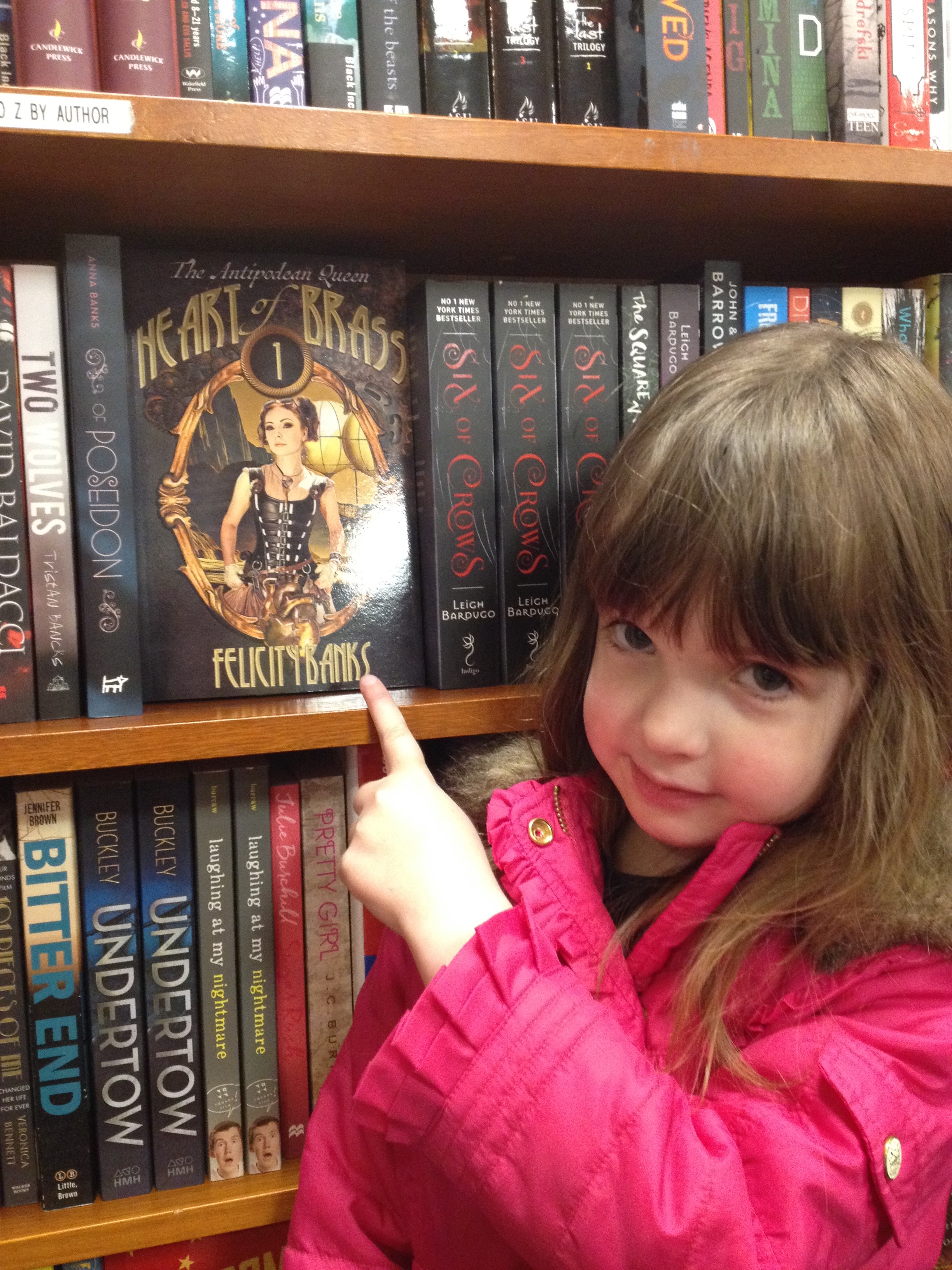
Full disclosure: I have some kind of connection to pretty much everyone on this list, but every single connection is through reading their work and liking it.
Emily Short has a fantastic Intro to IF here.
“Stuff and Nonsense” cover
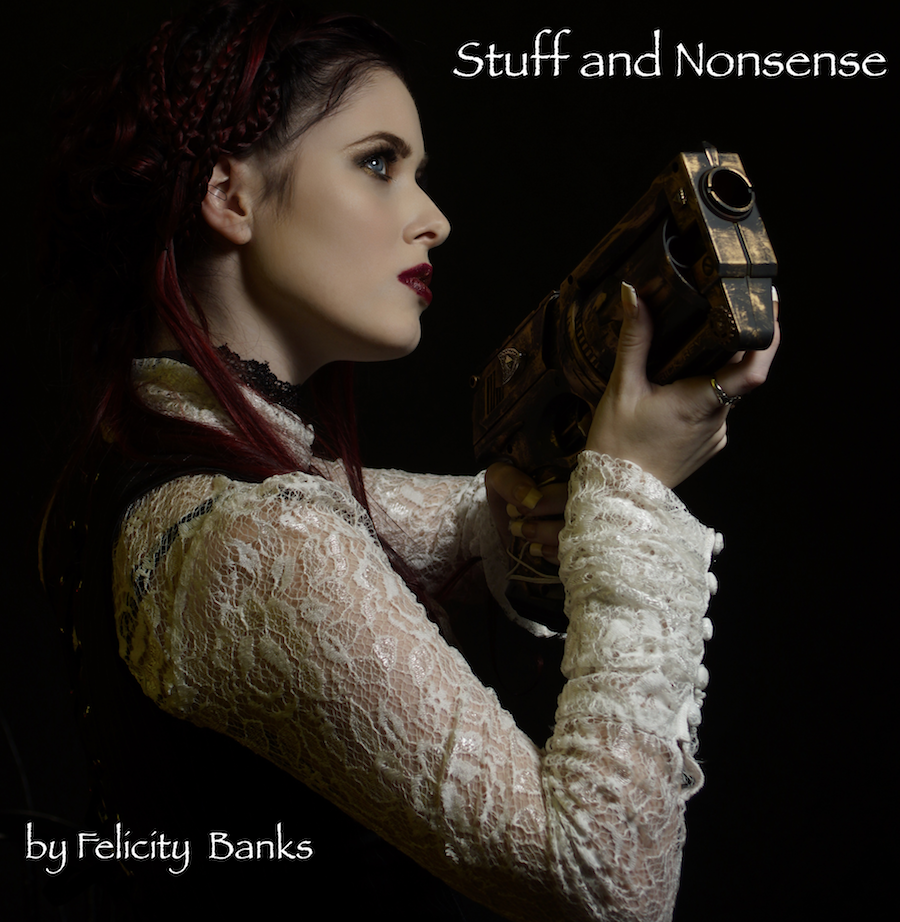
I’m learning Twine while writing a game for the IF Comp. If I want to put an image into the game, the simplest way is to link to a url. Specifically, this one. Probably. If I’m doing this right.
Photographer: Jody Cherry (Exposure Studios)
Hair & Make-up: Jody Cherry (Cherrish Hair & Make-up Artistry)
Model: Amelia Brown
Cropped to fit and text added (with permission) by Felicity Banks
And from The British Museum’s AMAZING collection of historical images:


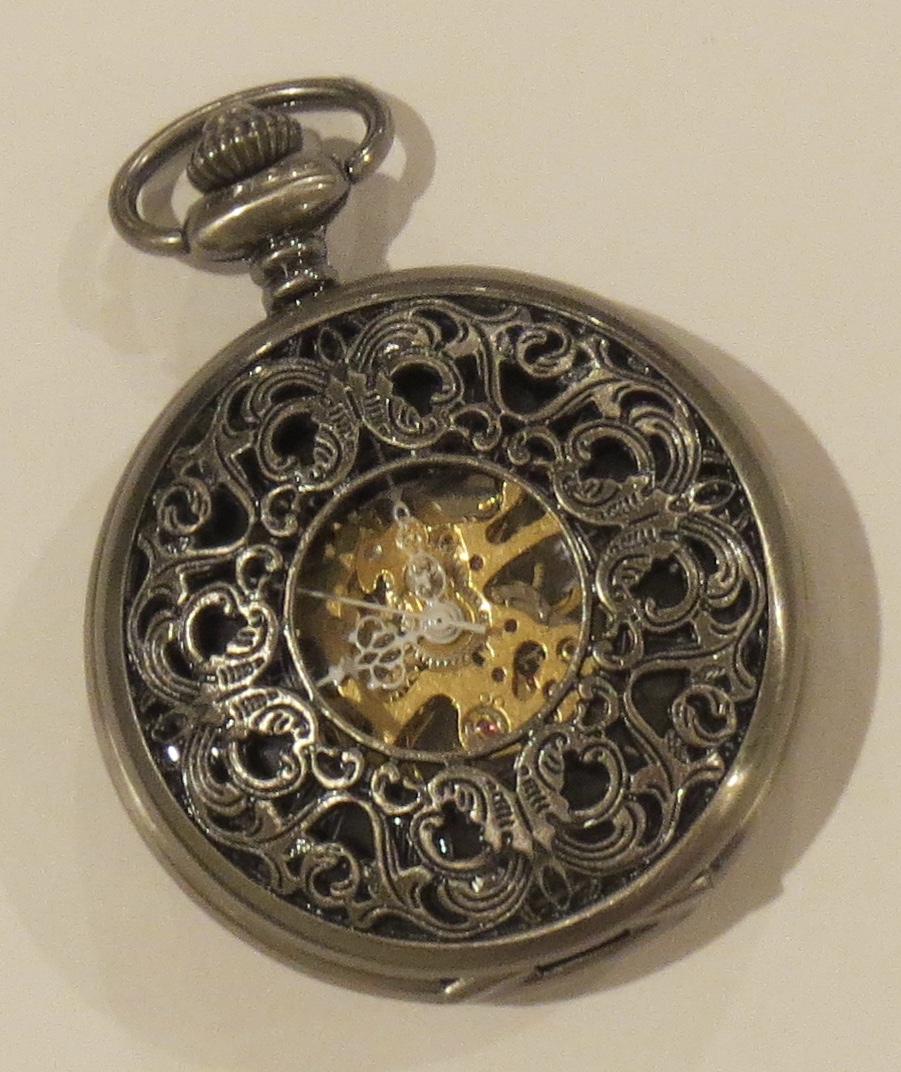
And some pictures of a pocket watch that I just took:


Choices: And Their Souls Were Eaten
I’ve been working very hard on this story app for Tin Man Games all this year, and I’m incredibly proud of it.
The beginning is free, and the rest costs a few dollars (or a LOT of ads if you choose that option on Android).
It’s a subscription story that releases a new section each week. There are between 2 and 7 strands happening at any one time, with both delayed and instant branching.
Some of you are already subscribed to the award-winning “Choices: And the Sun Went Out” (I’m a co-writer there). In that case, you’re already subscribed to “Choices: And Their Souls Were Eaten”. (Congratulations!)
The original story, the near-future scifi game “Choices: And The Sun Went Out” will end in December this year. The second story, “Choices: And Their Souls Were Eaten” will be “medium-length”. Ultimately it’ll work out to be around half a million words.

On Apple, a subscription to either story gets you a subscription to both.
You can choose to have certain character/s speak to you through your apple watch, if you have one. (That, the music, and the sound effects can all be switched on or off – I like the music off but the sound effects on.)
On Android, you can buy (or earn by watching a LOT of ads) Story Passes, which can be spent on either story.
“Choices: And Their Souls Were Eaten” is my project from the start; a steampunk adventure set in 1830s Europe when Queen Victoria was a teen princess and strange monsters roamed Europe. It uses the same magical steampunk universe as my novel “Heart of Brass2” and the ChoiceScript game “Attack of the Clockwork Army” but there aren’t any spoilers.
One of the features of the subscription system is that the writers (I have paid editors who happen to be excellent writers as well, and I encourage them to add cool bits) can adjust the story based on suggestions from readers. I’ve been known to add pirates, name characters after fans, and so on—all based on what people seem to like.
Place your random requests here, if you like!
Happy Birthday, Heart of Brass
You may have heard a rumour that books take a while to get published.
This is what I looked like around the time I finished the first draft of HEART OF BRASS:

This is what I looked like when the finished book was shortlisted in the Text Publishing Prize (editing takes a while too):

And this is what I looked like when the book was accepted for publication, after quite a bit more editing:
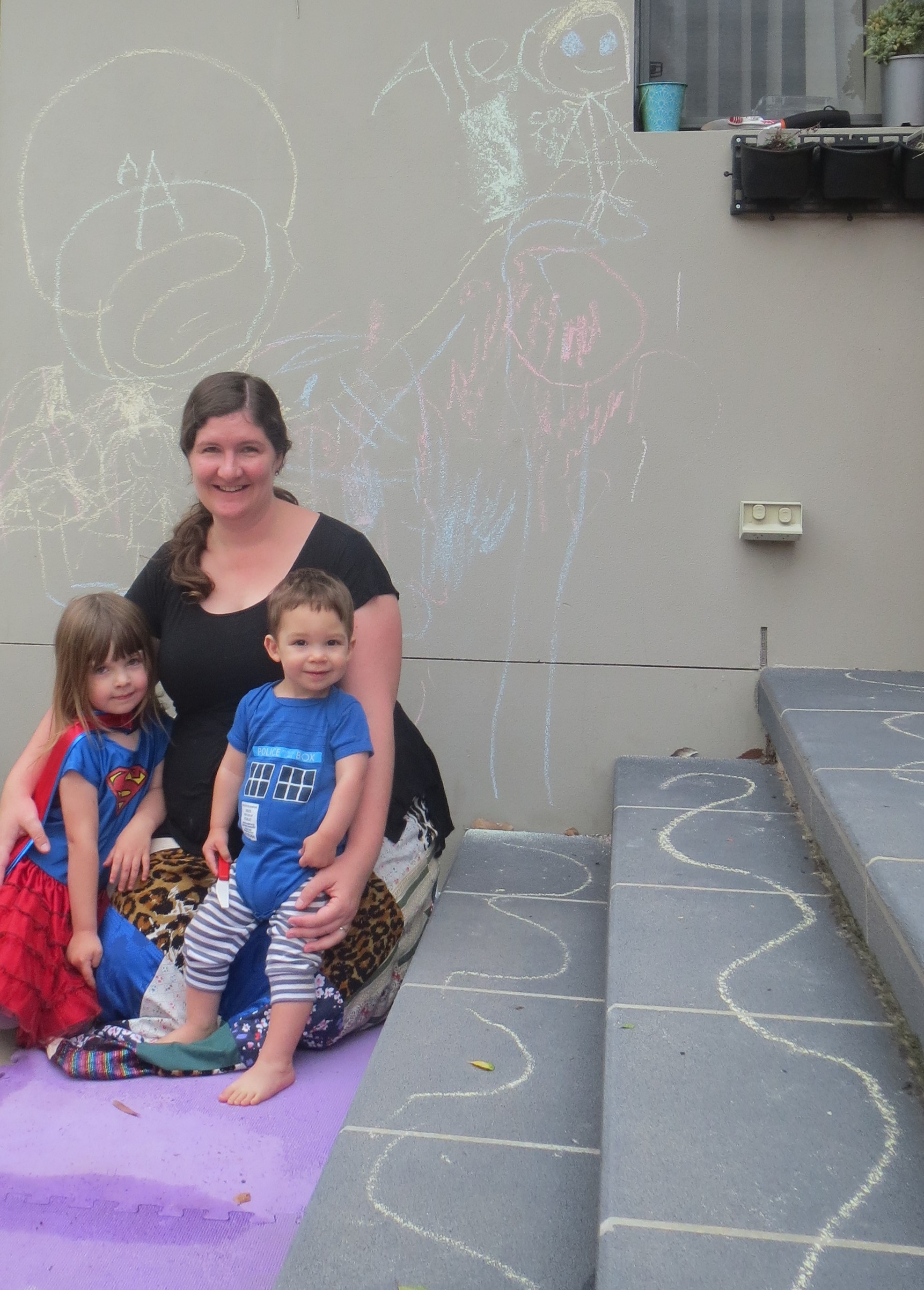
Yep, the book is slightly older than my four-year old.
On the other hand, the period between meeting my publisher and being in print was lightning fast, taking less than a year.
As of today, the book is fully released in both print and digital formats. You can buy a digital copy from Amazon or Kobo, or buy a physical copy from Odyssey Books, who will post it anywhere in the world.
If you’re confused about the order of all my steampunk stories, here’s the lowdown:
Each one is designed to stand on its own without spoilers, but HEART OF BRASS was written first.
In-story chronological order:
- Choices: And Their Souls Were Eaten. An interactive story set in 1837 Europe, to begin release as a subscription story (with new sections each week until it’s finished in 2017) by Australian gaming company Tin Man Games in August 2016 (at the time of writing it hasn’t started yet). I like to pretend the player character is Emmeline’s relative. It will be available as an app for itunes or Android.
- Heart of Brass. A young adult steampunk novel set mainly in 1854 Australia. Emmeline Muchamore’s origin story. Available digitally on Amazon, Kobo, etc, and you can buy physical copies through Odyssey Books, who will post it anywhere in the world. There will definitely be a second and third book in the trilogy, most likely published in October-ish 2017 and 2018.
- After the Flag Fell. A printable interactive story that won the 2015 Windhammer Prize. That version is free here, and an updated version is included with all editions of Heart of Brass. It is set immediately after the events of Heart of Brass.
- Attack of the Clockwork Army. An interactive story that takes place in the 1860s, mainly in Australia. It allows you to play as one of Emmeline’s siblings if you wish (which will cause spoilers if you haven’t read Heart of Brass) or as an original character in a slightly different and spoiler-free reality. Available here as an app for any device, or it can be read on your browser.
5? Stuff and Nonsense. It’s likely I’ll write a silly interactive short story to go along with the official book launch on 27 August (it’ll be specifically designed to be played by two or more people/groups, ideally on foot in Canberra’s awesome Questacon science centre). It’ll cost $25 (or $5 if you’re a Questacon member), and RSVPing is strongly recommended!
Details to come…
So four (and a half) different stories, four different main characters, four different formats.
Strange but true!
Edited to add: I converted “Stuff and Nonsense” into a Twine game. You can read it for free here. Chronologically, it comes in between 3 and 4 above.
The second novel, SILVER AND STONE, will be released on 1 October 2017. It’ll be available via the publisher, stores, Amazon, kobo, B&N, etc etc.
Steampunk Interactive Fiction
My steampunk universe is wandering free in several forms (with at least one more time, place and engine still to come) so I need to clean house and make things clearer.
I’m adjusting the category tag I use to coordinate things to “All Steampunk Fiction” and having two facebook pages – one for interactive fiction, and one for physical books.
Hope this helps…..

ARR ME HEARTIES!!!
The long weeks at sea have dragged by as the scuttlebutt is whispered from captain to cabin boy… there’s going to be a post-comp release of SCARLET SAILS… it’s twice as long… there are new chapters… there are even more chances to stab, shoot, or magically murder people that annoy you…
It turns out that (just this once) the rumours are true.
The beginning is free, and the rest is $2-$4.
You can buy it as an app through iTunes, Amazon, Google Play, or Google Chrome…. or on your computer.

Pirates Tag
You’re it!
Arr!
In celebration of the post-comp SCARLET SAILS being juuuuuuuussssssst about released into the world, I’ll be adding a “pirates” category to this blog.
I am SO SORRY there wasn’t one already. Very irresponsible of me.
The post-comp SCARLET SAILS app is twice as long as the (finished, and rather well-received) original, and it branches wildly from the first choice.
As soon as it’s released, it’ll be available on all the places you buy your apps. It’s fun, magical, sexy, and has plenty of rum and violence (often at the same time). In the post-comp version, you can choose what you wear and see the world differently depending on your chosen magical style.
I’ve set up just for piratical fun (of which, believe me, there is plenty to be had). It’ll be busy for the next few months, then much stealthier (until such time as the next pirate book comes out).
This photo is famous, not because I look so uncannily like Captain Jack Sparrow, but because this was taken the day I met and fell in love with my husband.

“Scarlet Sails” covers, redux
I wrote about designing the cover for SCARLET SAILS (aka my interactive pirate book….probably coming out within two months, yay!) over here.
The cover has to come in several versions, with very specific dimensions. So here’s what I have now:


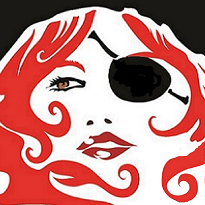
All of the above (which I now realise should have borders so you can actually see the dimensions, but whatever) are the descendants of this lovely lady (below, with watermark to protect the artist), from Shutterstock.
You can see the changes I made (eye colour, feather, etc) for yourself. The middle image above is far too short and wide to have the same word-and-image-and-nothing-else design, so I went with a slightly different concept.
I think the key to this cover design is its simplicity, so I’m avoiding the temptation to mess with it too much. We’ll see how that goes.
I’ll be VERY interested to see how this book sells in comparison to “Attack of the Clockwork Army”, and especially what ratings it gets. I think I’ve grown as a writer (the book is longer, the backstory far simpler, and the setting familiar) but we’ll see!
And of course, I really like my covers. I’ll know if I’ve screwed up if people rate it badly based on their impression of the cover. Her prettiness probably suggests more romance than the book has, but we’ll see (allowing polyamory in the book is a treat for people who’d like to romance more than one character, but/and it was a nightmare to code).

HEART OF BRASS novel to be published May 2016
“Worst one I’ve played”: Reviewing the Reviewers

Or you can play directly through the publisher’s web site, here. That’s the simplest if you’re not tech savvy (although you’ll need a credit/debit card there).
On most sites, it LOOKS like the game is free, and has in-app purchases. This is just a backwards way of saying, “You can read the first bit before you pay for the rest.” It’s a one-off $5 payment.
I’ve started up a facebook page just for this specific gamebook (discussion, reviews and steampunk/Victorian-era fun), at https://www.facebook.com/attackoftheclockworkarmy/

 Felicity Banks