Middle Earth versus Narnia
I’ve just finished re-reading the seven-book Narnia series by C. S. Lewis*and I’m also an admirer of the Lord of the Rings trilogy by Tolkien. Around the time the Lord of the Rings movies came out, there were heated arguments at parties everywhere**about whether the Narnia series or the Lord of the Rings series is better.
I was going to begin a seven-week series of Narnia reviews today, but I’m JUST about to get my greasy mitts on “Goliath” by Scott Westerfeld, so I’ll review that in seven days’ time and then start on Narnia.
In the meantime, here’s a pre-review review:
CS Lewis and Professor Tolkien were close friends, part of a writing group called Inklings. Many members of the group were killed fighting in World War 2. Who knows what other books might have been written if the whole group had lived.
Leaving aside The Hobbit and all the other works by each author, there are some notable similarities and differences.
Both men were Christian, which is clear from reading their books if you’re into symbols (much, much clearer in Narnia’s Aslan character than in Middle Earth – in which the clearest parallel is the nature of Gandalf’s death). Both Lewis and Tolkien distrusted industry, and featured images of fighting trees (yay) and evil loggers (boo). Both wrote tales of high adventure, personal honour, and selfless sacrifice. Both featured heroes who were flawed but who could not be mistaken as anything but great heroes.
I believe that if the Narnia books were sent to a publisher by an unknown author today, they would be published.
I believe that if the Lord of the Rings books were sent to a publisher by an unknown author today, they would not be published. *gasp*
CS Lewis was writing in the 50s, so naturally women were not allowed to fight in the front lines (they could shoot arrows from the sidelines, but none ever wielded a sword), and baddies tended to be dark-skinned (or, in the case of the Black Dwarves, black-haired). However he has excellent heroic warlike female characters, and gracious and noble dark-skinned characters (Aravis is both).
Tolkien is infamous for having almost no female characters whatsoever, but he does mention (either in passing or in the Silmarilion) some truly awesome females – who fought in battles as well as any man. They did tend to be defined by the men they loved, which is a shame.
The true reason I think Lewis would be published today and that Tolkien would not is that first of all, Tolkien’s fantasy is for adults. Adult fantasy is simply harder to sell than children’s fantasy (and if we’re honest, it’s partly because adult fantasy fiction is just. . . long). But the main reason is that Lewis actually stuctured his Narnia books like modern books – starting with action/danger/conflict within the first few pages and never spending huge swathes of time on decription, rambling tangents, or – cosmic bunny save us – poetry. Lewis also has a brilliant eye for the tiny detail that makes a scene come alive.
Tolkien was predominantly a linguist – not a storyteller. I for one am grateful he was writing back when the market was quite different, and his books didn’t get rejected with the note “Needs editing”. As a modern reader (and I do read), I prefer the Lord of the Rings movies. I’m sorry, but it’s true. On the other hand, I understand that no writer in the past, present or future could create a world as rich and complex and fantastic as Tolkien did. I’m even a little glad that he didn’t get edited (as we all know, Tom Bombadil is largely irrelevent to the main plot, and would certainly be cut along with many other wonderful scenes, characters, and descriptions).
If I’m going to read a book, I pick Narnia every single time. I was pleasantly surprised this last week by how well written they are. No other classic books translate so well to the smart, focused modern reader.
And now I shall duck and cover as the argument continues.
In other news, one of my own books has been at a certain large Australian publisher for three years now. I have just discovered that the particular individual who I knew very well was holding things up has stopped working there. Which means there’s a small chance I’ll get a response in the next month or two, and a very good chance I’ll have a response in 6-12 months (ie the normal response time).
If I’d sent the book in via the slushpile, I’d have had an answer over two years ago. Kids, contacts in the biz aren’t always a good thing.
*Fun fact: The “C.S.” stands for “Clive Staples”. Abbreviation is sometimes a VERY good idea.
**This tells you exactly the kinds of friends I cultivate.
“Pastworld” by Ian Beck
“Pastworld” by Ian Beck
If there’s one thing fantasy readers want – especially from steampunk tales – it’s sensory immersion. A flood of sights, sounds and smells that make us feel we’re living in another world. Ian Beck does that, in loving and exquisite detail. It is his greatest strength.
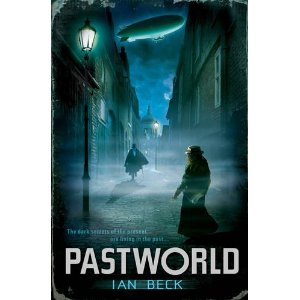
The rest of this review has been moved to Comfy Chair, where I get paid for it.
Philip Pullman Review #4 of 4
“Ruby in the Smoke” (book 1 of the Sally Lockhart quartet).
What do you get when a brilliant modern writer sets out to create a series of penny dreadfuls?
The rest of this review is at Comfy Chair, where I get paid for it.
Philip Pullman books part three
“The Amber Spyglass”
Oddly for a trilogy, I’m not sure this is the strongest book in the series.
The rest of this review is at Comfy Chair, where I get paid for it.
Philip Pullman book review # 2 of 4
“The Subtle Knife” is the second book in the “His Dark Materials” trilogy. Lyra – and several friends in unusual places – is still vital, and so is Will. Will is from our world, and he needs to find his father – an explorer who found something powerful enemies wanted, and hasn’t been seen since.
The rest of this review has been moved to Comfy Chair, where I get paid for it.
Philip Pullman month
Judging by some of the things he says in interviews, Philip Pullman can be quite unpleasant. His books – every single one – are brilliant.
“His Dark Materials” is the trilogy he’s best known for. I can’t actually write the kind of epic work that this is, and I rarely read it – but some people do it extremely well. Philip Pullman is unmistakably a master writer.
The rest of this review has been moved to Comfy Chair, where I get paid for it.
New chocolate bar: A review
Several weeks ago now, I heard of a brilliant new product from Kit Kat:

It is a chunky Kit Kat with three different sections – each one filled with a different type of caramel. There’s caramel fudge, crunchy caramel, and flowing caramel. Since I love caramel, chocolate, and chunky Kit Kats, I was intrigued at once. After a wait of several weeks, I finally acquired a bar and tried it out.
Sadly, although the concept is brilliant, the execution is lacking. The smooth flowing caramel is perfect (hard to get that wrong) but the fudge is very ordinary, and the “crunchy caramel” is clearly just the fudge again, but with crunchy bits put in (the crunchy bits are nice).
Frankly, I don’t think the fudge is actually fudge. It’s just filler. I suspect real fudge is too expensive to produce.
Kit Kat is currently advertising at least two other riffs on the three-in-one theme, but I tried the chocolate version and was equally unimpressed by the amount of effort put in to the fillings.
Verdict: Genius plan; poor follow through.
The last Harry Potter film: Spoiler-free review
For those not familiar with J. K. Rowlings’ iron will: Yes it really is the last film. In a world brimming with reboots and poor-quality sequels, that alone makes the Harry Potter film series unique. And in case you’re wondering – yes, oh definitely yes. It ends.
It is possible to enjoy this film without seeing the rest – but you’ll never lose the sense that you arrived late at a party.
As the ending to an eight-film series, it is a masterpiece. We finally understand Snape, Dumbledore, and even Harry himself. Every thread is tied up, and there is no wiggle room left for further mayhem. I particularly enjoyed the epilogue.
Characterisation is done, and done just right, in just a few seconds (not just for the major characters, but for several other favourites as well). The pacing allows space for fear, despair, building tension – and even grief and laughter. Visually it is beautiful (although very dark); the effects are flawless. The acting, now that the cast is completely grown up, is great.
Don’t make the mistake of thinking this is a children’s film. It most certainly is not. There is a LOT of darkness and a lot of death – and some of the deaths are absolutely nightmare-inducing. I had my eyes closed more than once.
In my opinion, the films are better than the later books, because Harry Potter spends too much time being miserable in print (which gets irritating), and that is cut from the films. The plots do tend to be rather squashed, but oh well. The one flaw I could find in this film was one I was expecting from having read the book. In my opinion, although it has several functions, the “white room” scene is just. . . a bit silly. Everything that it does could be done elsewhere.
It did give Harry some great heroic moments, though.
Speaking of which, that is a particular strength of the film: badass moments. There are lots of them, and they are all done very, very well.
Do see the film on the big screen if you can (like I even need to tell you). There will never again be an eight-film series done this well.
Dark, exquisite steampunk: Cherie Priest
Cherie Priest

(This picture was taken from wikipedia.)
“Dreadnought”
Scott Westerfeld is the king of steampunk, and Cherie Priest is the queen. While Westerfeld is quite light and fun, Priest is dark, with strong horror elements (her zombies are truly awful).
The rest of this review has been moved to Comfy Chair, where I get paid for it.
“My Family and other Animals” by Gerald Durrell
As fiction, this book would be hilarious but too riotously fun and absurd to be believable. Since it is the autobiographical account of the Durrell family’s five years in the mad Greek island of Corfu, it is just a brilliantly funny book.
Gerald was around ten years old at the time, and obsessed with all creatures – snakes, scorpions, magpies, dogs, beetles, geckos, trap-door spiders – everything. It was an obsession that remained – you may have heard of his wildlife preserves and/or documentaries.
The peculiar characters of the island (and, more importantly, of the Durrell family) are brilliantly realised in all their glory.
Rating: G
It’s very difficult to describe the book, so I’ll just give you a glimpse and let you see for yourselves. This takes place on a dull afternoon when the entire family was ill except Larry (a WRITER), who was feeling morose. . .
At length, glancing moodily round the room, he decided to attack Mother, as being the obvious cause of the trouble.
“Why do we stand this bloody climate?” he asked suddenly, making a gesture to the rain-distorted window. “Look at it! And come to that, look at us. . . Margo swollen up like a plate of scarlet porridge. . . Leslie wandering around with fourteen fathoms of cotton wool in each ear. . . Gerry sounds as though he’s had a cleft palate from birth. . . And look at you: you’re looking more decrepit and hag-ridden every day.”
Mother peered over the top of a large volume entitled Easy Recipes From Rajputana.
“Indeed I’m not,” she said indignantly.
“You ARE,” Larry insisted; “you’re beginning to look like an Irish washerwoman. . . and your family looks like a series of illustrations from a medical encyclopedia.”
Mother could think of no really crushing reply to this, so she contented herself with a glare before retreating once more behind her book.
“What we need is sunshine,” Larry continued; “don’t you agree, Les? . . . Les? . . . LES!”
Leslie unravelled a large quantity of cotton-wool from one ear.
“What d’you say?” he asked.
“There you are!” said Larry, turning triumphantly to Mother, “it’s become a major operation to hold a conversation with him. I ask you, what a position to be in! One brother can’t hear what you say, and the other one can’t be understood. Really, it’s time something was done. I can’t be expected to produce deathless prose in an atmosphere of gloom and eucalyptus.”
“Yes, dear,” said Mother vaguely.
“What we all need,” said Larry, getting into his stride again, “is SUNSHINE. . . a country where we can GROW.”
“Yes, dear, that would be nice,” agreed Mother, not really listening.
 Felicity Banks