“The Affinity Bridge” by George Mann
First things first: Louisette’s fart face (babies tend to smile when they have wind, and don’t learn to smile for pleasure for about six weeks).

And now, your weekly book review:
It’s clear Mann likes Sherlock Holmes, and has imitated Conan Doyle’s work – with certain deliberate differences.

This review has been moved to Comfy Chair, where I get paid for it.
This is the last steampunk book review I have prepped. I haven’t forgotten that I promised a map of the literary steampunk scene. It will have links back to a number of steampunk reviews, hence me posting them now rather than later. It won’t happen overnight, but it will happen.
“Mothstorm” by Philip Reeve (book 3 of 3)
Here’s a baby pic to tide the baby lovers over until there’s another Louisette-centric entry tomorrow.

“Mothstorm” is the third book in Philip Reeve’s “Larklight” trilogy. Each book stands alone, although there are spoilers if you read them out of order.
Uh-oh. Here comes another mighty force of giant interstellar insects. How terribly vexing.
The rest of this review is now at Comfy Chair, where I get paid for it.
“Starcross” by Philip Reeve (2 of 3 books in the “Larklight” series)
[Pre-labour report: Last night I went to the bathroom every 1-1.5 hours. No contractions to speak of, and most decidedly not in labour. Most women hate the last weeks of pregnancy, but I have more reason to hate this time than most.]
This is the second book in the trilogy, and I admit it’s the weakest of the three. It still outdoes almost any other children’s book on the market.
The rest of this review is now at Comfy Chair, where I get paid for it.

Sherlock Holmes: A Game of Shadows
[Contraction report: Yesterday eased off by a lot, and in a sudden flash of energy I left the house for the second time since Christmas, and went and saw the new Sherlock Holmes with CJ. Today the contractions have been happening a fair bit since 4pm – it’s 10pm now – but I think they’re slowing down again. Stupid things. It’s a strange state, to be wishing for pain to hurry up.]
Some of you are aware of how very much I loved the first “Sherlock Holmes” film. The two films are close enough to steampunk that I’ve tagged this accordingly.
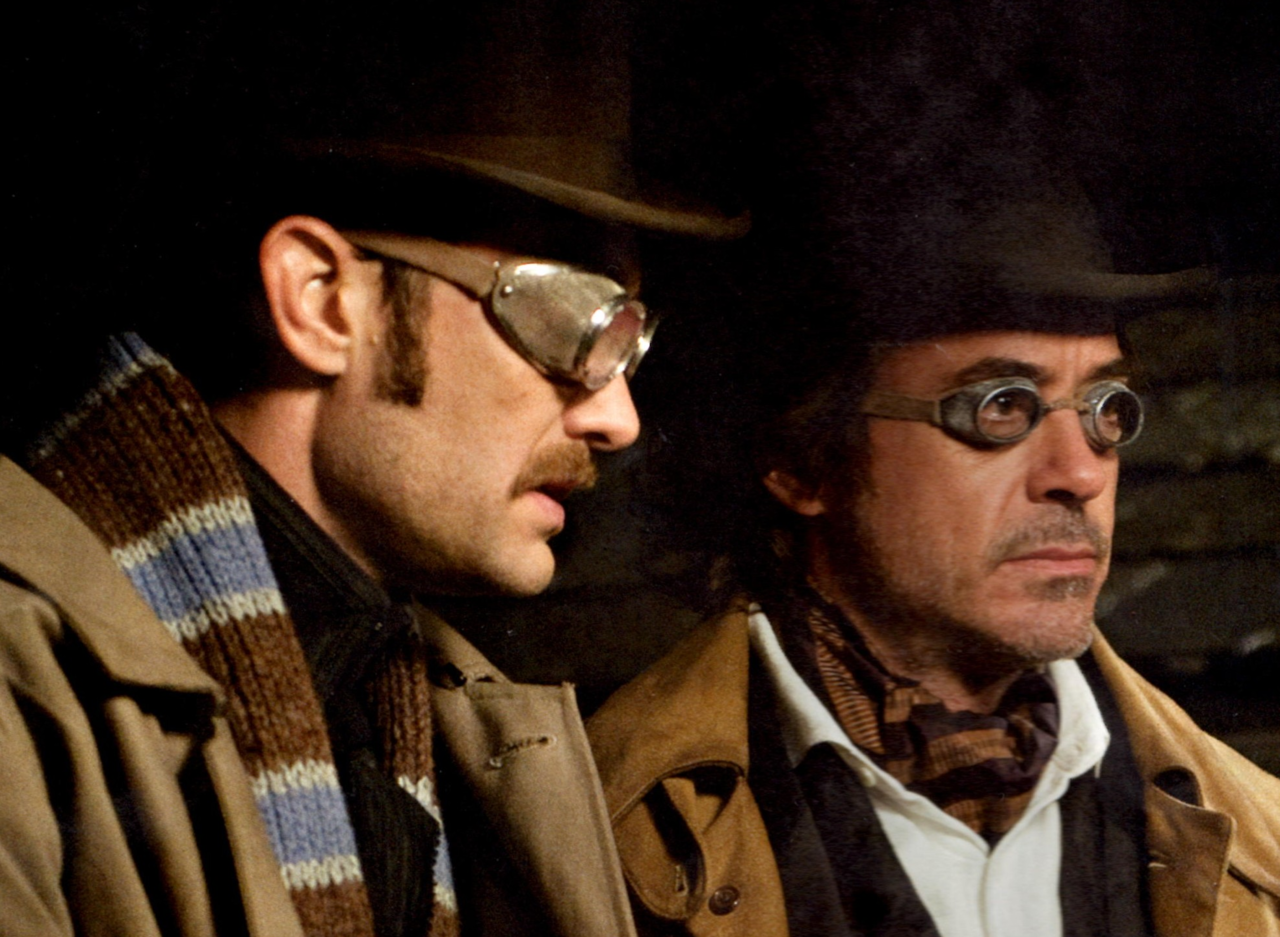
Sequels are a difficult thing to do well. Here’s four reasons why, and my comments on how successful this particular sequel has been:
1. The stakes must be greater than in the first movie – but not so great that they are either laughably ridiculous or disconnected to the hero’s personal goals.
In terms of general plot, the stakes are certainly larger. But the winner here is that the stakes are more personal. Full marks.
2. The villain must be more powerful – with the same caveats.
Moriarty is a MUCH better villain than Lord Blackwood (not that Lord Blackwood wasn’t a perfectly good villain – he was). He is the perfect opponent to Sherlock (and even more evil than Blackwood).
3. All the aspects that made the first film great must also be present in the next film – but without being repetitive or unoriginal.
There is still plenty of humour (particularly witty banter between Holmes and Watson) and plenty of action. Still quite a bit of Holmes-style deduction, but perhaps a smidgen less of each.
Much of the humour and character of the first film came from the odd domesticity of Holmes and Watson’s living arrangements, which often cause squabbles while the two men are otherwise busy having a fight scene. That juxtaposition of bickering and near-death experience is certainly still present, but the second movie deepens both their individual characters and their relationship. The actors became, if anything, even more charming and watchable than before. I was VERY impressed once again by the writers’ characterisation work.
One of the clever things about the first movie was the fight scenes, which happened once in slow motion in Holmes’ head, and then again in real time. Fights became (a) comprehensible to the viewer (unlike all too many modern fight scenes), and (b) incredibly intellectual (and all the more savage for it).
I was disappointed by the first fight scene in this movie, but it turned out I should have been more trusting. Each fight scene improved on the last, riffing on the slow-motion-in-Holmes’-head idea in a multitude of original ways. Each one was better than the one before. Again, I was seriously impressed.
The Victorian/steampunk feel is still present, although there are less devices and more gypsies.
If you enjoyed the supernatural thrills of the first movie – sorry, they’re gone (I say that’s a good thing).
There was one other aspect that I really enjoyed from the first film that is barely present in this film, but I can’t say what it is without ruining things for you 😛 I think the writers showed courage in the choices they made, and ultimately it paid off.
4. And the film must have its own unique X factor that makes it special in its own right.
The X-factor here is all about the three new characters – Moriarty, Mycroft (Stephen Fry!!!! Squee!), and the gypsy girl (whose name I can’t remember). The writers managed to introduce new spice to the existing cast without being indulgent of their own previous favourites or of the exciting new talent. That balance is extremely rare in a sequel (“Pirates of the Caribbean” became stupidly top-heavy due to having too many big names, each of whom had to have their own special scene), and I was impressed once more.
The film had two very silly scientific moments, but I forgive it, because they were very much played for laughs.
“Larklight” by Philip Reeve (part 1 of 3)
[No change in my pre-labour; still having mild contractions, like a sunburn that comes and goes.]
This trilogy is one of the greatest steampunk series ever written. It is hilarious, exciting, and utterly safe for children (as long as they’re not too phobic about insects, I suppose). Each book stands alone, although if you read them out of order there are some spoilers.

The rest of this review is now at Comfy Chair, where I get paid for it.
“The Nomad of Time” by Michael Moorcock

This is the first book in an alternate history trilogy (that is certainly steampunk, although it predates the first use of the term. Suffice to say, there are airships and an exploration of colonialism). I tend to cordially dislike classics because of the slow pacing and lack of character depth, and I did not expect to finish the book.
The rest of this review has been moved to Comfy Chair, where I get paid for it.
“The Difference Engine” by William Gibson and Bruce Sterling
What is the difference between this book and a good book?
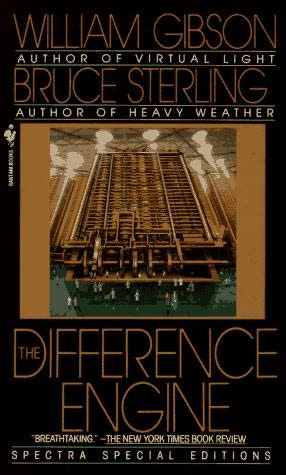
The rest of this review is at Comfy Chair, where I get paid for it.
“Clockwork Angel” by Cassandra Clare
Some of you will know Cassandra by the last name Claire, from when she wrote the Secret Diaries of the Lord of the Rings. (Very rude, very funny.)
When I read her original trilogy (very very quickly), my reaction was, “If only Twilight was like this!”

“Clockwork Angel” is the first book in a prequel series called “The Infernal Devices”.
The rest of this review has been moved to Comfy Chair, where I get paid for it.
Narnia #7 of 7: “The Last Battle” by CS Lewis
Once again, this book has more cynical tone than some of the earlier stories – but it is still most definitely a children’s book. The theme is deception and doubt, and the nature of Aslan is called into question. Aslan himself is apparently both silent and absent.
The story begins inside Narnia, as a greedy ape hatches a plan to make Narnia more civilized (because even in fiction, history teaches us nothing) using a fake Aslan to get his way. It works all too well, and within a few chapters the last king of Narnia, King Tirian (my first fictional crush – and I wouldn’t say I’m entirely over him yet) is imprisoned.
That is when two children from our world, Jill and Eustace, arrive to free him and – for better or worse – put their lives on the line in a desperate attempt to save the last remnants of goodness, imagination, and joy in Narnia as the Calormenes once more take over. This time, the lines between good and evil are blurred, and hope battles despair throughout.
This is the final battle, and it is the end. Many previous characters reappear, which is highly enjoyable for fans – but the losses of this book are greater than in the rest of the series. The joy of this book is greater, too, however. The first and the last books are a perfect framing device for the whole series.
Free sample (a good Calormene named Emeth is speaking):
“. . . my happiness is so great that it even weakens me like a wound. And this is the marvel of marvels, that he called me Beloved, me who am but as a dog –”
“Eh? What’s that?” said one of the Dogs.
“Sir,” said Emeth. “It is but a fashion of speech which we have in Calormen.”
“Well, I can’t say it’s one I like very much,” said the Dog.
“He doesn’t mean any harm,” said an older Dog. “After all, we call our puppies boys when they don’t behave properly.”
“So we do,” said the first Dog. “Or girls.”
“S-s-sh,” said the older Dog. “That’s not a nice word to use. Remember where you are.”

Rating: PG. I’d call it absolutely G and safe for anyone, but one character is a close parallel to Jesus Christ (in one of the later books this character clearly states that he exists on Earth as well, is known by a different name there, and that the children have been brought into Narnia so that they can more easily recognise him on Earth), and some atheists have found that offensive. The books do focus on the adventures, rather than allegory about 95% of the time.
Narnia #6 of 7: “The Silver Chair” by CS Lewis
This is altogether a darker and drearier tale than the rest. Instead of travelling through green lands (or snow-covered forest), our heroes – Eustace again (a completely different character to the annoyance he originally was), and a new character called Jill – walk through a seemingly endless barrenness, much like how I imagine the worst possible school camp. And it’s cold, too. Their companion is a creature called a Marshwiggle, and he is one of the greatest characters in the entire series (see the free sample for a taste).
In some ways this book is the most mature of the series – it is a classic quest (for a lost prince, the only heir of an elderly king), with a very clear set of instructions which immediately go awry. One of my favourite things about The Lord of the Rings is that it so often seems that all hope is lost, and the quest is doomed. This book has that same quality, which means that any good result feels deeper and more satisfying. For Christians, there is an even deeper and more satisfying implication – that God’s seemingly random instructions will actually make sense at some point, and that our own failures haven’t doomed us after all.
This book also contains some of the most peculiar and inventive aspects of Narnian life. CS Lewis certainly didn’t stop at a British landscape and talking animals.
Free sample (the marshwiggle, Puddleglum, is advising the children at the beginning of their journey):
“I don’t know that anyone can exactly help. It stands to reason we’re not likely to get very far on a journey to the North, with the Winter coming on soon and all. And an early Winter too, by the look of things. But you mustn’t let that make you down-hearted. Very likely, what with enemies, and mountains, and rivers to cross, and losing our way, and next to nothing to eat, and sore feet, we’ll hardly notice the weather. And if we don’t get far enough to do any good, we may get far enough not to get back in a hurry.
Both children noticed that he said “we”, not “you”, and both exclaimed at the same moment. “Are you coming with us?”
“Oh yes, I’m coming of course. Might as well, you see. I don’t suppose we shall ever see the King back in Narnia, now that he’s once set off for foreign parts; and he had a nasty cough when he left. . .”

Rating: PG. I’d call it absolutely G and safe for anyone, but one character is a close parallel to Jesus Christ (in one of the later books this character clearly states that he exists on Earth as well, is known by a different name there, and that the children have been brought into Narnia so that they can more easily recognise him on Earth), and some atheists have found that offensive. The books do focus on the adventures, rather than allegory about 95% of the time.

 Felicity Banks