How to be awesome (here)
Today’s article is written by Nathan Bransford, who is a writer, ex-agent, and social media expert.
It’s called “How to write a good blog comment” and I can heartily confess to rampant self-interest in sharing it here.
Let’s begin:
The art of writing blog comments may at first blush seem like a frivolous and unimportant one, but that is not actually the case!
Writing excellent blog comments is perhaps the very best way to build your own blog and/or social media presence. Consider a blog comment an audition to show off your own personal awesomeness.
Not all blog comments are created equal. Here are some good rules of thumb as you work your way up to becoming a blog comment ninja.
Read the Post You’re Commenting On, Then At Least Scan it Again
Yes, this takes time and the careful suppression of twitchy fingers. But there is no quicker way to leave an ineffective blog comment than to miss something in the actual post or to accuse the poster of saying something they didn’t actually say.
Accuracy is important. Good blog comments take into account the entire post and then come up with a good and original response. So not only take the time to actually really read the post, keep the comment on topic rather than bringing in an outside and unrelated agenda.
That said……
Get There Early
The most effective and influential comments are near the top of the comments section.
Read Nathan’s other four excellent points here.
My own personal tips:
1. Always assume everything you post online will be read by your mother, your boss, your worst enemy, and your best friend.
2. Never, ever express anger online (see # 1) unless you are fighting for a cause outside yourself.
I’ve also discovered that writing about where your manuscript is at with agents/editors/publishers (or how long they take to reply) is also a no-no. Unsurprisingly, they don’t like to be publicly discussed.
Perhaps more importantly, proudly reporting – or weeping over – your dozens of rejections has the effect of making you look unpublishable, which can put professionals off – because they definitely do look at your blog and google you before offering representation (see #1). Which is why you won’t be hearing any more about the publication process until I have an offer (and permission to talk about it here).
3. If you’re young, invent a fake last name that you use everywhere online (if you’re a writer, it can become your pen-name, so make sure it’s distinctive but easy to spell).
I also recommend you visit Nathan’s blog and/or his top-notch writer forums.
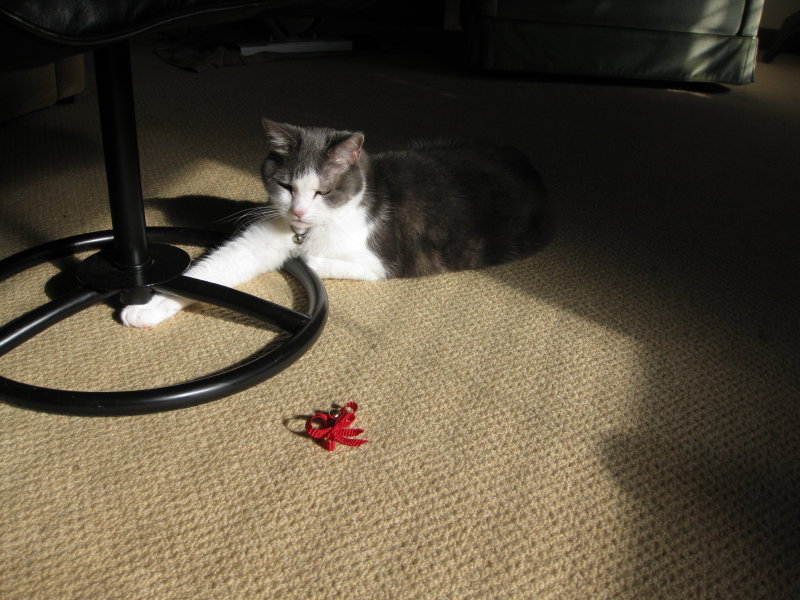
Here’s an Easter-themed cat picture – this is Indah pointedly ignoring the Lindt Bunny bell I tinkled and then threw at her.
Get it right – this time

I knew before I began my steampunk novel that I would need to learn a whole new set of rules when it came to my Koori character, Matilda (you’ll notice that’s not a Koori name – names are just one taboo area).
A week or two ago I attended a lecture (in the gorgeously squished building above) by bestselling chicklit author Anita Heiss, who is a member of the Wiradjuri nation.
The lecture itself was very interesting (especially the various covers – some early drafts had Koori art from utterly the wrong nation, ugh), but the best part for me was that, as I’d hoped, Anita was able to tell me exactly where to look to find out how to write respectfully about a Koori character.
These are the two documents she recommended I read before approaching the correct Koori nation for more detailed consent:
http://www.australiacouncil.gov.au/__da … _guide.pdf
http://www.asauthors.org/lib/ASA_Papers … tralia.pdf
The bits about copyright were especially fascinating, because of course copyright law isn’t designed for oral stories – which means extremely valuable stories are not legally protected. Not yet.
Also, I’ll probably need to pay actual money to representatives of the nation I choose for Matilda’s background. I can handle that. Given the classic steampunk theme of rampant colonialism, it’s neat that I will be giving something back in order to honourably write about that era.
There is a huge wealth of religious tradition that non-Koori Australia is largely unaware of – not because we’re helplessly undereducated, but because much of it is secret, and needs to stay that way. My rule when it comes to other religions is, “What if they’re right?”
What if it’s true that a woman playing a didgeridoo causes terrible harm? What if outsider knowledge of sacred rituals destroys a people group?
Frankly, I’m not going to risk it.
This was part of the reason I made Matilda half-British, and a rebel against both her parents’ cultures. That way I can steer well clear of a lot of traditional knowledge or ritual – since Matilda has left much of it behind her.
And of course I’ll take care that the facts about historical Koori that make it into the book are accurate.
If you are writing about a people group you’re not a part of, here’s a good list for you to think about:
1. Respect
2. Indigenous control
3. Communication, consultation, and consent
4. Interpretation, integrity and authenticity
5. Secrecy and confidentiality
6. Attribution and copyright
7. Proper returns and royalties
8. Continuing cultures
9. Recognition and protection
And here’s a great resource for finding Koori artists by state:
http://www.theblackbook.com.au/
I’m setting my book in Australia because I love it with all my heart. Matilda exists because there is no WAY I’m going to pretend Koori people didn’t exist in 1854. (That’s exactly what was done at the time – nice work, Empire.) I’m so pleased to have finally found some detailed resources so I can make the book something special for all Australians.
Or at least, all those who like steampunk.
In the beginnings. . .
Time to hide in your box, quivering in terror.
Today we’ll be visiting the Pub Rants blog (“pub” as in “publication”, you lush) for the bad news about beginnings: 99.9% are rubbish.
You can tell an experienced writer because they don’t bat an eye when someone says, “Send me the first two hundred words of your book, and I’ll know whether I want to read the whole thing” – because that really is all it takes to sort the maybe-quite-good from the heh-no-way.
Don’t believe me? Go to a critique site like this one and critique twenty first chapters. You’ll soon see exactly how easy it is and exactly how little time it takes. And if you’re serious about writing books, critique at least fifty first chapters and you’ll learn more than you’d learn from reading fifty bestsellers (which you should also read, but that’s another article. . . ).
The full article for today is here. If you’re a writer, read the whole thing – please. My favourite part is when she lists the most common first-page mistakes. Here is that list, with my comments underneath each item.
1. Telling instead of showing.
Don’t say, “I felt scared” – say “My mouth went dry, and I willed my hands to stop shaking.” It makes a surprising amount of difference. Also, know when your scene should be described in full excruciating detail (when there’s action, interesting dialogue, or some incident that makes a difference to the plot) and when not to (when characters are unconscious for three days, or talking about non-plot-relevent geraniums, or quietly grieving someone that they also grieved in the previous chapter). Your first scene should always be interesting, and full of blow-by-blow detail with no summary.
2. Including unnecessary back story.
You should know that the main character was attacked by an aardvark when she was three and that it caused her to hate all animals – but you will probably NEVER mention that incident in the whole book. You’ll just show her flinch when a dog walks in. That SHOWS us she’s had a bad experience instead of telling us.
We don’t actually care about the aardvark incident, or anything else that was exciting at the time – sad but true. Only the present truly matters.
We really don’t care about the fifteen changes in the government of your fantasy world that led up to this particular crisis. Again, keep it in your head.
3. Loose sentence structure that could easily be tightened.
Grammar is important for two reasons: So you make sense, and so your writing is invisible. Any time someone has to re-read a sentence, they are no longer inside the story. Learn how to talk good.
4. The use of passive sentence construction.
See what she did there?
“I hit the cop in the face” is a million times more interesting than “The cop was hit in the face.”
5. Awkward introduction of character appearance.
Please, no glancing in the mirror.
I use a lot of tricks for character appearance including action (I pushed my hair out of my eyes), comparison (Robert towered over me), style rather than lists of hair/eye colour (He pulled at his lower lip again, not realising he was doing it), senses other than sight (I heard a scratch at the door and realised Miss Smith couldn’t quite reach the bell), and other people’s reactions (Harrry stopped talking mid-sentence. Sure enough, Miss Aurelia was adjusting her top again). Anytime you’re physically describing someone while doing something else at the same time (showing character, moving the story forward, etc) you win.
6. Awkward descriptions/overly flowery language to depict.
If you must have an adjective, don’t have a list. “The fat dog wagged its tail at me” is stronger than “The fat little brown dog wagged its tail at me”. But verbs tend to be stronger still – “The dog waddled over to me, wagging its tail.”
7. Starting the story in the wrong place.
Start with something happening. Look at action movies, and you’ll see that the opening scene is often a mini-story that is related to the main plot – eg one young woman is killed by a guy in a mask, and later we realise he’s stalking another. It’s SO much more interesting that starting with a placid/static scene, or a conversation. Ideally the opening scene is the inciting incident that kicks everything else off. But there has to be some kind of risk.
8. Not quite nailing voice in the opening.
Be yourself. Or at least, be that small part of yourself that you have in common with your narrator. Sarcasm? Short sentences? Big words? Yeah-I-couldn’t-think-of-the-exact-word-so-I-made-it-up adjectives? In my opinion, you’ll find your voice somewhere in the first draft, and then if any parts don’t match you can fix them in editing. So relax about voice, and it’ll come.
9. Dialog that didn’t quite work as hard as it should.
For starters, use contractions (“I’m, he’s, you’re). Listen to real-life dialogue and you’ll see how much information people leave out. But do please skip the boring bits of real life – notice how rarely fictional characters say “Hi how are you?” “I’m fine, how are you?” and “Goodbye”.
10. A lack of scene tension even if the opening was suppose to be dramatic.
You get tension by having a clear, important, and difficult goal right away – anything from “Nerdy kid asks out popular girl” to “Bruce Willis defends USA against terrorists”. (To get readers to care, they need to be interested in your character – there’s another article in that.) You keep tension by having things go wrong – the girl’s mean friends show up to watch his humiliation, or Bruce Willis is barefoot in a place full of broken glass.
Again, detail helps. I find that the longer a scene takes, the more time readers have to feel stressed. And readers love stress.
How not to write a query letter
If you’re a writer long enough, the carefree laugh of creative joy turns to a bitter sarcastic coughing hack.
Here, for your bitter (but equally way more valid) joy, is an entire website devoted to sarcastic replies to idiotic queries. It’s called Slushpile Hell. (For those not in the know, the slushpile is the pile of manuscripts waiting to be read by an editor or publisher.)
Here’s two cut and pasted examples:
My writing coach told me that my novel is not yet ready to send to agents and needs more work. Could you read the attached sample chapters and tell me if you think she’s right?
I’d love to, but I’m terribly busy right now hitting myself in the head with a hammer.
Dear Slushpile Hell Scum, you think you’re so funny. I wish I knew who you were so I could come mock you and everyone in your little circle of ugliness. I’ve written a fiction novel—a GREAT novel. Do you think I’ll ever submit my manuscript to a CLOWN like you, or ANY of your fellow clown literary agents for that matter? Think again. You’re missing out on MILLIONS of dollars here.
Dear Charlie Sheen, thanks for your email. Best of luck in all your future endeavors.
You want the link again now, don’t you? Okay.
Time for your cat picture of the week.
I was airing out all our cushions and covers and chairs and so on, and put our very rickety cat tower on the barrier of the second-storey balcony. Five seconds later. . .

Guest blog on sailing and ballooning
Here it is, as promised – with more pics and writerly descriptions of what the experience is like.
http://ripping-ozzie-reads.com/2011/03/21/tall-ships-and-balloon-travel-what-are-they-really-like/
Ripping Ozzie Reads is a blog I’ve been following for more than a year. It’s run by a group of well-known Aussie writers, and has lots of interviews and writing articles.
#299: Steampunk Research
In January I decided to write a steampunk series. This was daunting, because I’m no historian. I decided to remedy my ignorance (to a very minor extent) by reading twenty nonfiction books (and of course spending time on wikipedia and elsewhere). I also took another look at the TV series “Worst Jobs in History”, visited the National Museum, and went horseriding – as well as reading several novels of the time (especially Marcus Clark’s “For the term of his natural life”), and every modern steampunk novel I could get my hands on.
Here for your convenience are my short reviews of the twenty books I read.
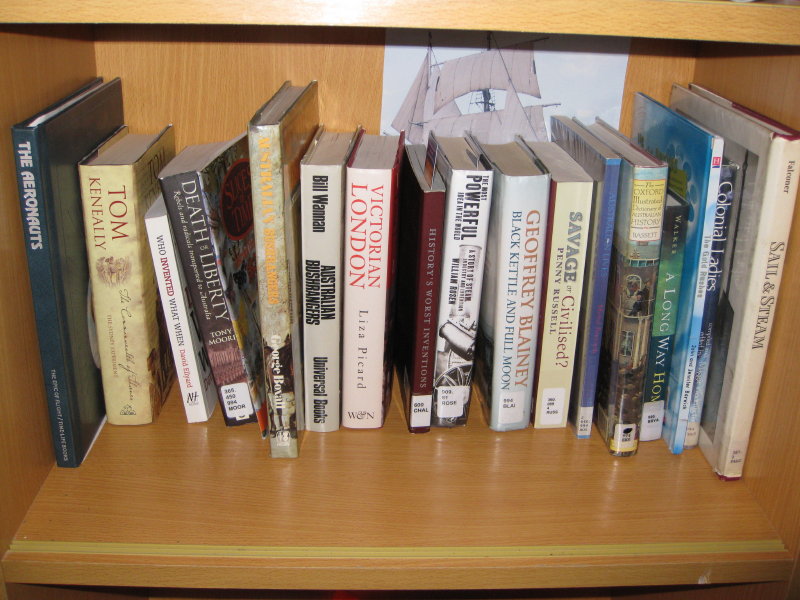
These are the top three, in my opinion.
1. “Victorian London” by Liza Picard (including colour illustrations).
If you’re going to read one book before writing steampunk, this is the one you want (and, as a bonus, it’s often hilarious). The first chapter is on smells. Need I say more?
2. “Who invented what when?” by David Ellyard.
This was brief and coherant enough that even I (a bit of a luddite myself) felt that I understood everything. It includes era-defining inventions such as the steam engine and life-changing inventions like toothbrushes. If you want to have an idea of where technology was at and how people lived, this is where you should start. The thing that makes it especially brilliant is that it’s in chronological order, so you can choose where to stop.
The other technology books I read were “History’s Worst Inventions” by Eric Chaline (which was very good, with a little more depth), “Technology in Australia 1788-1988” (which was intensely dry – I only read selected sections), “The Most Powerful Idea in the World: A story of steam” by William Rosen (which was good, but rather above the heads of non-engineers, and often focused on patent law rather than the more fictionally interesting bits of steam tech).
I also read “The Aeronauts” for balloon info, which was the single most entertaining book on this list – when I write about my own balloon ride I’ll add some quotes for all of you! Oh, and “Sail and Steam” by John Falconer, which I should have read with a dictionary in my other hand (do YOU know the different between a clipper, a cutter, and a tall ship?) but the stunning pictures were well worth it.
3. “Black Kettle and Full Moon” by Geoffrey Blainey.
Blainey is a very well-known Australian historian (I wasn’t able to get “Triumph of the Nomads”, which is a huge shame), and this book is all about everyday Australian lives – so of course it’s gold for writers.
The other books that were very good for everyday detail were “Australian Lives” by Michael Bosworth, “Colonial Ladies” (lots of brilliant and entertaining letter and diary fragments) by Maggie Weidenhofer, and “Slices of Time: Australian Family Life in 1838” by Joan M. Kenny.
For general Australian history I skimmed through “The Oxford Illustrated Encyclopedia of Australian History” (wikipedia was way more useful for getting a grounding in things) and “A History of Victoria” by Blainey (good, but not as relevant as the other one). I also read “The Gold Rushes” by John and Jennifer Barwick (a children’s book, which suited me fine).
For bushranging I read “Australian Bushrangers” by Bill Wannan, and “Australian Bushrangers” (yes, same title) by George Boxall. Both were fascinating – especially tales of bushranging chivalry – but they were also sometimes horrifying to read (especially the second one) because of the nature of crimes committed by certain bushrangers.
For better knowledge of the convict system, I read “Commonwealth of Thieves: The Sydney Experiment” (too historically early for steampunk, but a surprisingly gripping read. . . for a little while, despite all the odds, the two cultures had a chance to actually get on), “Death or Liberty” by Tony Moore (all about transported political prisoners. . . absolutely fascinating, and something Australians should be so proud of – the influence of those rebels is still felt in some of our best cultural attributes), and “A Long Way Home” by Mike Walker (a semifictional account of the convict Mary Bryant – packed with vivid detail and real-life desperate adventure – again, too early but still extremely useful).
Last but definitely not least, I read “Savage or Civilised” by Penny Russell (an examination of early Australian manners). Fascinating, and so relevant to steampunk attitudes! I’ll never think about handshakes the same way again.
So there you have it! Some of the best books for prospective steampunk authors to read, especially if you’re writing Australian steampunk (I know I’m not the only one!)
#102: Write a twitter tale
Clearly, this is something I do rather often. Still awesome, though.
If you’d like to do so yourself, here’s what I’ve learned (mainly by doing the opposite):
1. Readers need to clearly understand what’s happening – no matter how tiny the “chapters”.
2. Readers need to be emotionally involved (no matter how tiny the “chapters”).
3. Don’t have more than about three updates per day – it’s annoying.
4. If you use an account for stories, you probably can’t use it for anything else (too much explaining, too little space).
5. Be extremely careful what you say – even in the context of the story. Tweets can easily be misinterpreted, and they can’t be erased.
6. Twitter doesn’t have paragraphs, so dialogue needs very clear labels.
7. Use short names. Every letter counts. (First person narrative also saves space.)
8. Humour and action work better than anything else. Twitter’s one advantage is that you can tell a story in real time.
9. Use your own name wherever possible (including urls).
10. Don’t have an underscore at the end of your twitter name – computers can’t handle it.
11. Link your twitter account to a website for readers who want to know more. On mine I post the story so far each Friday, and the full story (in chronological order, with paragraphs) when it’s complete.
#11 is interesting because I’ve discovered that very few people actually read the entire tale – they enjoy the occasional dip into it, and that’s all. Which is great, because my aim is to be known as a writer, and that’s working. Plus it makes life slightly more absurd knowing that a few hundred people will be thinking, “Oh no! The pirates are attacking and I can’t remember why” or, “That was sweet how he got together with whatserface.”
I spent every spare moment in December editing a novel for the Terry Pratchett contest, which meant I was desperately scrabbling to write this month’s tale (Zeppelin Jack and the Black Diamond) from day to day. Today, I finally got ahead of the game.
Twitter tales are HARD to write. It’s not a good form for world-building, characterisation, or plot twists. But it IS good for a bit of fun (especially fanfic, oddly), and a surprisingly wide audience. I’ve been writing them constantly since August 2009, and it’s not easy to sustain the odd cast of mind required to squeeze a tale into such small spaces.
I post them on facebook too, at “Louise Curtis Books”.
It’s slightly disturbing that, with around 2500 followers in various places, my twittertales have more readers than anything else I’ve done. They’ve also garnered several radio and newspaper interviews, so I’m cautiously optimistic that they’ll fulfil their ultimate purpose (which is to make me familiar to readers, so they buy my books).
If you’re interested in writing a guest twittertale, I’ll almost certainly say yes to anything G/PG in the specfic and/or humour genres. Leave a comment or email me at fellissimo at hotmail dot com.
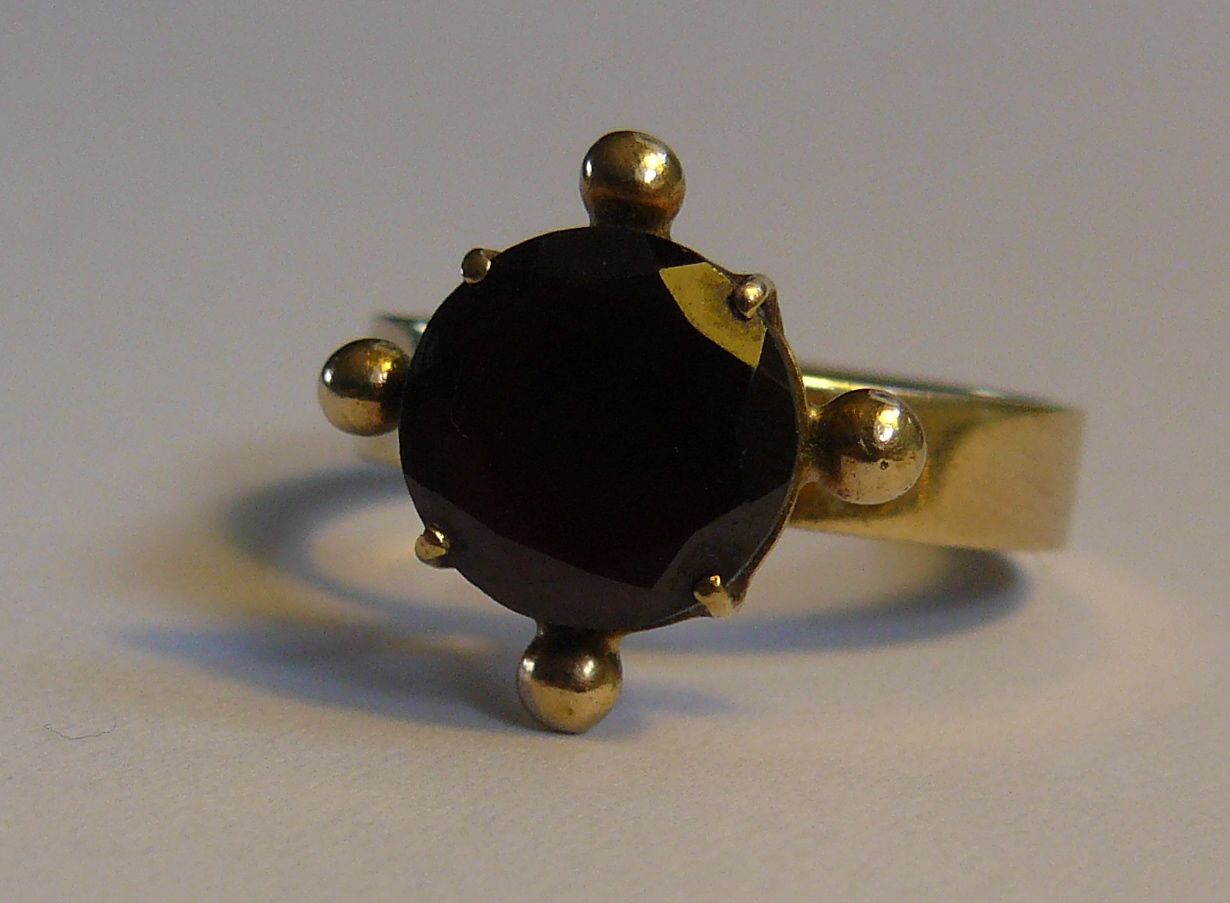
Here’s the $2400 ring that inspired this particular story (I’m going to sell it at half price, if any of you are interested in that kind of thing – same email address as above).
#57: Speed Writing
Want to write a bestselling novel? There are three basic things you need to do:
1. Write a novel.
2. Write a good novel, probably by much editing of #1.
3. Sell a lot of copies of your novel.
(Or alternatively, become a celebrity and ghost-write a novel. But I digress.)
Today’s all about #1, which is surprisingly difficult. Personally, I almost always write extremely fast first drafts (my realist novel was written in three days). I recommend every beginner uses a similarly manic method in order to finish that first book. Later on, you’ll know your own endurance better and can develop your own equally peculiar habits. (It also helps to split it up – I think of each 2000-word chapter as its own short story.) For your first book, the hardest part is physically writing it. So don’t worry; you can make it good LATER.
That means you DON’T re-read from the beginning every morning (you’ll get caught up in either how fantastic you are or how horrific you are, and both will slow down the actual writing), you don’t obsess over individual sentences, and you definitely don’t give the first chapter or first fifty pages to someone else to read and comment on.*
Today I’ll be taking my own medicine and speed-writing a 2000-word chapter in the next two hours. My computer says 11.42. See you at 1.42.
Here’s the notes I’ll be working from (divided into 500-word sections):
***search for Mrs Sweeton [who was recently abducted by the baddie]. They walk the grid, in pairs, in the nearby bushland. Yol and mr Johnson are left behind minding kids. Amy [that’s the hero] is paired with another character, Mrs banks [new character],
who is poking rudely at her mind.
They mentally fight, and go deep enough to satisfy amy that it wasn’t mrs banks who took mrs sweeton.
Is danny [amy’s boyfriend, who just publicly fought with her] planning to propose? What would amy say? Amy’s only just getting the hang of him, and is afraid. Mrs Banks comments on their fight.
——-
Hi again. It’s 1:26 and my chapter reached about 2005 words. I have a wonderful buzz of achievement, and I’ll come back later and probably find one or two good bits that I never planned. That’s the magic of getting words on paper – good stuff is bound to spill out with the bad.
*Partly because it’s just cruel to that person, and partly because your creative and editing selves are located in different parts of the brain, and simply don’t work well together. Write now, edit later. Trust me on this.
S#11: Paper Hat
Last night I took the entertainment section of the paper and made it more entertaining.
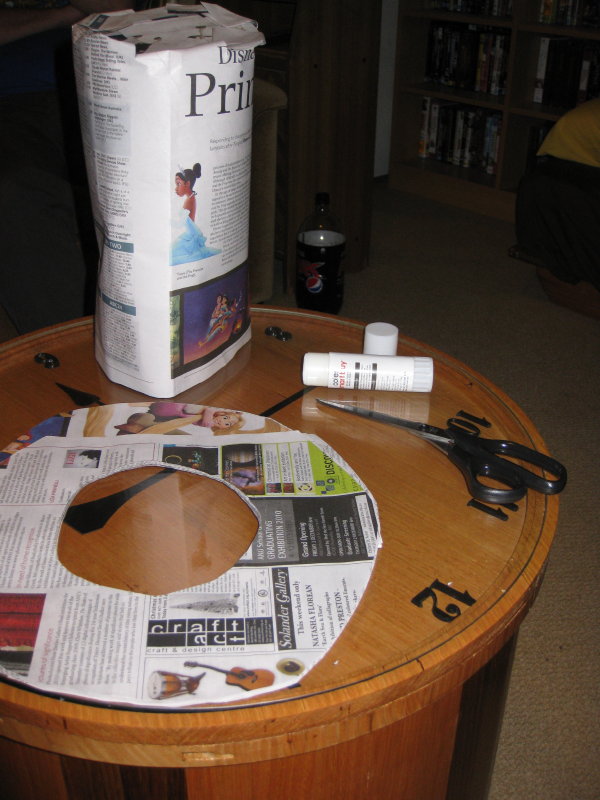
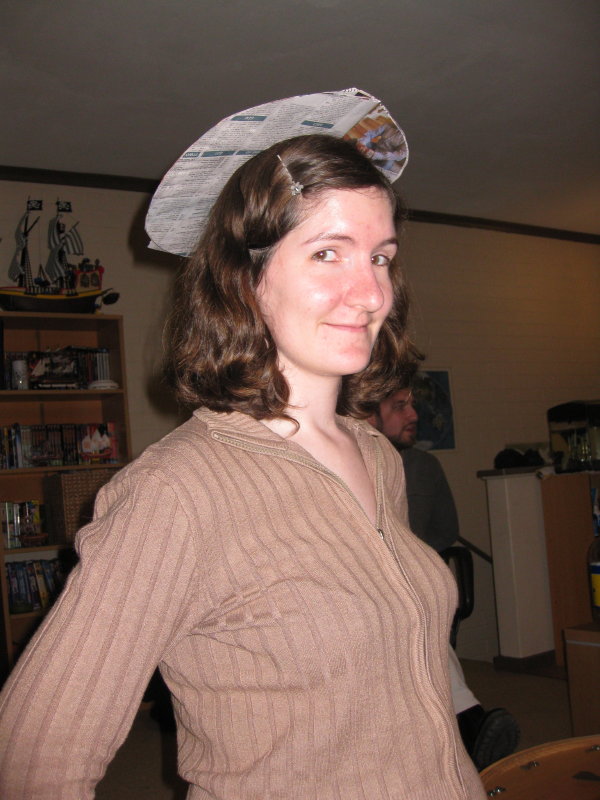
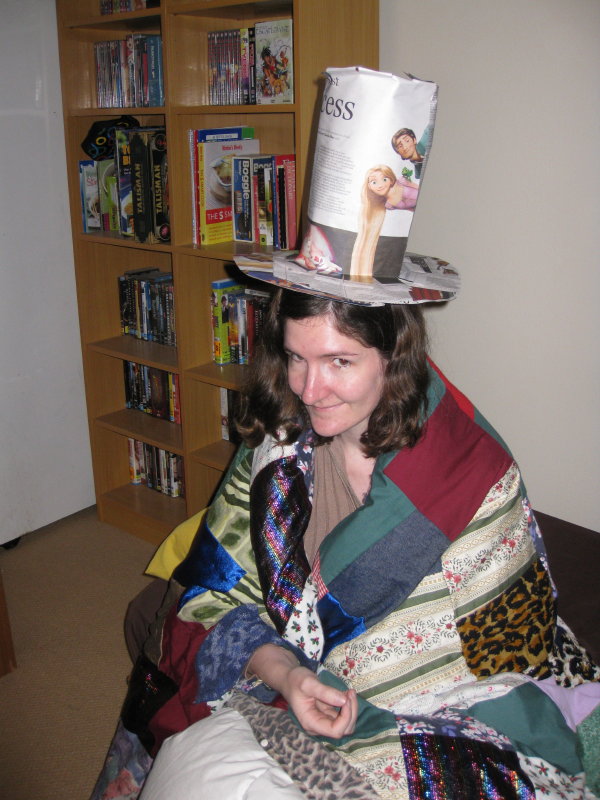
CJ was kind enough to also model for me.

The heading reads “Disney’s Last Princess”. It was quite an interesting article, saying that little girls no longer want to be princesses (unless they’re under five). Apparently “look pretty and find a man” (or its corollary, “look dashing and find a girl”) is no longer considered a universal goal.
I can think of one obvious exception to that rule (in which “look pretty” becomes “have extra-tasty blood”) but let’s ignore that and be encouraged.
To my fellow writers: Please, for the sake of all that is good in the world, write interesting, active protagonists.
Your homework: Read “Sabriel” by Garth Nix (PG/M for gore and violence). In my opinion, it is the best book ever written.
How To Talk English, Like, More Gooder
If you watch TV, you’ll know that people are dumb. As a writer, you don’t want to alienate the slavering masses of humanity, so here’s ten ways to make absolutely sure you come across as a complete idiot in your writing (interspersed with steampunk gadgets).
1. Use “like”, “totally”, and “you know” as much as possible! Also exclamation marks! Exclamation marks are totally awesome and not irritating at all when used frequently!!!!!!!!!!!!!!!!!!!!!!!!! You know what else is GREAT????? CAPITALISING AND ITALICS!! They’re a fantastic blog/online habit that brilliantly and non-annoyingly translates into REAL LIFE!!!!!!!
2. Invent a wacky dialogue (or several) and make sure at least one character talks in a way that makes your readers want to strangle them. Brian Jacques is the master. Observe:
Dotti wiped her lips ruefully on an embroidered napkin. “I bally well wish we could, I’ve never tasted honeyed oatmeal like that in m’life. I say, Rogg, how the dickens d’you make it taste so jolly good, wot?”
Rogg chuckled at Dotti’s momentary lapse from molespeech. “Hurr hurr young miz, oi chops in lot of. . .” [let’s just stop it here, or I’ll bally punch meself, wot wot?”]

3. Correct apostrophes are for pompous know-it-alls. If you want to pretend you’re smarter than, say, your pet fish (and shame on you for such ludicrously high goals), then go ahead! Use apostrophes like this. . .
a) For abbreviation. Eg can’t, isn’t, I’m, they’re = cannot, is not, I am, they are.
b) For possession – but only when it’s the next word or phrase. Eg Sarah’s cat/Sarah’s alluringly plunging neckline/Sarah’s totally, like, awesome grip on the English language. And also, “The cats belong to Sarah” with no apostrophe, since the owner-ownee words aren’t in the right place to need an apostrophe.
If you’re REALLY the kind of fool who thinks editors like consistent punctuation, I bet you’ll also be able to combine plurals and possessives in a way that allegedly makes more sense than just putting apostrophes in where they look pretty. So I guess if you were a real geek you’d put the apostrophe precisely after the owner or owners. Eg The cat’s bowl (one cat) or The cats’ bowl (more than one cat). Also, The women’s club (because “women” already indicates it’s more than one woman).
And I bet you’ll cut out the one optional bit of apostrophes (whether you add an extra ‘s’ or not when the word already ends with ‘s’) by sticking to the rule that always works (leaving off the ‘s’ – because the plural of “Jesus” never has an extra ‘s’ – strange but true; you’re allowed an extra ‘s’ for almost everything else. . . if you want it). So that’d give you disgustingly consistent tripe, like “The princess’ cat” and “Jesus’ disciples”. Or maybe even “The princesses’ cat” if the princesses collectively own a cat.
You’re such a nerd I bet you even know that the only time apostrophes get left out is for the possessive “its” (so people can tell the difference from the abbreviation “it’s” for “it is”) so you’d end up with a sentence like, “It’s such a nice dog even its bark is polite.”
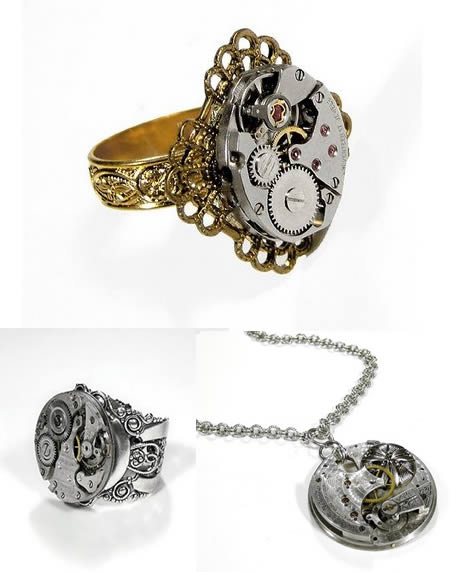
4. Adjectives and adverbs are for winners! More is better!!! You don’t need actual characterisation if you have a handy thesaurus. As you can clearly see below:
Boring old sentence: The Doberman took one look at my mother and growled. Mum’s blue eyes filled with tears. She didn’t even try to shield herself as the dog attacked.
Thrilling drama unfolding: The vicious cruel Doberman took one menacing look at my blue-eyed mother and growled loudly. Mum’s crinkly eyes filled with salty tears. She didn’t even try to shield herself as the mean and underfed dog attacked her quickly.
This lazy descriptive technique is also super great for dialogue. The word “said” is invisible, and you don’t want that!!! Write like THIS:
“Hello,” she extemporised.
“Why hello,” he growled back rapidly.
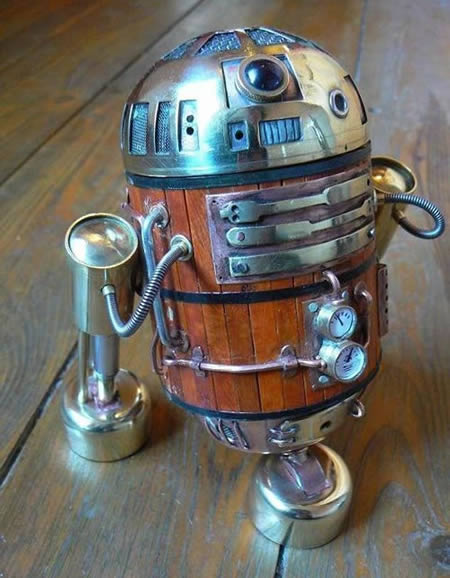
5. Words that sound the same may as well look the same. Right? Right!
Use “there” (“over there”, “There, there, don’t cry”) interchangeably with the possessive “their” (“their dog” “their lack of IQ”) and the abbreviation “They’re” (“They’re kidding about this, right?” = “They are kidding about this, right?”)
Ditto for the possessive “your” (“Your dog is getting mentioned a lot in this blog post”) and the abbreviation “you’re” (“You’re dumber than you look” = “You are dumber than you look.”)

6. It’s totally edgy to mix up past, present, and future tense. Make those verbs add zing to your story. If that’s too hard, just write in future tense or present tense. Readers LOVE that. It might be harder to read, but readers these days need a challenge anyway. (The exception is primary readers – for some reason, present tense doesn’t make them want to throw a book against the wall. For them, stick to future tense. It’s the only one that’ll really build their character.)
Boring old sentence: As I went to the store, I thought about how yesterday I’d had foccacia.
Thrilling drama unfolding: As I go to the store, I thought about how yesterday I will have foccacia.
Don’t you love how trippy that second sentence is? It just makes you want to read it again and again before moving on.

7. Corect Speling is 4 peopl with no imaginashon. Spel chekers are for peopl who r unartistic.
8. It’s totally humble to use a lower-case “i” instead of the standard capital “I”. Your editor will think, “This person will be great to work with” rather than, “This person has never written anything longer than an SMS.”
9. You don’t really need to start sentences with a capital letter. That’s old-fashioned. So are speech marks, like these old fuddy-duddies:
“Do you like my question mark?” said Mrs Jones.
“Sure!” said Mr Jones.
“I’m not sure though,” she said, “about how to break up a sentence in the middle, using commas.”
“Don’t worry,” he said. “Just use two sentences. The main thing to remember is that punctuation belonging to the sentence goes inside the speech marks – just like that exclamation mark I used earlier – and various commas for when the speaker pauses.”
“Do you think giving each new person a fresh line makes dialogue easier to follow?”
“Yes. And it means that not every single line needs a ‘he/she said’ tag.”
Mrs Jones said, “Good point. And I suppose you’d need to capitalise the first letter of dialogue mid-sentence if the dialogue made its own mini-sentence.”
“Sure. If you’re a total know-it-all.”

10. Don’t bother inserting page numbers. If your book gets dropped and the pages are out of order, the story will probably improve. For bonus points, leave your book title out of the header, too. It might just cause your book to get mixed up with a much better book. (Of course, if you also leave your name out of the header, no-one will be able to track you down – but that just adds to the mystery.) Having a header containing your name, book title, and page number is just showing off.
This post was based on Steffmetal.com’s #38: Re-Vocabise. The pictures are from http://oddee.com/item_96830.aspx
PS: CJ has SMSed to say our jewellery evaluation is ready for him to pick up, and thus discover all the details – such as, which items are worth how much (all we know so far is that the total is $11,500). Will the hideous amber necklace be the only item of real value? Will I still be haunting ebay’s jewellery section trolling for buyers in ten years’ time? The full financial details and pictures. . . tomorrow!

 Felicity Banks