S#60: Rise and Shine
Today’s awesomeness is all about changing one’s morning routine.
My normal routine is as follows:
1. Turn off alarm clock. Greet consciousness with a moan of existential despair.
2. Remember the existence of chocolate, and get up. Pat 1-2 cats, kiss 1 husband.
3. Have a glass of water while checking email just in case a publisher got up REALLY early to email me with a three-book deal.
4. Sort through up to twenty utterly uninteresting emails. Blink back tears of career-related despair.
5. Remember I’m not allowed chocolate until after breakfast. Get breakfast.
6. Eat breakfast (and six pills including vitamins B through to D) while posting twittertales (unless it’s something that specifically happens later in the day) and trolling through 15 or so blogs.
7. Give last skerrik of breakfast milk to older cat. Kiss husband goodbye as he goes to work.
8. Reach end of blogs. Check some again to see if they’ve posted something new since I last checked. Refresh email a few times, just in case the publisher has JUST walked into work and rushed straight to their desk to send me a contract. Facepalm with mental-illness-related despair.
9. Remember existence of chocolate. Eat chocolate.
10. Begin writing and/or housework.
Since I’m currently visiting my sister, brother-in-law, and almost-born niece/nephew in Perth, things have changed dramatically.
Which is to say, my husband and cats are not here, and I’m eating a different kind of breakfast.
Of course, when I’m away CJ makes it better by sending me photos like this (from yesterday):
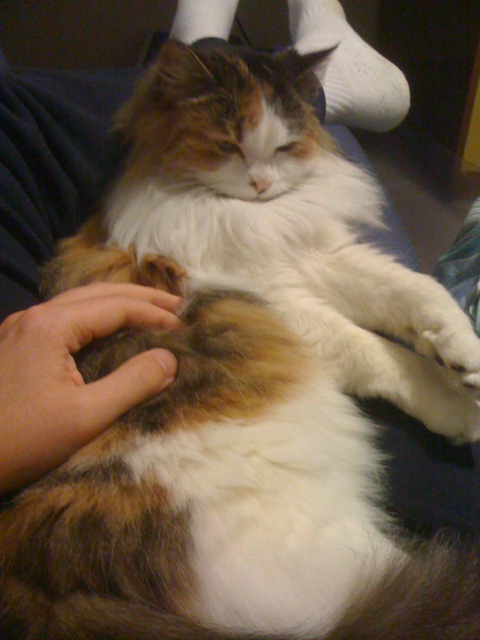
Yep, life sure is different when you’re travelling.
From radioactivebodega.net, something most wonderful:

And a postscript to today’s twitter scene: Nitrogen gas is extremely stable – so much so that an American space program sealed a room and filled it with Nitrogen to protect it against fire. When two staff members went in, they experienced mental retardation (otherwise they’d have realised something was wrong and simply left the room), unconsciousness, and death.
WILL JACK AND NIP SURVIVE????????
Further steampunk data (PG: a bit creepy)
Today’s awesomeness is #118: Clean someone else’s house. I’ve planned for several months to pull (slightly) more than my weight while staying here – since, after all, my sister could pop out a child at almost any moment.
And onto today’s more thrilling tales of wonder (and, it must be mentioned by way of warning, a little horror).
Ice (mainly for preserving food, often insulated with sawdust) was a new and thrilling thing (as I’m sure you can imagine if you’ve ever seen spoiled meat or milk) in the 1840s.
Wigs were pre-Victorian, but I can’t not share this snippet:
“The combination of open flames and combustible materials brought an element of alarm and excitement to every aspect of daily life in the pre-electrical world. Samuel Pepys recorded in his diary how he bent over a candle while working at his desk, and soon afterwards became aware of a horrible, pungent smell, as of burning wool; only then did he realize that his new and very expensive wig was impressively aflame.”
From portcities.org.au, Samuel Pepys:
Electricity was invented a while before it actually became useful. One of the first practical applications was used by Giovanni Aldini to make money. He “devised a stage show in which he applied electricity to animate the bodies of recently executed murderers and the heads of guillotine victims, causing their eyes to open and their mouths to make noiseless shapes.”
Sleep well tonight, kids!
God’s Love Language
Most of you have probably heard of the book “The Five Love Languages”. The theory is that everyone tends toward different ways of both expressing and understanding love. When we’re first in love, we express love in all the ways, but later on we settle into our predominant form of expression – which sometimes means absolutely nothing (or worse) to our partner.
The five love languages are:
1. Quality time.
2. Acts of service (eg doing the dishes when it’s her turn).
3. Touch.
4. Words of affirmation.
5. Gifts.
On a level beyond rationality, I feel rejected by God because I’ve offered him my life in service (as a missionary to Indonesia), and he has said, “Hmm. Nah – I don’t want that, thanks.” But even I can see that he has given me astonishing gifts – living in the Western world in safety, comfort and wealth (not compared to the average Westerner, but SO much more than the average human being). So the obvious thing for me to do is let God love me in the way he chooses – that is his right, after all.
And of course, the gift of Jesus Christ.
I think we go through a lot of pain because of our false expectations – both on other humans, and on God.
And here’s a pretty picture of some kangaroo paw, in memory of the plant (now deceased) that CJ gave me last Christmas.

#116: Visit sundry relations (and, further steampunk tales)
I am in Perth, which is slightly farther from my home than New Zealand. The up side of Perth is that my sister and her husband live here, and my grandpa, and an aunt and uncle who I very rarely see (with the especial feature that my uncle is Indonesian).
On Wednesday night, having discovered that my 90-year old grandfather had never eaten Indian food, my sister and brother-in-law took him out to “Spicy South” in Subiaco. I was lucky enough to be along for the ride.
MmmmMMMMMMmmm
None of us like our food super spicy, but that wasn’t an issue. We had butter chicken, lamb rogan josh, some kind of spinach-and-potato thing, pappadums, and two serves of naan bread (butter, and garlic).
Every bite was infused with spices and creamy deliciousness. Grandpa loved it. I worked out by a long process of elimination that the ultimate mouthful consisted of butter naan with butter chicken.
During the dinner, Grandpa mentioned he was seeing the aforementioned aunt and uncle for lunch the next day, and I invited myself along. We went to Jetty’s buffet restaurant in Hillary’s. Jetty’s costs rather more than I’m used to – but then, I’m not used to filling up with fresh prawns, either (there were about thirty dishes from lasagna to mussels – not counting sauces or desserts). Hillary’s is a very popular tourist trap with a man-made harbour, a small amusement park, extraordinarily tacky and overpriced shops, and large boats for sale.


Hillary’s also has a cold rock ice cream shop – which, sadly, we were too stuffed to visit on this occasion.
And we arrive neatly back at Bill Bryson’s history book, “At Home.”
“One early type of shower was so ferocious that users had to don protective headgear before stepping in lest they be beaten senseless by their own plumbing.”
Trust the Victorians to make a shower dangerous (baths sometimes blew up, but that’s another story).
1851 was the year of the Great Exhibition, which any Victorian student knows all about. It took place in the astonishing Crystal Palace (the most original and stunning building of the age – designed by a gardener), and was a roaring success. It was all about the rise of amazing new technologies.
“Almost 100,000 objects were on display, spread among some 14,000 exhibits. Among the novelties were a knife with 1,851 blades, furniture carved from furniture-sized blocks of coal (for no reason other than to show it could be done), a four-sided piano for homey quartets, a bed that became a life-raft and another that automatically tipped its startled occupant into a freshly drawn bath, flying contraptions of every type (except working), instruments for bleeding, the world’s largest mirror, an enormous lump of guano from Peru, the famous Hope and Koh-i-Noor diamonds, a model of a proposed suspension bridge linking Britain with France. . .”
You can see why steampunk holds such fascination. The simple question, “But what if it all actually worked?” is enough to launch a thousand novels.
More tomorrow!
A steampunk romance – and, windchimes
I’m reading Bill Bryson’s “At Home” which is all about how history made our homes the way they are (eg germs, telephones and electric lights all started drastically changing homes in the 1880s). Obviously, the Victorian bits are of particular interest. (And I can smugly note that he quotes Liza Picard’s “Victorian London” repeatedly – a book I’ve read from cover to cover.)
Here is, perhaps, my favourite part:
“Jane Webb [wrote] a potboiler in three volumes called The Mummy! A Tale of the Twenty-second Century, which she published anonymously in 1827, when she was just twenty years old. Her description of a steam lawnmower so excited (seriously) the gardening writer John Claudius Loudon that he sought her out for friendship, thinking she was a man. Loudon was even more excited when he discovered she was a woman and rather swiftly proposed marriage, even though he was at that point exactly twice her age.
Jane accepted. . .”
The two became incredibly famous horticulturalists, each in their own right. Jane’s book, Gardening for Ladies, gave women social permission to garden for the first time.
There is a postscript to this tale, which just adds to the wonder of it all.
Lawnmowers were invented several decades later, without much immediate success. At one stage, things got AWESOME:
“One enterprising manufacturer, the Leyland Steam Power Company, took up the idea first suggested by Jane Loudon in 1827 and built a steam-powered mower, but this proved so unwieldy and massive – it weighed over one and a half tons – that it was only ever barely under control and in constant danger of ploughing through fences and hedges.”
*Pause while Louise swoons delicately at the history of a genuine steam-powered mechanical killer monster*
Today’s awesomeness is Steff Metal’s # 37: Windchimes.
CJ and I have an especially awesome set of windchimes with a particularly piercing tone. We use them to call one another from opposite ends of the house.

Rar!
I’ll be sharing more highlights from the Victorian era via Bill Bryson over the next few days.
S#62: Find a Totem
I’ve been thinking about this awesomeness challenge for quite some time, and then I realised – I’m wearing one.
My interpretation of “totem” is a strong symbol in physical form – in this case, one that can be worn.
On the ring finger of my left hand is a white-gold band that symbolises my commitment to devote my life to a certain CJ for as long as we’re both alive. We’ve been married just over 21 months now, longer than two of my friend’s marriages (one of the women told me, “The first month was nice.”)
I still like CJ. He still likes me. We’ve worked through a couple of issues and (more or less) sorted osuyut how we run a house together, and how we relate to the members of our two families. Our house is the most peaceful place I know.
In my (beginning-oriented) experience, marriage really is all it’s cracked up to be – companionship, warmth, laughter, trust, big shared dreams of the future, and some pain.
I love the symbol of the wedding ring. The plain circle encompasses forever and simplicity (even, perhaps, boredom), and half the time I don’t even realise it’s there. But when I’m stark naked – I’m still wearing one thing. As I visit my 8.5-months pregnant sister, I still have a physical reminder of where my life belongs – with CJ.
I miss you CJ. Here’s a present: http://thefedoralounge.com/
And for everyone else, some steampunk pictures for your Wednesday morning (from our friends at geekologie.com again – and yes, it works):
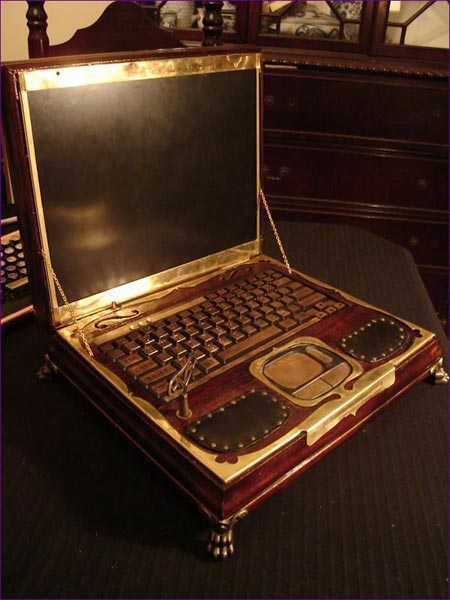
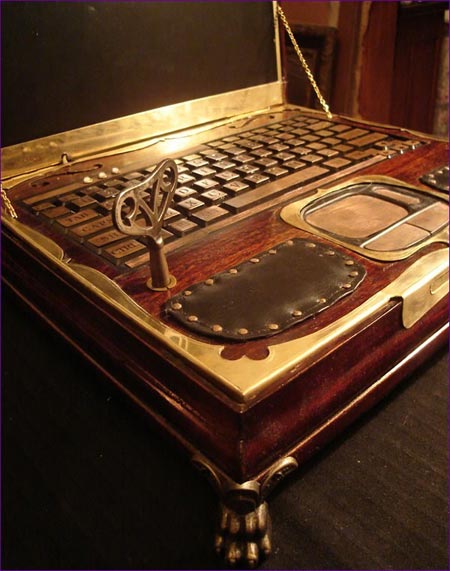
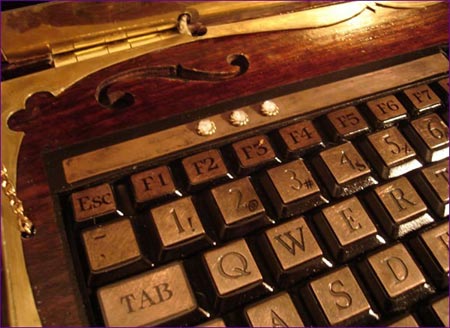
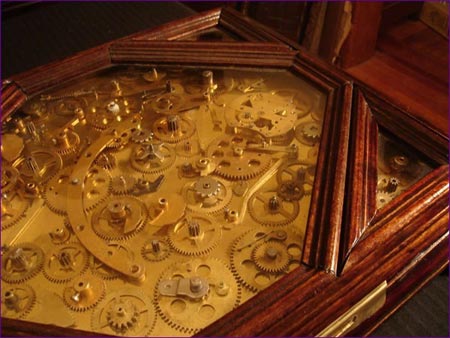
Oh, squee.
#207: Supermarket Treasure Hunt
The other day, I did something I’ve always wanted to do: a sensory treasure hunt. This is a game I invented, that you play with a friend (or a lot of friends) in a large store.
Each team/individual finds five items. Each item is distinct in a way that links to one of the five senses – sight, taste, touch, hearing or smell. When you have your items, you meet the others and decie who wins (or, for bonus points, you buy all the items, swap them around, and have to invent a way to eat and/or use them in combination).
I found:
Sight – eggplant (those things are just weird)
Smell – whiteout
Taste – liquorice
Touch – a coconut
Sound – a pack of dried noodles in a cup.
My friend found:
Sight – kupie doll mayonnaise
Smell – soap
Then she got distracted and bought a pink grapefruit bacardi breezer. And a pack of passionfruit ones. Then she saw a rope tower playground and. . . well, you know the rest.
Publisher K just requested the rest of my realist novel (based on the beginning, which I sent them about a month ago). Cool. The email I just received wasn’t from my contact, which is interesting – although my connection to the contact was extremely tenuous (I saw her speak, but didn’t get to talk to her – I addressed my query letter and sample to her as per the website’s instructions).
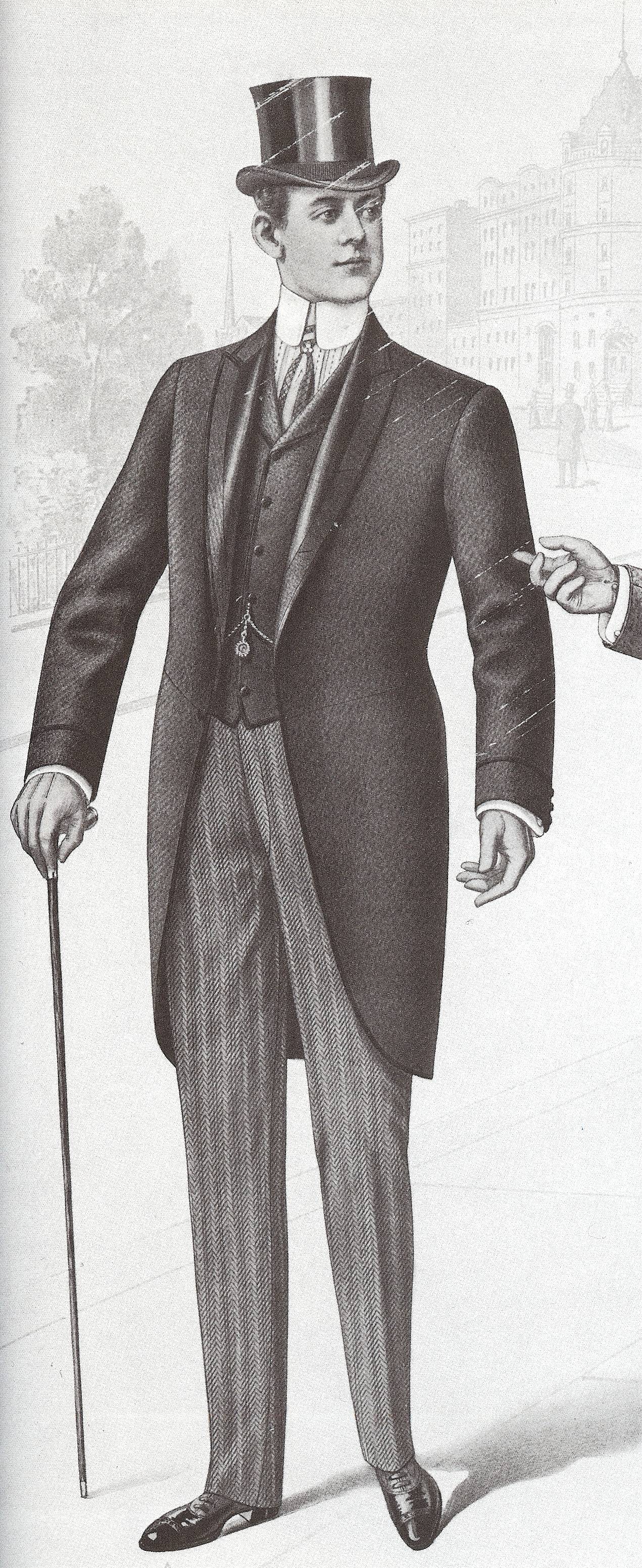
And speaking of cool, here’s a pic of morning dress from 1901 (thank you Nick and wikimedia).
#206: Be Immature
Yes, yes I know: That title sums up so much of this blog.
However.
CJ and I and my friend and her partner walked to the shops one night and my friend decided that what my blog needed was to have us climb a ten foot high rope tower at a children’s playground. Despite wearing my usual ankle-length skirt and no shoes, I agreed. Her partner filmed as CJ watched – we didn’t actually know we were being filmed. The Brennan that we mention is five years old.
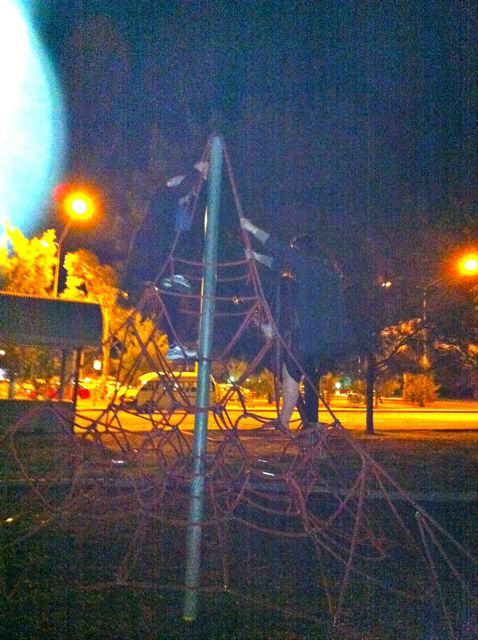
Yep, that’s attractive.
The boys then showed us how it was done (ie, with shoes and without squealing).
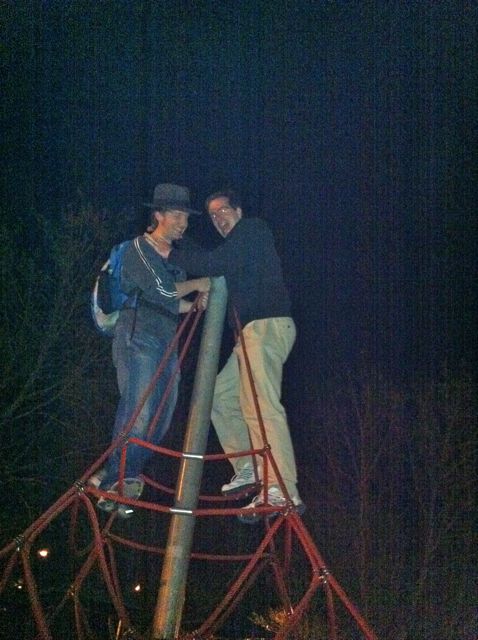
Curse your sudden but inevitable betrayal.
And, some steampunk pics:


How to Write Steampunk
So, you wanna write a steampunk tale? I recommend you start by researching Victorian times – my favourite book is “Victorian London” by Liza Picard. Her section on bathing is hilarious.
You can also go here, for some of the most beloved bits and bobs of steampunk compositions: http://www.writing.com/main/view_item/item_id/1249132-SteamPunk-A-List-of-Themes
You can read Richard Harland’s “Worldshaker”, “Girl Genius” online comics, or anything by Philip Reeve (keeping in mind that “Larklight” is G-rated and hilarious, but his Mortal Engines series is MA). The genre is flexible enough that the Girl Genius creators and Philip Reeve both say they’re not steampunk. (Whatever. . .)
Here are some examples of people who dressed a little steampunk by accident (one is from a wedding, and the other a pirate ball). Note the vests and/or cravat.


Today’s awesomeness is S#47: Participate in Operation Beautiful. You can find details at operationbeautiful.com. I posted these notes on my mum’s bathroom mirror:
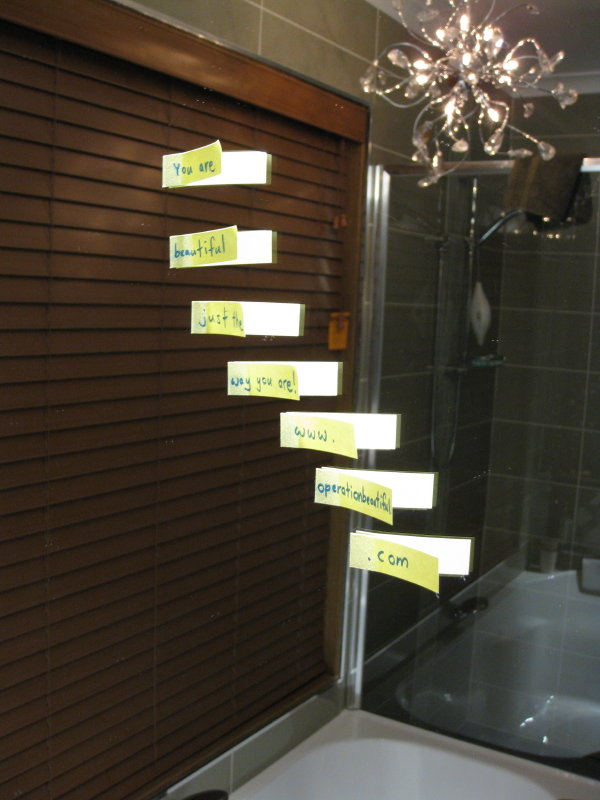
This time it’s super easy to play along at home. (Although I don’t recommend gentlemen readers post anything in ladies’ bathrooms.)
Three Things You Need to Begin a Novel
Some people believe you should write an outline of every scene before you begin. Others believe you should flow with the tale as it happens. I think that plot is important enough to deserve conscious thought – but I also believe that almost anything can be fixed by editing. And if you’re writing your first novel (or any novel), too much thought will kill you*.
There are only three decisions you actually need to make before you start.
1. If you’re writing for children or young adults, your main character needs to be a couple of years older than your target audience – and they need to stay roughly that age throughout the book. So your ten-year old won’t be driving a car, and your sixteen-year old won’t be getting married. Not if you want to one day sell the book. You also need to keep your themes relevent to the age group – so redemption isn’t a good theme for a ten-year old, and dealing with old age isn’t a go either.
2. If you’re writing for children or young adults, your length is relatively restricted – Ages 9-14 tend to read books around 30,000 words, and young adults read books around 60,000 words. More importantly, those are the lengths publishers buy. Give or take 5000 words, so don’t worry TOO much. Here’s a great post on word length by genre (including YA and children): http://theswivet.blogspot.com/2008/03/on-word-counts-and-novel-length.html
3. You’ll need to choose if you’re writing in first person (“I saw the duck. . .”) or third person (“She saw the duck. . .”). You probably do it automatically one way or the other. First person is much better for getting into the main character’s voice and head (or the narrator’s head, if he/she is a different person**), and for preserving a mystery (if the narrator doesn’t know something, neither does the reader – but it’s cheating to make the narrator not tell the reader what they know). Third person is less personal, but more flexible.
And that’s all you really need! Everything else can be fixed in editing.
But it’s useful to keep basic story structure in mind.
Basic Story Structure: An interesting character has a serious problem/goal and attempts to overcome it. It gets worse despite their efforts, and finally there is a crucial action-packed moment in the book when all is decided (for better or worse).
Fantasy example: An interesting character (Harry Potter, an orphan with magic powers) has a serious problem (defeating Voldemort, who killed his parents) and after many fights and more deaths and pain. . . he does.
Romance example: An interesting character (a charmingly quirky Sandra Bullock or Meg Ryan or similar) is lonely, and meets a guy (probably Hugh Grant). Her serious goal is to get the guy (it’s serious because it changes their lives). After feeling her loneliness more keenly than ever and having at least one major fight or embarrassment, the pair get together.
In order to get words on paper (that’s the hard part about first drafts), I recommend you treat each chapter as a short story that is relevant to the main plot (ditto your sub-plots, but you can always put them in later).
For example, if your main goal is to destroy an evil ring, some of your chapters could involve walking across a field and meeting more characters, running away from evil wraiths that want the ring, pausing to get advice from Cate Blanchett, and fighting a Balrog while taking a short cut. Each one of these has its own tension (will the farmer/wraiths/Balrog get them? Is the elf also evil/turned evil because of the ring?) and resolution (one step closer to the goal – but the main characters have a more complex or vulnerable situation to go on with, eg their powerful guide is dead or we have a greater understanding of the ring’s evil).
Here’s a funnier version of how to write a novel:
http://stiryourtea.blogspot.com/2010/09/how-to-write-novel.html
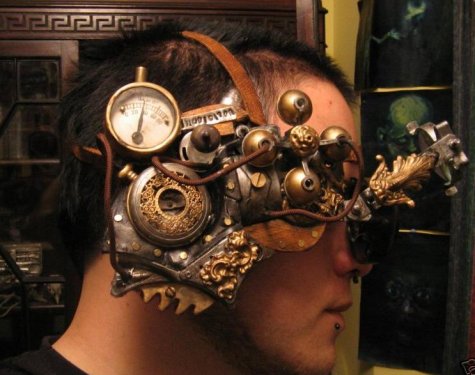
And since it’s Steampunk Earth Day later this month, here’s a pretty steampunk picture for you (from friedpost.com):
*Er. . . your novel. Whatever.
**Not recommended for your first book. Why makes things harder for yourself? Don’t challenge the establishment until AFTER you’ve proved you can write within the rules (say, after you’ve sold your first book to a major publisher).

 Felicity Banks
