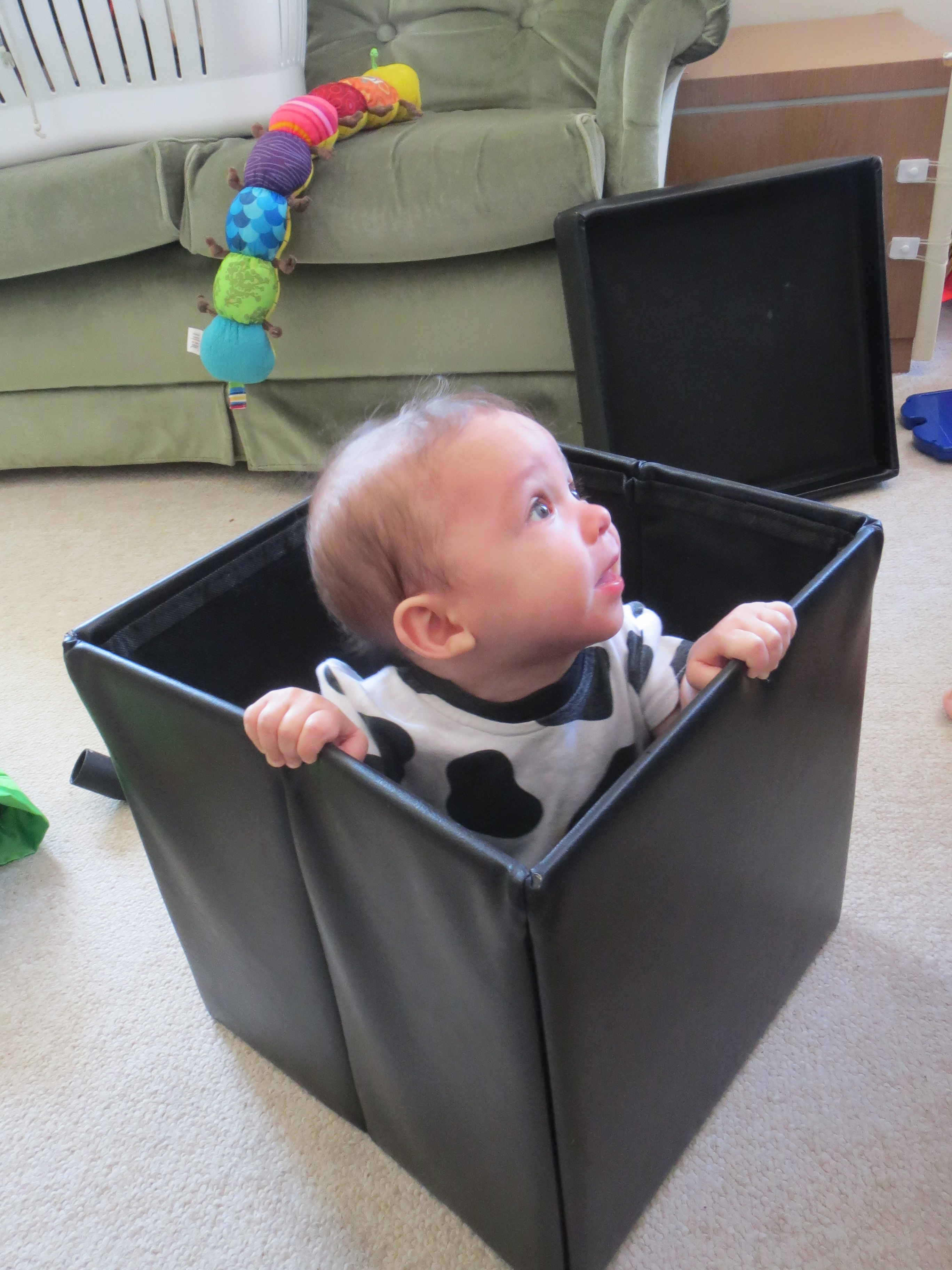
Exciting
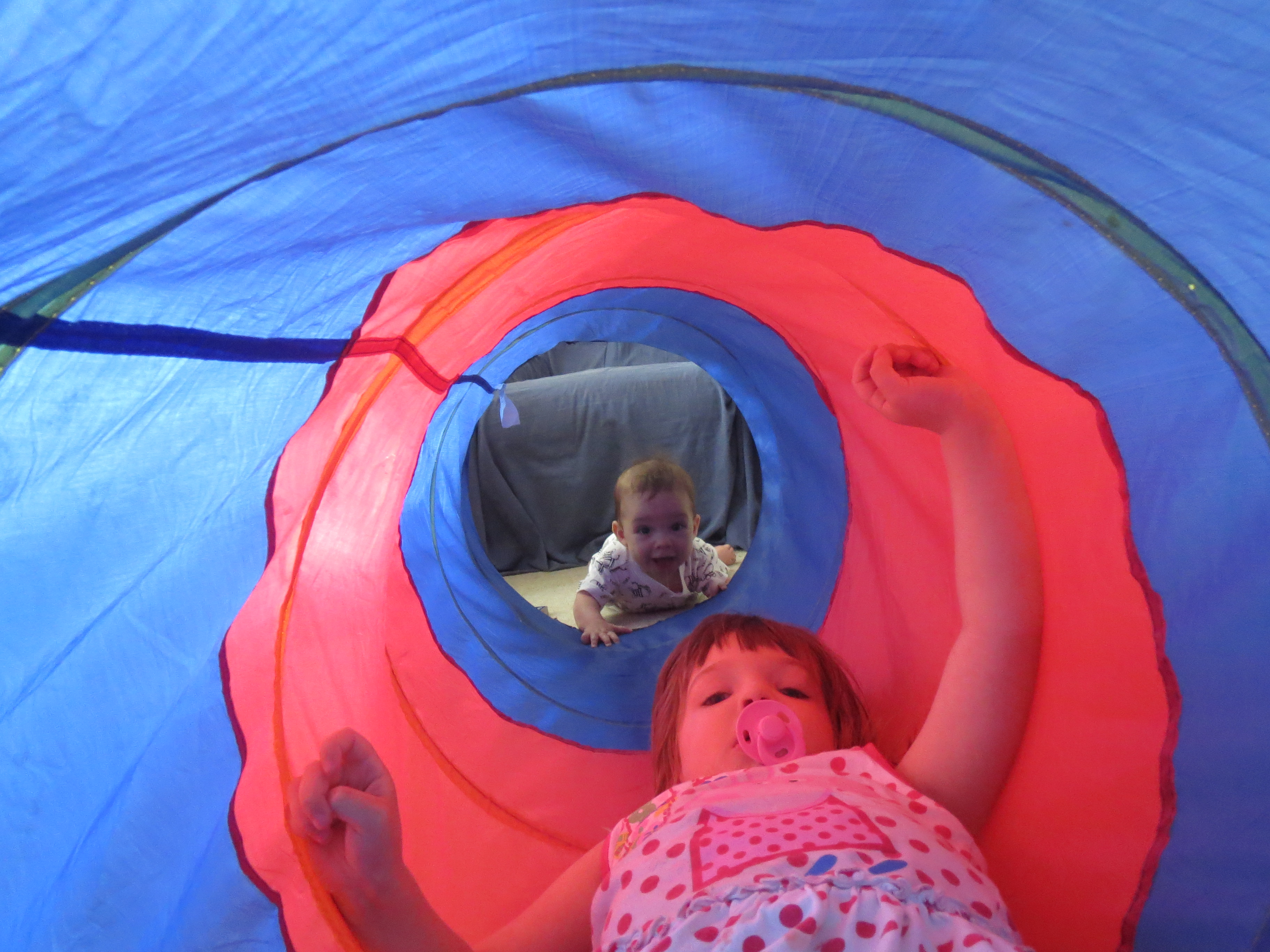
Crawling is definitely the skill that TJ is deliberately working on at the moment. (This pic looks weird because it was taken in a mirror so I didn’t need to get up.)

Open Letter to Immigration Minister Peter Dutton
Felicity Banks
Dear Mr Peter Dutton, Minister for Immigration and Border Protection:
I was a teenager when I first realised there was something wrong with Australia’s treatment of asylum seekers. A case was being discussed on the radio of a gay man in danger due to his homosexuality. When I heard the story, he had already been returned to his country of origin on the basis that he was faking homosexuality in order to gain entry to Australia – despite the fact that he was in a relationship with another asylum seeker at the time.
I’m in my thirties now with two children of my own that I would protect with my life – but I still fear for the children and adults who have come to Australia for help only to face an immigration system that is designed to send away as many asylum seekers as possible. It seems asylum seekers are presumed to be guilty of “faking it” – but statistics indicate the majority are genuine refugees1.
I know that as a police officer you have seen the best and the worst of humanity, and have protected and defended the most vulnerable people in our community. You have also seen first-hand that justice requires an open flow of information.
Thanks to the recent Migration Bill, your job includes the power to hide Australia’s legal processes regarding our asylum seekers. You even have the power to knowingly send genuine refugees back to likely torture and death without ever letting the Australian media or the UN find out2.
I do not believe that is the kind of person you are.
There are three things I think you and I both believe in:
1. Transparency.
The Australian government must be 100% transparent about exactly what is happening to asylum seekers who attempt to find a home in Australia (except of course for hiding names and faces of asylum seekers who feel they or their loved ones may be in danger if revealed).
2. Freedom.
No innocent person (particularly a child) should be imprisoned.
a. We urgently need to get kids (and adults) out of detention and into Australia (not Papua New Guinea or Nauru, where they are in immediate physical danger from locals when released into the community3). The Uniting Church has volunteered to find safe homes for all the unaccompanied minors, and there are many other organisations falling over themselves to volunteer to help more people – at zero cost to the taxpayer4.
If sorting out aid organisations is too complex, ask the Asylum Seeker Resource Centre to do it for you.
b. Our legal process is appallingly slow5 and the lack of a firm release date from detention is causing enormous harm6. It is not right to treat asylum seekers as badly as we do7, even in an effort to discourage people smuggling. The “stop the boats” policy looks good on paper, but only because the horrors are happening out of sight8.Our legal process should be weighted accordingly. The purpose of law is to protect the vulnerable – punishing the guilty is a secondary concern.
The fast-track-style legal process would be a good thing if it was used to get genuine refugees out of detention fast. It is not a good thing when it results in genuine refugees getting deported due to a lack of adequate examination of their case.
The needs of the incarcerated children are paramount, and their innocence is clear. But the majority of adults in detention don’t deserve to be there either1.
3. Humanity.
Please formally reaffirm Australia’s commitment to international human rights law, including the Refugee Convention that we helped to write9. Until now, we had a good human rights record. You have the power to make us a human rights leader once again.
Yours Sincerely,
Felicity Banks
Please note this is an open letter that, excluding my contact details, will be shared online.
In 2009/2010, 80% of boat arrivals were deemed to be genuine refugees, and only 3% of asylum seekers arrived by boat (ie “boat people” are an incredibly minor part of the issue, and are usually genuine refugees).
Former PM Malcolm Fraser is appalled at the recent Migration Bill and the powers it bestows upon the Immigration Minister (including secrecy and the ability to knowingly return people to a place where they are likely to be tortured).
Men and women granted refugee status and released into Nauru face persecution and threats, including police harassment when they ask for help. Women are afraid of being attacked and raped in their camps (both in and out of detention, but out of detention is more dangerous).
Unaccompanied children granted refugee status and released into Nauru face persecution from locals including beatings and threats.
4. http://www.mdainc.org.au/sites/default/files/Assessing-the-economic-contribution-of-refugees-in-Australia-Final.pdfhttp://wbttaus.org/better-ways/
Although studies vary considerably in their estimates, all agree that in the long term refugees settled within Australia benefit the national economy.
http://wbttaus.org/better-ways/
Suggestions of better ways to process asylum seekers (especially children).
At the time of writing (30 December 2014) 603 children are in immigration detention in Australia, 186 on Nauru, and the average time spent in detention is 413 days.
6. https://www.thesaturdaypaper.com.au/news/politics/2014/12/13/taliban-targets-afghan-family-scott-morrison-stalls/14183892001364#.VKF0pfCcC (trigger warning)
A case study of a girl given asylum in Australia after her father refused to allow her to become the concubine of a Taliban chief. While she waited three years for paperwork to process so her family could also be given asylum, her father was killed. Her brother is missing and probably also dead.
An asylum seeker mother details the horrific and unsanitary conditions in Nauru, including a lack of adequate drinking water.
A summary of 2014 for asylum seekers in Australia: “Under Australia’s watchful eye, asylum seekers face an environment of intimidation, violence, self-harm and procedural uncertainty. “
http://theconversation.com/asylum-seeker-code-is-a-rhetorical-tool-with-severe-consequences-35083
The bizarre rules for refugee visas (eg not being allowed to swear in public or they may have their visas revoked) are designed to dehumanise legitimate immigrants and promote racism in the community.
The “stop the boats” policy is putting more people in danger (the most vulnerable are ignored because they are forced to go and risk death elsewhere).
According to the UN, the reason there are less people arriving in Australia by boat is because the “stop the boats” policy is causing more to die at sea. A more effective method of reducing people smuggling and needless death would be to create better legal channels where possible (but for many of the most desperate asylum seekers, there IS no legal path to safety because their own government wants them dead).
Sri Lankan asylum seekers returned to Sri Lanka were immediately (and predictably) arrested.
“Less than two years ago, the Australian government’s own statistics showed that about 90% of boat arrivals, including those from Sri Lanka, were judged to be in need of protection. Yet suddenly, under a secret process on a boat on the high seas, with no legal oversight, only one of 38 is judged to need protection.”
http://www.smh.com.au/national/asylum-seekers-return-to-living-hell-20120723-22kq6.html
Tamil asylum seekers deported from Australia allege torture (sometimes to death) and imprisonment without trial. Their allegations fit into human rights abuses already documented against Tamil people in Sri Lanka.
Australia is breaking international human rights law, and is therefore condemned by the UN.
http://www.theage.com.au/comment/australias-position-on-refugees-is-despicable-20141213-124abc.html
Australia is a safe, wealthy country that is not pulling its weight in terms of international responsibility to the poor, desperate, and endangered.

Seven Months
Once again, TJ has chosen a lunaversary to leap forwards in ability. Today he made kissing noises for the first time (very funny!) and when I tried rolling a ball to him, he was catching it!


His crawling is progressing beautifully (particularly considering he rarely lasts beyond five minutes of practice because it’s so frustrating for him). I’m sure he’s taken his first crawling “steps” (shifting knees/hands forwards. . . on entirely separate occasions). He often pushes himself backwards by accident, and other times he actually gets forwards – by getting up on hands and knees, rocking back and forth hopefully, and then face-planting (you gain a bit of ground each time – play along at home!)
He also does something Louisette never did – he puts his head down and uses it as a pivot. And he deliberately uses rolling to get around – it’s more efficient than moving forwards.