2026 Book Reviews, Part 1
At the end of last year, a few bookish folk I follow on social media were getting accused of exaggerating the number of books they’d read in 2025. This made me both defensive and competitive.
So, I started writing down all the books I read. This year has been an extremely book-oriented time as I’ve mostly been in that sickness space where I spend lots of time in bed but can still read. Plus I’ve definitely read more than usual, because competitive.
Today is just over one-quarter of the way through the year, and I’ve read seventy-three books so far (including some novellas). I tend to like young adult fantasy novels—nothing with too complex a plot or too many characters, and I enjoy the themes of growing up and finding one’s place in the world. I don’t mind a mild romance but I get annoyed when it takes up too much space in the book or is too obsessive. Sure, I like a romance between rival cultures that makes a bridge between them. But not when falling in love is some amazing fated thing that’s too powerful to resist and that fully defines a person. I also get annoyed when the romantic couple has no other friends or interests, or when everyone around them goes on and on about their romance like it’s something super amazing and world-shattering. It’s just falling in love! It DOES happen every day! Get over it! And I want relationships to be healthy, with a power balance (as much as possible) and I want the relationship to make the pair better people. And the attraction must be more than physical or it’s very boring indeed.
Anyway, here are the books I’ve read this year (plus comments on the author’s other books), arranged alphabetically by author.
Allain, Suzanne: Mr Malcolm’s List. If you wish Austen had written more books, this should suit you. It’s certainly not Austen, but the comedy of manners is there. And a romance, of course. Unusually for me, there’s no magic.
Cho, Zen: Order of the Pure Moon Reflected in Water. Zen Cho is an incredible author. I adore her Sorcerer to the Crown series (which has the most delightfully ambitious and hard-hearted heroine). She’s a Malaysian American, and it shows in her books. No one else could have written such wonderfully unique tales. (Black Water Sister is intense and I’m not sure I dare to reread it.) She’s also very funny. Order of the Pure Moon Reflected in Water is about a nun whose tokong (nunnery equivalent) was burned down, and she announces early on that she is going to join a group of bandits. She is determined, naive, and fierce. I particularly enjoy Zen Cho as there’s usually some Malay sprinkled into the story, and I often recognise some of it because I speak Indonesian. I believe she has other books that may not contain magic, and she’s such a brilliant writer I will eventually read them too (because I read so much, I need to re-read a lot or it’s a very expensive habit).
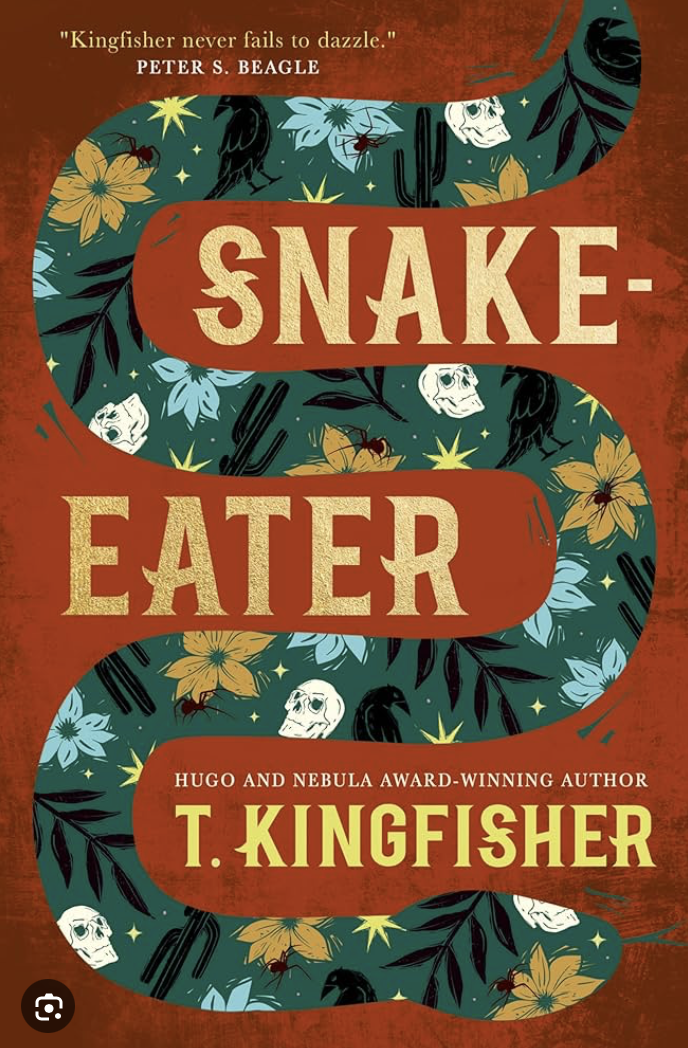
Kingfisher, T: She also writes as Ursula Vernon, when she writes for kids. (I tried a Vernon book once and hated it, which is hilarious since I’m obsessed with Kingfisher ever since reading A Wizard’s Guide to Defensive Baking). Kingfisher is an extremely interesting author. She writes cozy horror. It’s really really cozy (she usually has several genuinely lovely, kind, brave, intelligent characters in each book) and it’s really really horror (just… believe me on this. The lady is SICK). This year she had two brand new books for me to devour: the first was Snake-Eater, about a woman with severe social anxiety who leaves her awful husband with $27 and a vague plan of staying with her aunt who she hasn’t seen in years… and then falls afoul of some local spirits. I gobbled it down like therapeutic chocolate. The heroine was clearly Autistic coded (so much so that I wonder if Kingfisher is an undiagnosed Autistic person) and it was wonderful to see her grow braver and make real friends (super weird ones aka the best kind). The second book was Wolf Worm and I plan to never, ever read it again. Look, there’s a lot of seriously gross and invasive body horror in these books. But this one involved parasitic bugs—those ones that burrow into living hosts and lay eggs in them that then hatch and eat their way out—and that is too much for me. Good job, Kingfisher. your characters are so lovely that it takes a lot to pry me away from them, but you did it. And I absolutely know you’d be proud of yourself for that, too. Kingfisher is probably an author I’d love to meet, if I was confident and debonair and she wasn’t quite so popular.
Kwan, Kevin: Crazy Rich Asians. Have you seen the movie? It’s great. It’s definitely linked to the books… the plot is barely changed, in some ways. But the tone is completely different. The books are satire. There’s loads of them, and some really funny plotlines. But on this particular re-read I just didn’t want to hang out with all those awful rich people, even to laugh at them. (The central couple is lovely, as are some others.) But I’d still recommend these books. Again, there’s no magic.
Lancaster, A J: Stariel series (five books), starting with The Lord of Stariel. This is a solid fantasy series with a practical-minded heroine and a central romance that is sweet and healthy. A lot of it is concerned with family problems (with magical and/or very dangerous elements) and with trying to negotiate between the human world and the fairy world. I adore books in which people try to bridge cultural divides. In fact I can’t reread most of the “Temeraire” series by Naomi Novik because the British are so terrible at dealing with other cultures. In the books, I mean, not just in the historical period it’s based on. (Ooh, I haven’t read any Naomi Novik this year! I shall have to rectify that, stat!)
Lawson, Jenny: Broken. This is the only non-fiction book on this list. You may know Jenny Lawson as “The Bloggess” and/or the author of Let’s Pretend this Never Happened, which is an extremely funny book; her first. She is extremely funny in this book too, but I mostly noticed how heartrending it was (in bits and pieces and small places). I can see why mentally ill people fall over themselves to see her, as she is so brilliant and so warm and kind. She is very mentally ill herself, and I guess this year it was too much for me due to my own mental state. I remember racing to finish it and then to read something else to get it out of my head. Her first book is even funnier and easier to read as it’s more about her childhood which, although upsetting, is also extra funny (in part because I do NOT possess the unique trauma of having an enthusiastic taxidermist father, so those stories don’t cut as deep). I generally avoid mental illness in books as it triggers my own, although there are some exceptions (like Kingfisher, and the Arcadia Project trilogy by Mishell Baker).
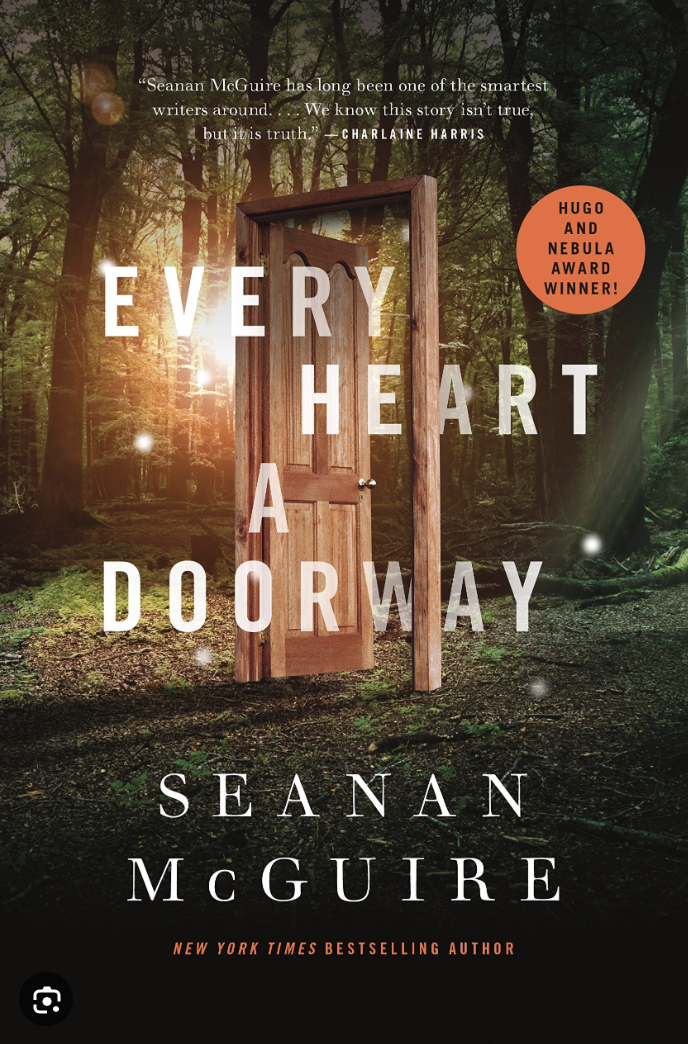
Macguire, Seanan: This author can’t write happy. She just can’t. Bittersweet? Melancholy? Beautiful? Oh yes. I’ve read several of her books but my favourite is the Wayward Children series (starting with Every Heart a Doorway) which is all about children (usually now teens) who found a door into another world… a world where they FIT… and then for one reason or another they stumbled back into our world. Some of these other worlds are made of lollies. Some are horror movies made real. Some are kind, or cruel, or both. The wayward teens tend to accidentally-on-purpose get involved in quests. They are, mostly, heroes. There are now eleven books in the series, all of which I reread this year, and I’ve already read the most recent one twice.
Nix, Garth: The Old Kingdom series, which sort of begins with Sabriel but I now read them in in-world chronological order and thus started with Clariel (I think it’s better to start with Sabriel on your first reading; it was originally a trilogy). There are six books in all, plus a short story The Creature in the Case which falls between Abhorsen and Goldenhand and is well worth reading every time. Goldenhand is now the final book and I genuinely think it might be the best. Which, believe me, is saying a LOT. This series is incredible. Sabriel starts off in an all-girls’ school set in a world similar to our own world in the 1920s or so. But across the Wall is the Old Kingdom and her birthright—a land of limited technology and way too much necromancy. Sabriel’s father is the Abhorsen, who keeps the dead down. Sabriel is his heir. When something mysterious (possibly death) happens to her father, Sabriel sets out into the kingdom she barely knows to find out what happened to him… knowing it might be her duty to kill him, if he has somehow been turned into a monster.
Riordan, Rick: My daughter is seriously obsessed with these, so it’s high time I read them. I’ve read the original five (starting with Percy Jackson and the Lightning Thief); the Ashes of Olympus five; the Trials of Apollo five; the Chalice of the Gods and Wrath of the Triple Goddess; and the Nico di Angelo adventures Sun and Star and Court of the Dead. My favourites were The Trials of Apollo because of the character growth (which is even better in Court of the Dead); Wrath of the Triple Goddess because of the animals; and Court of the Dead for attempts at cross-cultural communication again. Riordan’s books are super formulaic power fantasies…. but they’re also very funny and deliberately absurd. They’re ideal reading for about age 10 but are perfectly safe for younger kids. Even the god of wine doesn’t drink any actual wine and although there’s a lot of monster-killing the monsters will eventually recover, so the stakes appear high but nothing truly bad will ever happen (although sometimes a character is killed, even quite important ones). Perhaps Riordan’s real genius is in making various ancient gods G-rated. They’re also queer friendly (increasingly so).
Springer, Nancy: I read the tenth Enola Holmes book this year. They’re all fun, and the movies are great too. Enola is Sherlock Holmes’s much younger sister. She was raised by their very eccentric mother, who disappeared on Enola’s fourteenth birthday. That caused the older brothers to check in on her for the first time in many years, and decide she needed to be sent to finishing school at once. She promptly escapes (in disguise, no less) but her natural curiosity leads her to start solving mysteries… all while evading her brothers. Like Riordan, Springer manages to make Victorian London remarkably G-rated despite the peril.
Thomas, Aiden: Lost in the Never Woods. This book I hated, which was surprising as I loved Cemetary Boys (an LGBTQIA+-friendly, women-friendly story about a magical version of Latinx culture in the USA). Lost in the Never Woods is a continuation of the Peter Pan story. Wendy is grown up and thoroughly traumatised by the disappearance of her two younger brothers, long ago. She only half remembers Peter Pan… and then he shows up. I disliked it because it was just trauma after trauma and even the relatively successful ending was miserable. It also felt (to me) pointless because I didn’t really feel like Wendy was better off, even though she got some answers and a kind of closure.
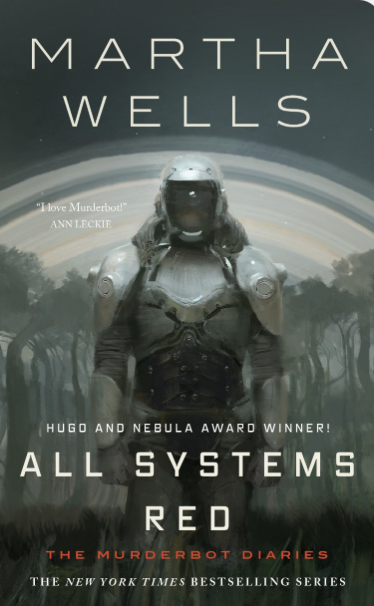
Wells, Martha: Murderbot Diaries. The main character is an android who manages to tinker with his programming and thus gain free will. He is a security robot who is understandably NOT a fan of humans, and he names himself Murderbot. But he happens to fall in with a group of surprisingly clever and determined hippies and he begins to change and grow as a… well, a person. The books and the show are funny and charming and even a little bit heartwarming in between bouts of savage violence. What’s not to like?
If you want more reviews, click here for 300+ books that I regularly reread.
 Felicity Banks