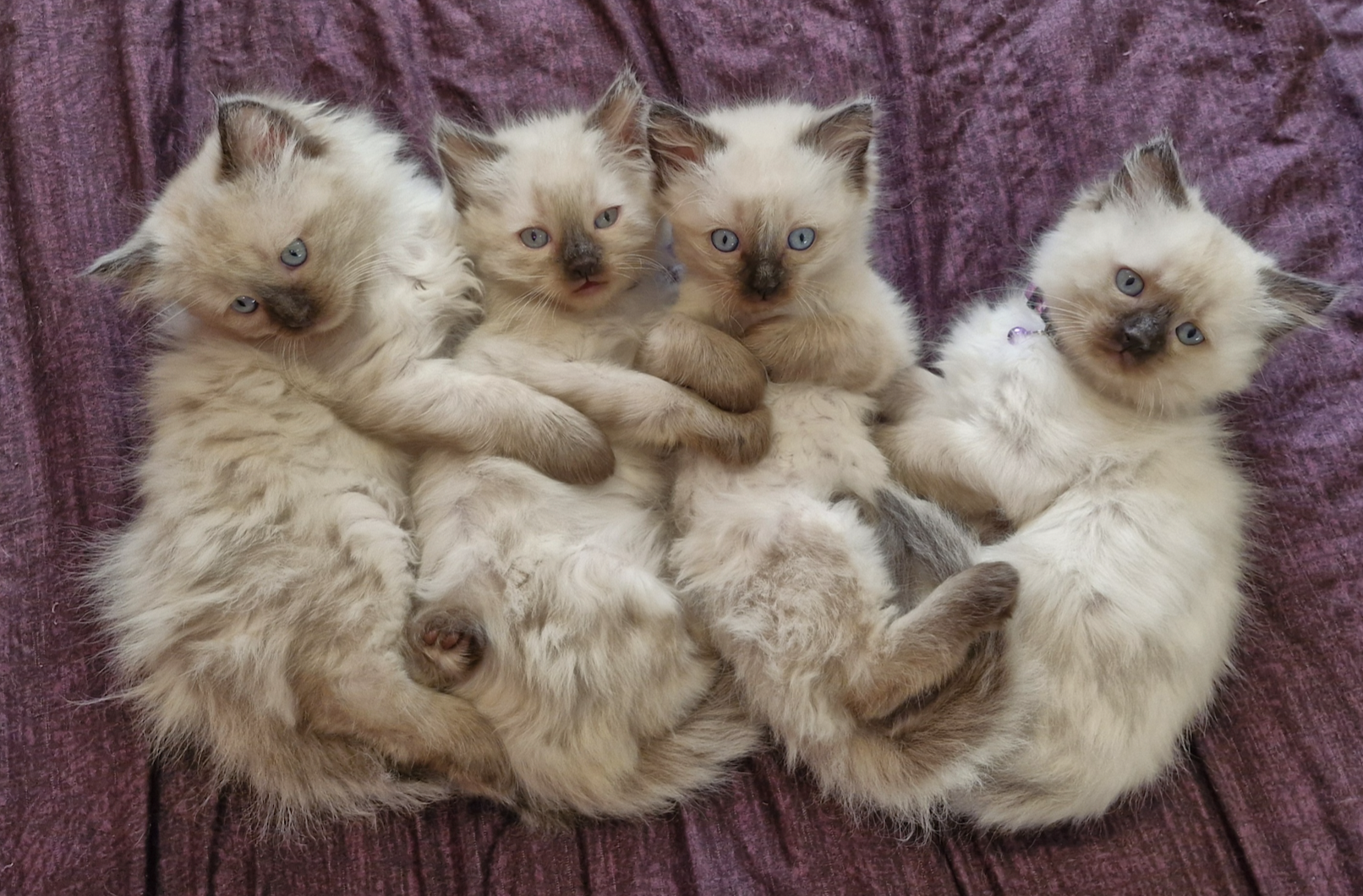
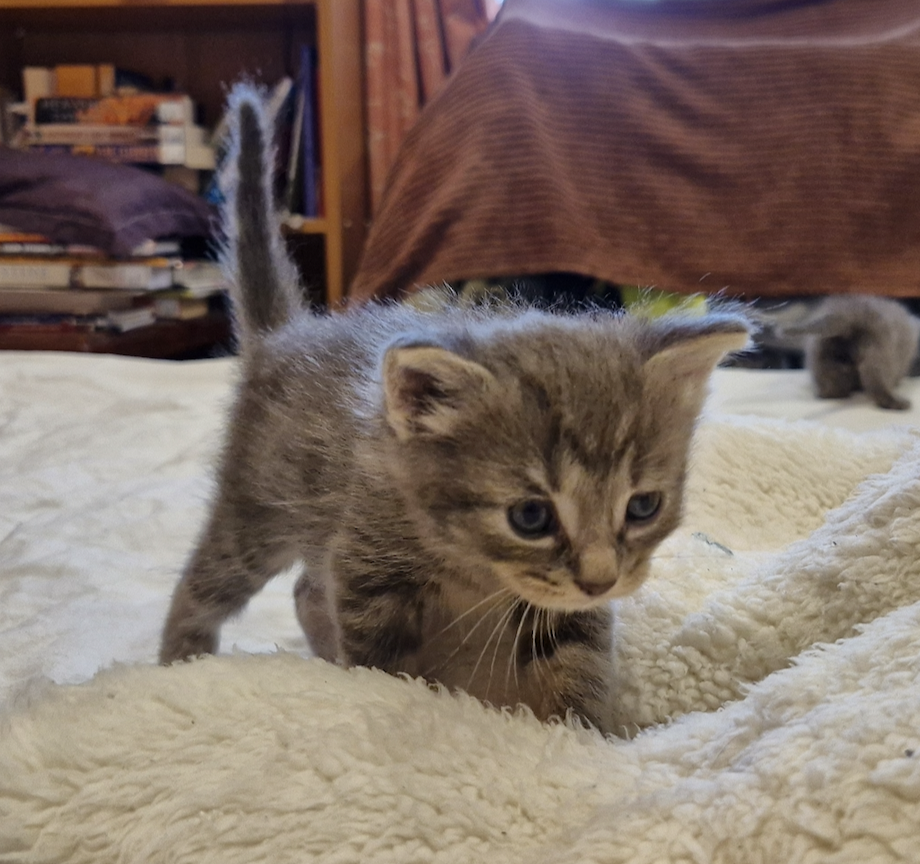
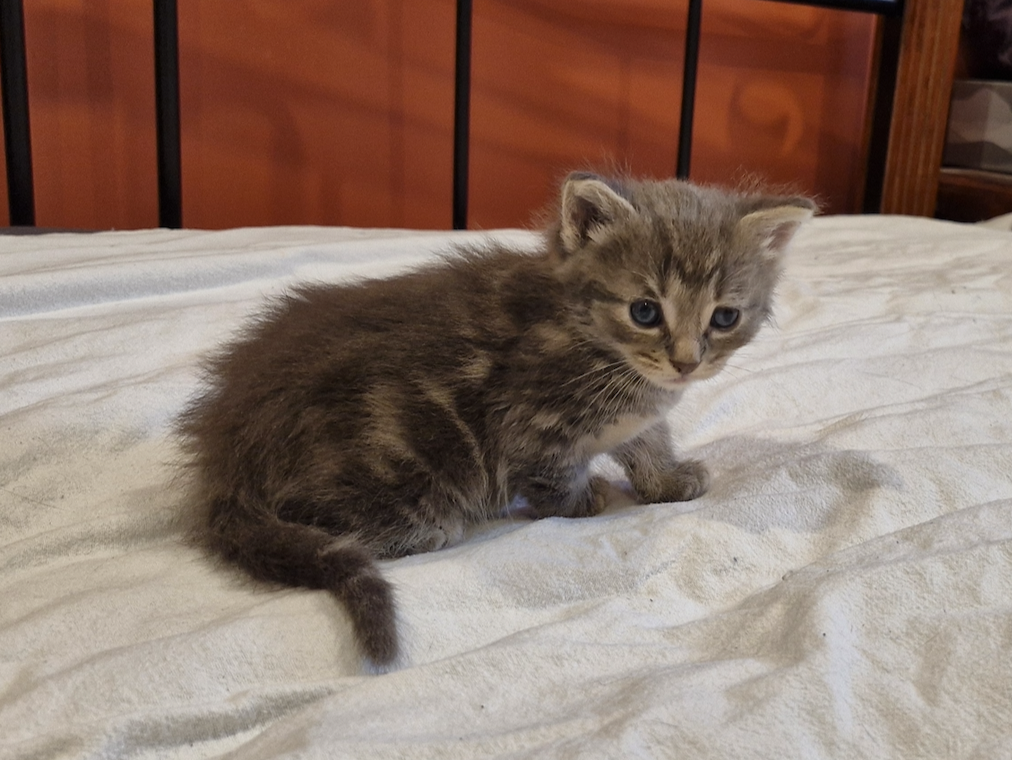
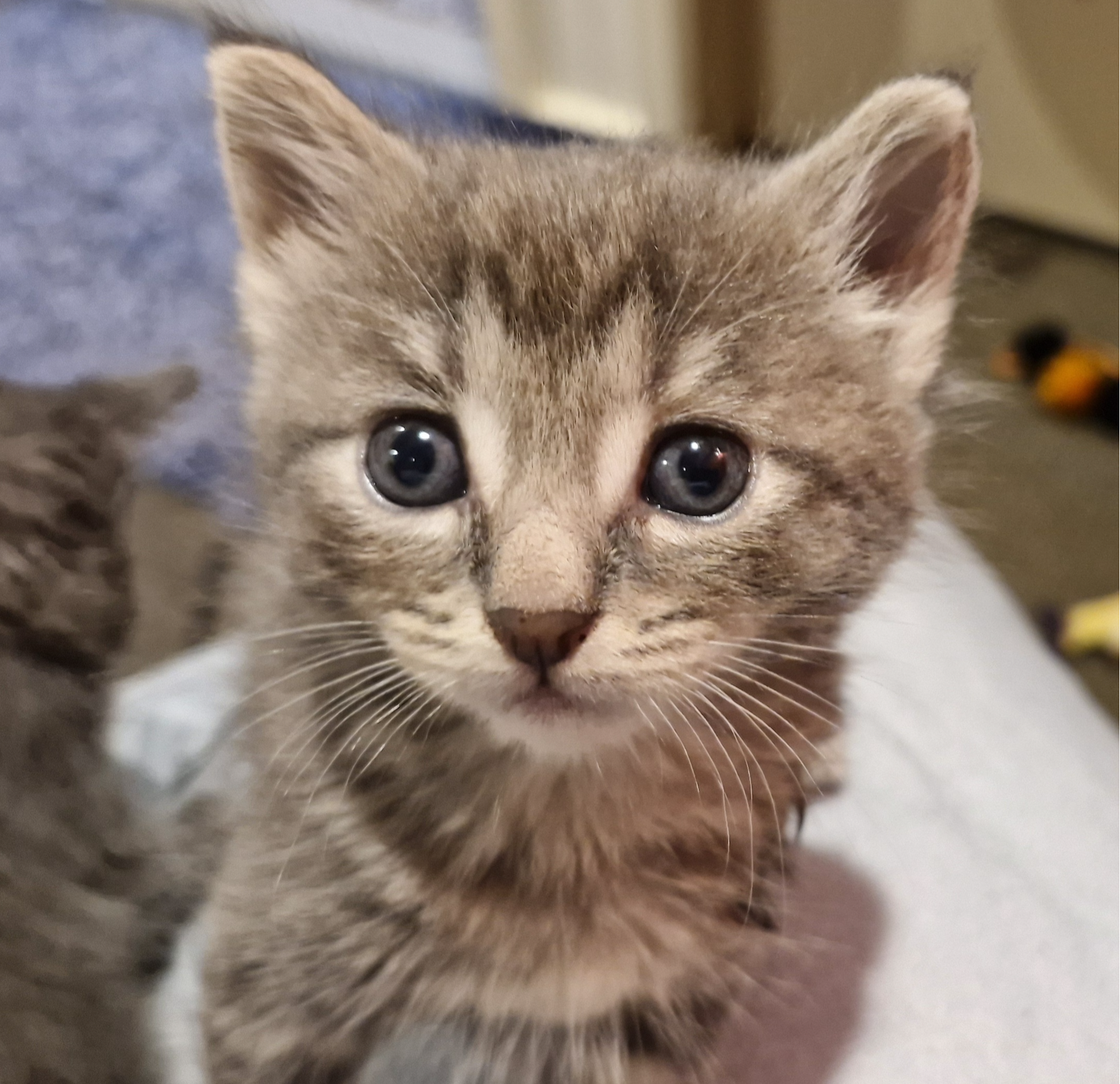
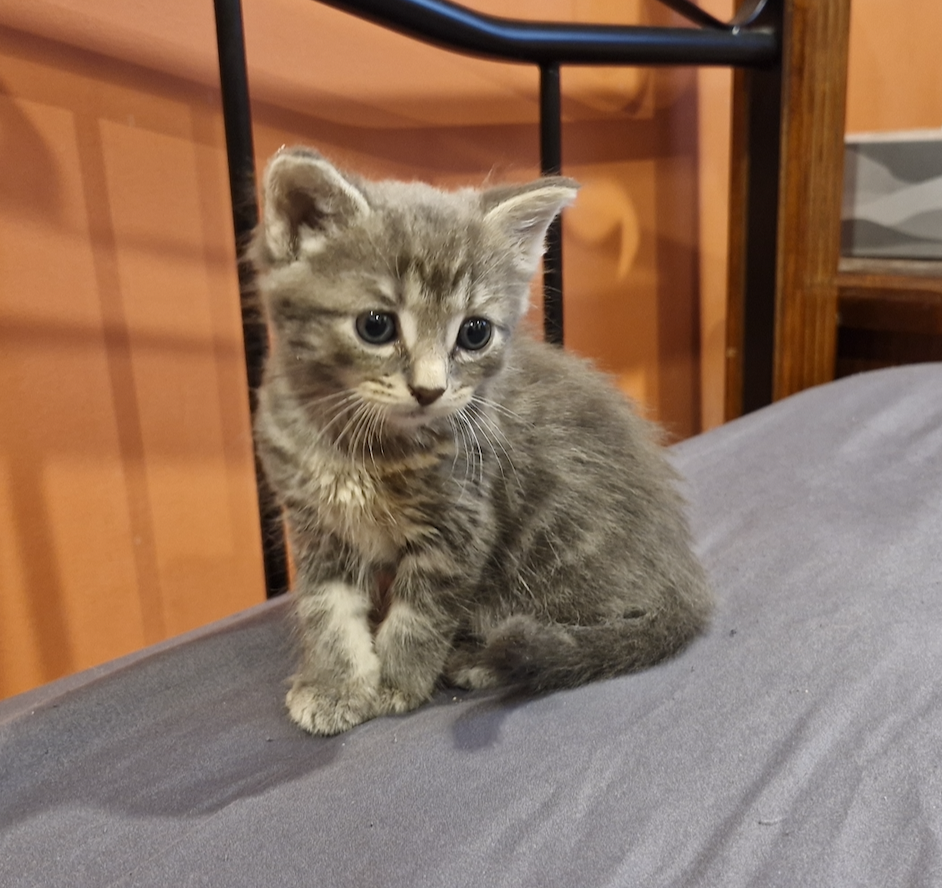
Are these the kittens for you?
Edit: All four kittens are now spoken for and will go to their forever homes mid-January 2026.
My adoption guide is here but let’s talk about this specific litter of extremely similar-looking Ragdoll babies.
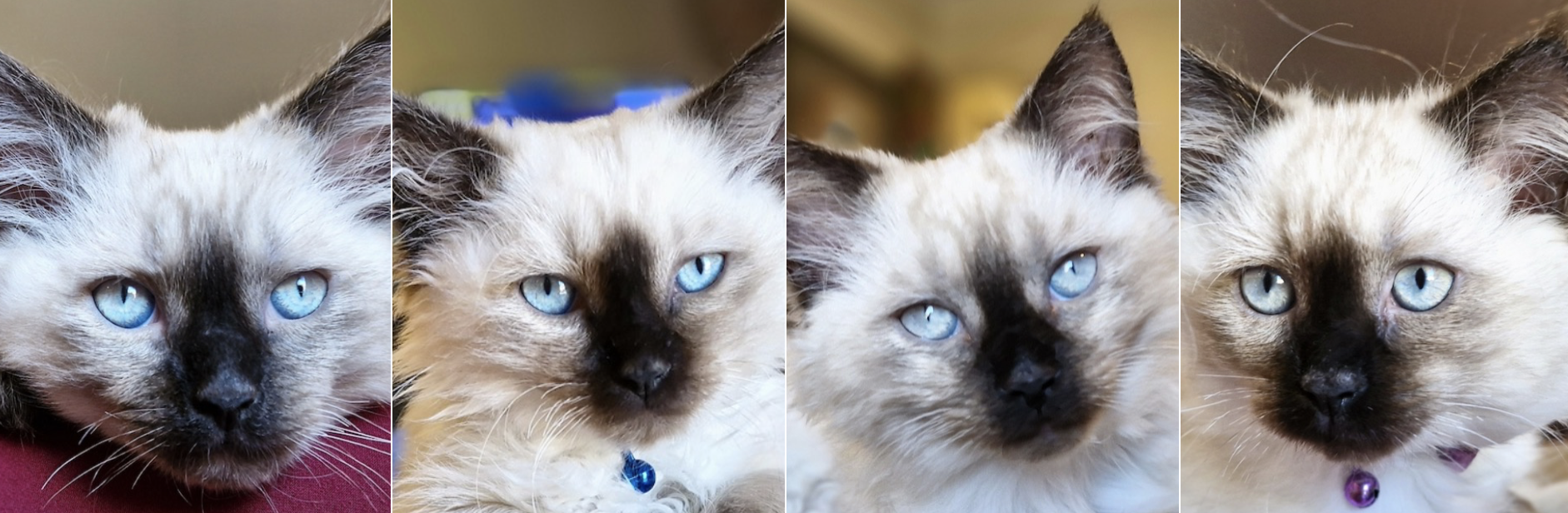
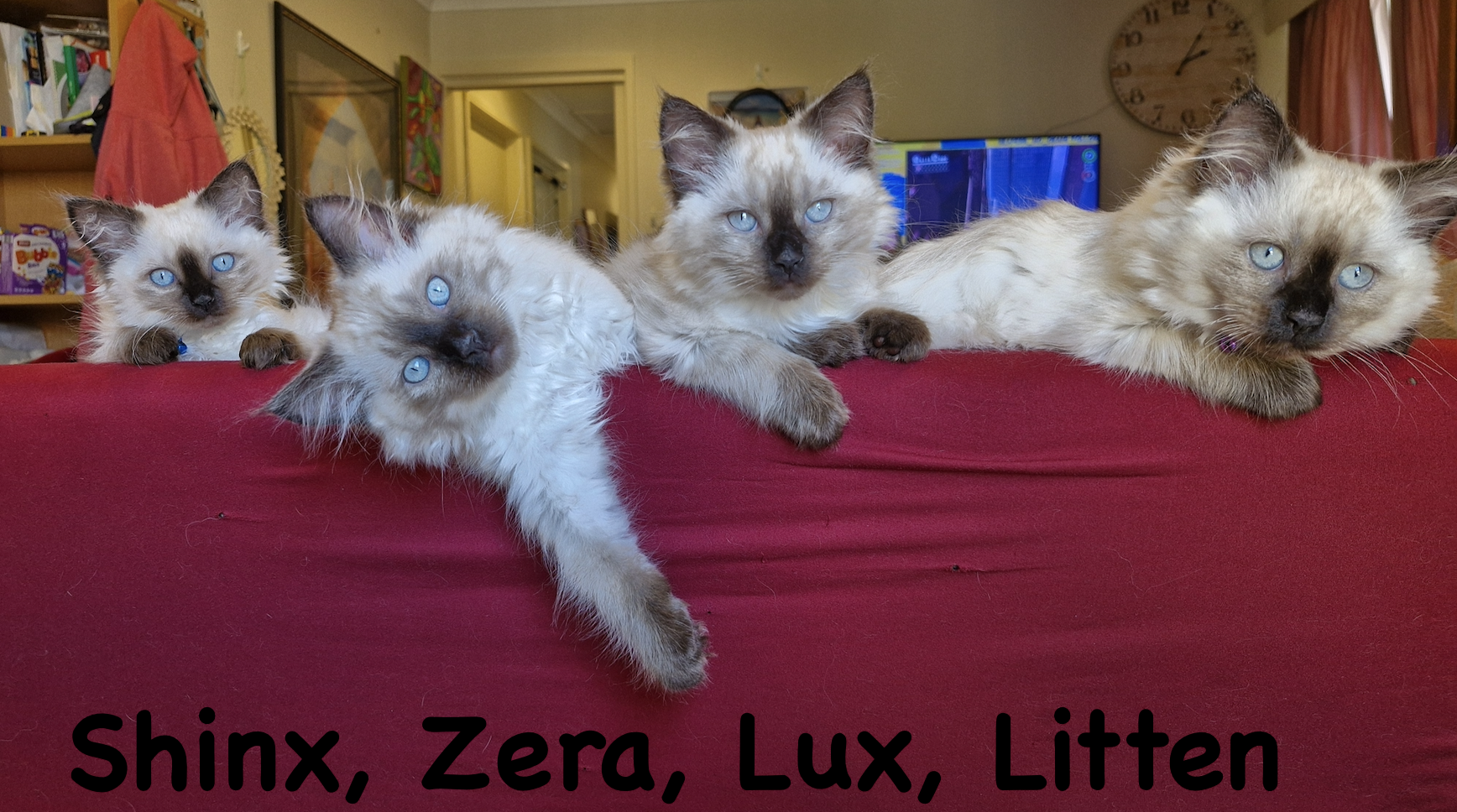
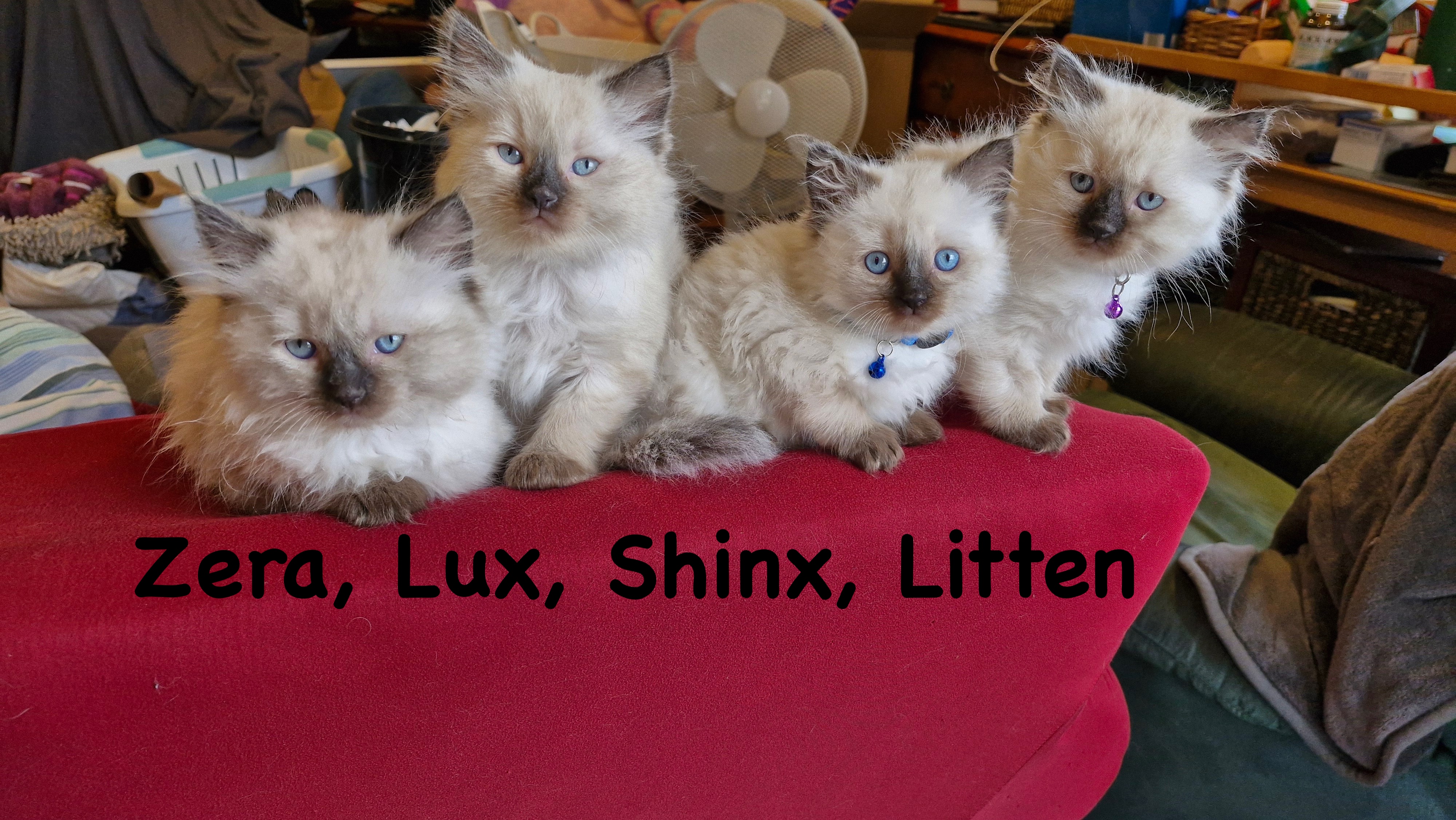
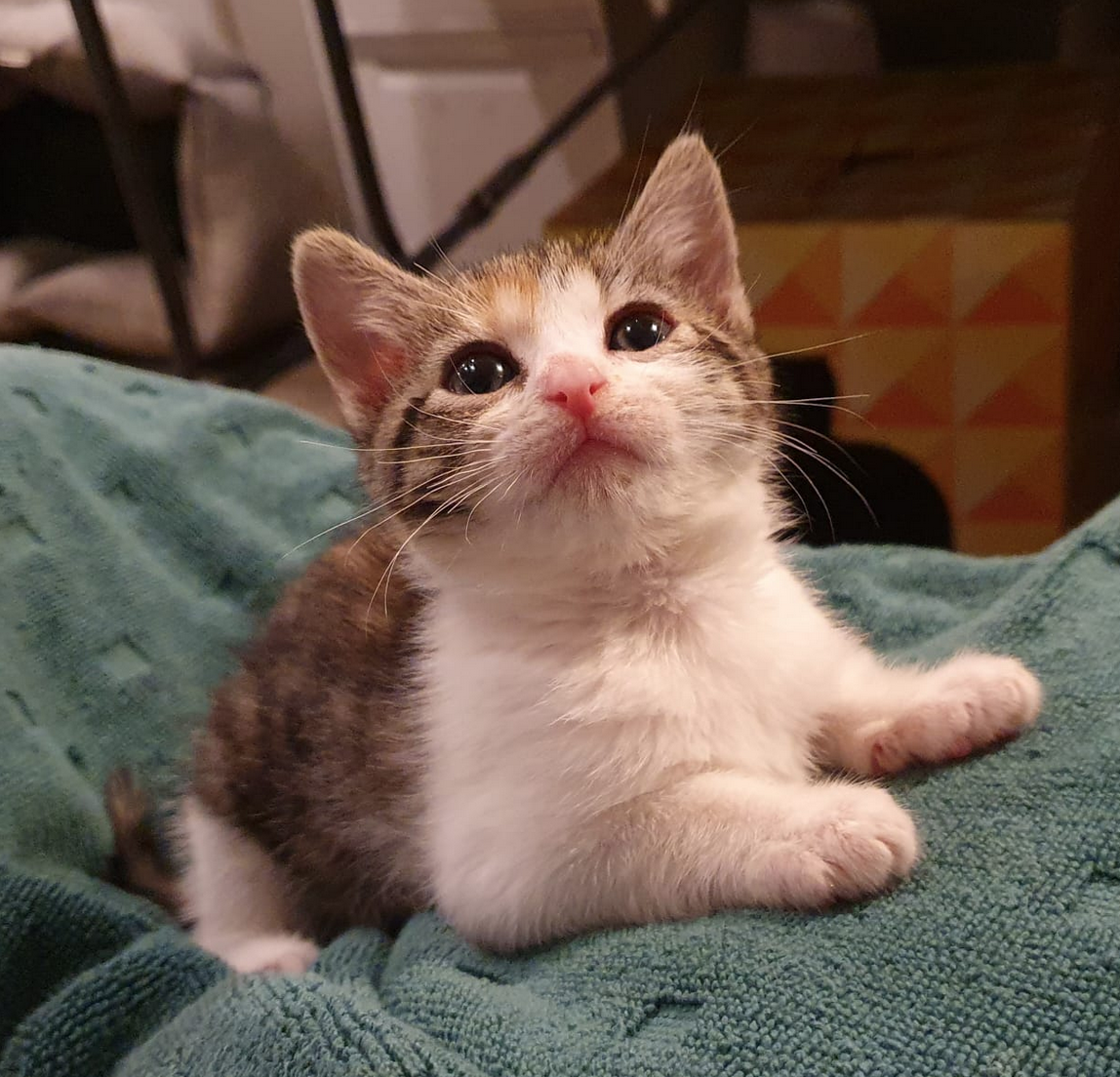
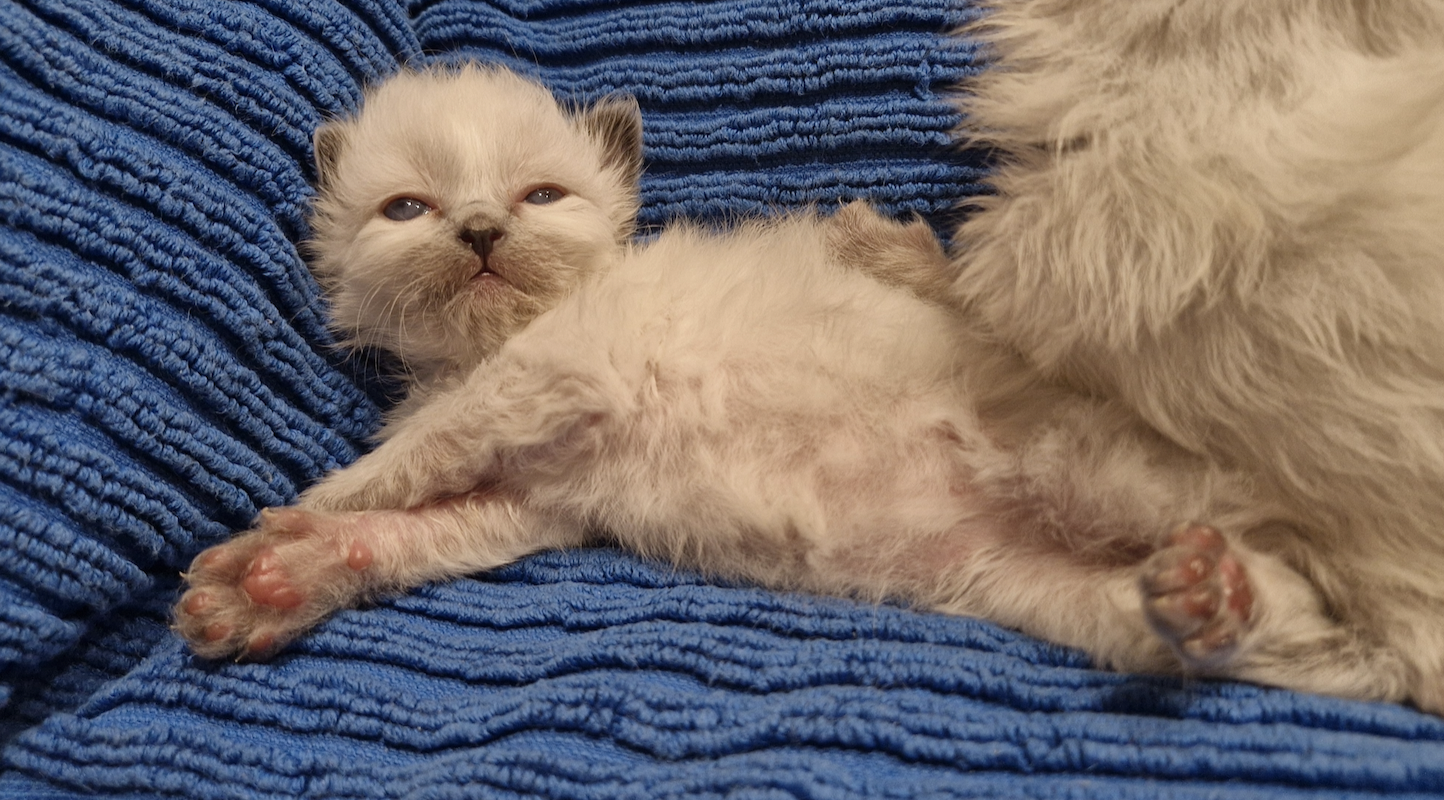
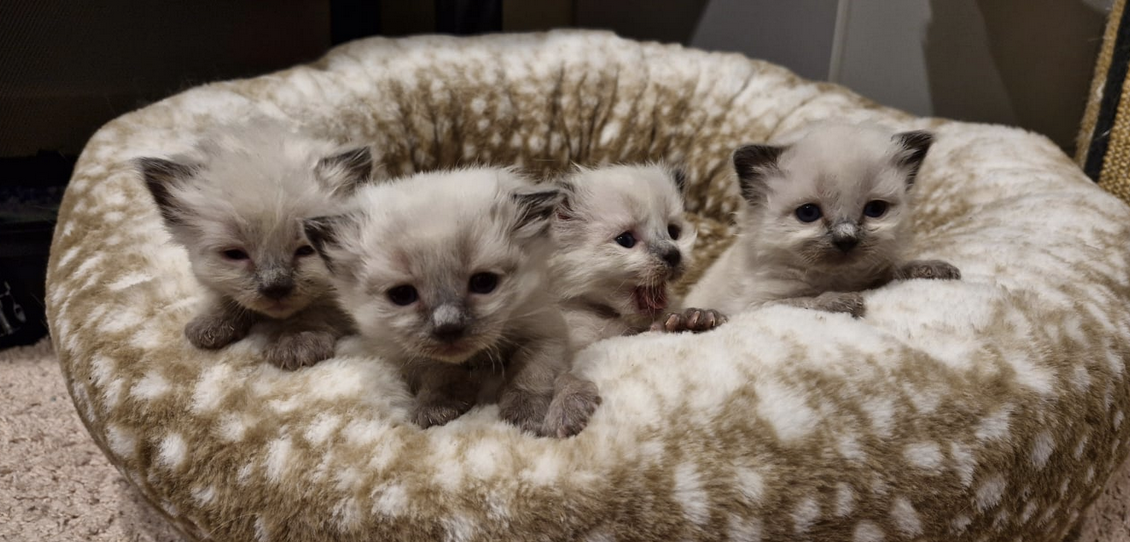
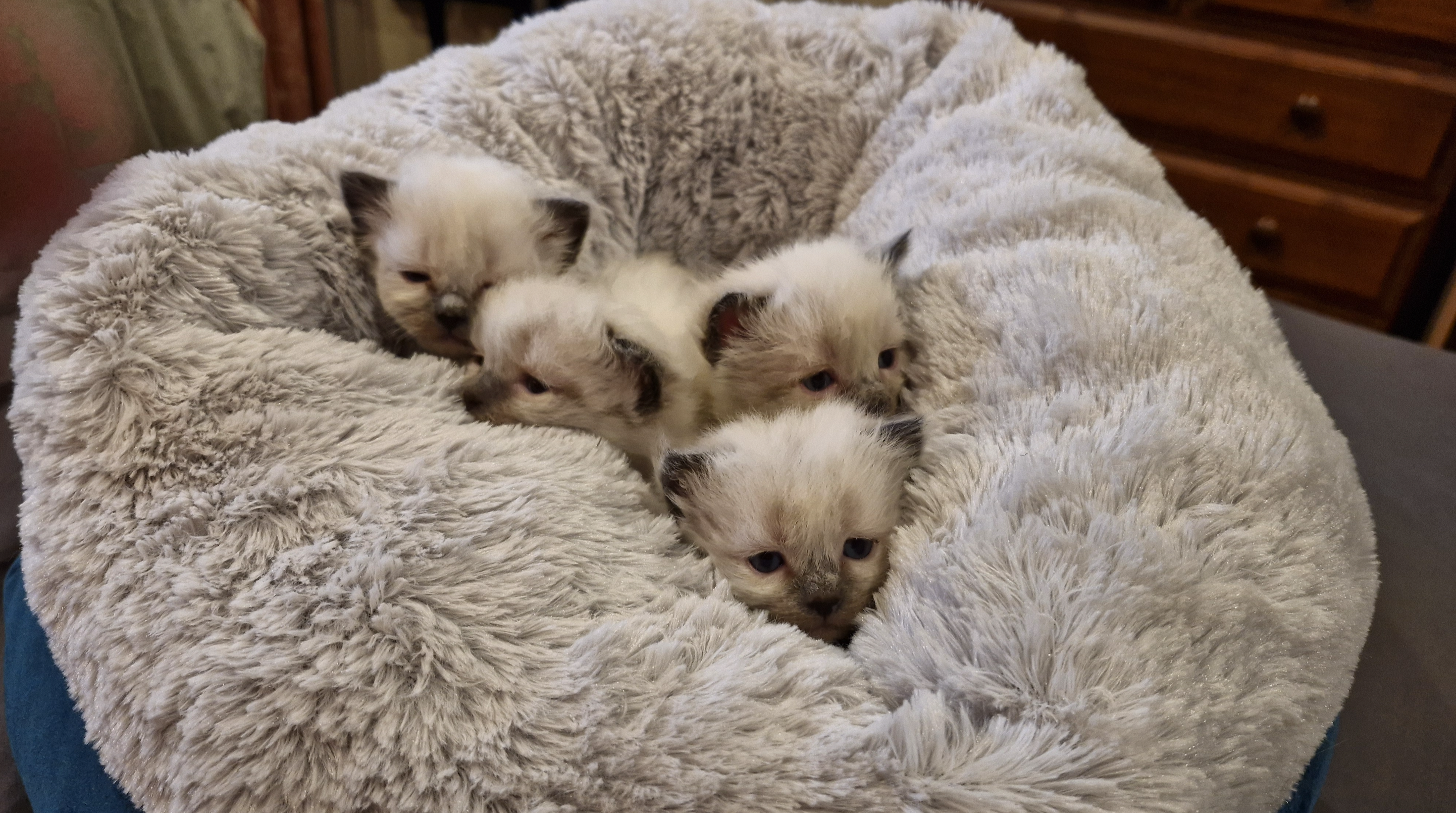
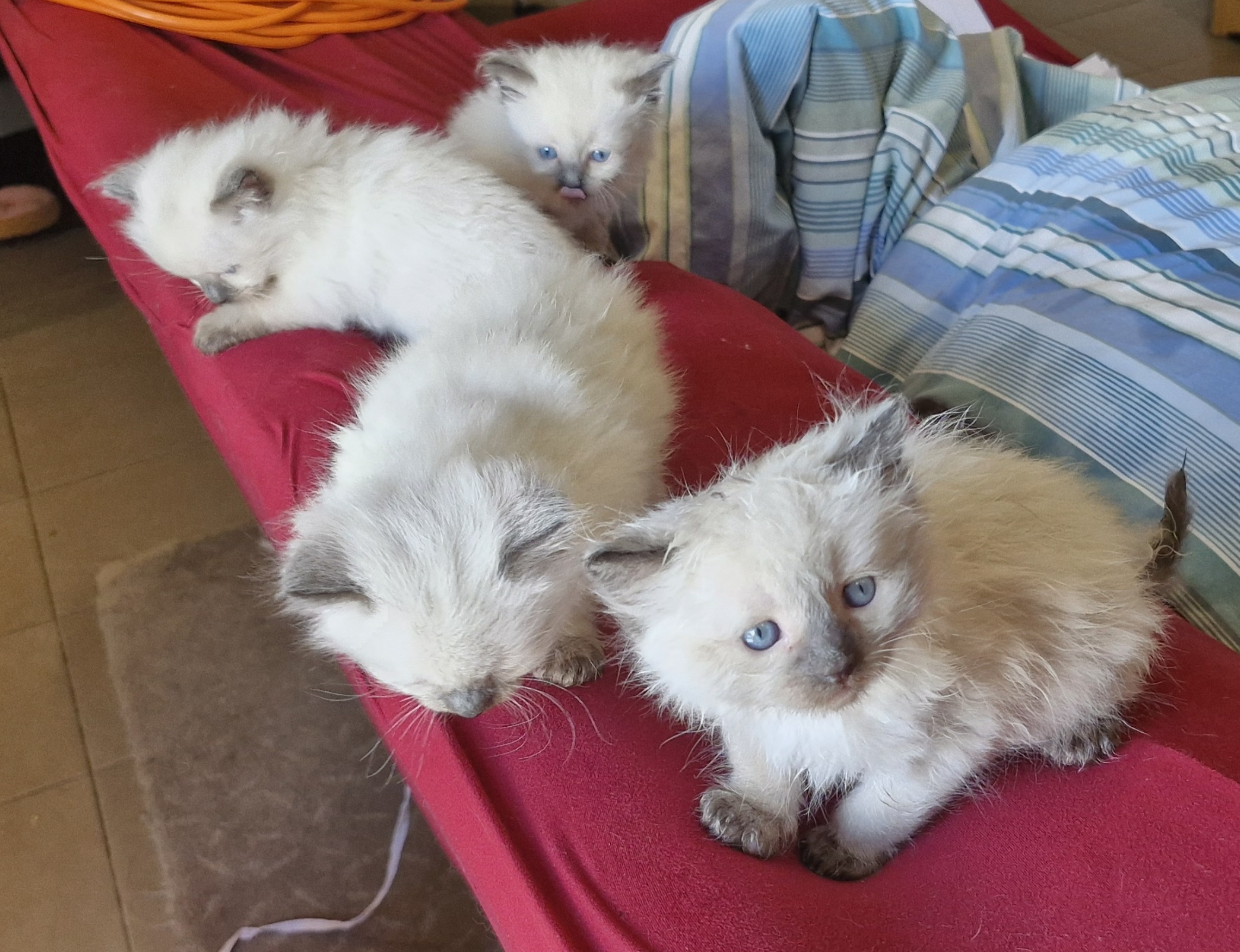
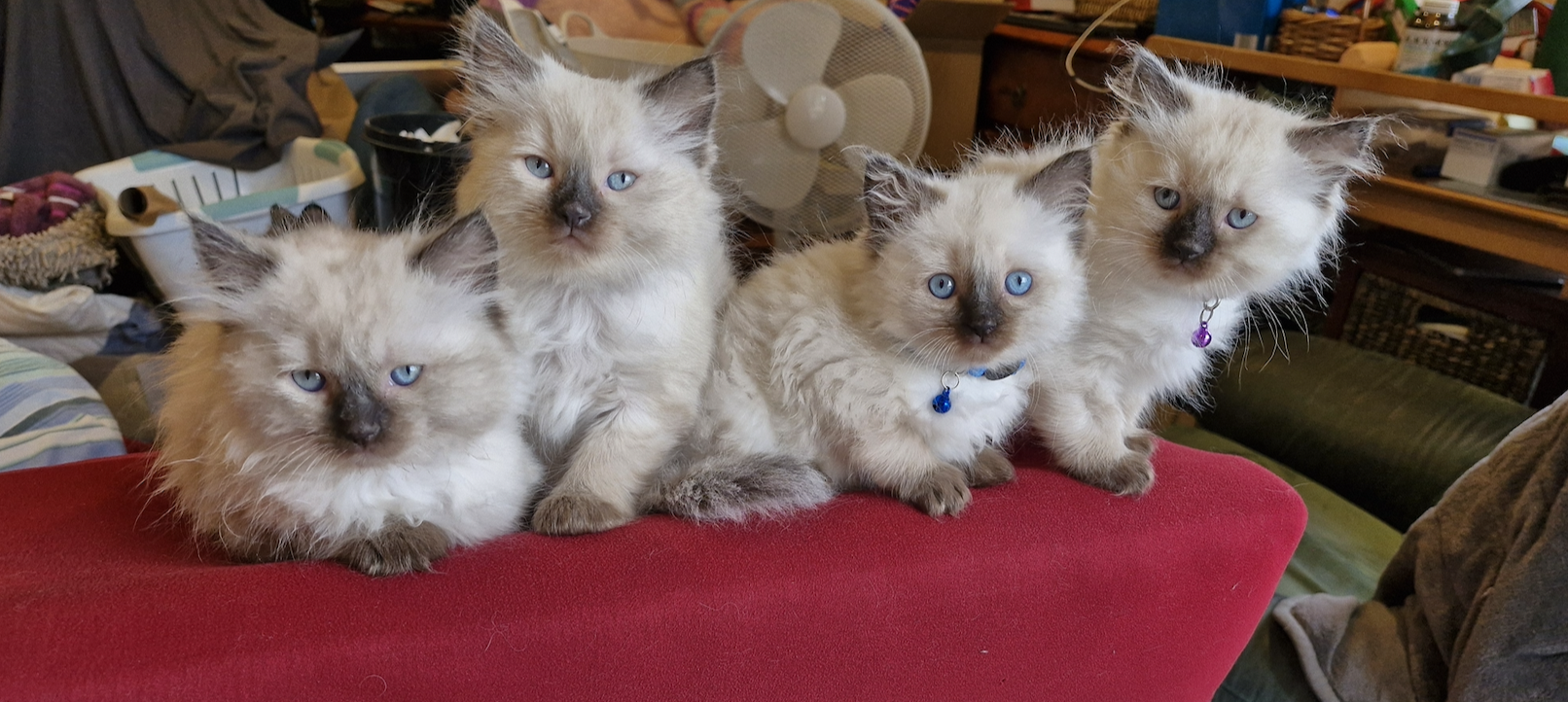
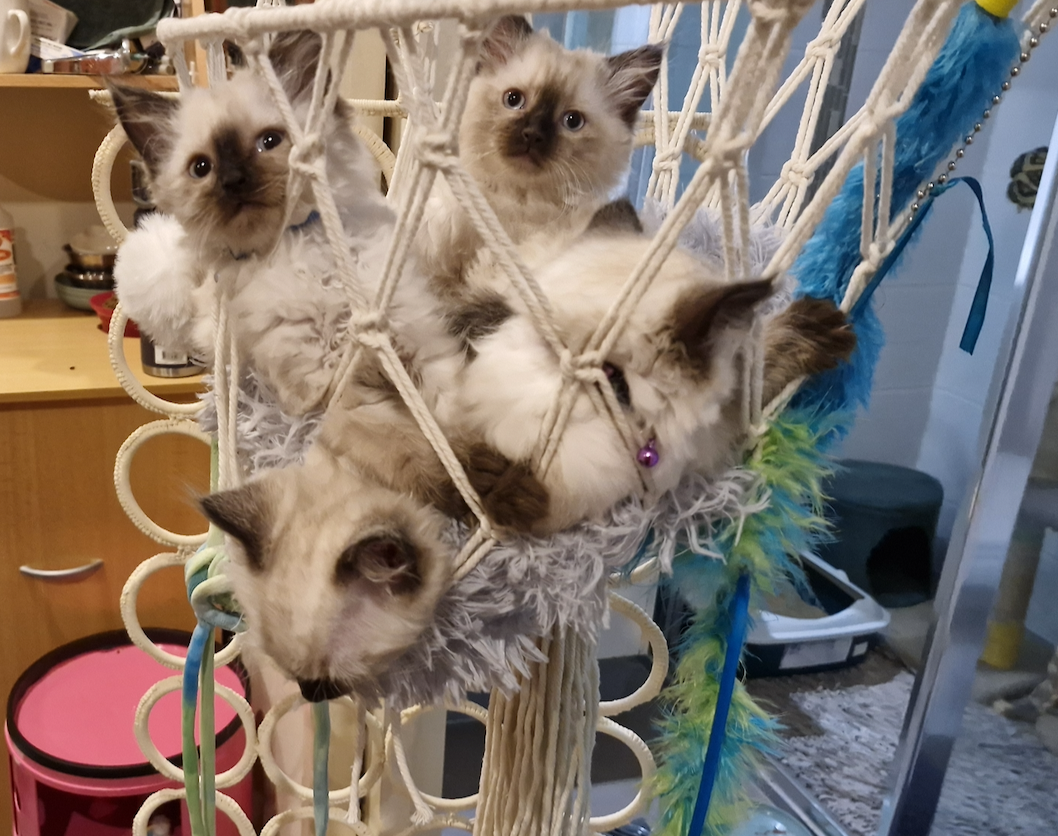
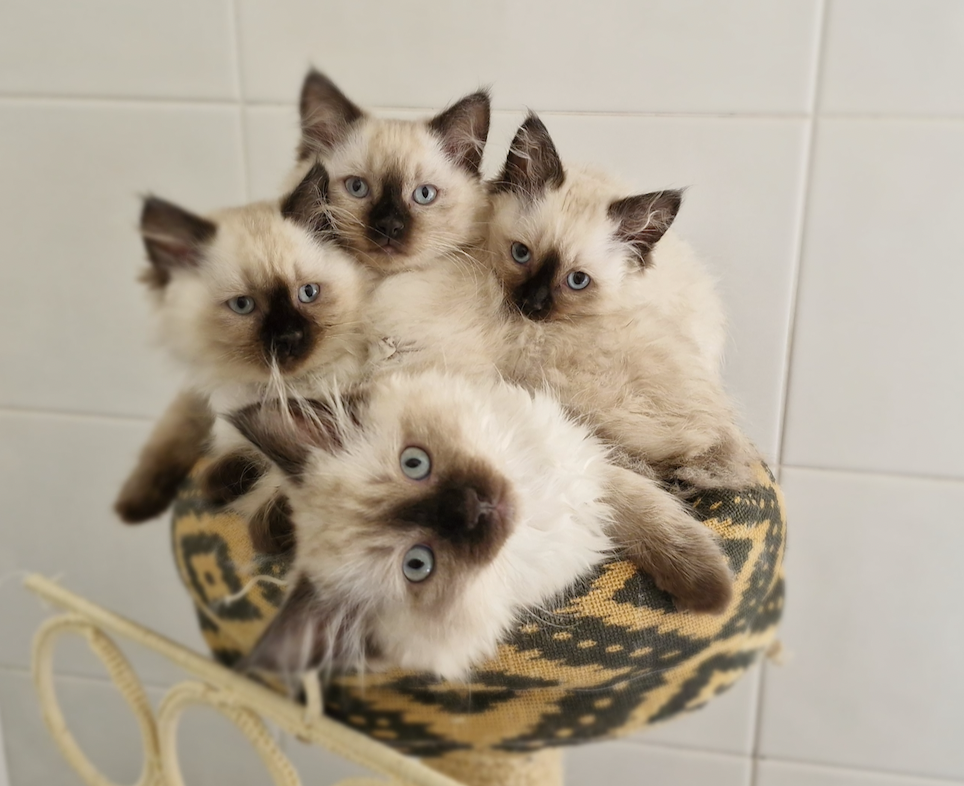
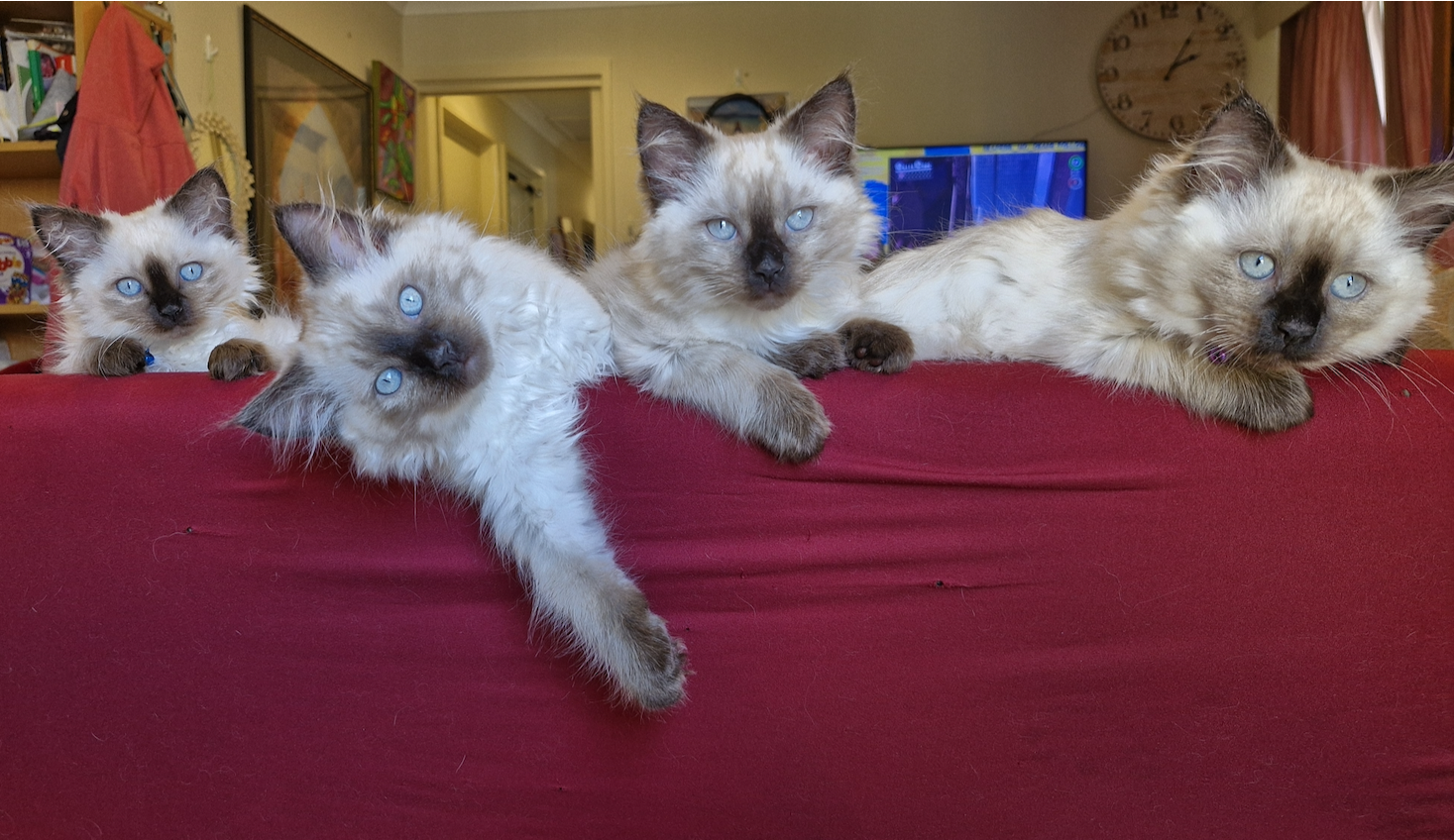
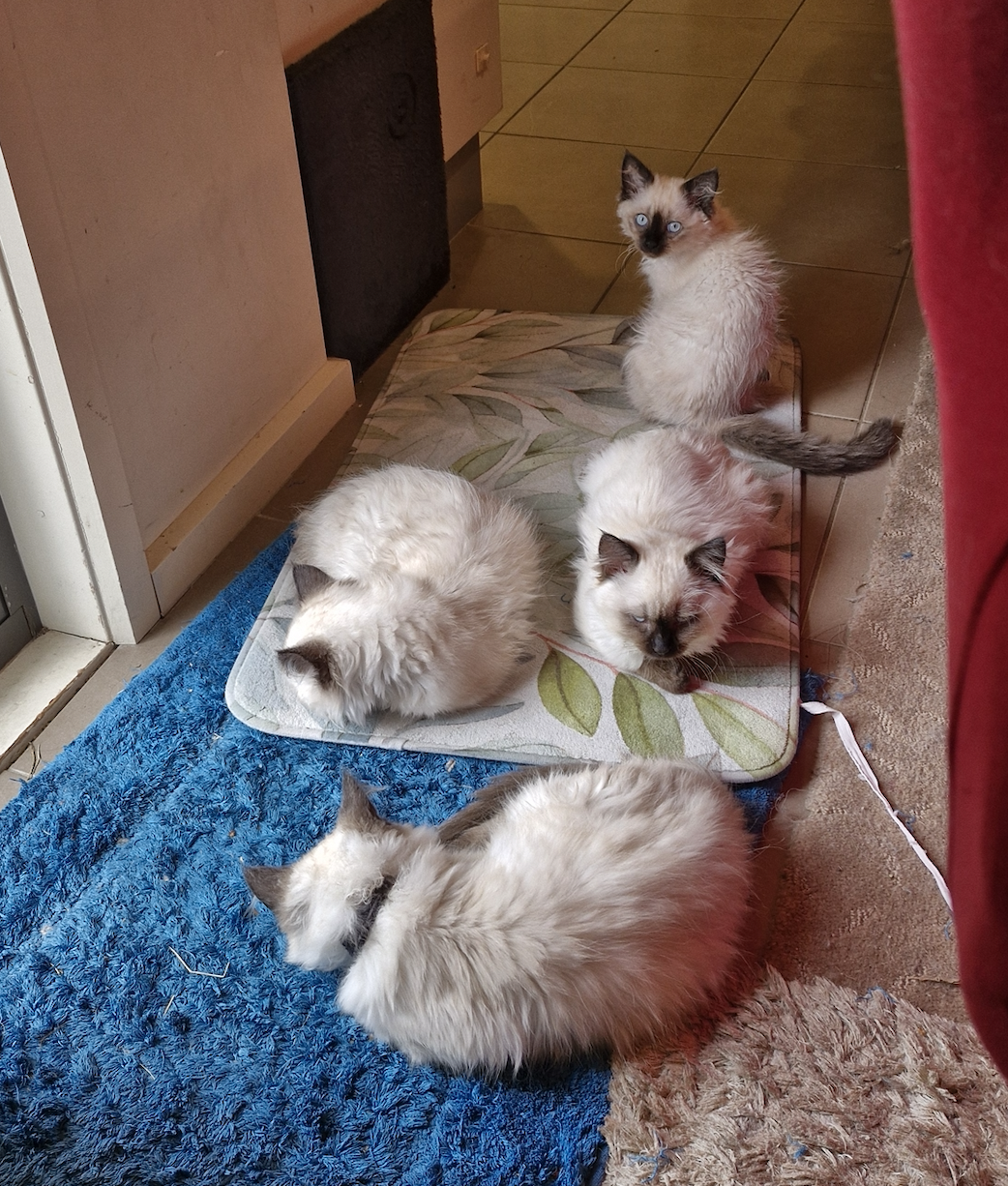
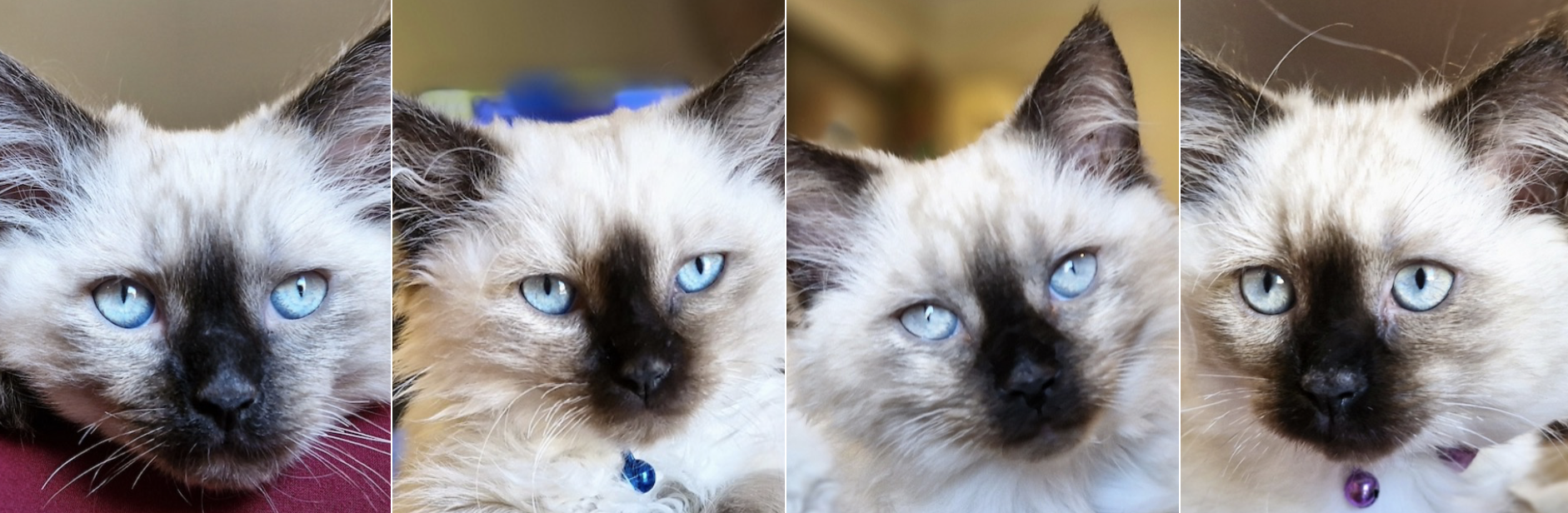
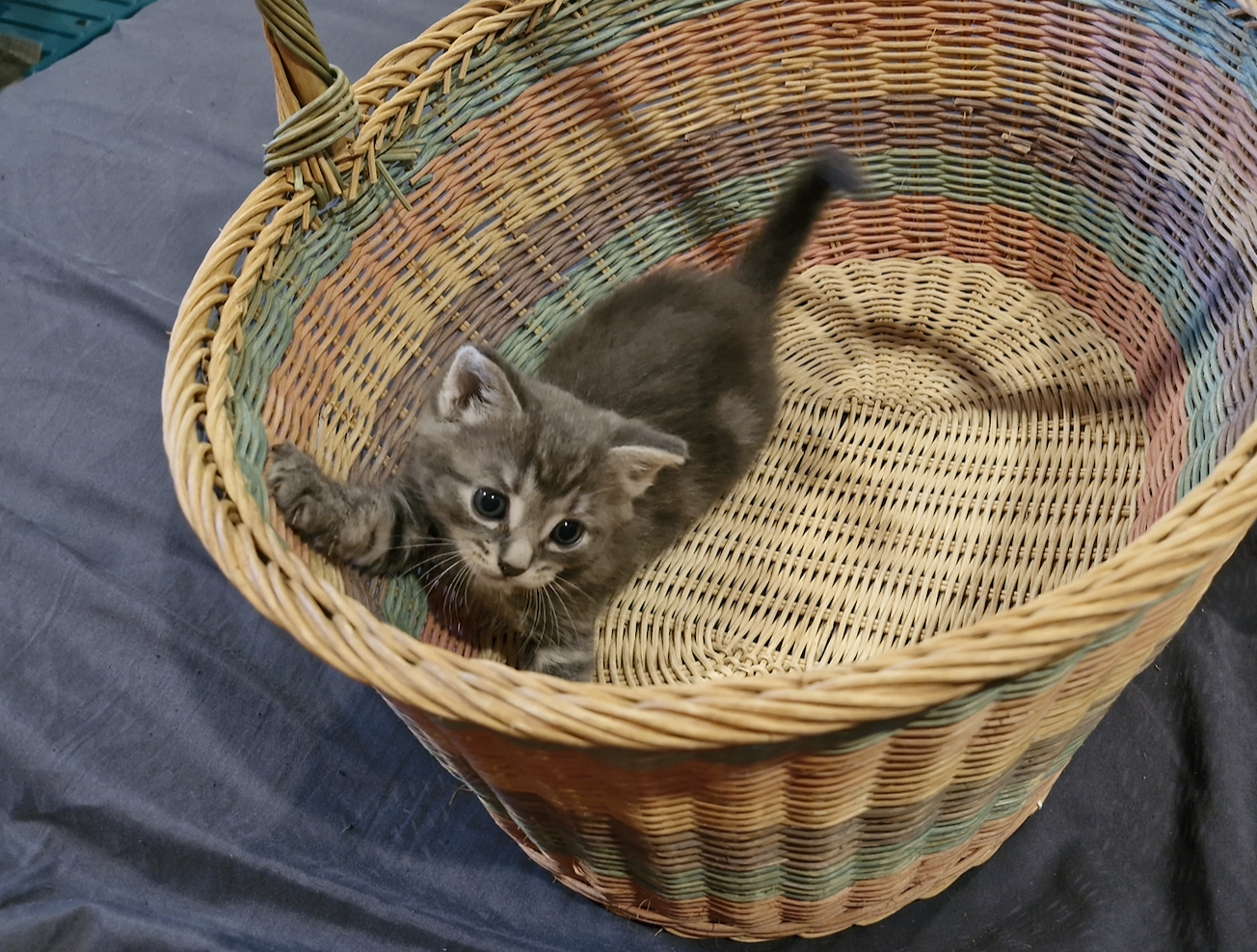
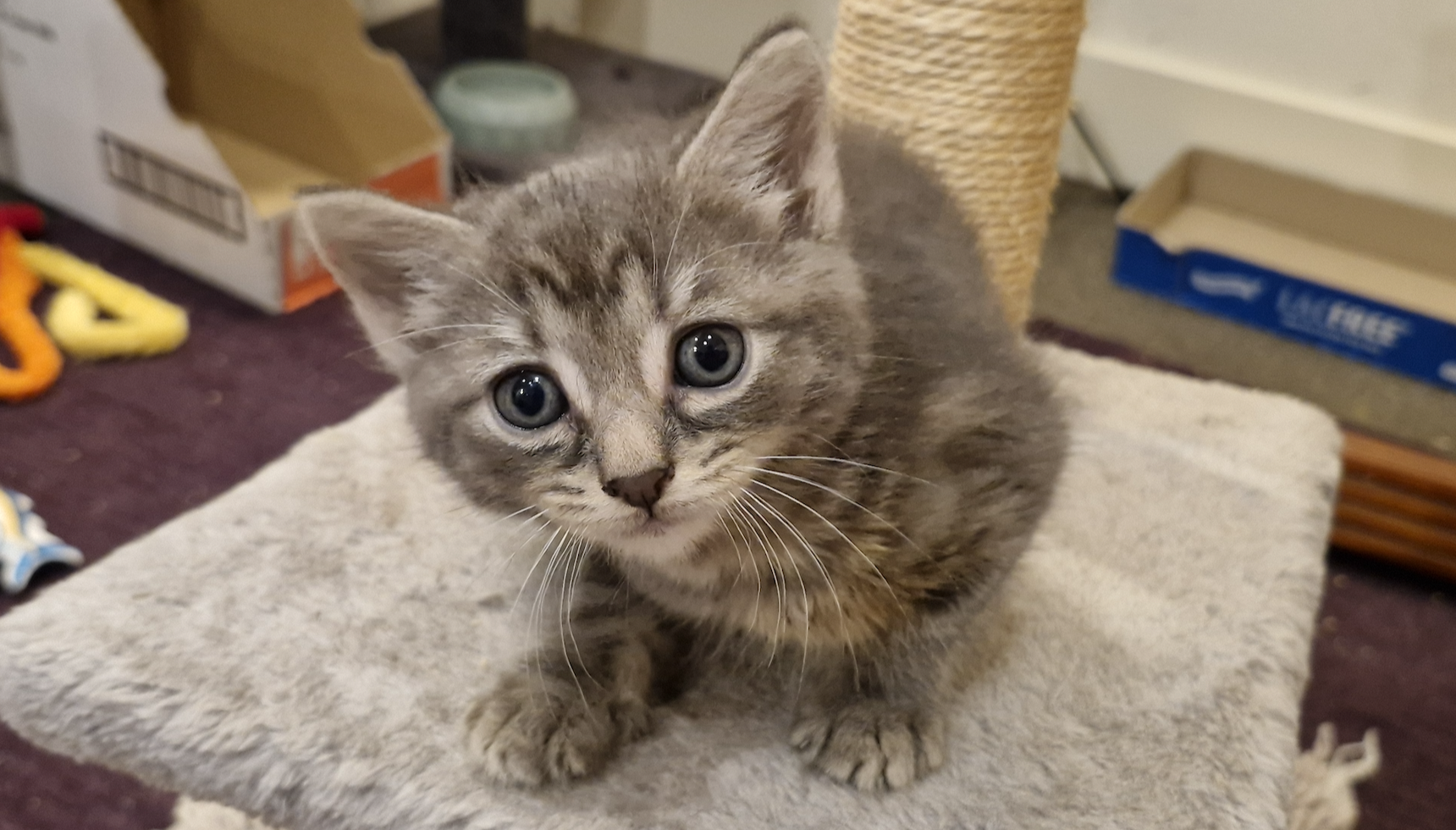
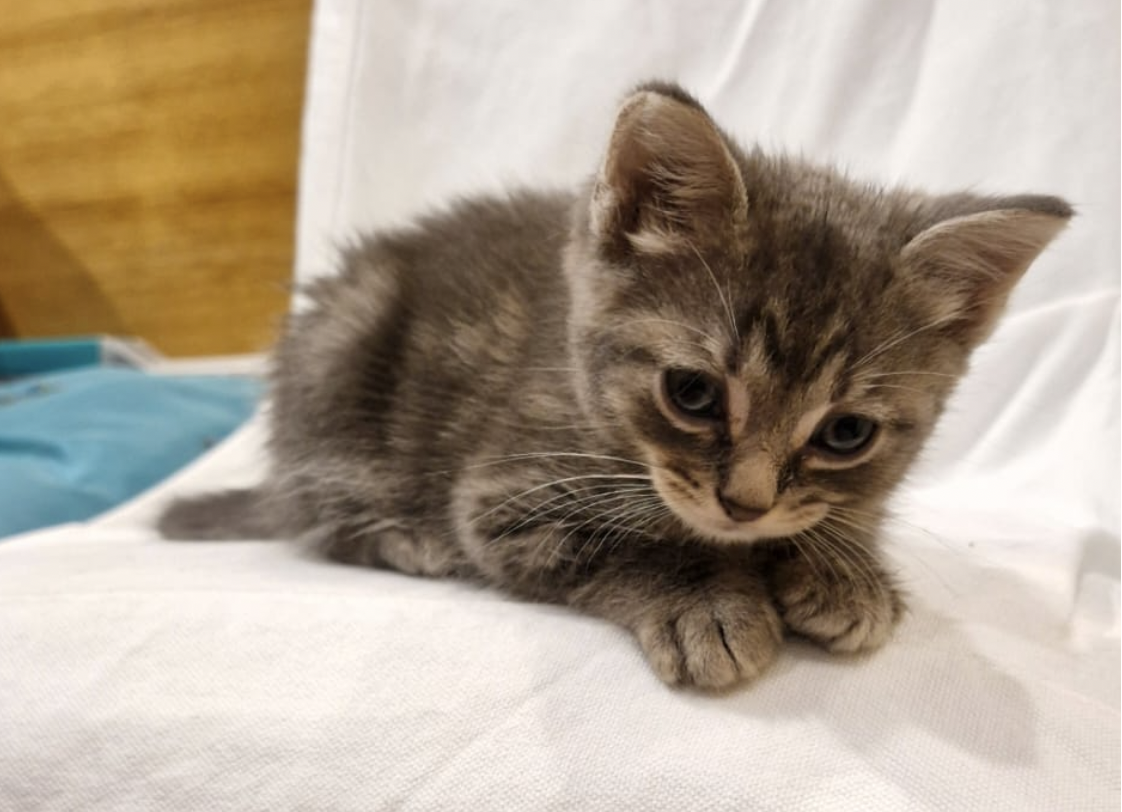
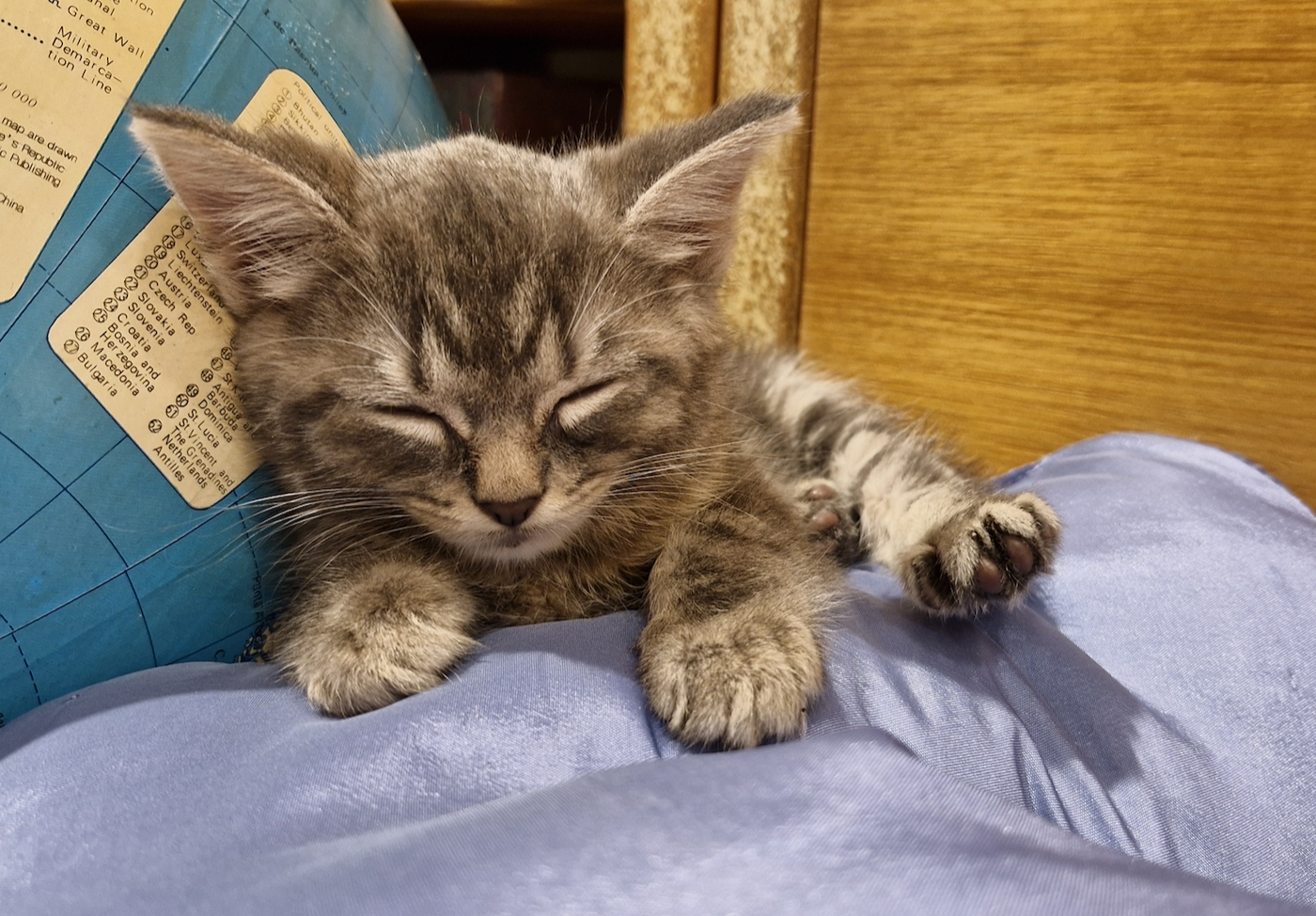
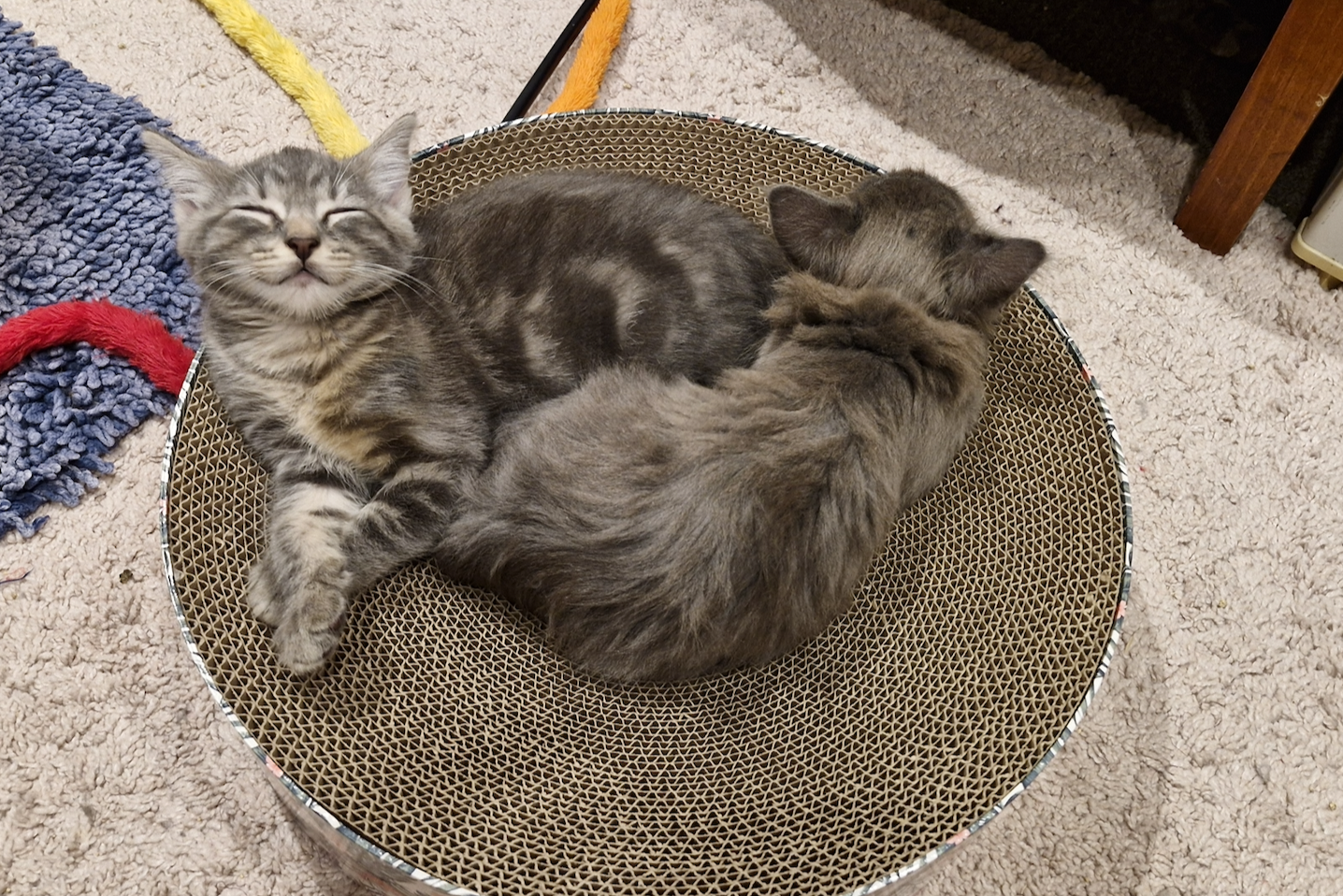
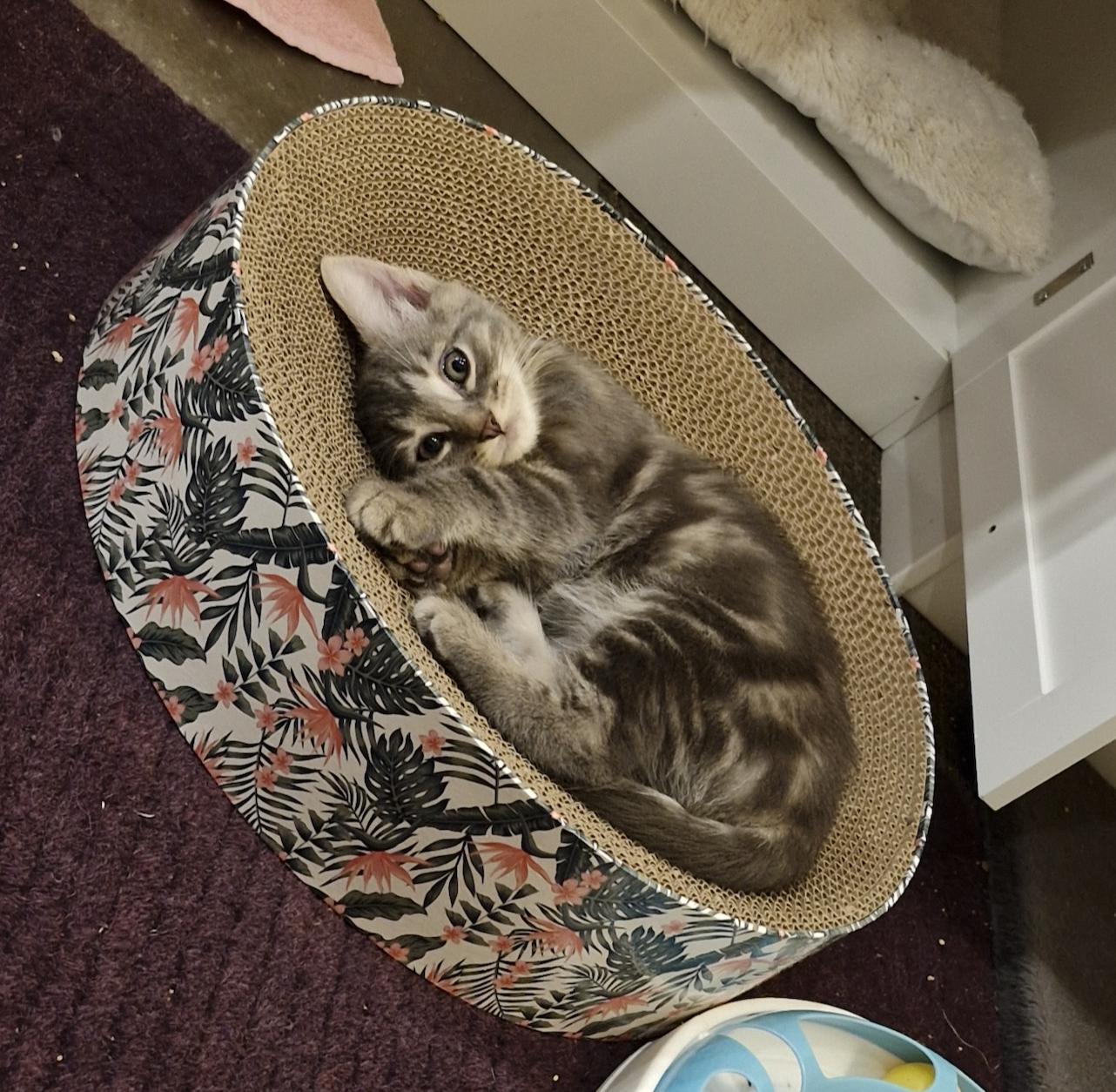
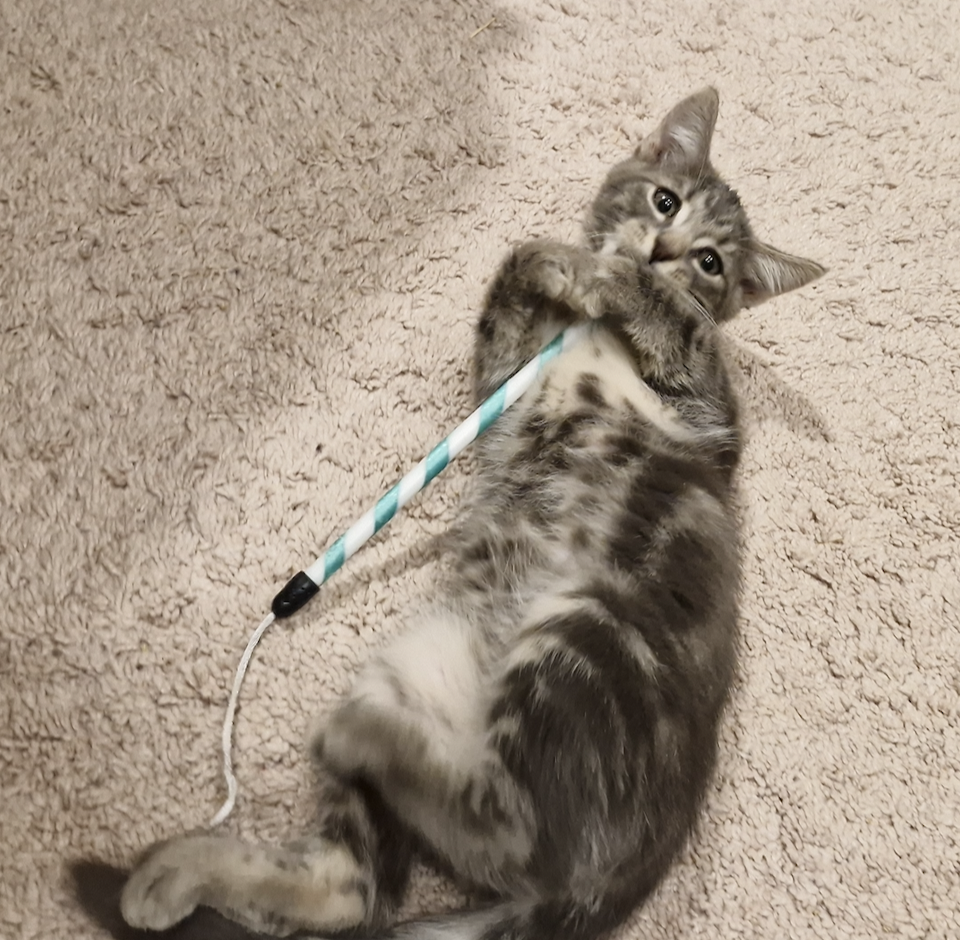
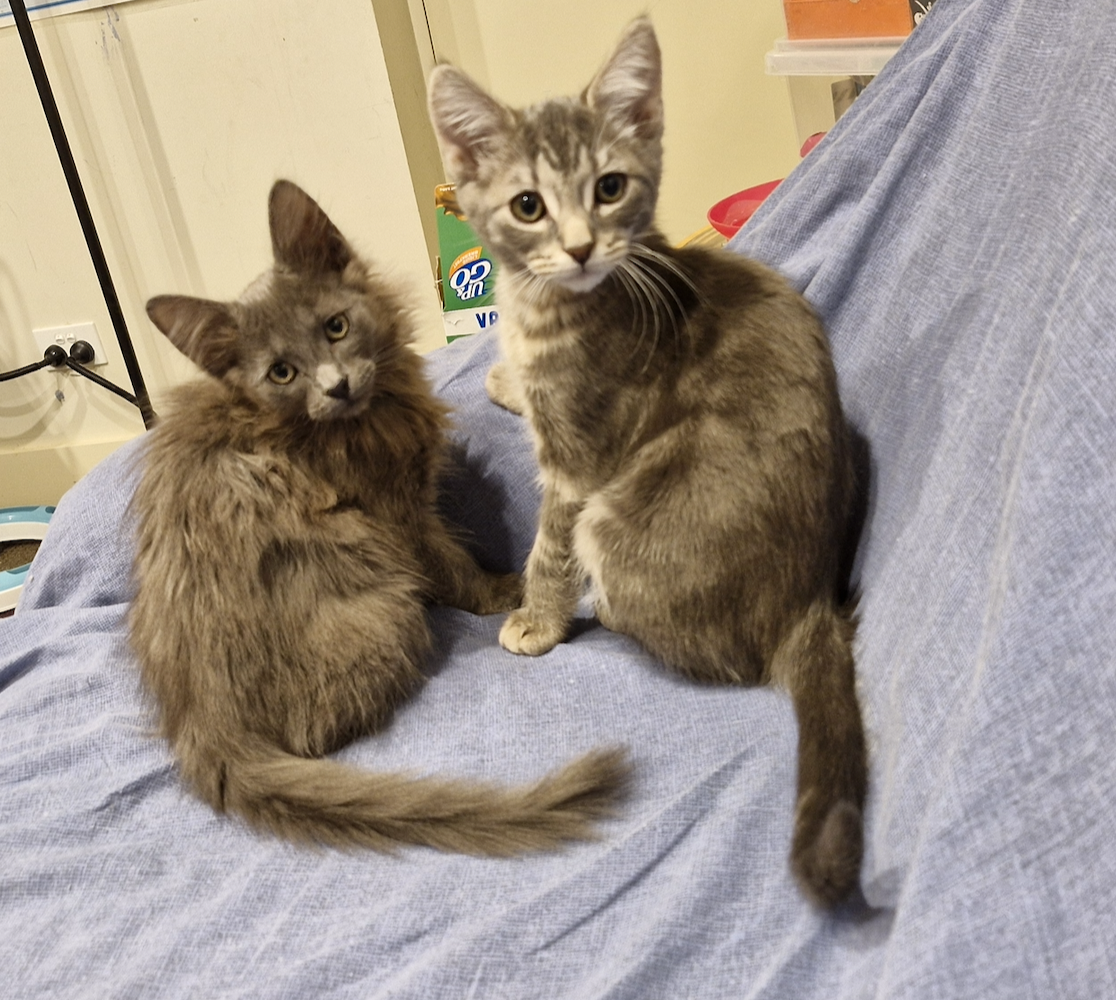
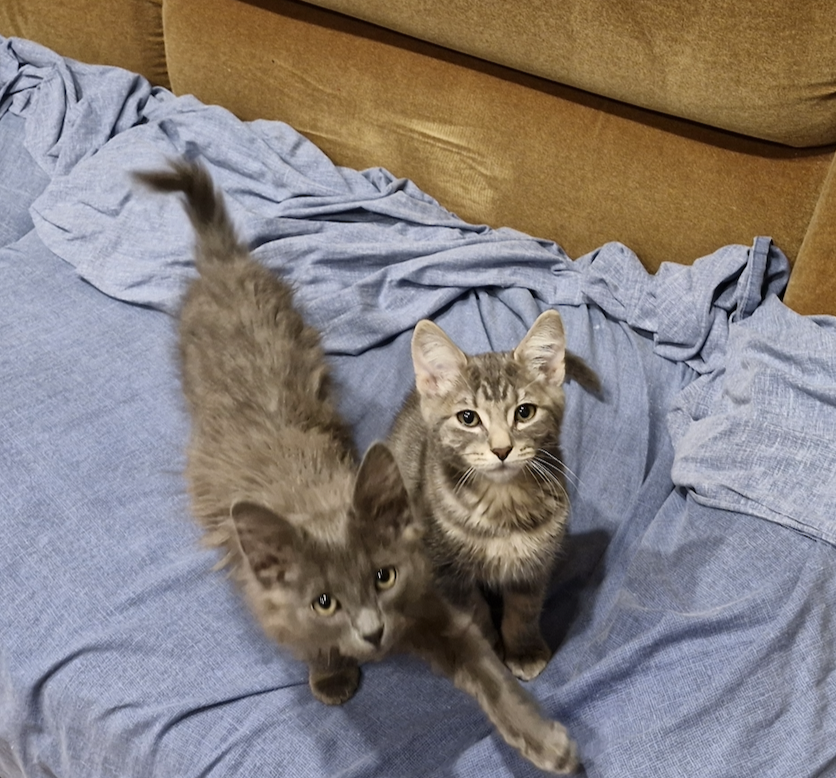
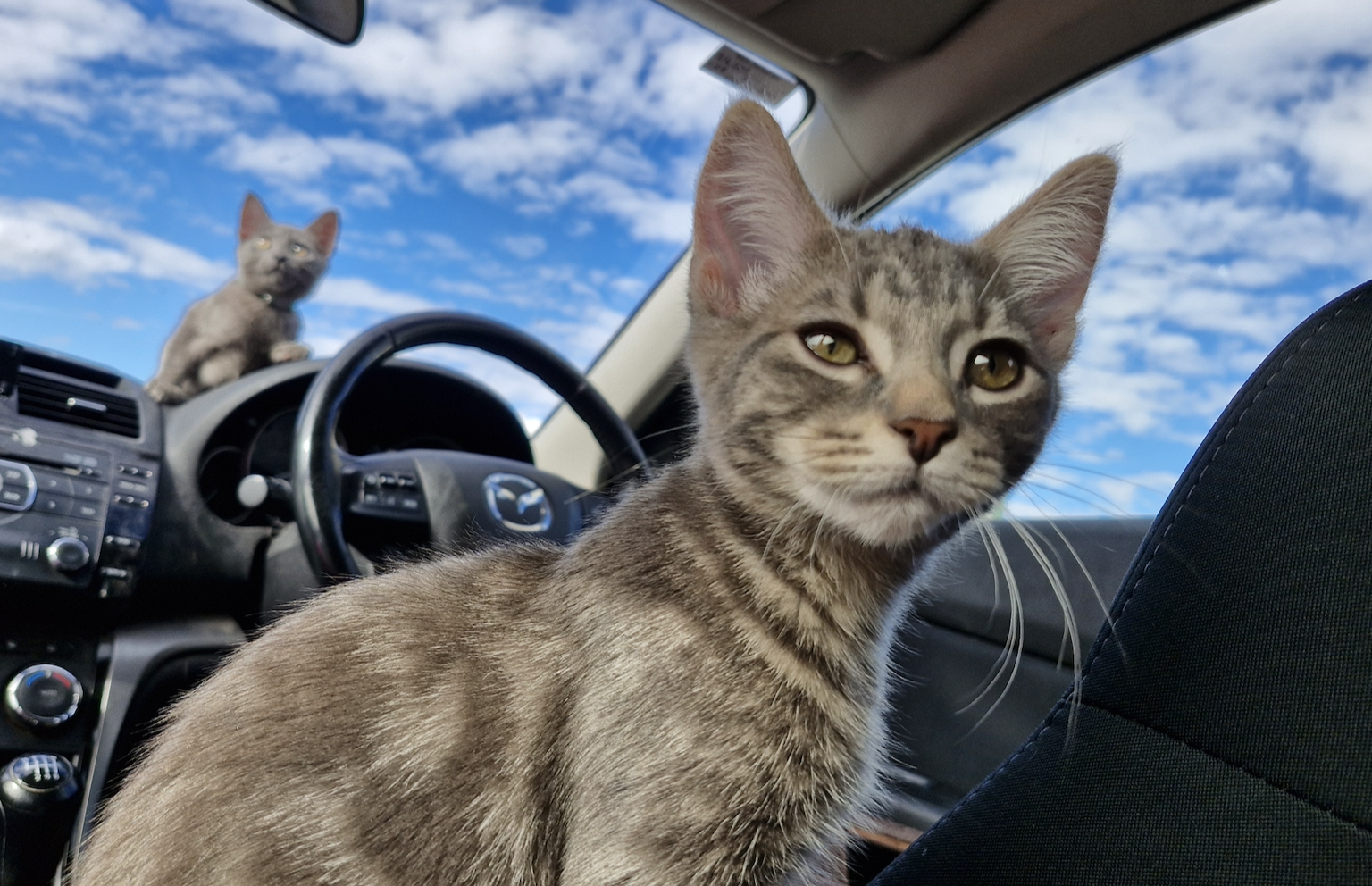
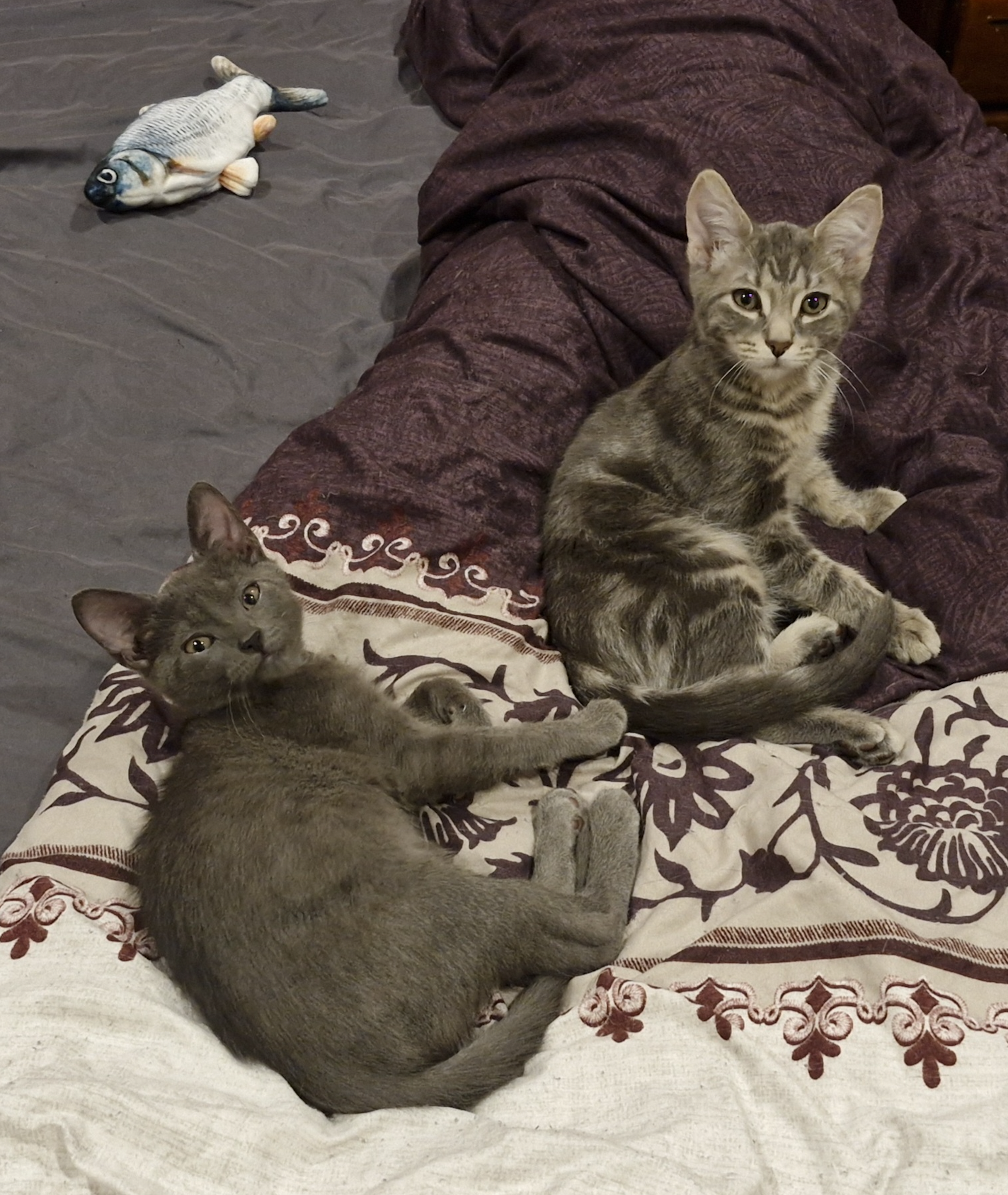
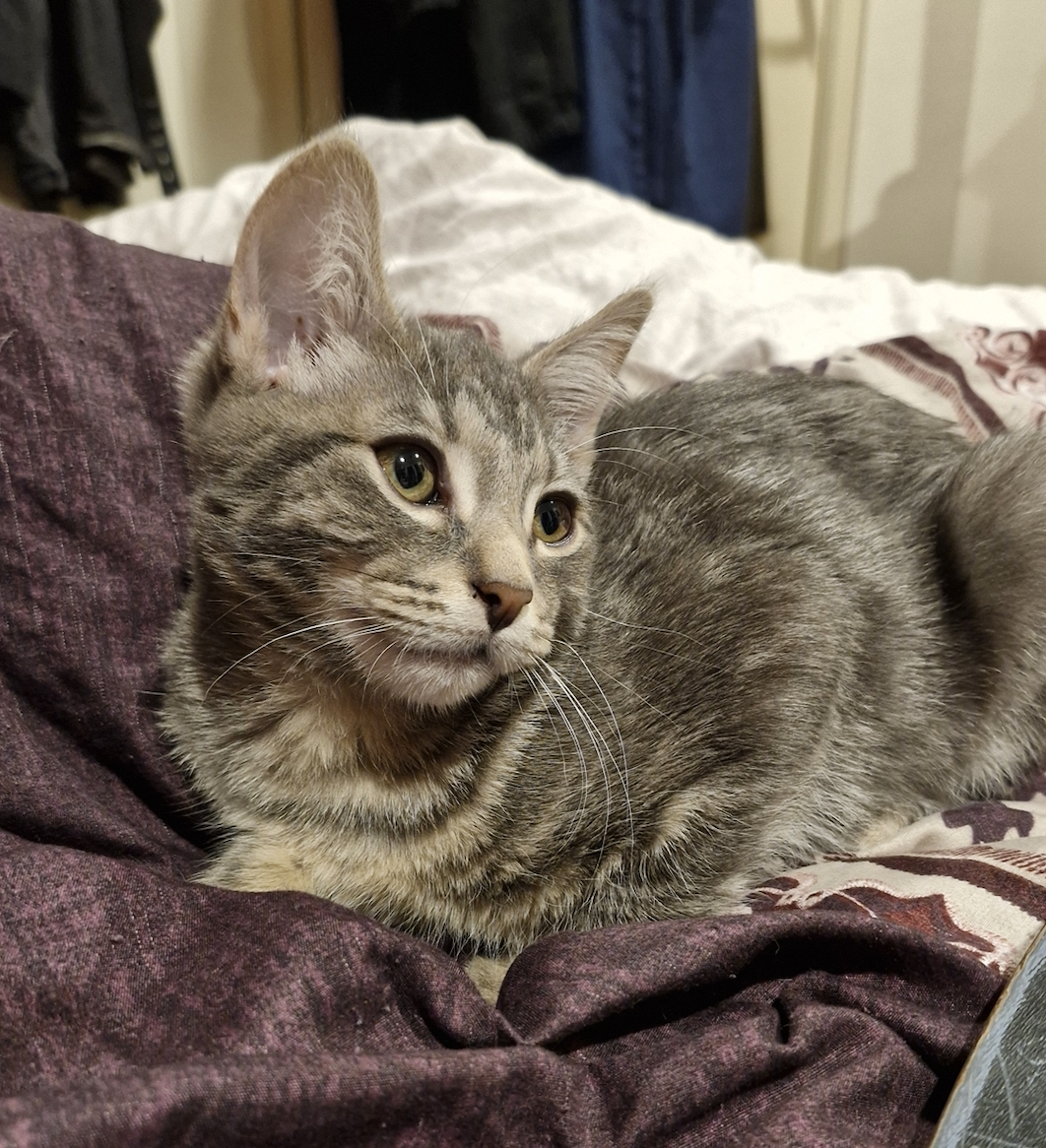
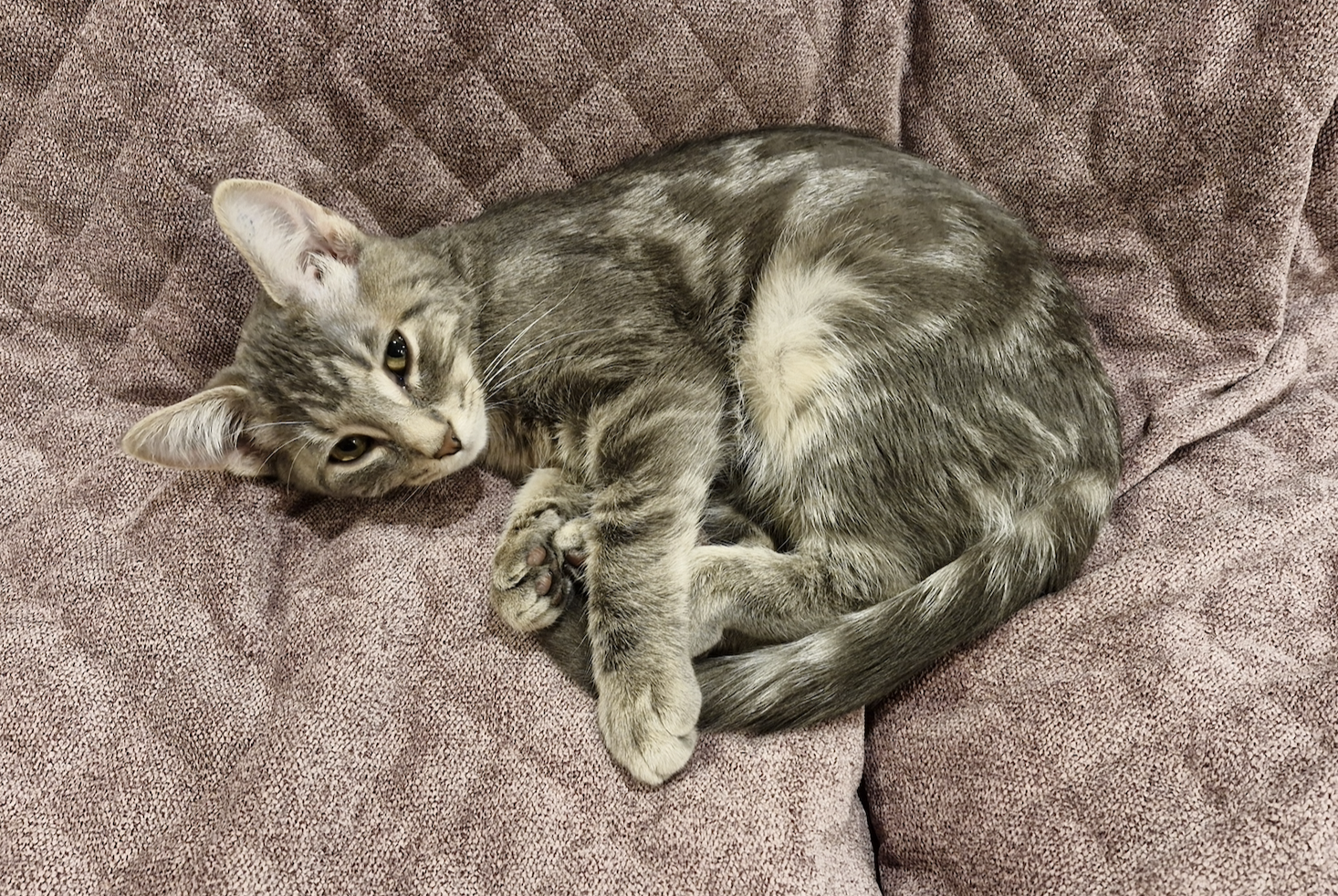
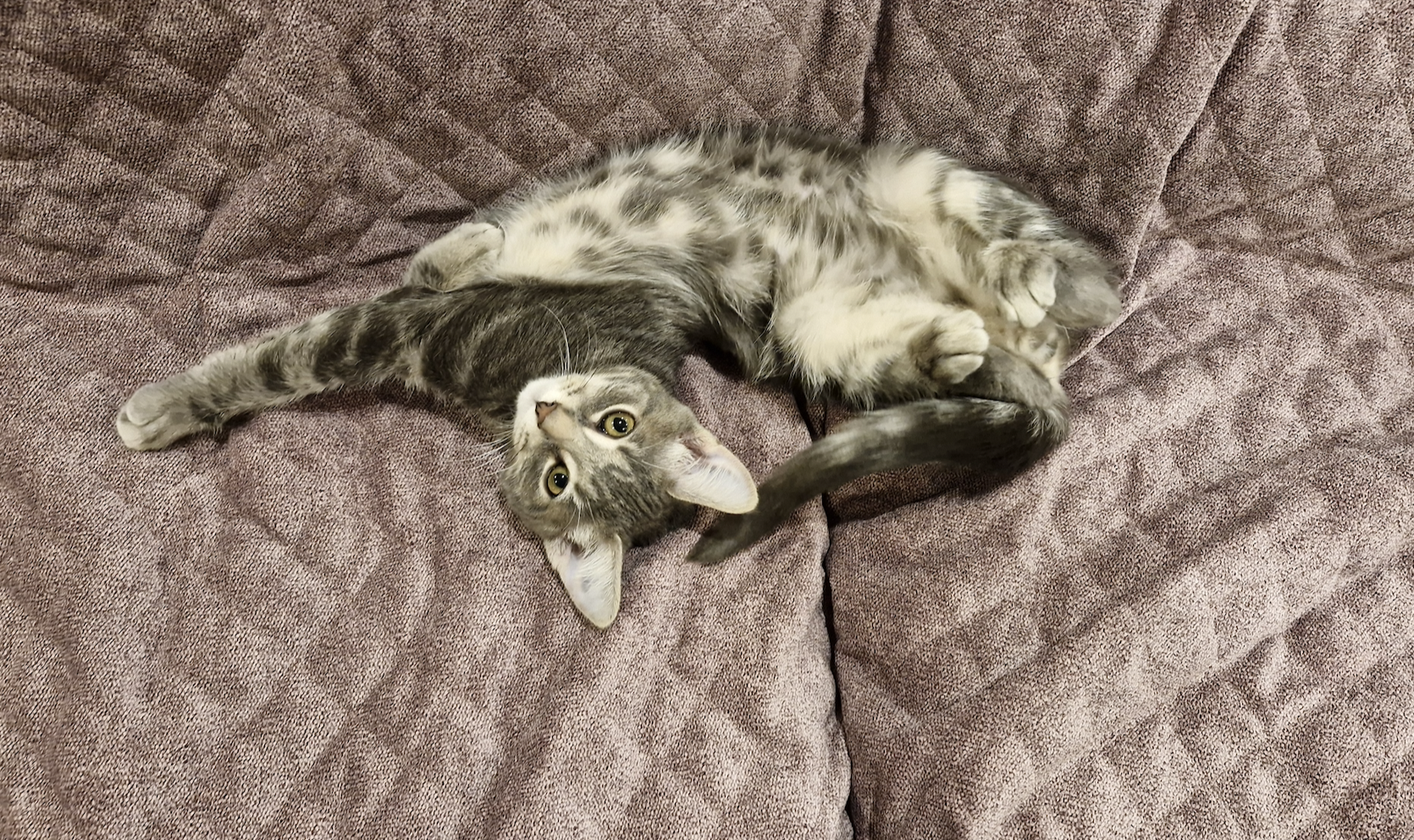
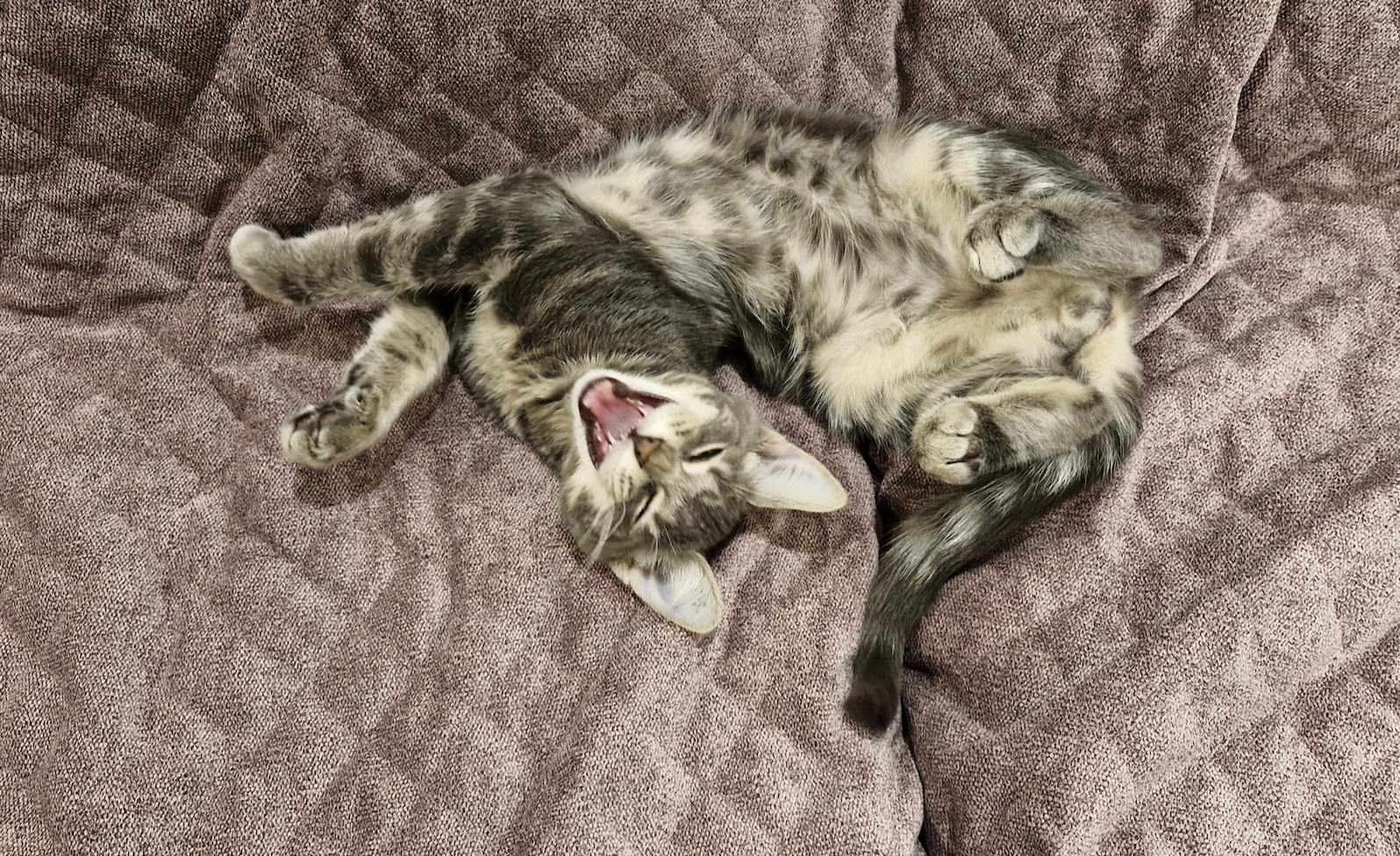
The kittens above are Zera/Zeraora (the only boy), Shinx, Lux/Luxray, and Litten. They’re all named after cat Pokemon, in consultation with an expert (aka my son).
Zera is the fluffiest I think, and was the first to really love humans. He is extremely chill even by the standards of this litter. He showed a slight interest in electrical cords and I bought chewy toys for him to see if it would help. It seems to have worked as we definitely don’t have a major cord-chewing issue. When travelling, he will loudly complain about the lack of cuddles for a few minutes before settling. I have a cat carrier that is exactly like a baby carrier, and he handles it extremely well (so does Lux).

Shinx is my personal favourite, and the most obsessed with being near me at all times. She might be the smartest as every so often she’ll come up with a problematic behaviour (like sneakily eating my breakfast when I put the bowl on the shelf next to me) but seems to learn very quickly what isn’t allowed. She is smaller than the others, and has the wildest eyes.
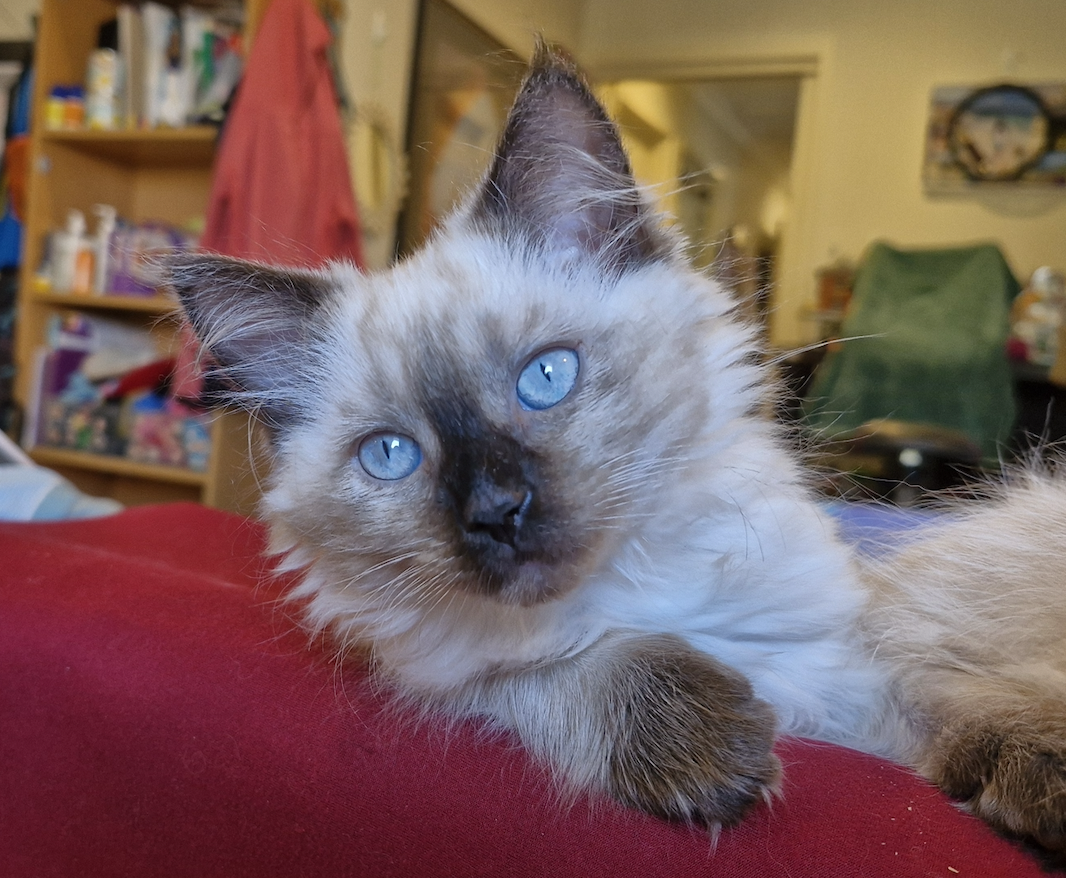
Lux has the best cat manners. She doesn’t like posing for photos (a lot of cats see the camera as an aggressive stare-off) and when the others want to suck on some fur she’s almost always the sucking victim. She and Litten are slightly more independent (by the standards of this litter). When travelling, she will loudly complain about the lack of cuddles for a few minutes before settling.
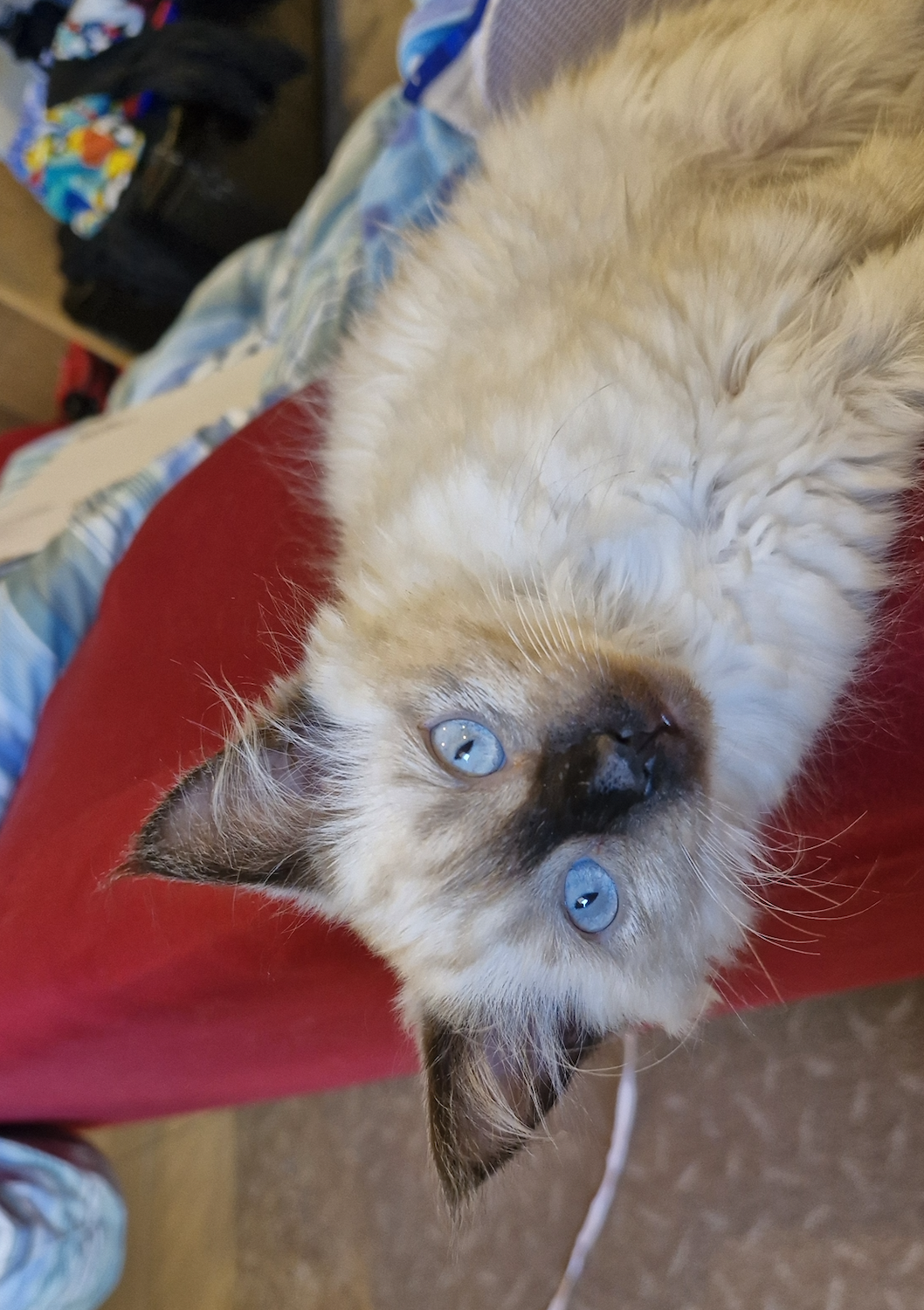
Litten is the first-born and was the loudest for the first couple of months. She was also the smallest, but she isn’t any more. She might be the most playful (or Shinx). She has the scowliest face.
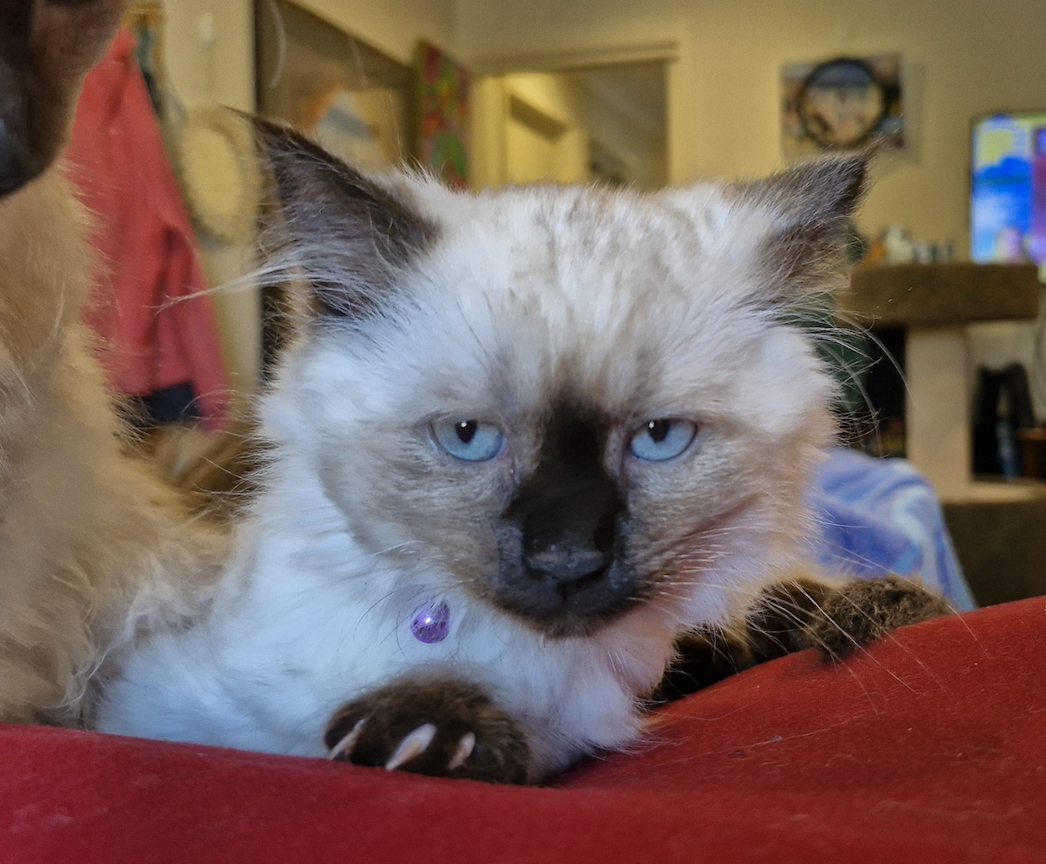
As a litter they are very much what one would expect from a pack of Ragdolls.
Yes, they follow their favourite human from room to room. (If you like company in the toilet, these are the kittens for you.) They will run circles between your legs and literally under your feet as you attempt to find a place to step.
Yes, their long fur does cause toileting issues sometimes. They’re not super gifted toilet-wise eg they need litter trays at both ends of the house—although they have never had an issue with holding on while travelling, even for about five hours at a time. They are fairly finicky about clean litter trays so you need to either have a lot of trays or empty them multiple times during the day (or both). Their stomachs can handle cheap food (Whiskas kitten food at the moment) but take a long time to adjust to new food (especially Lux, and to a lesser extent Shinx).
Yes, they can be picked up by literally anyone and they will simply accept it is happening. They can all be cradled like a baby, and Zera, Shinx, and Lux will sometimes purr in enjoyment of being hugged in that way. They also gaze lovingly at their human, which a lot of cats won’t do. They all love chest and belly pats.
They are not particularly vocal… except when food is being served, at which point they will all scream hysterically until the food is placed in front of them.
They are slightly more playful than the average kitten (which is a lot, lol) but with enough play sessions during the day they will sleep through the night. I recommend adopting two for this reason and others. If you only adopt one, you need to spend about two hours per day playing with them (in at least two separate sessions). If you adopt two, then two or three twenty-minute play sessions per day will be enough. They will get less playful once they’re a year old or if you don’t play with them enough.
They DO object (loudly) to being closed into a separate room when they know their humans are awake (the exception is Zera, who seems perfectly content wherever he is).
Zera and Shinx love sleeping on their human’s bed.
Their biggest issue as a litter is that they love sucking on each others’ fur. Zera is the worst offender, followed by Shinx. Lux is the favourite victim. I say “victim” as sibling sucking can become a serious medical issue. On the up side, they suck tummies rather than genitals (good). But I’m working on training them out of it, or at least reducing the frequency. I’m having some success, but there’s a long way to go.
They are all strongly bonded to each other. Because of the sibling sucking, Zera and Lux probably shouldn’t be adopted together.
They are fantastic with other cats—utterly unafraid, but still respectful. I suspect they’d do extremely well with a dog, especially a puppy (assuming the puppy can play without hurting them).
Regarding young children, I would advise caution. These kittens are SO trusting that they get underfoot to a ridiculous extent (especially near dinner time, or any time someone is preparing human food). A young child could easily step on them and hurt or kill them, which would be incredibly traumatising.
They’re also good but not great with scratching and biting. For better or worse, I have encouraged them to play with my fingers but to do it with claws sheathed and with mouthing rather than biting. They’re pretty good at it… but I still have loads of tiny bleeding scratches all over me (many of them because they jump on my lap or whatever and use a tiny bit of their claws to help with balance). Zera is the best I think, mainly because he interacts with humans the most.
They’re fairly good with getting brushed but it’s difficult to trim their butts (which is something that I strongly recommend their owners do regularly) because they don’t like getting forced to hold still.
They all (but especially Zera) like to chew on tissues for some reason. I THINK they’re over it now but you never know.
They will get darker as they get older, probably ending up with their faces and lower legs almost completely dark, and most of their backs dark brown with the rest of their fur a rich cream.
Here are all the videos I’ve put together with the kittens so far. The videos aren’t embedding properly at the moment so I’ll add the links in full too.
The day of their birth (there is some blood on their fur at first but it’s not graphic). https://www.youtube.com/watch?v=_cYb0ENMjiQ&t=20s
Syringe feeding them when they were less than a week old: https://www.youtube.com/watch?v=10D3cbGr_Bk&t=2s
A long video of the kittens around eight weeks old, falling asleep (or not) together: https://www.youtube.com/watch?v=xygw-k_IJPY&t=3s
Around ten weeks old, discovering their first Christmas tree. That’s Shinx climbing it (blue collar). https://www.youtube.com/watch?v=CKekerP_fI0
This is Litten with an unrelated cat. All the kittens love grooming each other and being groomed. https://www.youtube.com/watch?v=bppeNrGbRVA
And, kitten fight club from a couple of days ago. It starts with Lux (black collar) and Zera, then Litten (purple collar) joins in. Usually Shinx would be there too; she must have been fast asleep somewhere. https://www.youtube.com/watch?v=BWQPfjXDthU
The Crimes of Which I Am Accused
Unfortunately, that title is not a joke.
It’s been almost two years since most of this happened, but I know there are people out there who still believe certain things about me that are simply not true. Given the seriousness of the accusations, I want to very briefly say what happened so I can direct people here both now and in the future.
Summary:
I never did anything illegal.
I never did anything cruel or neglectful.
Rather than ‘kidnapping’ two kittens, I was trying to protect them from neglect—and I was right to do so.
In late December 2023 I began minding an incredibly friendly kitten as a foster for one of the many local cat rescue groups. I’ll call my main contact person Bob (although they are female). In consultation with Bob, I added five more kittens to the group. They all got on extremely well very quickly, and were also very friendly towards humans. One day it occurred to me that they were ideally suited to be the feline staff of a ‘cat cafe’—a small business in which people pay to play with cats. I’ve always wished Canberra had a cat cafe. In the past I’ve run several micro businesses, all of them ultimately making a profit (which is remarkable and mainly due to minimal up-front costs). So I realised that in some ways I was the perfect person to start a Canberra cat cafe where people could enjoy playing with kittens: the kittens could get a wider range of humans to socialise them (something that is recommended by the RSPCA); and I could make money from one of the few things I am able to do (I am disabled by chronic illness and cannot earn enough to even pay for my medical costs—but I have to try to earn something because life is expensive).
I soft-launched “Tabby Time” by posting on a few FaceBook groups. I was extremely clear that this particular Cat Cafe would not serve food or coffee, and would be held in my very ordinary and often messy house (I do tidy my home, but there are four people living here and all four of us have special needs of some kind). There was an immediate enthusiastic response. Then, within days, someone (who does not live in Canberra) posted on reddit, offended that I would charge money without a fancy venue or coffee. A lot of people mocked me or were offended, but I didn’t especially mind as anyone who knows anything about cat cafes knows that, for hygiene reasons, they often DON’T serve food or drink. And, anyone who loved cats would instantly understand that the cats were the point and this was a cool thing to have in Canberra.
People quickly decided my cat cafe was illegal, because it was not yet insured. I was, as always, very open about my insurance status. It is unwise but not illegal to run a business without insurance, and I had guessed correctly that public liability insurance would cost a huge amount (over $2000/year; considerably more than the cafe was ever likely to earn). This whole cat cafe was just a tiny thing for a few cat lovers to enjoy. The goal was to connect cats and people without making my life worse, and to maybe get bigger if it all worked well.
The closest I came to doing something illegal was saying that if people were thirsty I could give them some water, tea or Milo. I never actually DID give anyone anything to eat or drink because they were always so enthralled by the cats they didn’t feel hungry or thirsty BUT it is technically illegal for a small business to give someone a glass of tap water without a food preparation licence. (Later on I supplied bottled water for this reason.)
So no, I did not ever run an illegal business.
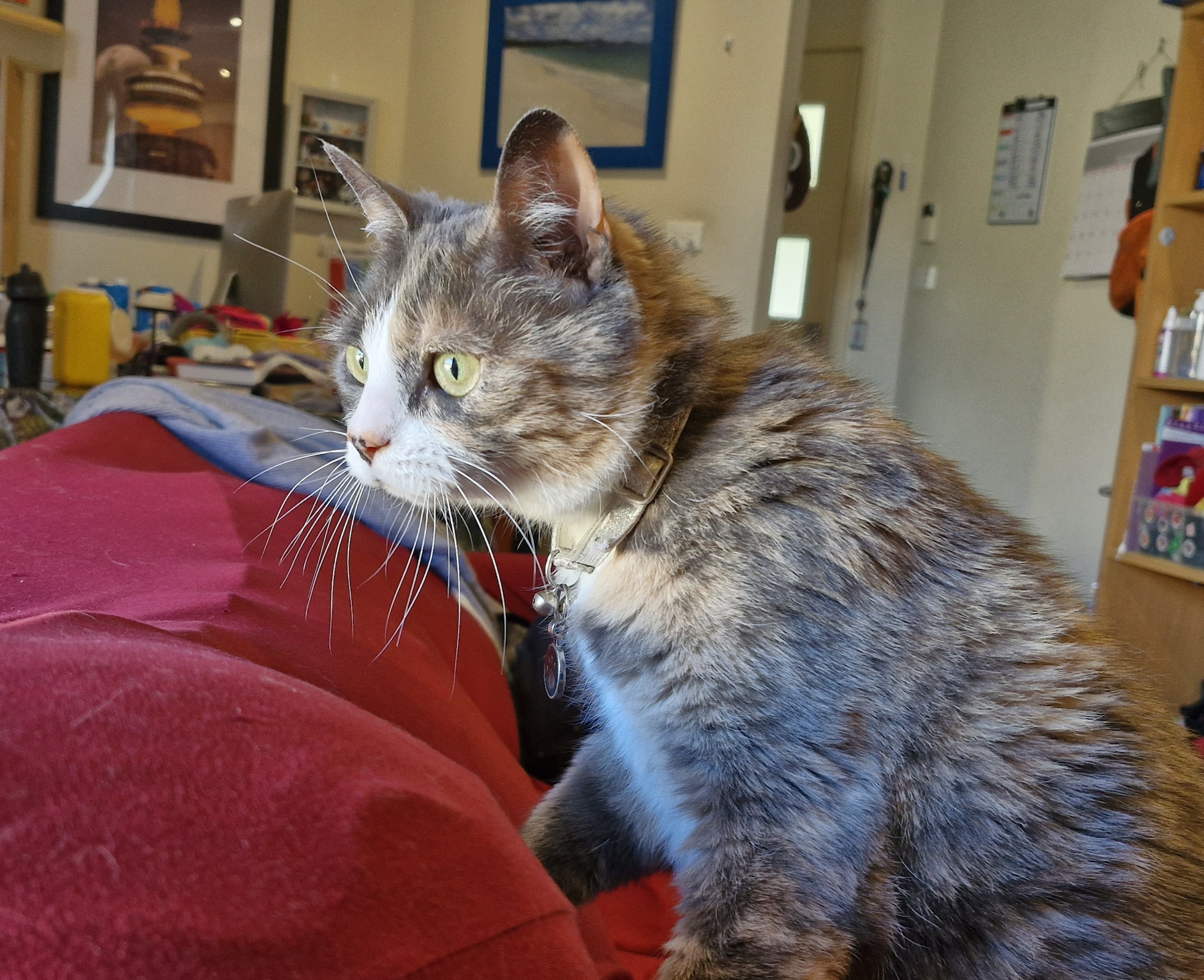
The tide turned online when someone decided that I was cruel to animals. This was either based on my appearance of incompetence; the accusations of running an illegal business; or simply the fact that most cats (including my two non-foster cats, one of whom is pictured below watching a bird) absolutely WOULD hate the very concept of a cat cafe.
But.
I. was. never. and. will. never. be. cruel. or. neglectful. towards. animals.
Let’s break this up into three parts.
- The idea that a cat cafe is innately cruel.
The majority of kittens I foster love having new human visitors. For example, the kittens I am fostering right now typically have play times lasting twenty or thirty minutes. When two of my volunteers visited a few days ago, they played for an hour and a half, including climbing all over the volunteers.
I never ran many cat cafe sessions (it was never open for more than a few hours at a time, either—my illness means I get too tired to function very quickly, plus of course the kittens would get tired) but I facilitated a lot of very special moments, such as teenage boys melting when the kittens chose to nap on their lap, and a young girl slowly getting over her fear of cats.
For me, running a cat cafe was exactly like inviting cat-loving friends over to play with my foster kittens. The only difference is that I have extremely high hygiene standards now (which have stayed even though the cafe is closed), and I let strangers visit, and they paid me. For the kittens the experience is identical—and fun.
More importantly, my kittens choose their level of interaction. They are able to leave the visitor space at any time! Any human visitors are only allowed in one section of my house, and there are always high places, hiding places, AND exit routes for the kittens.
The humans are also supervised very closely, and not allowed to pick up the cats unless I say it is okay (for example, when a kitten is sitting at their feet literally meowing to be picked up).
2. The idea that a cat cafe is innately exploitative.
Exploitation can mean “to use resources” or it can mean “to treat someone unfairly in order to benefit”. A few people really hate the idea of a cat foster gaining any kind of benefit from fostering cats. I agree that I should not do anything that harms the cats (including causing them stress—other than when a small amount of stress is good for them, eg getting slowly used to the sound of a vacuum cleaner in order to have a happier life in the long term). But I do not agree that someone should never make a profit from doing a job that is worthwhile! Teachers and vets and nurses and zookeepers and doctors and many many other professionals are doing important work. In an ideal world, all jobs would be paid. Writers! Foster carers! Those caring for unwell relatives! Artists! Etc! And yes, it’s rare for foster carers to be paid. But the best cat cafes benefit the human workers (who get paid), the customers (who get to play with cats), AND the cats—both because they get more attention (on their own terms), and because any foster cats are more likely to be adopted. That’s a win-win-win scenario. Fantastic!
3. The idea that a cat cafe is unsafe (for either humans or animals).
Human visitors need to be told that there is always a risk of scratches from cats—even the most well-trained cat will dig its claws in if it loses its balance. If a cat cafe doesn’t have a special glassed-in area for food and drink, it’s probably not hygienic to eat or drink there. I kept anti-histamines, spray disinfectant, and bandaids on hand as well as various other first-aid supplies.
Humans also need to sanitise their hands before they touch the cats, and when they leave. And they need to be supervised. I use F10 vet-grade sanitiser and stay in the room. Generally my customers get a free lecture on cat care and communication, whether they want it or not, because that’s how I roll (cats are an Autistic special interest for me).
If the cats are unwell, the cafe closes until they’re fully recovered.
I also vaccinate the kittens before they see anyone, and I arrange for them to have their second vaccination before adoption (as far as I know I am the only foster organisation that does both kitten vaccinations).
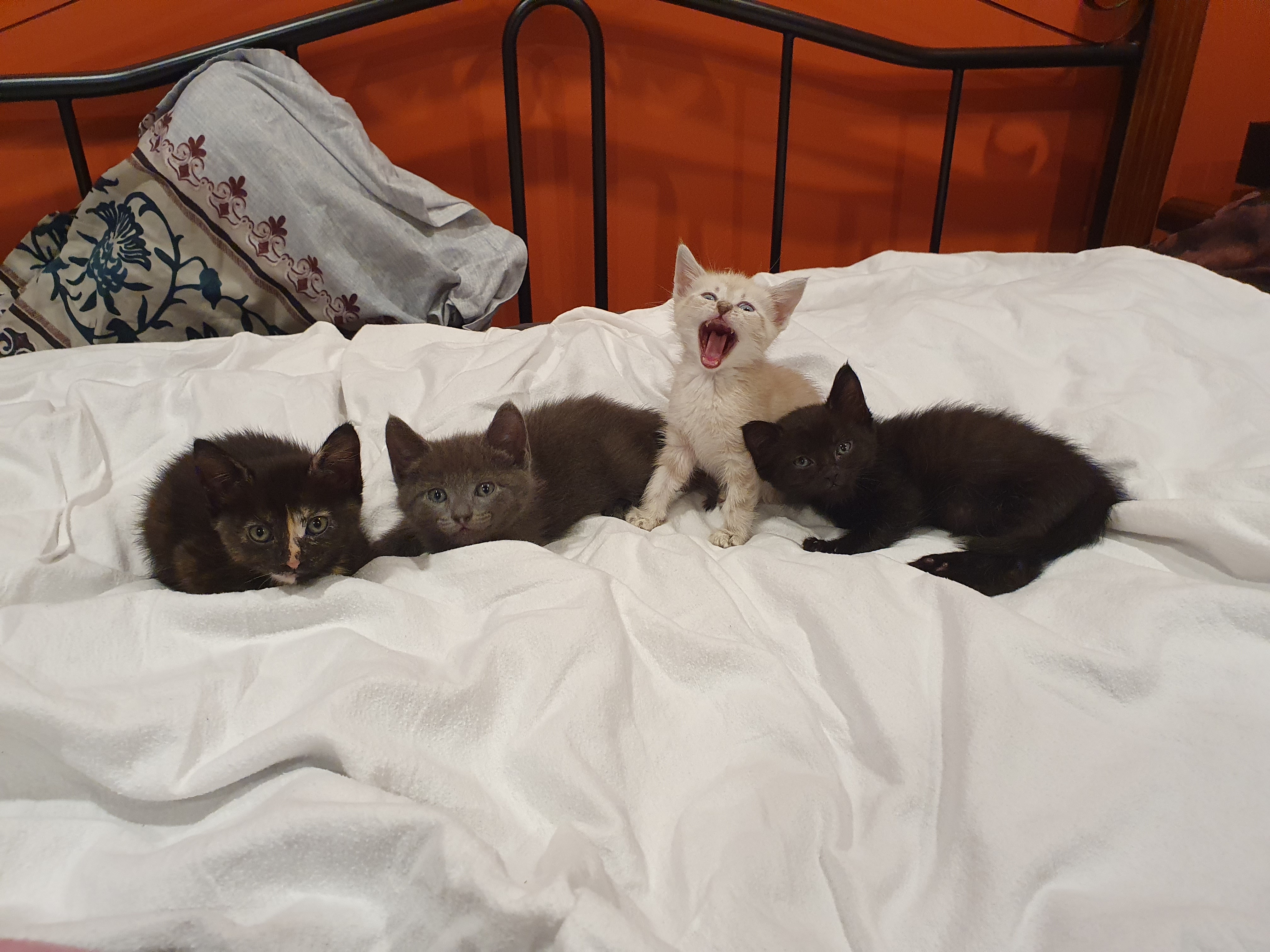
Here’s another litter I fostered and found homes for:
There are two more things I was accused of at around that time, both related to the agency I was working for.
First, that I never asked their permission to run a cat cafe. This has been perpetuated by Bob2, who I didn’t really interact with until he showed up at my house. If Bob didn’t communicate things to her co-worker, that is actually not my fault.
In fact, when I brought up the idea of a cat cafe Bob said, “If it helps with fostering, go for it.” We continued talking about it before I started it, and when it was running. She had only a vague idea of what a cat cafe was, and we were both taken by surprise that it attracted so much attention so quickly—but I respect her and her work, and I’m not stupid enough to launch a small business without asking the boss if it’s okay!
Things got so wild that some people said they were withdrawing donations from that agency. At least one of them was lying in order to get attention, but this was still devastating news for anyone who cares about cats because taking money away from foster agencies means cats will definitely die. There are way too many homeless cats out there, and not enough foster agencies to care for them all. When we say no to a cat, we know they may get put down. It’s devastating. (I know at least one agency that takes on way way too many cats for this reason, literally keeping dozens in a single very cramped and stinky house. I know another that euthanises kittens immediately.)
Other people online saw what was happening, immediately understood that people were hearing rumours and lies and causing real harm, and tried to donate to the foster agency. But the foster agency was so disturbed by all of this that they refused donations for a time. Because reputation matters that much.
I was desperate to protect the agency so I encouraged them to make me a scapegoat, even while they always made it clear that I had never been cruel or neglectful to the animals in my care. I know now it would have been smarter for them to say, “We stand by our foster carer. We would not have let her foster kittens if we were not confident that she is trustworthy.” and then to ignore any further chaos. Oh well.
The RSPCA and the Department of Domestic Animal Safety both came and did a surprise inspection of my premises. I like to think it’s fun for them to see a bunch of healthy, happy kittens. Certainly they were perfectly content with my set-up (the only issue was that I had two water bowls in the cat-only area and they said there should be three). But of course once an internet mob scents blood, they cannot listen to reason. I’m not sure why people think that a random on reddit is more trustworthy than the two departments who specialise in animal care and safety, but here we are. (I was also reported to the NDIS because I said I thought there might be a way for people to use the cat cafe as unofficial therapy. I never encouraged fraud but to be fair I do get confused by the NDIS rules… which of course I also said up front and publicly.)
The foster agency I was working with had already decided to take away the six kittens I was fostering. The RSPCA and DAS inspections meant nothing to them (not surprisingly, since they knew the kittens were thriving in my care and were taking them away only to appease the mob).
I had already found homes for four of the kittens, and I knew that the agency did not actually have enough resources to look after “my” six as well as those they were already caring for. So I had a dilemma: to do what was best for the kittens, or to do what a bunch of abusive internet strangers wanted me to do.
As I said, I respect the agency. But I knew they were doing the wrong thing. BUT, their reputation is a matter of life and death.
I attempted to contact the future owners. One of them was not available, but the other said they did NOT want their kittens to be given to the agency. That meant that it was foster carer + future owner VS foster agency.
So I compromised: I gave four kittens back to the agency, and insisted that the last two (the two whose owner I had spoken to) either remain in my care or go directly to their new owner (this would be a foster-to-adopt situation in which he would not legally own them until they were desexed). I knew that this would look VERY bad online but as always I prioritised the health and safety of the kittens over my own well-being.
So, the final crime of which I am accused is kidnapping two kittens.
Here are the relevant facts:
- Although I had previously requested paperwork from the agency (specifically, I asked for their foster guide) they never gave me anything. The RSPCA guidelines emphasise that the RSPCA can confiscate foster kittens at any time for any reason, so although legally the smaller agency I worked with never even mentioned that they might claim back the kittens I was aware that there was precedent.
- Five of the six kittens I was fostering had never met Bob or Bob2.
- Although there was never any paperwork, Bob and I talked regularly about kitten care. She was an excellent mentor/trainer and she also had reason to know that I was an excellent foster carer. She is good at what she does.
- As soon as I said that I would not give up the last two kittens, Bob2 made me verbally agree on a recording that the kittens now belonged to me and I was responsible for any vet care that was required. Less than an hour later, the owner paid the adoption fees to Bob2. We all never mentioned that legal agreement again. So… the agency was willing to give up the kitten but immediately took it back when money was offered. This is TOTALLY FINE WITH ME and is not cruel or shocking. The only weird bit is that they tried to punish me by making me (briefly) the legal owner of those two kittens. While also screaming to the press that I kidnapped them. They didn’t show me the same consideration I showed them—protecting reputation as much as possible in order to save the lives of more cats. I am also a foster carer, and hurting me hurts the cats that I can’t save. So screw you, Bob2. You lost your temper and did the wrong thing and as a result people still hate me even though I’m innocent. However, you are a genius foster carer so I wish you every success in life.
- In about 48 hours, the kittens were at their owner’s house. My house was empty of foster kittens, through no fault of my own, and the entire ‘kidnapping’ was a beat-up.
- Remember how I mentioned that the foster agency was overwhelmed? Well, they didn’t manage to coordinate the desexing for those two kittens in time. In the ACT it is illegal to leave a kitten undesexed after three months without a permit. So yeah, the foster agency DID do something illegal. Worse, the two kittens developed behaviour problems as a result of not being desexed in a timely manner. So yeah. I was right NOT to give them up. I should probably have stuck to my guns and kept them with me for the full fostering period. (But even though the foster agency’s failure was technically illegal, they will never and should never get punished for it. We’re all doing our best here. And late desexing usually works out fine as long as no one gets pregnant.)
So, rather than kidnapping two kittens, what I actually did was sacrifice my reputation in an attempt to keep them as safe as possible.
You’ll notice there are no photos of the crucial six kittens. That’s because I deleted all the hundreds of photos and videos I took of the kittens at the request of the agency. They also never told me anything about the fate of the other four kittens. I know the second two that I had found a home for DID get to stay together and go to that home because that person knew the situation and messaged me. I have no idea if the final two kittens were ever adopted. They were healthy and well-socialised thanks to me, so I assume they landed on their feet.
The cat cafe is closed now (because of insurance, lol) but I am still fostering. It is something I can do despite my disability, and I am good at it.
This is Popcorn, who was almost certainly going to be euthanised before I took her in along with her four siblings. She was the most violent of the bunch, hissing and spitting in terror. She almost died of cat flu from the stress of being taken from the street (I told the person who caught them that any future kittens should be left longer before being caught). But they all lived, and adjusted to being house cats, and were all ultimately adopted.
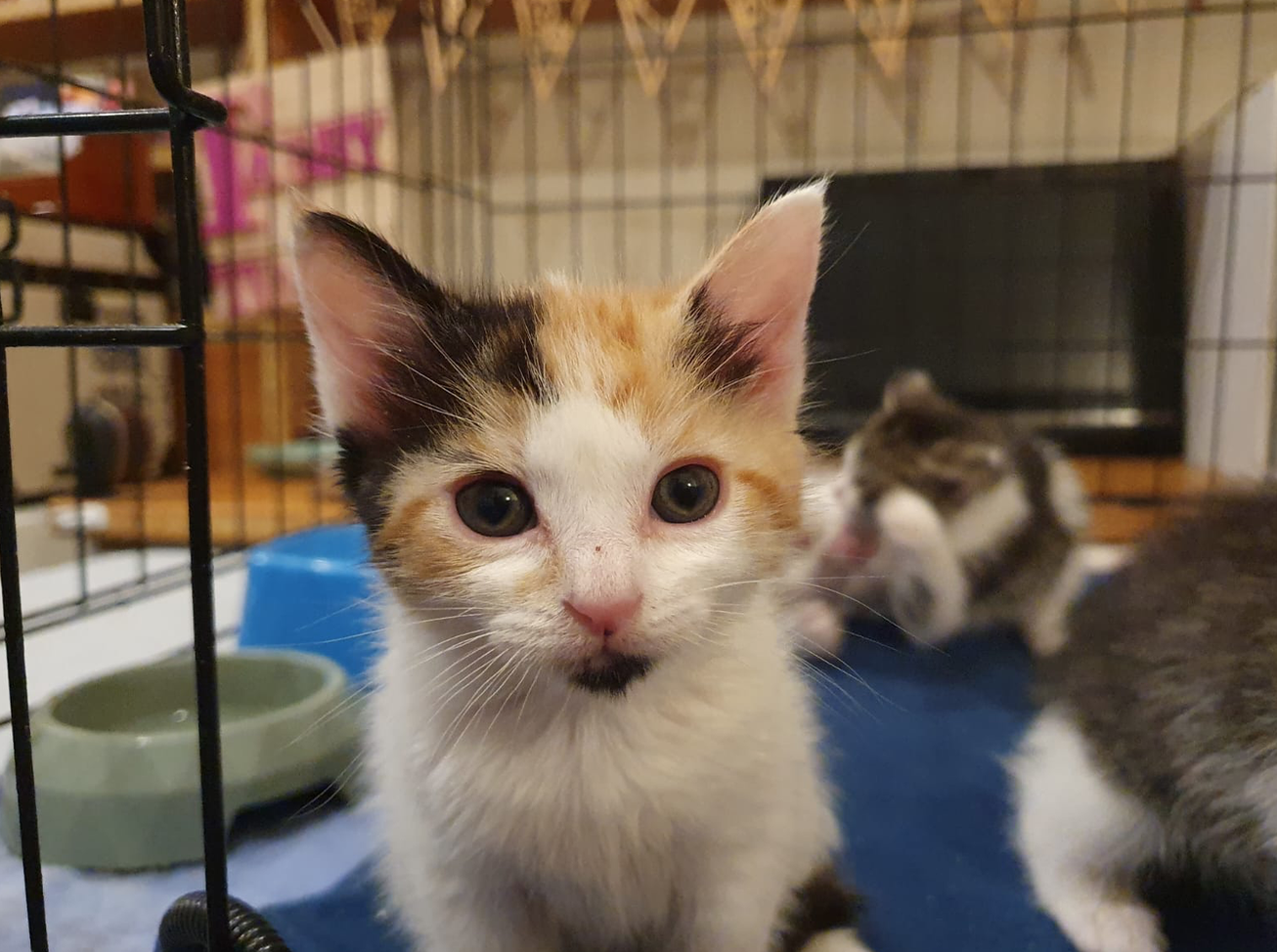
I am very proud of all the work I’ve done, and I enjoy it very much. I will probably have to give it up because my I can’t justify spending thousands of dollars on fostering cats when I can’t even pay for my own medical costs. But I’ve applied for a government grant and I’m optimistic that somehow, I will be able to continue saving precious furry lives.
If you have any questions, please ask them here. If you sound sane and human, I will answer them.
I was aware at the time that I was Autistic and that quite a few people have an immediate negative reaction to Autistic people (not on purpose, I believe, and not consciously) according to various studies. I am now diagnosed as Autistic (Level 2). This partly explains my poor communication skills online, and why some people immediately feel uncomfortable around me (which makes them more quickly trust lies about me). It is also very obvious in the way I always share the worst things I can think of about myself eg my house is messy; I’m not insured. Instead of seeing my honesty as making me trustworthy, people seem to think that I must be sharing bad things in order to hide worse things. Uh, no. I’m just extremely honest. It’s an Autism thing.
Summary:
I never did anything illegal.
I never did anything cruel or neglectful.
Rather than ‘kidnapping’ two kittens, I was trying to protect them from neglect—and I was right to do so.
I’m having kittens about having kittens
Today I assisted a cat through her first birth. I want to remember every detail, so here goes.
(Warning: There is a tiny amount of blood shown in some photos, and if you look very closely you might see an umbilical cord stump.)
A few weeks ago someone reached out to me on FaceBook. She has two young Ragdoll cats, a bonded brother and sister, and had a surprise pregnancy. Was it safe for the mum to deliver her brother’s baby?
The answer is, “Definitely”. Some breeders deliberately breed relatives when looking for certain traits. It makes the babies more likely to have certain genetic diseases, but it’s perfectly safe for the mum.
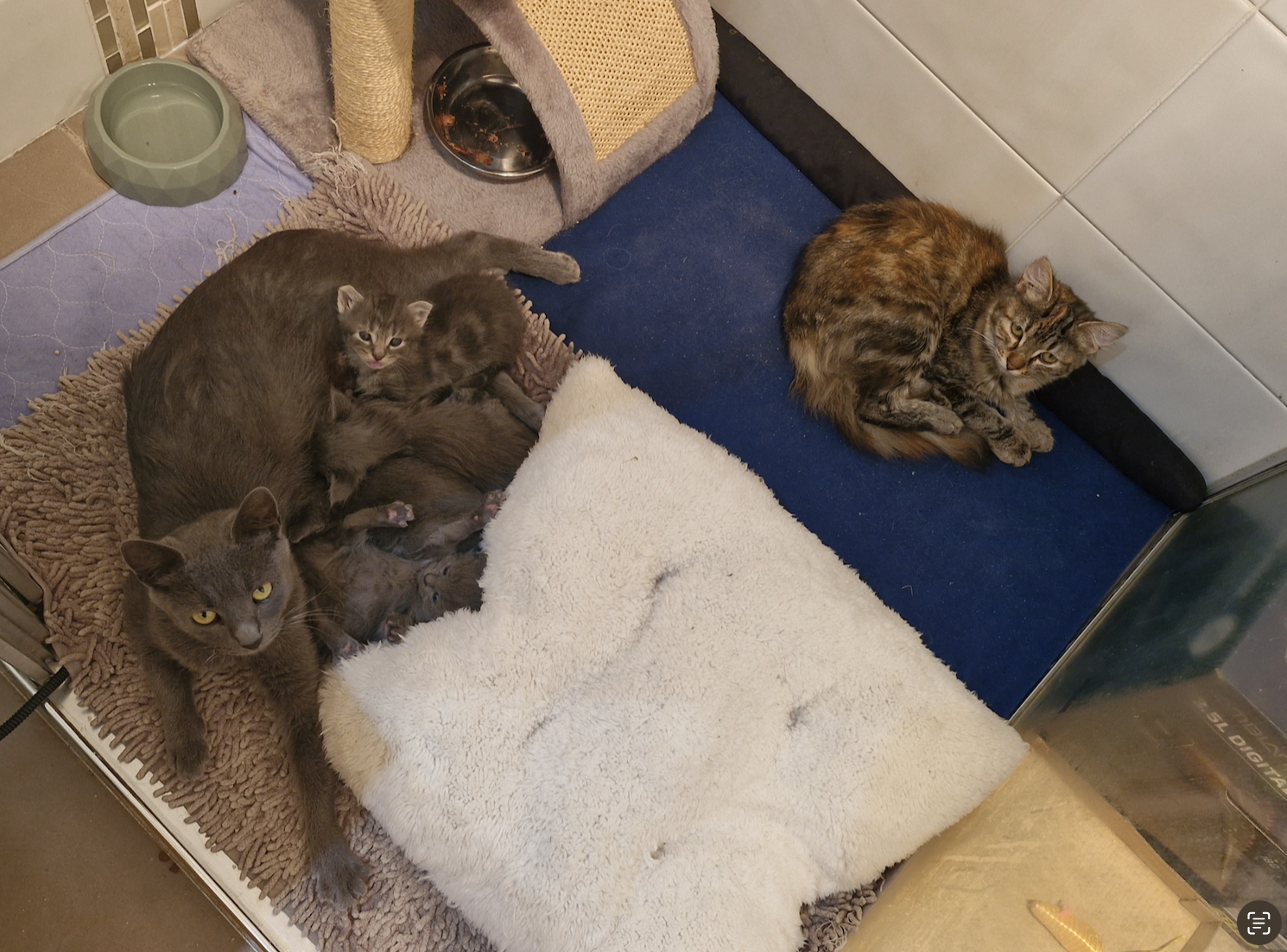
We talked a lot, and ultimately I am looking after both adult Ragdolls (hereafter called ‘Mama’ and ‘Papa’) until the kittens are weaned. Papa is there to make Mama feel as relaxed as possible, not least because they only moved to my house a week and a half ago.
The owner is devoted to her cats. They are healthy and vaccinated and will return to her when the kittens are weaned. I’ll hold on to the kittens until they’re all adopted. Two of the owner’s friends already want to adopt a kitten each.
We took the cats to Cooinda Vet in Marulan (much cheaper than Canberra even though it’s an hour and a half drive each way) to get Papa desexed and Mama checked. The ultrasound showed “at least two” babies due within two weeks.
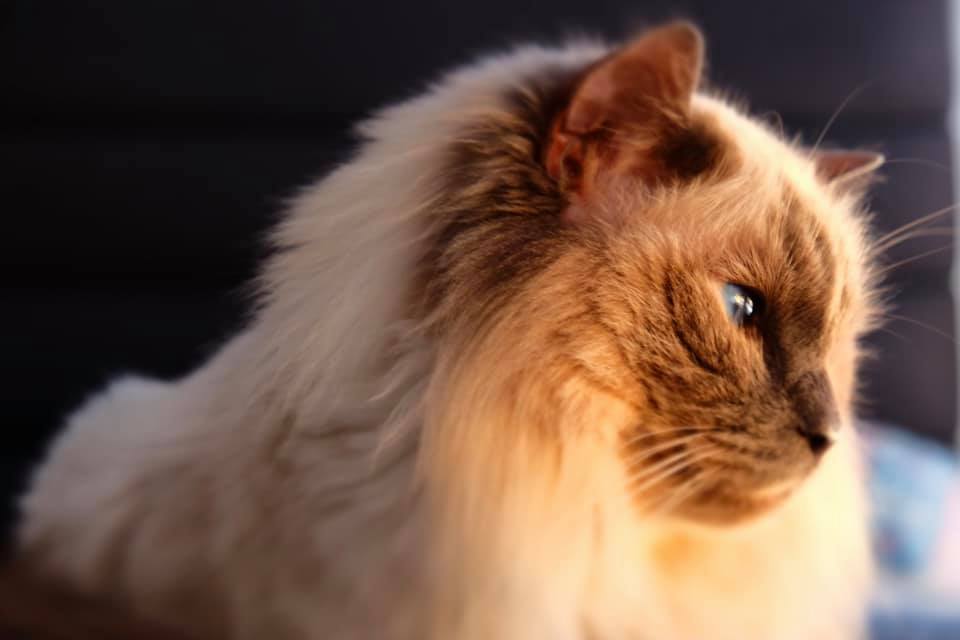
The owner doesn’t want photos of Mama and Papa online, but it’s fine for me to share kitten photos. Ragdolls are one of the bigger breeds of cats. They are very fluffy with a white or cream body and dark points (like a Siamese). They have amazing blue eyes, and are famously chill, often relaxing utterly (like a rag doll) when picked up. Here is a Ragdoll photo from one of my interactive books:
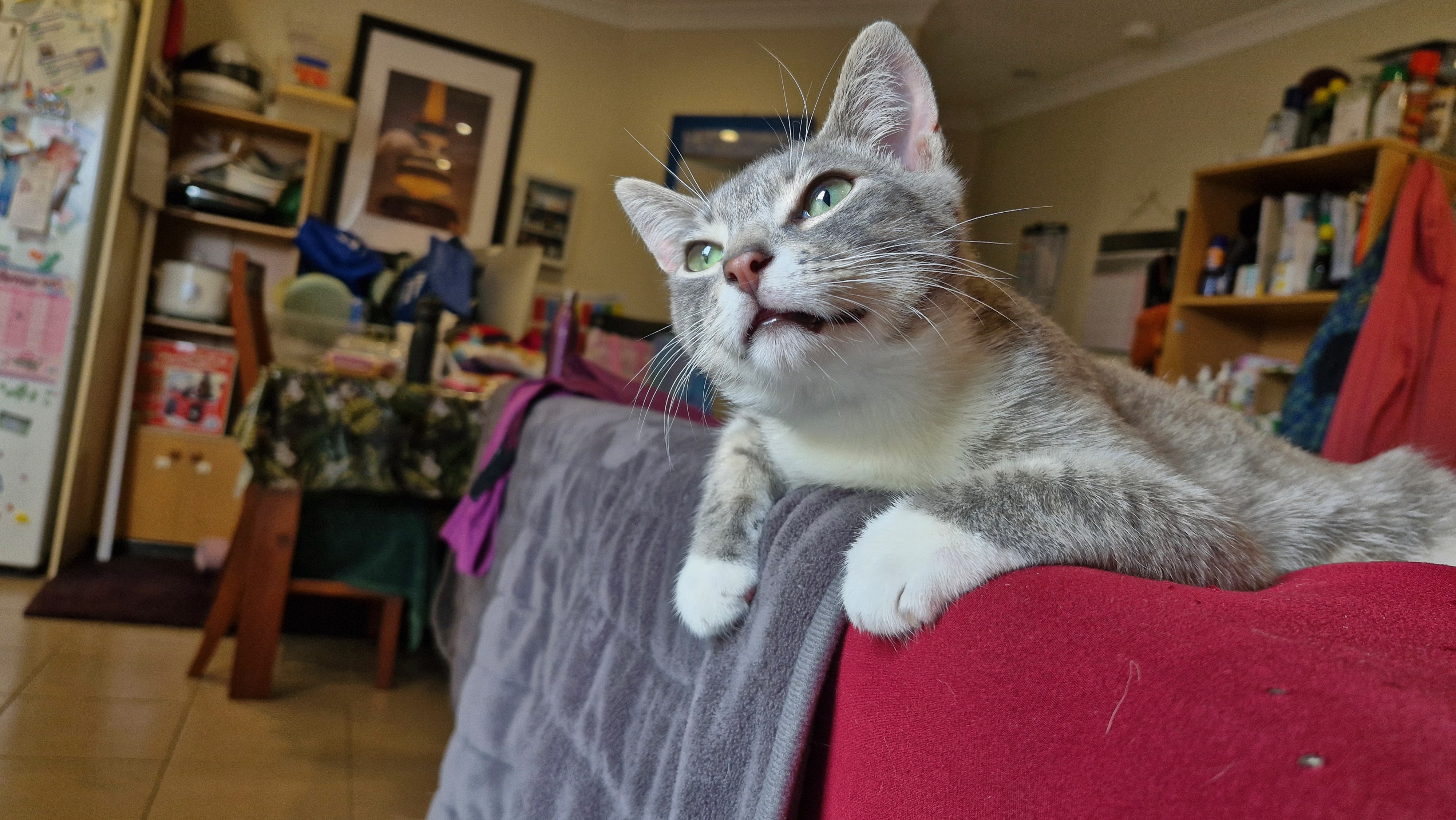
Papa is extremely friendly and will quickly approach new people (or cats). He is a LOT like Jack Black, one of my foster kittens (pictured below). They’re already starting to play together. Mama is also quite used to Jack. (Zipper is grudgingly tolerant and then goes outside to get away. Zoom is terrified, having never met a cat bigger than herself. Jodie is terrified but bravely challenging herself to get a little closer to them each time they are allowed in the same space.)
Anyway!
I set up three possible nesting boxes for Mama, but one is definitely superior. Apart from anything else, it’s set up inside a large mesh carrier (the kind for a small dog) which means in an emergency I could just zip it up and take the whole family to the vet.
Sometimes Mama would go in there, wash herself a little, and then wander out. Unsurprisingly, both she and Papa spent a lot of their first few days hidden behind a table. Change is scary. But honestly they both emerged relatively quickly, and were both snuggly with me, including purring and rolling over for belly rubs. My other family members have all patted Papa many times, and the kids have each patted Mama.
On 20 October (Monday) I noticed Mama was producing milk, confirming the vet’s estimate of her due date. I felt the kittens kick a couple of times during the week, and noticed that she liked to burrow into the nest (which is sort of bad because I’d carefully layered it including waterproof layers, layers for warmth for the newborns, and layers that could easily be removed if they got blood on them).
On Tuesday I saw her stomach twitch, which was either kitten movement or pre-labor contractions.
On Wednesday, she and Papa were grooming each other (another pre-labor sign). At 8pm, she had burrowed into the nest and was sitting on the plastic carrier base with my carefully-arranged covers over her. I wasn’t sure, but it seemed like it might be time for The Kittening at last. Here are most of the messages I sent to my friend, including the times I sent them (and the typos):
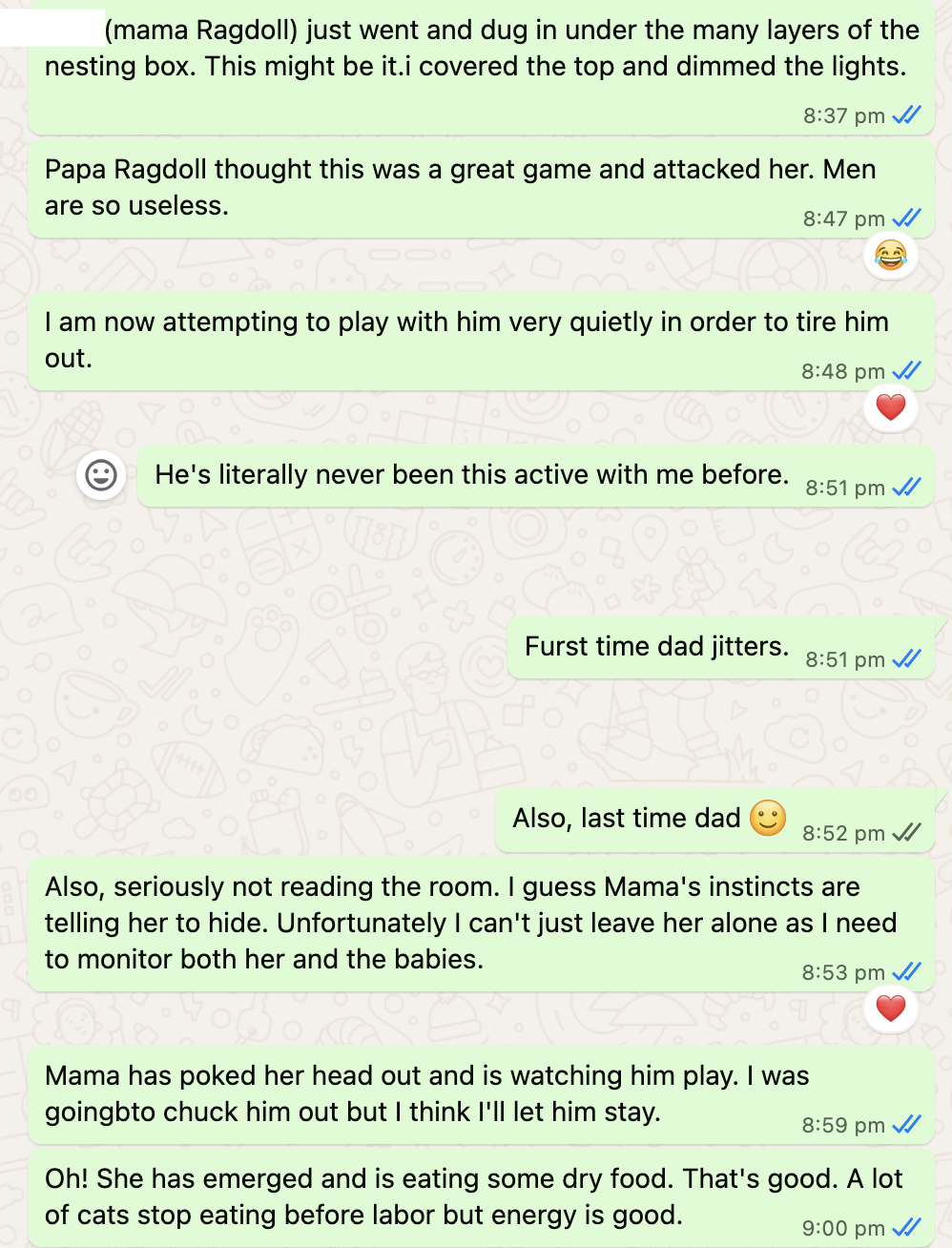
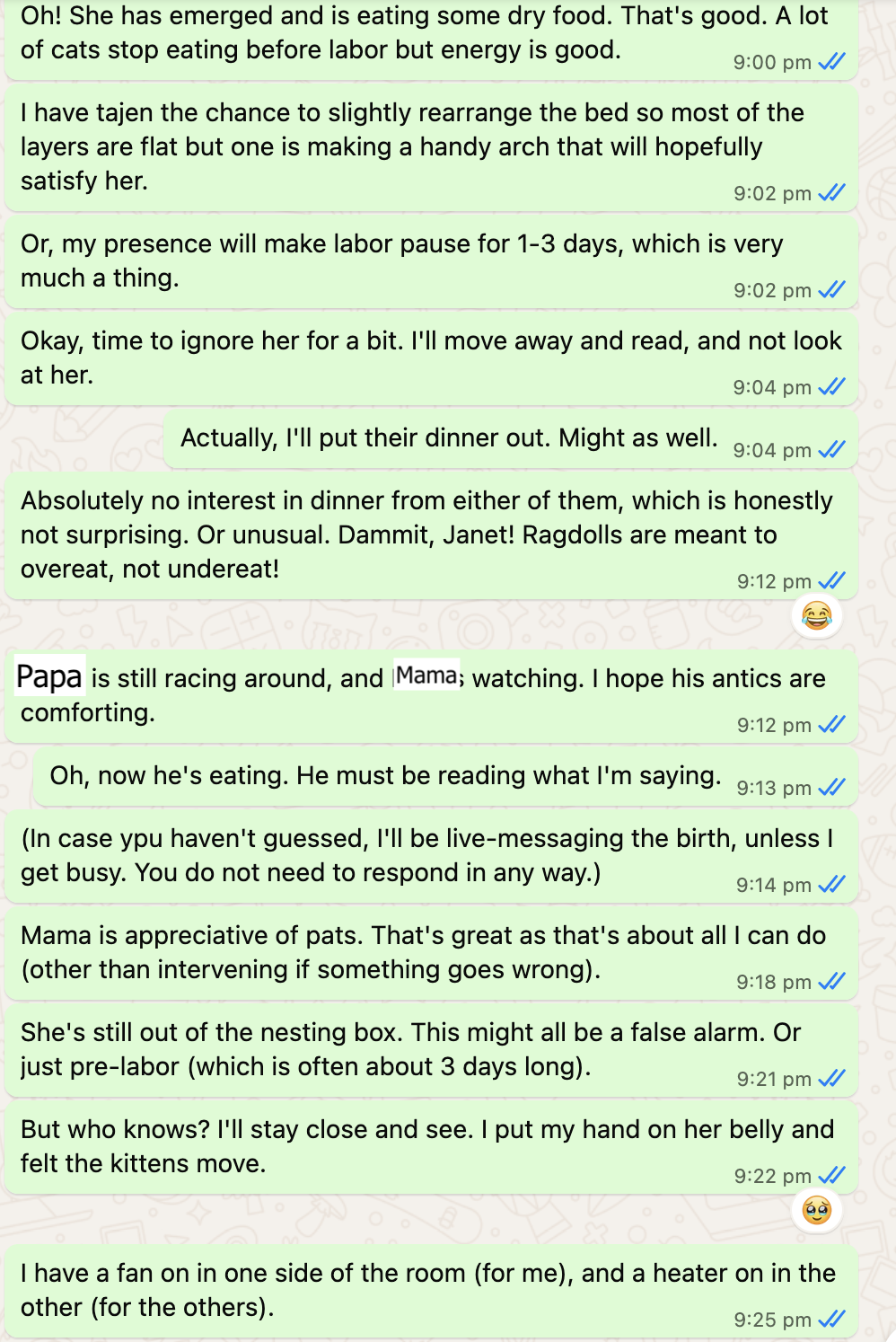
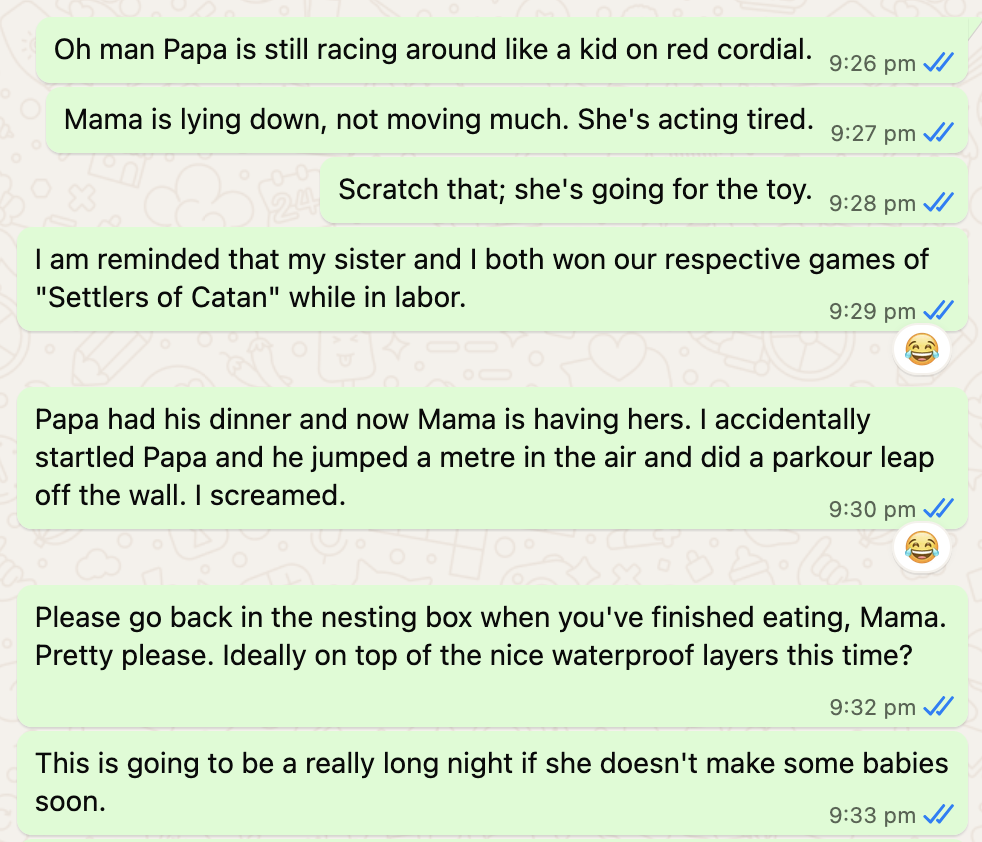
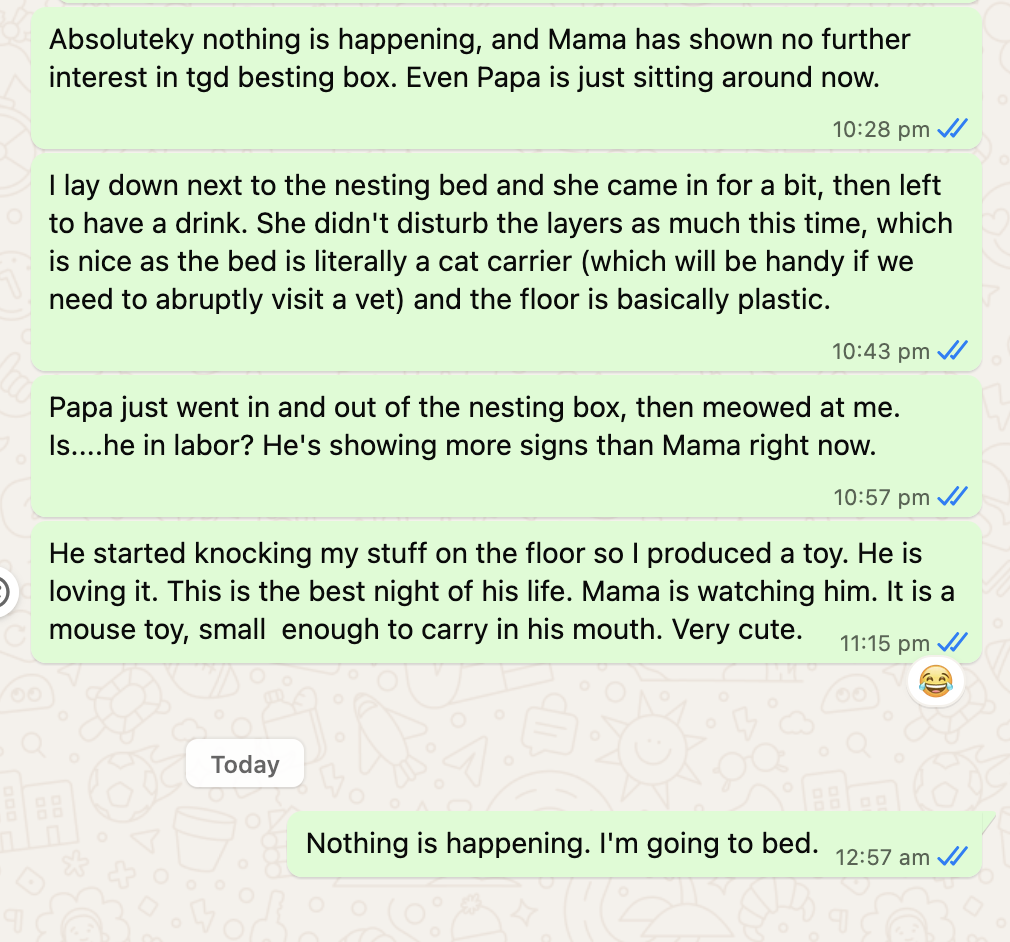
So I went to bed about 2am and slept until 7am, when I needed to get up and get my human kids ready for school. I bought more food and litter (and a toy for Jack’s BFF Jodie), came home and slept until 1pm. Of course I fed the various cats, scooped litter, and checked on Mama again. She had dug out an entire layer of the nesting box, rearranged the rest, and was chilling out elsewhere. I left the heater on and the AC off.
At 1pm I found her in the nesting box (under the nice blankets) again, and I went and had my lunch. I did some much-needed cleaning (Mama likes to throw a solid cup of litter out of the box overnight, which would normally be a pre-labor sign but apparently she does that all the time). I heard two meows around 2pm and wondered if it was really proper pre-labor this time.
At 2:20pm I went back into the cat room. Papa was acting strangely and I heard another meow. Where was Mama?
She was hiding behind the table again, but coming out since I was there. Then I heard another meow… and realised it wasn’t Mama. Or Papa. It was coming from behind the table.
Papa and I raced to investigate. I don’t know which one of us knocked over the conveniently over-sized water bowl but it went all over us and the rug.
I frantically-but-extremely-carefully tossed everything piled up on the table onto the couch, and then saw the tiny damp BABY CAT behind the table on the bare, low-quality carpet.
EEP!
The rule is to always let the Mama give birth in the place of her choosing.
But.
There was a scattering of litter on the floor, and it’s not a warm place at all. And she liked the nesting box, didn’t she? Just not the way I arranged it?
I knew it wouldn’t be long until the next baby arrived, and I couldn’t bear the thought of it getting born on the floor. Who knows where that floor has been?
So I gently put Mama in the nesting box (on top of the covers even) and the baby next to her. I was so scrambled I didn’t even wear gloves, but I noticed Mama wasn’t fussed at all. She just lay comfortably on her side and washed her baby. And purred, especially when I patted her.
Now that the first baby was out, she didn’t feel the need to hide (and maybe it helped that I was there to protect her from danger? I dunno—some cats hate having humans there, and others love it. Mama was very clearly in the “love it” camp).
After all this time, I wasn’t ready! I needed to change the stinky litter! I needed warm water and clean rags! Where was my notepad? Did I need anything from the birthing kit? What about picking up the kids from school? And was the first baby kitten okay? I’d dimmed the lights and now I couldn’t SEE!!
Another baby came out, just like in the videos I watched to prepare for this birth. Mama seemed very comfortable and pleased with herself. Kittens are born 10-60 minutes apart, so after watching to see it was breathing I raced out to toss the litter, grab various things, and sort out the human kids. And to message the owner to tell her it was all happening. She was literally having an ultrasound at the time. Here’s a kitten next to Mama’s front paws.
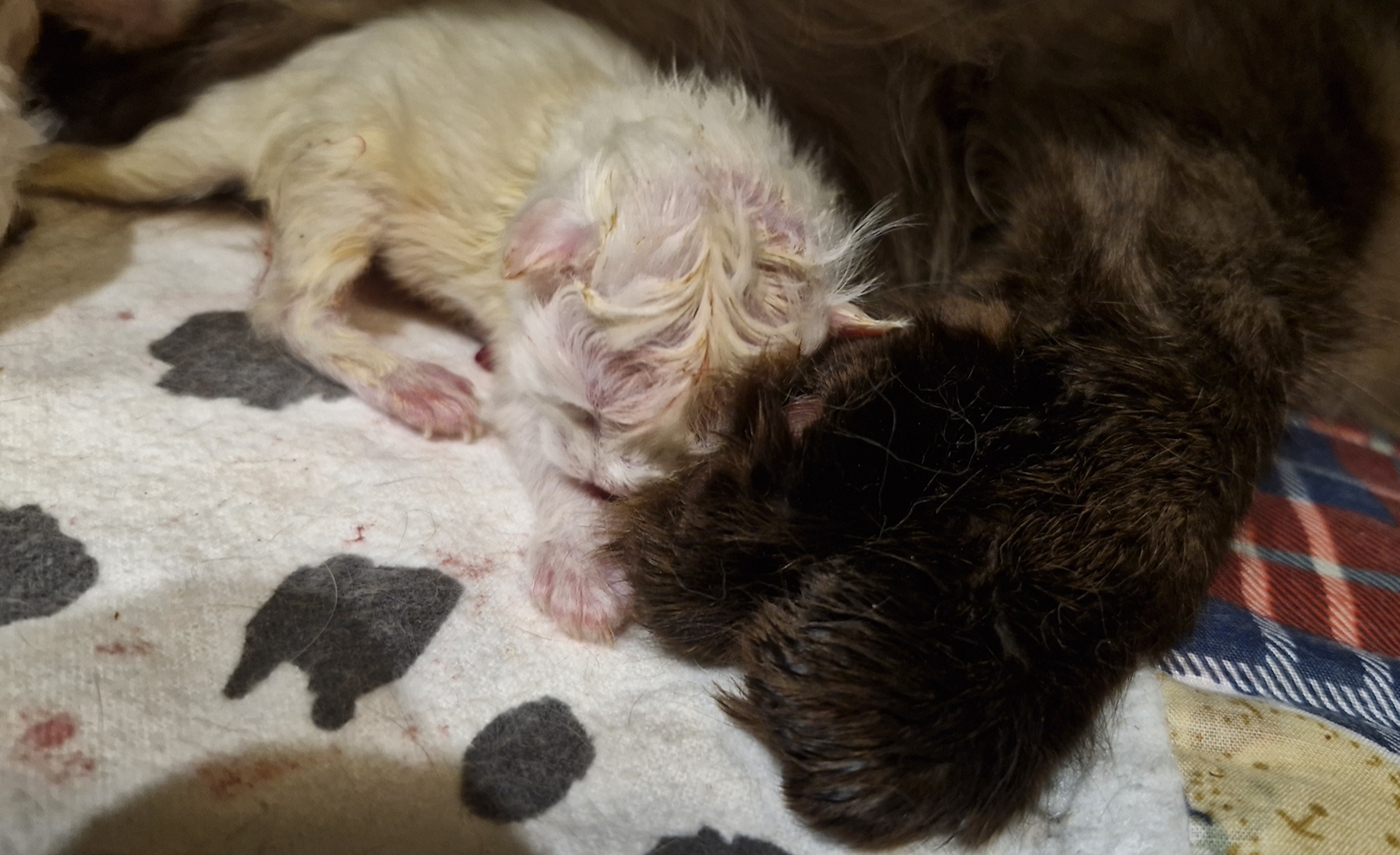
And then I settled in for the rest of the birthing process. Clearly, Mama had read the instructions that tell birthing cats to lick off the amniotic sac so their kittens can breathe, and to chew through the cord and eat each placenta when it arrives. So I wouldn’t need the scissors, alcohol wipes, or unflavoured dental floss (to cut the cord), and I wouldn’t need to break open the amniotic sac or clear the kittens’ airways.
They were very wet despite getting a few good licks from Mama. I turned a second heater on, checking the two thermometers I’d placed in the room and sweating buckets myself from the heat. The owner asked if she should/could come over. Given that Mama was purring every time I patted her, I said an emphatic yet.
Another kitten came out. Excellent! Three kittens!
Papa approached with fascinated caution, sniffing the air and watching the magical cats that had appeared through some kind of hidden doorway that he had somehow never discovered. HOW DID THOSE THINGS GET IN HERE?!? He didn’t hiss or growl, but he backed away to watch from a safe distance. Some father cats will literally kill newborn kittens, but clearly that’s not his vibe. I’ll still supervise him a lot.
The owner arrived, making a big fuss over both adult cats and generally squeeing like a first-time grandmother should. And then suddenly Mama’s stomach started visibly pulsing as if she was going to throw up.
I knew what that meant by now, and said, “She’s having another one!”
She enough, moments later there was a fourth kitten! She washed it off and then lay down to wait for the placenta, which she ate like the rest. The kittens were trying to feed, and they were SO BAD at it. I mean sure, they’re blind and mostly deaf at this stage, and too weak to stand, but they kept sucking on Mama’s paws or her fur. More than once I tried to point one in the right direction. If anything that made it worse because they’d immediately hare off somewhere else. Still, I remembered a vivid story I was told when I was pregnant about the strong drive to nurse after birth (in humans) and I mostly just watched them flail about. It was probably building up their muscles or something useful like that.
Four kittens! Fantastic!
I made the owner go away because she’s pregnant herself and that room is HOT since kittens can;t thermoregulate. Plus of course I wanted them to myself. And to turn on a second heater because they were still wet.
At 4:18 I wrote to my animal welfare person.

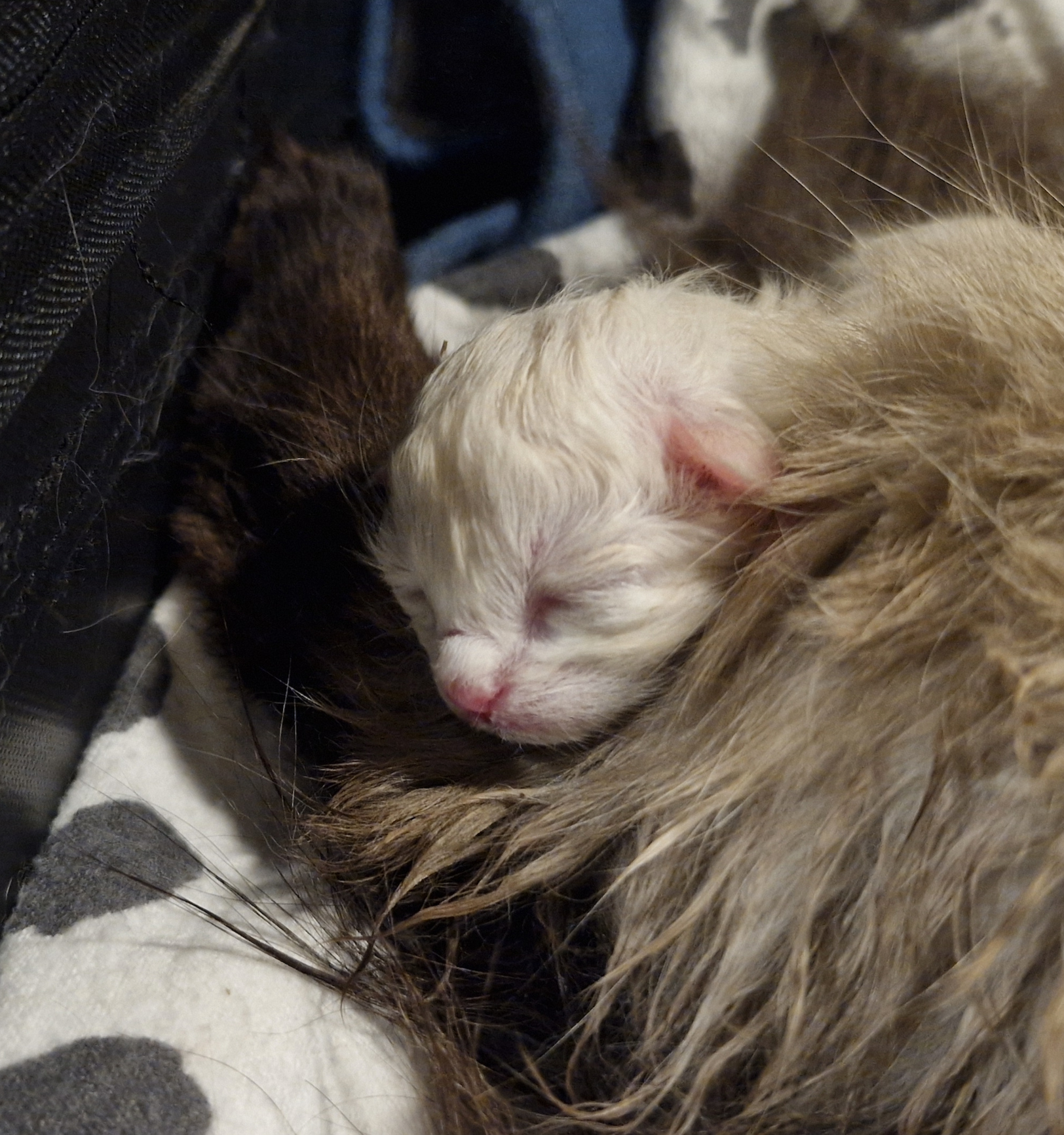
At 6pm it was clear there were no more kittens (probably for the best!) and I decided it was time to weigh them. The problem with Ragdolls is that they all look extremely similar, especially at birth when they’re generally pure white. So I hatched a plan to lay them out on a towel and take a photo (to catch large-scale physical differences), then take a photo of each face as I weighed them, in case their faces look different in some particular way.
As soon as I moved the kittens they began meowing with the same force and volume that had been demonstrated to me when the first one had meowed so loud I’d heard it from the other end of the house and thought it was Mama. They also grabbed hold of the ground with their claws and began to crawl hard in the direction they thought was probably towards Mama.
Mama leapt into action immediately, grabbing one in her mouth and putting it back in the nesting box before I could start weighing them. Papa came up too, wondering what on earth was going on.
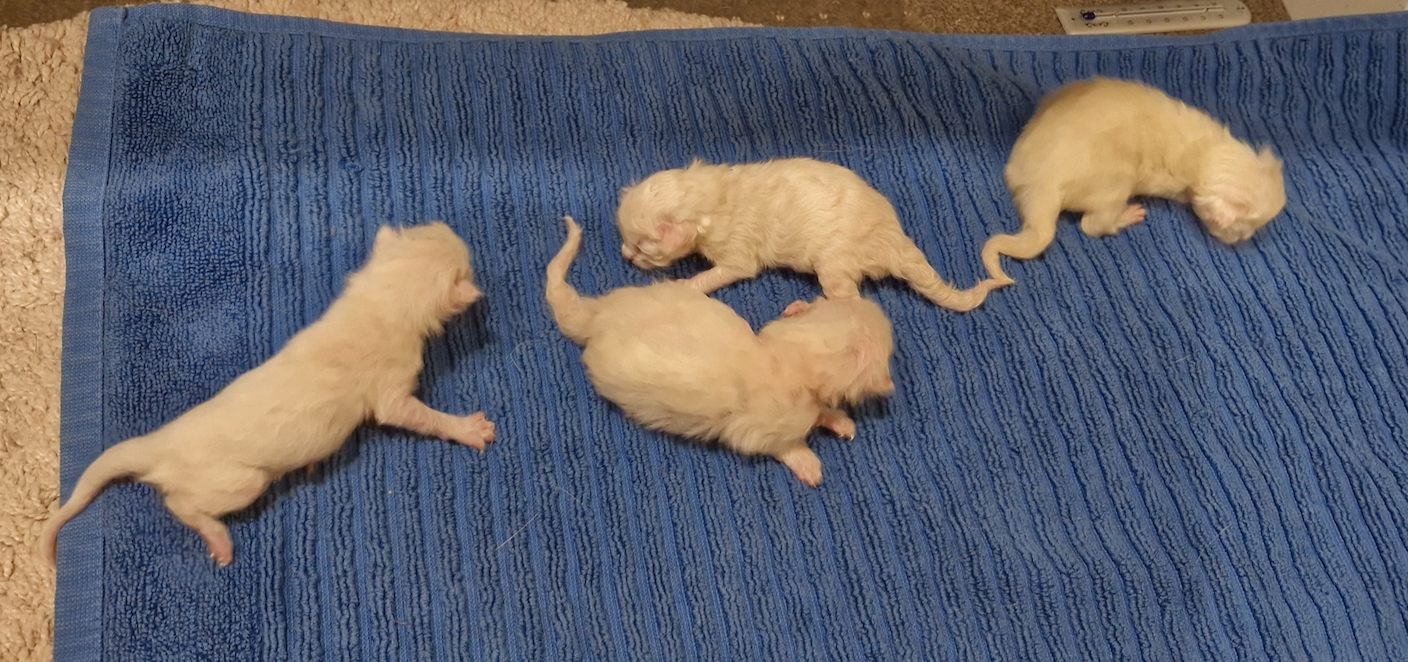
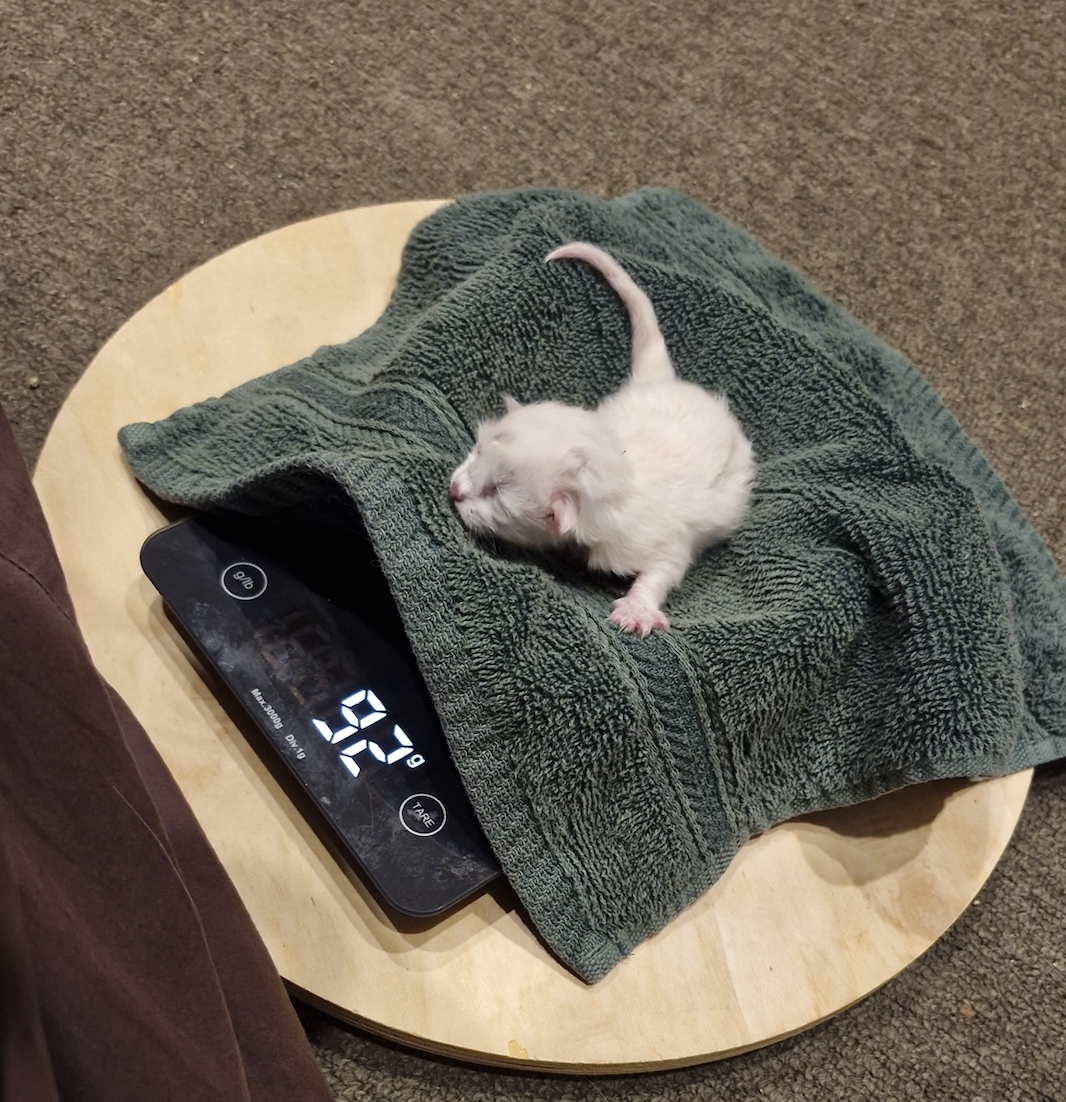
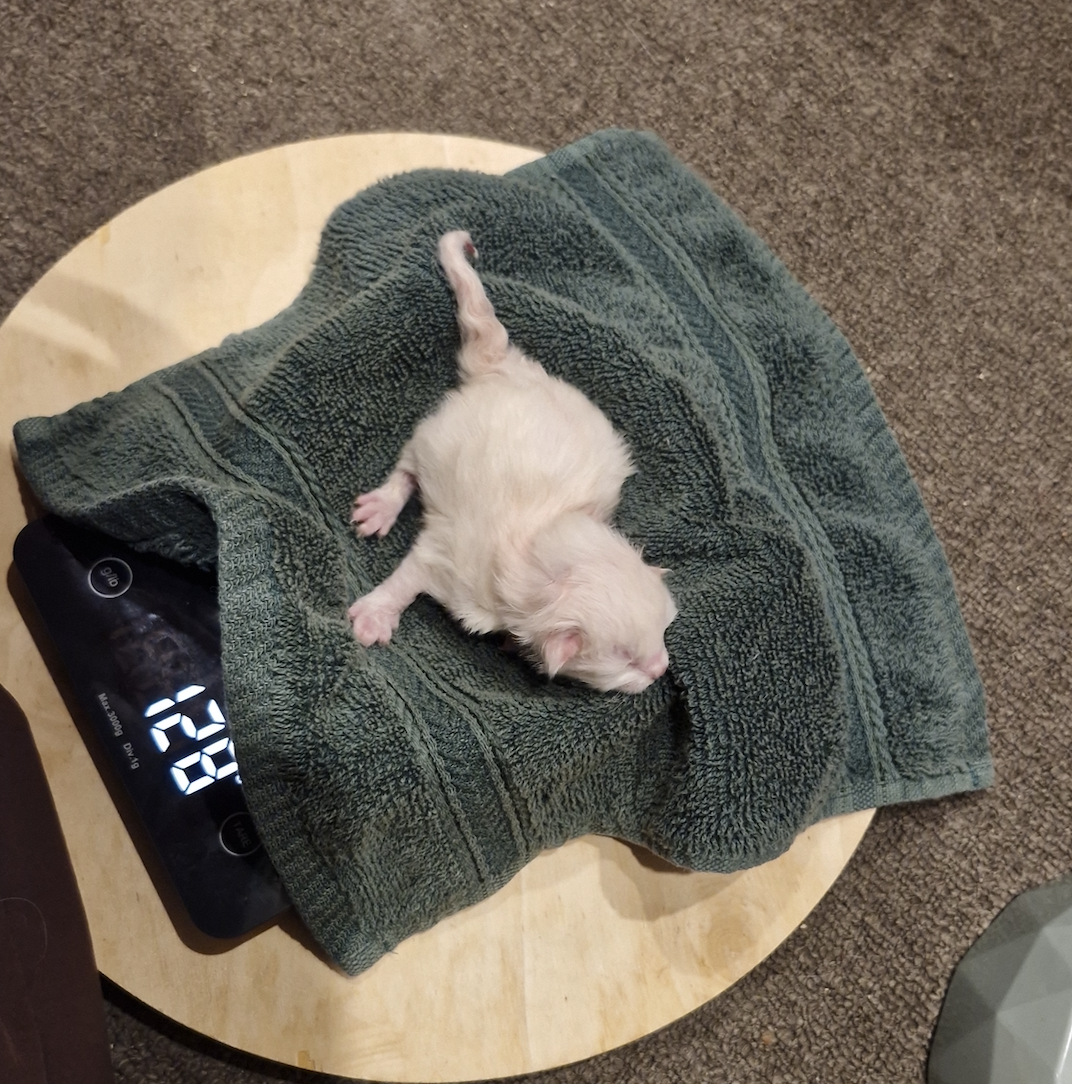
They’re like living dandelion seeds: soft and white and moving in a totally erratic way. I weighed one, swapped it for the one that had been rescued, and weighed that one—as Mama grabbed a third one. It was chaos! But I’m pretty sure I weighed all four in the end: 92g (Litten), 108g (Shinx), 120g (Luxray), and 128g (Zera).
Tim (my son) and I have been discussing names, and the theme for this litter is “Cat Pokemon”. So! The one on the left, the runt, is Litten. The middle top kitten has a tiny bit of colour, so it is Luxray (the Pokemon creature has black fur… this kitten will have a black face, tail, and paws when he grows a little). The one below Luxray is … Zeraora? Something like that. It’s the biggest. And on the right is Shinx.
Zera:
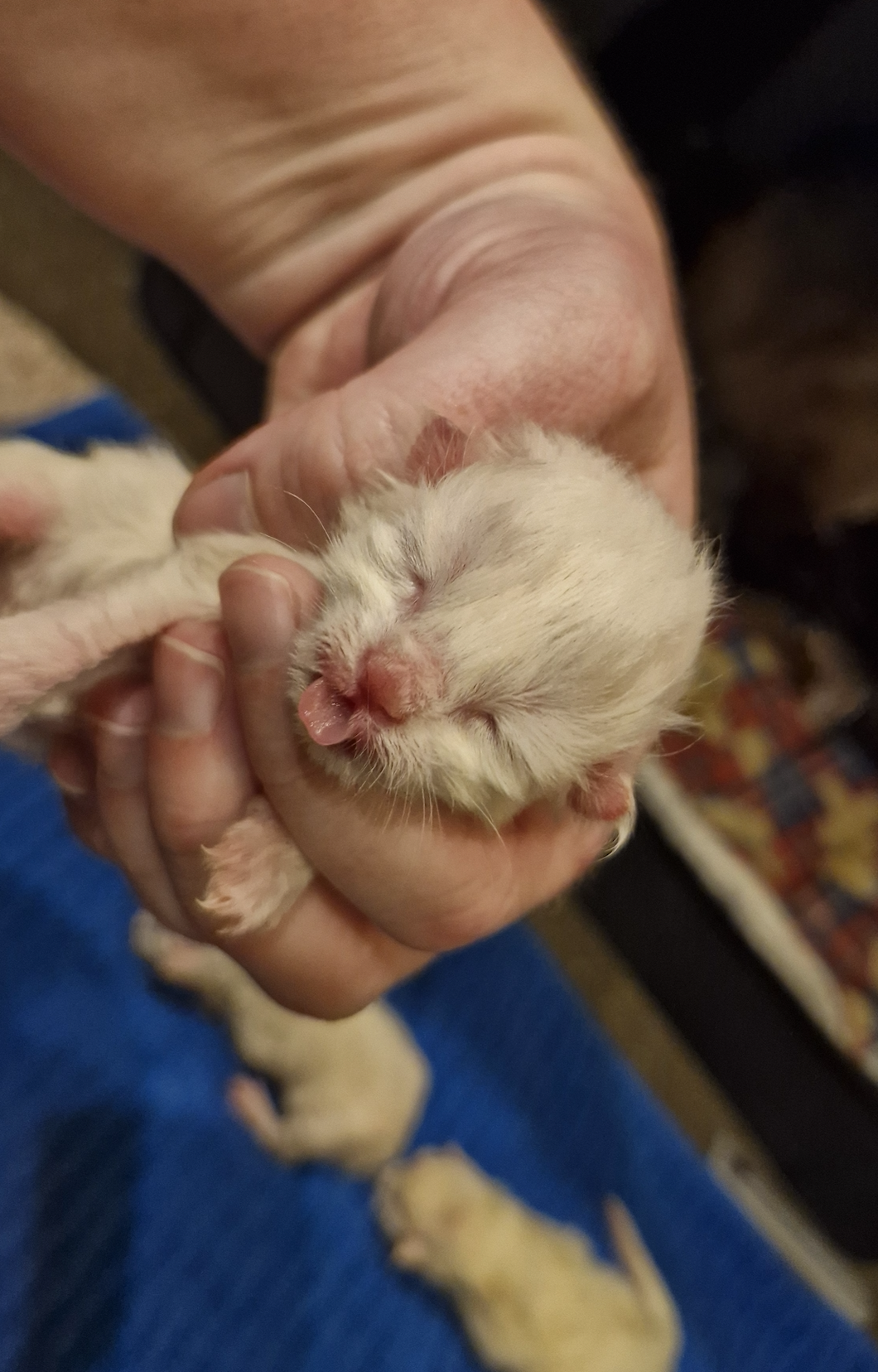
As you can tell, I once again broke the first rule of neonatal kitten fostering – I didn’t wear gloves. I had gloves ready to go but when I realised the first kitten was on the bare carpet and hastily moved them to the nesting box, I was too frantic to remember gloves until I’d already moved them. Mama didn’t seem fussed at all, so I figure that means I don’t have to wear gloves.
Sidebar: I really hate gloves. To me wearing gloves is as uncomfortable as picking up poo with my bare hands—clearly this is an Autism thing because it’s not super rational. I still do wear gloves when I need to (I took them on and off constantly when I worked in an Early Learning Centre), but in the moment I forgot.
I will need to consult my animal welfare person about whether it really is too late to bother wearing gloves. In all honesty, it also feels wrong to me to handle a newborn with plastic, especially when they need warmth so much. I suspect that kittens who were held skin-to-skin as neonates are probably more relaxed with humans than those who weren’t handled. But I also think only the owner and I should use our bare hands, because Mama already has our smell on her from much patting.
Cats co-parent with friends in the wild (even big cats have been known to sometimes dump their babies on a trusted human!) and I feel like mixing scents is part of that. But the #1 reason to wear gloves is so the mum doesn’t reject the babies. Which is why I’ve said here that if you’re not willing to feed the kittens every two hours, and stimulate their bowels every time, then you should wear gloves.
Anyway, here’s Litten, the runt:
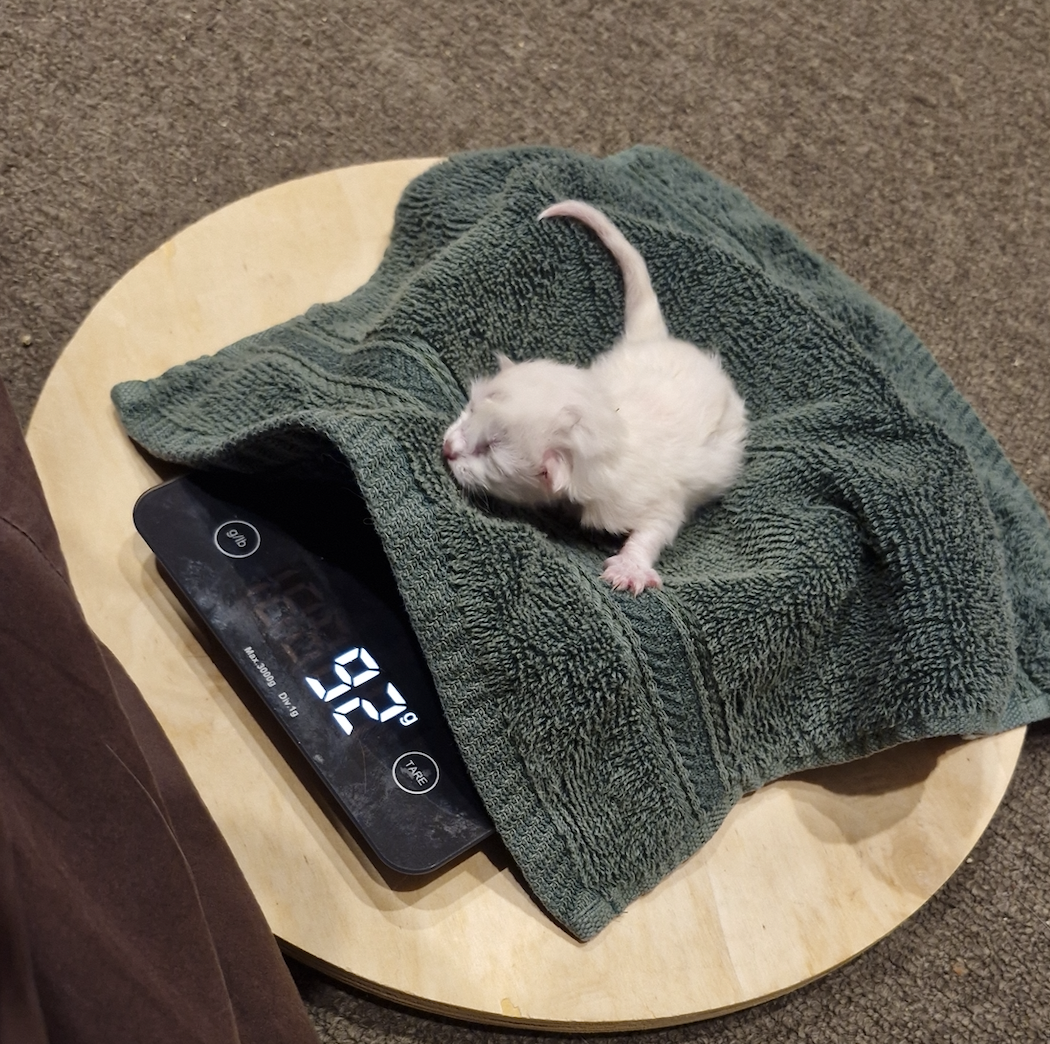
Newborn kittens should weigh 50-150g, so that’s not a bad starting position. Like almost all runts of my acquaintance, Litten has an incredibly loud, piercing meow that she/he deploys without hesitation. I think she/he was born first. The smallest is always most at risk, so I’ll be watching Litten closely.
This is Luxray, aka “the brown one”. Hopefully they darken up soon because that hint of brown is essential for me to tell them apart (and to therefore know if one isn’t gaining weight properly).
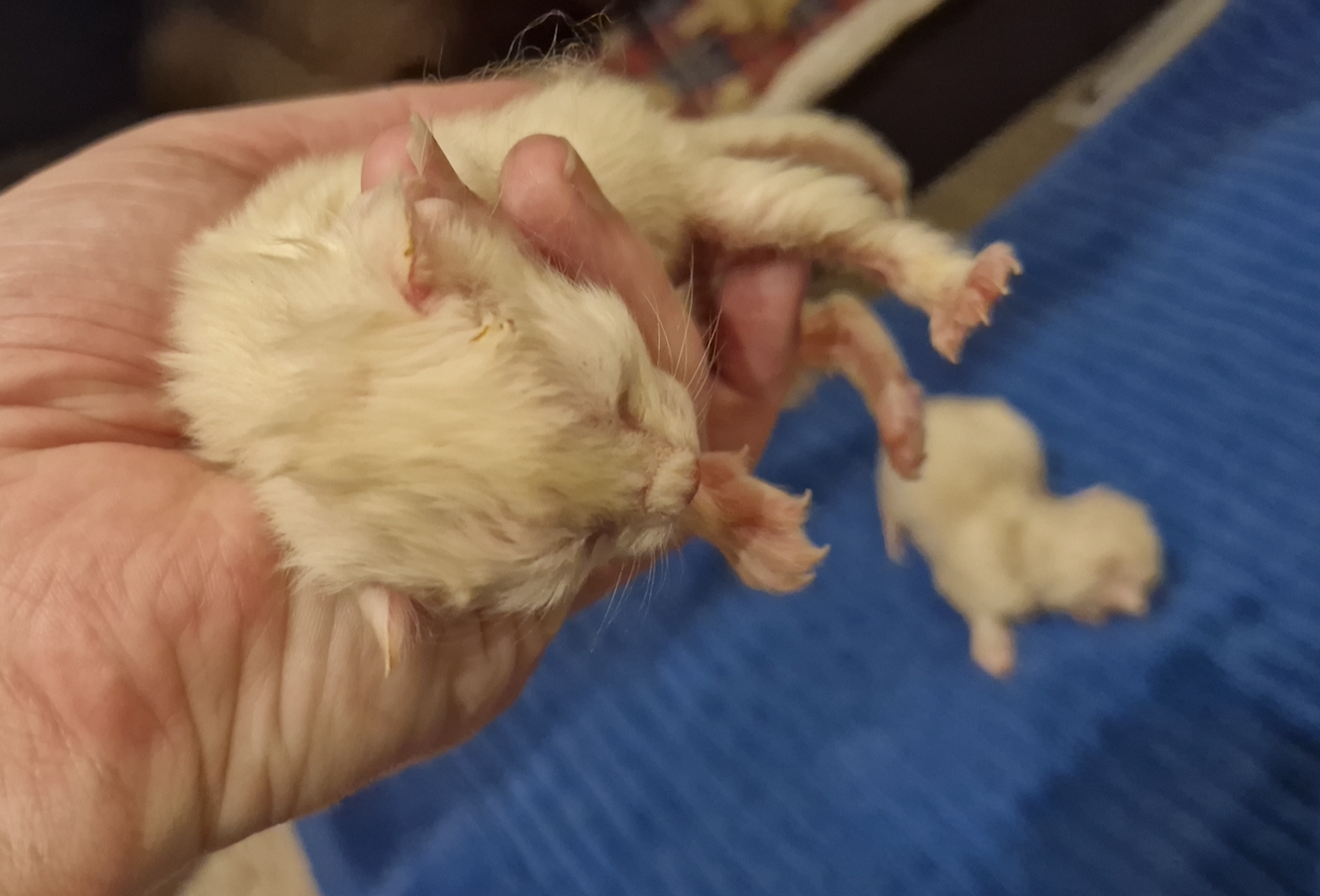
And that means this one is Shinx. It looks like I’m strangling them but I’m just holding their head steady.
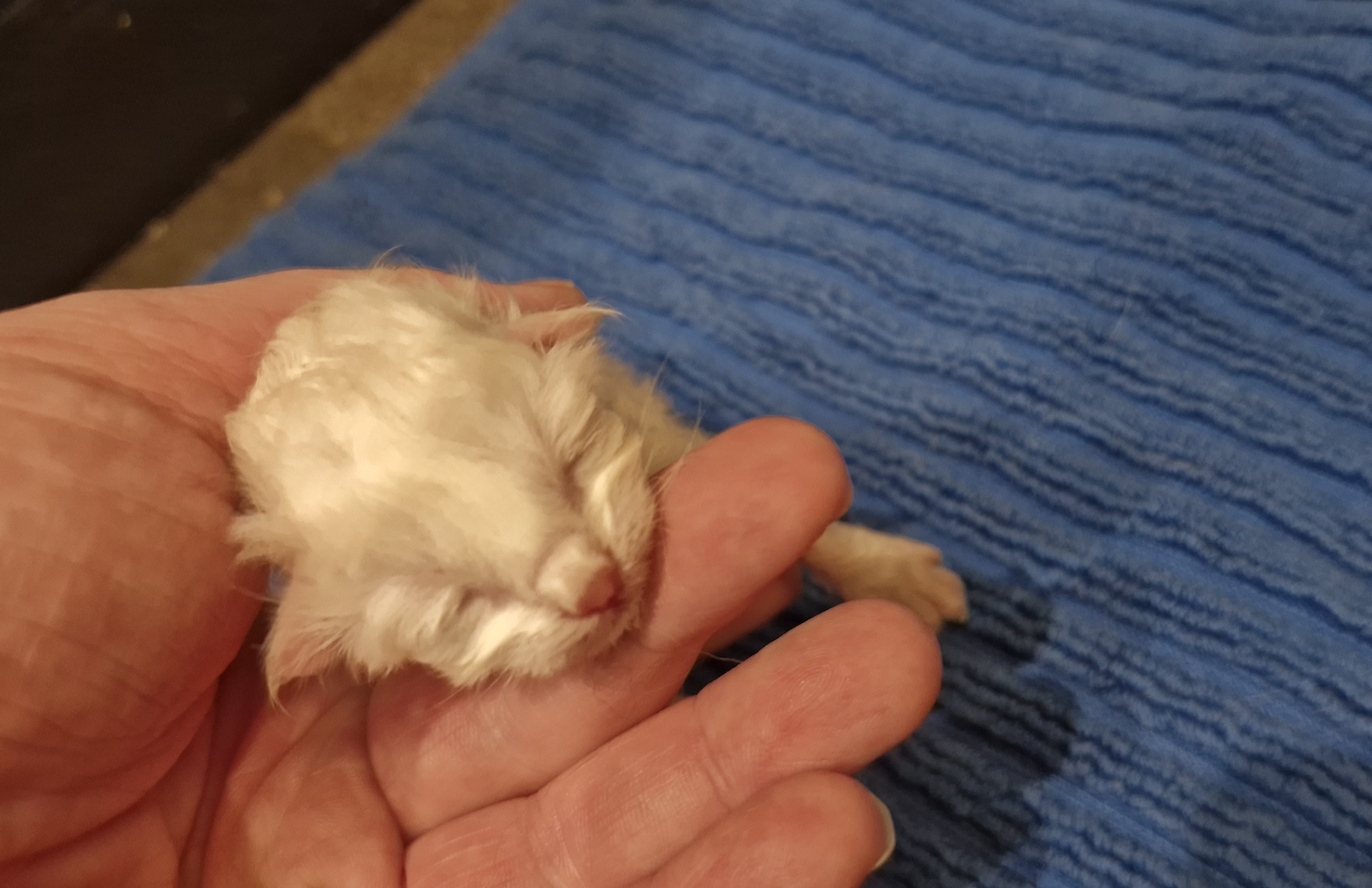
So that was 6pm. I popped in and out to make human dinner, and then pick up another heater, and then eat my own dinner. I was a bit worried about the kittens’ ability to nurse. They just didn’t seem able to get it, and I was unable to help. Maybe what they needed was some peace.
So, once dinner was all done I went back hoping to see some amazing nursing action. Papa and Mama both raced to meet me (or to make a bid for freedom) at the door. I was surprised as I expected Mama to stay in the nesting box unless she needed food, water, or litter.
By then my animal welfare person had asked some follow-up questions and advised that newborn kittens could get dehydrated very quickly. It was very clear that the babies had a pattern of rooting around for food and generally failing—sucking at fur, mum’s paws, each other, and one even sucked on their own foot—then going to sleep. If you’ve ever had a human baby, you know that feeding can tire them out before they’ve had enough. I wasn’t sure any of these kittens were getting any milk at all. Much like humans, cats sometimes don’t produce enough milk even IF the baby is doing everything right.
So.
I prepared some Womberoo cat milk (the best stuff in Australia for newborns) and syringe-fed each of the four babies. They all got the idea really quickly and gobbled it down… which was good, because Mama was concerned as I stole her babies again (which is good and healthy behaviour on her part). She approached and sniffed at the babies as I fed them. Then she basically went
…and started licking the spilled milk off their faces with more than maternal enthusiasm.
Once I’d fed the kids, I poured the leftovers into a dish for Mama, and she lapped it up with alacrity. That was my cue to put out dinner for her and Papa, which she ate immediately. Great.
It was clear from the enthusiasm and focus of the kittens that they were very hungry, so… I’ve been syringe-feeding them all night. 9pm, 11pm, 1am, 3am, 5am. It’s nearly 6am now and I’ll be feeding them again in an hour.
At least two have managed to latch beautifully since then, but I don’t think Litten has managed it even once. Poor little mite.
So the next few days are going to be rough for me.
When my first human baby was born, I got so tired I started losing touch with reality. At once stage I thought I was a baby. Another day, I briefly thought I was cleaning Lizzie’s face because she was a lawyer with an important court date. None of these incidents lasted more than a few seconds, but they’re obviously super dangerous. How am I going to go feeding kittens every two hours for probably at least three days? Well, it won’t be pretty. But for now I’m doing everything right: taking my meds; washing cat dishes ready for the morning, writing down things I need to remember; solving problems and being responsible. Hopefully nature works things out real soon, whether this feeding issue is caused by unco kittens or a lack of milk flow or both. I’m certainly proving my usefulness to the owner! Litten would probably have died by now without the supplemental feeds.
Wish me luck.
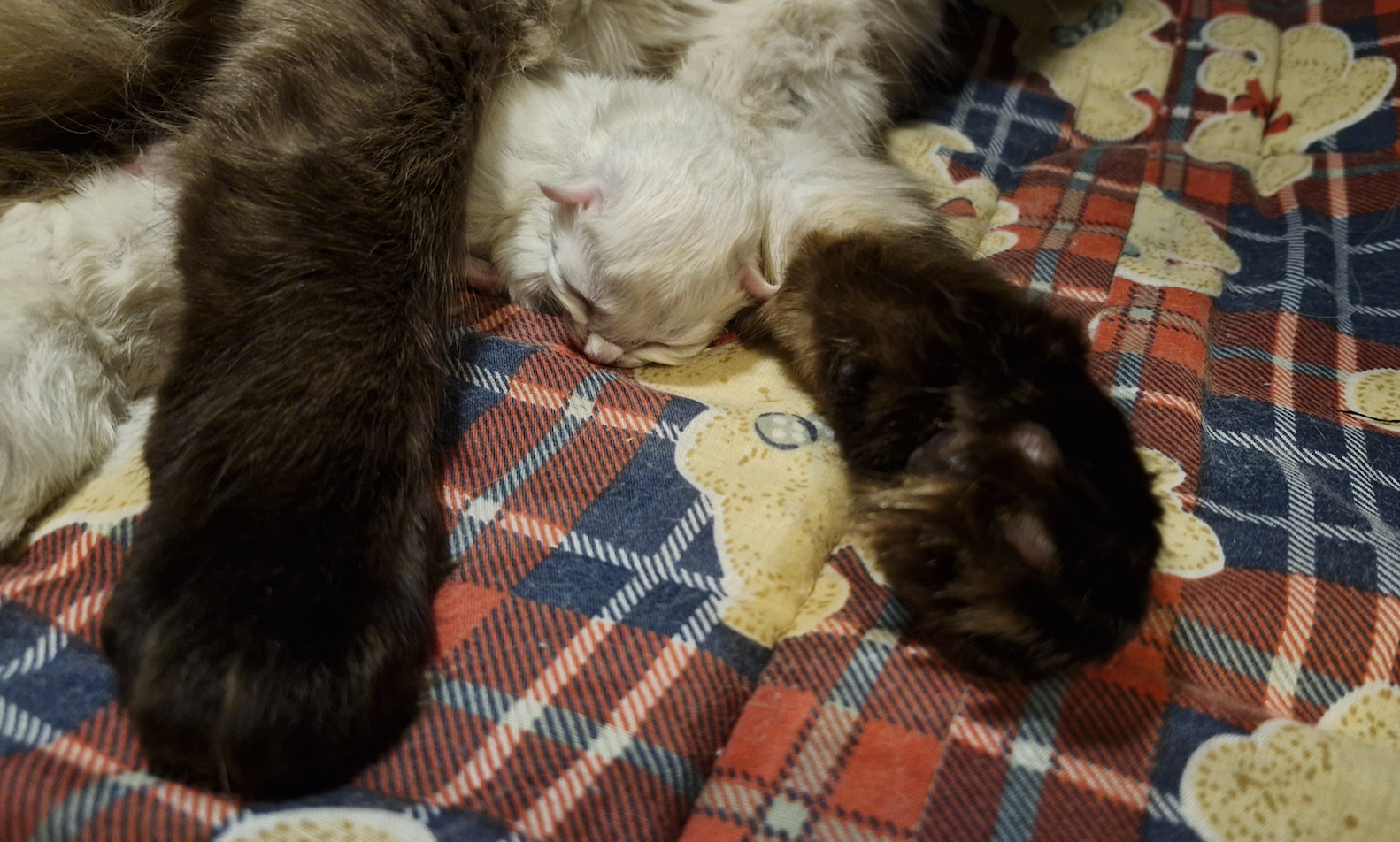
Did you think that was all of the night’s drama? Because it wasn’t.
At 1am I went into the room, deploying fancy footwork to avoid letting Papa out… and Mama wasn’t there.
Two kittens lay in the nesting box, completely alone. I carefully turned back some layers to try to find the other two, but they were nowhere to be seen. They weren’t in the other two nesting boxes either, or in Mama’s hidden corner behind the table.
I was mystified and starting to panic when I heard a meow that led me to the other side of the room. There, in a big plastic tub of soft toys, under a giant unicorn, was Mama Ragdoll looking very pleased with herself—and two of her four kittens.
Why there? Did she still need to burrow and the unicorn was her only option? Was there too much light on the nesting box? Was the nesting box area too hot for her elaborately furry self?
And WHY did she leave two kittens behind? Was it because the abandoned kittens were too bad at nursing and she decided to let them die so the other two had a better shot at life? Did she just forget about them? Did she want a change of bedding?
I cast aside the enormous unicorn (seriously, it’s bigger than a medium sized dog), carried the toy tub back over next to the nesting box, and hastily changed the bedding before moving Mama and the favoured pair of kittens back into the nesting box. Mama immediately got out and headed back for the bucket, but I tipped out the toys and she gave up.
I did the feed, patted Mama a lot, chucked the soft toys in the wash and disinfected the bucket. I also cut patches of fur from Shinx and Zera so I could reliably (ish) tell them all apart at last.
Mama seemed content again at 3am and 5am.
Best of all, when I weighed the kittens at 5am all four had gained weight. Weight is the best way to tell if a kitten is thriving, scraping by, or in danger of expiring. I THINK these lovely babies are going to make it.
Here’s my GoFundMe page, if you’d like to help!
Caring for Newborn Kittens
I have fostered exactly two newborn litters (each of which had an excellent and friendly mother) so I’m no expert. But I wanted to write down everything I learned in order to help myself next time I’m fostering tiny ones.
The first thing to know is that kittens under four weeks will probably die if they are separated from their mother, so don’t separate them! And, don’t touch them without gloves for that four weeks unless you’re willing to feed them every two hours, day and night, if the mother rejects them due to your smell, AND to do mother-type things such as stimulating their butts to make them poo. (And they’ll still probably die.) I choose not to wear gloves, but to sanitise my hands with F10 (vet-grade disinfectant) and then rinse them with water (the F10 is strong stuff so although it’s safe to handle adult cats when using it, kittens are fragile).
I won’t include details on caring for orphaned kittens under four weeks old, as I have no experience with that. Suffice it to say, it’s a very intense job.
Here’s a lovely video of the first 100 Days with some purebred kittens. It’s not particularly educational but it’s gorgeous.
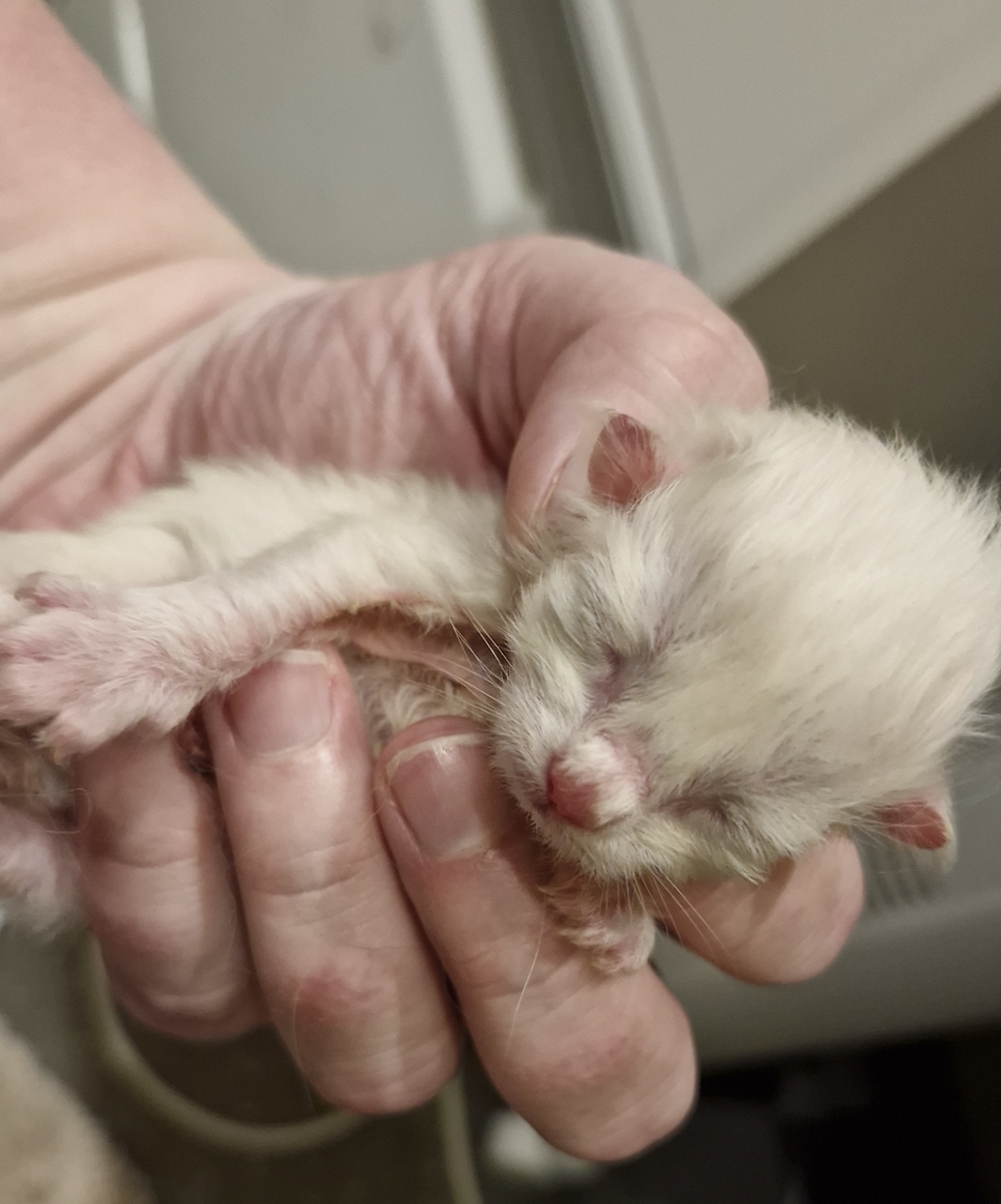
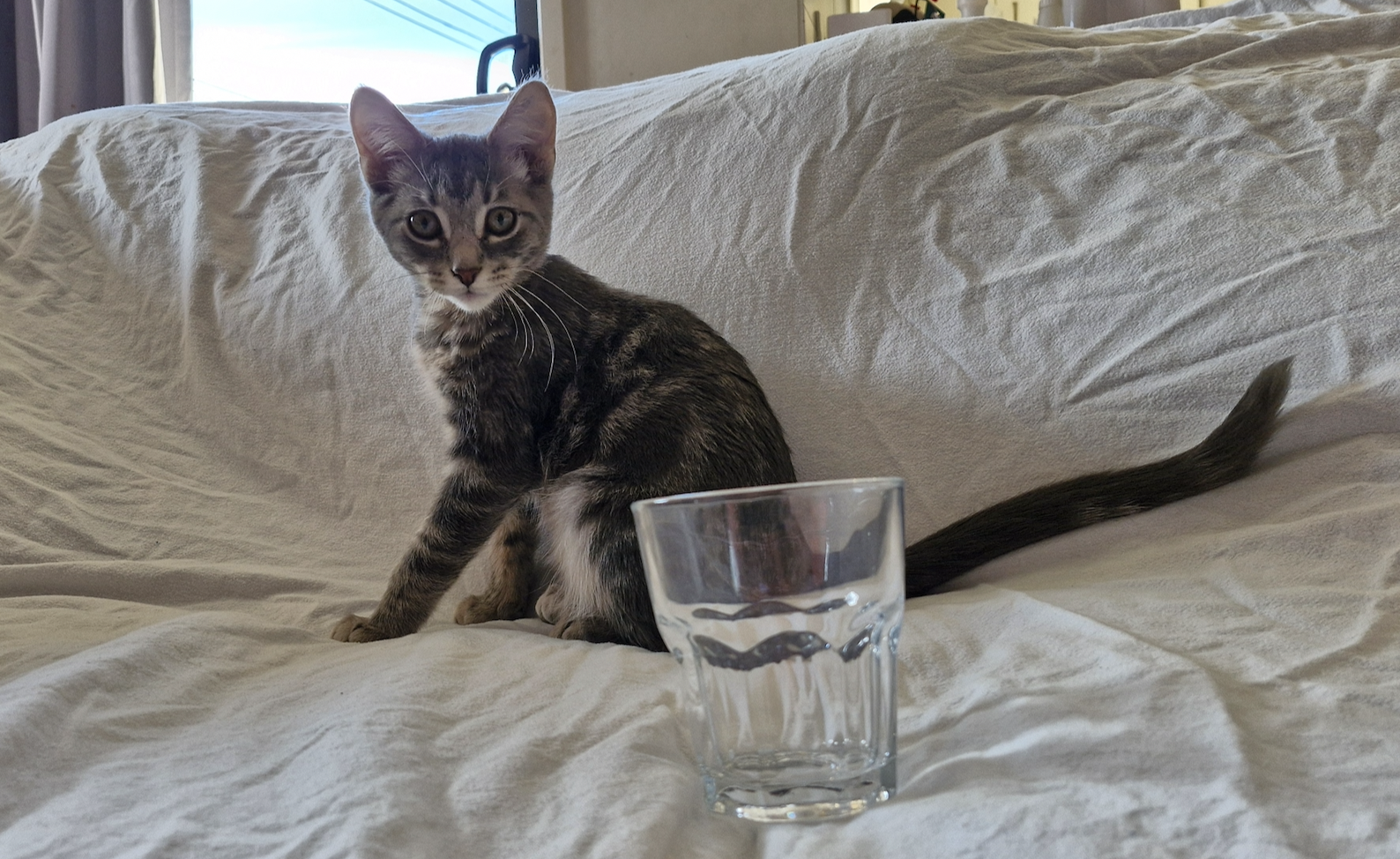
Speaking of gorgeous, here’s Turtledove (“Turtle”) at three days and then again at three months. There’s a huge set of Turtle photos at the end of this post.
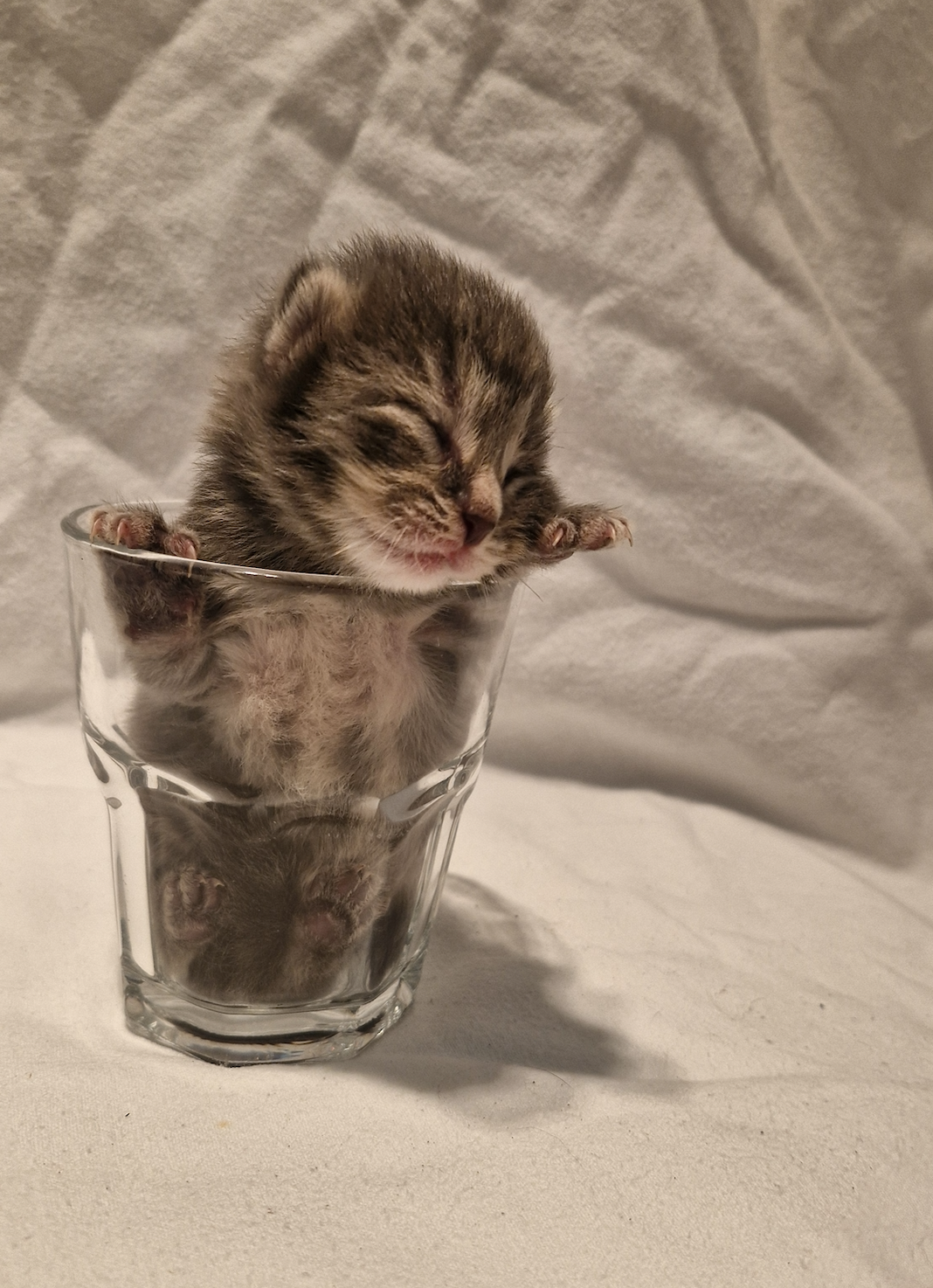
And here are some photos of Ragdoll kittens as newborns (they are born white and then their ‘points’ (ears, nose, paws, and tails) darken, and continue to darken for a year.
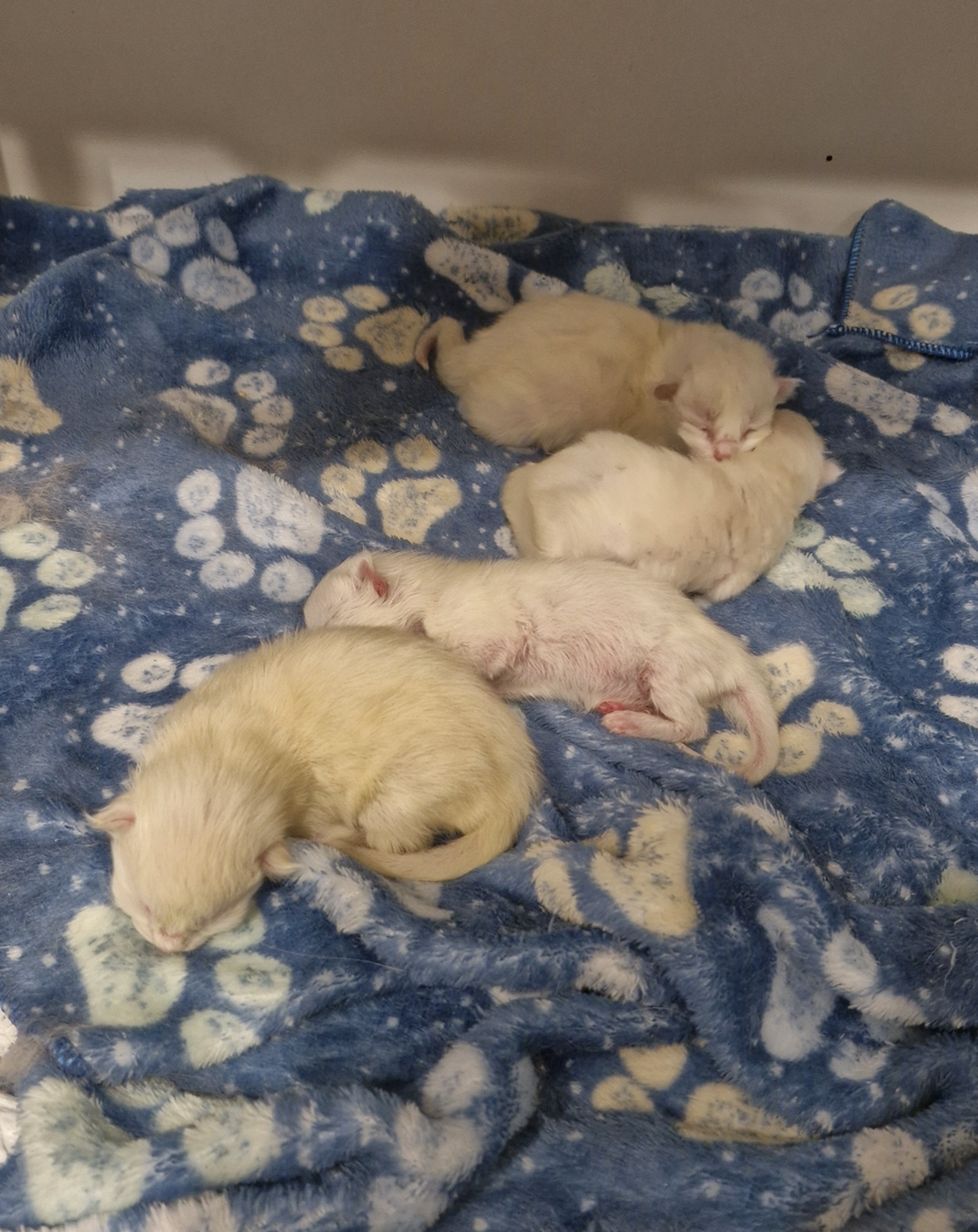
I was lucky to be fostering newborn kittens along with their extremely friendly and relaxed mother cats who were both happy to have a fellow mammal helping with the child rearing. Cats are actually very social creatures, often ‘babysitting’ for one another. Dove (a stray but I suspect she was abandoned and missed having a family) rarely moved more than twenty centimetres from her kittens for the first two weeks… but Mama Ragdoll (who had her first litter by accident when she was barely over a year old herself), although lovely with her kittens, was not interested in staying in the nest when she didn’t have to.
Cats are very good at mothering, and to a large extent the best thing to do is simply leave them alone to get on with it. But both of the litters I fostered needed supplemental feeds. Dove was fine after the first few days in my house (a new environment), but Mama Ragdoll just didn’t produce enough milk. That happens a lot for mammal mothers, including me with my kids.
When they’re pregnant, they could do with more food (Royal Canin has ‘Mother and Baby Mousse’ in tins with a pink label, which is also a great first food for the babies when they’re old enough) and a reliable supply of fresh water (at least two bowls, because sometimes one gets knocked over). They also need a nesting box—a safe, warm place to both give birth and to keep the kittens. A cardboard box with a towel (that can be washed and replaced with another towel) tends to work well (keeping the sides about 15cm high so the kittens don’t fall out until they’re old enough to find their way back). Most cats want privacy when giving birth, although some want company. It’s good to monitor the birth in case something goes wrong. Here’s a guide on pregnancy and birth. Obviously, a pregnant cat should have a prenatal check-up at the vet too. If you pay for an ultrasound, you’ll get a good idea of the due date, plus might find out how many kittens are coming. With Mama Ragdoll, we were advised that there was less than two weeks of pregnancy remaining, and there were “at least two” kittens, but it was hard to tell because it was too late in the process. She had four kittens.
Warning: Some mothers have a powerful instinct to move their litter every few days, so make sure your nesting box is in a room that has other possible nesting boxes in it, AND that the whole room is safe for kittens. Mama Ragdoll was always hiding her kittens from us (eg under a bed where it was very difficult to reach the babies). Even worse, she usually left one or two kittens behind, so they’d just be by themself, as if they were abandoned. Usually if the mum ‘forgets’ a kitten that would mean the left-behind kitten was unwell and the mum was leaving them to die…. but I’m pretty sure Mama Ragdoll was just dumb!
Mama Ragdoll is now desexed, by the way. Due to the owner’s request, you will not see her face.
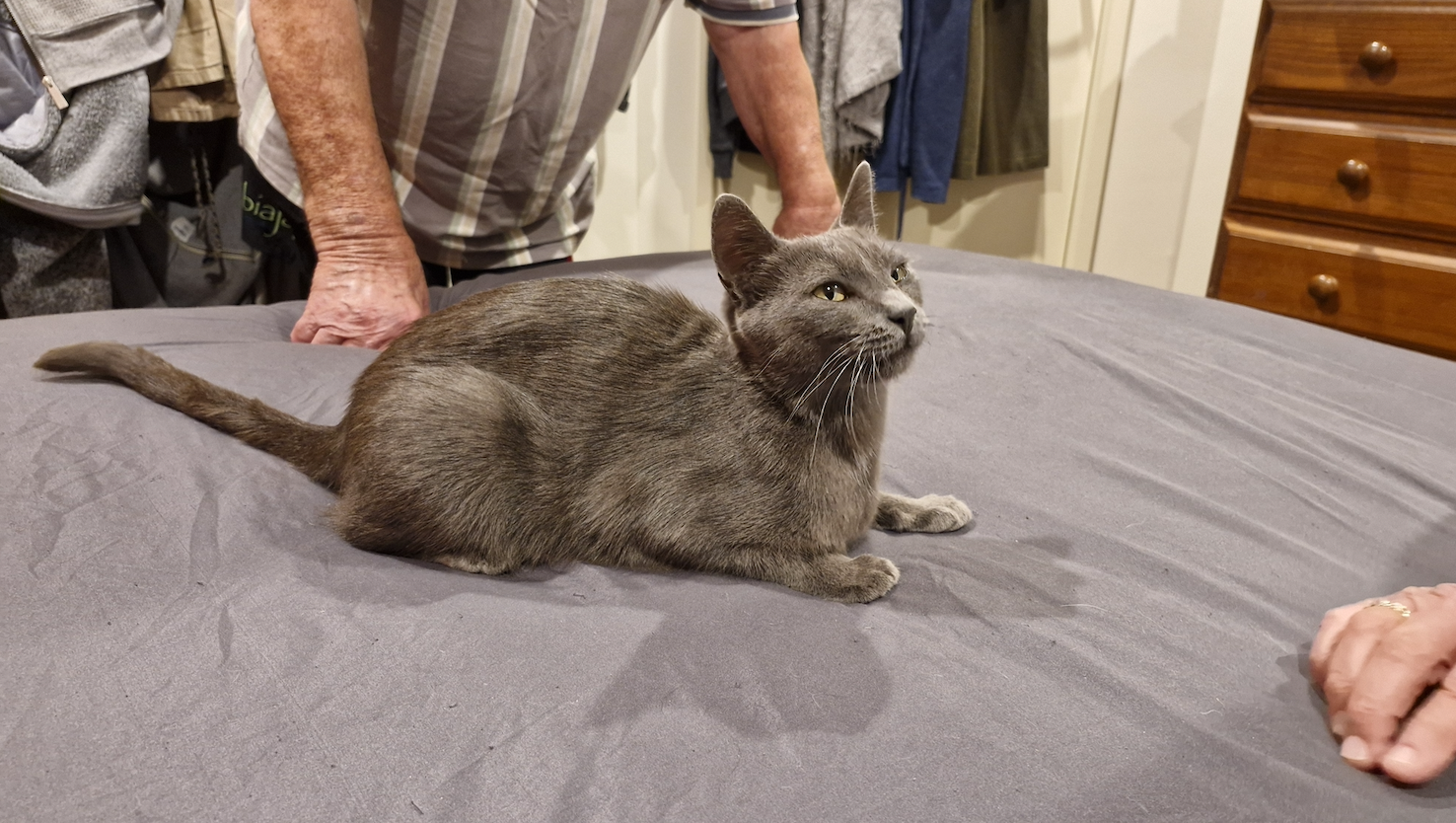
This is Dove with the elderly couple who were already feeding her, and who officially adopted her when her kittens were old enough. She’s one of the friendliest cats I’ve ever met.
I met Dove and her kittens when the babies were one day old, and then I frantically raised some donations to be able to justify fostering them from the following day (even with donations and adoption fees, they cost over $2000… so now I’m fundraising to make up for that so I can justify the next kittens I foster).
One of Dove’s kittens died the night after I met them. Nature has chosen a scattershot approach with cats—they breed easily, often, and in large numbers—which means that kitten mortality is always very high. Nature’s PLAN is for lots of them to die as newborns, which means looking after kittens is in some ways more difficult than looking after a human baby. It can also be very traumatic.
That kitten may have died because there was a storm that night, and the temperature dropped quickly. But it probably died because it either wasn’t ‘fully baked’ (it was premature) or it had some kind of birth defect that wasn’t immediately visible. It was the smallest. It may even have died because it wasn’t able to feed properly due to fighting with its siblings over access. Cats have eight nipples so there’s plenty for everyone, but they still fight each other from birth for the best positions. It’s nature’s way of keeping the resources for those who are most likely to survive.
If you count the heads in this photo, you can see there are five kittens. Believe it or not, Dove is actually a very small cat (probably because she had kittens too young—kittens can get pregnant as young as four months of age… even to immediate family members).
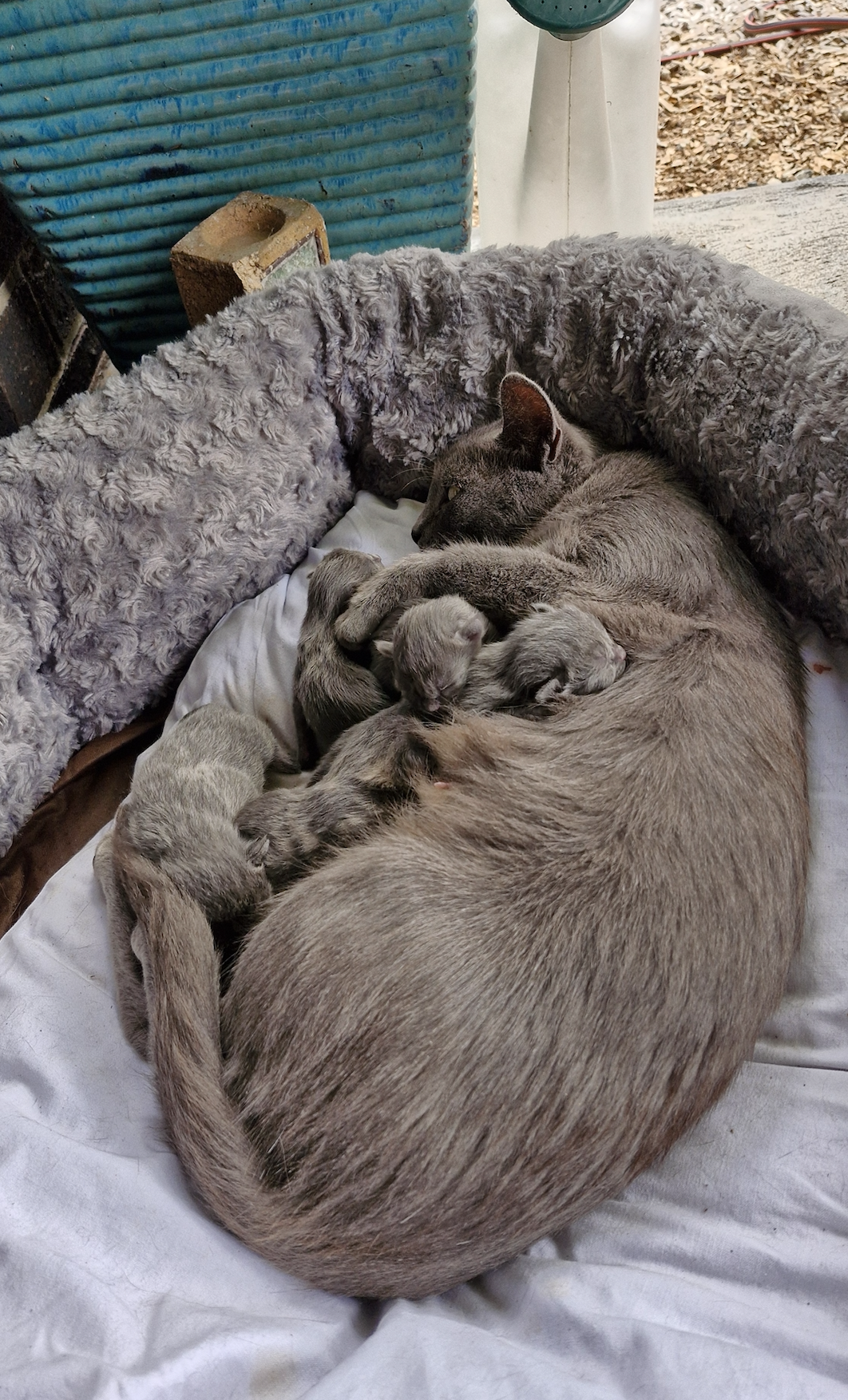
Here’s a photo with my finger for scale. Newborn kittens weigh about the same as a pack of cards. They often don’t have fur yet on their legs and bellies (and even if they’re born fully furred, it is so fine that it can rub off with grooming for a while). It is normal for considerable size differences between kittens. If you are trying to keep a runt alive, it may help to supervise feeding times. The nipples closer to the mum’s head have a better supply.
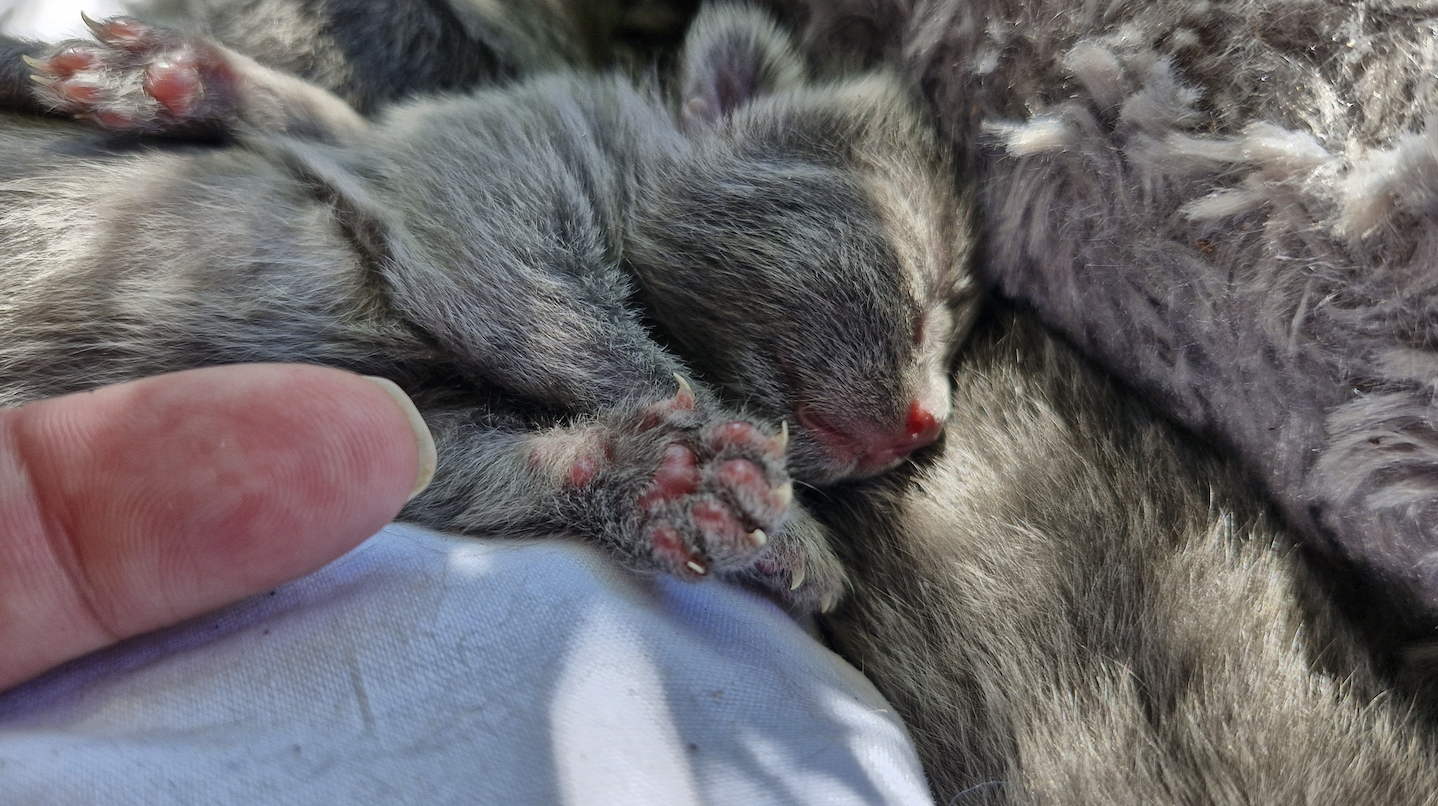
Basically, the most important thing for non-orphan kittens is to keep them warm as they cannot regulate their body temperature—that is the main reason they’re always cuddled up together as babies. That lack of temperature control is the most likely thing to kill them.
BIRTH
Mother cats need to break the amniotic sac so the kittens can breathe; bite through the umbilical cord (which can make a rather alarming grinding noise); and wash the kittens (mainly to dry them). Mama Ragdoll did all that perfectly, but often first-time or young mums don’t do it, so the human needs to step in. Birth needs its own blog entry, but that’s the most likely issue. It is common for one or two kittens to be stillborn.
This video was taken during the birth of the Ragdolls. Trigger Warning: there is a small amount of blood on the fur but nothing super graphic.
TEMPERATURE
For the first four days, the ambient room temperature should be between 29.4 and 32.2 degrees Celsius. A pet-safe heat pad is a good idea too. (Some people use a heat lamp, being careful to ensure there is enough room for the cat and kittens to move away from it if they get too hot). Between four and seven days you can gradually reduce the temperature to 26.7 degrees Celsius. After ten days, you can gradually reduce the temperature to 22.2 degrees (aka comfortable for humans) and keep it there until they’re four weeks old. They’re still very vulnerable at four weeks, so keep the temperature around 20 degrees, plus have cuddly spots for them to sleep. Textured fabrics like imitation sheepskin are good for reflecting heat back to the kittens.
Orphaned kittens benefit from having a heat pad toy to snuggle with (and ideally siblings). In this video of the Ragdoll kittens’ first two weeks, they were kept at the above temperatures… but you can still see that they always seek out each others’ warmth.
WEIGHT
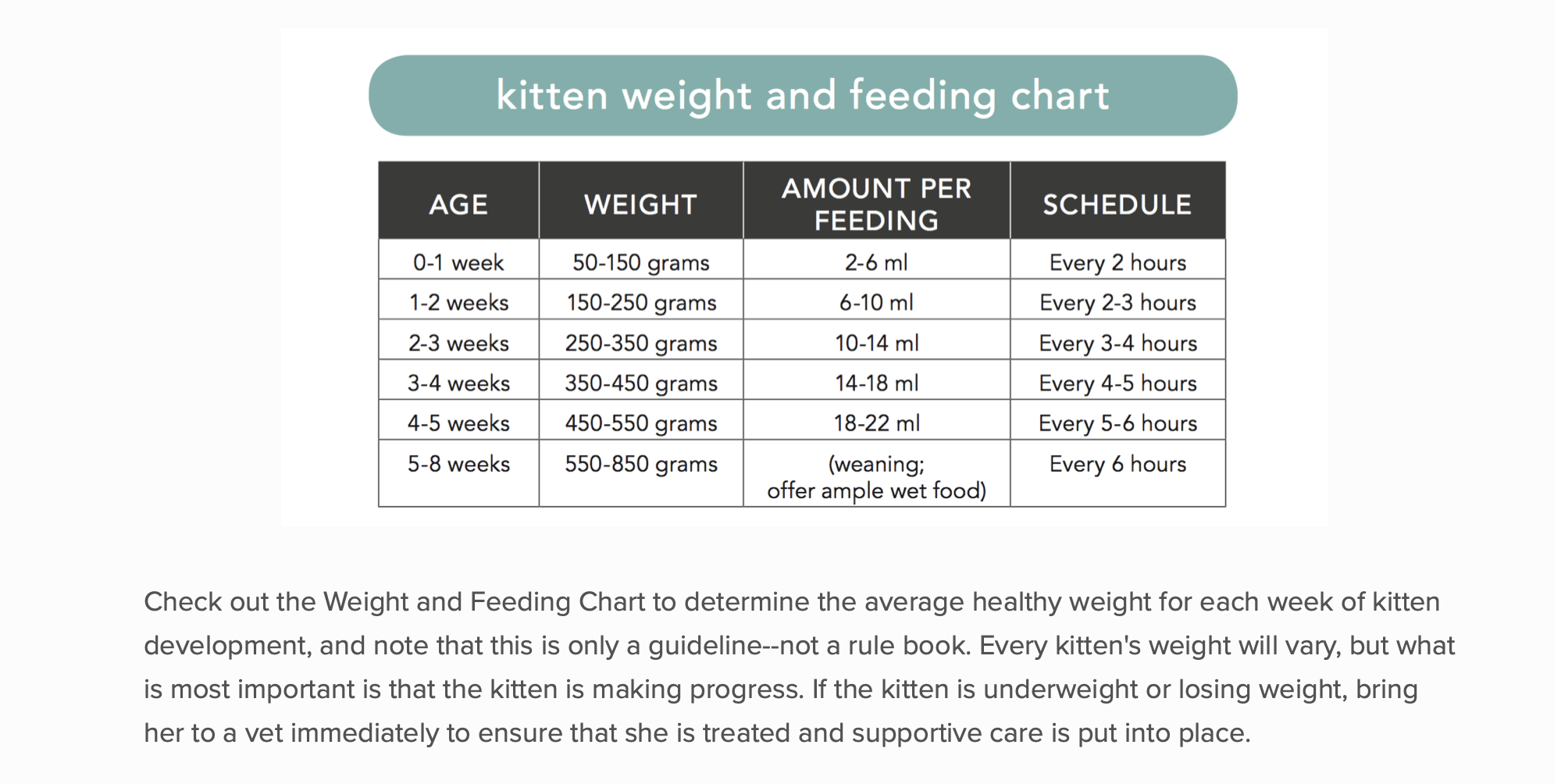
Weight is the first and best measure of health for us ignorant humans. So, kittens should be weighed daily (often twice daily) for the first three or four weeks, and twice weekly for another three weeks after that. This chart is from kittenlady.org and also gives feeding directions for if your kittens are orphaned.
Let’s talk about kitten development week by week, with videos!
WEEK ONE
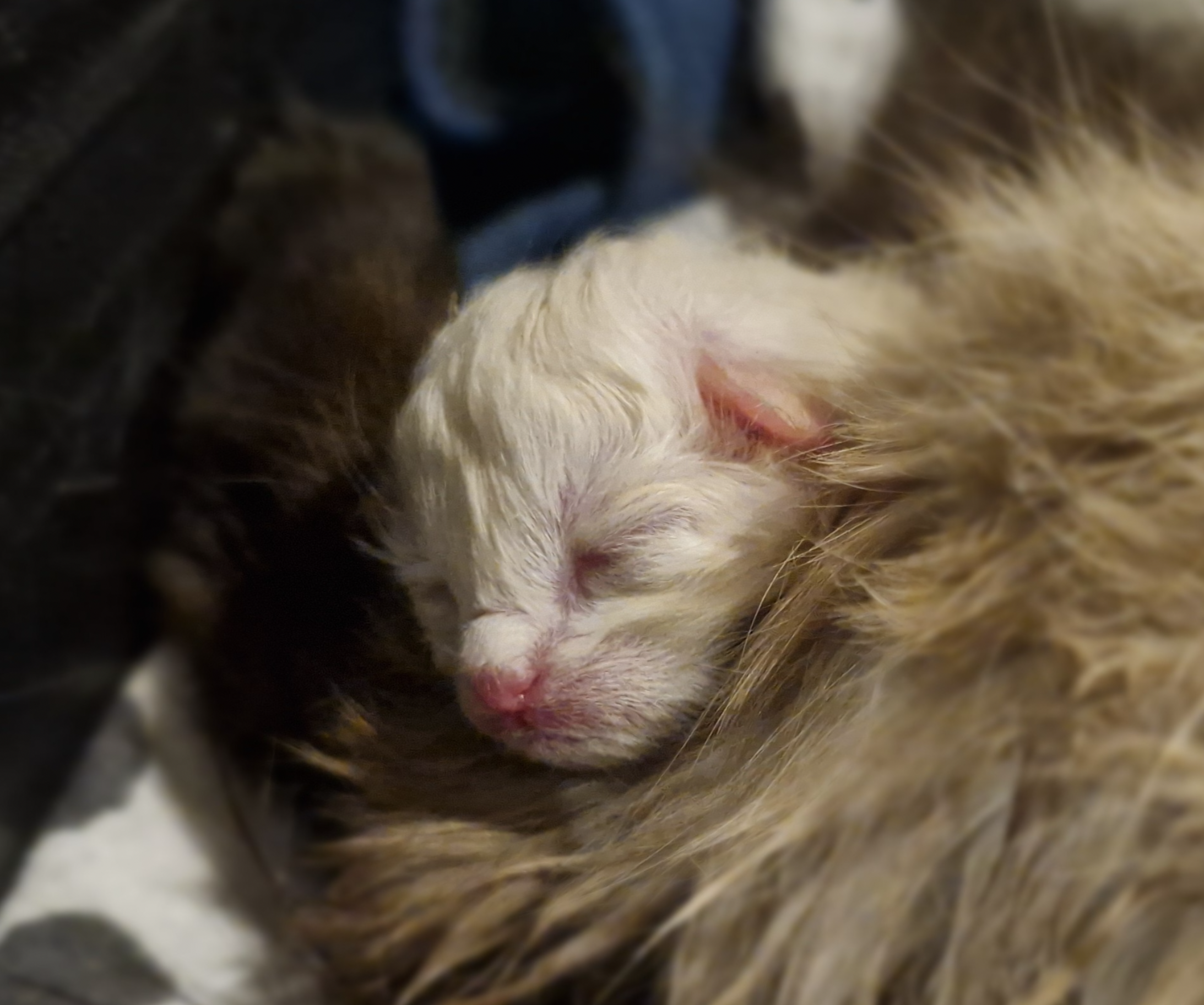
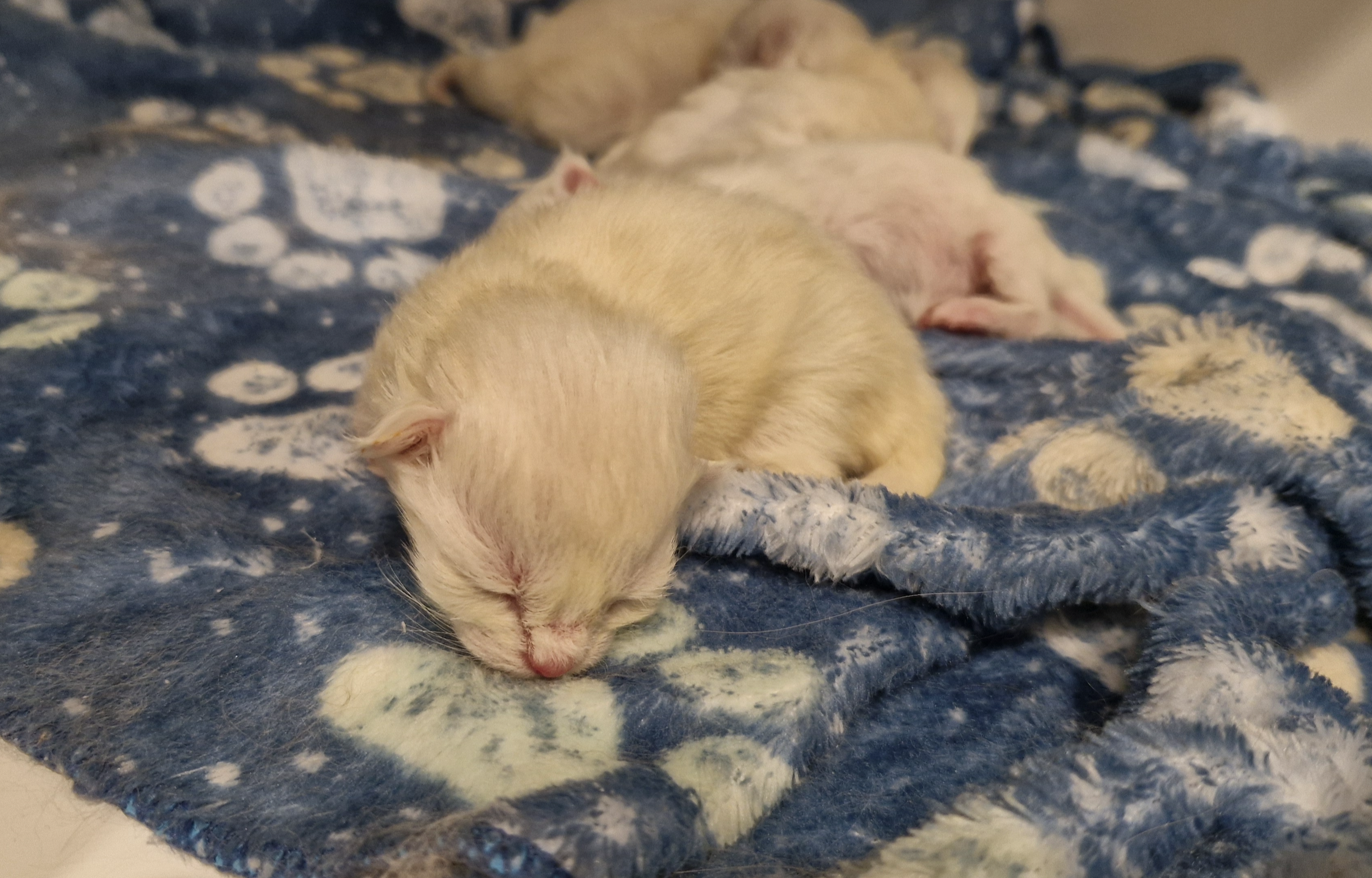
When kittens are born, their eyes are closed and their ears folded so they can’t see and can barely hear. They also have the stump of the umbilical cord, which needs to drop off by itself at around five days of age. Kittens are pear-shaped, with adorable fat tummies.
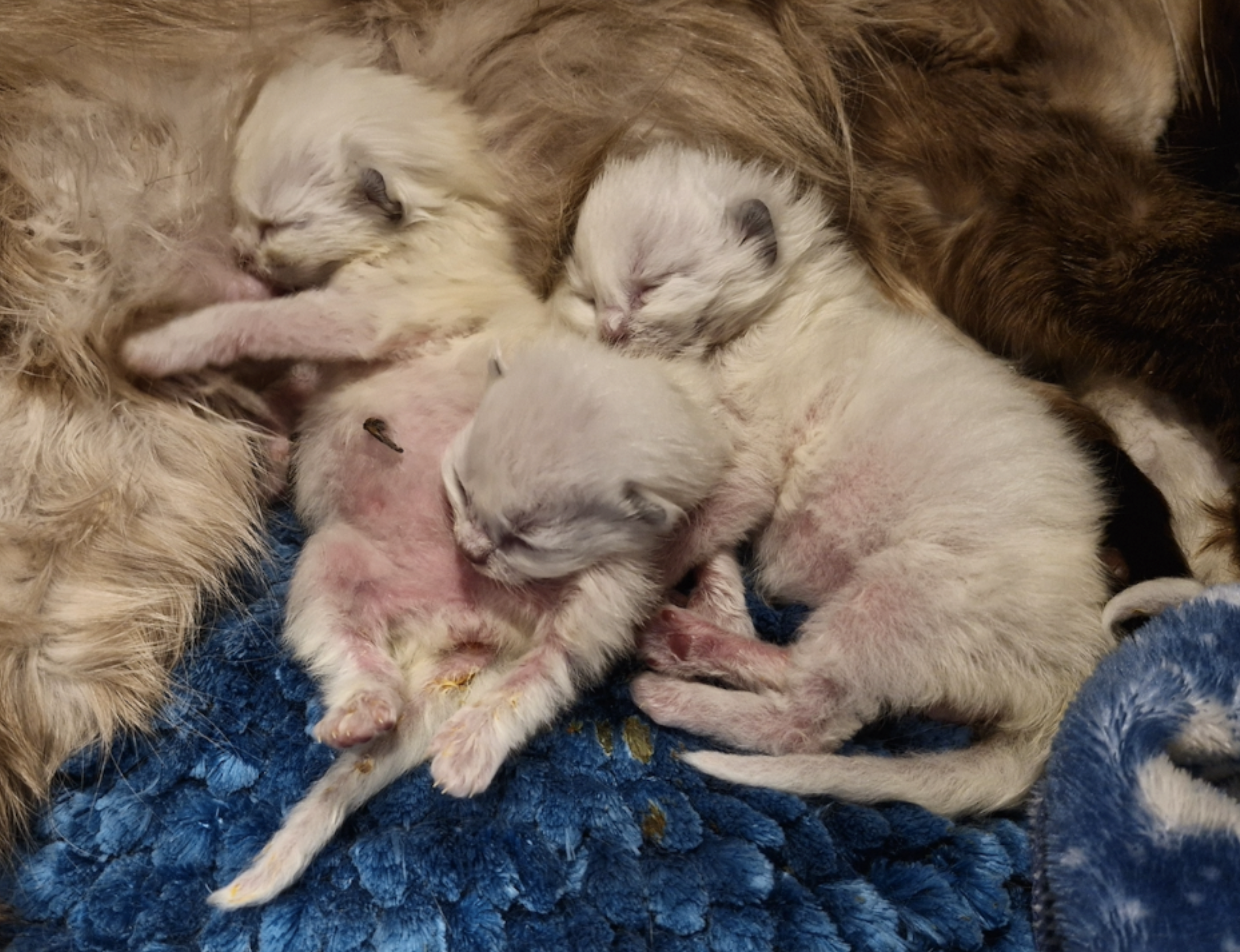
In addition to keeping them warm, it’s worth noting that a bed with gappy sides can be a suffocation danger. When they’re young, they’re very uncoordinated. If they fall on their back, they can’t turn themselves right way up (which was part of the inspiration for Turtle’s name). My instinct says to not change the bedding too quickly after birth. I think 24 hours might be about right, then every few days after that unless it’s noticeably dirty. However that is my guess, not professional advice. Certainly there will be blood, urine, and/or poo in their bed quite often. But you want to leave them undisturbed as much as possible, for both their sake and the mum’s sake. And wash and sanitise your own hands if you handle them at all.
Kittens will probably hiss at humans (you can see it in two of the videos in this section). To me, it looked like panting (a sign of dehydration). Mother cats are protective of their young, and even house cats will sometimes get furious if you attempt to touch their kittens at all.
I cut patches of fur from two of the kittens in order to safely differentiate them, so I knew which one was which, especially when weighing them. They gain about 10g a day, but you should weigh them at the same time to get the most reliable data possible, and record it all so you can observe trends. If they’re healthy, they don’t need to see a vet yet (a vet visit is a big deal and the stress could make them sick or even kill them).
Kittens under four weeks old can also have heart failure and die, particularly from a loud noise such as a dog’s bark or a vacuum cleaner—or from something scary, like an unfamiliar cat (cats are adorable, but they’re also extremely potent killers and it is rational for them to be afraid of other cats).
Their ears unfold in the first week, which means they start to hear better after a few days.
Their stomachs are extremely weak and although the mother cleans them (and stimulates them to wee and poo with her tongue—if they are orphaned, a human must stimulate them by dabbing their butt with a tissue after every feed) there will be a lot of poo around for 4-5 weeks at least. You can see some diarrhoea in the umbilical picture above. Sometimes you need to wash them (with plain warm water and clean facewashers/towels) but be extremely careful as being wet can make them cold. They can’t regulate their body temperature at all. It may be worth using a warm hairdryer with a diffuser from at least 30cm away, but try not to wet them any more than necessary.
WEEK TWO
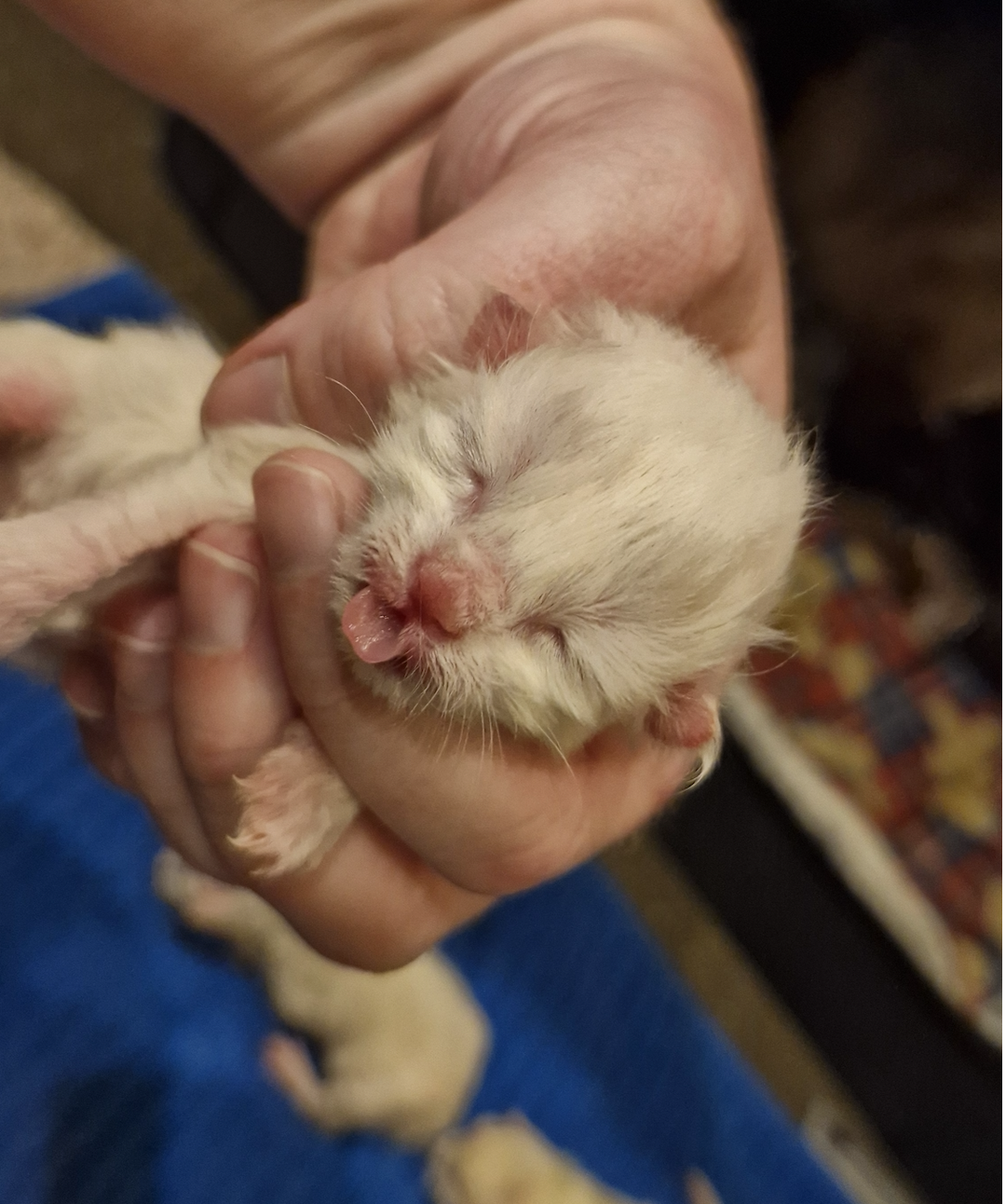
This is when the eyes open (gradually, over several days). Do NOT touch them unless there is discharge indicating something is wrong. Try to keep lights low as they gain their vision.
All newborn kittens have blue eyes.
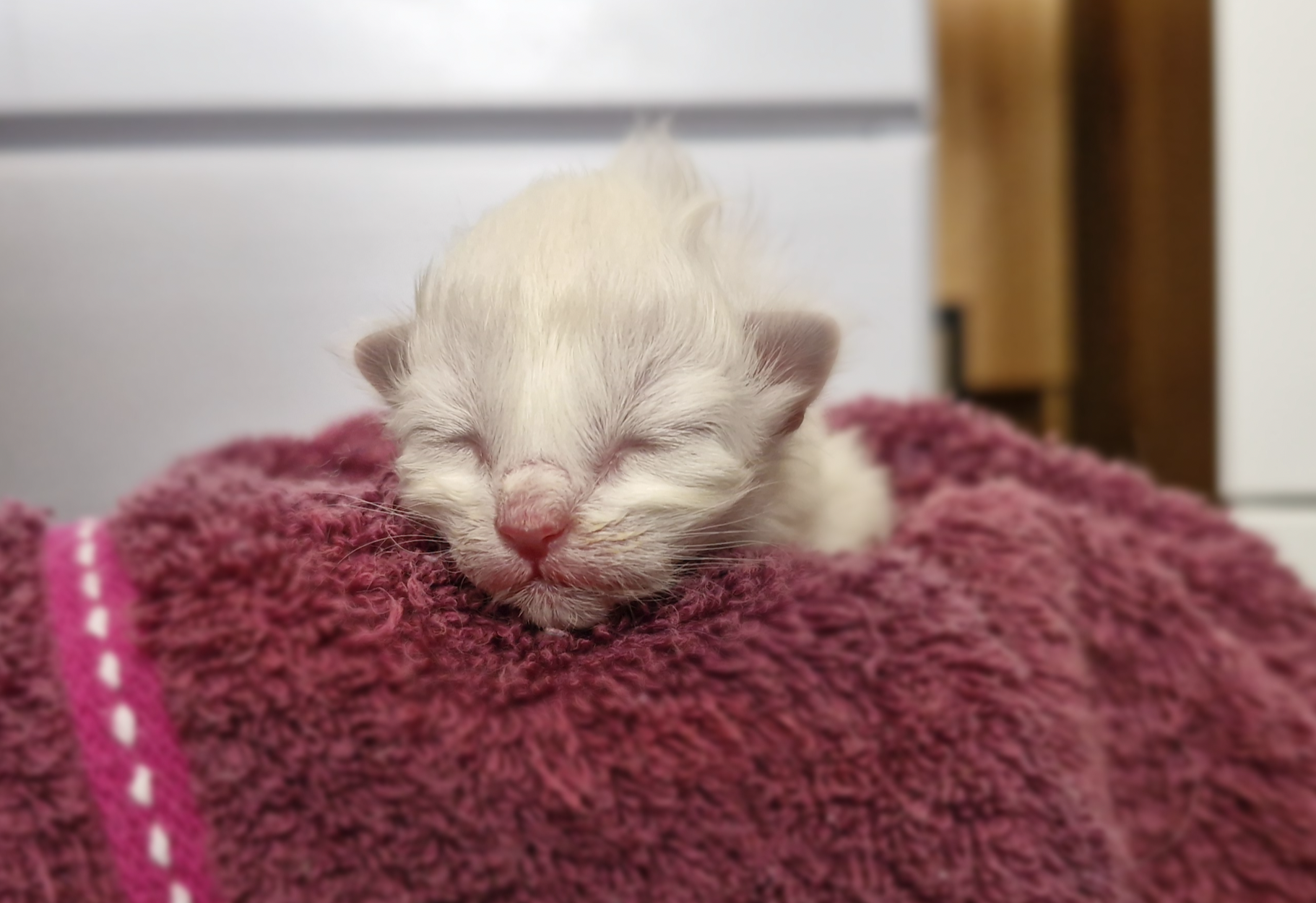
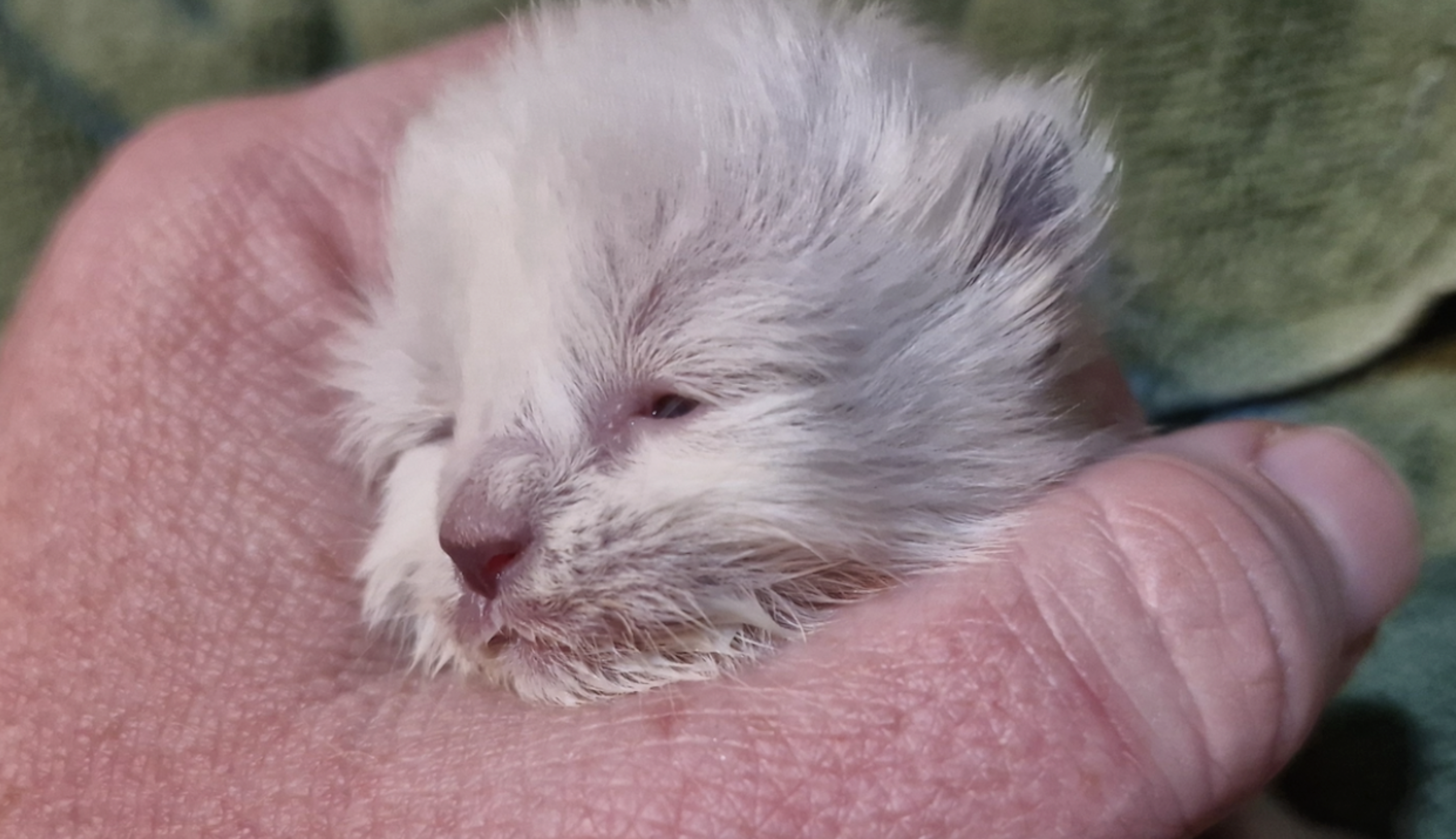
They honestly don’t do much except eat and sleep.
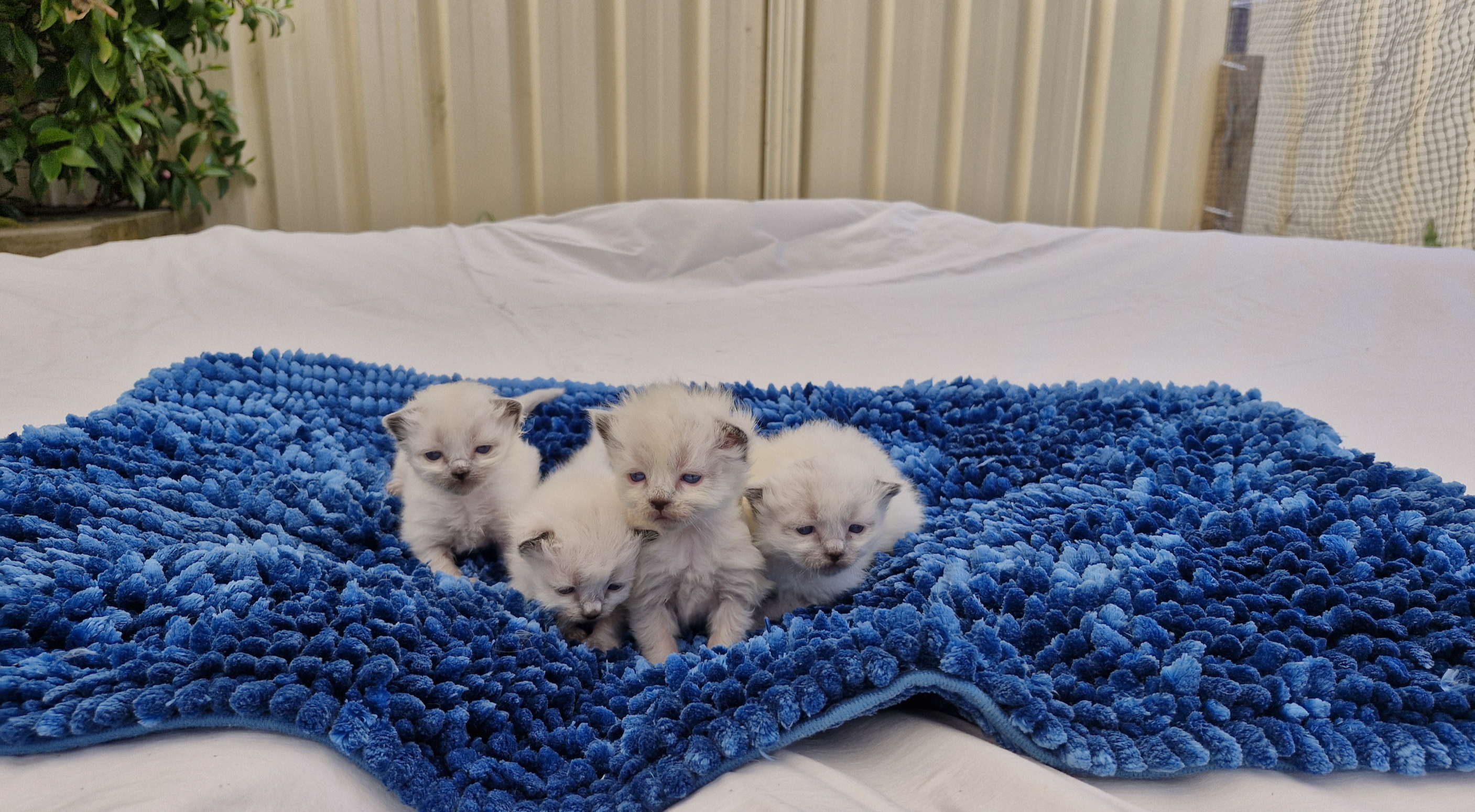
WEEK THREE
They’re starting to walk around a bit more, which means they now have the ability to drown in a water dish! So keep water dishes nice and shallow, or put them in a slightly higher location. You don’t want them to get wet, as that will make them cold. They can climb over a very small barrier a few centimetres high, but might not be able to get back, so make sure that the area around their nesting box is also warm and fairly flat.
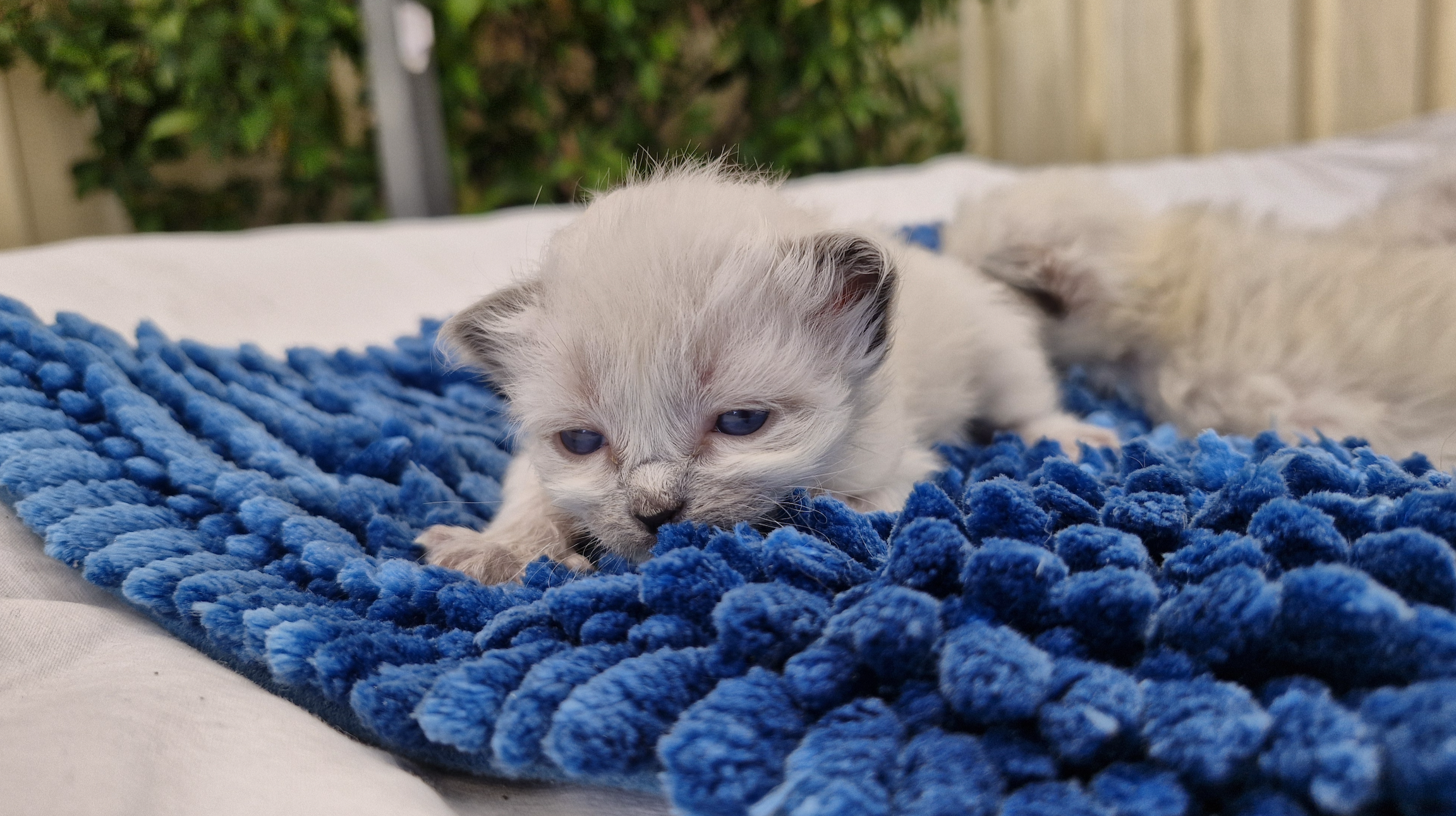
The kittens will start play-fighting each other but they’re not strong enough to hurt each other even if they try. Mostly it just makes them fall over. When they are first walking, their bellies often drag on the ground.
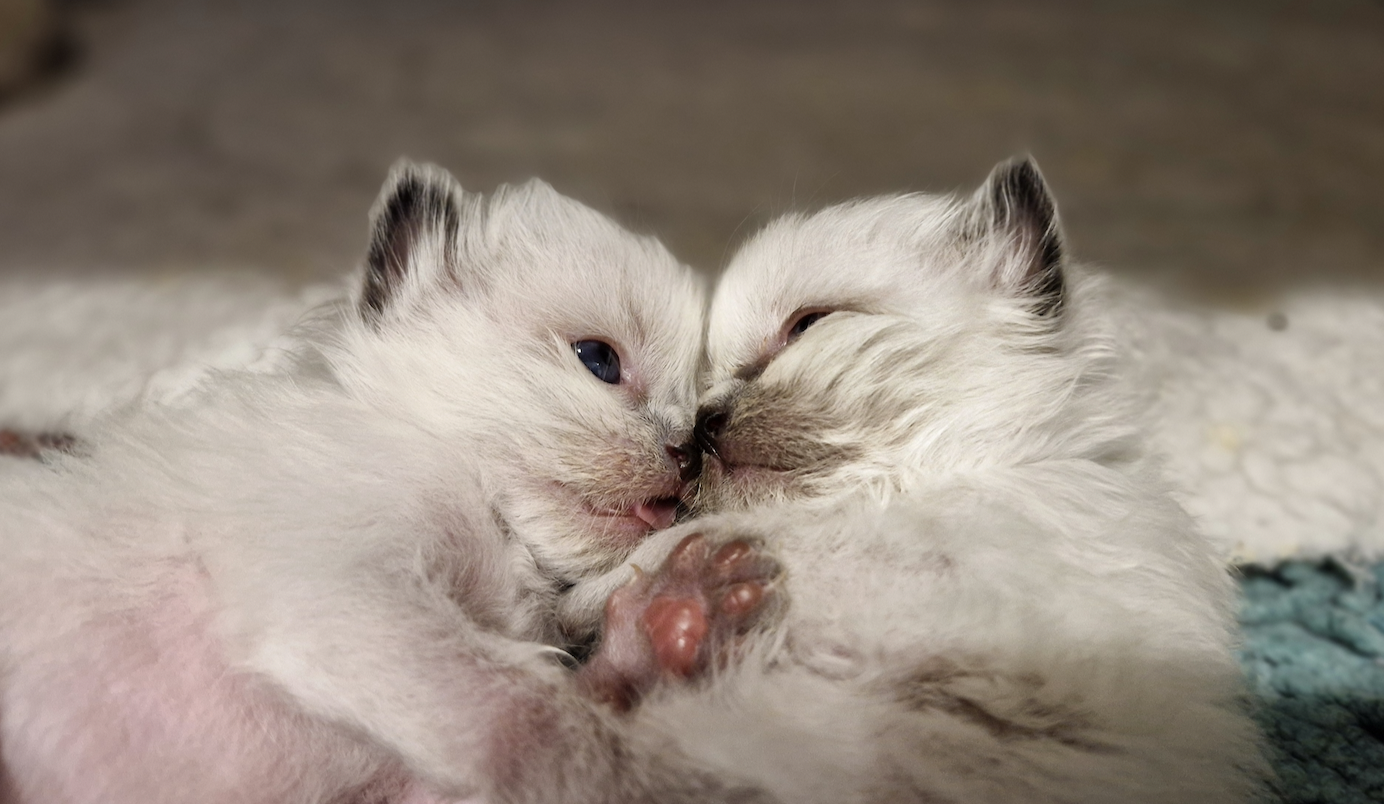
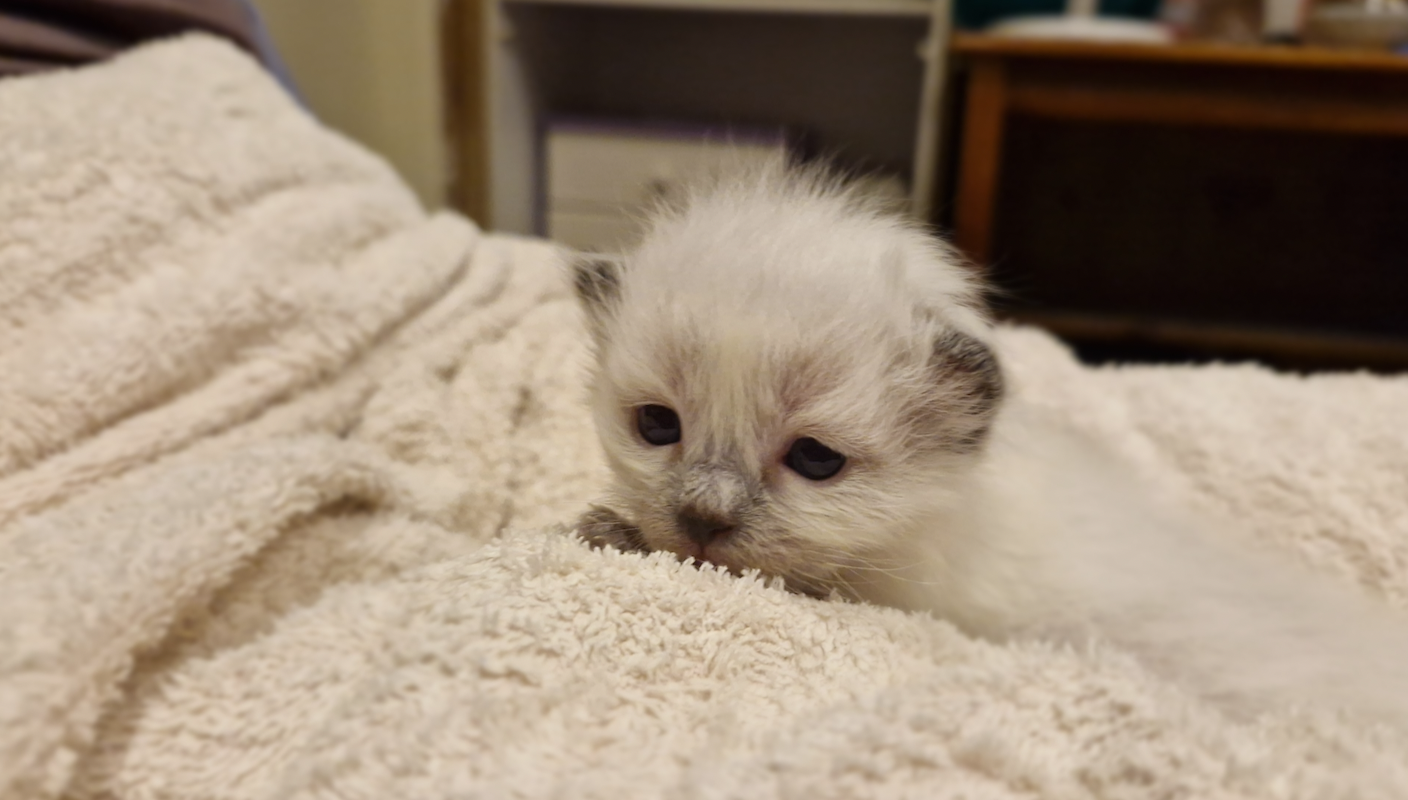
WEEK FOUR
This is the smallest kitten you’d usually see in a photo or on TV. In some ways, this is when they start getting interesting. They’re also less likely to drop dead without warning, although it’s definitely still possible. In humans, medical people often refer to the first three months of life as “fourth trimester” because a human baby is so tiny and fragile. The kitten equivalent is four weeks. They are extremely curious and quite mobile, while also being very small and quite dumb. My quarantine room is the ensuite bathroom in my home, and I never ever let them out unless I’m there to keep track of them. They are still extremely sensitive to cold and noise, and either could kill them shockingly quickly.
This is when they start being interested in toys, so there is plenty to do even in a tiny room. Dove was too tired out from the work of motherhood to want to do much herself. She was still very underweight despite getting fed excellent food. It didn’t help that big sister Kookaburra (Dove’s daughter from a previous litter) would often take a drink from her! Some people recommend removing older kittens for this reason (as soon as possible), but Kookaburra needed the comfort of family to assist with her socialisation process. I did remove Dove from the kittens when they were only about nine weeks old, for Dove’s sake, and she immediately gained weight in her new home. Otherwise I would have kept her with them until twelve weeks so they had plenty of time to observe and imitate her pro-human behaviour.
Play always includes meowing in pain, which is very important developmentally as they are teaching each other how hard is too hard. They’ll also start to struggle against their mum when she washes them (or carries them back to a safe place), and she may fight with them and/or smack them surprisingly hard when they attack her and she doesn’t feel like joining in. It’s nice for her to have somewhere high where she can watch them but still get a break physically. You can also start teaching them physical boundaries, by saying, “No” and moving away if they use their claws or bite a human. They are not strong enough to hurt you, but it builds good habits. If you want them to be safe for young children, you should avoid the temptation to use your hand as a cat toy.
WEEK FIVE
This is about when they’re likely to start eating solids. I fed them Womberoo cat milk and Royal Canin’s Mother and Baby Mousse, both of which are also great for nursing mothers and can be bought from pet stores (although Womberoo may be difficult to get and isn’t necessary except for orphans or supplemental feeding).
Although I let them on my bed, I supervised them closely so they didn’t fall off. They’re definitely at an age where they can fall/jump and injure themselves.
It was extremely interesting watching Kookaburra (their older sister) as she coped with them growing up, and clearly had some jealous/threatened feelings she needed to work out along the way. However, I could see that her claws were sheathed even when she attacked them.
Six weeks is still definitely too early to introduce them to other pets! Yes, they’re tiny and harmless… but they’re also one of nature’s most efficient killers so your other cats may freak out. Or your dog may bark and give them a literal heart attack. Or your other pets may have a minor illness that can infect and kill them, as they can’t be vaccinated until eight weeks of age.
They can definitely now climb, so that opens up a whole new world of ways to injure themselves or break your stuff. You need to supervise closely (more than ever) to spot danger as it develops. Welcome to the toddler phase! They’ll often mew for help if they feel they are too high up (or if they forget how to get back to the nest) but usually it is best to let them try to figure things out for themselves. The best judge of their ability is their mum, who definitely hears them mewing and decides whether to rescue them or not. They can fall from about twenty centimetres onto carpet without hurting themselves.
If the mum is anti-human and all the kittens are eating solids, this is when you should separate them from the mum. Otherwise they will copy her anti-social attitude.
WEEK SIX
Some people will sell kittens when they are six weeks old. This is deeply wrong as they’re barely weaned, too young to be vaccinated (or, crucially, desexed), and they definitely still need their mum AND their siblings.
But they’re incredibly cute.
This is also when their permanent eye colour starts to develop. Ragdolls keep their blue eyes but most cats have yellow eyes.
They will fall asleep in unusual places, making carers absolutely panic as they search their entire house for their missing kitten. Goose once fell asleep in a tissue box under the bed! Other possibilities include behind cupboards, inside shoes, under clothing, behind a toilet, and much more. So it’s still best to limit them to one room. They do need space to run, and some novelty (toys, or even just moving items around). Items like scrap paper or empty bottles with rattling rubbish sealed inside can be great toys, and you can make old toys new again by removing them for a week and then bringing them back.
This is also when kitten claws will start to draw blood, so if you haven’t started training them to keep their claws sheathed with humans then now is the time (if a kitten has no siblings, it will take a lot of extra training to teach them boundaries, especially around biting). You may also want to keep some disinfectant on hand for minor wounds (on you, not on them). And be careful not to trip on them! The one down side of having kittens used to humans from birth is that they comfortably assume no one will ever step on them. (For this reason, stray kittens are often better suited to households with younger kids—they are also less likely to scratch humans, as they never forget that humans are a different species.)
As they start getting into solid food, it’s worth making sure that you have a routine and a distinctive noise that they associate with wet food (such as a bell, calling “Food time!” or the sound of a can opener). You want to make sure that when you give them more freedom, you can trust them to appear at meal times and/or when you yell “Food time” (or whatever). It is also worth thinking about getting them a collar, even if they will be inside cats, because if they do escape your house, people can tell immediately that they’re not a stray.
You can start giving them kitten-appropriate dry food a week or two after they start eating wet food. Start with just a few pieces sprinkled on or in their wet food, so their teeth and stomachs can adjust slowly. I usually start with Royal Canin, then experiment with cheaper food after ten weeks or so. If you change their food, it is vital to do it very gradually over several days. If their poo is extra smelly or sloppy after two weeks with new food, then you need to switch back to the good stuff.
They now have loads of energy and need at least two or three solid play sessions daily. If they don’t get them during the day, they will have night-time zoomies. Morning and dusk are excellent play times that fit with their natural rhythms. Surprisingly, almost all cats will adjust to your routine including waking when you wake up (and immediately demanding pats and/or food and/or play depending on their personalities).
They will toilet train themselves (make sure the litter trays have low edges that they can climb over, and that there are multiple trays), but between four and six weeks they’re likely to make toileting mistakes (and to play with the litter itself), so it’s quite a messy fortnight. I use lots of bath mats around litter trays because they’re easy to lift up and shake out, then wash. Kittens also tend to walk through their food at this age. They’re a lot like human toddlers enjoying exploration and experimentation.
Ragdoll kittens are larger than average so they tend to reach developmental milestones sooner (and if you have a runt they will always take longer, which is fine). The major exception is toileting, because of their fur. It would probably help to trim their butts (with hair-cutting scissors) starting now. I didn’t quite dare to trim ‘my’ Ragdoll litter, and they were still sometimes flinging poo around (unintentionally!) at twelve weeks of age, including getting it on each others’ heads like horrifying little hats.
I let them briefly look at some other (friendly and calm) kittens through mesh, so they could see and smell each other but not touch. It was very interesting that they all had different reactions. I think it was worthwhile to introduce them to the concept of other (non-aggressive and vaccinated) cats without actually letting them physically touch.
This week, I moved them out of my bedroom and ensuite into the official cat room.
WEEK SEVEN
This entire video is just gratuitous cuteness. They’re incredibly acrobatic at this age, and love chasing balls, chewing on things, scratching things, and getting in and out of boxes. You should be able to notice different personality traits, one of which will be whether they prefer the company of other cats or other humans. Eg. Kookaburra clearly needed a home with other cats, even though she would take a long time to trust them. And Goose needed a human who would give him lots of attention (his owner tells me that Goose follows her from room to room).
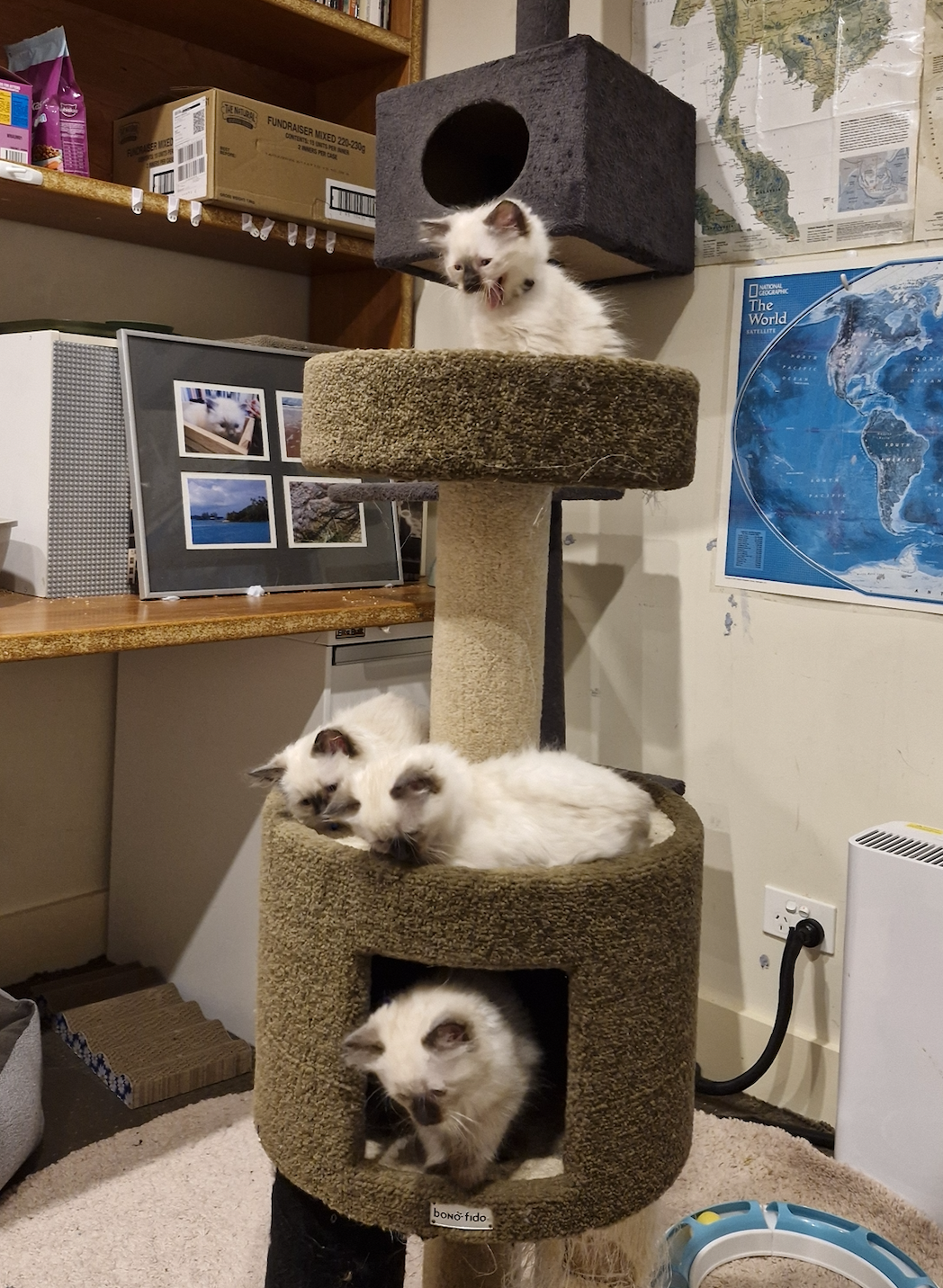
They can fall almost two metres onto carpet without injury now—usually. Injuries are much much less likely, but always possible.
WEEK EIGHT
They can get their first health check and vaccination at eight weeks, as well as a microchip. They can’t usually be desexed until twelve weeks. Then, after time to recover, they can be adopted. Boys are generally fine after a few days, and girls should be monitored by someone who knows them for ten days. Their operation is much more complicated.
Looking after newborn kittens was one of the best experiences of my life, and I hope I get to foster newborn kittens again someday.
I recently had someone contact me asking if I could foster two very pregnant (and friendly) cats and their babies. I had to say no, because I have to pay off the debts from the Bird kitten litter before taking any more foster babies.
If you can help me get closer to the day when I can foster another group of kittens, I would be very grateful. At this stage, though, it would take a miracle.
Here’s the Ragdolls in Week Nine, Ten, Eleven, and Twelve:
And in close-up (I swear these are four different kittens!)
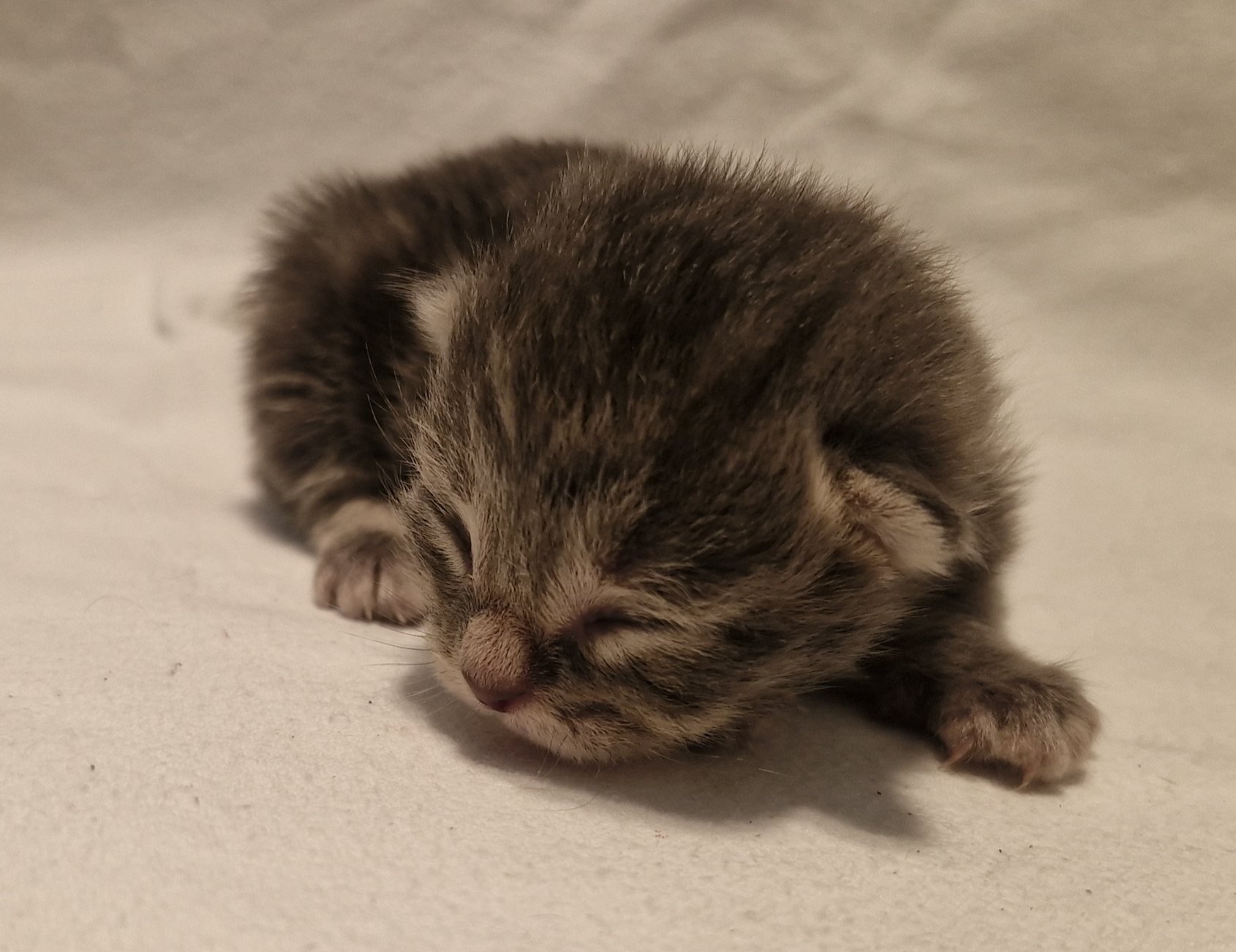
Here is Turtle in photographs from a newborn baby to a confident and ready-to-adopt young man:
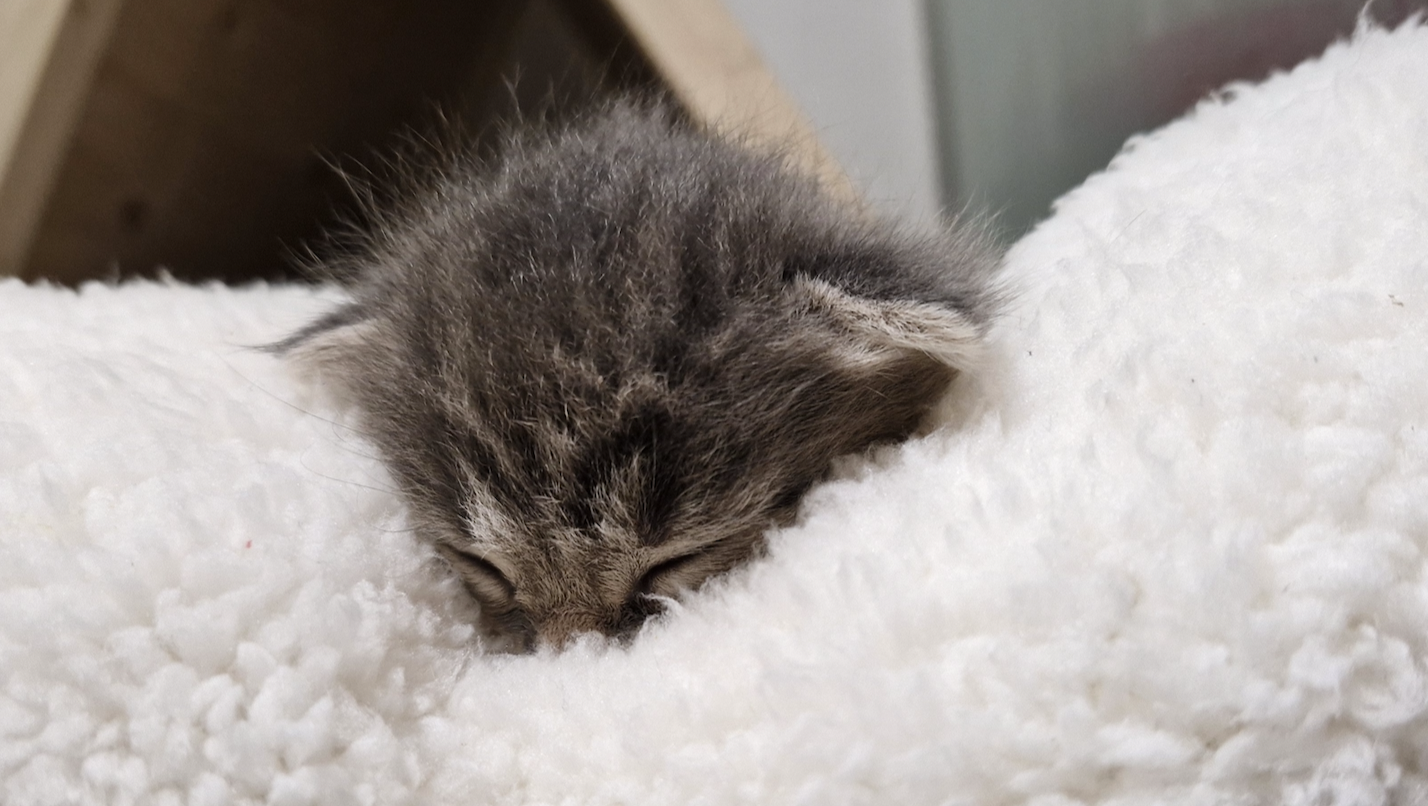
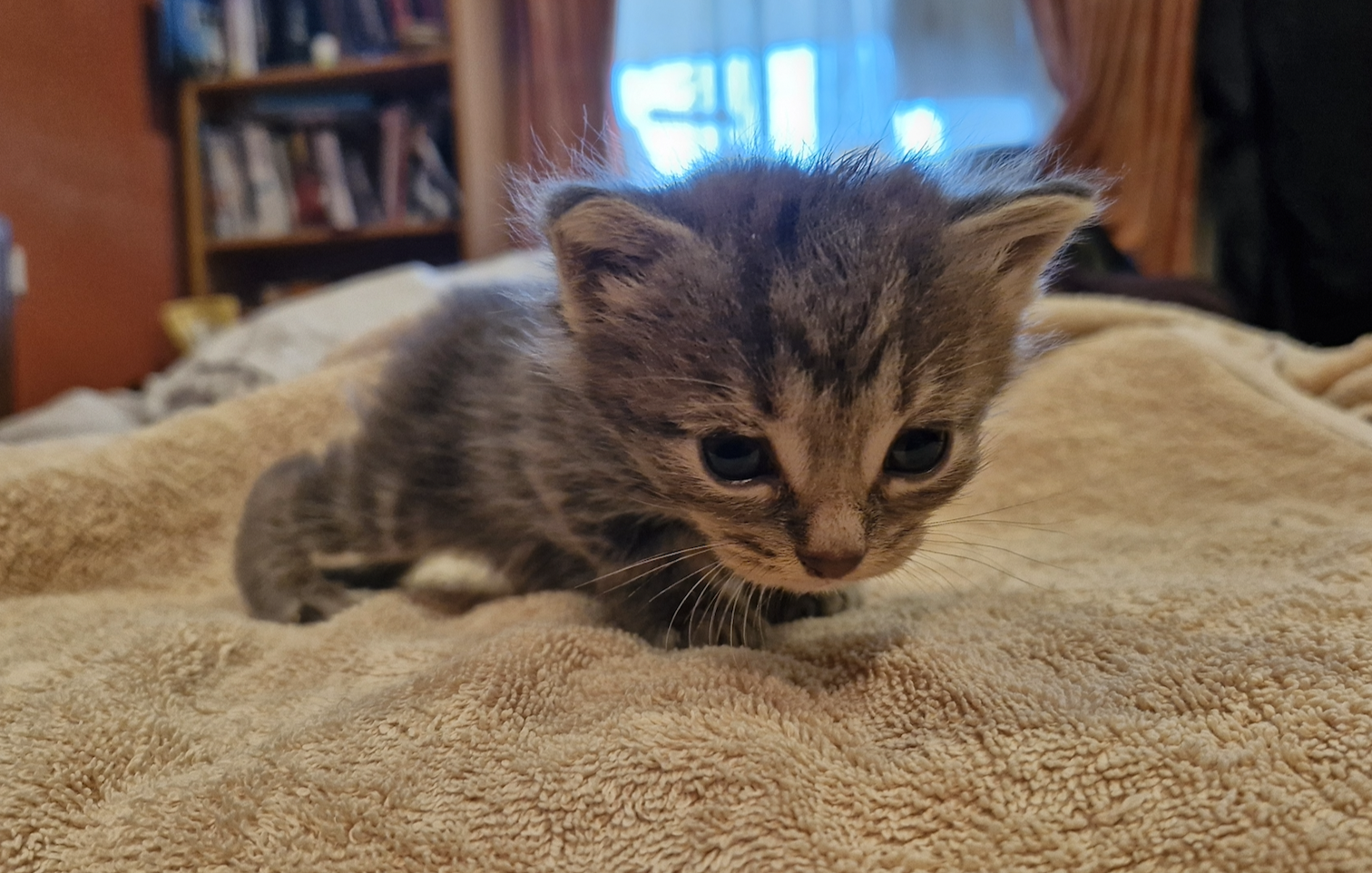
Okay, the last three photos were all taken on the same day. Aren’t they great though?
Cat Rescuing for Newbies
This post is very much inspired by Athena Scalzi. People are constantly running into stray cats and kittens and wanting to help them (and to stop them breeding).
TNR stands for ‘Trap Neuter Release’ and has proven extremely effective in humanely reducing a cat population over time. Humane cat traps cost around $40. If you want to make a real difference to a cat colony without euthanising any cats, you can trap cats and take them to the vet to be desexed and vaccinated—then take them back and release them into their colony. It’s God’s work.
Most adult cats are difficult or impossible to socialise (eg some will take literally years before they allow a human to pat them). Others are abandoned pets. If you scratch the skin of literally anyone involved in cat rescue, they are extremely angry about the treatment of cats by irresponsible humans. I imagine those who focus on native Australian animals (which tend to be a convenient size for cats to kill and eat, and have few natural defences) are even more furious.
So… cat fostering is extremely important. And so is desexing pet cats!
Catching cats
The first thing to know is that, no matter how adorable they are, cats are one of nature’s most efficient killers. Even at four weeks old—barely weaned—they can sometimes send humans to hospital. Seriously. They are faster than you, and they have multiple inbuilt weapons that they have been using since they were newborns. This is Cinnamon, who was about six weeks old and absolutely shredded my hands when I caught him. Even a cat who appears friendly and lets you pat it (even purring!) will react with efficient and lightning-fast violence if you try to restrain it. The one exception is a cat about this size or smaller, because IF you can ‘scruff’ them (grab them by the loose skin on the back of their neck like a mother cat) then that will work like an off switch. But if they’re older, they may be immune. Or just too heavy. Or they may just be too smart to let you get a grip (like Cinnamon). This is why I strongly recommend getting a trap!
I’ve always used a trap that you put food inside (and then walk away and wait until their weight snaps it closed), but others swear by ‘drop traps’.
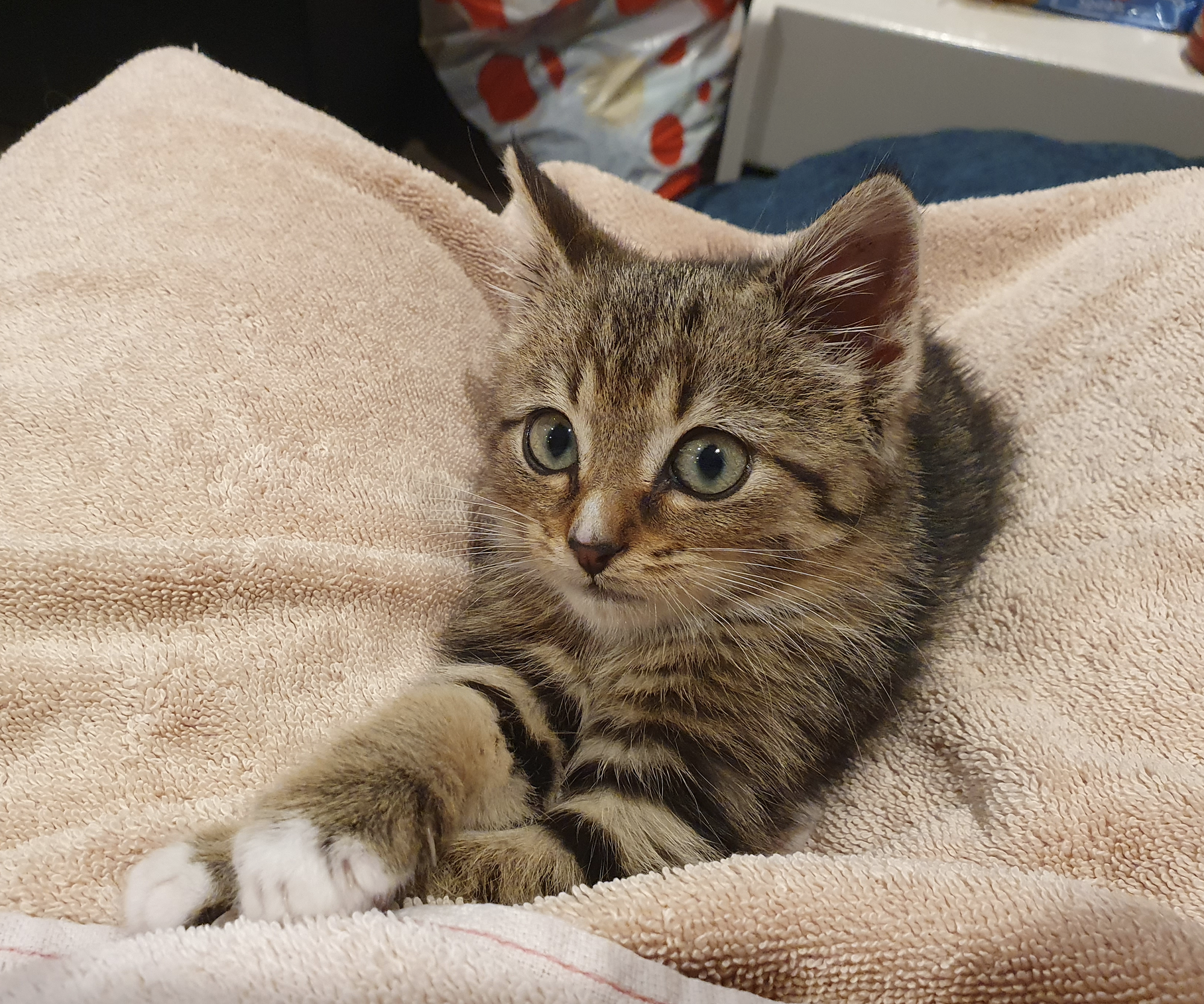
You can ‘train’ stray cats a little by feeding them at the same time each day, which is the first thing you should do in preparation for trapping. Try to get photos so you can assess age and health and/or send those photos to a rescue organisation.
Having said that, every rescue organisation I know is perpetually overwhelmed. It’s likely to be tricky or impossible to find someone to help. But if you catch a cat in a lever-style trap, you can take it directly to the RSPCA. They may euthanise it, but at least they won’t just let it go.
If a cat is younger than four weeks, it is not yet weaned and it will probably die if you trap it. If it is four to six weeks old, it will not be able to clean itself, so you and a facewasher will become very familiar with its butt. Six to twelve weeks old is perfect because they’re still quite adaptable (and want cuddles) but don’t need their mum any more. If their mum is friendly towards humans, she will be a good influence on her kittens and should stay with them until twelve weeks if possible. If she’s not friendly, she should be separated from them at around five or six weeks.
Cinnamon was purring in my lap less than 24 hours after shredding my hands, because he was desperate for a mother and I was a pretty decent substitute for his biological mum (who I was not able to catch until later). After twelve weeks kittens may already be too set in their ways to be socialised, but you never know. This is Jack Black, who was rescued at six months and was sweet and loving from the start.
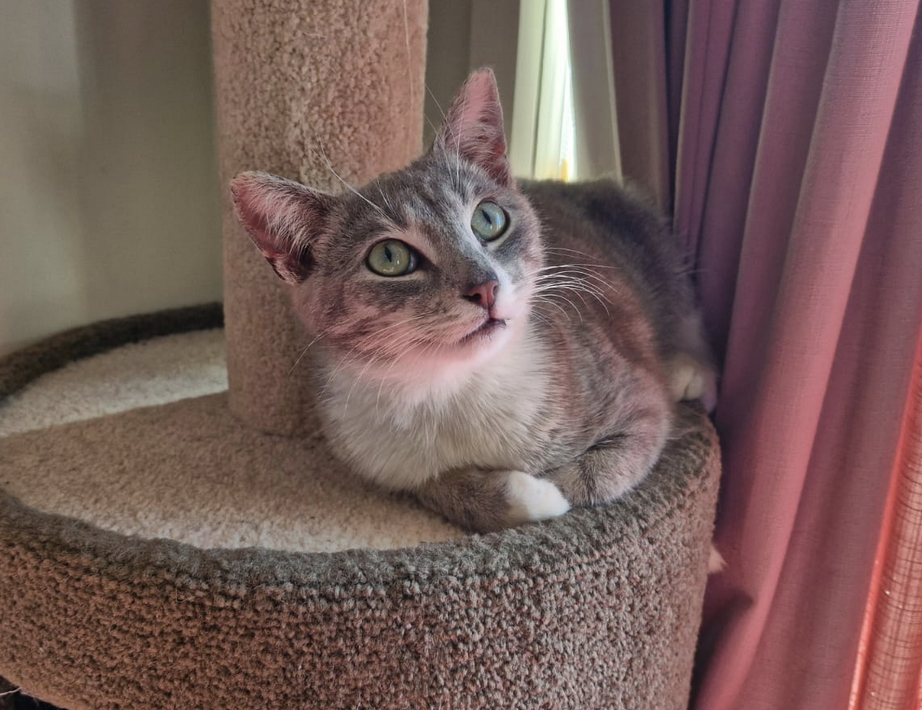
I made a series of weekly kitten videos starting from newborn age, so you can watch them to give you some idea of how old your kittens are. If the mother of very young kittens is killed, a foster carer may be able to save them by feeding them Womberoo cat milk (gently warmed) every few hours via a syringe or bottle, and keeping them in a room at about 30 degrees Celsius if they’re less than two weeks old. They will also need to massage the kittens’ butts to help them poo.
At some point I plan to do a detailed blog on fostering newborns. Suffice to say, it’s difficult work and often they’ll die anyway. So keep them with mum until at least four weeks if possible.
And if mum is around, she is likely to reject young kittens if they have been touched by humans. So be very careful! Do what I say, not what I did!
If possible the person who catches the cats should not be the same person who fosters them.
It is very important to note that kittens can get pregnant (to their immediate family members, ew) from just four months of age, so if you catch more than one kitten and there is a mix of genders then you must try to separate them by gender and/or get the males desexed asap (the male operation is quite simple). Once they’re about six months old, male balls are usually fairly obvious so their gender is suddenly a lot less mysterious.
Your first few days with foster cats
They are almost certainly infected with worms and probably fleas, both of which can be transferred to humans. For this reason, the first medical treatment they get from me is a combined flea and worm treatment. I use Nexgard because it’s the only one in Australia that puts all the parasite medications into one liquid (otherwise, it’s a combination of liquid and tablets, which your cats may object to). If I know a cat is going to be difficult to socialise (eg they’re over twelve weeks old), I medicate them before letting them out of the carrier. Otherwise, I wait a few days or weeks so their stomachs and nerves can adjust to their new life, especially if they’re small.
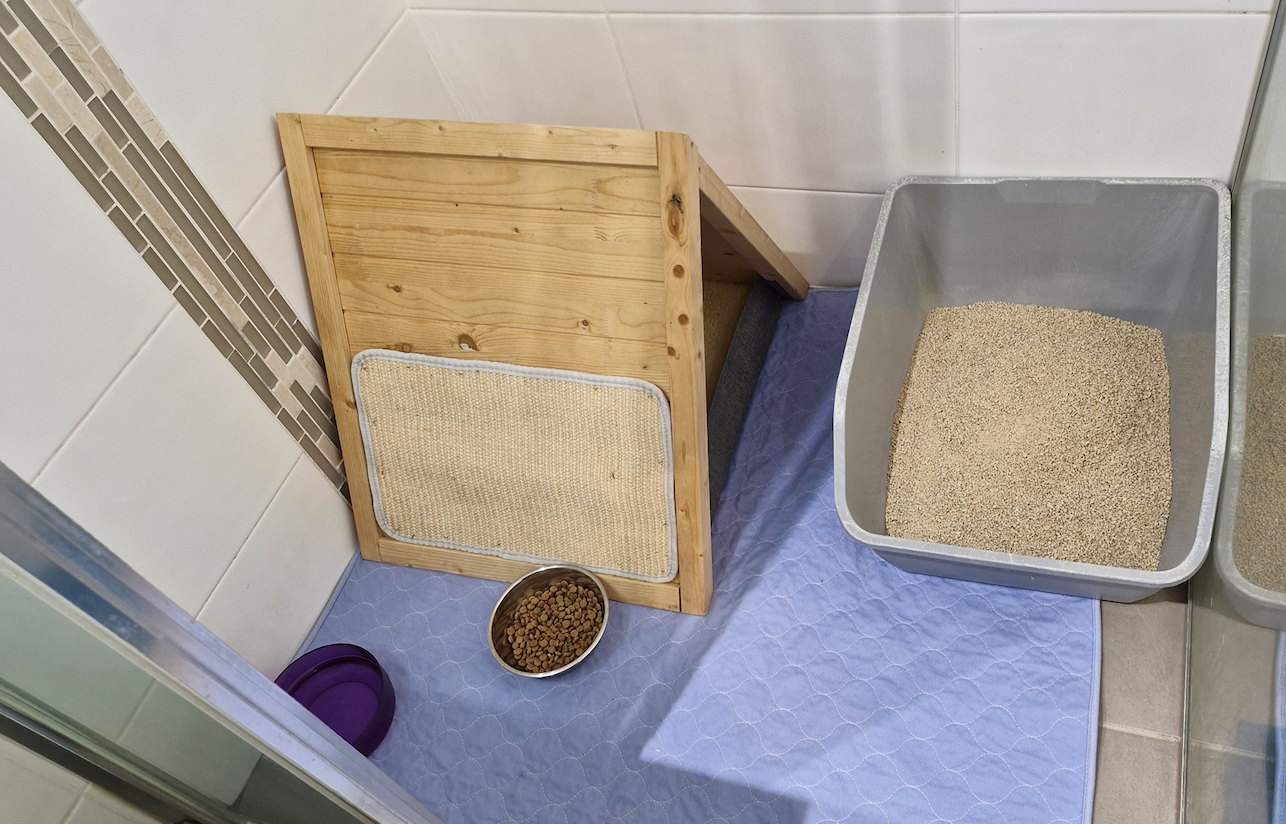
My quarantine room is the ensuite, because it’s easy to clean and hard for a cat to truly hide. I provide food, water, litter trays (two for a single cat, and then another one for every cat added), something to scratch, and somewhere to hide. It’s tricky to fit all of that into an ensuite, especially since cats like their food, water, and litter to all be separated. But here’s an example of a fairly typical set-up (there is another litter tray out of frame). The blue mat is actually an incontinence pad (I love incontinence pads and bath mats because they give comfort and warmth but are very easy to wash).
The small size of the ensuite is actually a good thing because it is basically a large box where the cat can quickly get familiar with the whole room. I puts toys in there fairly soon but not immediately because even toys are scary at first.
It is much easier for your rescue cat if they have another cat with them (that they know), which is why I strongly recommend fostering two or more cats rather than just one. Cats find it stressful to be introduced to other cats so although it’s usually worthwhile it’s best to wait a few weeks before starting the feline introductions. Kittens are much more adaptable, especially when they’re younger.
Most cats are lactose intolerant, so don’t give them milk unless they’re under six weeks old (and you’re using a pet milk such as cat Womberoo or Di-Vetelact). Or you can give them human lactose free full cream milk as a treat.
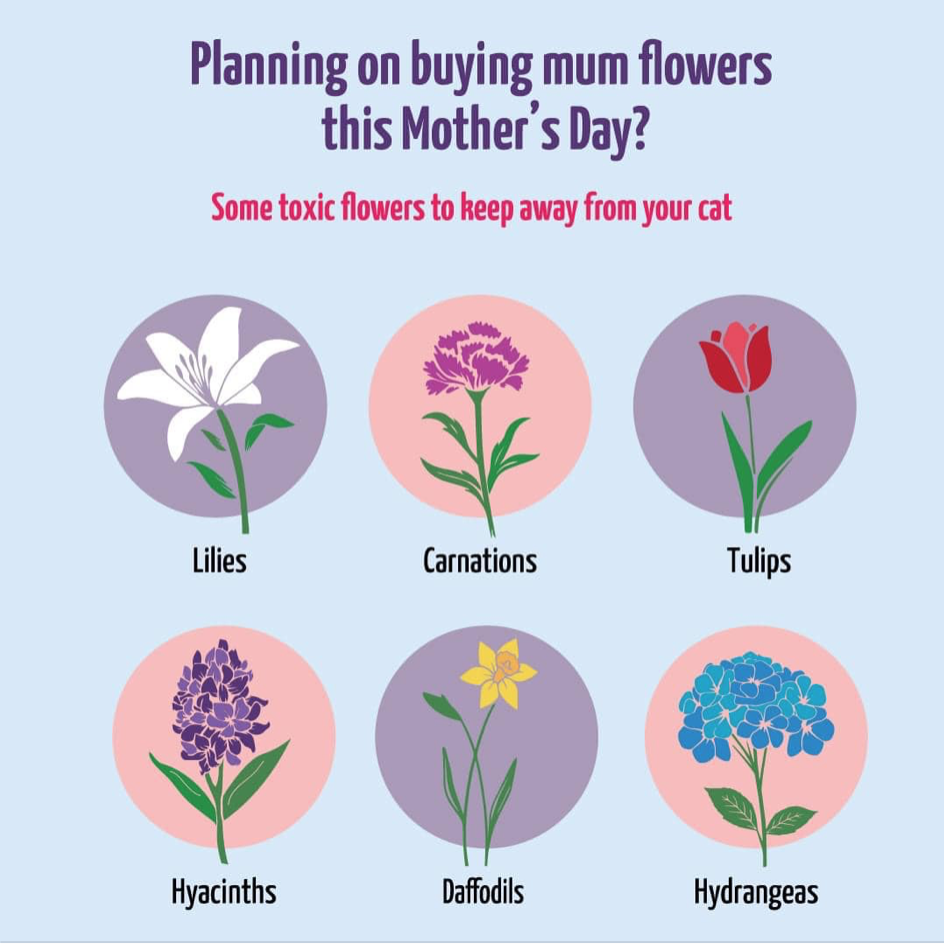
Some plants are poisonous to cats, including these favourites. Cats often eat grass which is fine although it can be a sign they’re feeling unwell. Grass tends to make them vomit, which is one way to get bad things out of their body (so, they’re self-medicating).
Food-wise, don’t give them dry food until six weeks of age. Do give them wet kitten food if they’re over five weeks. The younger they are, the better quality it needs to be. I use Royal Canin mother and baby mousse if they’re under six-ish weeks, and Felix kitten food if they’re not (and when changing food it’s vital to do it very gradually over several days or weeks). For dry food, I use Royal Canin kitten food if they’re under eight weeks, and Whiskas if they’re over eight weeks.
A lot of cats get soft stools after worming, after vaccinations, and when changing food. Some continue to get soft or stinky poos long term, and they need to be shifted permanently onto good quality food like Royal Canin or Ziwi.
If they’re over six weeks old, I usually top up their dry food (and water) constantly, and give them wet food twice per day. It’s rare for kittens to overeat.
I use “World’s Best Cat Litter” which is expensive ($26/bag at Woolworths) but lasts a long time and reduces smell very well. The annoying thing is that I get a scattering of sand near litter trays. Bath mats are great for catching most of it, and then I can shake them out in the garden and wash them.
Use this rule for water bowls: a minimum of two bowls, and then add one or more bowls for every two cats.
They tend to get somewhat bored of the quarantine room after a week, so if they’ve been wormed at least three days ago and they’re using the litter trays, I let them explore a little further. They’re often tempted to poo in beds or on clothing (especially clean or dirty washing because of the smell) or piles of paper, so that’s something to watch out for. The best defence is habit, so I only gradually increase their roaming area. I always scoop trays daily, plus any time there’s a poo. And I supervise their exploration closely at first.
If they have small bald patches, especially on the face, ears, legs, and tail that is probably ringworm. Ringworm is a minor condition but it’s incredibly infectious, including to humans. The spores are too small to see and can live in fabric for over a year. Washing doesn’t get rid of the spores unless it’s extremely hot (think 90 degrees or more) or includes specific sanitisers. I use F10, buying it from Aussie Vet Products as even pet shops don’t usually stock it. I also buy F10 hand sanitiser. If they have ringworm, they stay in quarantine—with as much play time and novelty as possible. And those without ringworm should be separated into a second quarantine area if possible.
If one or more of your cats has ringworm, you need to talk to a vet (and tell them you suspect ringworm before you enter their premises). Ringworm is actually not a worm (and not treated by worm medication) but a fungus.
Here’s Jodie Foster with a lesion above her eye and two more developing on her nose and under her other eye.
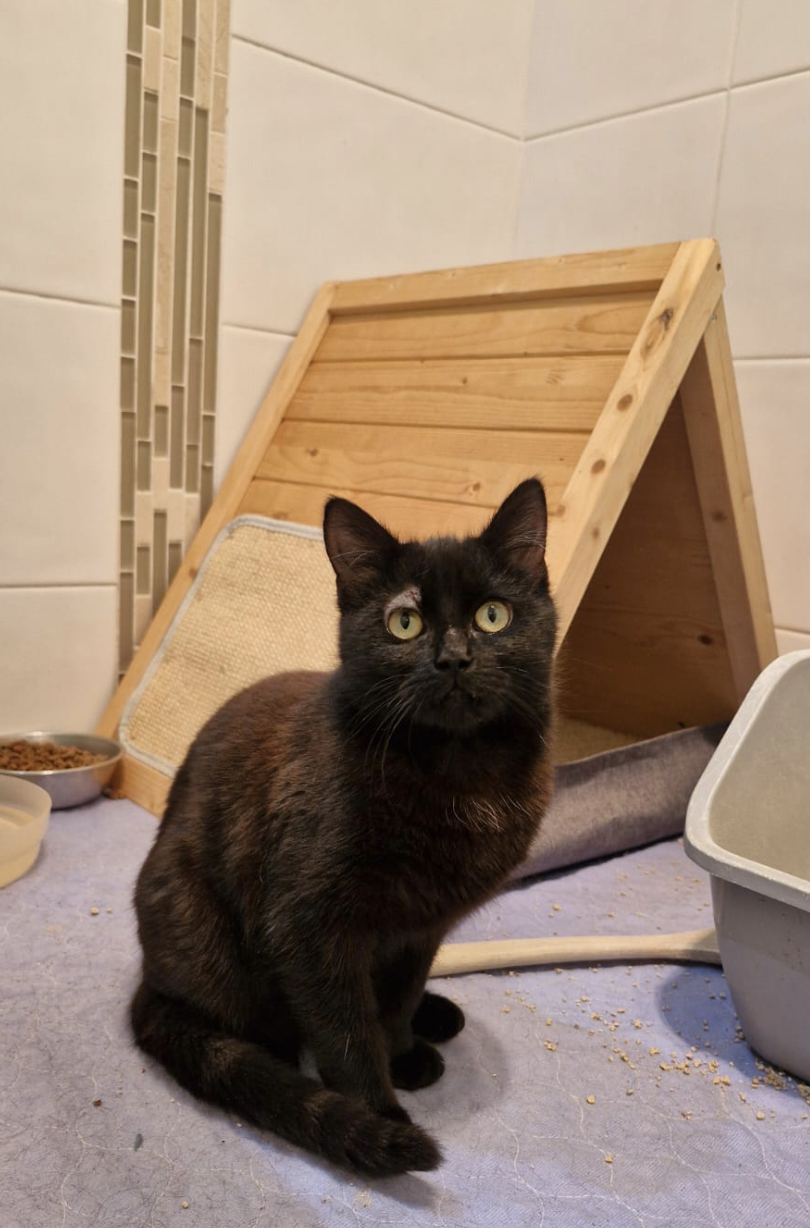
The other disease that a lot of cats will get is cat flu, which can be brought on by stress (like being rescued). A few sneezes are no big deal, but if they have runny eyes or nose they are sick and it may get deadly shockingly fast. Monitor their breathing and you may need to take them to a vet at short notice (so make sure you know your local emergency vet).
Because a vet visit can also be very stressful, you need to carefully balance the potential harm of a vet visit with the potential benefit. I would usually say it’s a bad idea to take a cat to a vet within three days of them arriving at your home unless they have something that needs immediate attention. A lot of foster cats will hold a grudge and get less trusting after I take them to the vet.
Go to a vet within 48 hours if your cat has a runny nose (clear or yellow/green), is drooling, or refuses to eat (try extra-smelly food such as fish first). Go to the vet immediately if they have trouble walking, if they are panting, if they are not drinking, if their eyes look painful or are not fully open, or if they are not playing at all. Ditto if the discharge from their eyes is yellow or green.
Cats can also get a fever from cat flu. You can test them for fever by feeling the temperature of their ears. If you feel them when they’re healthy they feel quite cool, and if you feel them often you are more likely to be able to tell if something is wrong. If in doubt see a vet of course.
If you are looking after them at home, it is helpful to wipe the moisture away from around their eyes and nose with a wet cotton ball. Steam can also help them, so it is often helpful to run a very hot shower with your cat in the bathroom and the heaters on for ten to twenty minutes up to twice per day (being careful not to dehydrate them, as that can also kill them). Change their water frequently and keep other pets away. It may help to gently warm their wet food (mainly to increase the smell so they can recognise it despite a stuffy nose). Reduce their stress levels as much as possible.
Socialising your rescue
The first and best tool for winning your cat’s heart is food! After food is gentleness. You are at least a hundred times bigger than any cat, so you are frankly terrifying and they need time to learn to trust you. Speak gently and try to avoid anything too noisy (crying baby, vacuum cleaner, etc) especially for the first week. Kittens under six weeks can have heart failure from a loud noise or a scare!
Prolonged eye contact is usually seen as aggressive in the animal kingdom, but if you meet your cat’s eyes and then give them a slow blink or look away, that tells them, “I don’t want to fight you.”
I find that mewing at them often helps, mostly by confusing them (confusion is better than fear).
They feel less threatened if you sit on the floor.
If they let you, go ahead and pat them. If they hiss at you but don’t growl, snarl, or swipe at you they are probably safe to pat. Be careful, move slowly and steadily (pausing when they hiss), and make sure they have room to move away from you. If they are extremely food-motivated you may be able to pat them when they’re eating, but I generally don’t because I don’t want them to associate food with fear.
Give them plenty of time to think about new information (such as “the human monster patted me and it didn’t hurt”), and if possible help them to spend a lot of time observing you doing normal non-scary activities such as watching TV (not too loud or violent), reading books, playing on your phone, and sleeping. I like to give them one small challenge per day eg sitting 10cm closer than I sat the day before or letting them see another cat from across the room for the first time.
If you absolutely cannot pat them, here are some strategies that might help:
-patting them with a wooden spoon to get them used to gentle touch (without getting your flesh mangled).
-dangling a toy such as a fishing-pole toy or rolling a ball at them, so you can have a positive interaction without getting slashed. Don’t do this for the first week though, as toys can appear threatening at first.
-Letting them see you interacting with another cat (ideally a kitten so it’s less scary).
-Letting them interact with another cat, so they are less lonely (but introductions must be done very slowly and carefully over several days/weeks).
-Feeding them treat tubes.
I find that EVERY cat in the world goes through a ‘conflicted’ stage when they enjoy your company, possibly even purring when you pat them, but are still afraid of you.
At the time of writing, Cate Blanchett still hisses when I approach, but snuggles and purrs when I pat or hold her. However, she also sliced me up quite badly when I grabbed her by force to take her to the vet just last week. That was my fault for not slowly scruffing and patting her before picking her up.
Most cats hate being picked up or restrained.
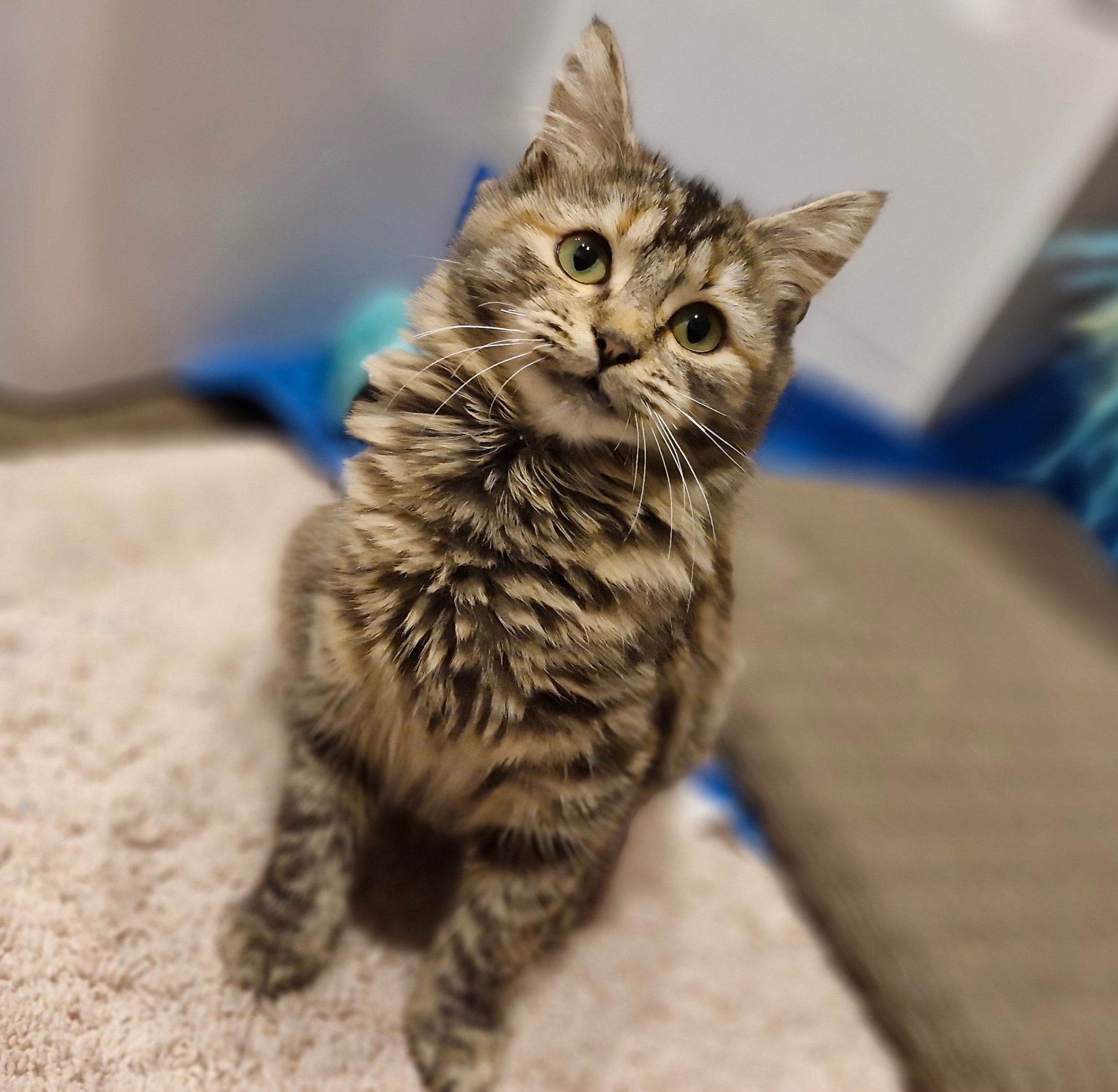
Summary of Fostering
*Don’t trap kittens under four weeks unless their mother is dead. They will probably not survive.
*Be aware that the second a cat feels trapped (eg by your hands) they are likely to attack with considerable speed and skill.
*At four months of age cats can get pregnant to their siblings, so they need to be desexed or separated immediately.
*Cats can give you worms, fleas, or ringworm so take precautions, especially early on. Cat flu is dangerous to the life of kittens.
*Cats need water, dry food (once they’re over six weeks), wet food, a scratching place, and a hiding place. Cats under six weeks of age will benefit from specialised pet milk.
If you are a good foster carer, you will get the cats health checked, vaccinated (ideally twice but as far as I know I’m the only foster organisation that does that), microchipped, treated for parasites, and desexed. Then adopted into a safe and appropriate home!
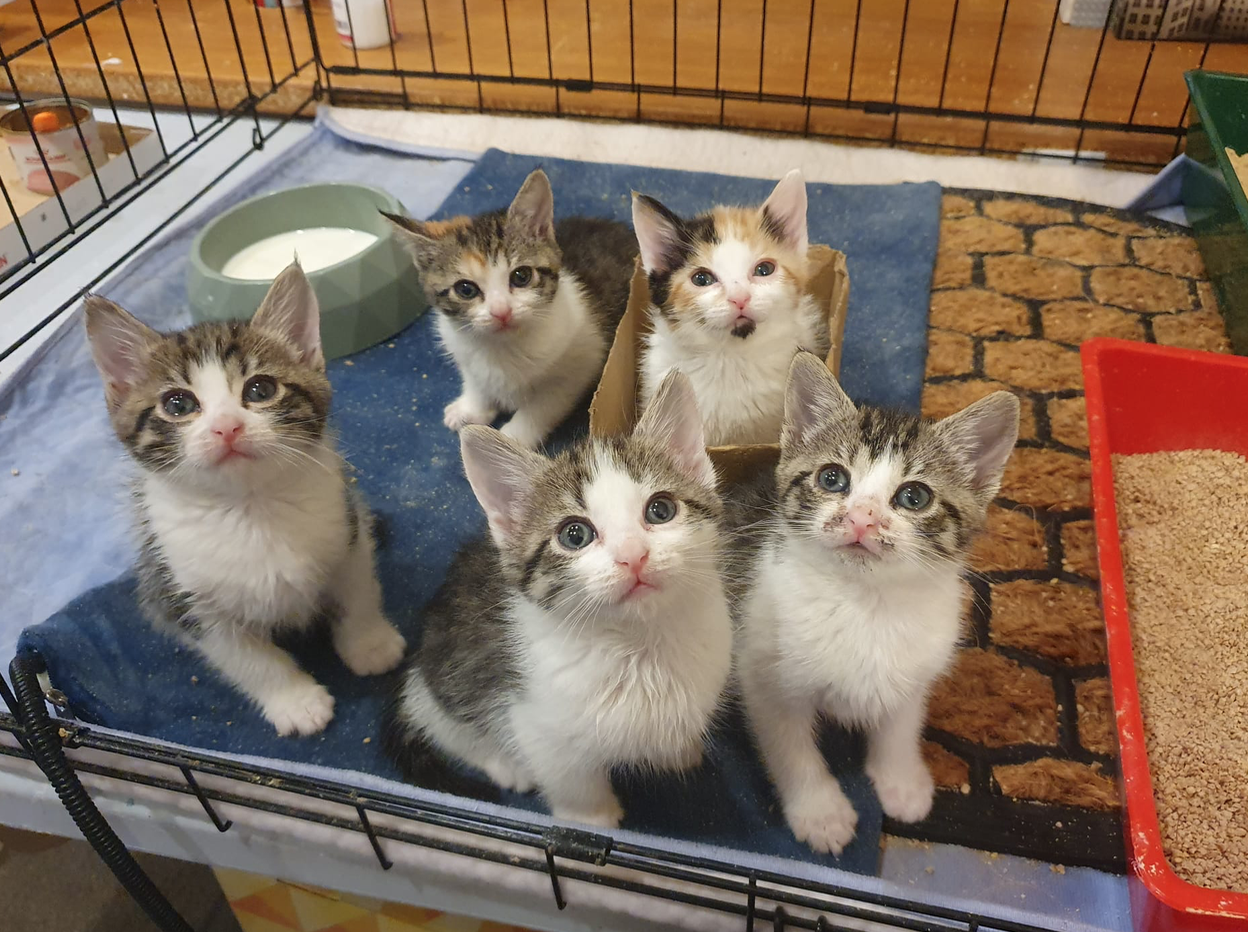
This is a VERY quick and dirty guide to fostering, but I hope it will help you!
If you’re in Canberra, you might like to volunteer with me, or get mentored to become a foster carer yourself! My email address is MagicalMoggiesCanberra@gmail.com
Here’s the link to my GoFundMe. Food, litter, and vet care gets real expensive real fast.
So you’re thinking of adopting a kitten. . .
First, let’s take a moment to think about this twenty-year commitment to a living being!
This guide has sections:
Two is always better
Cost
Kids and Cats
What do you need to get before the kitten arrives?
Eye Contact, Physical Contact & First Contact
Training Your Cat
Cat Manners and Communication
Sickness
Cat Politics
Bits and Pieces
I wrote a blog about introducing my younger cat (Zoom) to my cantankerous older cat (Zipper), with lots of advice. You can read it here.
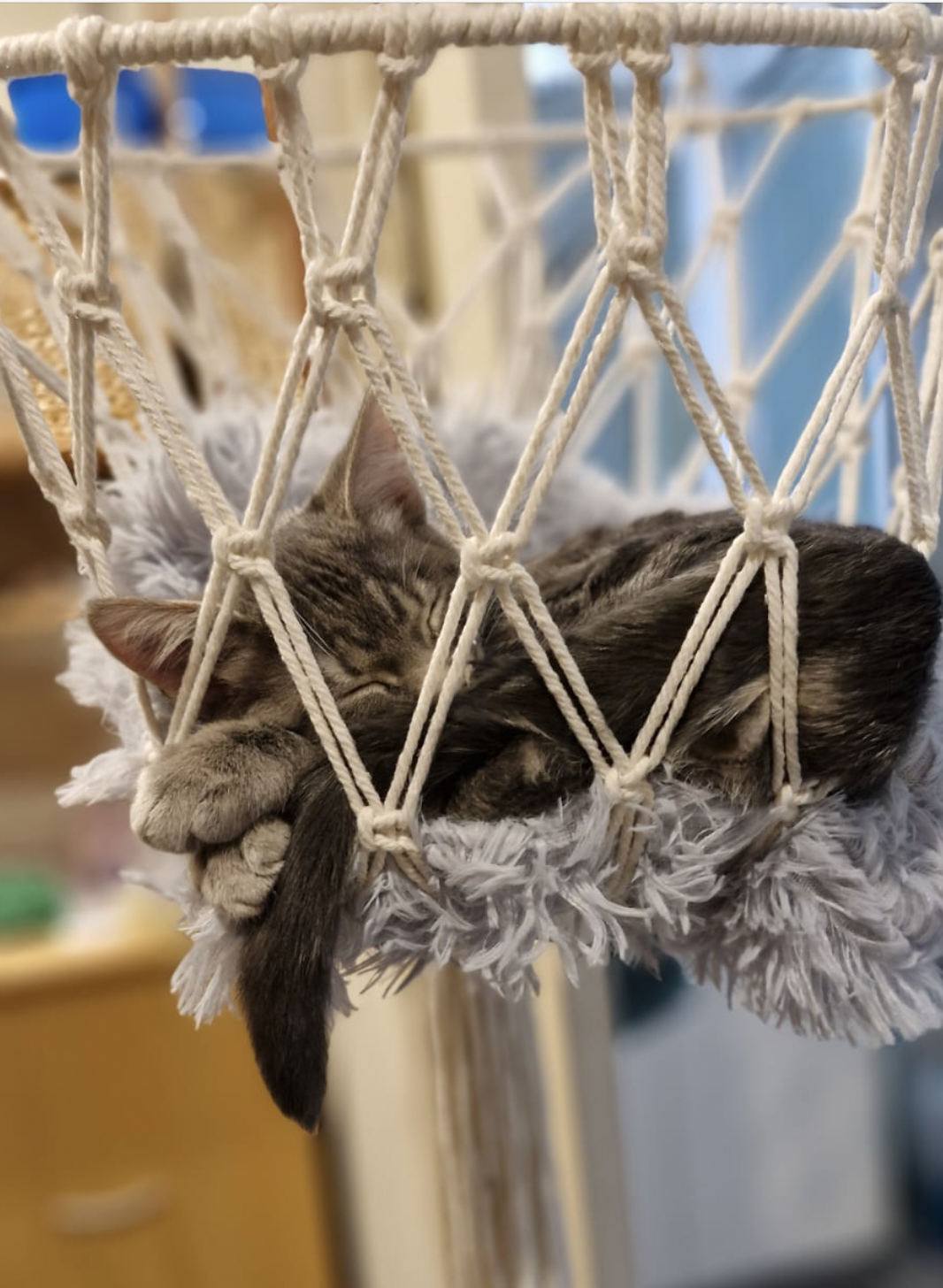
Two is always better
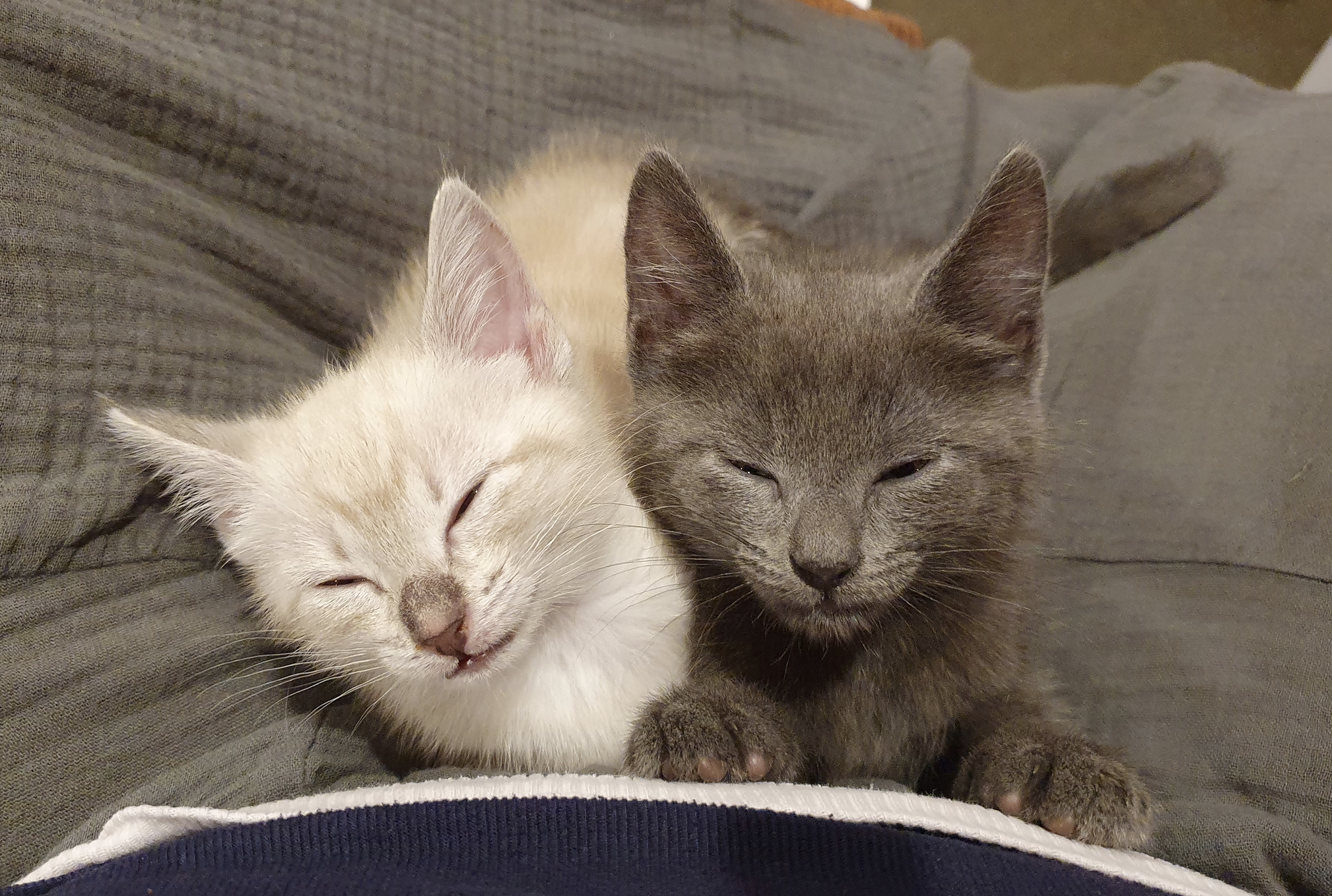
There is nothing cuter—or more entertaining—than a bonded pair of kittens. But there are also several coldly logical reasons to adopt two kittens:
- Kittens need about two hours of play time daily. The best toy for a kitten is another kitten. If you don’t want zoomies at 3:00am, your best defence is getting two cats.
- A solo kitten may develop Single Kitten Syndrome. Kittens teach each other physical boundaries, meowing mid-wrestle to indicate when a bite is too hard. Without that mutual training, they often get obsessed with biting and will bite humans (hard, and often, and without provocation). It’s virtually impossible to train them out of it.
- Any cat born since mid-2022 must be kept on your property if you live in the ACT. That means they must stay either inside or in a cat run. A lot of cats get very very bored as a result, and some of them develop behaviour problems (like defecating in your bed or biting you or your kids). The solution is another cat. OR if you don’t want to get two cats, you can adopt an older cat, so they can roam outside (assuming you’re not in one of the cat containment suburbs).
- With every week that passes, a kitten gets less open to the notion of another cat in their space. Even if they tolerate another cat, it’s not the same as a bonded pair. Better to start with two. (They can also forget each other after as little as a week apart.)
More than half of the people I meet adopting kittens are getting a second cat, and crossing their fingers that the relationship between the two felines will work out. It’s MUCH better to get a bonded pair if you possibly can! Most adult cats are fundamentally opposed to a new feline friend, and although the majority will eventually tolerate the new member it would be better for everyone if you adopted a pair of friends from the start.
Kitten Lady has seven reasons you should adopt a pair instead of just one kitten. She also has tips for those who want to adopt just one cat or kitten.
Cost
Adoption fees are usually around $350 each. Cats should be desexed, microchipped, vaccinated, and given monthly flea and worm treatment before they’re adopted. It can easily cost $700+ to get basic vet work done yourself, so it’s worth adopting from a rescue for that reason alone.
Food and litter costs between $50 and $150 each week per cat (more for specialised food). A completely healthy cat that never has a single health issue would still cost around $200 per year at the vet for their annual checkup and vaccination. However, a single medical incident (eg swallowing a hair tie) can easily cost $1000-$10,000. An illness such as cat flu will probably cost you around $500. Serious health issues will costs thousands, possibly several times over. A lot of cats will have dental issues at some point. You can expect to pay $1000 if a single tooth needs to be removed.
Parasite treatments cost around $50/month per cat.
A carrier costs $50-$500, and cat scratching posts also cost $50-$500 (more for the really elaborate ones). Professional cat runs cost around $5000.
I often go to Goulburn Vet or Cooinda Vet at Marulan because vet costs are cheaper there than in Canberra.
Many people get pet insurance, which costs around $50/week.
(Speaking of the cost of food, litter, and vet care, would you like to donate to my ongoing GoFundMe so I can continue rescuing cats? I can’t do it without help!)
Kids and Cats
Many organisations will point-blank refuse to let you adopt a cat (especially a kitten) if you have a child aged eight or less. The reason is that cats (especially kittens) get underfoot and kids are uncoordinated, fast-moving, and unaware of their surroundings. Sometimes a child steps on a kitten and kills it. It’s not common but it does happen, and it’s obviously incredibly traumatic for everyone. The solution is to be aware of the possibility, and to supervise kid-cat interactions very carefully, especially for the first six weeks. It can also help to teach kids to look around carefully while they’re walking around the house (remembering that they’re kids and they can’t instantly become adults), and to get a more cautious, flighty kitten rather than one that gets underfoot. Cats over one year old are much bigger and safer. You can also keep a cat in just one section of the house, which will help (although they will probably try to escape, and that adds the risk of closing a door on them).
I have been told that cats sometimes sit on a baby’s face and smother them to death in their sleep. I suspect this is an urban legend, but I wouldn’t let a cat sleep with a baby for this reason.
Cats definitely understand that children and babies are different to adult humans. Some treat them as younger kittens to be cared for. Others treat them as a dangerous threat (noisy and unpredictable). Still others see a chance to dominate them, which can be tricky because they may choose to attempt dominance through scratching, biting, or jumping on them.
Pretty much every cat in the world will scratch your kids sooner or later—by accident if not during play time. But especially kittens. However, I find that rescue cats scratch less than purebred cats (as they have a better sense that humans are different to cats), especially if they were rescued when they were at least two or three months old.
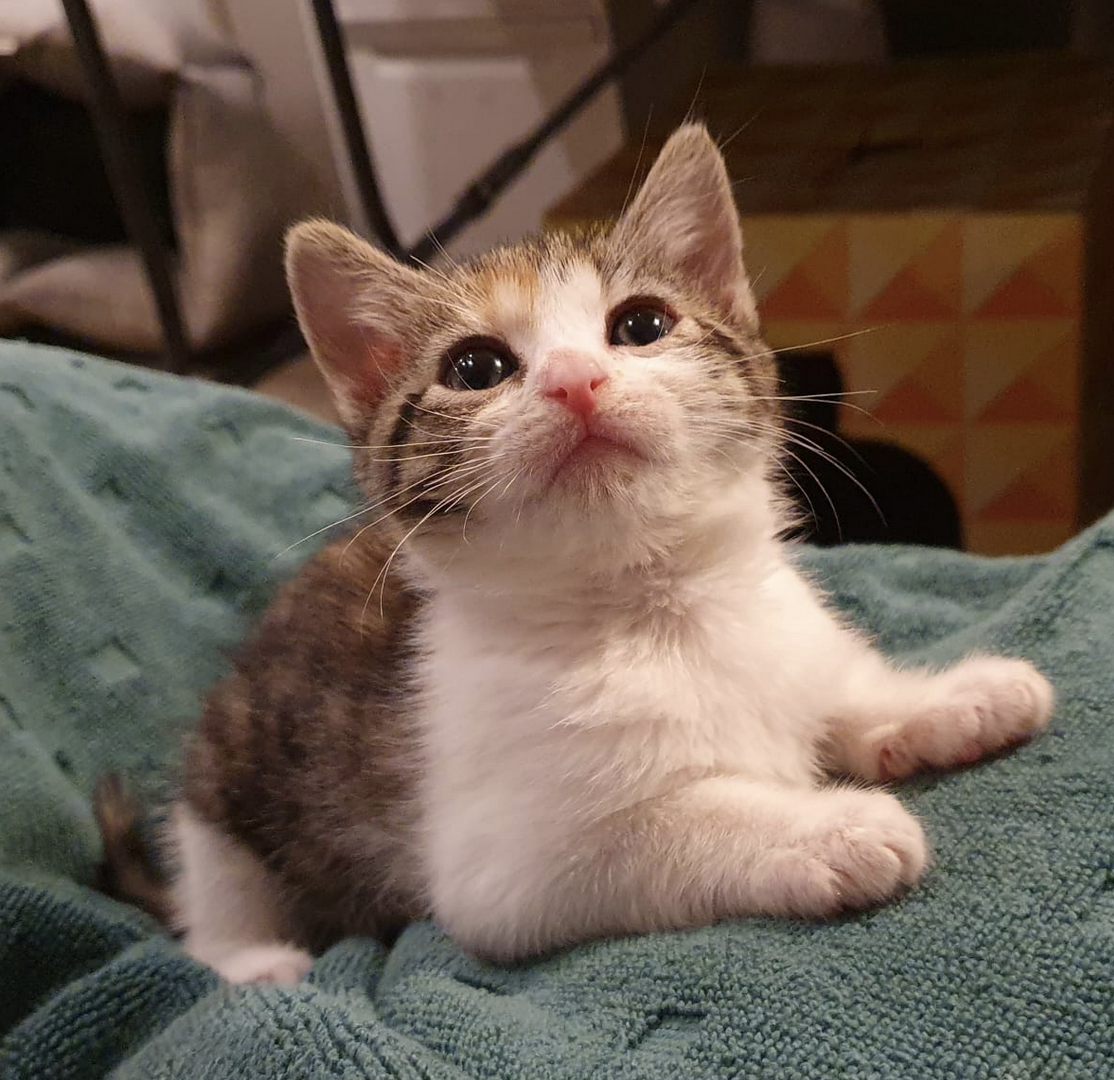
What do you need to get before the kitten arrives?
You need toileting supplies, bowls, wet and dry food, a carrier, and a scratching post. Toys are fun and highly recommended but can be made out of household items (paper, cardboard boxes, towels, etc). Within a month you’ll need parasite treatments too.
Toileting Supplies
Litter trays: Most cats prefer to have a tray for poo and another tray for wee. They also may not be willing to share with another cat (or they may deliberately use a different cat’s tray as a show of dominance). If in doubt, get the same number of trays as you have cats, plus one more. If you have a two-storey house, there should be at least one tray on each floor. You can buy trays at Woolworths, but they’re quite small and a kitten over six months of age may find them too hard to use. A plastic storage tub usually works very well. All your trays can be in the same room, directly next to each other, especially if your house is small. They should be at least a metre away from the cat’s water, which should also be slightly separated from the food.
Scoop: You need at least one scoop, and should scoop the trays at least twice a day, plus anytime there is poo in a tray (for your sake as much as theirs). Kittens tend to poo at least twice daily. There are small plastic scoops in Woolworths which are fine. I recommend always having a spare one on hand in case the first gets unusually nasty.
Litter: I use World’s Best Cat Litter (also available from Woolworths). It is quite expensive but reduces smell a lot due to absorbing moisture. It is ‘clumping’ meaning that even urine turns into balls that can be scooped and put in your normal toilet, then flushed. That means most of the litter stays clean and it doesn’t need to be changed as often. Most cats are very adaptable to different types of litter, but I always place them in the litter immediately in a new home (possibly even doing a bit of gentle digging with their paws to make sure they get the idea). Usually, showing them the litter is enough—but more on that later.
Some people line their litter trays with plastic litter bags (some cats will not tolerate the noisy plastic though). Others wash litter trays in detergent and water (obviously not in the same sink food is washed in). That’s what I do at the moment, and then spray them with Glen 20 before using them again.
I like to put bath mats around the litter trays to catch most of the inevitable scatter of litter. I can easily shake them out and wash them.
When you think about it, it is incredible that cats instantly understand that the litter tray is their toilet. However, sometimes their understanding is not perfect. They (very understandably) see some other locations as toilets as well: the dirt in pot plants (or gardens) are an exact match for toileting in the wild, and they are also drawn to soft fabrics such as washing piles, linen cupboards, and beds. The best way to prevent this confusion is to supervise them carefully for the first couple of weeks, restricting their access to tempting toilets (eg by closing bedroom doors and removing pot plants) until they have formed a strong habit of only using their litter trays. I recommend giving them a small ‘range’ at first, such as the laundry, hall, and living room. This helps prevent them from getting overwhelmed by exploring the whole house at once, and reduces stress. It also means they’re much less likely to poo somewhere you don’t want them to poo.
They won’t poo where they eat, so if you have an issue with them pooing somewhere several times, you can stop them by placing a food bowl there.
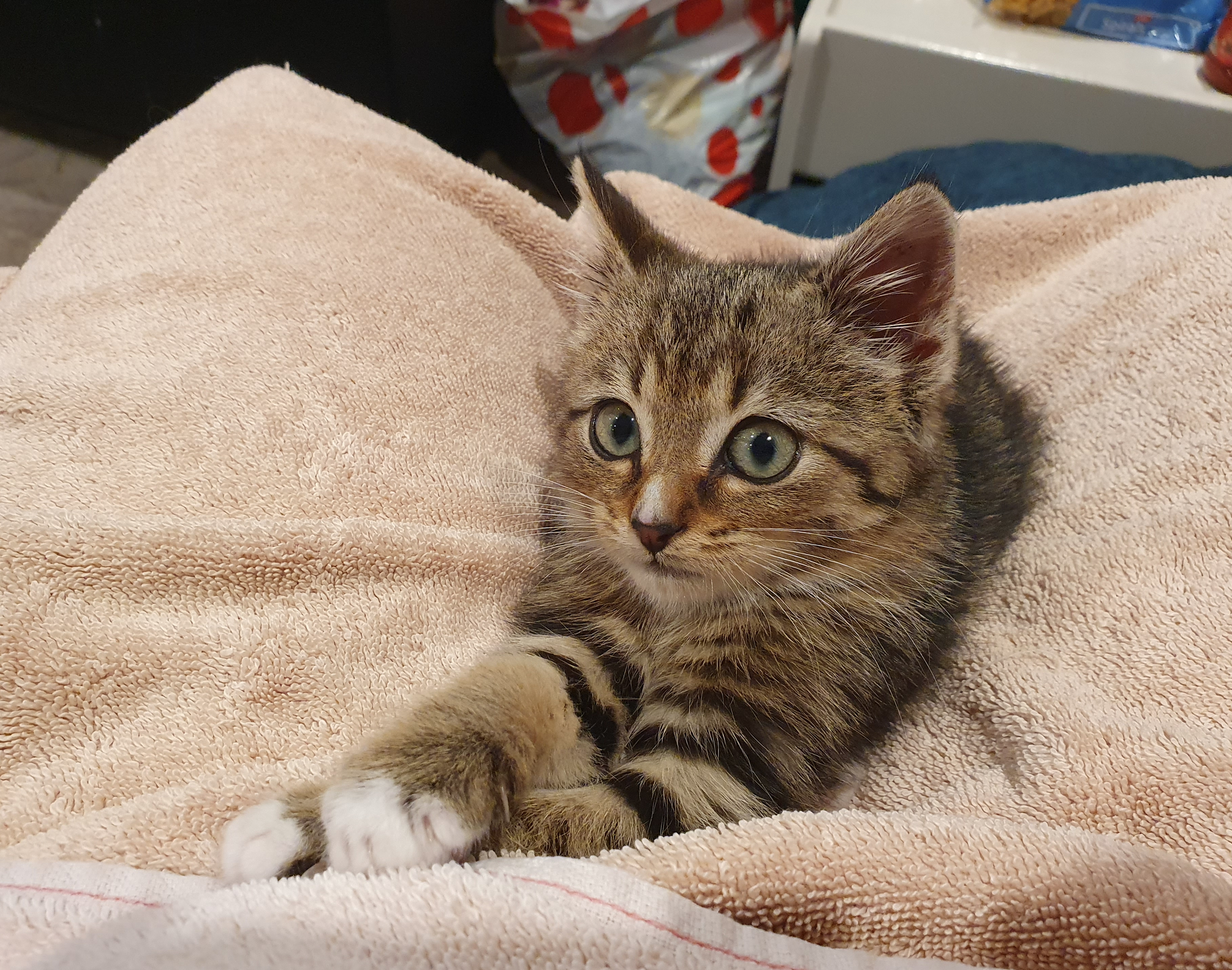
Bowls and Food
Almost any type of bowl is fine—ceramic, steel, or plastic. It doesn’t have to be a cat-specific bowl although there are many that claim to help with eating or digestion (and others that slow down a cat that eats too fast).
A kitten should have at least two water bowls (apart from anything else, they may accidentally tip one over). Water and dry food bowls should be checked and daily (topped up if necessary), and washed once per week (otherwise things grow in the water). Wet food bowls are just like your dinner plates—they get washed every time they’re used.
I typically give kittens dry kitten food on demand and wet kitten food twice a day (I’ll tell you when you adopt them how much they typically eat). Cats have shockingly delicate stomachs so you need to be VERY gradual when changing their food. Don’t do it within two weeks of them arriving at your home. Don’t change wet and dry food at the same time. At 12 months, they can eat regular cat food (but of course make the change gradually).
You can tell their stomach is unhappy because their poo will smell unusually bad; they may fart or meow in pain when defecating; or they may refuse to eat the new food. Generally I feed them Royal Canin if cheaper food isn’t cutting it. Royal Canin has ‘Mother and Baby Mousse’ for kittens up to four months (and an equivalent dry food), then they switch to a different Royal Canin kitten food for the remaining eight months of kittenhood. Then there’s adult food of course.
Felix cat food is much better quality than Whiskas.
One of my previous kittens had a very weak stomach and now eats Zyka food, which is excellent quality. Their owner carefully researched which cat food had the highest percentage of actual meat, and once they adjusted their poo didn’t smell nearly as bad.
Other cats may get special food that needs to be kept in the fridge, or their owners may cook for them. Remember to give their stomachs time to adjust to whatever you feed them. Even something as ‘pure’ as plain roasted chicken breast will upset their stomach if they’ve never had it before.
Remember: Most cats are lactose intolerant! However, lactose free milk is safe for them to drink as a treat.
Carrier
Sadly a cardboard box is not going to work—cats are too wriggly. Most cats really enjoy the mesh-sided carriers, not just when travelling or going to the vet, but as a bed or play space at home. However, one kitten I knew dealt with the stress of travel by rubbing his face against the mesh, breaking off almost all of his whiskers—so he needed a plastic carrier. I will take kittens to the vet before they’re adopted, so I’ll have some idea of how well they travel and if they have an aversion to mesh carriers.
Scratching Post
Cats need to scratch things, just as you need to sometimes cut your nails. Some people choose to cut their cat’s claws, but even those cats still need to scratch as the instinct is very strong. I recommend putting a scratching post near your couch so hopefully you can convince them to leave your couch alone. You can buy very cheap scratching posts and pads (the cardboard ones get destroyed and need to be replaced, but a lot of cats adore them; destroying them is part of the fun) from the Reject Shop. The Reject Shop also has surprisingly good toys (but use your discretion if a toy seems unsafe eg if small pieces can be broken off and swallowed).
Toys
Technically you can make your own, but official cat toys are also very fun. I recommend ‘fishing pole’ type toys—something dangling from the end of a stick—because it helps the cat to attack the toy rather than your hand, and it’s easy to exercise them without having to run up and down the hall yourself. Ditto ping pong balls. When I have something for the recycling box, I often let the kitten/s play with it for a little while first, so they get some variety.
Medication
All cats should be treated for parasites (worms and fleas) once per month. Parasites can be brought into your house on shoes, bags, etc so even an inside cat needs ongoing treatment. Also, parasite treatments are only about 99% effective, and parasites breed with impressive speed. Their tiny babies generally survive treatment and can live (and grow up and breed) for literal years.
Truly, nature is amazing.
It is possible for worms and fleas from cats to infect humans (fleas much prefer cats to humans, but worms love every warm body).
There are lots of types of worms, and the back-of-the-neck treatments do NOT cover all of them. Nor do the pills. So both treatments are necessary. The exception is this brand, which really does cover everything, but it’s very expensive.
Back-of-the-neck treatments like this one need to be put on the skin, not the fur (a bit of spillage is okay). This one has more in the vial than other brands, so I put it in a few different spots (close to each other) rather than squeezing it all out in one go.
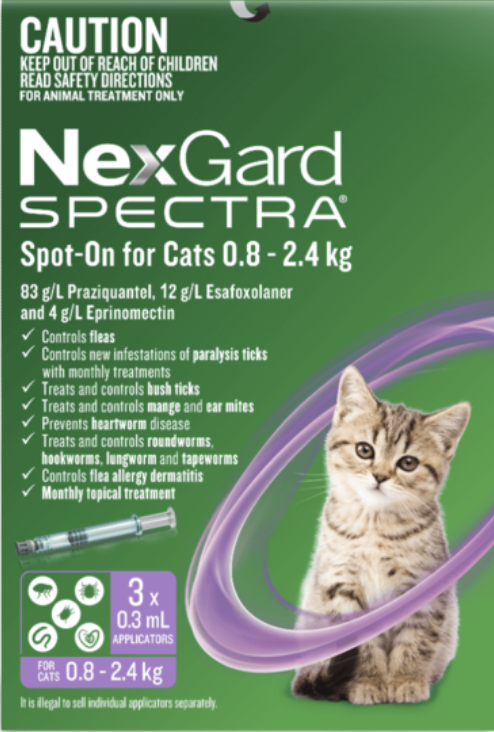
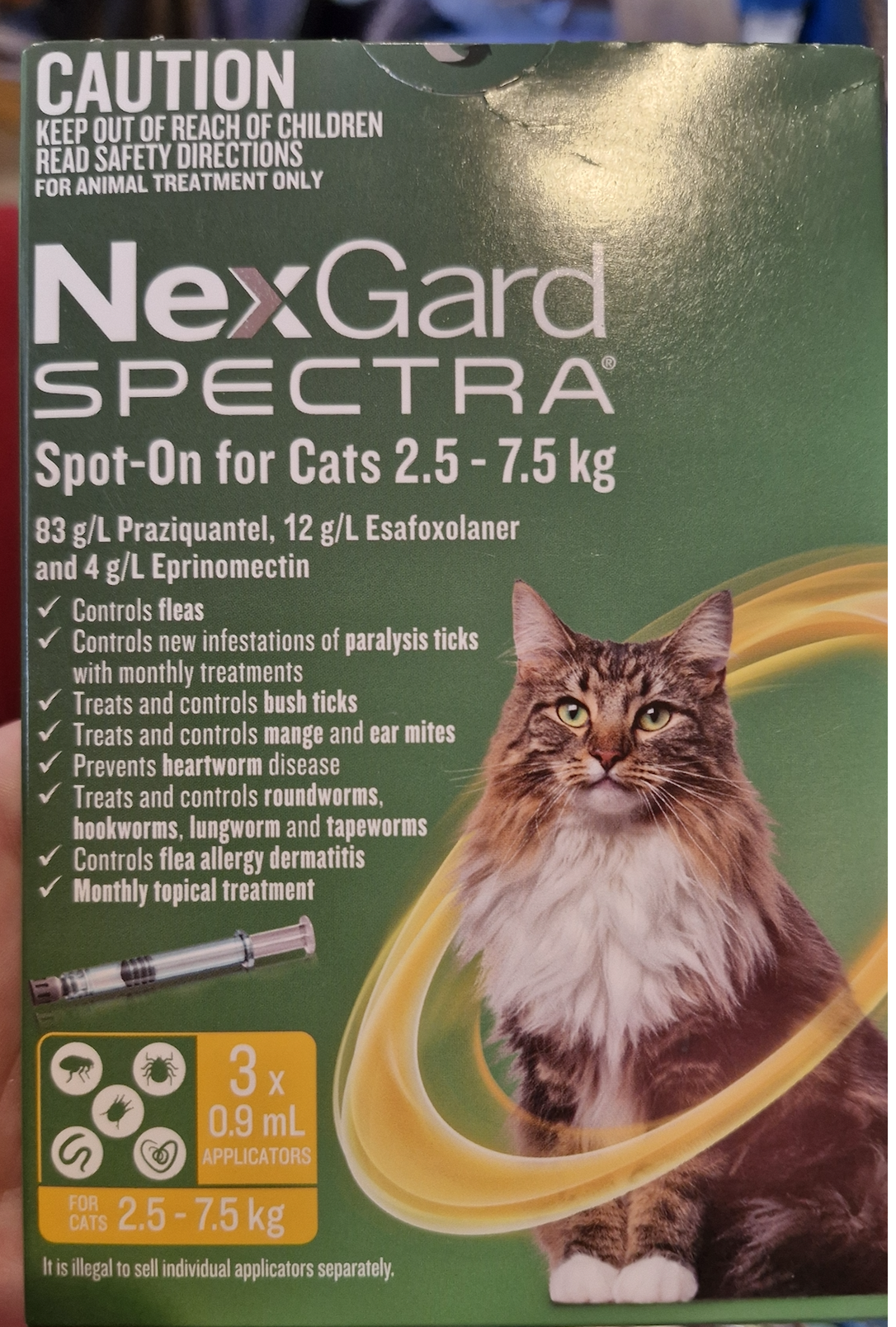
It’s worth noting that ringworm is NOT a worm but a fungus. But I’ll talk about ringworm later.
A kitten needs two vaccinations, given a few weeks apart. As far as I know, I’m the only foster organisation that sometimes arranges both kitten vaccinations. Most arrange the first set, not the second.
After they’re a year old, they’ll need vaccinations annually.
Eye Contact, Physical Contact & First Contact
Like most autistic people, the majority of cats don’t like prolonged eye contact. This is true of most mammals, as eye contact is often a dominance move and/or the prelude to an attack. (This is also one reason cats often gravitate to someone who is allergic to them.)
The best way to make a cat feel safe is to sit on the ground (you are VERY big and scary) and ignore them, with one arm or leg outstretched so they can approach in their own time and sniff you from as far away as possible. If you talk, use a gentle, steady voice. Meowing is great as it confuses them tremendously, which lowers their fear level and raises their curiosity. Under these circumstances (and if there are no major distractions such as other cats, pets, pet smells, or people) the average kitten will approach you within ten minutes (the average older cat would take longer—half an hour perhaps).
If you meet their eye, give them a slow blink. It shows that you respect them and do not intend to start a fight. It also shows affection. A slow blink is a great, respectful greeting of your cat throughout their life (and they will often return the favour, which is absolutely a compliment).
All cats are shy, because all cats have very strong prey instincts. Like small birds, they are braced to flee at the slightest noise or hint of a threat.
A ‘very shy’ cat could take weeks or months before letting you pat it. A stray or feral cat can take years. However, it is possible for a very shy cat to also be a major snugglebug. They just need time.
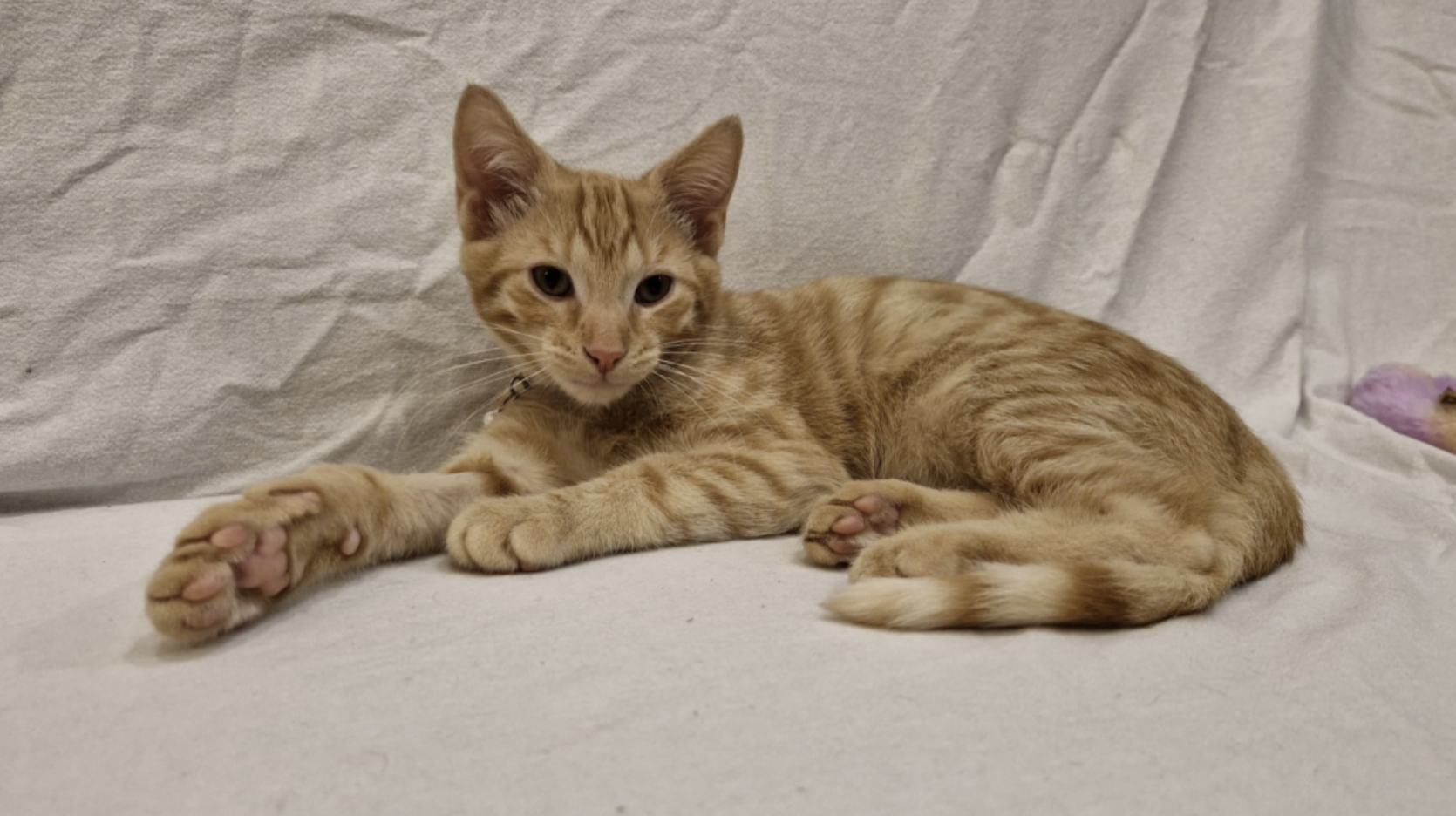
I find that kittens who are 4-6 weeks old when they are rescued tend to decide within 24 hours that I am their mother, and all they want is to be near me (but they may not be great at cleaning themselves). They often accept all humans once they’ve accepted one. Kittens who are 6-8 weeks old take longer to accept me, and are not as devoted to me. If they come into care when they are over 8 weeks old (and haven’t already had positive human interaction), they are likely to remain wary and shy of new people for their whole lives. However, that can also mean that they don’t get underfoot as much, and are more careful not to scratch humans.
There are two reasons for a cat to give you prolonged eye contact. One is dominance/fury. I know when my older cats are angry because they glare at me. (My husband is careful not to lose a staring contest with the cats, because he does not want them to think they are the boss. Which is fair! Cats will often punish their owners by pooing outside of the litter box. Our cats know that they will just get in trouble if they try to pull something like that.) The other reason is love. Kittens who have grown up with humans will often gaze lovingly at you. Feel free to gaze back (ideally with the occasional slow blink)!
Before you try to pat any cat, you should introduce yourself by letting them sniff your hand or finger. If they don’t look excessively terrified at your mere existence in the same room, reach out your hand, palm down and relaxed, and let them sniff it. If they have a good sniff and then settle back into position, you can choose to move away or slowly pat them (patting their side is best as a pat on the head can be seen as threatening).
You are most likely to get good results if you let a cat approach you, rather than you approaching them.
A lot of cats will sit near you but just far enough away that you can’t pat them without getting up. They will also often face away from you. It can be frustrating, but they are still being companionable. In fact, many cats will follow you from room to room, only to sit facing away from you and out of reach. It is still a compliment!
A lot of cats sit somewhere prominent and graciously accept pats whenever one of their humans walks past. Others demand lap time and/or sleep on your bed.
Whether your cat sits nearby, next to you, or on your lap—let them choose the level of affection 95% of the time for best results. They don’t speak English, so the only way to communicate that you are safe is to respect their boundaries. Some cats feel safer up high, and some cats feel safer under things (eg under a desk). Be careful not to make them feel trapped by approaching them when they don’t have an escape route, especially if they’re in a playful or wary mood.
It is very rare for a cat to tolerate hugs (aka a terrifying cage made of your arms) although most will allow it for a few seconds if they trust you enough. You can feel their muscles tense, and then they will begin to struggle gently (then with increasing force and eventually claws and teeth). Don’t push it. If you do hold them, have one arm under their back legs, and their front legs resting on your other arm. It is secure but loose, so they feel less trapped.
The majority of cats find it extremely stressful to be picked up at all. Mother cats carry kittens by the loose skin on the back of their necks. The younger (and lighter) a kitten, the more likely that they are comfortable (and even reassured) by this method of picking them up. It is also safer, as most kittens automatically ‘flop’ in response. It’s usually not appropriate for adult cats.
Otherwise, you can pick them up by scooping them under the chest and putting your other arm under their back legs, then bringing them to your chest for a secure hold. You want them to feel that you are definitely not going to drop them, but they can jump away if they want to.
Moods
Most cats have very distinct play and sleep cycles, with at least two play sessions a day, often first thing in the morning and then again at dusk (cats are diurnal, so dawn and dusk are their natural hunting times). When they have ‘zoomies’ they are often so hopped up they almost seem in pain or terror eg running full tilt from one end of the house to the other, emitting odd meows and chirps, or jumping in shock at the slightest thing. Don’t worry, zoomies are natural and healthy. Toss them a ball (or a pen, or bit of scrunched-up paper) to encourage them and don’t be concerned if they run into walls. DO NOT attempt to pat or snuggle a cat with zoomies! They are extremely hyped up and may respond as if they’ve been attacked. Imagine you were alone and lost in a dark alley of an unfamiliar city at 3am with heavy footsteps coming towards you, and then someone grabbed your arm. Even if it was your grandmother, you’d probably instinctively punch her in the face. That is how a cat feels during zoomies (extremely jumpy), except in a fun way. If you have children, teach them the signs of a cat in a playful mood, and teach them to stay out of the way (and grab a fishing-pole toy to get the most out of the kitten show).
Playful mood: Wide eyes, big dark pupils, flattened ears, twitching tail, and fast, jerky movements. Running or crouching, especially if their butt is wiggling and their gaze is fixed while they are crouching. Rolling over on their back and exposing their belly (it’s a trap!!!)
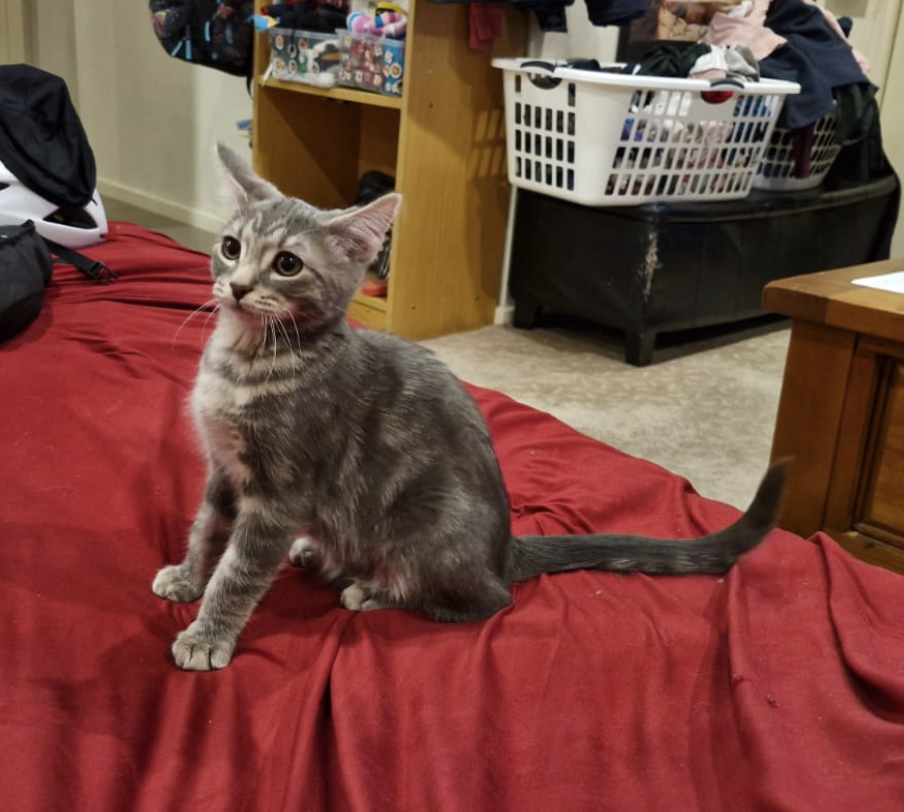
Kittens are so energetic they will sometimes go directly from sleep to playful, especially if you are dangling a toy at them. But like us, they usually need some wake-up time first.
A cat who feels safe and happy will respond positively to their humans when they wake up. They may start purring or meow a greeting. They are likely to stretch and blink, and often roll onto their back and luxuriously stretch. In a just-woke-up scenario, the belly exposure is not a trap but an invitation to pat them. Many cats love chest pats BUT it is also an excellent fighting position so some love to grab hold of your hand and bite it with affection. You need to choose whether to teach them to hold/bite you gently, or to avoid belly rubs altogether.
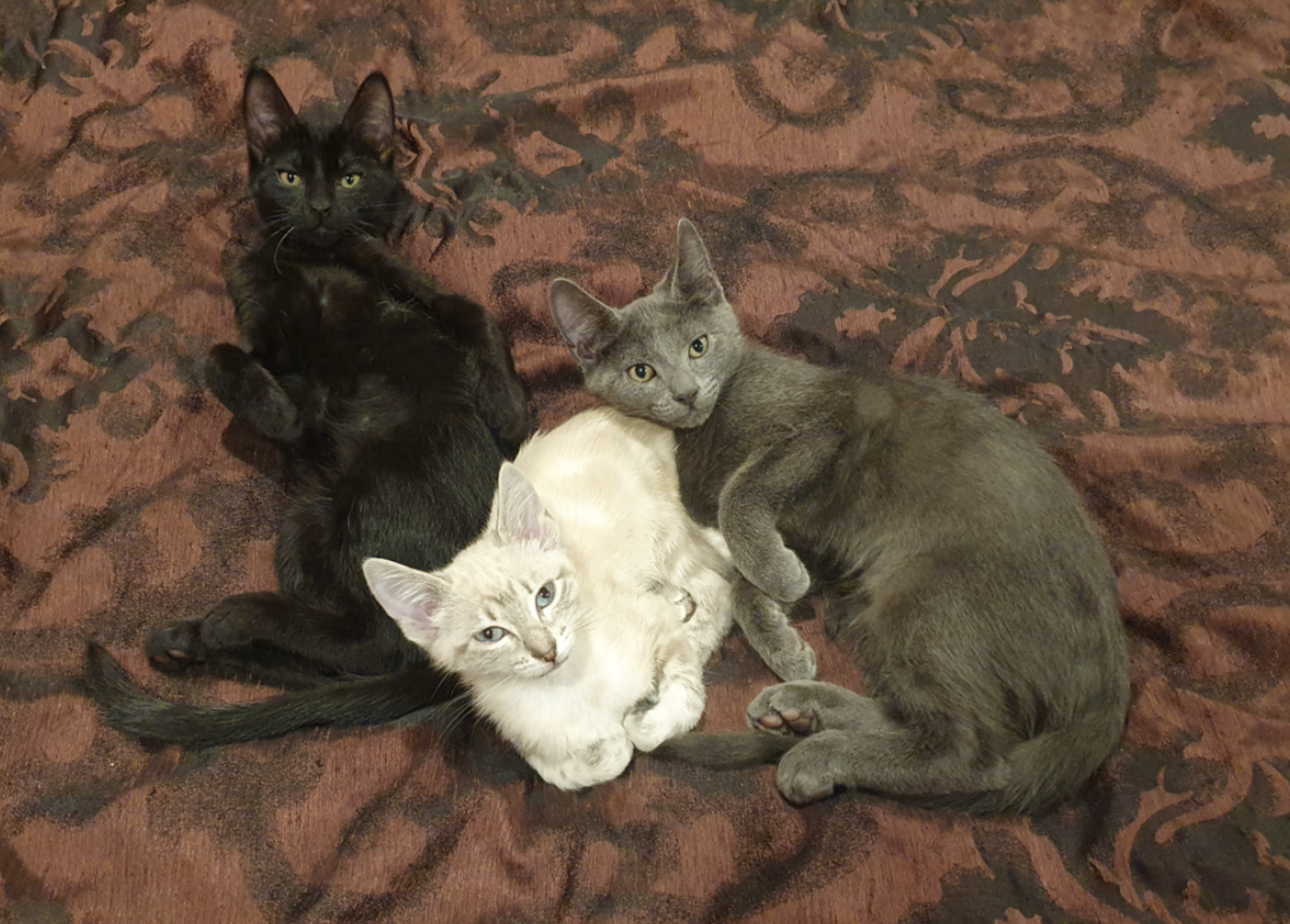
Training Your Cat
Yes, a cat can be trained. The level of training depends on the cat’s intelligence and personality, the amount of time you’re willing to invest, and how much you understand cat behaviour. Cats don’t have a sweet tooth, but there are plenty of cat treats out there. Some cats aren’t too fussed about them, and others would teach themself to open a jar in order to get to them (seriously!!)
If you’re adopting from me, your cat will probably know the following words:
Their name (and most of them will come when I call because I always use their names when giving them food or treats).
Dinner.
No (said in a low, threatening voice).
Gentle (mainly used when two cats are fighting each other and not listening to the other cat’s meows of pain).
Ouch! (Very much associated with “No”.)
I use their names constantly, but especially when feeding them wet food (at which point I also call “Dinner!”) If they don’t respond to “No” by itself, I physically remove them (which is a punishment as they’re very social creatures) and/or tap them on the nose with one finger, which is annoying rather than painful but gets the message across.
About 5% of cats turn the tables and start to train ME eg they know I don’t like getting bitten, so when I am about to leave the room they will bite me as punishment. Those cats are tricky, and I will warn you if yours is one of them! I’ll also let you know if your cat is bent on escape. Most cats try to escape at least some of the time, with varying amounts of determination. I strongly recommend getting a collar for this reason. It means that if (when) your cat escapes, passers-by can tell instantly that they have a home. A lot of good-hearted people accidentally kidnap beloved pets because cats will act as if they’re homeless and starving in order to get extra treats. Cats are liars!
Some cats are naturally more vocal than others. I try to discourage a lot of nagging meows by ignoring them (or sometimes saying “No”), which works fairly well if I can get the whole household to stick to our guns. But I encourage ‘trilling’ (that adorable ‘prrm?’ noise). If they’re particularly vocal, I’ll let you know. Some people love having constant conversations with their cats.
Some of my previous foster kittens have learned some basic tricks (such as ‘sit’ and ‘beg’) and/or they can walk on a lead.
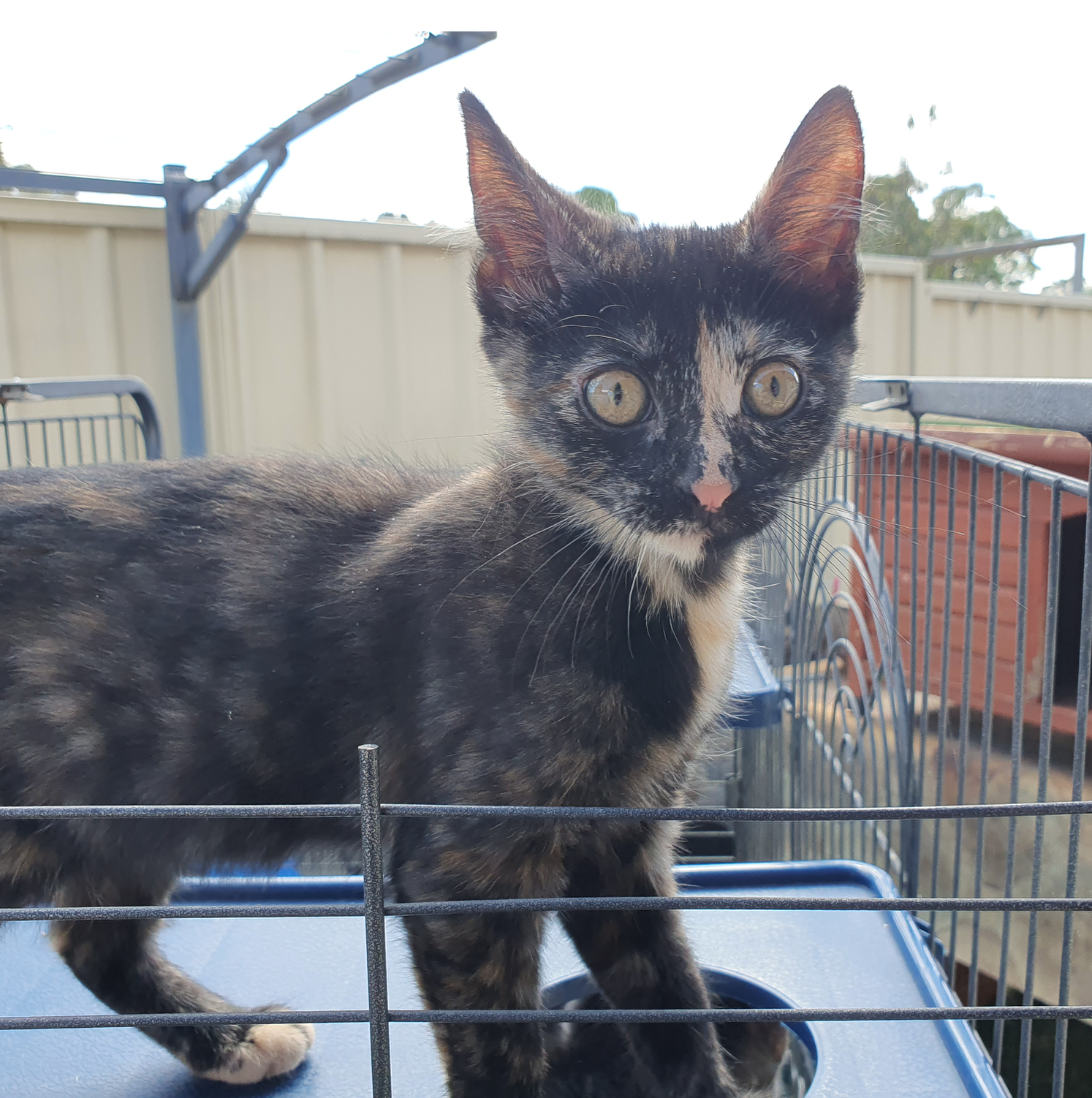
Cat Manners and Communication
Violence
Cats are both predator and prey. They are expertly designed killing machine, who hiss and fight literally before they can roll over. They are faster than humans, and they have very sharp knives on all their limbs and in their mouths.
They NEED to play. They need to ‘kill’ (destroying their own toys is extremely satisfying). They often hide toys—not to annoy you, but because their instincts tell them to do so. They scratch and bite and kick one another shockingly hard, and when they attack you (your hands, your ankles, your hair) it is actually a sign that they are accepting you as a friend (basically, you are a very weird cat). They express love through violent play. However, they absolutely DO communicate to each other when a scratch or bite is too painful, so it makes sense for you to communicate with them that they must not claw or bite you. The simplest line to draw is, “No not ever.”
Remember, when they are small, they don’t hurt you (much). They are also cautious with new friends, being gentle and tentative—at first. It is adorable.
But. They get much bigger and stronger very quickly, and a sweet little kitten nip is the equivalent of a bloody bite from a year-old cat—so if you accept nips when they’re young, you are likely to get bites later.
If you want a cat that is so well-trained it doesn’t even bite when a toddler yanks its tail or forces it into cuddles, then the “No not ever” rule is best. It requires discipline from you and everyone in your household: never ever wriggle your fingers enticingly for them to chase. Never let them wrap their front legs around your arm or leg in a ‘hug’. Never accept them charging at you and batting gently at your legs. Always say, “NO” from Day 1 and if necessary tap them on the nose or put them in a room by themselves.
If they are reasonably teachable, offer them a toy to chase or bite as soon as possible after saying, “NO” so they quickly understand that their hunting instincts are allowed, but must be directed towards inanimate objects.
If you have had cats before, you don’t have young kids, and you’re confident in your abilities, you can teach a kitten to play with you while still being gentle. It is fairly easy for a kitten to learn to always keep its claws sheathed when playing with humans, but ‘gentle biting’ is trickier. However, most young cats can be taught to ‘mouth’ your fingers instead of actually biting you at all.
You can teach a cat that they can attack you more violently through a doona, but there is a strong risk that they will unleash their full strength through any fabric (I assure you they can draw blood through even thick jeans). So watch out for that.
Sickness
Because cats are prey animals, they naturally hide their illness. Unless they are actively bleeding or can’t walk, you need to actually pay attention to know when they need to see a vet.
Some cats will not eat or drink for 24-48 hours in a new place. Keep a sharp eye on their litter (so you know when they start to wee) and try to give them lots of alone time (with no humans and especially no other pets). It is often helpful to keep them in a laundry or bathroom for several days (with bath mats and/or a bed so they’re not on the tiles, and with heating or cooling if necessary so it’s between 18 and 30 degrees celsius). A small room can help a nervous cat get used to their new environment, although most will get extremely bored after about two hours, so ideally that small room is a place they can retreat to without being followed, but they can emerge when they want to.
If your new cat hasn’t eaten or drunk water (ie no wee in the litter box) after 24 hours, you definitely should be concerned. Please let me know, and we can arrange a visit for me to reassure the cat a little and give tips on making them feel better. I’ve never used Feliway but I’ve heard it’s amazing for calming a stressed cat. If they do not eat or drink for 48 hours, they should probably come back to my house for a few days to recover before trying again. I can also assess their behaviour and figure out if something more than the usual stress is going on, because I have spent a lot of time with them.
Cat flu is a serious illness for cats, and causes symptoms including runny eyes, runny nose, fever, and fatigue. It’s usually easiest to spot in the eyes. Unfortunately it can be brought on by stress (such as going to a new home). It may take a couple of weeks before they show symptoms. Because a vet visit can also be very stressful, you need to carefully balance the potential harm of a vet visit with the potential benefit. I would usually say it’s a bad idea to take a cat to a vet within 3 days of them arriving at your home. But if you are concerned, please contact me immediately so I can come to your house and assess their health. Kittens can die from cat flu. Most adult cats get better on their own. Don’t panic if your kitten sometimes sneezes; that’s actually not a sign of illness. If they sneeze often and/or produce mucus with the sneeze, that is a symptom of cat flu.
Go to a vet within 48 hours if your cat has a runny nose (clear or yellow/green), is drooling, or refuses to eat (try extra-smelly food such as fish first). Go to the vet immediately if they have trouble walking, if they are panting, if they are not drinking, if their eyes look painful or are not fully open, or if they are not playing at all. Ditto if the discharge from their eyes is yellow or green.
Cats can also get a fever from cat flu. You can test them for fever by feeling the temperature of their ears. If you feel them when they’re healthy they feel quite cool, and if you feel them often you are more likely to be able to tell if something is wrong. If in doubt see a vet of course.
If you are looking after them at home, it is good to wipe the moisture away from around their eyes and nose with a wet cotton ball. Steam can also help them, so it is often helpful to run a very hot shower with your cat in the bathroom and the heaters on for 10-20 minutes up to twice per day. Change their water frequently and keep other pets away. It may help to gently warm their wet food (mainly to increase the smell so they can recognise it despite a stuffy nose). Reduce their stress levels as much as possible.
Dehydration is another killer of kittens, and it can be extremely sudden. If your cat throws up more than once, they should go to a vet within 24 hours as they may need to be put on a drip to save their life before their kidneys fail. You can also test their dehydration level at home by pinching the loose skin on the back of their neck. If you let go and it doesn’t immediately go back into place, they are dehydrated. (You can do this for humans too, by pinching the skin on the back of the hand.)
Ringworm is a fungus that is incredibly difficult to eradicate as it can live in any fabric for twenty months eg your couch, your carpet, or your clothes. It is infectious to humans. It is called ringworm because it tends to cause little round red spots on the skin, sometimes in a donut type shape with a red ring that is pale in the middle. The spores can survive being washed, too. On cats, it usually appears on the face, ears, tail, and legs. If your cat has a tiny bald spot that isn’t a wound, take them to a vet as soon as you can and carefully follow their advice. The sooner you start treatment the less likely it is that you’ll have to burn down your house and all your possessions to get rid of it. (Seriously, ringworm is the WORST.) It’s actually quite a minor illness, causing mild itching only, but it usually takes months of obsessive cleaning and quarantine to eradicate. Always tell your vet that you suspect ringworm before entering their premises.
If a kitten is scratching a lot, they may have fleas, lice, or ear mites. Fleas are small black crawling things (more obvious if you part the fur). If you see white dots on your kitten’s fur, try to brush it off. If it brushes off, it is dandruff. If not, it is lice (not infectious to humans, but needs treatment). Ear mites look like dark coffee grounds in the ears. If your cat has lice or mites, see a vet (letting them know what you suspect before entering their premises). If it has fleas, use a topical flea treatment, and continue using flea treatments monthly for at least two years.
Poo is an excellent indicator of health and is often also used to communicate with you. When you scoop their poo, pay attention to sudden changes such as an abrupt change in smell, colour, or texture (sloppy). Take them to a vet if their butt is red/irritated (if they’re licking it a lot it’s itching or painful) or if they don’t seem to have control over their toileting. A lot of cats will have a mild reaction after vaccinations, worming, or while changing food but if their poo is watery they are seriously ill and at risk of dehydration and death. Also see a vet if they are straining or meowing before pooing.
Cats sometimes poo just outside the litter box if they have outgrown it, if the litter needs changing, or if they are stressed. If the litter stinks, there are not enough litter boxes, or they are very stressed, they may poo farther afield.
If your cat seems unwell, isn’t eating or drinking as much as usual (you can tell by the litter box if you can’t tell from the level of the food), isn’t grooming themselves properly, is gaining or losing weight, or isn’t as active as usual, there is probably something wrong. If they meow or flinch when patted they are likely to have a hidden wound (probably infected) and you should see a vet asap. If they spend a long time in your lap while still a kitten (without trying to play), if they seem weak, or if you can’t wake them up, it is an emergency and you need a vet to see them as soon as possible.
Most vets keep a daily slot open for emergencies, so if they are open try your usual vet first. If not, call Canberra Veterinary Emergency Services in Gungahlin on 6225 7257 and tell them what is happening. They will probably tell you to come in immediately.
It is possible for humans to get sick with toxoplasmosis, which is not a big deal unless you are pregnant or an infant. For this reason, pregnant women should never be involved in cleaning litter, litter trays, or anything that might have litter on it.
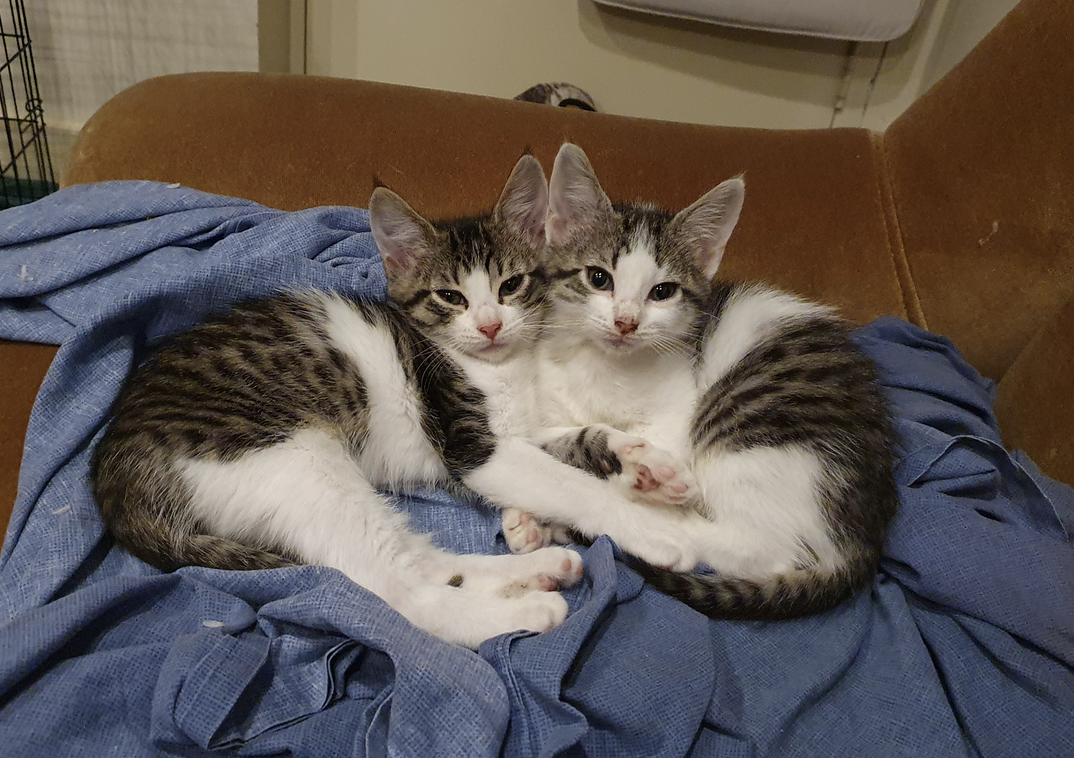
Cat politics
Cats are (believe it or not) social animals, often forming large and coherent colonies in the wild. Within a household, you are part of their colony… but you’re generally known to be a big but clumsy predator. An adult cat’s usual reaction to a kitten is terror. Kittens LOOK adorable, but in the right circumstances they can do a shocking amount of damage. They also have more energy than older cats, which makes them more powerful in some ways. However kittens are usually very curious and affectionate, and they tend to act very submissive to the bigger cat. As they age they may decide they’d like to be the boss and you may get complicated politics as the cats wrangle for dominance. Sometimes they will outright fight each other. Other times they will provoke each other in subtler ways, such as deliberately sitting in places that are the favourite spots of the other cat (possibly on your lap). Your job is to make sure they’re both getting all the love and attention (and food) they need. If they fight with real violence, eg drawing blood, you can try Feliway to calm them but you may need expert help. If they’re incredibly passive aggressive about it all, don’t worry. The competition probably keeps them from getting bored.
In a household with more than one cat, they may poo much more than usual if they are in one of these battles for dominance. It may help to have more litter trays or to use Feliway.
Bits and Pieces
Many cats throw up quite often, about once a month. That is a normal part of their digestive process. It is worth telling a vet at their regular checkup, especially if it is a new thing for you. If they throw up more often, it usually means something is wrong. In my household, it usually means Zoom (pictured) has managed to get into the kitten food again.
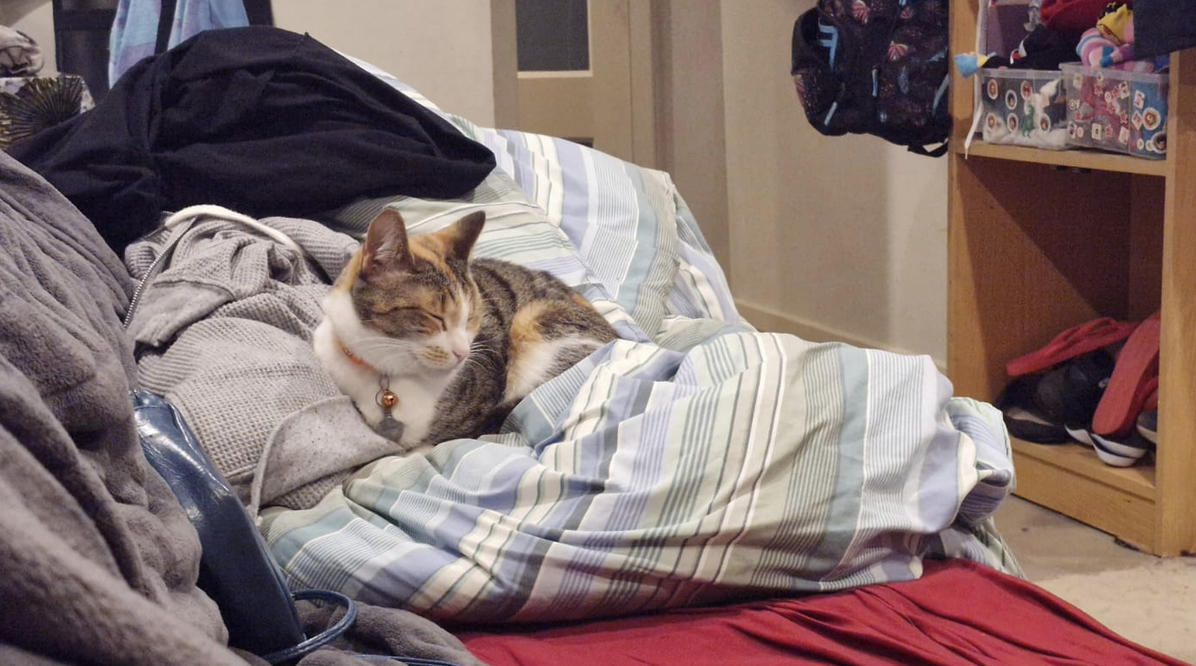
Some cats prefer humans to cats, and some prefer cats to humans.
Some cats are more cuddly than playful, and some are more playful than cuddly.
Cats often eat plants, so it is worth googling your plants to see if they are toxic to cats (the list is long).
I’ve also found that some kittens totally change personality within six months! So if you want a particular personality, you’re better off adopting a cat that is at least a year old.
Every group of kittens I look after seems to have one specific issue. One litter was obsessed with electrical cords; one would go ballistic if you tried to give them a pill; another litter was extremely loud and would complain if they were in a room alone; etc.
Medium or long-haired cats are gorgeous, yes. You’ll need to brush them at least once a week (sometimes daily). They will still shed about twice as much as any other cat. And, sooner or later, a poo will most likely get stuck to their butt and you will have to deal with it (either that or regularly trim their butts). So, choose wisely.
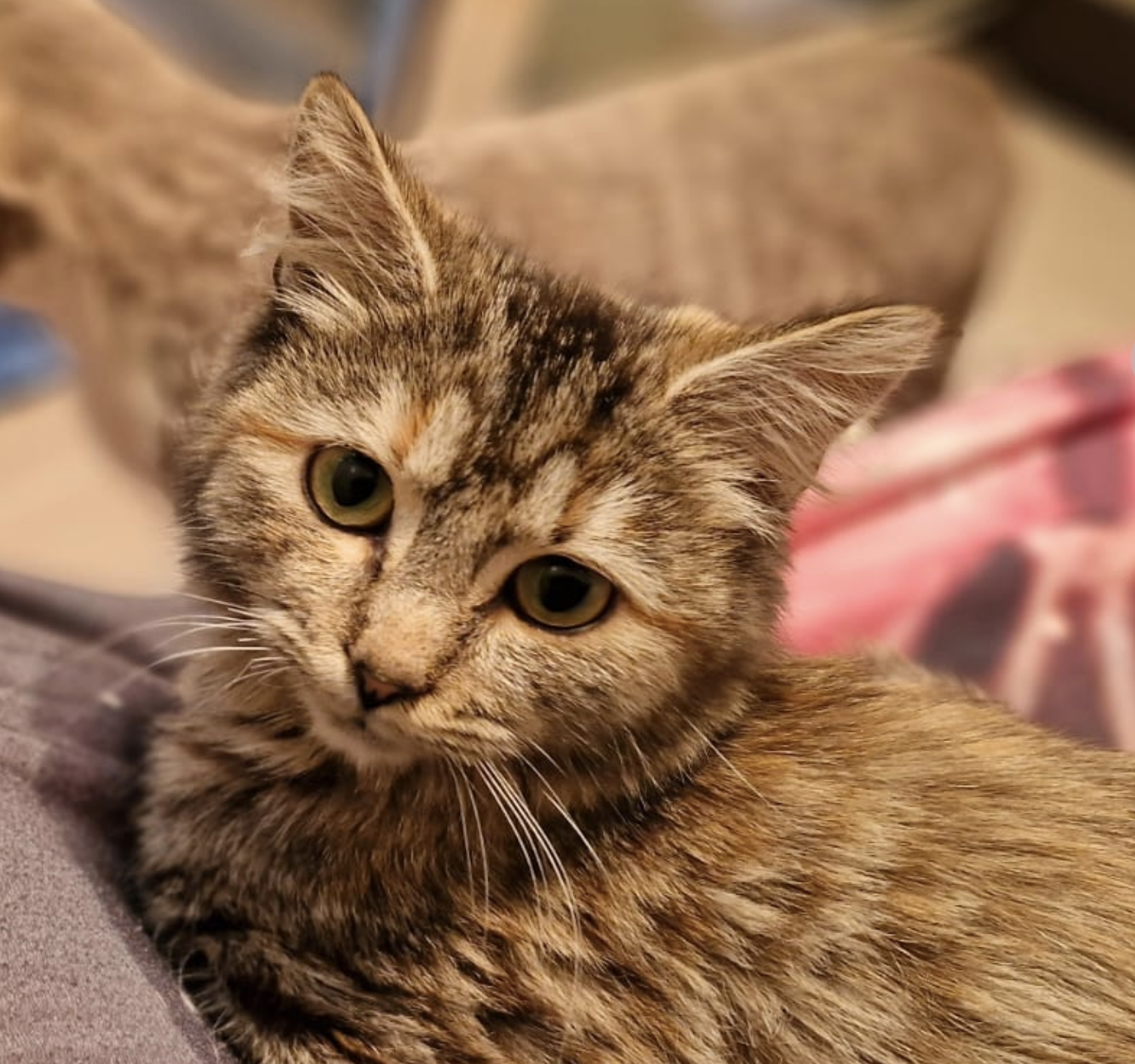
Most foster agencies will take back a kitten and refund the adoption fee if you change your mind within two weeks of adoption, for example if you discover that your child is allergic to cats or one of your other pets absolutely hates them. (It takes much more than two weeks for cats to adjust to a new cat in their home, but there should be at least a little bit of progress eg the original cat starts off running from the room when it sees the new cat, and has gotten to the point where it will sit on a very high shelf and suspiciously watch the new cat while sometimes hissing at it.) Please note that even two weeks can make a difference to a cat’s ability to be adopted (everyone wants the youngest possible cat) so don’t treat it as a free kitten rental service. These are living, vulnerable creatures. Moving houses is also very stressful for them.
If you adopt a cat and find your other pets absolutely will not accept it, that is an excellent reason to give up the new cat. Your older pets should always be the priority. However, if they are hissing at each other after two weeks there is still hope for them to accept each other. Hissing is not violence, but communication, meaning, “Stay back!” I also find that when cats are ALMOST used to each other they will play together with an edge eg they will wrestle hard, hiss a lot, and stalk each other. If their claws are sheathed, this kind of play is probably okay. They are sorting out dominance without actually hurting each other. But they should definitely be supervised closely.
Inside cats usually live about twenty years, so think carefully about where you will be in five years, ten years, fifteen years, and twenty years. It is sometimes difficult to find a rental if you have a pet, and it is very difficult to find a new home for a cat, especially if it is over a year old (with every week over twelve weeks, it gets much harder to find a home). Are you willing to give up a great rental because your cat can’t come with you? What if you are offered a job posting overseas? What happens if you have a child ten years from now?
If you give up your cat when it is no longer a kitten, it is more likely than not that they will be put down.
If you are okay with that, you should not get a pet.
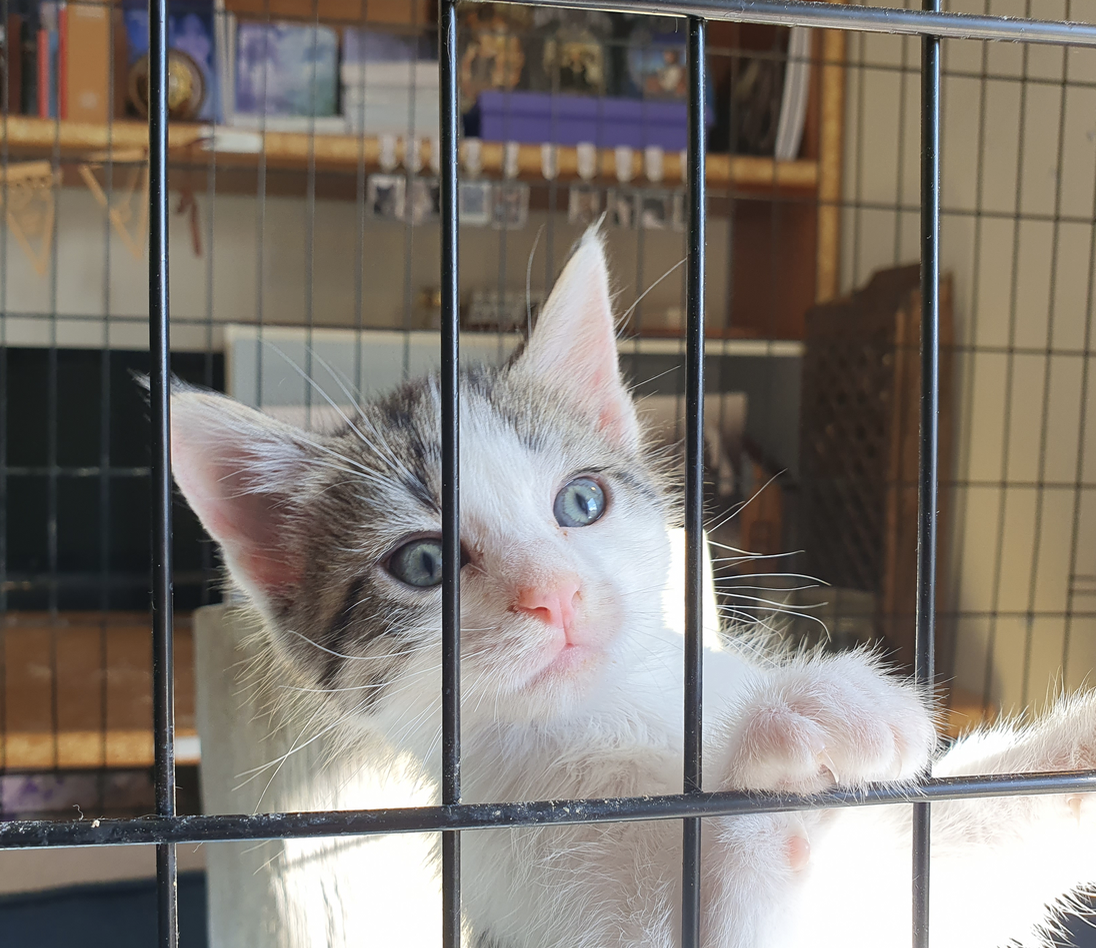
Things to ask your foster carer
- When was their last parasite treatment, what brand was used, and did they have a reaction?
- Did they have a reaction to a vaccine? When is their next vaccine due?
- What is their personality? Are they vocal? Do they prefer humans or cats? Are they unusually energetic or unusually snuggly? What is their favourite type of toy? Are they an escape artist? Are they obedient or naughty?
- What is their most annoying habit (there’s always something)?
- How do they handle unfamiliar cats/dogs/children/people (if known)?
- Have they ever been unwell? (Childhood illnesses can weaken them permanently.)
- What food are they eating, and do they get sick when their food is changed?
- Have they ever had a toileting accident?
- Do they travel well?
- How do they behave at the vet?
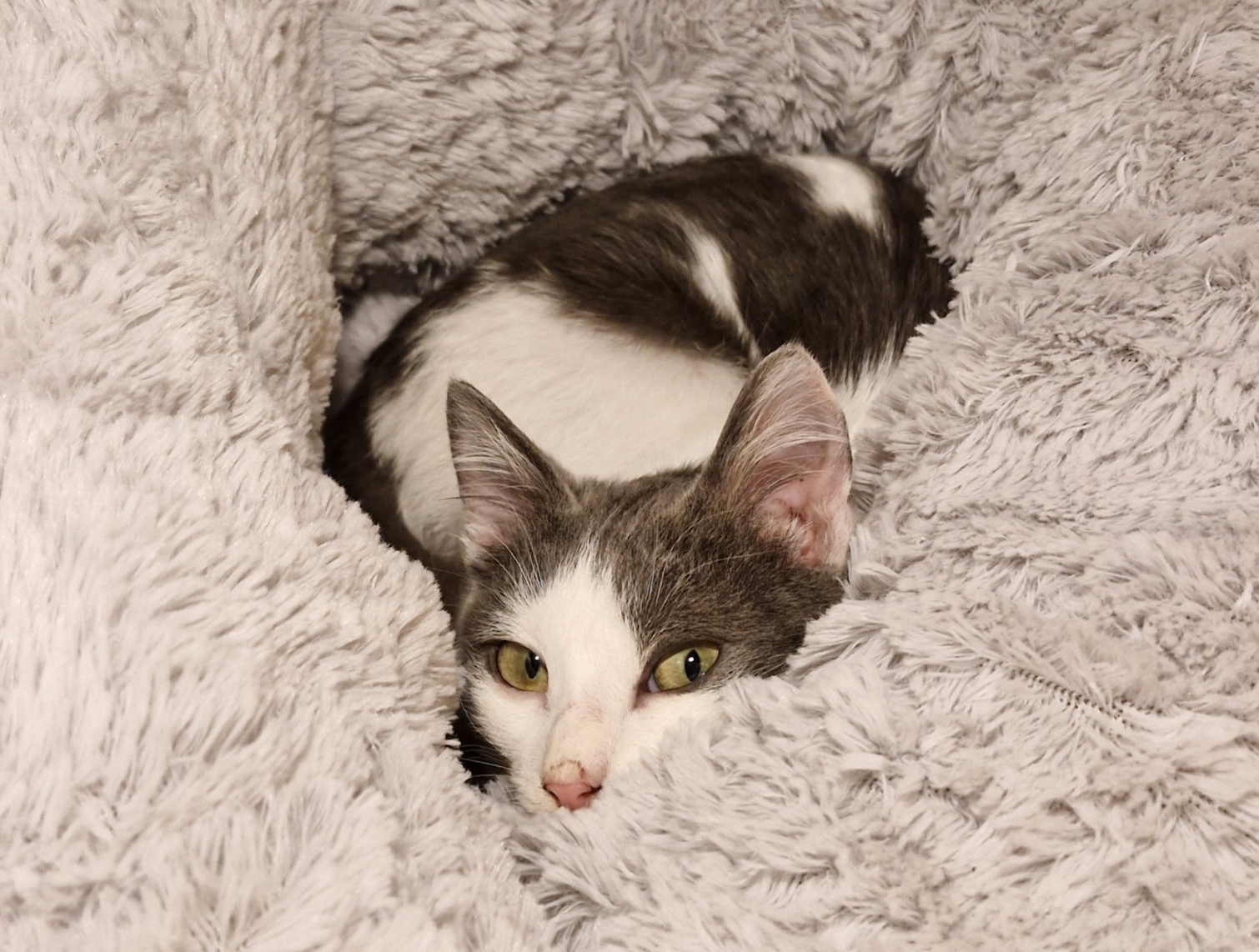
If you appreciate the work I do, please help me keep doing it! At the time of writing (mid-August 2025) I need $1800 to let me keep going after my current group of kittens is adopted.
Here is the link to my ongoing GoFundMe: thank you so much
Cat calendar
JANUARY
Buttons was a bitey boy.
I found him in a shed. My friend and I caught him together. We both ended up bleeding a lot and covered in cat urine.
He was about four weeks old.
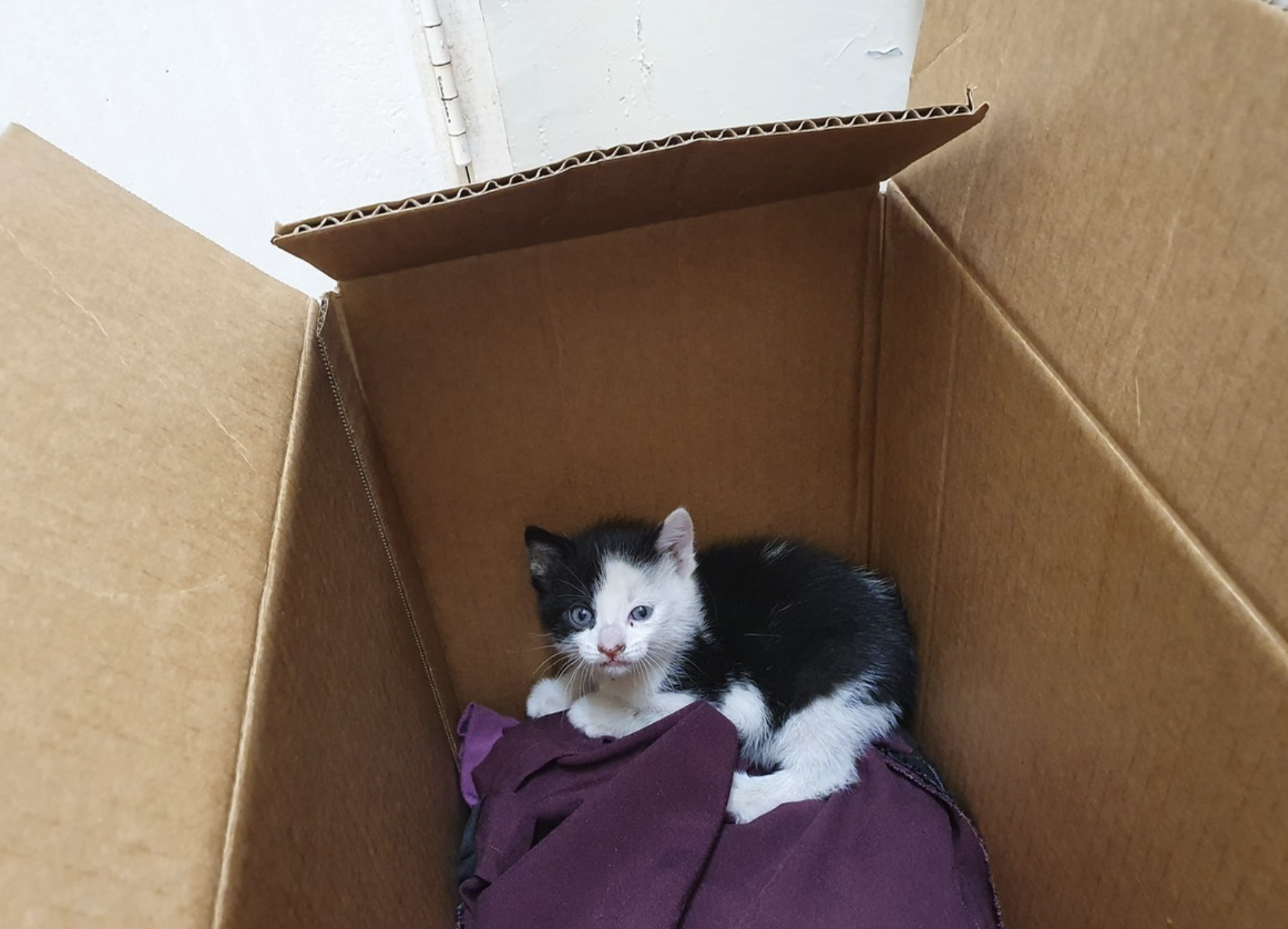
He taught me that fostering kittens is messy, tiring, bloody, stinky, stressful, and just as wonderful as I’d always imagined.
Buttons was adopted into a family of experienced and undaunted cat owners.
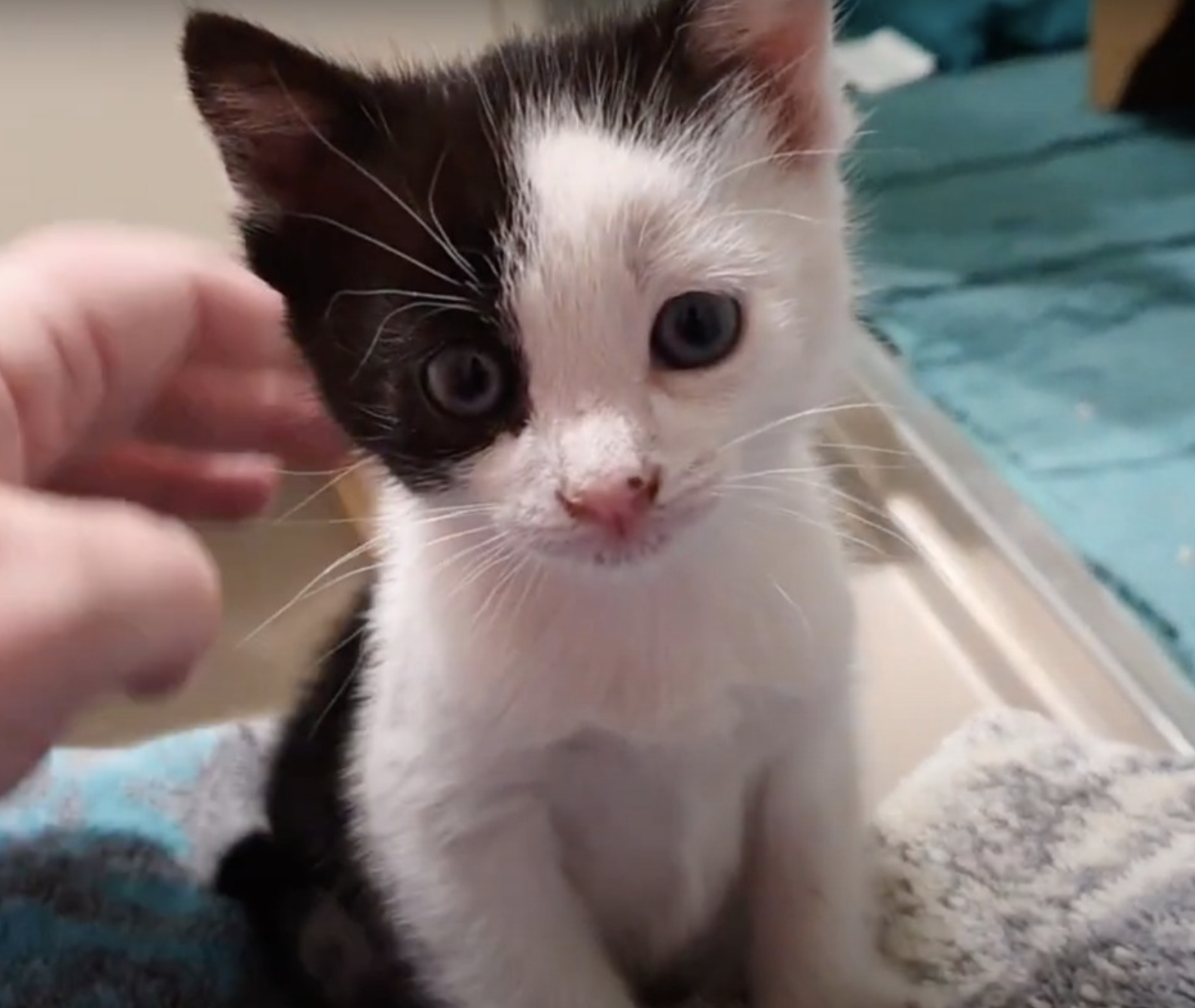

FEBRUARY
In February 2024, I started fostering the ‘Nature Kittens’: Dawn, Thunder, Cloud, and Midnight.

MARCH
While the entire Nature Kittens litter was still with me, someone I know caught another litter of five stray kittens that would have to be euthanised because no one had any room to take them.
They were barely a month old.
I took them to my house “for a few days” until I could find another rescue that could look after them.
One of the two calico girls (sitting up on the right) hissed and spat so much on that first day that she set off the others. She was so tiny and so fierce… and she sounded like popcorn. So I named her Popcorn, and her sister Caramel (second from the left, with some orange patches). Then I named the boys Violet (“Violent”) Crumble (left), Curly Wurly (top middle) and Sprinkle (bottom), the runt.

Two members of the Snack Pack nearly died from cat flu, but recovered. Little kittens are extremely fragile! Even if they can also rip a full-grown human to shreds when they really don’t want to be picked up.
APRIL
Thunder and Midnight were adopted together. Their new owner built a custom enclosure for them, which they loved immediately.
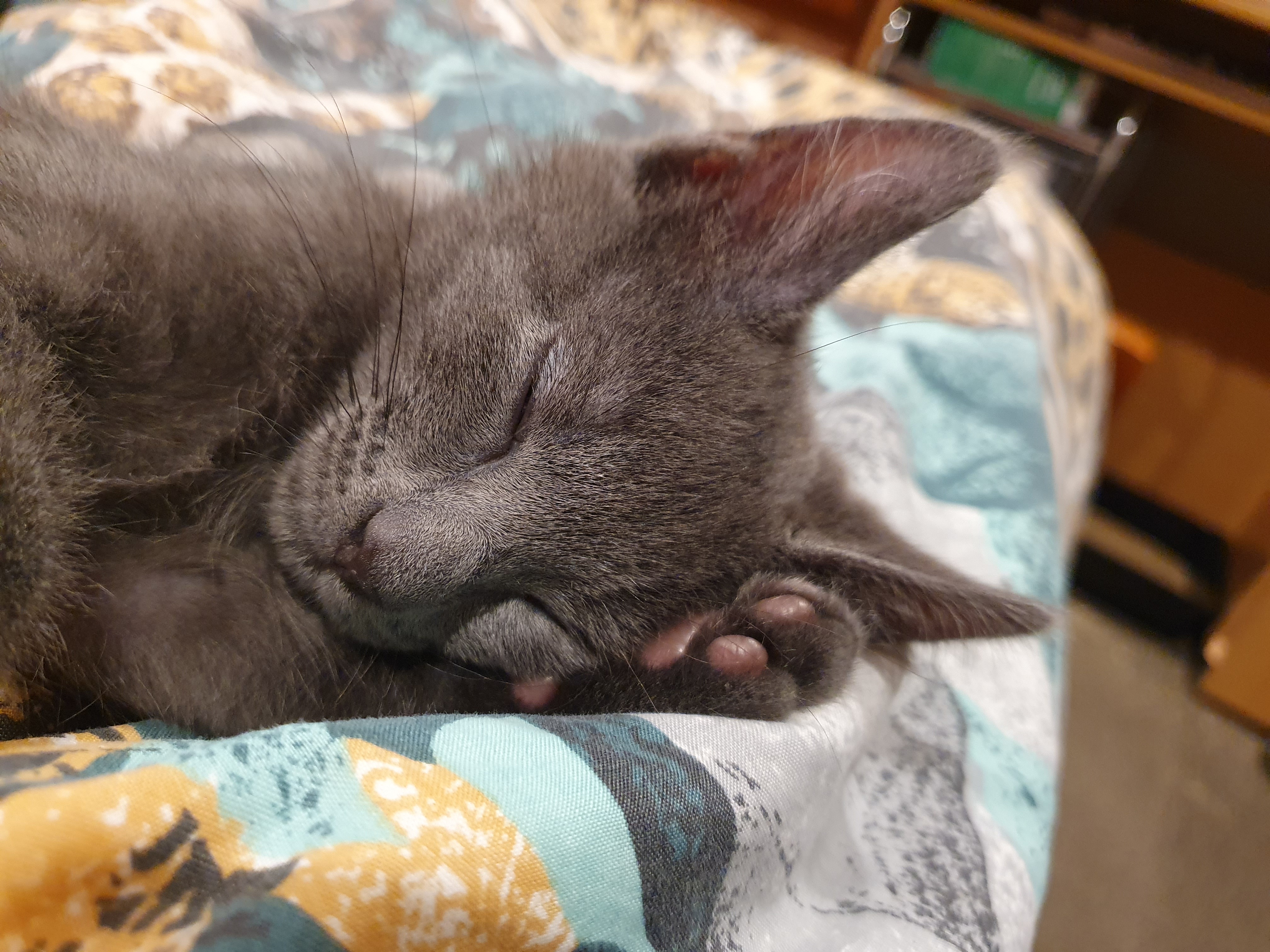
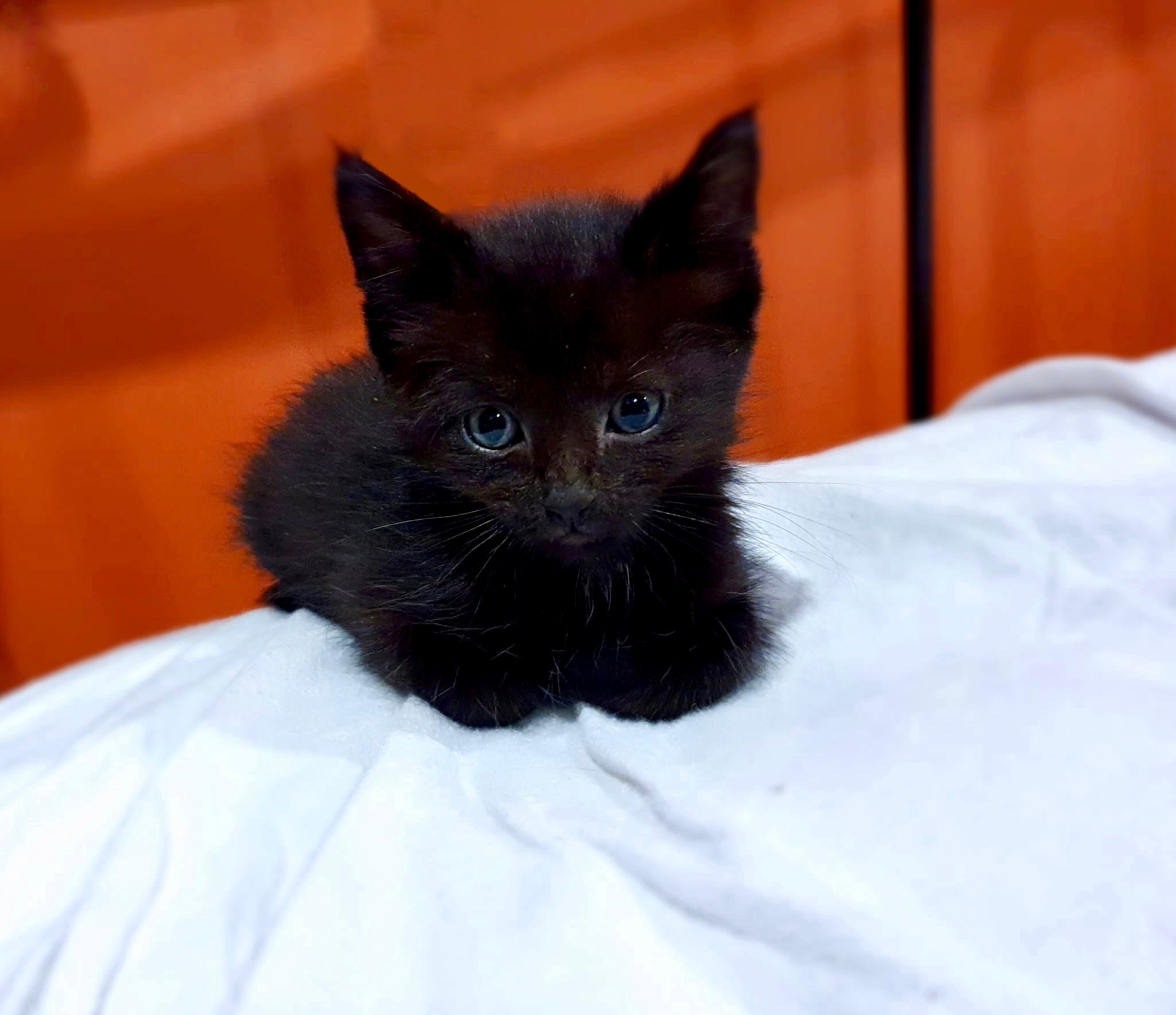
MAY
Cloud suddenly stopped eating and lost more than half her body weight. The vet suspected she needed major surgery, and would never live a full life. She always was smaller than the others.
It turned out she wanted a different kind of food.
She was adopted by a retiree who had cared for her previous cat for twenty-three years despite the cat’s health being poor for several years. So Cloud now has a devoted personal handmaiden… and that is precisely what she requires.
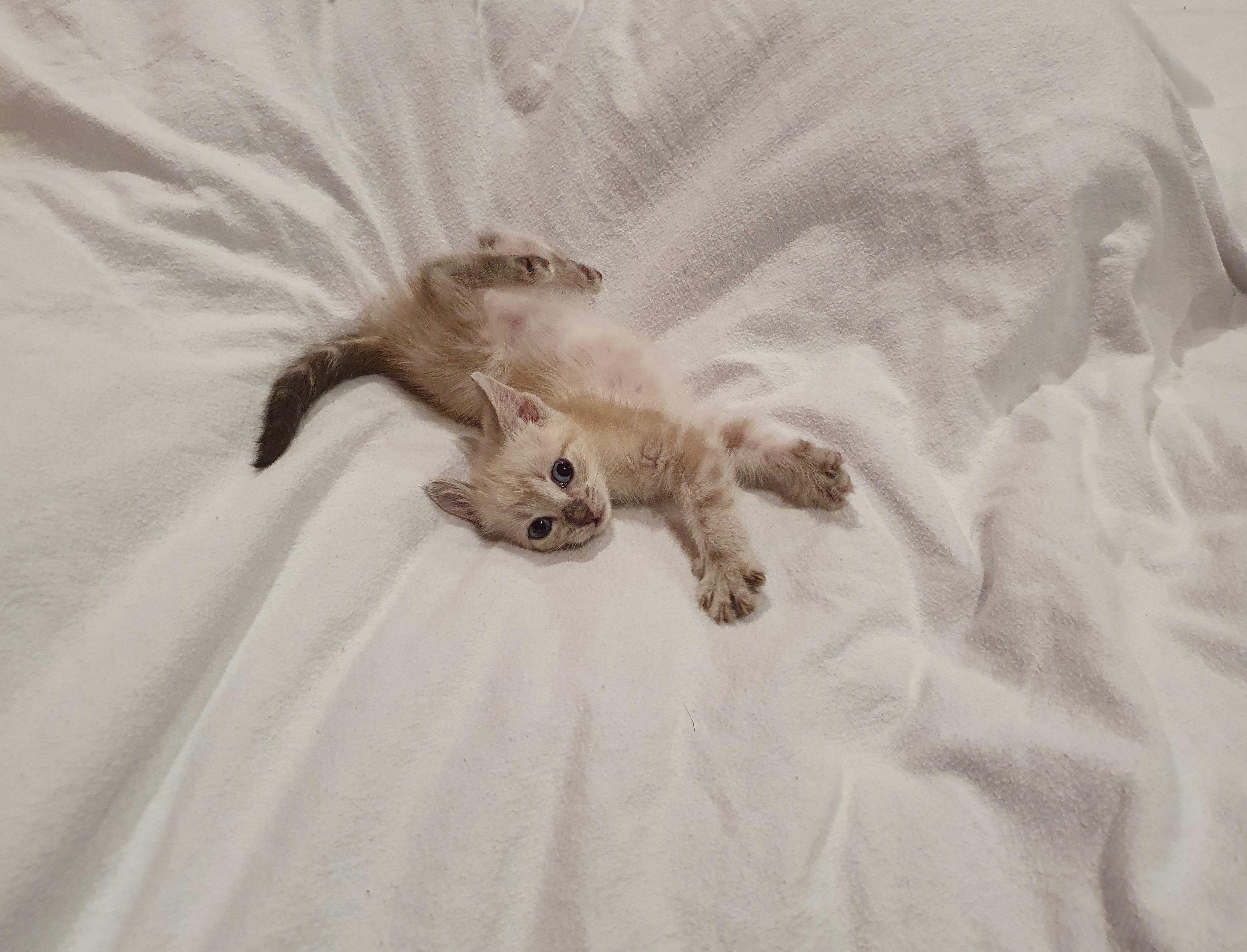


JUNE
Popcorn was the first member of the Snack Pack to be adopted. She doesn’t hiss or spit any more, but loves to purr and snuggle, and will cheerfully approach any human.
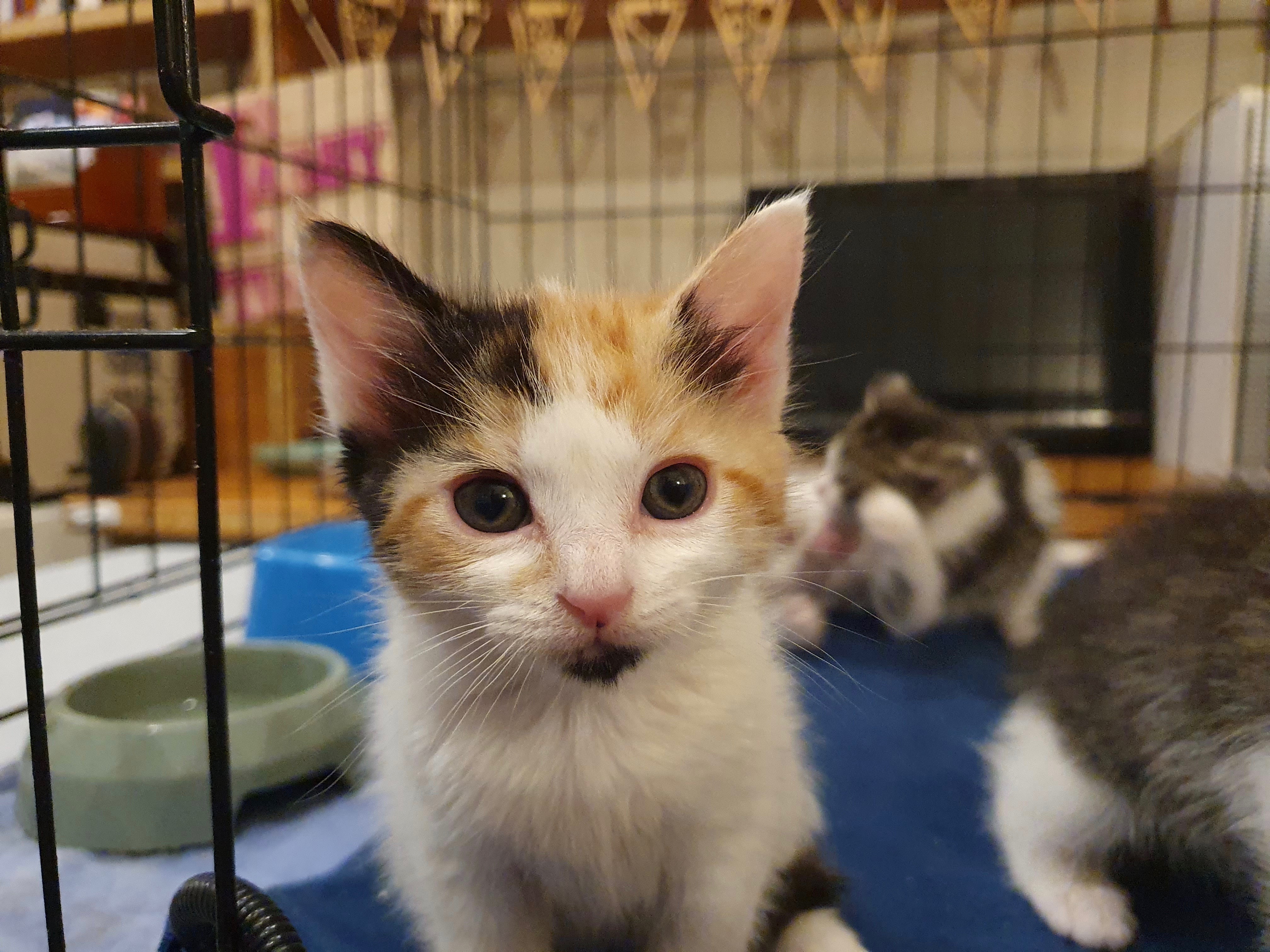

JULY
Sprinkle (left) was the second member of the Snack Pack to be adopted.
In the early days he was extremely concerned that I would neglect to feed him and would scream hysterically when I entered the room. He would sometimes forget where the food was located after I put the bowl down, and would scream some more.
Why is it that the smallest kitten of the litter always has the biggest personality?

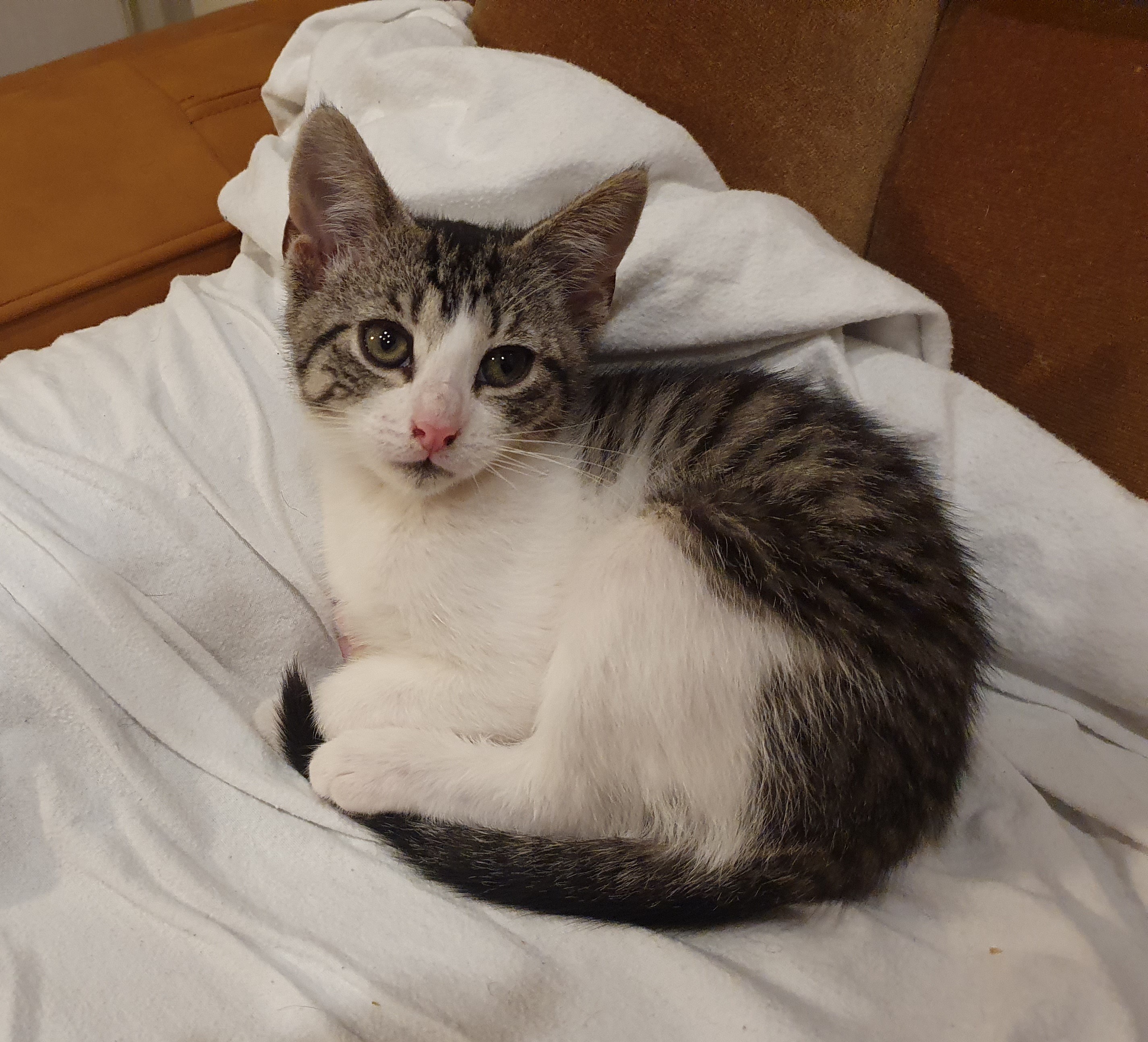
AUGUST
Dawn was finally adopted in August… and then she was un-adopted, as her new owners discovered one of them was allergic to cats. Fortunately she quickly found another home, and is now settled in happily.
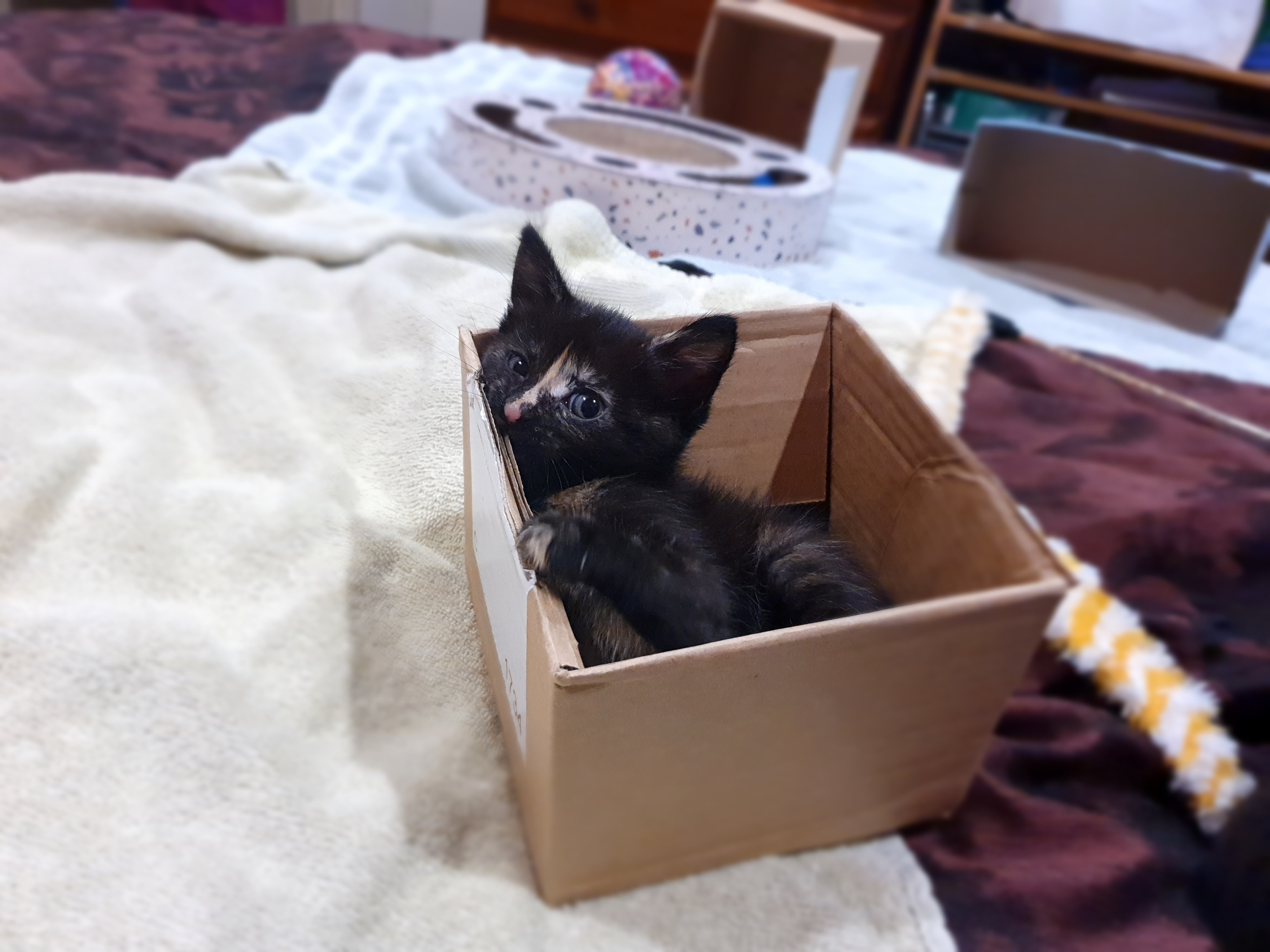
SEPTEMBER
Violet Crumble looks almost exactly like his brothers, yet still manages to be the prettiest. He was adopted next out of the Snack Pack.
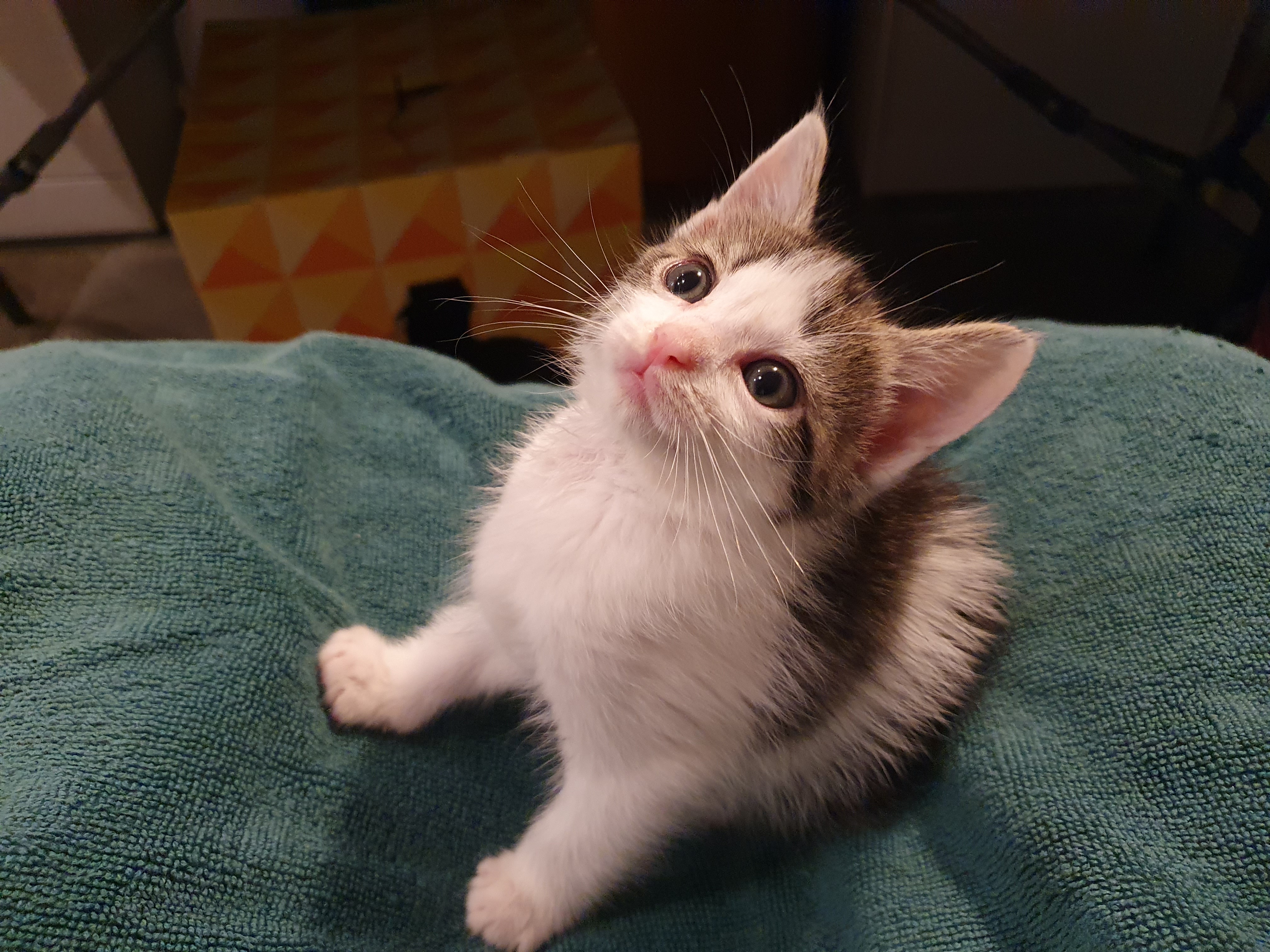


OCTOBER
The last two kittens in the Snack Pack were adopted together.
So Caramel and Curly Wurly will continue to make a cuddle puddle daily for the rest of their lives. They are very lucky, and so are their owners.
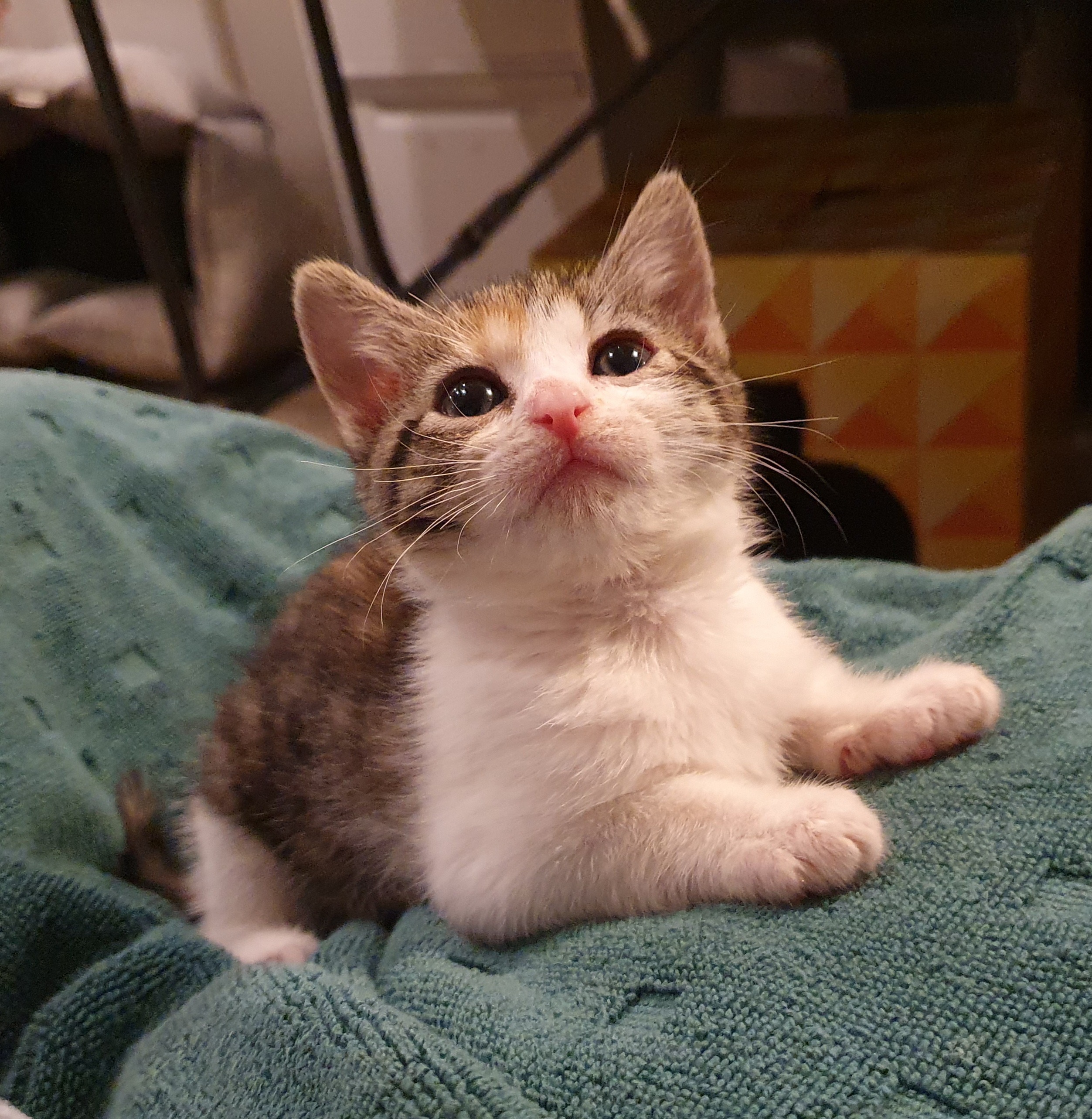

NOVEMBER
In Spring, with no fosters left, I helped another rescue organisation by taking on four of their kittens: I named them Squirrel (fluffy tortoiseshell and white), Bunny Rabbit (her sister, a tortoiseshell very much like Dawn), Meeouse (white), and Monkey.
Monkey was so named because he liked to climb upside down across the roof of his enclosure.
I quickly discovered that he also loves jumping into the arms of the nearest upright human. Or onto their back. Or shoulder. He’s not fussy. But he’s shockingly fast.


DECEMBER
I hope all four Animal Kittens will find their forever homes by Christmas.
Edit: I shall add more pic/s of those four, possibly including a group shot or two.
Eight is less than Thirteen
Last entry, just over two months ago, I wrote about how I ended up with thirteen cats in my care:
*My two “actual” cats, Zipper and Zoom.
*Two cats I often cat-sit for a friend.
*The four Nature Kittens: Thunder, Midnight, Cloud, and Dawn (now aged twenty-three weeks).
*The Snack Pack of five, so they didn’t get put down: Popcorn, Caramel, Sprinkle, Violet Crumble, and Curly Wurly. They’re thirteen weeks old now and thriving.
I have found homes for Thunder, Midnight, and Cloud, so out of the Nature Kittens litter only Dawn is left. She is a beauty with a great personality, who purrs SO MUCH.
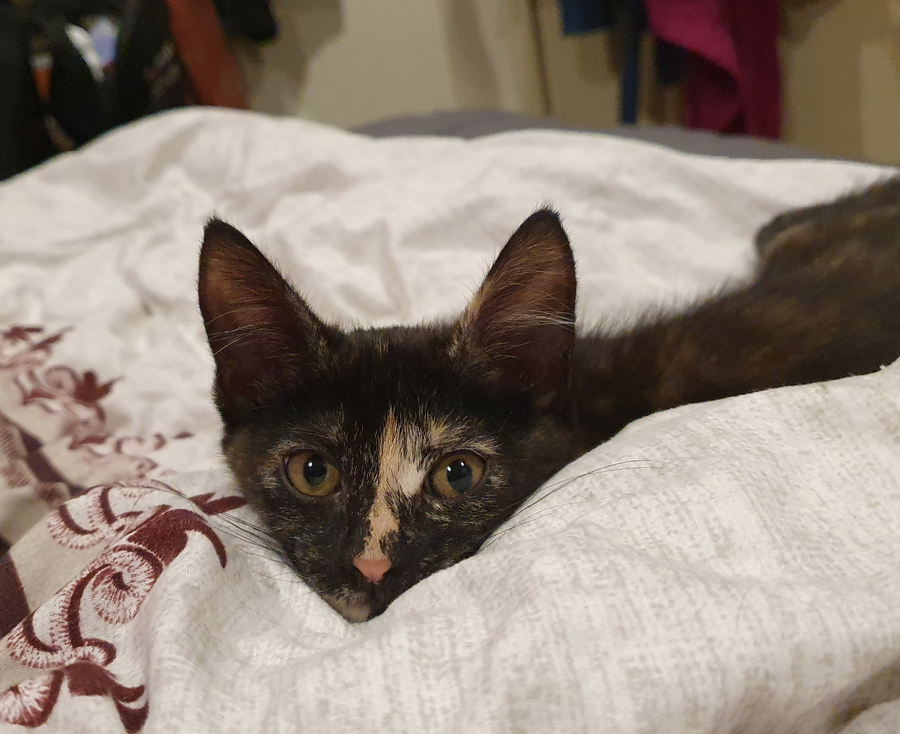
I have also found homes for Popcorn and Sprinkle, so the Snack Pack is now just Curly Wurly, Violet Crumble (his BFF), and Caramel.
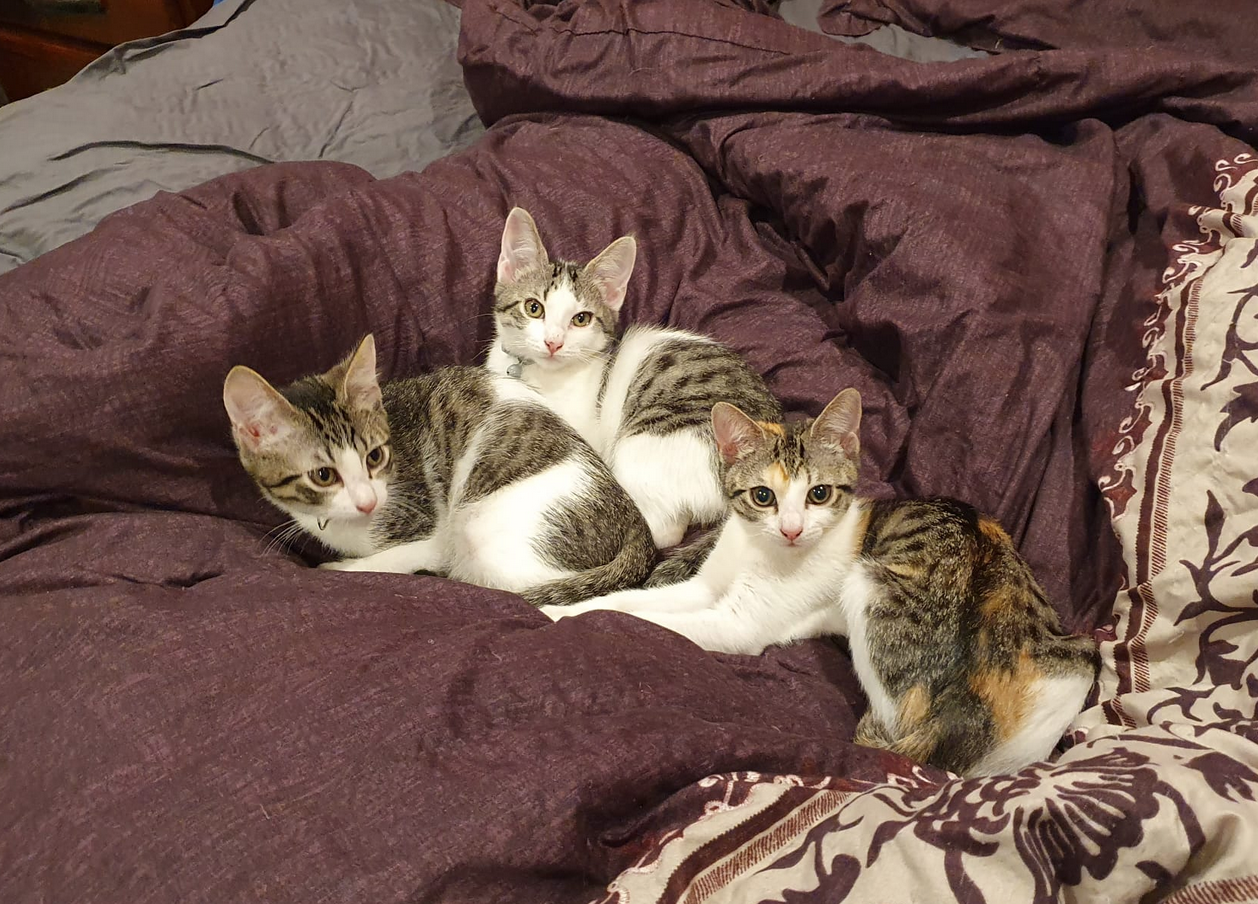
Only four foster kittens! Totally manageable!
Except I’m cat-sitting again, so there are six temporary cats in addition to my own cats.
I have learned that there is indeed an upper limit to the number of kittens I want to have in my care at one time (I think four is good). However, I’ve also been through a LOT these two months and I never failed to give them food, water, clean litter, and lots of attention.
*The Snack Pack got cat flu. Two of them nearly died and they all had to stay in quarantine a lot longer than expected.
*I lost thousands of dollars in wages due to feline and human illnesses and injuries.
*Cloud suddenly declined, losing about a third of her body weight in two weeks. The vet said she was probably going to die.
They all recovered fully, even Cloud (who was tested for a bunch of stuff including feline AIDS… and she’s okay! She’s basically just a massive diva!)

*I got covid for the first time (yes I AM immunocompromised, thanks for asking!) and of course my whole family got it too. But we seem to have all fully recovered, which is great!
*Someone in my local area found five dumped kittens that were CLEARLY the offspring of someone’s house cat that they were too irresponsible to desex. I broke my thirteen-cats record when I took them in overnight. For one night, I had fourteen cats in my care! And of course I tried to think of some plausible way to take them in too, but I couldn’t—which is definitely for the best. So that was just the one night.
This is one of them:
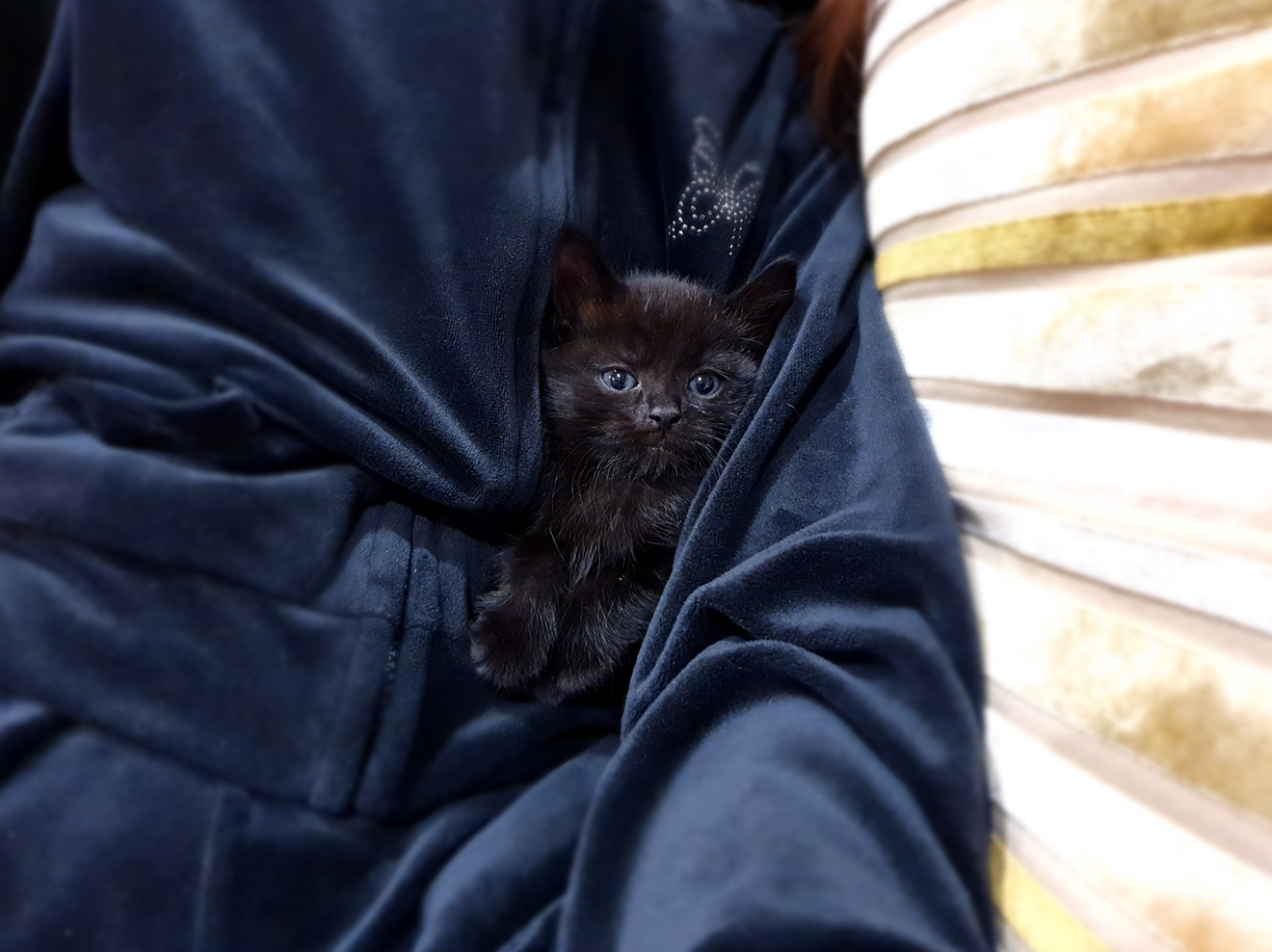
I will soon be cat-sitting my friend’s pair of cats again (which of course I love to do), so I’m at eight cats altogether currently, which would be fine except…
*Twelve days ago I bent over to scoop out a litter tray and I felt my back go SPROING!!
It does that sometimes, and I wasn’t immediately terrified, even when it became clear I couldn’t stand up straight. I call it a “back injury” but it’s really a fibromyalgia flare-up. One of the fun things fibromyalgia does is just suddenly attack and take your disability level from your personal version of normal to “oh fuck”.
And so began the worst fibromyalgia flare-up of my life.
I’ve had fibromyalgia for ten long, often miserable years, but this…. the last twelve days have been worse than any illness or injury I’ve ever had. I’m definitely on the mend, with most days better than the day before, but I’m still barely able to walk or stand, and when I do I have about five seconds of being okay-ish and then the pain just gets greater and greater until I either lie down or start screaming. There has been a lot of screaming in pain lately. For a while, turning over or shifting position in bed was a kind of torture (but necessary, of course).
I can sit for a lot longer now, but after maybe ten minutes things get ugly (spasms, etc).
In the early days of this flare-up, there were several hours when I was lying down but the pain was still so bad it was like being in labor. The worst part by far is knowing that if this has happened once, it is likely to happen again. That terrifies me so much.
On the up side, my arms are fine. At first I wasn’t able to walk up the hallway to the Cat Encounter area, so my daughter would bring the kittens to me in bed. I’m now at the point where I can give them their food, scoop some of their litter (Chris does the rest), and walk back and forth from the Cat Encounter area (which has a couch for me to lie down on) at least twice a day.
It’s bleak, though. And my future is bleaker still. This flare-up is the kind of injury which makes a person change her life. But I’m not sure what I’ll change it to. I’ve already lost so much to this stupid disease and I have very little left to give. However, I have discovered an agency called OneLink that may be able to help me access some government services. I’m clinging onto that like a lifeline, because I need hope right now.
I’m also VERY EAGER to have slightly fewer litter trays to empty.
So.
I am eager to find homes for the last four foster kittens. Please share this post with your friends in the Canberra region!
They naturally fall into the very close bonded pair of Curly Wurly and Violet Crumble (both desexed boys, chipped, and double vaxxed); and the newly-friendly duo of Dawn and Caramel (both girls who are chipped and double vaxxed but Caramel isn’t desexed yet, mainly because I simply didn’t have enough money).
But they all get on well so any pair is possible. Or you can adopt just one (but you haven’t known true bliss until you own a pair of kittens that love each other—plus, without a furry friend they get very bored because all cats must be kept on your property in the ACT).
The adoption fees are equal to one vaccination + microchip + desexing, so for boys it’s $305 each (I go to Goulburn to make it cheaper) and for girls it’s $460.
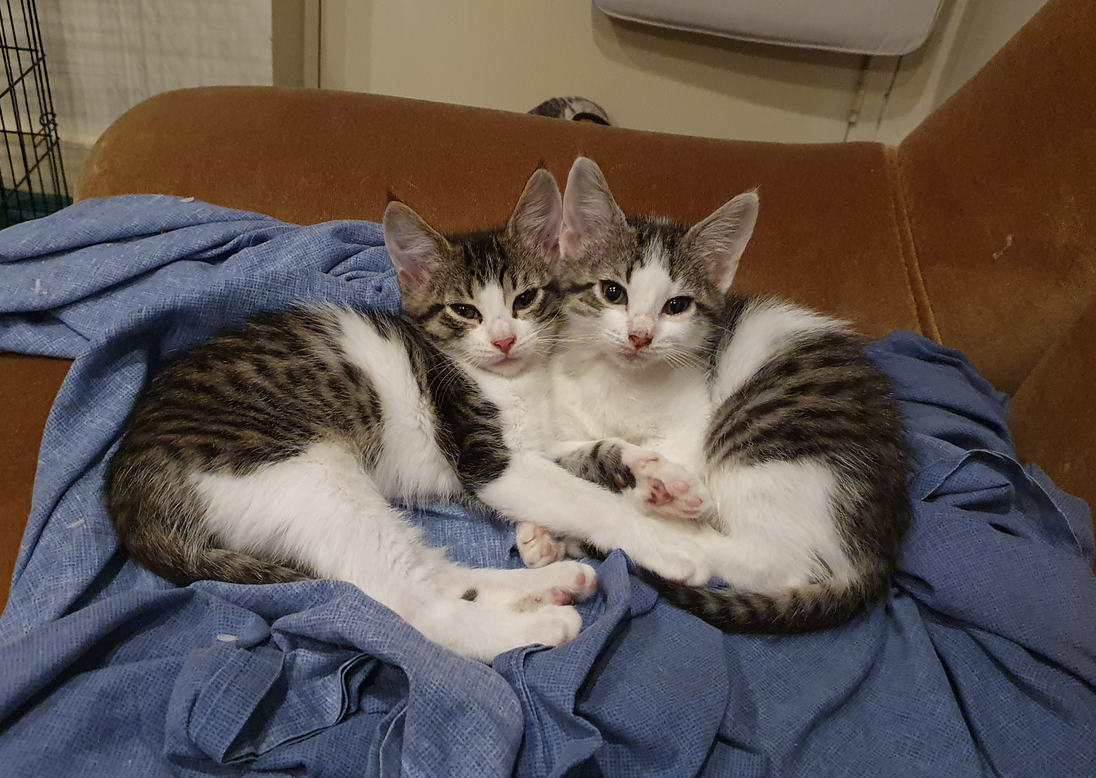
Curly Wurly is playful and friendly, usually waiting by the door so he gets the first snuggles when a human comes in; Violet Crumble loves to gaze adoringly at people, carry toys from place to place, and rest his paws on things.
They are SO CUTE when they wrestle together! I have bought them collars so people can tell them apart.

Dawn (900164002269084) is a female tortoiseshell who purrs like a supercar and demands focused pats when I wake up in the morning. She loves climbing, boxes, and destroying things. Do not leave your toilet paper unsupervised! She is desexed and has been vaccinated twice. She is open to friendships with dogs and older cats. She loves belly rubs but/and is likely to wrap her paws and teeth lovingly around your hand. She gets on well with Caramel and doesn’t like to be alone.

Caramel (900164002269081) is a major snuggler although she is naturally nervous. When she is free to roam she comes and “checks in” on me every so often, purring furiously. She has the biggest eyes I’ve ever seen. She has a strong killer instinct and needs a lot of play time, ideally with another kitten.
Both Dawn and Caramel are experts at spotting me reading and inserting themselves between the book and my eyes in order to get guaranteed pats.
I am a teensy bit jealous of whoever gets to own them.

Hustling Update, 2024
A few months after I wrote the first and second post about all the many many different things I do, I started fostering kittens.
I. Love. It. So. Much.

That is the stunningly beautiful Cinnamon, one of the feral cats that I caught and socialised in 2023. Catching feral cats is definitely NOT something I plan to do regularly! I am the opposite of physically gifted/strong… but socialising cats is something I think I’m pretty good at.
So, fostering kittens is something I want to keep doing forever and ever amen. There are several down sides, including the cost and the cleaning (not so much the gross-out factor, but my physical body struggling with it). I do one day plan to be rich enough to hire a regular cleaner, so hopefully I could find a cleaner willing to scrub kitten poo off the walls (somehow the foster kittens always seem to get poo on the walls). Many cleaners refuse to deal with any pet stuff whatsoever, which is fair enough. But I’m sure I can find someone.
Fortunately, I have a really great babysitting job at the moment, and my health has improved recently (due to new meds) so I’m earning more than I’ve earned since I first became disabled in 2011. Amazing! Of course as a household we have a lot of financial things to catch up on from the cozzie livs crisis, eg I hadn’t seen a dentist since January 2022 and one of my fillings fell out. But things might be looking up financially?
Unfortunately my right knee has major objections to my babysitting work. I am seeing a physio and strapping it daily, as well as not sitting cross-legged on the floor (which is what made it start malfunctioning). But it’s a significant problem.
BUT one aspect of the “Castle of Kindness” concept from 2019 has actually come to pass. Actually several aspects have come to pass—sponsoring refugees; welcoming them into my home; having them play in my (blow-up) pool; running a food pantry with some emergency supplies (such as water)—but this is the first time that an element of that dream has helped me with my own pain/disability: we now have a spa.
It’s a blow-up spa, the cheapest on the market (under $600 from Bunnings, plus electric and chemical supplies which were about another $200), and it is surprisingly good!

Here’s my son showing the “4 person” spa (really it’s only good for one person, or 2+ who don’t mind having their legs tangled up) that he’s not allowed to go in due to his cast (he broke his wrist falling from a climbing frame at school).
I was really anxious that it wouldn’t be deep enough to help with neck and shoulder pain at all (but if I squidge down it works) and that having a ring of bubbles around the bottom would be useless (but actually the bubbles work really well), and that sitting on the bottom of the pool would be uncomfortable (it isn’t—our outside foam helps, but the buoyancy of the water is the main thing making it comfortable—and I can move around more than in a ‘normal’ spa, which is a good thing).
So in many ways I am living the dream.
Last but definitely not least, I started a cat cafe business in January! When I foster kittens, I feel strongly that it is my duty to take and share MANY kitten photos, and to invite my cat-loving friends over to play with the kittens (which is good for the kittens, and enjoyable to them). So to my mind it was perfectly natural, in a city lacking a cat cafe, to… well, to start a teeny little cat cafe in my house. I kept it as simple as possible, with very limited hours and no food or drink. A lot of cat cafes don’t serve hot drinks, because that’s obviously hazardous to both the kittens and to the hygiene of the humans. But a few people were offended on FaceBook that I had a cafe without coffee, and one person shared about it to reddit. That was perfectly fine until people who don’t understand how cat cafes operate (ie using only friendly/social/bored cats, and not letting humans pick them up or follow them into cat-only areas) decided it was animal abuse. That’s when it suddenly got serious. Long story short, although I never did anything wrong the cat cafe was shut and the kittens taken away. I’ve also gotten to know the RSPCA and DAS inspectors (which has actually been a positive experience).
There’s no good reason not to start the business back up again, after triple-checking that all my paperwork is in order and that there is an external person checking on the welfare of the cats/kittens. I love cats and I love sharing that experience with others. It’s also a great way to find homes for foster kittens. I’ll always have to deal with extra scrutiny (fine) and people online convinced that I’m evil and/or incompetent (I can live with that as long as they continue to be wrong).
I realised that with a designated space for the cat encounters, I might as well restart the escape room business too—people can do an escape room and a cat encounter in one day. And I put in a little shop to sell my books, Qusay Fadheel’s art prints, and maybe even some cat merch since I do take pretty good cat photos after all these years.
So that’s where a lot of my brain is at these days.


 Felicity Banks