Four years
I’m crying, but it’s not sadness.
My husband Chris and I have been following the US election with increasing horror today. We both chose not to speak openly in the car on the way home, because our kids were with us. We exchanged a few careful words, and I asked Chris to drive. He knew without asking that I was too upset to drive safely.
TJ fell asleep.
Louisette is four years old, a pre-schooler in a Peppa Pig shirt and a baseball cap. She picked up on the vibe and asked, “What’s wrong?”
Chris looked alarmed as I opened my mouth to explain today’s election: “A country a long long way away has just chosen their President. I don’t think they made a good choice. He’s… mean. I think now he will be able to be mean to more people.”
Louisette was silent, thinking.
“It’s a very very long way away,” said Chris.
Damage control.
“Yes,” I said. “On the other side of the world. And there are lots of other politicians who will also be making the laws and all that kind of thing. The whole system of government is designed especially so that if someone mean is the president, they can’t do too many bad things.”
“A long, long way away,” said Chris.
“That man doesn’t hurt people on purpose,” I said. “But when people ask him for help, he says no.”
“That country is all the way on the other side of the world,” said Chris. “Really super far away.”
“And you know what?” I said. “I bet all the kind people in that country—and even us, right here in Australia—will be extra super kind and we will look after all the people who need help.”
“How?” she said.
I’d just received a “Really Useful Gifts” magazine in the mail. They have a wide range of physical items—a goat, a well, a school—that are labelled with prices eg for $50 you can buy a goat so a family has a source of milk, cheese, and future income (if they have a boy and a girl goat…).
When we got home and sorted out the inevitable chaos of bags and drinks of milk and the parental win of transferring TJ into his bed without waking him, I showed Louisette the magazine.

Louisette has an allowance of $1 per week. Sometimes she buys a 50 cent lolly. A lot of the time she saves it up. Sometimes she dips into her savings and buys herself a toy.
I steered Lizzie towards the things she’d understand best in the magazine: A school. Chickens. A vegetable garden (she always claims to love vegetables, although when we put them on her plate she says things like, “I meant in Summer I like them; not today.”)
She was excited that she could give these presents to someone she’d never met. I told her she had $20 saved up, and that she could spend as little or as much of it as she liked. I told her I would put in the same amount of money that she did.
We kept coming back to chickens. And a small business. And a pre-school. And adult literacy (she was shocked at the concept of someone who was all grown up but still couldn’t read. Reading is hard). And a vegetable garden.
I warned her that if she got all those things her money would be gone. All of it.
“What about my flower?” she asked.
I remembered it well: A little plastic thing with a smiling face that bobbed back and forth. It was the first toy she bought for herself with her own money.
“Actually,” I admitted, “that’s broken. It cost $3. So if you bought all of these things, you would have to wait three weeks with absolutely no lollies or buying anything. Then you could buy a new flower.”
“Okay,” she said. “Then I will buy no lollies for weeks and weeks, and I will buy this”— A school building—”and this”—a clinic—”and all those other things too.”
That’s when my eyes started to mist over. I counted up the cost. $80. Every bit of me wanted to buy it all with my own money, and let her keep her allowance. “That’s a lot of things, Louisette. You’d get no allowance at all for weeks and weeks and weeks.”
She nodded gravely. “You’d get no money at all—not even one single dollar—for weeks and weeks. Not until your birthday.”
An unimaginable distance.
“Yes,” she said. “That’s what I want to do.”
A lot of people feel scared of a lot of things right now. We feel helpless.
I can’t change the world, but I can change it for a few of the people who need it the most. I can be kind. I can learn about other cultures and get to know people who aren’t exactly like me—Mexicans. Homosexuals. Muslims. Trump supporters.
I can find out what we have in common, even if it takes some digging sometimes.
I can change an entire village in another part of the world by giving it a school, clinic, small business opportunity, and chickens.
I can teach my children to respond to fear by being more kind, by making more friends, and by giving more of whatever we have to give.
Four years feels like a long time. For my daughter, it’s a lifetime. But in a world that seems to be getting darker and meaner… there she is. There I am. There you are.
The world is a beautiful place.

If you’d like your money to be more effective where it’s needed most, skip the charity gimmicks and give money to a reputable company like World Vision or Oxfam.
Same story but without the Trump stuff (so it’s more shareable):
My four-year old daughter Louisette was thrilled to discover that she could use her allowance to buy presents for people she’d never met—and her presents could help them have better food, water, and jobs!
Her allowance is $1 per week and she’d saved $20. I told her that I’d give the same amount of money she did, and we looked at the “Build a Village” range and some other things that made sense to her, like chickens and adult literacy. She is learning to read and she knows it‘s hard work but super important… especially with a mother who’s a writer!
We had to choose so carefully. She paused and asked me about a toy she wanted to buy. I told her that it cost $3 so if she wanted to give her whole savings away she would have no money at all for three whole weeks and then she could buy the toy.
“Well,” she said. “I want to buy the school, and the clinic, and the vegetable garden, and the chickens, and the pre-school, and the one that teaches a grown-up to read. So if I have no money at all for weeks and weeks and weeks, can I do that?”
“That would be a very, very long time,” I told her. “All the way to your birthday… with no money at all.”
“And then I can give them all those things?” she asked.
“Yes.”
“Then that’s what I really really want to do.”
Louisette loves to dress as SuperGirl, and pretend to help people. Today she made a difference to people in the real world. https://www.usefulgifts.org

Romance stats from “Choices”
My day job is writing for Tin Man Games. I’m co-writer on “Choices: And The Sun Went Out” and writer on “Choices: And Their Souls Were Eaten”.
They are both serial/subscription phone app stories (with the banner name of “Choices: And The Sun Went Out” on itunes and Android), that release a new piece of story roughly once per week.
One of the cool things about the app is that each arc (that is, four weeks) the players get to actually see how many other players are on the same path they are.
Spoilers from “Choices: And The Sun Went Out” coming!!!!!!
.
.

.
.
.
.
.
.
.
.
.
.
.
.
.
.
.
.
.
.
.
In “Choices: And The Sun Went Out” there are two possible love interests (both bisexual; the protagonist’s gender is never specified).
Sharon is a blonde Australian taxi driver with an adult daughter. She uses a bunch of Australian slang, drives like a (talented) maniac, and is addicted to danger.
Etienne is a Canadian Park Ranger of Middle Eastern descent. He’s a pacifist with a philosophical bent, and he can handle himself in a fight (…when he has to. Which is often).
Over time, the player was given several opportunities to flirt with each potential love interest, and we kept track of whether players chose to flirt or not (and how often).
Finally, in Arc 13 (yep, that’s thirteen months into the story!) we finally let the romance go ahead… if a player had been sufficiently flirtatious. We also let the player say no to romance if they wished.
We were dying with curiosity about which one of our love interests proved more popular. And the winner is…….
Well set me on fire and call me barbie… it’s Sharon!
The lovely Sharon walked off into the sunset (and by sunset I mean “hail of bullets” because the story’s climax is happening right now) with 45% of players.
Etienne snagged 30%, and the remaining 25% opted out of romance this time.
Do we have more male players than female? No idea. More males play video games, but more females play phone games. (Looking at public reviews, it looks like almost twice as many males are leaving reviews, but there are a lot of things that could be skewing those results.)
At present I’m writing the “China” side of the story. 42% of players are with me (and the other 58% are in Russia).
Here’s where it gets even more interesting.
In Russia (written by Alyce Potter, who created the character of Sharon), 67% of characters fell for Sharon, while 14% fell for Etienne.
But in China, 50% of characters fell for Etienne and 19% fell for Sharon.
I confess I have my own bias: Although I usually prefer women in fiction, Etienne (written by KG Tan who later surrendered his side of the writing to me because he has so many other jobs to do for Tin Man Games) is my favourite in this story.
It seems our natural biases worked for us… but how? We’ve been building up the romance for months across storylines that meandered all over the globe. Is there some third factor that drew players (and myself) to both China and Etienne or to both Russia and Sharon?
Statistics can’t answer that one…
Conflux 2016
Conflux is Canberra’s speculative fiction conference. It happens every year on the October long weekend (even when that means starting in September, like in 2016 and 2017).
Each year features guests of honour from around Australia and the world; panels on a variety of topics (including deliciously blatant fanfests); workshops; book launches; pitching sessions; a dealer room; and opportunities to hang out with like-minded people (some of whom happen to be authors with varying degrees of fame). A few people do cosplay, which is always fun.
The reason I’m able to handle conferences when I can barely handle dropping my kids at school is simple: adrenaline. I’m generally moderately with it as long as I feel like I’m performing.
In 2014 TJ was a teensy baby and I had a sudden thought: I hadn’t finished a full original novel since Louisette was born in 2012. Had I lost the knack?
At around the same time I noticed there were five possible pitching sessions at Conflux: A large publisher, three smaller publishers, and an agent. I decided to pitch to every single one with a different book. That meant writing a brand new book in a couple of months (which I pitched to the agent, so I had time to edit it before any publishers saw it). That book is “Flight of Fancy.”
Satalyte accepted my pirate young adult fantasy novel “Stormhunter”. For various reasons it hasn’t been published yet, but it’s going to be published eventually. I love doing pitching sessions with publishers, because they’re always nice people and they like meeting authors.
In 2015 I pitched “Flight of Fancy” and “Heart of Brass”. Odyssey Books ultimately accepted “Heart of Brass”, which meant that this year I FINALLY had a book to actually sell to people!
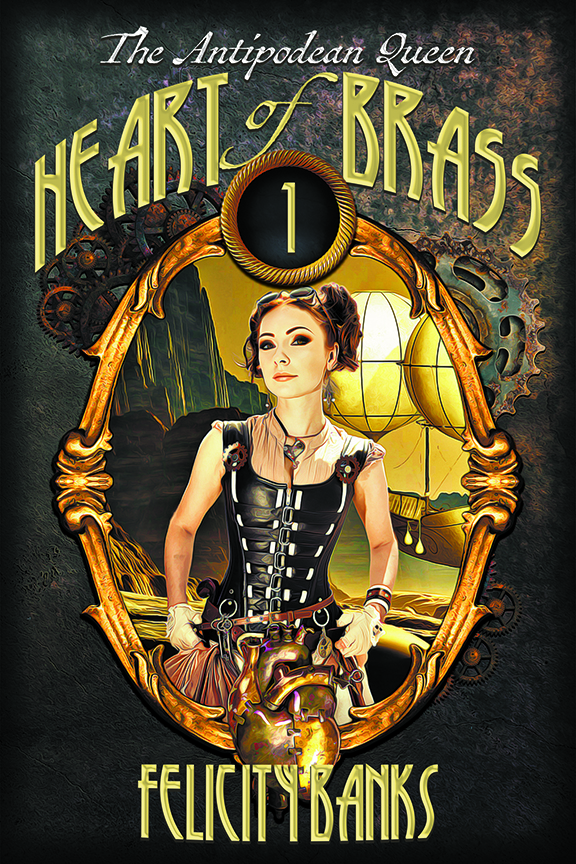
This year at Conflux I ran an interactive fiction workshop (lots of writers attend the conference every year), assisted with several panels (especially the steampunk ones), actually attended one session (very rare for me, since I get sore sitting in chairs without masses of adrenaline helping me out), and spent hours hanging out in the dealer room (mostly on the Canberra Speculative Fiction Guild (CSFG) table rather than the Odyssey table, because there were four other Odyssey people there and it was crowded). The familiar tension of, “Why am I talking on a panel when I don’t even have a novel published?” was gone (it’s worth pointing out that I haven’t gotten any smarter or more interesting than last year – panellists should be readers, but their writing life is almost always irrelevant), and I enjoyed the new tension of, “I’m absolutely trying to sell my book here”.
Our family car died suddenly the day before Conflux, so travel was complicated (especially with the uncharacteristically vicious weather), which complicated matters. My interview on interactive fiction at the local ABC 666 radio station was an unexpected bonus.
It was definitely fun chilling out with friends (Odyssey, Satalyte, CSFG, and others) and I think I recognised about 60% of the people. Conflux is my “home” conference, and the CSFG (which runs it) is a truly excellent group of people.
I enjoyed taking stupid pictures of my book, too.
This year people walked past the bar/restaurant on the way to the conference, so there was plenty of hanging out over food/drinks which was really excellent too.
This Saturday I’ll be at the Book Expo in Parramatta (Sydney), which I’ve never been to before. It’ll be interesting to see what it’s like!
Introduction to Interactive Fiction
I thought I’d better write an entry today in case someone is a-googling after hearing my interactive fiction interview on 666 ABC Canberra at 7:25am this morning (wheeee!)
Hello and welcome.
I write both novels and interactive novels. Other people find interactive fiction via the gaming community, so there are usually elements of game play (for example, skill bonuses that are tested later). You can “read” an interactive “book” or “play” an interactive “game”. I use the terms interchangeably.
Within interactive fiction, there are two main forms: Choice-based interactive fiction (the reader makes choices from set options) and Parser interactive fiction (the reader types commands to move the story forward and/or solve puzzles). I’m strictly on the choice-based side, which is definitely more accessible for newbies. The list below will make it immediately obvious that I was drawn to interactive fiction via Choice of Games. It’s not a bad place to start. This is what games always look like on the inside:

You pick one of the options, and click next. Easy!
Interactive fiction is almost always digital (the obvious exceptions are “Choose Your Own Adventure” novels, and the Windhammer Prize), and almost always released as a phone app on the itunes and android stores (and more, for Choice of Games).
If you’re curious about interactive fiction (IF), here are some good places to start learning more:
To learn by playing
Interactive Fiction Data Base This link takes you directly to my page, which has links to all of my games. My games are usually accessible to newbies, since I am one myself. There are a LOT of games and reviews on IFDB, and you can find lists (such as “Games for new players”) to sort through the mountain of stories.
The Interactive Fiction Comp is hugely popular, and all the games are free to play. Judging season is in October and the first half of November each year (right now!!) Usually about half the games are Parser games. Some games are a lot easier to download than others so if you get stuck just move on.
Birdland came fourth in the IF Comp 2015, and is a funny game using Twine. Free.
Choice of Games (CoG) is an extremely successful company with a clear in-house style.
Choice of Broadsides is a short CoG game that’s a perfect introduction.
Choice of Robots is an excellent scifi CoG story.
Community College Hero is an excellent teen superhero CoG story (Pt 1). It’s not an official CoG game, but is released through their Hosted Games label.
Creatures Such as We has a more literary style than most CoG games. It’s also free, and placed second the IF Comp in 2014.
My own CoG Hosted Games (I’m not associated or affiliated with CoG in any way) are the Australian steampunk adventure Attack of the Clockwork Army, the piratical romp Scarlet Sails (which also placed 7th in the IF Comp 2015; this version was improved after the competition which is why it’s not free like the original version). I also wrote and edited for the retro scifi comedy Starship Adventures, which has a bunch of behind-the-scenes special features.
Cape is a beautifully written Superhero origin story, where you can add detail by choice. It’s a hypertext story, meaning that you click on bolded words rather than choosing choices from a list. It placed fifth in the 2015 IF Comp, and is free.
Tin Man Games releases what they call “Gamebook Adventures”. They range from the mostly-text scifi serial story “Choices: And The Sun Went Out” app on itunes or android (the European steampunk tale “Choices: And Their Souls Were Eaten” is the second story inside that app; I’m a co-writer on #1 and writer on #2) to the recent Warlock of Firetop Mountain which takes the famous Steve Jackson & Ian Livingstone novel and turns it into a video game (including a fight system). They are internationally respected and an Australian company.
To learn by reading the blogs of reviewers (who also write games and talk about stuff)
To learn by joining a community
Be aware that the IF community is a small, welcoming, diverse, and kind group. Don’t be a troll. Don’t write when someone (especially a reviewer who is adding to the community with their comments and not getting paid for it) has made you feel angry.
Embrace different genders, sexualities, abilities, and nationalities.
The Interactive Fiction Forum is very lively during IF Comp season (October/November).
An excellent book on Twine and writing, pitched for beginners to both
Writing Interactive Fiction with Twine by Melissa Ford
If you’re quick, you can probably catch me at Conflux today between when-I-get-there and 1:30 (when my workshop starts – it’s booked out already, but just email fellissimo@hotmail.com if you want to arrange something else workshop-ish). I’ll most likely be in the dealer room, since my publisher has a table (the publicist is actually hiding in this shot – can you see her elbow?)

To learn by writing
Twine is certainly the easiest; it actually automatically builds an (adjustable) map for you. It takes about thirty seconds to learn, or ten minutes on your own.
There are LOTS of online resources, including lists here and here about finding the authoring tool that works for you. You certainly don’t need to be a computer programmer!
To get paid
Choice of Games pays advances of up to $10,000 for novel-length stories based on an approved outline and written with their tool, ChoiceScript. I know from personal experience that a story written for their less-exclusive “Hosted Games” label earns a respectable amount purely through royalties. Mine have earned around $1000 each, but there are no guarantees (and no limits!)
Sub-Q magazine pays for short fiction (they can be quite literary).
itch.io is a vibrant community that’s specifically designed to let indie creators sell their games on their own terms. It has loads of game jams that you can join, and some jams are competitive (which is a handy low-stakes way to see if your writing is appealing to others.
Contests pay a little (often not in money) but are hugely important to the community and to gaming companies, who sometimes even approach entrants to offer paid work. All the contests are publicly reviewed and judged, which is an intense emotional experience for any writer. Don’t ever interact with reviewers until after the competition is finished (and even then, always thank them regardless of what they said—every review is a precious gift, and the harsh ones are often the most useful).
Your stories must not be published, and they must be publicly available after the contest for free. Although the judging is public, they are NOT popularity contests, but based on judges being as neutral as possible in their ratings.
IF Comp is the biggest and best, but it’s NOT for beginners. Reviewers can be harsh in order to be more entertaining, or due to assuming you’re trolling the contest).
Windhammer Comp is printable (and short, and Australian) and high-status. First prize is $300, within runner-up prizes of $50. Not bad for a short story that doesn’t require learning a new tool!
IntroComp (for games that aren’t even finished)
Spring Thing (called the Fall Fooferal if you’re in the Southern Hemisphere) is particularly welcoming to newbies, including a “Back Garden” where you can indicate that you’re new and reviewers should take that into account. It’s deliberately placed in a part of the year when the IF Comp is far away.
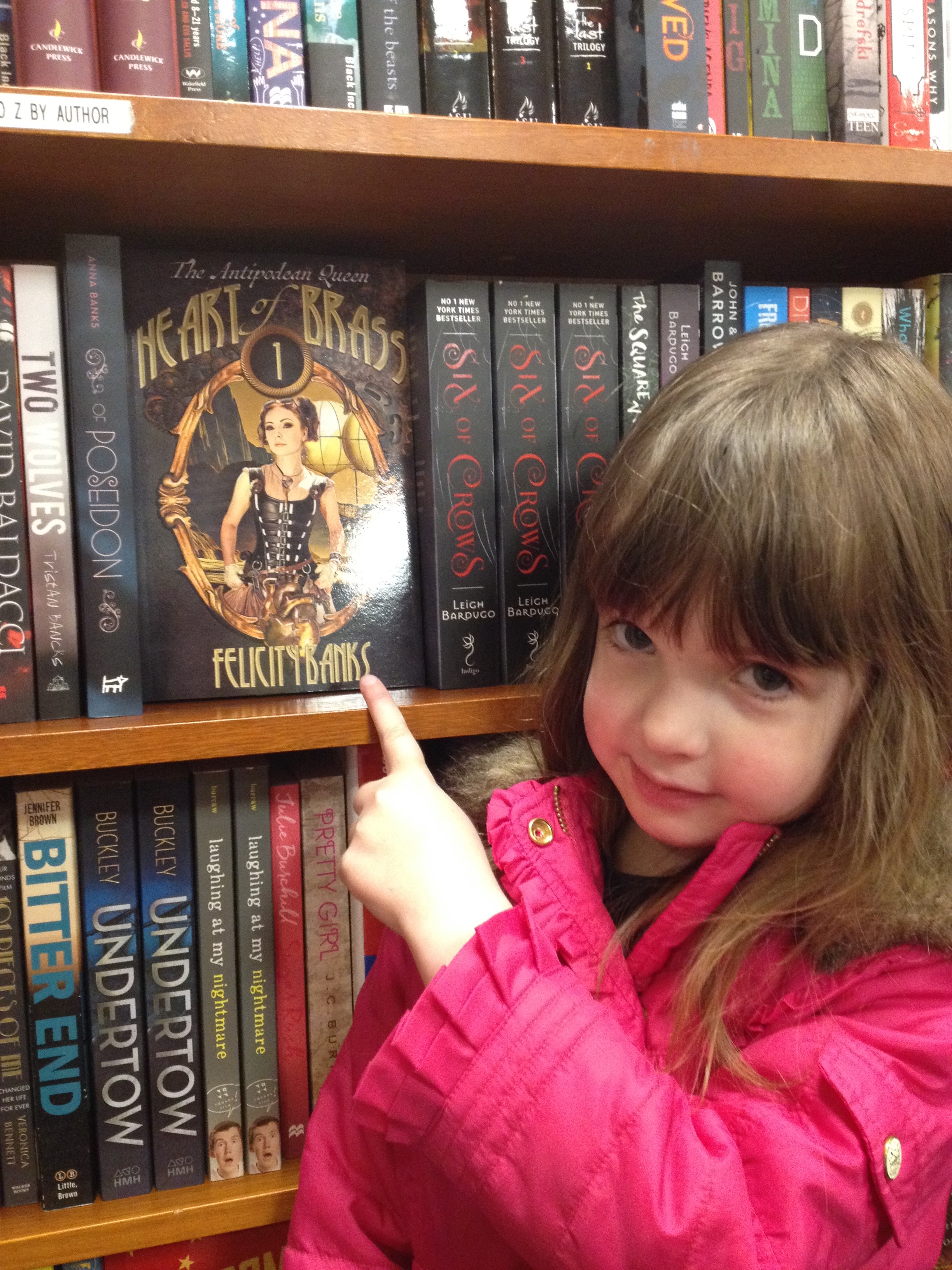
I won the Windhammer Prize in 2015, and my publisher included that story with my novel:
Full disclosure: I have some kind of connection to pretty much everyone on this list, but every single connection is through reading their work and liking it.
Emily Short has a fantastic Intro to IF here.
Tick Tock







The mechanical spider was built by Justin Gershenson-Gates at A Mechanical Mind. The image was used with permission (Image 2 is filtered).
https://www.facebook.com/amechanicalmind/
https://www.etsy.com/shop/amechanicalmind/
I’m figuring out images for my newest interactive story, “Stuff and Nonsense”. Images are easier if they’re linked to a url. So this entry will continue having pics added.







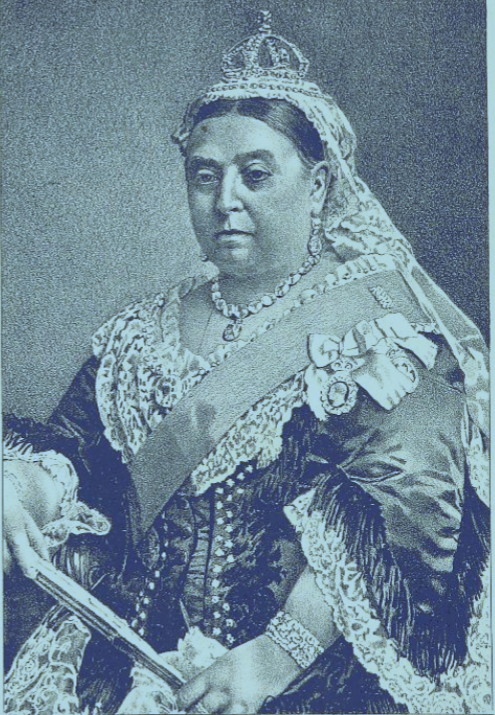



“Stuff and Nonsense” cover
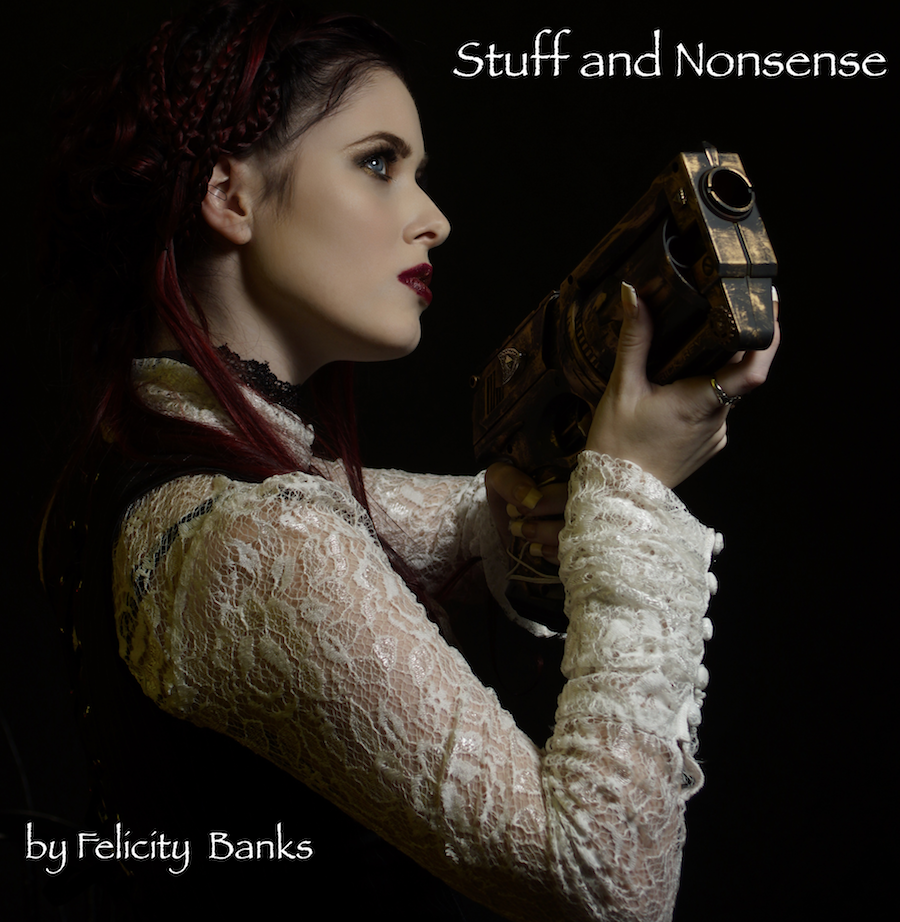
I’m learning Twine while writing a game for the IF Comp. If I want to put an image into the game, the simplest way is to link to a url. Specifically, this one. Probably. If I’m doing this right.
Photographer: Jody Cherry (Exposure Studios)
Hair & Make-up: Jody Cherry (Cherrish Hair & Make-up Artistry)
Model: Amelia Brown
Cropped to fit and text added (with permission) by Felicity Banks
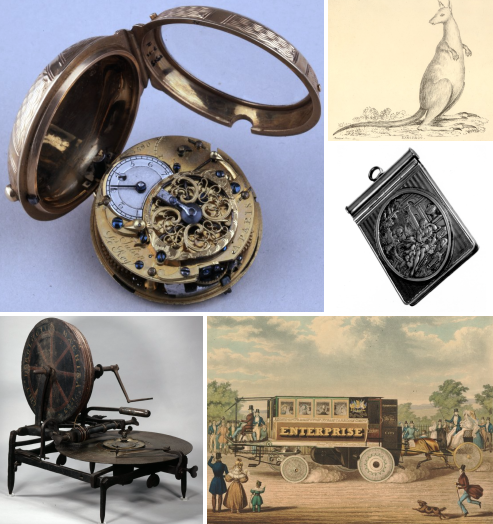
And from The British Museum’s AMAZING collection of historical images:


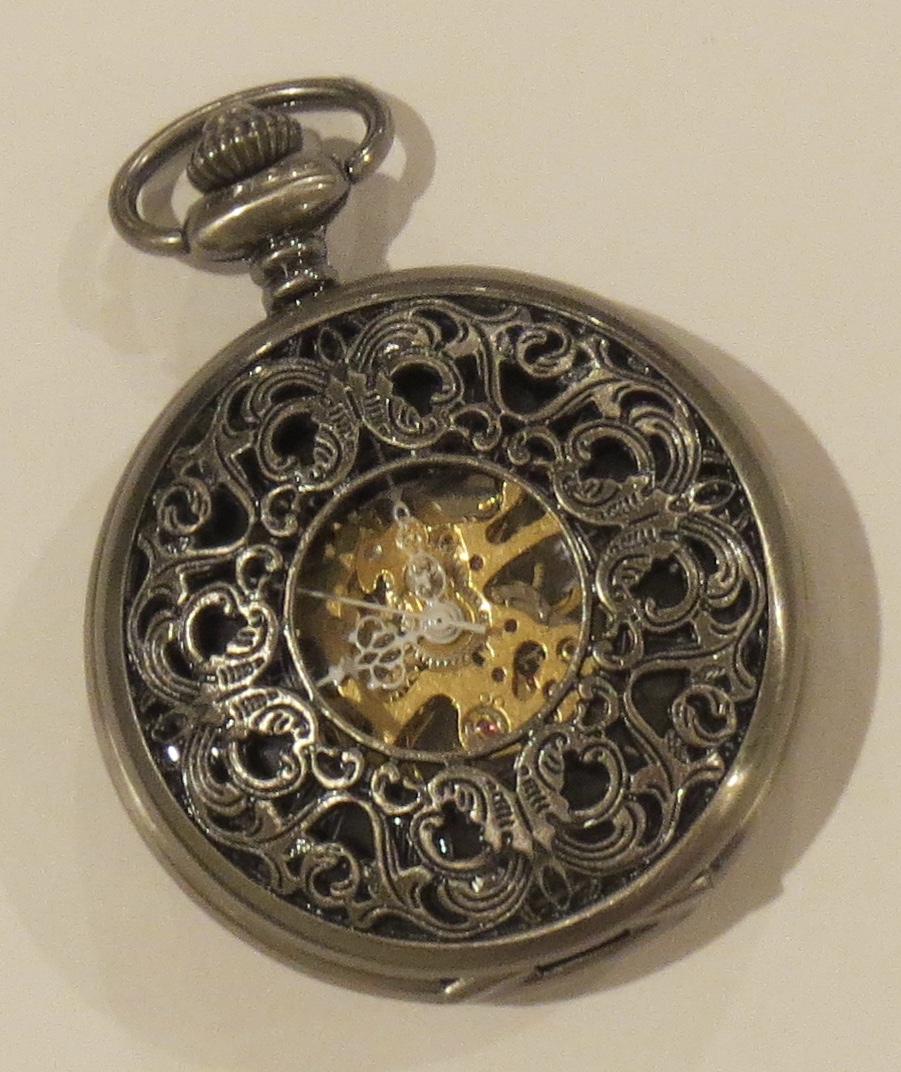
And some pictures of a pocket watch that I just took:


Weak Words
I haven’t posted any writing advice in a while, possibly because a lot of my work is out there now and anything I say is likely to be hypocritical and I’m scared of people pointing that out.
But here is a great, simple, well-explained infographic on words that should be dragged out and shot. Take a look!
Adventures in Melbourne
Last Friday morning I flew to Melbourne, meeting my Tin Man Games workmates in 3-D for the first time. I flew home Saturday night.
On Saturday I ran a social meet-up before the Participatory Storytelling Panel at the Brimbank Writers and Readers Festival.

I’ve been wanting to go to Melbourne for a while, and it was the Participatory Storytelling Panel that gave me the excuse I needed (thank you to Phil Minchin, on the left in the above photo, for all the hard work you do—and for this panel in particular).
I also took the opportunity to deliver 35 copies of “Heart of Brass” to a whole bunch of bookshops, starting at Dymocks Watergardens and including Dymocks Geelong, Geelong Market Square, Knox, Prahran, Southlands, Camberwell, and Doncaster, as well as Andrew’s Book Store (Ivanhoe).
The Watergardens books are signed.
So.
How was Melbourne?
Rainy. It rained all day Friday, and loomed all day Saturday. I spotted small patches of blue sky after the panel was finished (as I was on my way to the airport). It was raining again by the time my plane boarded. (Do I even need to mention that every second person I saw told me how stunning and downright summery the weather had been just before I arrived?)
I really enjoyed the way so many of Melbourne’s central buildings were highlighted in brilliant colour, looking bright and beautiful even in the Melbourney weather. The buildings also worked incredibly hard to be any shape but rectangular. Some created optical illusions with paint. Some were actually curved. Others had random geometric shapes sticking out. The great thing about all the crazy colours and shapes was that they made excellent combinations when viewed from a range of different angles. You’ll have to take my word for it, because I didn’t take a camera (with over 40 books in my suitcase, I was keen to cut down on luggage).
Someone on a bus gave me their seat, presumably believing I was pregnant (absolutely worth it, for once). On another occasion two men got into a punch-up while I sat waiting for a taxi outside a shopping centre. It was terribly exotic, but not exactly a great advertisement for Melbourne.
How was travelling?
I was super, super excited about staying in a hotel. A clean room, AND a room I didn’t have to clean after myself or anyone else? A whole night without anyone screaming at and/or near me? A bed with only my own limbs to injure myself on? Waking up to the sweet tones of my phone alarm instead of spending the first ten seconds of my day immediately dealing with more urine and more screaming? Walking to the bathroom without noticing ten things I should probably fix/clean/move along the way?
Food delivered to my room, where I could eat in bed and watch TV, all without interruptions AND in my PJs??
I stayed in a hotel without room service (WHY EVEN BOTHER TRAVELLING?), that was so small I kept bumping into the walls. But it had a TV and a bed and an ensuite, and that was awesome. And I didn’t hear any screaming, and no one peed on me. So that was special.
Melbourne trains don’t go to the airport, which is stupid. Getting to and from airports is often surprisingly complex, so I picked a hotel with a shuttle bus—which turned out to mean catching the skybus from the airport followed by a “loop” bus that goes to a list of hotels. It wasn’t a fast or pleasant process, but it did eventually get me there. I left home at 7am for an 8:30-9:30am flight, and arrived at the hotel around 12. After five hours of travelling I was pretty tired, but I prettied myself up as much as possible in a short time and took out my home-printed google maps to make sure I got to the Tin Man Games office, SMSing as I left the hotel to let them know I was close by.
And so it was that I walked half an hour through steady rain to the place Tin Man Games used to be located, many years ago. I was exhausted, sore, sweaty, and in precisely the wrong direction.
From there I caught a taxi, and reevaluated my abilities—both physical and mental. Everyone does dumb things sometimes, but that was me at my best. I prepared for weeks. I was careful. I had backup plans.
I missed so many things, and made so many mistakes along the way… and I’m going to keep making bizarrely obvious mistakes for at least another couple of years (while my brain recovers from a long period of daily migraines). The simple fact is that I’m not mentally or physically capable of basic functionality outside of my own carefully-constructed routine.
From then on I didn’t really travel alone. People looked after me at various points, and the rest of the time I relied on taxis. Taxis are stupidly expensive, and they often don’t come when/where you need them most. I can’t rely on them to help me.
So I need to have a serious think about whether I can do that sort of thing—independent interstate travel—ever again.
On the other hand, although I’m a bit stiff and sore, I’m incredibly refreshed and optimistic. There’s something about travelling that refreshes me from the inside out. So I need to think about that too.
Professionally…
I very much enjoyed hanging out with my Tin Man Games people. They really are exactly as smart and funny and chilled-out in real life as they are on skype. The up side of networking is that people in the same creative industries as me are often really fun to talk to. We actually ran into a few other people at lunch, which was a nice bonus.
The official IF meetup was small but high-quality, with exactly one person representing almost every single facet of my interactive fiction life: a young adult fantasy author, a Choice of Games writer, a Tin Man Games writer/programmer, the organiser of the Participatory Storytelling Panel, and a coupla randoms. Most of us went to the panel too.
I had thought the panel would feel long, at 1.5 hours, but it didn’t. Each one of us could have easily talked the entire time, because we love our subject manner and spend a large chunk of our waking hours thinking about it. It may well have been the best panel I’ve ever been on. The audience was cool too—smart and thoughtful and involved.
Professionally, the trip was a raging success. I also had a great time in between the travelling parts.
The gentlemen pictured are Wade Dyer, inventor of the tabletop role-playing universe Fragged Empire, and Phill Krins, who is one of the organisers of the spectacular Swordcraft live-action games.

I hope someday we meet again.
Parenting
Well, it happened. Louisette told me she wanted to be a writer when she grew up.
Being a writer is a terrible idea! My dream for my kids is for them to have steady, 9-5ish jobs with sick leave and annual leave and a pay rise every year. I want them to be healthy and sane. In short, I want them to have everything I never will.
“That’s wonderful!” I said to my sweet innocent child. “And you know what’s great about writing? You can do it AND have another job at the same time!”
Ah, parenting. Finding that magical place between, “Follow your dreams” and “Do your homework.”

That’s Louisette hugging a dinosaur.
Drinks with umbrellas in them
The other day I saw a random stock photo of people sitting on banana lounges by a pool sipping tropical drinks from pineapple halves.
I don’t have a bucket list (the last thing I need is another to-do list) but I immediately tweeted that my life was incomplete because I’d never drunk out of a pineapple.
So today, our shopping list included two whole pineapples and a coconut. Chris has long since learned to obey strange requests, so he bought them without comment (he does the shopping).
Here’s what I made, adjusted from here since I’m incapable of just following a recipe (but if you want a proper one with measurements and stuff, go there).
Step 1: Freeze milk into ice cube trays. You will use half of one normal-sized tray.
Step 2: Gather ingredients:
-Milk frozen into cubes (as above)
-2 pineapples (For me, the edible parts added up to about 500g including juice.)
-Milk from one coconut (roughly 200mL) or a can (400mL)
-Natural, vanilla, or coconut yogurt
-A pack of those teeny paper umbrellas
-Straws (plastic or metal can stand straight up in a pineapple cup, but you’ll need to be careful to clean them immediately after drinking or they’ll get super gross).
Optional:
-Some banana (but be cautious; the drink needs to be able to get through a straw if you don’t want to eat it with a spoon).
-Grated coconut (possibly fresh, if you’re up for it)
-Ice (again, keeping in mind that one can’t drink from the rim of a pineapple so you’ll probably have to use either huge large blocks that stay out of your straw’s way, or crush your ice VERY finely).
-A thermomix. Thermomix smash!
Could be interesting/awesome:
-Other tropical fruits (mango?)
-Avocado
-Sweetened condensed milk
Step 3: Extract most of the pineapple from your pineapples without stabbing them through (or stabbing yourself at all).
I used a large knife to cut them in half (making four “cups”) then made a cross-hatch through the fruity part (like a noughts-and-crosses board with the pineapple core in the centre). Then I used a metal spoon to scoop out various bits, sorting them into fruit and core and cutting again as needed (I took the good fruit out first, then cut a + into the core so I could take it out in pieces). Every so often your “cup” will get super juicy – just pour it into your blender and keep going.
Leave plenty of pineapple in the “cup”.
Step 4: Get the milk out of the coconut. I stabbed it with a skewer and then drained it through a strainer (to catch any random bits from the outside of the coconut) into a bowl. (It works better if you stab more than one eye; for me only one worked. I ended up standing over the sink shaking the coconut until it was empty which took a couple of minutes and was actually kind of fun.)
Step 5: Thoroughly blend pineapple chunks, coconut milk, your frozen milk cubes, and four good dollops of yogurt.
Step 6: Check the taste and texture, and adjust if necessary.
Step 7: Pour into pineapple cups and (if you have time) stick it in the fridge for up to an hour and/or add ice cubes. Leftovers will need a jug or something.
Step 8: Add straws, metal spoons (enthusiastic people can manually extract more pineapple from their cups), and (optional) grated coconut to garnish.
Serves four, including multiple refills.

 Felicity Banks