The Great Book Sort (Part 2)
Since one of my three followers is in hospital and needs more book recs, here’s…. some more book recs!
Favourites
“Clean Sweep” (and “Sweet in Peace”, “One Fell Sweep”, “Sweep of the Blade”, “Sweep with Me” and I haven’t read “Sweep of the Heart” yet) by Ilona Andrews (aka the Innkeeper series). Now here’s the interesting part: they’re not all THAT well written. They read like many many many mid-level paranormal romance authors (and, to be fair, a million billion times better than MANY error-riddled published books, especially self-published books). The plot is only more important than the inevitable love triangle (good), and the writing is fine and fundamentally flawless but not astonishing. I’ve read other books by the author and they went to the “Nah” pile—perfectly good books, which I might re-read if I run out of favourites. So why is this series a favourite? The heroine is an Innkeeper, with considerable powers… but she’s fundamentally an inter-species diplomat, and most of the books’ tensions come from two or more very different magical species coming into contact in or near her inn. So it’s all about making different cultures feel safe and comfortable and respected… and I LOVE THAT TO BITS.
Side note: The “Temeraire” series by Naomi Novik is absolutely brilliant but I can only re-read the first of the series (it’s all excellently written) because there are so many cases of cultural clashes where people are just awful at understanding each other. It’s too painful to ‘watch’ a second time.
“The City in the Middle of the Night” by Charlie Jane Anders is scifi that takes place on a planet where only a narrow band between the permanent day and permanent night is mild enough for human habitation. According to wikipedia it’s climate fiction, but I don’t see it that way. It is, amazingly (since I’m doing these reviews in alphabetical order by author, which is effectively random), another cross-cultural story.
“The Bear and the Nightingale”, “The Girl in the Tower”, and “The Winter of the Witch” by Katherine Arden (aka the Winternight Trilogy). If you want to know what I mean by “astonishing” writing—as opposed to Ilana Andrew’s “fundamentally flawless” writing—this is it. This is really, really it. The trilogy takes place in Northern Rus’/Russia. You will feel the deadly cold as you read. You will feel the corrosive hatred and unmet hope in the heart of the beautiful priest. You will feel the wild heart of our heroine, and the weight of an entire society that falls, always, on the shoulders of women. CONTENT WARNING: Women are constantly at risk of rape, and are also subject to arranged marriages against their will, which definitely includes spousal rape (the men are also married without always getting a choice over their partner, but they are clearly in a position of muuuuch more power than any woman). I am not against arranged marriage on the whole. There are several examples of happy arranged marriages in the book (and in real life). But there is at least one arranged marriage in this series that is incredibly awful, and a better man would have made different choices (yes, even in that historical setting—although there is room for interpretation on that score). The sexual violence is never explicitly described, and it is never used to break the spirit of a female character or to justify someone’s evil with a rape backstory. There are much more creative ways to break a person. . .
This series is magical, and it is unbelievably harsh, and it is exhilarating and tragic and more.
You, too, will weep for a nightingale.
Since I’ve already talked about the brilliant Naomi Novik AND I’ve talked about magical stories set in medieval Russia, I can’t stop there.
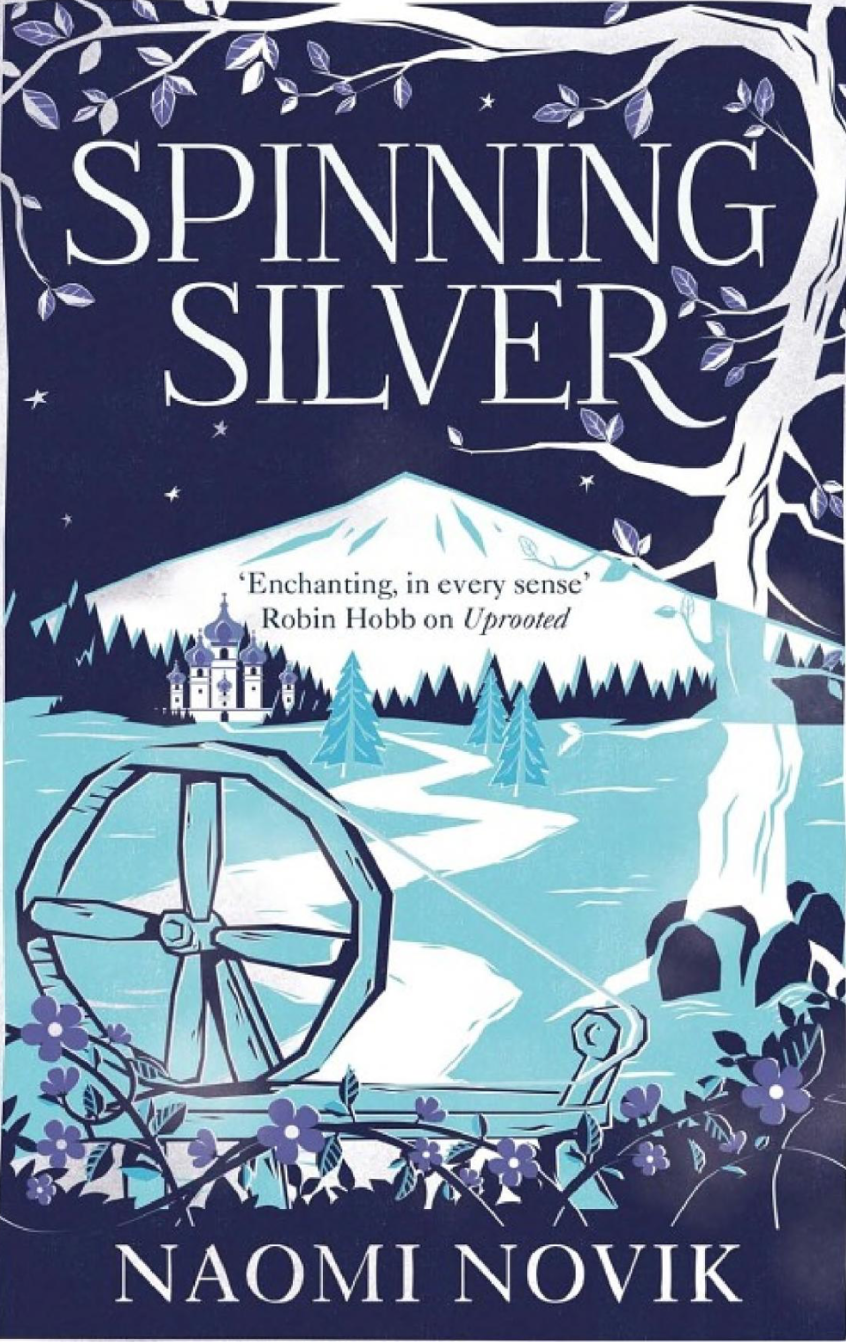
“Spinning Silver” by Naomi Novik. This is so good you guys. So so good. It is just as good as the Winternight Trilogy, and when I describe them they sound similar, thanks to the rich and bone-chilling selling of a magical medieval Russia. They even both have a female heroine who attracts the interest of an immortal man (for better or worse—but usually much much worse). But although rape is still threatened in this book, it is only a very slight possibility that is quickly and relatively easily fended off. In this story, the heroine is Jewish. So there is a whole other complicated and historical layer. And almost everyone in the story becomes a better person, which I love. That reminds me: another thing this book has in common with the Winternight trilogy is a protagonist who is incredibly honorable. Even when someone treats them incredibly badly, they do what is right. Even when they absolutely deserve a break they refuse to leave people to their fate. I love that.
“Uprooted” also by Naomi Novik. Completely different world. You’ve got a medieval-ish valley with a nasty wizard who takes a girl from the village every ten years. It’s always someone a bit extraordinary, so the heroine has grown up knowing that her best friend (who is beautiful, and kind, and clever) will be the girl taken. Except the wizard takes her instead. Content warning: there is an attempted rape (that ends rather badly for the attacker, which amuses me more the more times I read it). Again, it’s brilliantly written, including delving into the complicated feelings of the characters. How would you feel if your mother had long since accepted that you would be taken against your will as a teenager? How would you feel if, after all that, you weren’t chosen after all? And how would you feel if you were the friend of that girl that everyone knew was so, so special (unlike you)? And how would you feel, knowing your best friend would be taken and not being able to do anything to stop it? And how would you feel when you were taken instead?
And that’s only the start. I don’t want to say too much, but this book is amazing.
“A Deadly Education” (and “The Final Graduate” which ends on a major cliffhanger, and “The Golden Enclaves” once it comes out later this year) by Naomi Novik. All of the above brilliance, but absolutely hilarious too. This is a “magical school” story, but the survival rate of this particular educational institution is incredibly low. Our heroine is prophesied to become an evil sorceress. People dislike her instinctively, and she is severely hampered in her magical school by the fact that the school is basically pushing her to destroy the world and everyone in it (because it will automatically feed you the magic you’re best at—which in her case is all the most destructive killer spells). Worse, she just had her life saved by everyone’s favourite hero RIGHT when she had a conveniently impressive monster to kill. It is so funny, and strangely sweet, and exciting, and surprising. Naomi Novik was an impressive author when she wrote “Temeraire”, but she just keeps getting better and I hope she lives forever so I can keep reading her books.
“Sing the Four Quarters” by Tanya Huff. The heroine is a princess who gave up the throne to follow the call of her magical gifts. Then she did the one thing that an abdicated princess must never, never do: she got pregnant. What is worse, the man she slept with is currently in a dungeon accused of treason. He’s mostly a pretty face to her (she has a healthy and open long-term relationship with another woman, which is beautifully realised) but he’s no traitor.
Nah (aka good books that I might re-read someday, but just not really my thing)
“Fifth Quarter”, “No Quarter” and “The Quartered Sea” by Tanya Huff. Interestingly, the first book in the series is “Sing the Four Quarters” and I love it, and it’s right above this entry in my favourites pile. But in Book 2 we get a pair of new characters: siblings, and an incestuous love that continues to play a part in the rest of the series. They’re still really good books, but I strongly dislike both of the sibling characters and don’t want to spend time with them.
“Over the Woodward Wall” by A. Deborah Baker (aka Seanan Macguire, who will show up on the “Favourites” pile soon enough). This is well written (Macguire is a master writer) and pretty good, but aimed at a younger audience. I just found the two child protagonists mildly annoying.
“The Midnight Library” by Matt Haig. The midnight library is a place where you can go between life and death, and play out alternate possibilities. Sort of cool, but I want sentient books and mysteriously well-read monsters in my library setting, not a story about regret and life choices.
Nope
“The Dragon Lady” by Angelique S. Anderson. Magical steampunk, including dragons. Too many adjectives.
“Red Queen” by Victoria Aveyard. I don’t remember much about the book (apparently a bestseller), but there’s a lot of clumsy exposition in the first two pages.
“The Tangled Lands” by Paolo Bacigalupi (who had a book in the “Nah” section of Part 1) and Tobias S. Buckell. Really well written but too dark for me.
The Great Book Sort (Part 1)
I’ve been reading mainly ebooks for many years, and now have over 700. I only recently realised I could and should sort them. The main categories I am now using are “Favourites” (happy to re-read frequently for the rest of my life), “Nah” (books that are good, but I dislike them for one reason or another—but if I get desperate I could still potentially re-read them). I also have categories for research (mainly non-fiction), and for “People I’ve Met” (mainly so I can quickly glance at them when I’m on a panel with someone, to remind myself of their books—but also so that if I hate a book by a friend, I can put it there rather than in the “Nope” section).
Here are some samples from the main three.
Favourites (currently 249)
“Notes From A Small Island” by Bill Bryson. It’s very rare for non-fiction to be so entertaining that it’s worth a regular re-read, but Bryson’s travel books are brilliant (and hazardous, because if I try to read one before I go to sleep I laugh so much I end up feeling more awake than when I started). Other than his travel books, I also love “At Home”, his book about his house and by extension the history of the home in the Western World. Highly recommended for historical authors, even though I don’t own a digital copy. His book “A Short History of Nearly Everything” isn’t nearly as fun (although definitely more fun than a textbook).
“Minimum Wage Magic” by Rachel Aaron. An incredibly relatable heroine fighting seemingly impossible odds to make rent. I like it. Haven’t bought the next book in the series, but I think that has more to do with cashflow than anything else. Or possibly because it wasn’t quite good enough to make me want to keep going and risk the quality falling in the sequel.
“Mr Malcolm’s List” by Suzanne Allain. Delightful and witty Austen-esque romance. I’ve been recommending it for years and now it’s getting made into a movie.
Nah (currently 89)
“Nice Dragons Finish Last” and “One Good Dragon Deserves Another” by…. Rachel Aaron. It’s rare for a writer to fall into two categories, but clearly these books were “tolerable, but not handsome enough to tempt me”. Maybe I won’t buy the second “Minimum Wage Magic” book after all. Sometimes it’s nice to take your reasonably-happy ending and pretend nothing of interest ever happened to the character again.
“Children of Blood and Bone” and “Children of Virtue and Vengeance” by Tomi Adeyemi. Really well written, but just a few shades too dark for my readerly palate.
“The Water Knife” by Paolo Bacigalupi
Really well written; very violent. It’s science fiction (my preferred reading genre is ‘YA fantasy that doesn’t go on and on excessively about how hot the romantic interest/s are’) and climate fiction, set in a very dry USA.

Nope (currently 116)
“The Sparrow” by Mary Doria Russell. This was recommended to me by a friend, and I can definitely see why. It is heart-rending and has a lot of kindness in it, and a very interesting exploration of faith. But some really bad stuff happens—too dark for me to stomach. TW: rape.
Almost all stories with rape in them (including flashbacks, spousal rape, or statutory rape) will go in the “Nope” pile for me. This book definitely earned its rape scene, but even so…. way too many writers think, “What shall I put in this female character’s backstory?” and go straight to sexual violence. I’ve done it myself (once, out of hundreds of stories). As someone with a vivid imagination and strong empathy, it is often traumatising for me to read. I am extremely fond of trigger warnings for this reason, and wish all books with sexual violence had them.
“The Wandering Inn” by Pirateaba. Great cover, terrible writing. I never read past the opening few pages. (If you think publishers are harsh for rejecting books based on a few pages, you should try giving a book to actual readers. We’re not here to find your diamond in the rough. We want diamonds from page one, sentence one.)

“Brilliant Devices”, “Her Own Devices”, “Lady of Devices”, and “Magnificent Devices” by Shelley Adina. This is light-hearted steampunk, and I obviously liked it enough to buy all four books the first time around. But the second time around the author’s admiration for the heroine was too grating, and the way she won over a bunch of streetkids struck me as both unrealistic and patronising. And yes, I know books aren’t meant to be exactly like real life, but the mix of dark problems and comical solutions bugged me so much I don’t want to go back.

Welcome to Australia
This is the finished version of “Welcome to Australia”, a book I started writing way back in 2020. It is designed to be read by immigrant and refugee children with their parents/guardians.
Eventually there will be versions in Dari Persian, Mandarin, Indonesian/Malay (Bahasa), Arabic, and Spanish.
Update January 2023: The Indonesian translation is finished, checked, and being formatted. The Dari Persian version is finished but hasn’t had its final translator check yet. The Mandarin and Spanish versions are with volunteer translators.
Update 6 February 2023: The English and Indonesian/Malay versions are going to the printer TODAY. The Spanish, Mandarin, and Dari Persian versions are all finished and awaiting formatting. The Arabic is… not started yet. But we’ll get there eventually!
Update 28 March 2023: The launch last month went really well, and when I realised there was a Columbian woman with beautiful daughters at the launch I asked her if I could add her girls to the book. She said yes (see p. 9). Then I decided the book needed a bushland photo on the back cover, a desert landscape somewhere, and some African representation (not to mention a simpler map). My apologies to Jason Tankard at Design Print Canberra for making him go over the same book dozens of times. And now we need to make all the changes to all the versions. . .
See the Indonesian/Malay version in full here!
See the Dari Persian version in full here.
Comment here, buy a copy in my store, or email FBanksBooks@gmail.com to get your copy or to donate a copy to a school, refugee, or refugee-supporting organisation.
YES there will be cheap ebooks of all of the versions, as well as combined English/non-English versions.
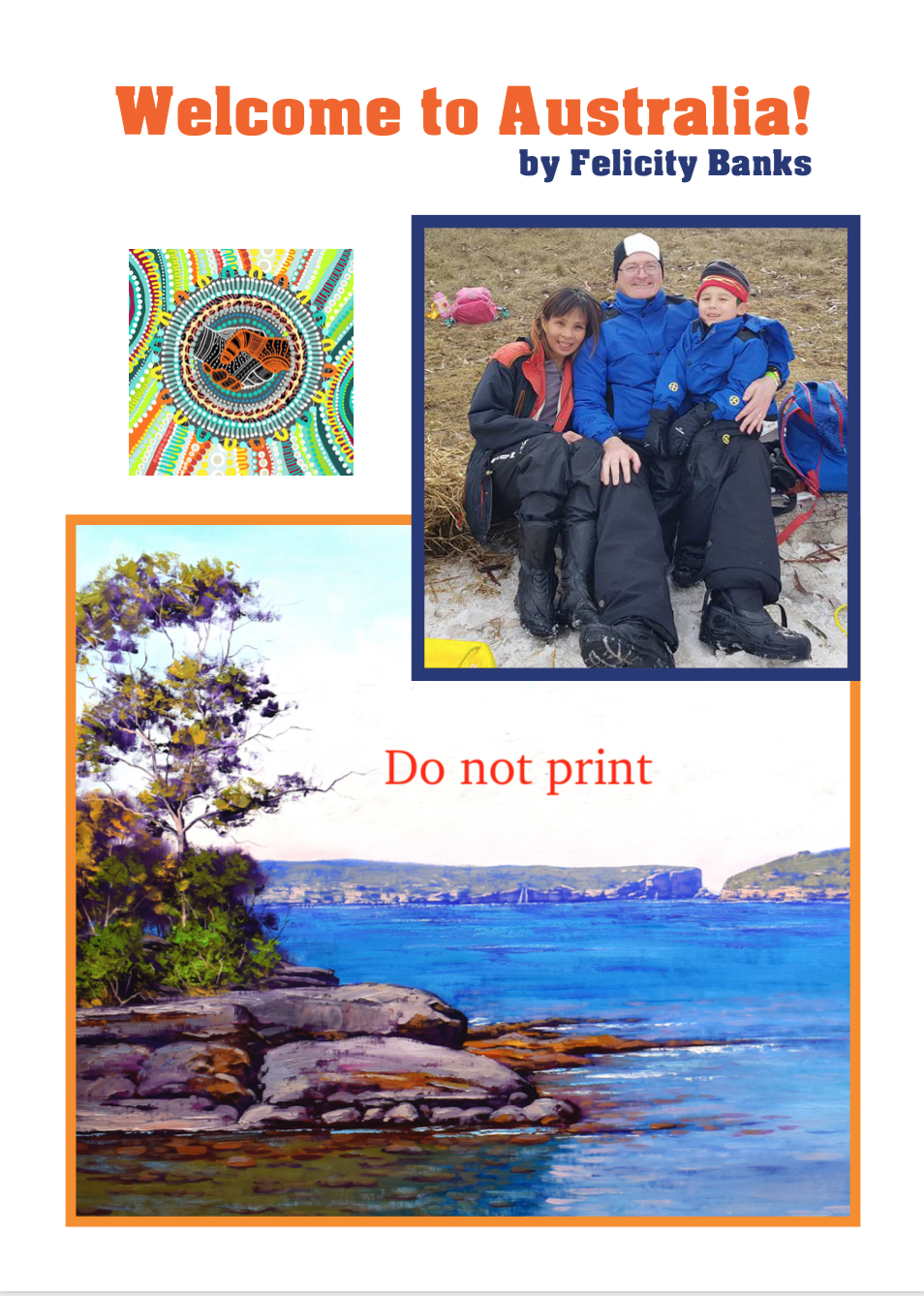



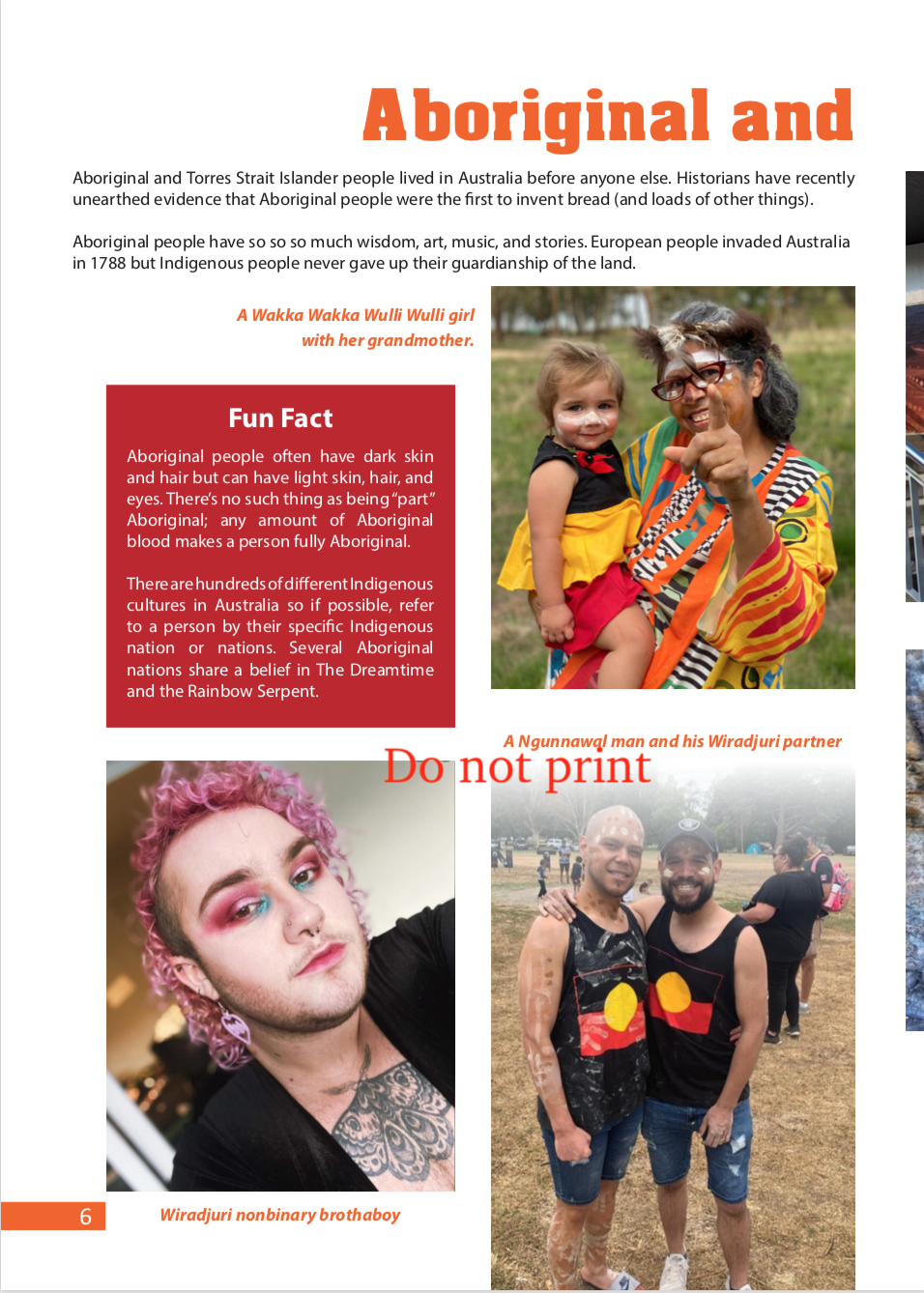


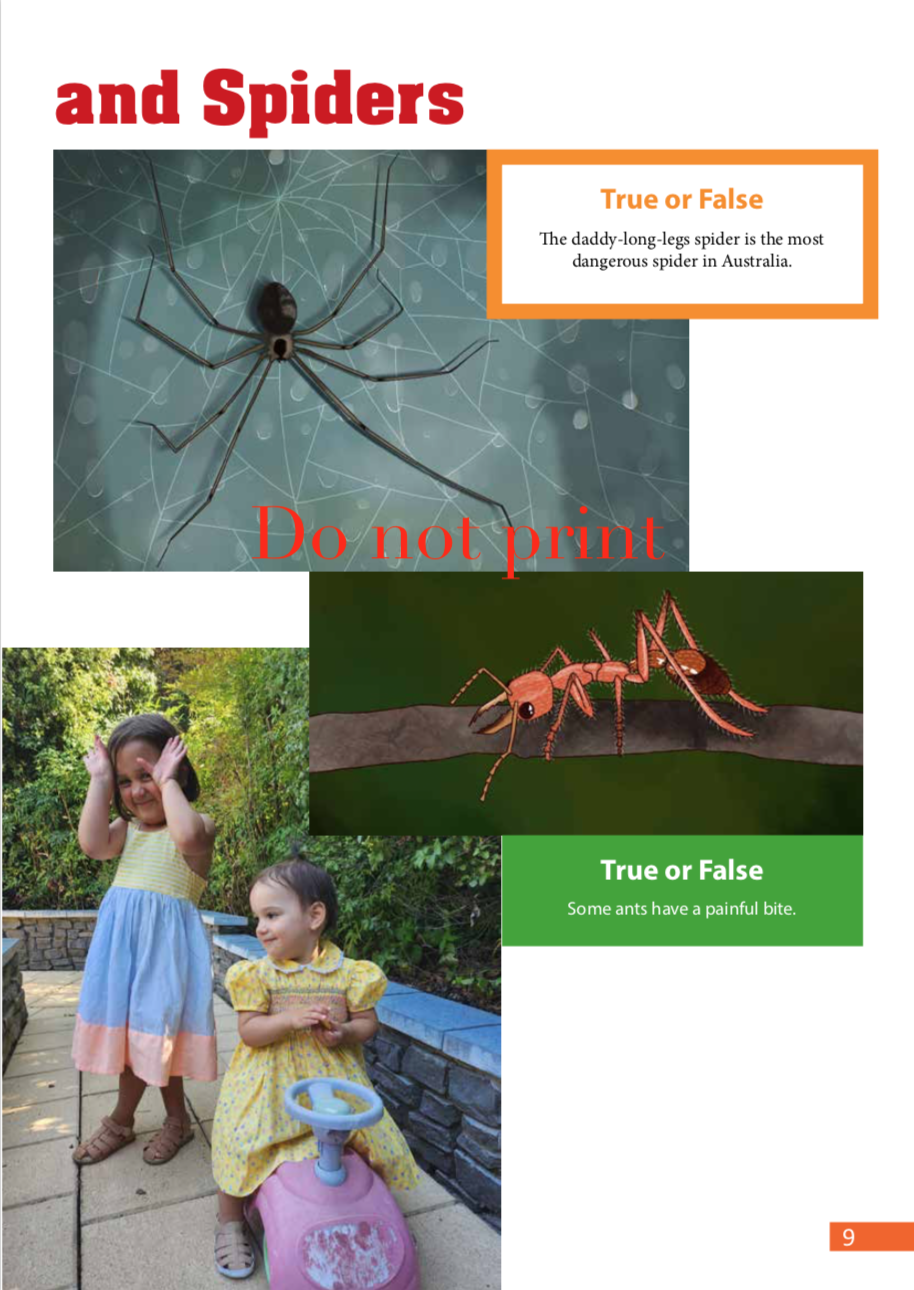


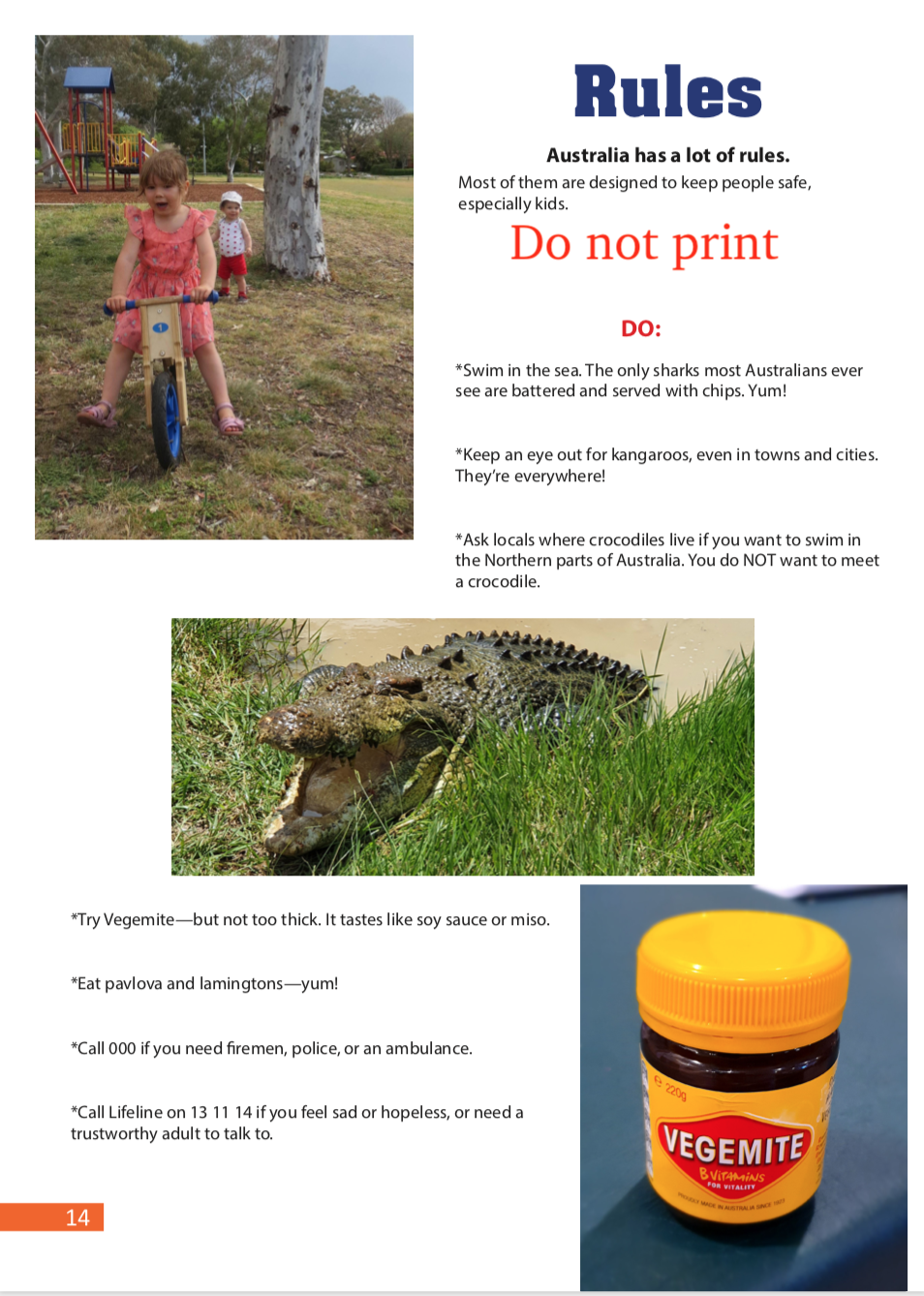


I am perfectly happy for these images to be shared, especially in schools and among immigrants and refugees and the organisations that help them. My only rule is that you don’t get paid for our work.
A lot of the illustrators/models donated their images (and there are a LOT of photos of my kids) but I made a point of paying refugees and Aboriginal people (both models and sensitivity readers).
Aspergirls
My daughter Lizzie was diagnosed with Autism earlier this year. They classified her as Level 2 which is largely meaningless (every autistic person is wildly different from every other autistic person) except it means she can mostly deal with mainstream school but also gets funding for therapy.
Sometimes ‘mild’ (again, a problematic term) autism is called Asperges. Lizzie and I quite like the term “Aspergirl” because it sounds like a superhero. It’s very likely that Tim and I are also autistic, although our lives are clearly much easier than hers.
Autism comes with both advantages and disadvantages. It’s much harder to diagnose in girls as they present differently. I saw this on FaceBook (with the original link long since broken) and was fascinated. I took screenshots, and have commented on the screenshots.


Uh yes, I don’t even wear long sleeves (unless it’s under about 5 degrees Celsius, and sometimes not even then) because they bother me.
I often don’t brush my hair and I almost never wear makeup.
Eccentric personality. Well, yes.
No, I wouldn’t say I’m youthful for my age (immature in some respects, sure), or more/less expressive than the mainstream, or androgynous at all. Lizzie and I are both hyper-feminine in style (I wear skirts and dresses all the time; she wears pink; we both maintain long hair despite finding it a hassle). I’ve read elsewhere that being really really into gender roles OR really not into them are both autistic traits.

I test as INFP/INFJ on Myers-Briggs tests (and yes I know they’re not scientific). INFPs in particular are famous for being a different person in different situations, and not being able to turn it off. I had a boyfriend that I broke up with because he expected me to be depressed and needy… so I was.
I think this blog and my entire life support the film/books addiction.
Ah yes, being hyper controlling in order to cope with stuff. Ask anyone who has ever tried to do anything with me, including the recent ZamZam Foundation launch. I can delegate, and I can handle having stuff delegated to me, but I have to be able to say no to stuff.
Home is my safe place—which is difficult when I don’t live alone.
Classic gifted kid.

I’m a writer with a double degree.

I’m not super great at being employed but I’m fantastic at being self-employed.
I’m intelligent but verbal instructions have always been a big weakness for me. People often accuse me of pretending to be stupid when I genuinely don’t ‘get’ what’s going on.
My obsessive writing is more or less socially acceptable.
Yes I’m emotionally sensitive. And I have an anxiety disorder and clinical depression, so… yes.
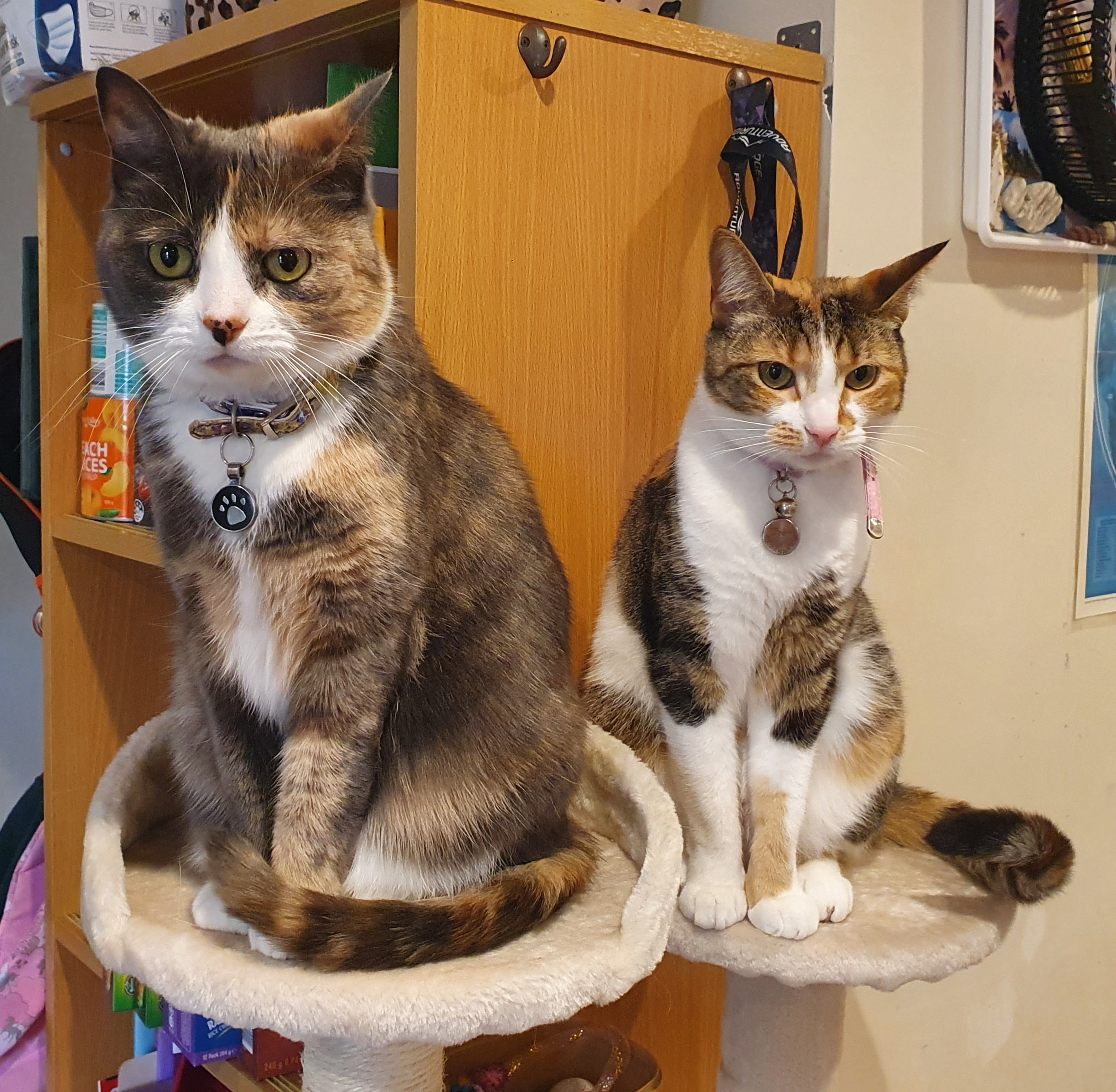
My computer deleted a draft of this blog entry and I don’t feel like re-writing, but I’ll leave the rest of the article here for you. And a pic of my cats.


 Felicity Banks