Queen Charlotte: A Bridgerton Story (TW: rape)
I have watched this series over the past several days, and now I need to talk about it.
I enjoyed the first season of Bridgerton and the second was okay. I enjoyed the first Bridgerton book and was increasingly incensed by the books that followed. The TV series is also astonishingly rapey (for example, Daphne rapes her husband in the first season after realising he is using her ignorance about sex to avoid having children).
Queen Charlotte follows the tradition, featuring many sex scenes between a young Lady Danbury and her much older, very oblivious husband who she was betrothed to at the age of three. They are arguably filmed as funny scenes. Fortunately I had advance warning and was braced for them.
At church today, the reading was from Genesis 29. Jacob (a founding father of the nation of Israel) works for his relative, Laban, for seven years as advance payment for marrying his younger daughter Rachel. On the wedding day Laban switches in his older daughter Leah and Jacob sleeps with her and only discovers the deception the following day. Laban says Jacob can have Rachel too, but he has to work another seven years. So Jacob marries Rachel, and then works another seven years. Unsurprisingly, he loves Rachel more than Leah. The first time we hear Leah’s opinion on all this, she is giving birth to four sons, each time thinking that her husband will finally love her. The story continues to be messy as the sisters fight over their husband’s affection and even trade him between themselves.
Did Leah know when she slept with Jacob that she was part of a trick? Was she in on it? Did she want to marry Jacob? Was she happy to marry anyone since she was considered less desirable and/or her father was a liar and/or she wanted children?
The “conclusion” of today’s sermon was that domestic violence is still happening. It wasn’t okay then and it isn’t okay now. There is no happy ending here—no neat moral for us to nod about and promptly forget.
When we read Bible stories like that we tend to blame ancient cultures. But clearly, women have been used as trading pieces in every culture on earth—including, obviously, European nobility.
How much choice did the fictional Lady Danbury have? She looked forward to her husband’s death but didn’t kill him or try to escape. They even had a little bit in common, as they were both dark-skinned and therefore in a socially precarious position despite coming from royalty themselves. She had zero interest in her children until she realised her rank (and entire fortune including her house) was dependent on her four year-old son.
Many cultures have arranged marriage to various degrees. Sometimes the men have choice and the women have none. Sometimes a couple is betrothed but either party can choose to break it off if they want to. Sometimes rituals and celebrations are not enough to hide that women are being sold into sexual slavery, often as children. In the USA, some religious fanatics (Christian ones) force raped children to marry their rapist.
I have met several women in Indonesia who were child brides (in a small village). The custom was to give the woman to the much older husband when she was extremely young, and then the husband would wait until her first period before having sex with her. (Of course there was no accountability whatsoever for even that much kindness.) When I spoke to the women they were middle-aged with children of their own and appeared perfectly content. I didn’t speak enough Indonesian to find out what would happen to their own children. My own Indonesian friends found it all very shocking, so it was clear that cultural change was happening.
I don’t have a problem with arranged marriage itself. When both parties are evenly matched in power and choice, it can be beautiful. In Queen Charlotte there is deception about King George’s madness but they fall in love and are both intelligent, socially progressive people of a similar age. Neither party is particularly willing at first, but they swiftly fall in love. The ideal of arranged marriage is a marriage undertaken for mutual benefit by two open-minded people who are equal in power and who fall in love after their wedding.
Love is a choice.
And for many women throughout history, marriage is a means to an end: It gives them respectable adulthood and a measure of independence; it gives them a career of sorts (running a household); and it gives them children. Not all women want children but a lot of human beings do—our biology pushes us that way—and an extremely small proportion of women have the ability to make children without going the sex-with-a-man route. Given the choice, many women would marry and have sex with a horrid or even violent man if that was the only route to get children. And of course, many people who marry for love end up deeply unhappy or even abused (mostly women, but some men too).
It’s nice—sort of—that King George is also against the idea of marriage at first. There’s a symmetry there which gives their relationship some equality.
However, what marriage is truly equal?
I am a disabled woman married to an able-bodied (but neurodiverse) man. Even if we were both healthy, he would almost certainly earn significantly more than me, have more physical strength, and be free to walk alone at night without danger. Even if we both worked, statistically I would still do the majority of the housework (a discrepancy which grows larger after having kids).
There are many more aspects of being female that are harder to measure. I do not receive the same amount of pain relief as Chris would receive for the same level of pain. I am assumed to be less intelligent. I pay more for mechanics and tradesmen. And so on. This is all magnified a thousand times for women of colour, of course. I’m lucky. But I know I’m a second class citizen inside my own marriage. (Chris is great, totally feminist, blah blah blah. But he still has societal baggage, and so do I.)
If I wanted to divorce Chris, it would be extremely difficult. I would lose at least some access to my children. We would almost certainly lose our home. I would probably have to live in some kind of share house in order to survive financially, which I know from past experience is incredibly stressful. I am currently able to earn up to $300 a week. That would probably no longer be possible. I would be living on a disability pension for the rest of my life.
It is terrifying, to be a disabled woman.
Fortunately we have no plans to divorce, and Chris’s life and income are insured.
But I am, like Lady Danbury, dependent on a man’s goodwill.
There is a great deal of clever writing in the show. Prequels are tricky. We know that Queen Charlotte loves her King George, and that he is destined to get madder over time. We know that Lady Danbury will become the fabulous character we already love.
There is a plotline in the “present” of the Bridgerton TV series in which a much older Queen Charlotte is berating her many children for not producing more heirs. The pattern of royal duty continues, even though she has borne a prodigious quantity of offspring. It is clear she is not the perfect mother, either. Any examination of royal life must show that it is too much: too much wealth, too much responsibility; too little personal freedom or choice; too little connection to the real world; too much power. Too much inbreeding. As a commoner I can sigh over the gorgeous costumes while also being relieved that my life is nothing like that.
I can also stress over Lady Danbury’s considerable dilemma: to use her friendship with the queen to keep her rank, and thus protect the rank of all the recently-elevated non-white half of the ton… or to be a true friend, refusing to either spy on the queen or ask for favours. We know she wins her rank, but how does she do it?
I adore the gay relationship between the queen’s personal assistant and the king’s personal assistant. A gay relationship is always welcome, but the dynamic between the two of them as they attempt to remain loyal to their royal charges is intense and dynamic. It links beautifully into the main plot as well as highlighting the weird relationship between servants and their employers. Not quite family—no, never!—yet often more intimate than family. They are often best friends, or something like best friends, yet with absolutely no power over their own life. While Lady Danbury courts and then rejects a man that her maid would have liked her to marry, she talks about finding her own path and so on. Her maid never gets that option. The gay servants are lucky enough to have a long life together, but only because things happened to fall into place for them. And the absence of one of the pair in the final episode is an absence that can only ever be felt in silence.
I’ve read an article criticising the way the series handled race—as if a dark-skinned queen could solve racism (much like President Obama’s presidency “solved” racism in the US)—but I think it is handled perfectly in the context of a highly fictional and escapist version of the past. It is not 100% realistic but it also doesn’t try to say that a few dark-skinned nobles would make everything okay. And in any fictional story, we always have our protagonists to thank for great acts of heroism and change. Honestly, it is fairly believable that a few high-ranking individuals could cause widespread social change.
This series wasn’t as witty as Bridgerton‘s season one, but it was extremely watchable and surprisingly deep. With lots of extremely attractive people flitting about in amazing dresses and wigs. The quasi-historical wigs and the title character’s natural hair work perfectly together.
And oh, yes of course—the madness. I think it is beautifully handled, including the horrors of misguided medical treatments, the determination to continue with medical treatments, and the desire to protect one’s loved ones from the truth (that always backfires). In many ways, the most tragic part is Queen Charlotte’s insistence that she is herself the cure for him. Because I feel like many people do believe on some level that love can fix mental illness…. and it doesn’t work like that. For once we have a fictional story that shows us that love continues when madness does, side by side.
So I’ll never be able to laugh at a joke about mad King George again. But the journey was worth it.
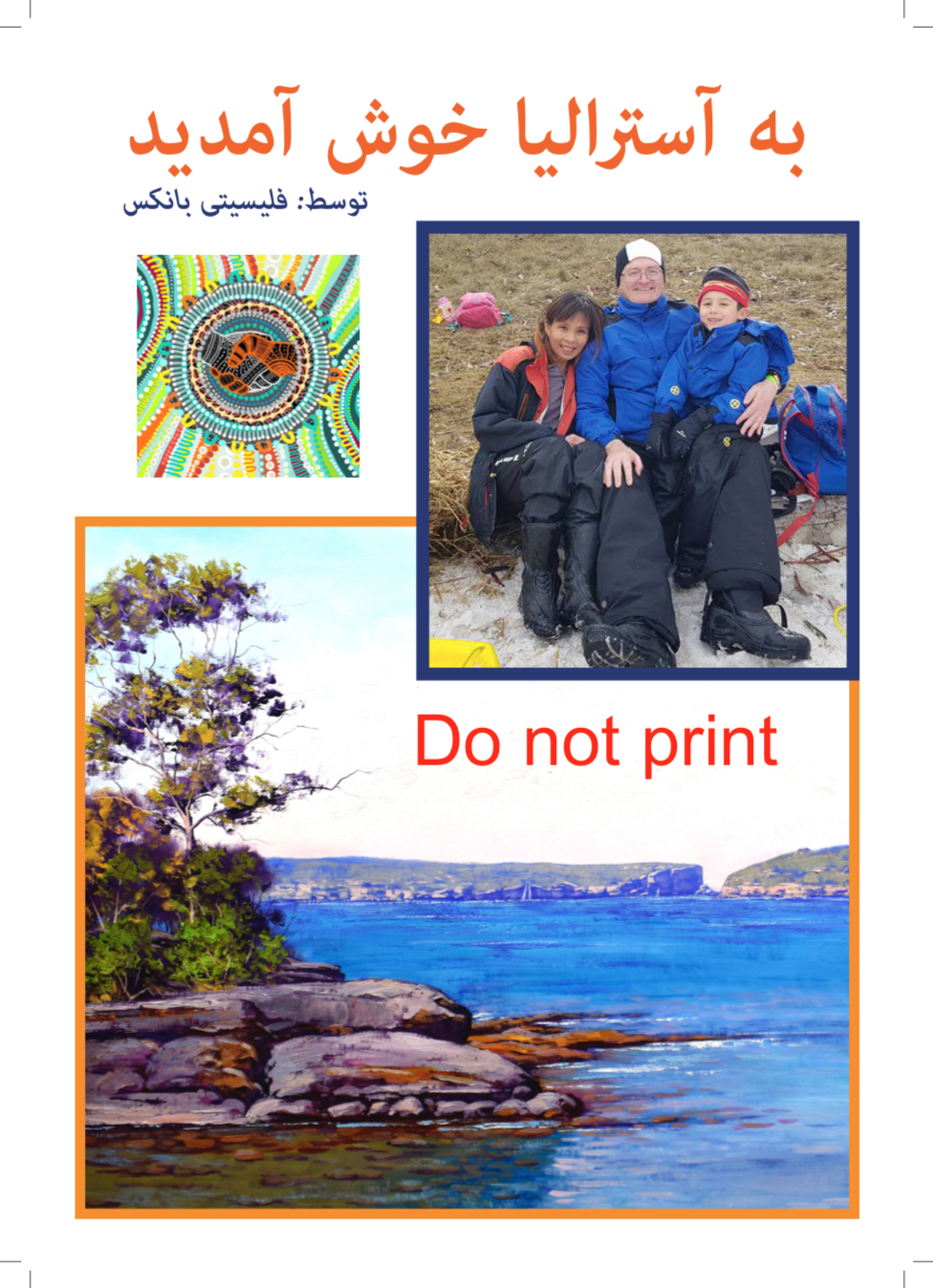
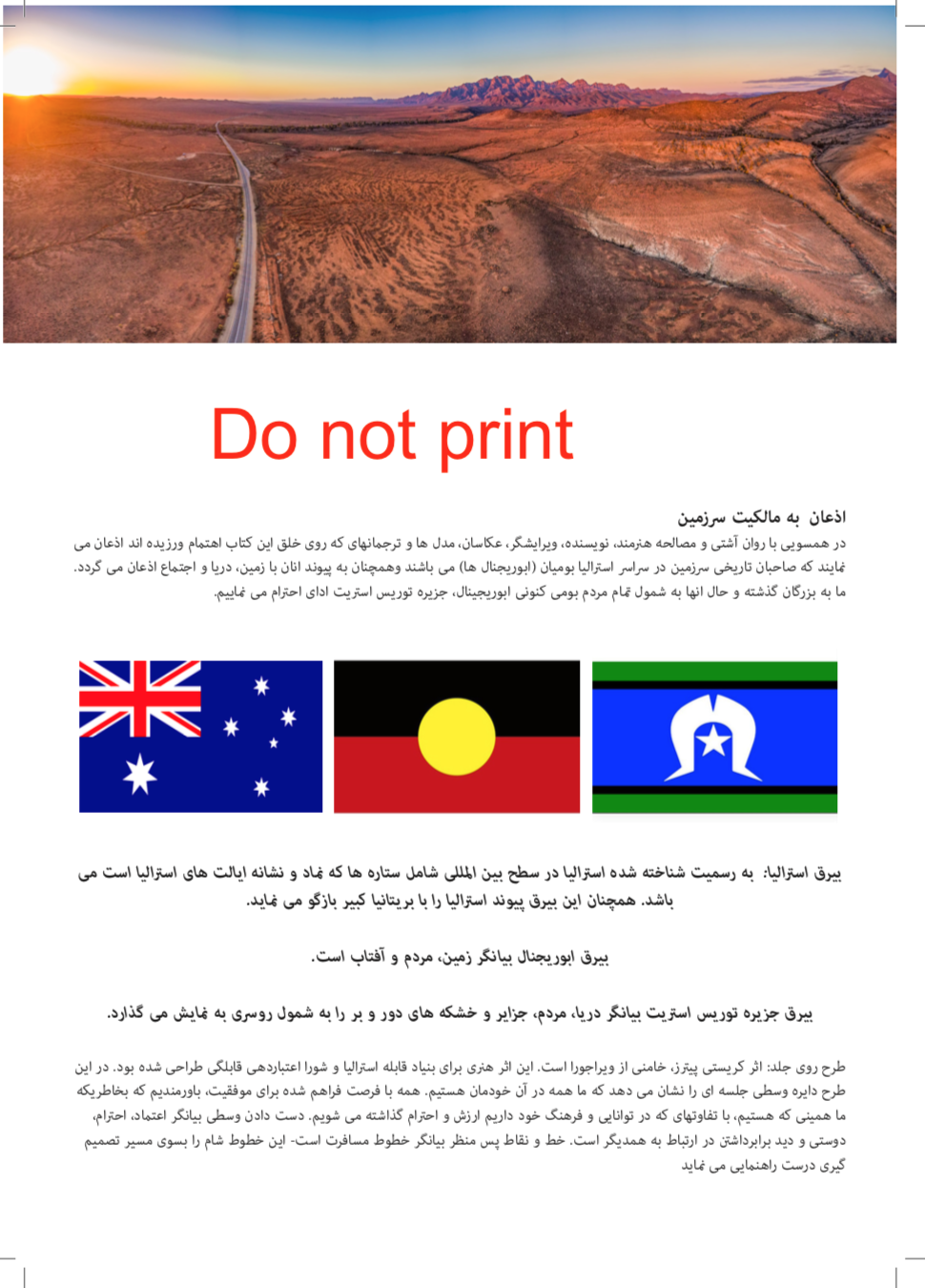
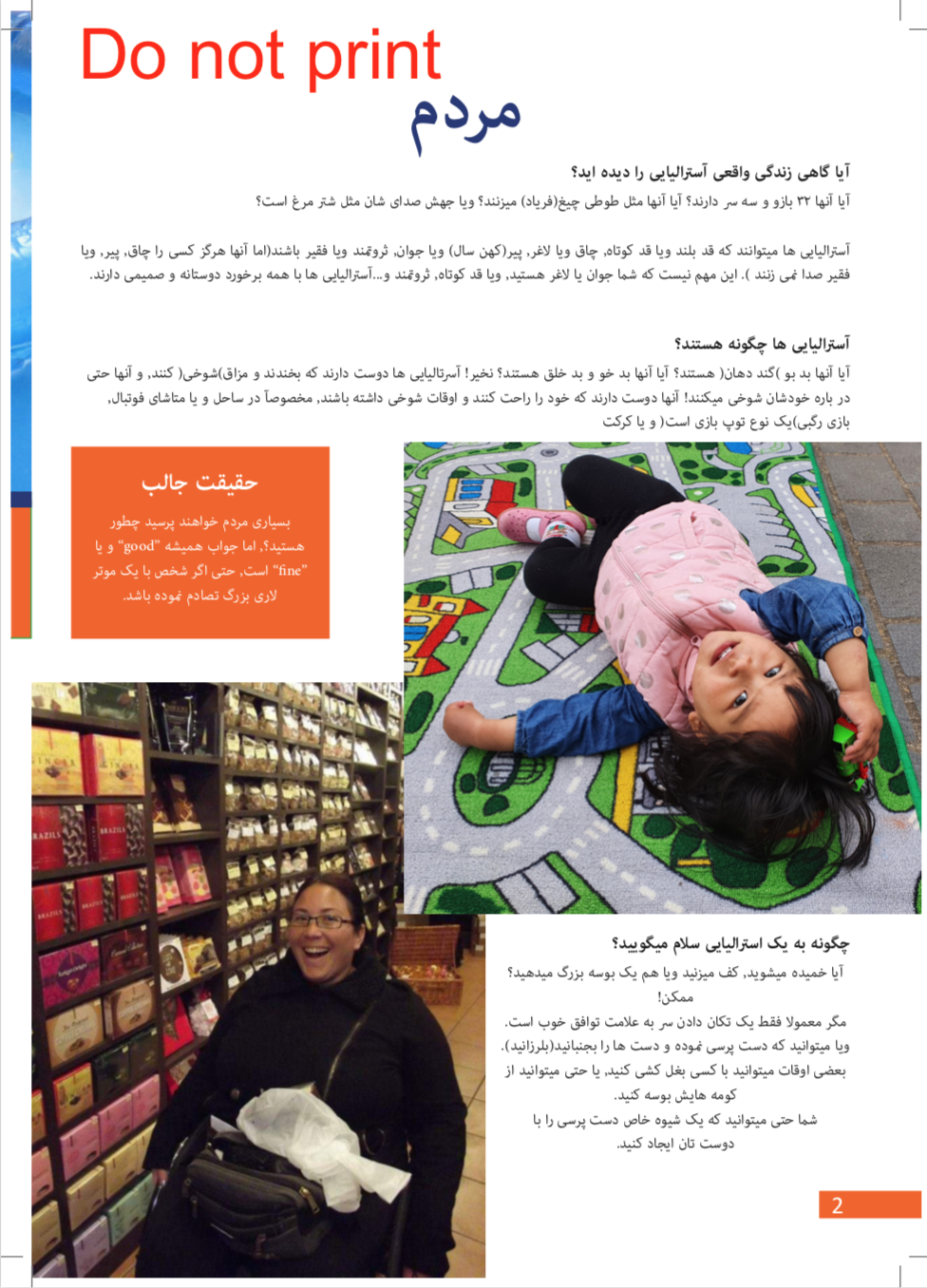
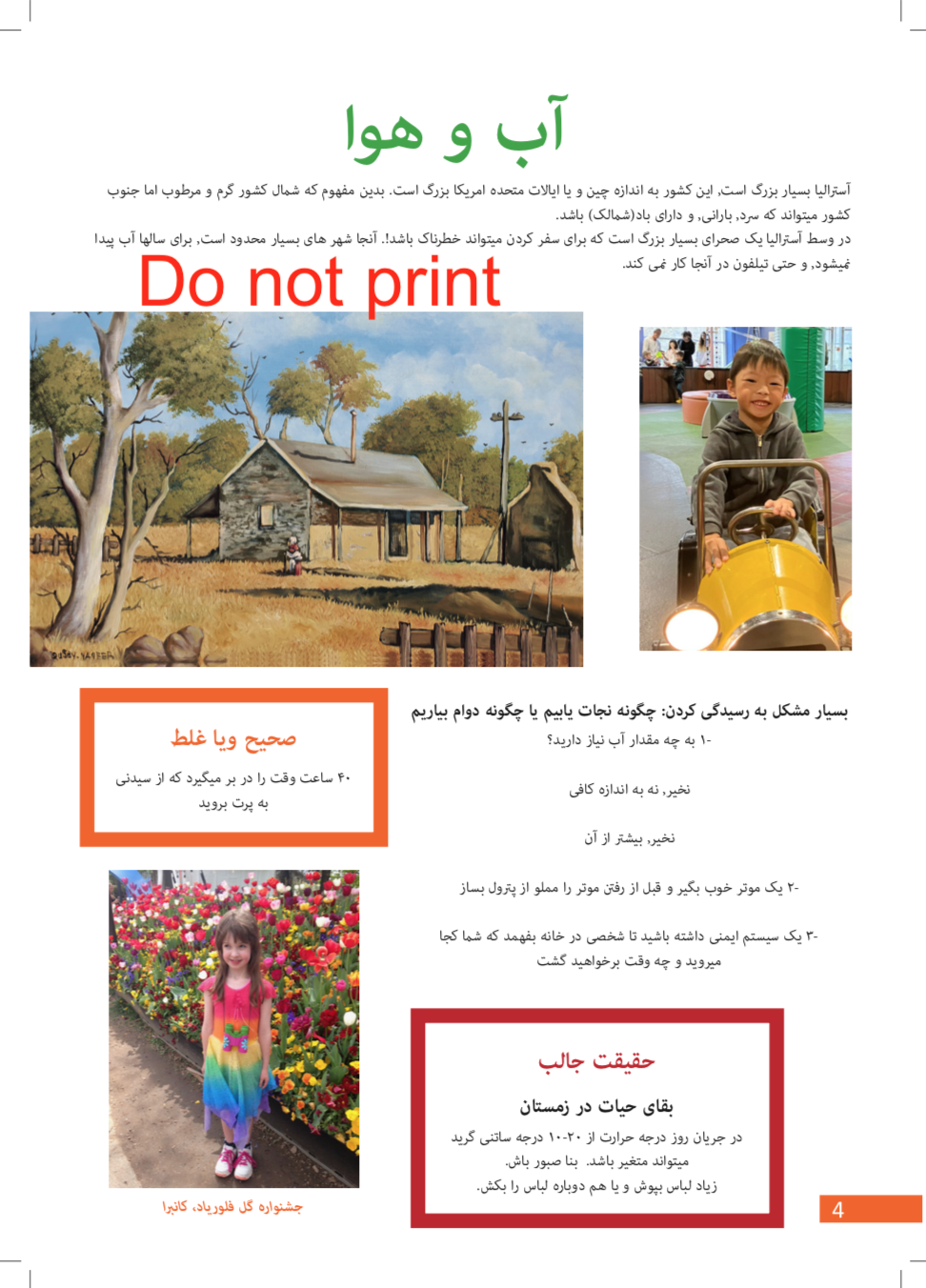
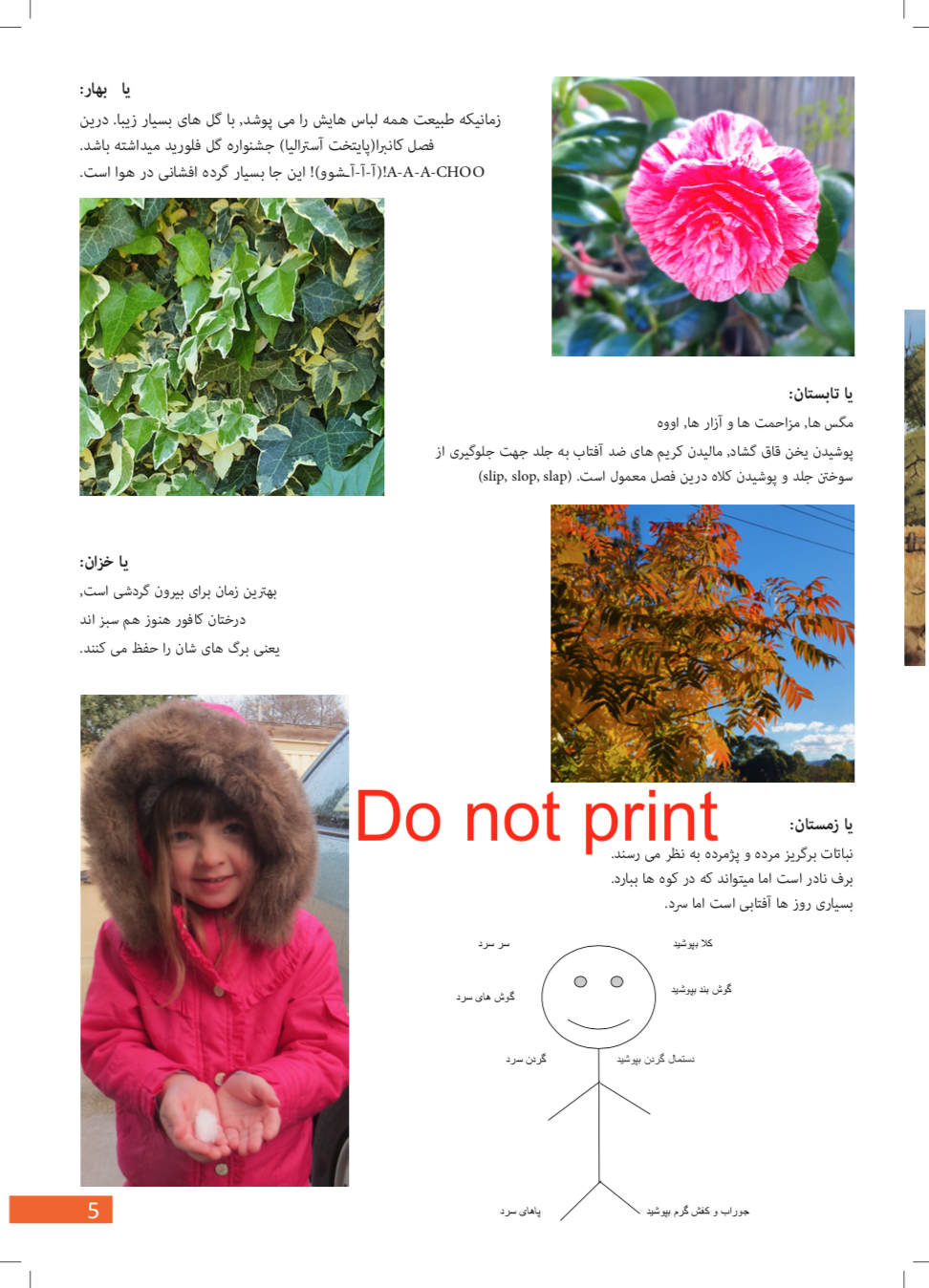
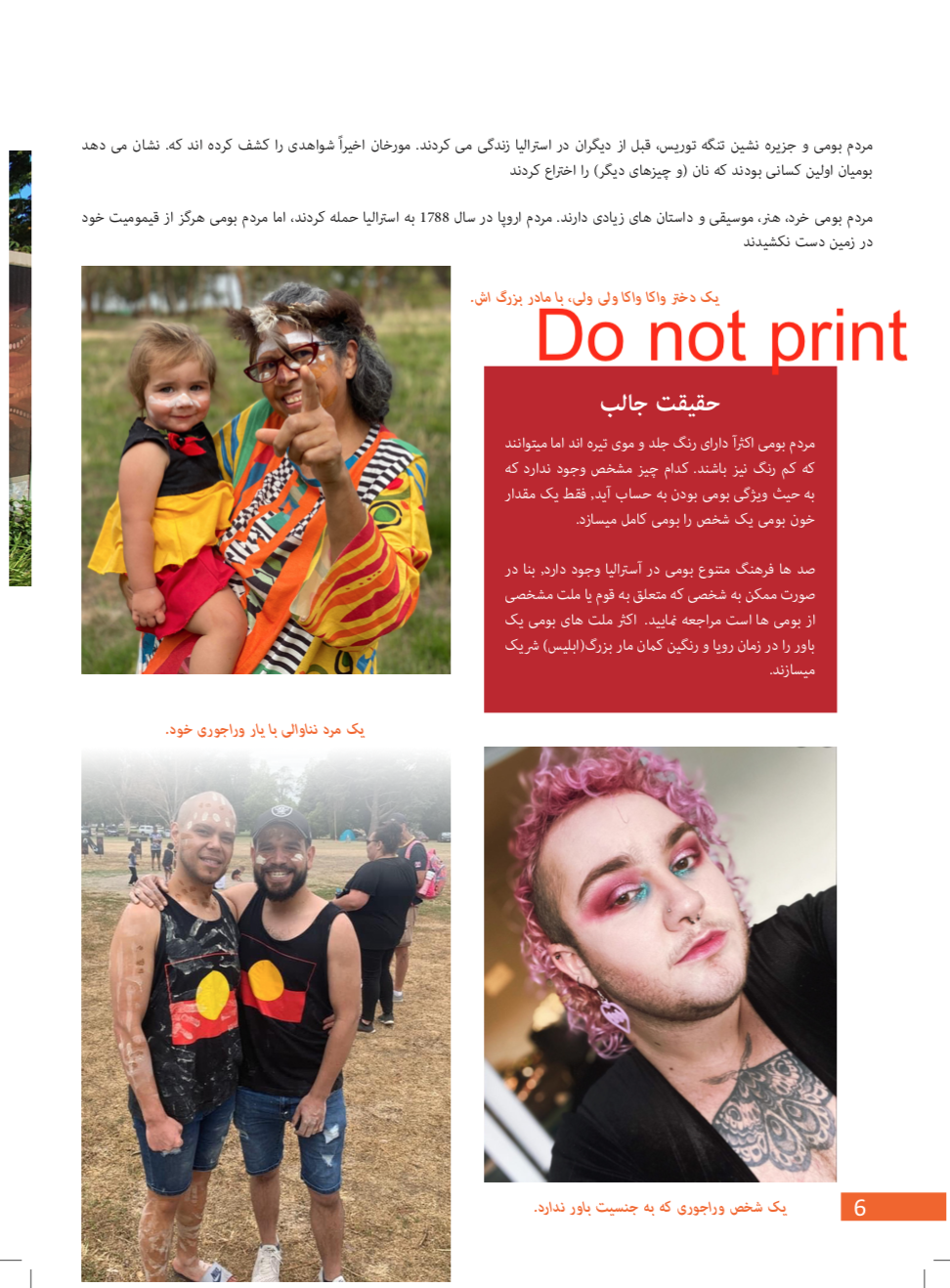
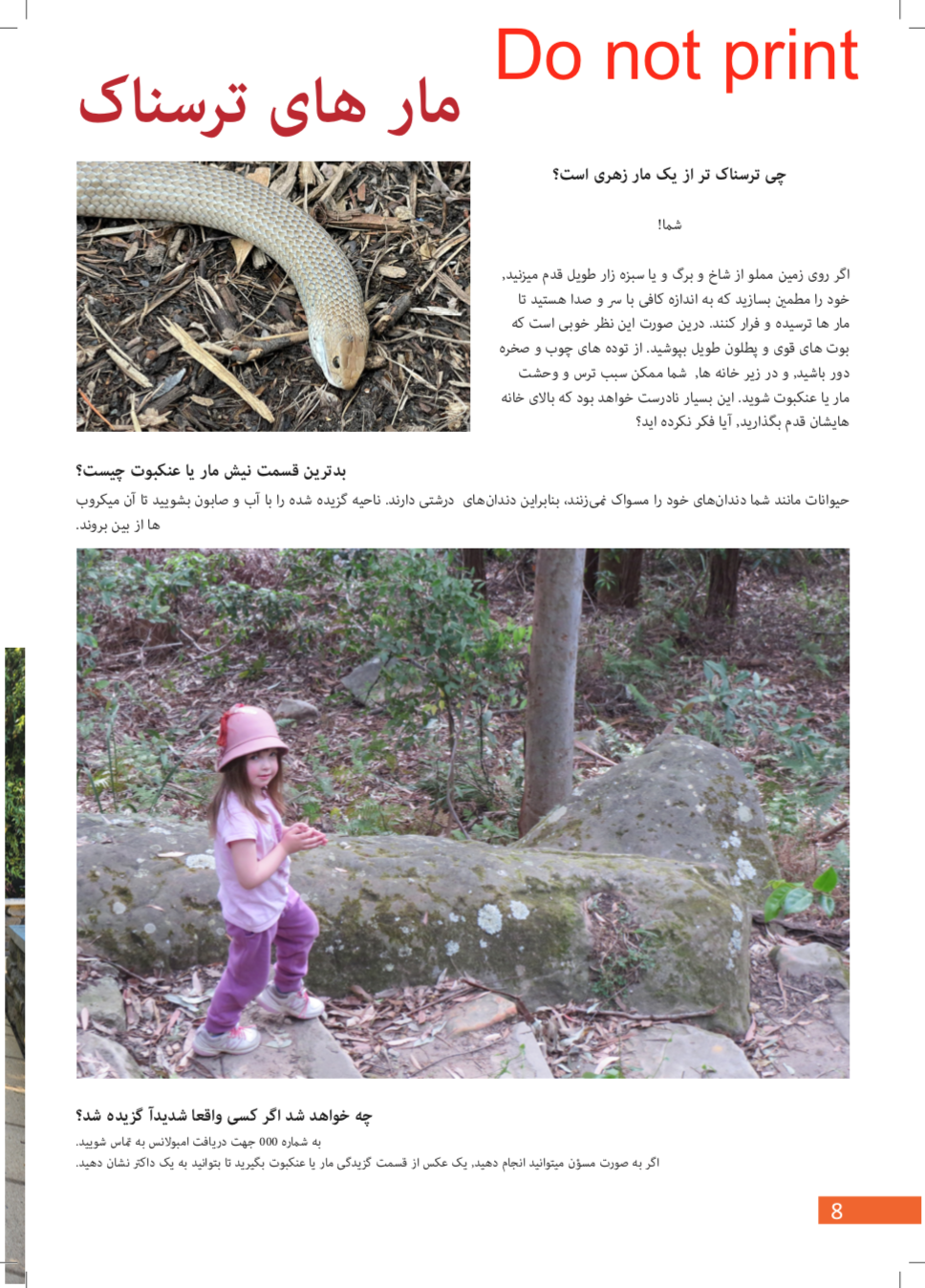
“Welcome to Australia” Dari Persian
Bahasa Indonesia/Bahasa Melayu
Please feel free to share all versions of this book as widely as you like.
All I ask is that you don’t make a profit from any part of it. Dozens of people spent time working on this book, and most were not paid (all Aboriginal people and refugees were paid or had donations made in their name).
You can buy physical copies here in any of the available languages. Yes, the publisher (Shooting Star Press Canberra) plans to sell digital versions of all languages too.






 Felicity Banks